Some days, the need for a friendship book shows up fast.
Your child climbs into the car after preschool, buckles in, and goes quiet. Then the story spills out. Someone said, “You can’t play with us.” Or a best buddy grabbed the glitter crayons and wouldn’t give them back. Or your child wanted to join in and just stood there, frozen, not knowing what to say.
That’s the moment many grown-ups know well. You want to help, but you also don’t want to turn a tender little hurt into a big lecture. You need a gentle way in.
That’s where picture books about friendship can do beautiful work. A story gives kids enough distance to look at a hard feeling without shutting down. They can watch a character make a mistake, feel left out, try again, apologize, or discover a new friend. Then, almost without realizing it, they begin talking about themselves too.
As an educator and a dog mom who believes a cozy read can soften almost any rough day, I love using friendship stories as conversation starters. A good book won’t solve every playground problem overnight. But it can give a child language, comfort, and one small next step.
If your child is also sorting through big feelings like jealousy, disappointment, or worry, this roundup of books on emotions for children is another thoughtful place to look.
More Than a Story Building Friendship Skills Page by Page
A friendship book often starts working before you even finish reading it.
I’ve seen this happen in classrooms, in library corners, and on couches with one tired grown-up and one teary child. The child doesn’t want advice. The child wants to feel understood. A story can do that without pressure.
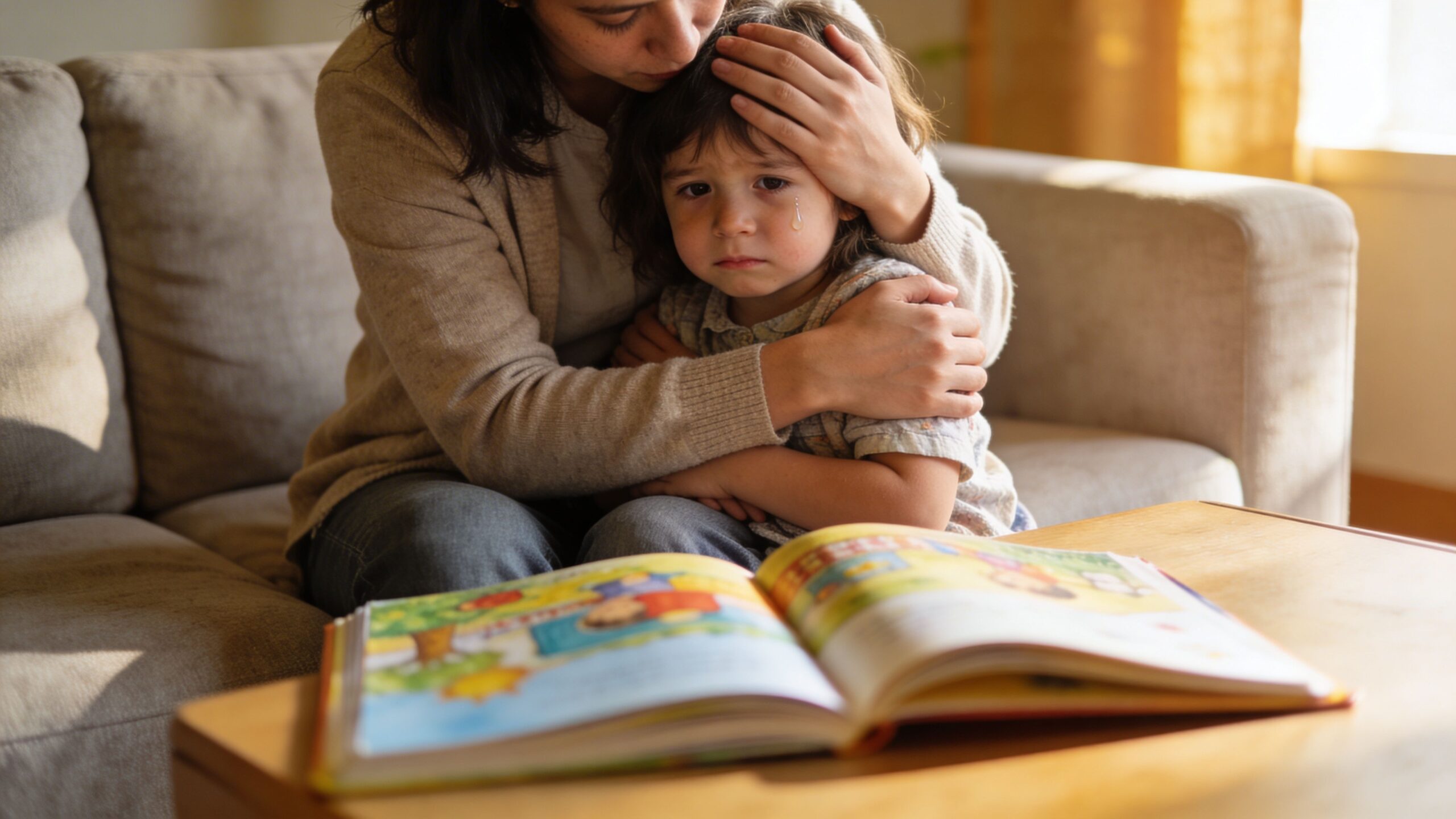
What kids hear in a friendship story
When you read aloud, children are usually listening for more than plot. They’re noticing:
- Who got left out
- Who spoke up
- Who shared kindly
- Who made a repair after a mistake
- Who kept trying when friendship felt awkward
Those moments matter because they turn a fuzzy problem into something visible. “Friendship trouble” can feel huge to a young child. But one page showing two characters arguing over a toy gives the child a shape they can recognize.
A child who can point to a character and say, “That happened to me,” is already doing important emotional work.
Why books feel safer than direct advice
Advice can make some kids feel cornered. Stories don’t.
A book lets your child sit beside the problem instead of inside it. That little bit of space helps. They can talk about the bear, the rabbit, the imaginary friend, or the pup in the story first. Later, they may tell you what happened at recess.
I also love that picture books slow everyone down. The page turn gives pause. The pictures offer clues. The short text leaves room for questions like:
- “How do you think she felt right there?”
- “What could he say next?”
- “Have you ever had a day like that?”
For families and teachers, that’s the sweet spot. Not a lecture. Not a quiz. Just a warm, honest talk with a book in the middle.
Why Reading About Friends Helps Kids Make Friends
Friendship stories aren’t just sweet. They can be practical tools for learning social skills.
Think of them like a simple car manual for relationships. A child may not understand all the mechanics of friendship yet, but a good story shows how the parts work together. One feeling leads to one choice. One choice leads to a consequence. Then someone repairs, reconnects, or tries a better way.
Stories give kids social scripts
Many children struggle not because they’re unkind, but because they don’t know what to do in the moment.
A friendship book can model:
| Situation | What a child learns from the story |
|---|---|
| Joining play | How to ask, wait, and try again |
| Sharing materials | How to take turns without panic |
| Hurt feelings | How to name the feeling and respond |
| Differences | How to stay open and curious |
| Conflict | How to apologize and rebuild |
That’s why books matter so much in the early years. They make invisible social rules visible.
What the research tells us
Picture books like The Sandwich Swap show how differences can spark misunderstanding, then move toward acceptance. That kind of story pattern lines up with findings summarized by Sarah Gardner Teaching: a 2018 American Psychological Association study found that exposure to diversity-themed narratives increased children’s empathy scores by 22% post-reading, and NAEYC benchmarks position these books as social-emotional learning tools linked to reduced bullying incidents by 15% in randomized school district trials (Sarah Gardner Teaching).
Those numbers matter, but the classroom meaning is even clearer. When children repeatedly hear stories about perspective, repair, and belonging, they get better at noticing other people’s feelings.
Practical rule: If a book helps a child understand both sides of a conflict, it’s doing more than entertaining.
Perspective-taking in plain language
“Perspective-taking” can sound academic, but it’s simple. It means a child starts to think, “How did that feel for the other person?”
That’s a big friendship skill.
When a character says something unkind and then sees the effect, children watch that cause-and-effect chain unfold. They begin to understand that actions land somewhere. Words matter. Tone matters. Excluding someone matters.
And because the learning happens through story, it sticks differently. A child isn’t just told to be kind. A child sees why kindness changes the ending.
The Friendship Playbook Key Themes and Lessons
When parents or teachers ask me for help finding picture books about friendship, my first question is usually not “How old is the child?” It’s “What friendship challenge are they facing right now?”
That answer helps narrow the search.
Some books are best for a child who’s shy. Others help with sharing, repairing after conflict, or welcoming someone who feels different. When you know the lesson you need, choosing gets much easier.
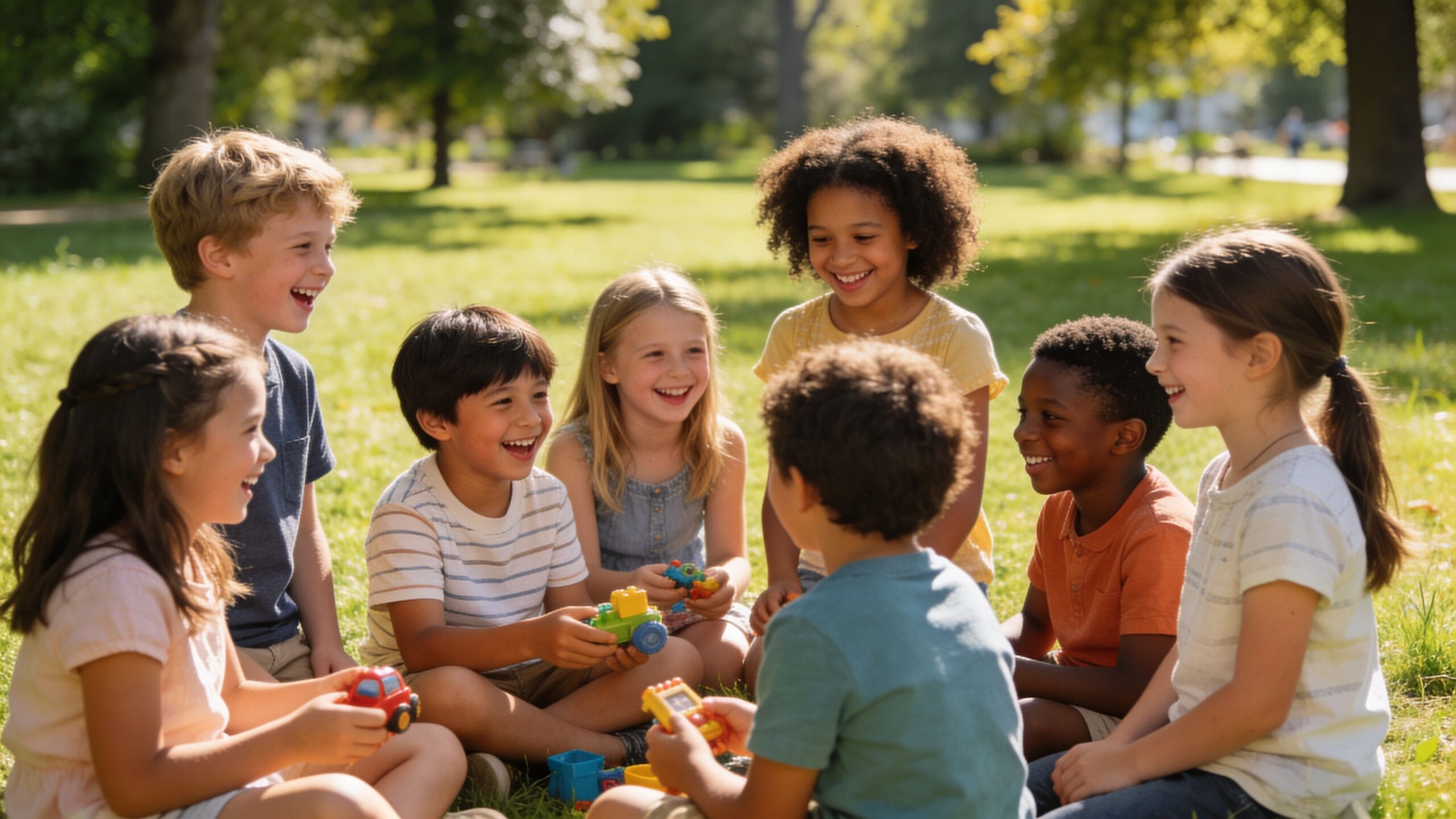
Making the first move
Some children want friends but don’t know how to begin.
Look for books where a character takes a social risk. They wave first, offer help, ask to join, or reach out after feeling lonely. These stories are wonderful for kids who hang back on the playground or wait for others to do the inviting.
The lesson isn’t “be brave all the time.” It’s smaller and kinder than that. It’s “friendship often starts with one small move.”
Sharing and taking turns
This theme works well for toddlers and preschoolers because the conflict is concrete.
A toy. A spot on the rug. A turn with the marker. A snack at the table.
Stories in this category help children see that sharing isn’t about losing everything they love. It’s about trust, waiting, and learning that good things can come back around.
Working through disagreements
Some of the best friendship books don’t avoid conflict. They show it clearly.
That’s helpful, because kids need to see that arguments happen even in caring relationships. A useful book in this theme usually includes:
- A recognizable conflict such as grabbing, interrupting, or unfair words
- A pause or consequence so the hurt feels real
- A repair attempt like apologizing, listening, or trying again
Not every friendship lesson needs a perfect ending. Sometimes the most useful books show that making things right takes effort.
Celebrating differences
These are powerful books for classrooms and mixed-age groups.
A strong “differences” story might focus on culture, preferences, personality, ability, or family life. The best ones move past “we’re all the same inside” and make room for a better message. Friends can be different and still belong with each other.
This category helps children who are quick to say, “That’s weird,” or “She doesn’t do it like me.”
Coping with loneliness and exclusion
Some children need books that say, gently, “You are not the only one who feels left out.”
That’s where stories about waiting, searching, and finding your people become so comforting. These books work well after a hard social moment, a move, a new class, or any season when a child feels on the outside.
A simple way to use this framework is to ask yourself one question before choosing a book:
| If your child is struggling with… | Look for stories about… |
|---|---|
| Not knowing how to join in | Making the first move |
| Fights over toys or materials | Sharing and taking turns |
| Friendship bumps and hurt feelings | Disagreements and repair |
| Fear of people who seem different | Celebrating differences |
| Feeling alone or left out | Loneliness and belonging |
Choosing the Right Story for Every Age and Stage
A wonderful friendship book can still miss the mark if it doesn’t fit the child’s developmental stage.
A toddler needs simple scenes and clear feelings. A kindergartener can handle basic conflict. An early elementary child is usually ready for more layered social situations, including mixed feelings and misunderstandings.
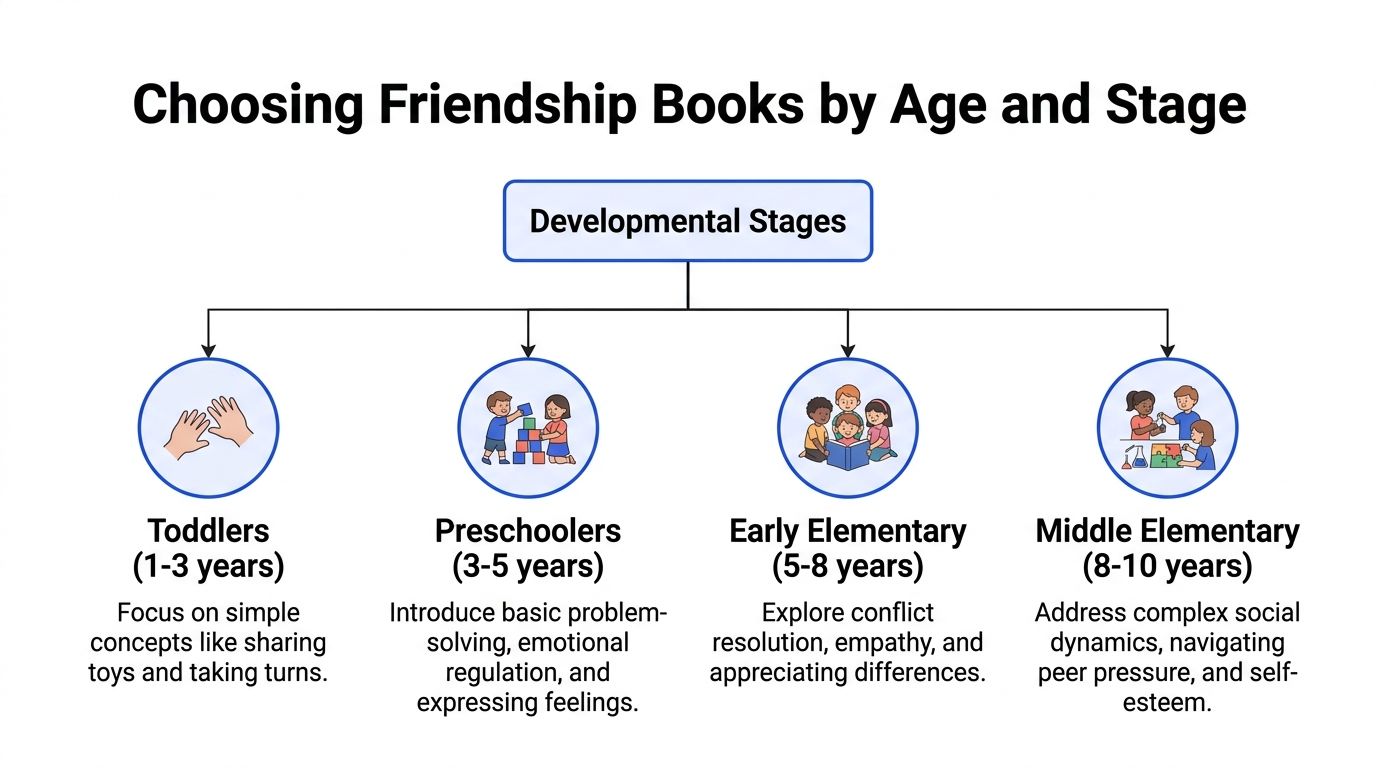
Toddlers ages 1 to 3
At this age, friendship often looks like playing near someone, noticing what they have, and learning tiny social rhythms.
Choose books with:
- Very simple plots and repeated language
- Familiar routines like snack time, playtime, bath time, or park time
- Clear visual emotions so children can “read” the faces
- Gentle themes such as sharing, kindness, waiting, and helping
Board books and sturdy picture books often work best here. If you’re building a read-aloud stack for little ones, this guide to Montessori books for toddlers is a helpful companion, especially if you want books that support independence and calm observation.
You may also like this curated list of toddler-friendly reads at https://setterfren.com/best-picture-books-for-toddlers/
Preschoolers ages 3 to 5
This is the golden age for friendship books.
Preschoolers are very interested in fairness, rules, turn-taking, and belonging. They also tend to replay social moments over and over, which means stories can give them words they’ll use later.
Look for stories that include:
| Good fit for preschoolers | Why it works |
|---|---|
| Simple conflict | They can follow the problem clearly |
| Emotional vocabulary | They’re learning to name feelings |
| Cooperative play | Group play is becoming more common |
| Repair after mistakes | They need to see friendships survive bumps |
A preschooler can usually handle books where a character feels mad, jealous, left out, or embarrassed, as long as the plot stays grounded and the illustrations help carry the emotion.
Early elementary ages 5 to 7
Children in this stage can consider motives more carefully.
They start noticing cliques, fairness in groups, and how words can sting even when no one is yelling. This is a strong age for books about inclusion, courage, empathy, and perspective.
Books for this group can go further. A character may mean well and still hurt someone. A friend may need space. A child may have to decide whether to follow the group or do what’s kind.
If your child can retell a social problem in sequence, they’re ready for more layered friendship stories.
Middle elementary ages 8 to 10
Even if your main read-aloud years are shifting, don’t stop using picture books.
Older children often appreciate nuanced picture books with emotional depth, especially when the art adds nuance that chapter books may not. At this stage, friendship books can support conversations about peer pressure, self-worth, social change, and the difference between fitting in and belonging.
Our Favorite Picture Books About Friendship
Some books teach one friendship skill clearly. Others hold a whole bundle of them at once.
The titles below are books I’d happily pull off the shelf for home, classroom, counseling corner, or library display. I’m focusing on what each book can help a child talk through, which makes the list more useful than a simple roundup.
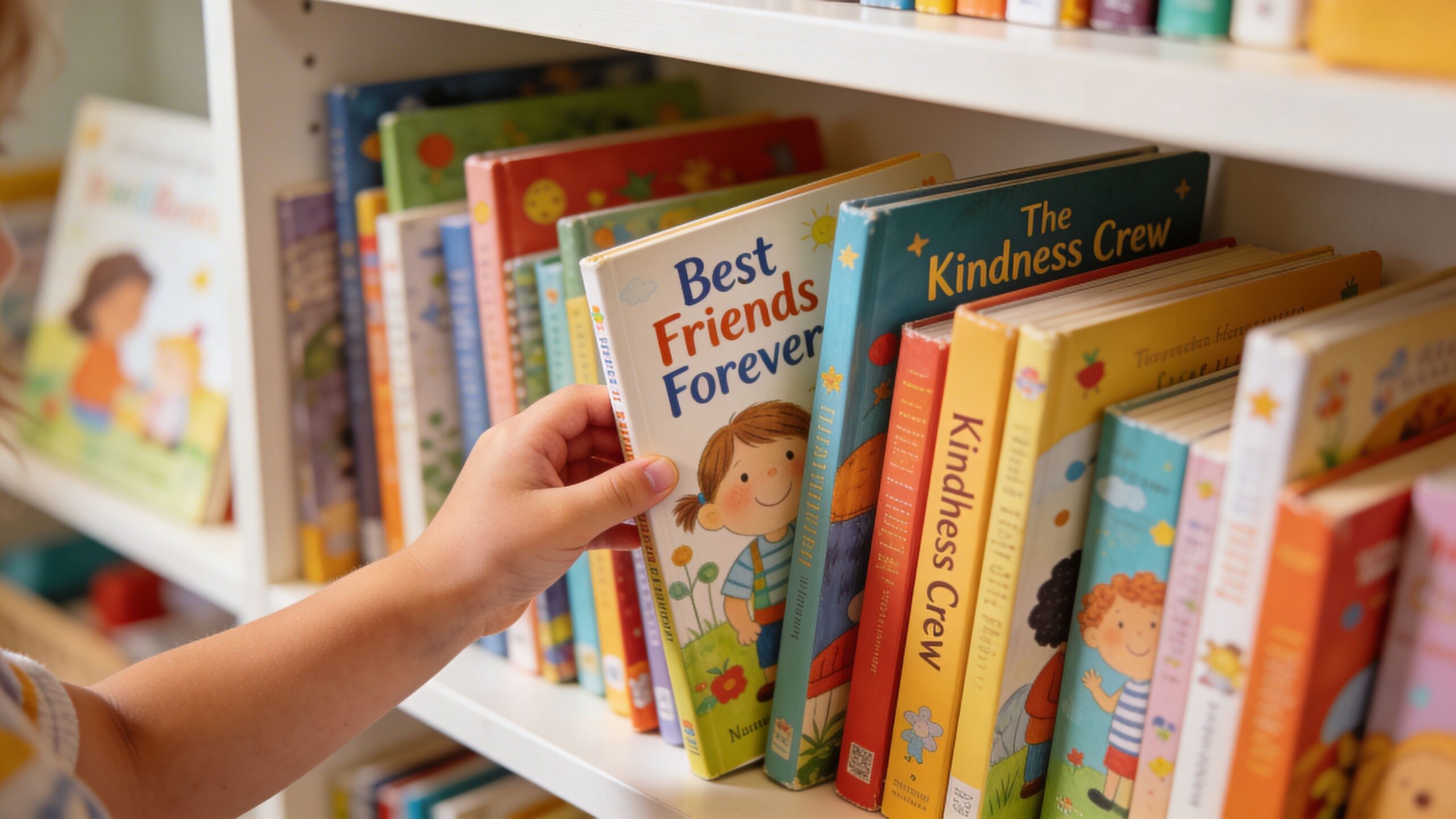
A few standout choices
The Adventures of Beekle The Unimaginary Friend by Dan Santat
This is one of my favorite picks for children who long for connection but don’t know how friendship begins. Beekle leaves his island and goes searching for his person, which makes the book especially lovely for conversations about courage, waiting, and taking initiative. It also carries major literary weight. The Adventures of Beekle won the Caldecott Medal in 2015, the most prestigious U.S. award for children’s picture books, and sold over 500,000 copies by 2020. The same source notes that 95% of K-2 educators use friendship picture books in their curricula, with Beekle often recommended for its themes of initiative and courage (Amy Lemons).
The Sandwich Swap by Queen Rania of Jordan and Kelly DiPucchio
Use this one when the friendship lesson is about differences. The story moves from disgust and rejection toward understanding, which makes it useful for helping kids think about culture, assumptions, and acceptance.
Strictly No Elephants by Lisa Mantchev
A warm choice for children who feel excluded. The central message is that if a group won’t make room, kindness can create a new circle.
Frog and Toad Are Friends by Arnold Lobel
A classic for good reason. These stories show that true friendship has room for different personalities. One friend can be anxious. The other can be steady. The relationship still works.
Books for specific friendship moments
If you’re matching the book to the child, this kind of sorting helps:
- For shy children choose stories about joining in, waiting, or making the first move.
- For toy conflicts choose books centered on sharing, turn-taking, and fairness.
- For classroom community choose stories that celebrate differences and belonging.
- For hurt feelings choose books with apology, repair, and reconnection.
That’s often how I build a book basket. Not by reading level first, but by emotional need.
Here’s a read-aloud option you can preview before you decide whether it fits your group:
Don’t forget animal friendship stories
As a dog-loving reader, I’ll always make room for friendship books with animal characters.
Animal stories can be especially helpful for children who feel a little tender or defensive. A dog, bear, elephant, or rabbit creates enough emotional distance that kids often talk more freely. They’ll say, “He should’ve asked first,” or “She looks lonely,” before they’re ready to talk about their own day.
That’s one reason pet-themed friendship stories work so well in cozy read-aloud spaces. A warm animal character can carry a surprisingly big lesson without making it feel heavy.
How to use this list well
Don’t feel pressure to buy a giant stack all at once.
Start with one question: what does my child need help practicing right now?
Then choose one book that meets that moment. Read it more than once. Pause on one page. Let the conversation stay small. That’s usually where the best growth begins.
Bring the Story to Life With Reading Activities
A friendship book does even more when children get to respond to it.
You don’t need a complicated craft cabinet or a full lesson plan. A few thoughtful follow-up activities can help kids move a lesson from the page into real life.
Discussion prompts that work
Skip the vague “Did you like the book?” and try questions tied to choices and feelings.
- Name the feeling “How did the character feel when that happened?”
- Track the turning point “What changed the friendship?”
- Spot another option “What else could the character have done?”
- Connect to real life “Has anything like this ever happened to you?”
- Practice language “What could you say if you wanted to join that game?”
Sometimes the best post-reading question is the simplest one. “What part felt most true to you?”
Low-prep friendship activities
These are easy to use at home or in a classroom:
Role-play a tiny problem
Act out moments like asking for a turn, inviting someone to play, or apologizing after grabbing a toy.Make a kindness chain
Write one kind action per strip of paper. Link them together and add a new one each day.Draw a friendship map
Ask the child to draw places where friendship happens. Playground, lunch table, library, soccer field, grandma’s house.Create a two-choice card
Put one social problem at the top and draw two possible responses underneath. Then talk about which choice helps friendship grow.
If you want more literacy-friendly extensions, this collection of activities for early learners is useful: https://setterfren.com/kindergarten-literacy-activities/
A simple routine for repeat reading
Friendship books often work best on the second or third read.
Try this rhythm:
| Reading round | Focus |
|---|---|
| First read | Enjoy the story |
| Second read | Notice feelings |
| Third read | Talk about choices |
| Later revisit | Connect to real life |
That structure keeps things calm and natural. It also helps children who need repetition before they’re ready to speak.
Start Your Friendship Story Today
If you’re standing in front of a bookshelf wondering which title might help your child most, you already have a good starting point. You’re paying attention.
That matters.
Picture books about friendship give children a safe place to practice empathy, courage, repair, and belonging. The right story can help a shy child try one brave sentence. It can help an impulsive child see the effect of grabbing or excluding. It can help a lonely child feel less alone.
Keep it simple. Match the book to the moment. Think about the lesson your child needs most right now. Then read slowly, talk a little, and let the story do some of the work.
If reading these books sparks your own storytelling dreams, you might enjoy this next step on writing for children: https://setterfren.com/how-to-write-a-childrens-book/
I’d love to know which friendship books your family or classroom returns to again and again. Those favorites become part of a child’s emotional toolkit, and they’re worth sharing.
Setterfrens LLC is a cozy place for dog lovers, readers, parents, and educators who believe life feels better with a wagging tail and a good story. If you’d like more book picks, practical guides, and warm community updates, visit Setterfrens LLC and join the growing pack.