When you think about the absolute best picture books for toddlers, what comes to mind? For most of us, it’s classics like Goodnight Moon or The Very Hungry Caterpillar. There’s a good reason for that! They master the perfect formula for little ones: simple, rhythmic language paired with bright, clear illustrations that grab a toddler's attention and won't let go.
Why Picture Books Are a Toddler's Best Friend
Welcome to the wonderfully messy, magical world of toddler literature! Here at SetterFrens, we’re firm believers that life’s better with a wagging tail and a good book—a philosophy we think should start right from day one. For a toddler, a picture book is so much more than a story; it's a whole universe of colors, sounds, and feelings they can actually hold in their hands.
These simple-looking books are actually powerhouses of development. They introduce toddlers to new words, the rhythm of language, and how sentences fit together, laying the groundwork for all future literacy. Every single time you point to a picture and say, "Look at that big, brown dog!", you're forging a crucial connection between an image and a word in your child’s incredibly busy brain.
More Than Just Words on a Page
The real secret sauce of picture books? It’s the shared experience. Curling up together with a book is one of those cozy, essential rituals that builds a deep sense of security and love. It's in these quiet moments that you're not just reading a story; you're teaching your toddler that reading is a warm, joyful activity—a treat, not a chore.
This one-on-one time is also a huge boost for their emotional growth. Picture books are a fantastic tool for nurturing your baby's social development because they introduce big feelings, relationships, and new situations in a way that feels safe and easy to understand.
A picture book is a toddler's first window into the wider world. It teaches them about everything from counting and colors to kindness and courage, all from the comfort of your lap.
Building Empathy One Story at a Time
Stories with characters toddlers can relate to—especially furry, four-legged ones—are amazing for building empathy. When your child sees a character in a book feeling sad, happy, or even a little scared, they start to recognize and name those same feelings in themselves and in others. That emotional vocabulary is a true cornerstone of social intelligence.
At SetterFrens, we’ve seen firsthand how stories about loyal pups and playful pets connect with little ones. These tales offer simple, powerful lessons in:
- Responsibility: Learning what it means to care for another creature.
- Friendship: Understanding the special bond between people and animals.
- Unconditional Love: Seeing the unwavering affection a dog can offer.
In the end, finding the "best" picture books isn't about a hunt for one perfect title. It’s about building a collection of stories that sparks joy, gets you talking, and makes your bond even stronger. This guide will walk you through exactly how to do that, setting the stage for a lifelong love of reading.
How to Choose the Perfect Picture Book for Your Toddler
Walking into the children's section of a bookstore can feel overwhelming, can't it? The sheer number of colorful spines all vying for your attention is enough to make anyone’s head spin. So, how do you find the books your toddler will actually want to read night after night?
The secret isn't about finding a single "perfect" book. It's about learning what to look for based on where your child is right now. You wouldn't hand a steak to a baby who's just starting on purées, and the same idea applies here. The book that captivates a three-year-old might completely fly over the head of a one-year-old. It's all about matching the book to their current skills and budding interests.
This little guide can help you narrow things down. Are you hoping to build their vocabulary, talk about big feelings, or just have a good cuddle? Your goal for story time can point you in the right direction.
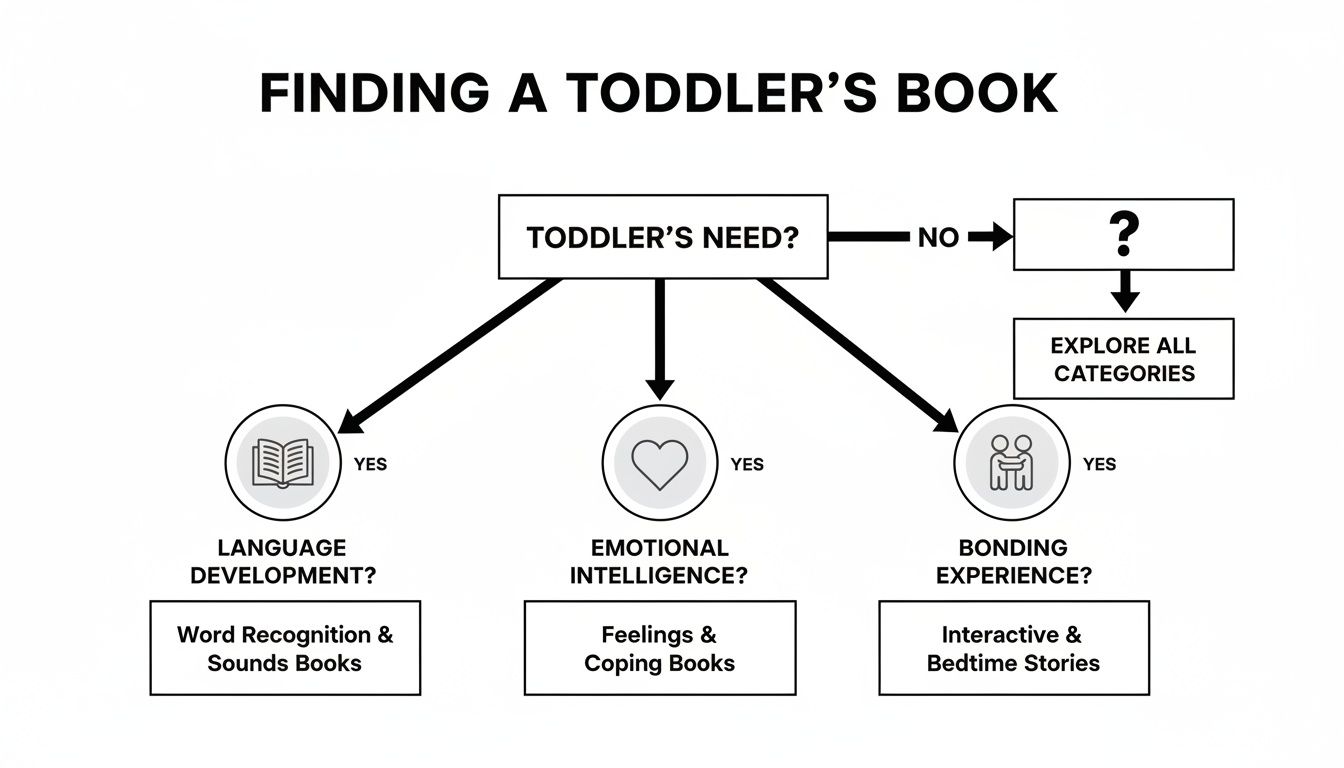
As you can see, once you know what you’re trying to achieve—whether it’s boosting language or simply connecting—you can quickly find the types of books that will help you get there.
First, A Quick-Reference Guide
To make things even easier, here’s a quick-reference table to help you match book features to your little one's developmental stage. Think of it as your cheat sheet for bookstore trips!
Matching Book Features to Your Toddler's Development
A quick-reference guide to help you choose the most suitable picture books based on your toddler's developmental stage.
| Developmental Stage | Cognitive and Motor Skills | Ideal Book Features |
|---|---|---|
| Young Toddler (12-18 months) | Exploring with hands and mouth; learning cause & effect; short attention span. | Board Books; Touch-and-Feel textures; Lift-the-Flap surprises; simple, single images per page. |
| Toddler (18-24 months) | Developing hand-eye coordination; recognizes familiar objects; starts repeating words. | Interactive elements (sliders, sounds); stories about daily routines; books with repetition and rhyme. |
| Older Toddler (2-3 years) | Improved fine motor skills (can turn paper pages); understands simple stories; growing vocabulary. | Paper pages with supervision; books with a clear narrative (beginning, middle, end); relatable characters and problems. |
This table is just a starting point, of course. The most important thing is to watch what your own child gravitates toward.
Match the Format to Their Hands
For the youngest toddlers, around 12-24 months old, books are basically toys that happen to have pictures. They will be grabbed, chewed, dropped, and even sat on. This is why durability is your best friend.
- Board Books: These are the undisputed champions for this age group. Their thick, sturdy pages are nearly impossible to destroy and are a breeze for clumsy little fingers to turn.
- Touch-and-Feel Books: Adding different textures—a fluffy patch of fur on a kitten or a scratchy bit of sand—gives them fantastic sensory input that helps their brains build new connections.
- Lift-the-Flap Books: These are brilliant for teaching object permanence, the crucial concept that things still exist even when they’re hidden. The simple joy of revealing a hidden picture is endlessly exciting for a toddler.
As they get closer to age three, they'll develop the fine motor skills to handle paper pages more carefully. But even then, board books are a fantastic, safe choice for when they want to "read" by themselves.
Focus on Simple and Relatable Content
A toddler's entire universe revolves around their home, their family, and their daily routines. The best picture books reflect this reality, making them feel seen and understood. Look for simple stories about familiar things like getting ready for bed, eating a meal, playing at the park, or meeting a new pet.
The words inside are just as important. Toddlers are naturally drawn to:
- Repetition and Rhythm: Books with a predictable, rhyming pattern are incredibly catchy and easy for little minds to remember. This helps them guess what's coming next and builds phonological awareness, which is a cornerstone of learning to read. You can see just how this works by exploring what early literacy skills are and why they matter.
- Simple Vocabulary: The words should be clear, straightforward, and directly match the pictures on the page.
- Bold Illustrations: Seek out books with bright, high-contrast pictures set against clean backgrounds. A cluttered page can be overwhelming, but a single, clear image helps them focus and connect the word to the picture.
The goal is connection, not complexity. A simple story about a dog finding his ball is more impactful for a two-year-old than a complex narrative with a deep moral lesson.
Build an Inclusive and Diverse Bookshelf
Finally, a truly wonderful toddler library should be both a mirror and a window. It should reflect your child's own life back to them while also opening up a window to the wider world. Try to find books that feature a wide range of characters from different backgrounds, family structures, and abilities.
When children see characters who look like them, it reinforces their sense of identity and belonging. And when they see characters who are different, it plants the seeds of empathy and teaches them to appreciate the beautiful variety of our world. If you're looking for a specific framework, a guide on Montessori books for toddlers can be a great resource, as it emphasizes reality-based stories that reflect a child's world.
Our Top Picks for the Best Picture Books for Toddlers
Alright, this is the fun part! Now that we’ve walked through what makes a picture book just right for a toddler, it’s time to share our family's bookshelf-tested favorites. This list is more than just a collection of popular titles; it’s a handpicked mix of timeless classics and wonderful new finds that we, and so many other parents, have fallen in love with.
Each book here does something exceptionally well, whether it’s getting your little one giggling, helping them navigate a big feeling, or just making them fall in love with the rhythm of words. And because we’re SetterFrens, you’ll find a special spot for books about our favorite four-legged friends. For every recommendation, I’ll share why it clicks with toddlers and a little "SetterFrens Tip" to help you bring the story to life.
Classic Rhymes and Rhythms
These books have been read at bedtime for generations, and for good reason. Their musical language and catchy repetition are pure magic for building a toddler’s vocabulary and a love for stories.
1. Brown Bear, Brown Bear, What Do You See? by Bill Martin Jr. & Eric Carle
This book is the gold standard for teaching repetition and rhythm. The simple, predictable pattern of "What do you see?" followed by "I see a…" makes it so easy for toddlers to catch on. Before you know it, they'll be "reading" it right along with you. And Eric Carle’s vibrant, textured collage art is an absolute feast for young eyes.
- Why it works: The singsong text is fantastic for developing phonological awareness and memory. The bold, high-contrast animals help with learning colors and animal names, making it a perfect first step into the world of words.
- SetterFrens Tip: After you finish the book, go on a color hunt in your house. Ask your toddler, "What do you see that is red?" just like in the story. You can even include your own furry friend: "I see a brown dog with a black nose!"
2. Goodnight Moon by Margaret Wise Brown & Clement Hurd
There is no better book for winding down the day. Goodnight Moon is a quiet, gentle hug in story form. We follow a little bunny saying goodnight to all the familiar objects in his "great green room." The soothing, poetic words and the way the illustrations slowly dim create such a peaceful vibe for bedtime.
- Why it works: Its lulling rhythm and simple words are incredibly comforting, turning reading into a cherished end-of-day ritual. It also subtly teaches object identification and the comfort of a predictable routine.
- SetterFrens Tip: Make it part of your own tuck-in routine. As you get your toddler settled, say goodnight to things in their room: "Goodnight, lamp. Goodnight, fuzzy bear. Goodnight, puppy sleeping on the rug."
Interactive Fun and Engagement
Toddlers are hands-on learners. These interactive books pull them right into the story, inviting them to lift flaps, follow directions, and become part of the action.
3. Where's Spot? by Eric Hill
An absolute must-have for any toddler library, this lift-the-flap adventure is a classic for a reason. Sally the dog is looking for her playful puppy, Spot, and your little one gets to help by peeking behind doors and under beds. The sheer excitement of discovering what's hiding under each flap never gets old.
- Why it works: It’s a brilliant way to teach object permanence (things still exist even when you can't see them!) and cause-and-effect. The simple question-and-answer format makes it easy for kids to join in.
- SetterFrens Tip: Play a real-life game of "Where's Spot?" with your own pet! Have your toddler cover their eyes while you hide a favorite toy, then help them look for it. "Is it under the cushion? No!"
4. Press Here by Hervé Tullet
This book feels like pure magic, no batteries required. Each page gives a simple instruction—"press the yellow dot," "shake the book," or "tilt the page"—and the next page shows the incredible result. It’s a wonderfully clever way to show toddlers that their actions can make things happen.
- Why it works: Press Here is a fantastic introduction to cause-and-effect and following directions. It’s so engaging and proves that a book can be every bit as interactive as a tablet.
- SetterFrens Tip: Keep the game going after the book is closed. Draw a few colorful dots on a piece of paper and give your toddler fun instructions like, "Tap the blue dot three times!" or "Draw a wiggly line from the red dot to the yellow dot."
Stories About Big Feelings and Everyday Life
Picture books are a safe place for toddlers to explore the big, confusing emotions they're just starting to feel. These stories offer relatable characters who help them make sense of their world and daily routines.
5. The Kissing Hand by Audrey Penn
This is such a tender and powerful story, especially for little ones dealing with separation anxiety when starting daycare or preschool. Chester Raccoon is nervous about leaving his mom, so she shares a sweet family secret—the Kissing Hand—to remind him that her love is always with him.
- Why it works: It gives children a real, tangible tool to help them cope with being apart from a loved one. It’s a beautiful way to reassure them that they are loved and connected, even when you're not in the same room.
- SetterFrens Tip: Make the Kissing Hand your own family tradition. Before a drop-off, kiss your child’s palm and tell them to press it to their cheek whenever they need a little reminder of your love.
6. Go, Dog. Go! by P.D. Eastman
A true SetterFrens favorite! This book is a wonderfully chaotic and joyful romp filled with dogs of every size and color. They're driving cars, riding scooters, and having a massive party in a treetop. The language is delightfully simple, focusing on key words that toddlers can pick up quickly.
- Why it works: It’s a hilarious, high-energy way to introduce basic concepts like colors, opposites (big/little), and prepositions (in, out, over, under). The zany pictures are packed with funny details kids will love pointing out over and over. You can dive deeper into what makes illustrations like these so powerful in our guide on what makes a good picture book.
- SetterFrens Tip: Grab some toy cars and animal figures and act out the story. Line up all the "red dogs" or have a big "dog party" on a couch cushion.
It's clear that parents everywhere see the immense value in these early reading experiences. Did you know the global children's picture book market is expected to jump from USD 12.34 billion in 2025 to USD 21.68 billion by 2034? That's a huge leap, and it shows a worldwide appreciation for how vital these books are in helping our kids navigate their very first words and worlds. Discover more insights about the children's book market here.
Turning Storytime Into an Unforgettable Adventure
Having a shelf stacked with the best picture books is a great first step, but the real magic happens in how you share them. Reading with a toddler isn't just about saying the words on the page; it's an invitation to create a cozy, interactive adventure together. With just a few simple tricks, you can turn storytime from a quiet activity into a dynamic experience that boosts their understanding and brings you closer.
Think of yourself as the director of a mini-play. You don’t need a Broadway-level performance, just a bit of enthusiasm! Try giving each character a unique voice—a deep, rumbly one for a bear or a high, squeaky one for a little mouse. It’s a simple thing, but it brings the story to life and helps your toddler tell the difference between who's talking.
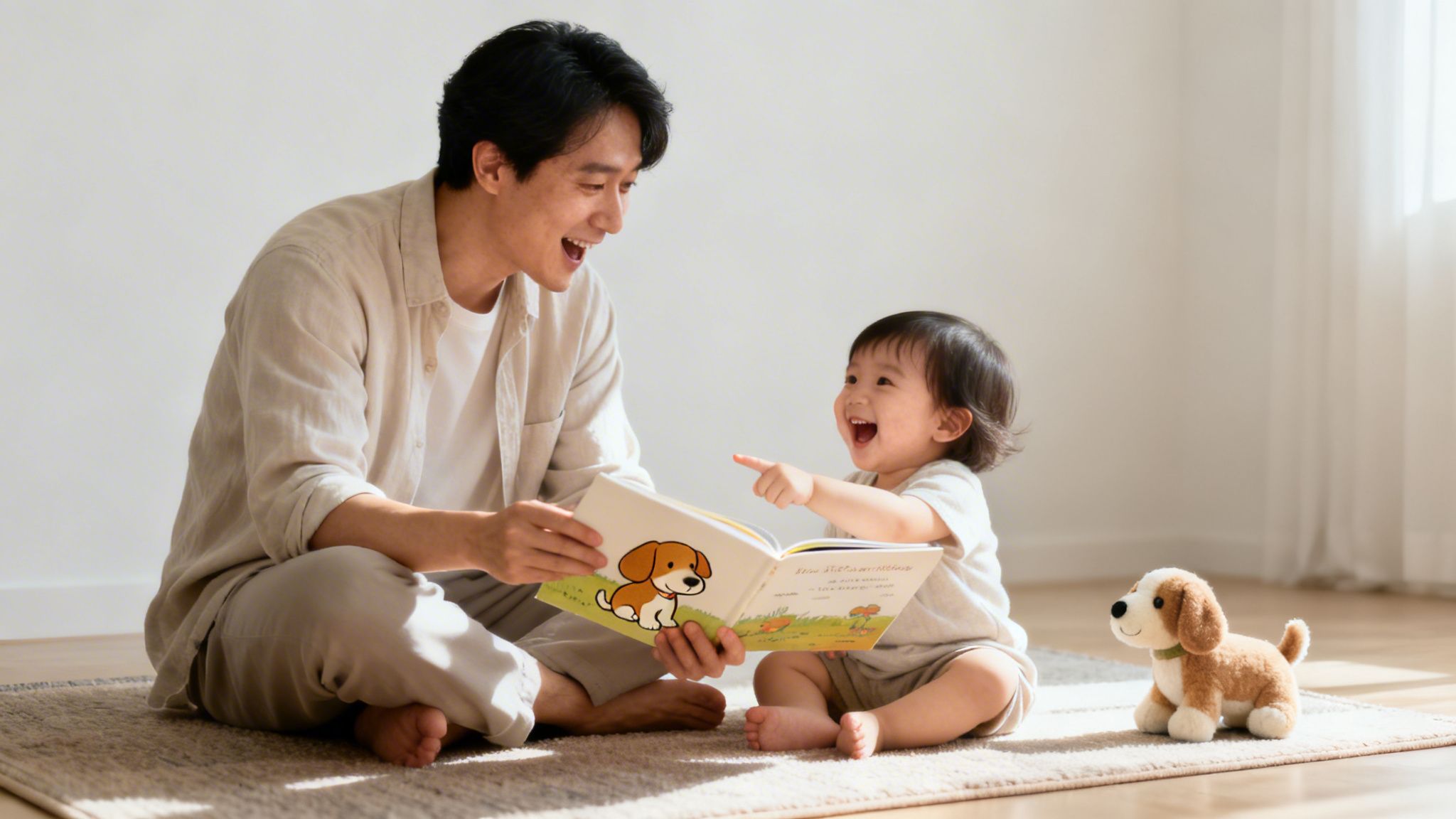
This playful approach turns reading into an active, shared event, which is so much more engaging than just sitting and listening.
Spark Curiosity with Questions
One of the best tools you have is asking questions. Instead of just reading the text from start to finish, pause and talk about the pictures with your toddler. This method, sometimes called dialogic reading, is all about shifting your child from a passive listener to an active participant.
Here are a few easy, open-ended prompts to get you started:
- Point and ask: "What's this?" while pointing to a familiar object like a ball or a puppy.
- Predict what’s next: "Uh oh, the bunny looks sad. What do you think will happen now?"
- Connect to their world: "Look at that big red tractor! Do you remember seeing one on our walk yesterday?"
Asking questions gets them to look closer, think a little deeper, and start making connections between the story and their own life. It shows them that their ideas are a valuable part of the experience.
Make Reading a Full-Body Sport
Toddlers learn with their whole bodies, so let them move! Encourage your little one to get physical with the story. When a character hops, ask them to hop like a bunny. If a dog in the story wags its tail, you can both wiggle your bottoms.
The goal is to make reading an experience that engages all their senses. When a child can act out a story, the words and concepts stick in their memory far more effectively than if they just sit still and listen.
This multisensory approach is amazing for cementing new words and ideas. For example, if you’re reading a book about farm animals, really get into the "moo" of the cow and the "oink" of the pig. Getting silly together is one of the best ways to build happy, positive feelings about books.
Bridge the Gap Between Pages and Real Life
The fun doesn't have to end when you close the book. The most memorable stories are the ones that spill over into your toddler's everyday world. This simple strategy reinforces learning and shows them that books are totally relevant to their own lives.
After reading a book, try a related activity:
- Story about dogs? Spend some extra time playing with the family pup or visit a local dog park.
- Book about baking? Let them "help" you mix ingredients for a simple batch of cookies.
- Tale about a park? Plan a trip to the playground to swing and slide, just like the characters.
By extending the story into a real-world activity, you make the themes and vocabulary from the book stick. You're showing them that stories are more than just words—they're a springboard for exploration and fun. If you're looking for more ways to make reading an event, check out our guide on summer reading program ideas that can be adapted for any time of year.
Ultimately, the key is to create a consistent, cherished routine. Whether it's a quiet story before bed or a lively reading session after breakfast, this predictable time together builds a foundation of security and joy, fostering a genuine, lifelong passion for books.
Building Your Toddler's First Library on a Budget
Creating a wonderful library for your toddler doesn't have to break the bank. With a bit of smarts and creativity, you can build an exciting collection of books they'll absolutely adore without spending a fortune. The real goal here is variety—a healthy mix of tough board books they can chew on (literally) and special paperbacks for those snuggly story times.
A great little library is all about different textures, stories, and experiences. It keeps things interesting as they grow. And while we’re pretty sure one of our SetterFrens dog-themed books is the perfect cornerstone for any collection, filling out the rest of the shelf can be a fun, frugal adventure.
Master Your Local Library System
Your local public library is, hands down, the best-kept secret for book-loving families on a budget. It's an absolute treasure trove of classics, new releases, and hidden gems, and it's all completely free.
Getting to know your library system is like discovering a parental superpower. Most libraries offer way more than just books on shelves; you can often find digital collections, audiobooks, and even themed story kits to check out. A weekly library trip can easily become a cherished family ritual, bringing a constant stream of new adventures into your home without the clutter or cost.
Think of the library as an endless, rotating bookshelf. It gives your toddler the joy of discovery while helping you figure out which authors and stories they really love before you decide to buy.
This is the ultimate "try before you buy." When you find that one book your toddler begs for night after night, you'll know it’s a keeper worth adding to your permanent collection.
Become a Second-Hand Book Hunter
Thrift stores, second-hand shops, and garage sales are absolute gold mines for pre-loved children’s books. Let's be honest, toddlers don't care if a book is brand new—they just want the fun story and colorful pictures inside. You can often find beloved classics in fantastic shape for just a buck or two.
- Look for quality: Give books a quick flip-through for torn pages or broken spines, but don't sweat a little bit of love and minor wear.
- Keep a running list: Jot down authors or titles you're searching for in your phone. It makes scanning shelves so much faster.
- Shop online marketplaces: Sites like ThriftBooks or local Facebook parenting groups are great for finding bundles of toddler books.
This widespread love for early literacy creates a wonderful cycle of sharing. It’s especially true here in North America, which accounts for a massive 40% of the global children's picture book market as of 2024. This passion for reading ensures there are tons of amazing second-hand books out there for savvy parents to find. Learn more about the thriving picture book market.
Organize a Book Swap with Friends
Here’s a fantastic, community-powered way to refresh your collection: host a book swap! Just gather a few friends or neighbors with kids around the same age and have everyone bring a small stack of books their little ones have outgrown.
It’s a fun, social, and super simple way to trade stories. Everyone gets to go home with a "new" pile of books for their toddler, and it costs absolutely nothing. Plus, it helps build a great community with other book-loving families—something we’re all about here at the SetterFrens pack.
Got Questions About Reading with Your Toddler? We've Got Answers.
If you're wondering if you're "doing it right" when it comes to storytime, you are not alone. It's a journey filled with wiggles, interruptions, and a whole lot of questions. We've heard just about all of them from parents in the SetterFrens community, so we’ve put together some simple, straightforward answers to help you out.
Let's take the guesswork out of it so you can relax and make reading a fun, stress-free part of your day together.
When Is the Best Time to Start Reading Picture Books?
Honestly? You can start from day one. For newborns, it's not about the pictures or the plot—it's the soothing rhythm of your voice that builds connection and comfort. It's a beautiful way to bond.
Things really start to click around the 12-month mark. This is when picture books become a fantastic learning tool. Dive in with simple, tough board books filled with big, bright pictures and just a few words per page. Don’t worry about finishing the book; the real goal is just enjoying the moment together and making it a happy routine.
Help! How Do I Get My Toddler to Stop Chewing on Books?
First, take a deep breath and know this is completely normal! Toddlers explore the world with their mouths. It's just what they do. Instead of seeing it as a battle to win, you can work with this phase.
The trick is to offer books built for this kind of love. Try these:
- Non-toxic board books: They're sturdy and can handle a little mouthing.
- Soft cloth books: These are perfect for grabbing and chewing, and you can usually toss them right in the wash.
- Vinyl bath books: Made for the tub, these are waterproof and pretty much indestructible.
When you're reading, gently redirect their focus back to the pages. Point to the pictures, make silly animal sounds, and talk about what's happening. As they grow, they’ll naturally figure out that books are for looking, not for tasting. This phase will pass!
How Many Books Should My Toddler Own?
When it comes to building a toddler library, quality absolutely trumps quantity. A small, well-loved collection of 10 to 15 fantastic, age-appropriate books that you rotate is way more powerful than a massive, overwhelming shelf.
For a toddler, repetition is everything. They learn through predictability, picking up new words, ideas, and the rhythm of stories by hearing them again and again.
There’s no need to constantly buy new books. Your local library is your best friend here! It’s the perfect place to try out new stories, discover what your little one loves, and keep things fresh without cluttering your home or your budget.
Join Our Pack at the SetterFrens Puppicino Club
Now that your bookshelf is brimming with new adventures, why not continue the fun with us? We’re building a cozy online community over at SetterFrens for people just like you—dog lovers who believe life’s better with a wagging tail and a good book. Along with our curated selection of dog-themed books, SetterFren.com features honest reviews of the top dog products and practical how-to guides to help you care for your pup like a pro.
Think of it as your new favorite spot on the internet to find your pack. By joining our free Puppicino Club, you get a front-row seat to all sorts of member-only perks, book updates, and dog-friendly treats.
So, What's in It for You?
When you join the Puppicino Club, you’ll be the first to hear about our newest dog-themed picture books—perfect for adding to your toddler's growing collection! You'll also get exclusive content and special treats that we only share with our pack.
Your journey into choosing the best picture books for toddlers is just the beginning. Let's make every storytime a moment of connection and joy, surrounded by a community that gets it.
Come hang out with us by following @setterfrens on TikTok and Instagram! We’re always sharing heartwarming dog moments, product tips, and behind-the-scenes content from our growing pack! We can’t wait to welcome you and your furry family into the community.
Discover a world of stories, tips, and adorable dog content at SetterFrens. Explore our hand-picked books and join a community that truly celebrates the joy of reading with our four-legged family members. Visit Setterfren.com to learn more and join the pack!