
Training a Havanese is all about tapping into what makes them special: their intelligence, their deep desire to please, and their love for a good time. Positive reinforcement, patience, and a consistent routine are your best friends on this journey. Forget harsh methods; these little guys thrive on praise and treats.
Your adventure begins the moment you bring them home, creating a world for them that’s structured, supportive, and most of all, fun.
Understanding Your Havanese Companion
So, you've welcomed a Havanese into your life! Get ready for a clever, charming, and endlessly entertaining sidekick. Here at SetterFrens, we believe life's better with a wagging tail, and we know that great training starts with understanding the dog in front of you. With the Havanese, their history tells you everything you need to know.
These dogs were originally bred as companions for Cuban aristocracy, which means being close to their people is literally in their DNA. This isn't just a fun fact; it's the key that unlocks their potential. When you're training, you're not just teaching commands—you're deepening the bond they crave.
Their history also tells a story of incredible resilience. It’s hard to believe, but back in the 1970s, the entire worldwide Havanese population was down to just 11 dogs. The fact that they bounced back from the brink is a testament to their intelligence and cooperative nature—traits that make them so wonderfully trainable today.
Key Takeaway: Your Havanese isn't just a pet; they're a tiny, fluffy partner hardwired to work with you. Frame your training sessions as a fun game you play together, not a chore.
Think of this guide as your roadmap to a happy, well-behaved pup. We’ll walk through all the essentials, giving you the confidence to care for your pup like a pro.
Here's a peek at what we'll cover:
- House and Crate Training: We'll help you build that crucial foundation. For a complete walkthrough, check out our comprehensive guide on how to crate train a dog.
- Essential Commands: Discover fun, positive ways to teach the basics that every dog should know.
- Socialization Skills: Learn how to introduce your Havanese to the world so they grow into a confident, friendly adult.
- Behavioral Troubleshooting: We'll tackle common headaches like excessive barking and separation anxiety head-on.
Building a Strong Foundation from Day One
Whether you’re bringing home a bouncing Havanese puppy or a more settled adult, that first day is a big deal. It's the beginning of a beautiful friendship, and the best way to start is by creating a predictable, comforting routine. Havanese are incredibly smart little dogs, and they find real security in knowing what to expect from you.
Right from the get-go, we're going to focus on two huge milestones: crate training and housebreaking. For these guys, who can sometimes be a tad stubborn about where they do their business, a crate is a game-changer. Think of it less like a cage and more like their own private den—a safe, cozy spot that’s all theirs. It’s an indispensable tool for preventing accidents and giving them a sense of security.
The Puppy vs Adult Training Mindset
Training a puppy is like starting with a blank slate. You get to introduce them to the world and shape their habits from scratch, focusing on fundamentals like potty schedules and learning to love their crate. With an adult Havanese, you might be working with some pre-existing habits, good or bad. The goal here is to understand their history, gently correct any unwanted behaviors, and build new, positive routines together.
If you're starting with a brand-new puppy, our guide on how to train a puppy is packed with foundational tips that are perfect for the Havanese breed.
This infographic gives a great overview of the Havanese personality and how their history shapes their training needs.
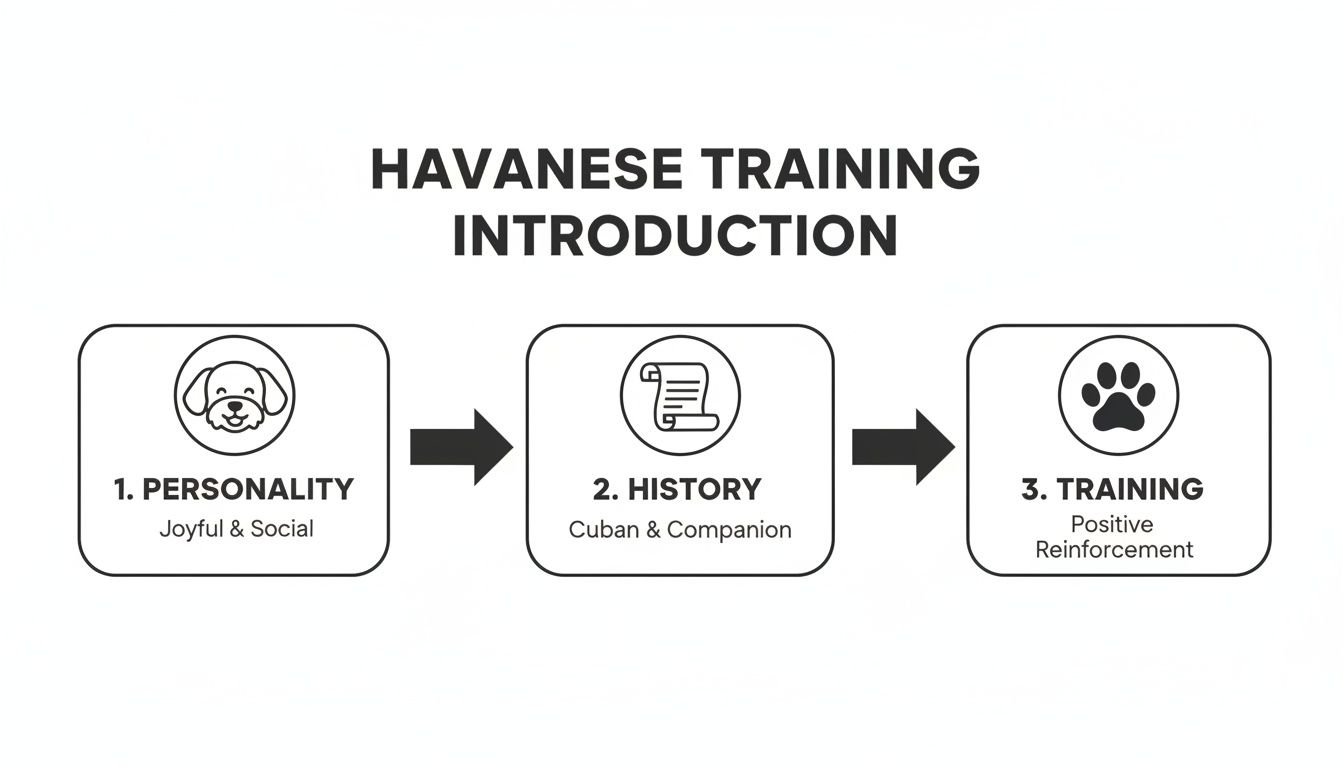
You can see how their sunny disposition and history as companion animals make them perfect candidates for positive, reward-based training methods. They genuinely want to please you!
When you're figuring out where to start, it helps to see the different priorities for puppies and adults side-by-side.
Puppy vs Adult Havanese Training Focus
| Training Area | Puppy Focus (Under 1 Year) | Adult Dog Focus (Over 1 Year) |
|---|---|---|
| Housebreaking | Frequent, scheduled potty breaks (every 1-2 hours). Learning the basic concept. | Identifying existing habits or signals. Establishing a new, consistent routine. |
| Crate Training | Making the crate a fun, safe den with games and treats. Short durations. | Overcoming potential past negative associations. Building comfort and security. |
| Socialization | Crucial window (3-16 weeks) for positive exposure to new sights, sounds, people, and dogs. | Gradual, controlled introductions. Assessing comfort levels and building confidence. |
| Obedience | Short, fun sessions on basic cues like "Sit" and "Come." Focus on engagement. | Assessing what they already know. Refining cues and building reliability. |
No matter the age, the core principles of patience and positive reinforcement are exactly the same. You're just applying them to slightly different challenges.
Establishing a Housebreaking Routine
When it comes to housebreaking a Havanese, consistency is everything. Their little bladders mean they need to go out often, especially when they're young. Accidents are inevitable, so don’t stress. How you react is what truly matters. Never, ever punish them for an accident. Just clean it up with a good enzymatic cleaner (to eliminate odors that attract them back to the same spot) and double down on your routine.
A handy rule of thumb for puppies is that they can generally hold their bladder for their age in months plus one. So, a 3-month-old pup can usually go for about 4 hours.
Here’s what a solid starting schedule looks like:
- As soon as you wake up: Before you even think about coffee, it's straight outside.
- After every meal: Within 10-15 minutes of eating, take them for a potty break.
- After waking from a nap: The first thing they need to do is relieve themselves.
- During and after playtime: All that fun and excitement gets things moving!
- Just before bed: A final trip out for the night ensures a dry crate.
For an adult Havanese, you can space the trips out more, but the principle of a predictable schedule still holds true. Watch for their signals—are they sniffing the ground intensely, circling, or whining by the door? The moment they potty outside, throw a mini-party! Lavish them with praise and a super tasty treat. This positive reinforcement is the heart of effective havanese dog training. You're teaching them that doing the right thing in the right place makes amazing things happen.
Making Basic Commands Fun and Effective
Let's get one thing straight: training your Havanese shouldn't feel like a chore. Forget those old-school, rigid training drills. For these clever little dogs, the best training feels like a game you're both playing—and winning—together. The secret sauce is positive reinforcement, which is all about celebrating the wins, not getting hung up on the mistakes.

This method works wonders because it taps right into their DNA as companion dogs. Havanese live to please you. When you reward a good choice with a tiny, delicious treat or a happy "Good boy!", you're speaking their language loud and clear. It supercharges their confidence and makes them genuinely excited for the next training session.
On the flip side, a harsh word or a frustrated sigh can cause these sensitive pups to shut down. Keep your sessions short and sweet—just 5-10 minutes a few times a day is perfect. This keeps their focus razor-sharp and the vibe fun and upbeat.
Teaching the Core Commands
Ready to get started? Let’s break down the "big three" commands every Havanese should have in their toolkit. Grab some small, high-value treats and put on your happy voice!
- Sit: This is the perfect starting point. Hold a treat near your Havanese's nose and gently guide it back over their head. As their nose goes up, their little bottom will naturally lower. The second it hits the floor, say an enthusiastic "Yes!" and pop that treat in their mouth.
- Stay: Once "Sit" is solid, you can introduce "Stay." After asking for a sit, say "Stay" with your palm facing them like a friendly stop sign. Take just one tiny step back. If they don't move for a single second, step forward and reward them. Slowly, over many sessions, you can begin to increase the time and distance.
- Come: This one is a potential lifesaver. Start inside, in a quiet space. Say your pup’s name and then "Come!" in an excited tone as you back away. The moment they scamper over to you, throw a mini-party with lots of praise and treats. A crucial rule: never call them to "Come" for something they hate, like nail trims or a bath.
Turning Training into a Game
Repetition is boring for everyone, including your Havanese. These guys are smart and crave mental stimulation, so turn those commands into a fun activity.
Try playing a game of "Hide and Seek" to make "Come" more exciting. Have a family member gently hold your pup while you go hide in another room. Once you're set, call out "Come!" in your most cheerful voice. When your Havanese finds you, reward them with a jackpot of treats and affection. It transforms a simple command into a shared adventure.
Pro Tip: Weave commands into your daily life to give them context. Ask for a "Stay" before you open the door to head outside, or a "Sit" before putting their food bowl down. This makes the training practical and helps it stick.
Havanese really shine with their eagerness to please and quick minds. They often pick up new skills in just a few short sessions, a trait that puts them ahead of many other toy breeds. As one of the easiest small breeds to train, their success really boils down to using positive, fun methods. You can find more great insights on their trainability from the folks at Canine Perspective Chicago.
By keeping things playful, you're doing so much more than just teaching obedience. You're building a rock-solid foundation of trust and communication that will truly last a lifetime.
Socializing Your Havanese for a Confident Life
One of the most valuable gifts you can give your Havanese is a world full of positive experiences. A well-socialized pup grows into a confident, happy-go-lucky companion, whereas one who misses out can become fearful and anxious. Proper havanese dog training is really about teaching them the world is a fun, safe place, not something to be afraid of.
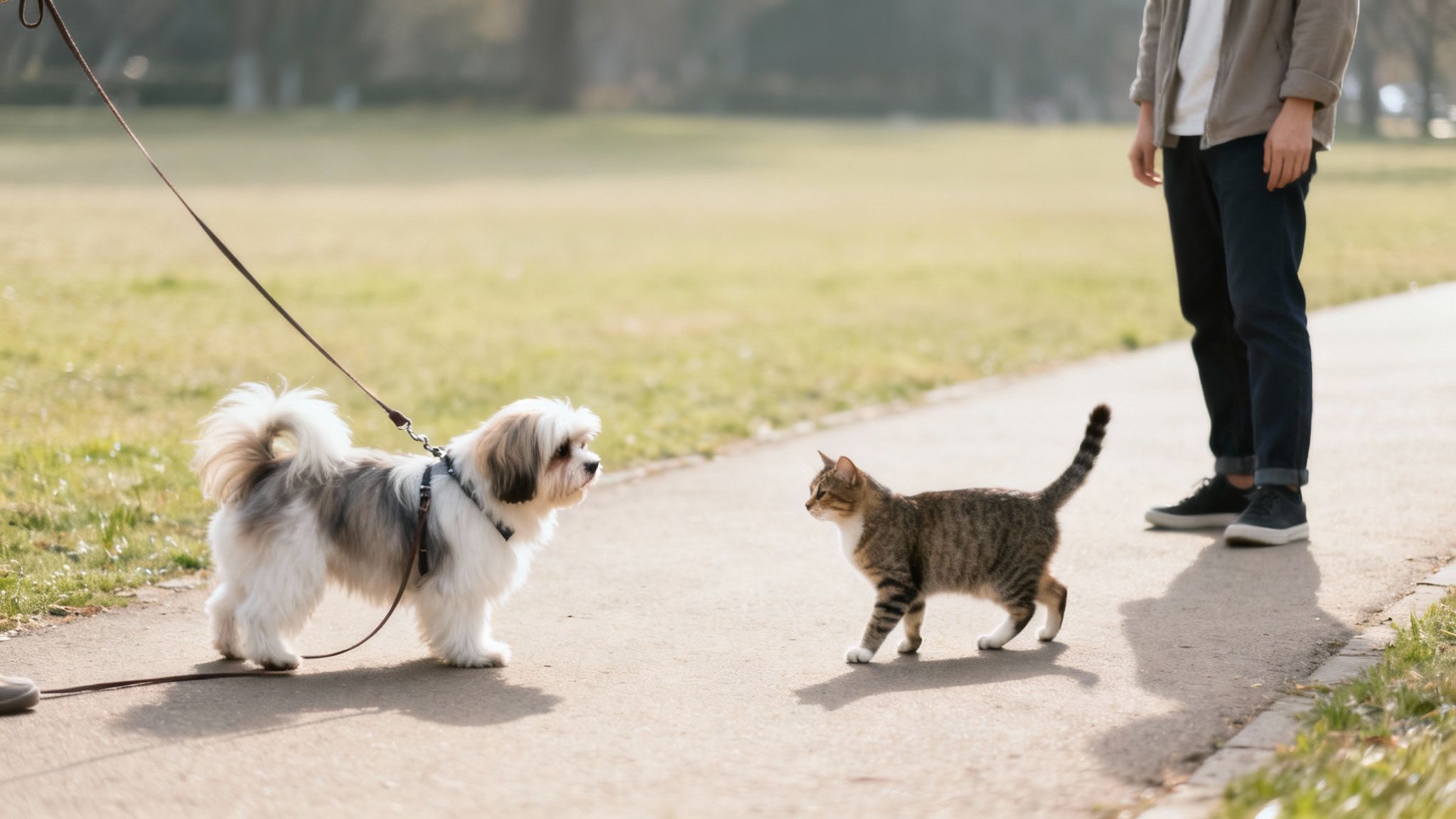
This process is absolutely crucial when they're puppies, especially in the first three months. The numbers don't lie: Havanese training success rates can hit 90% in well-adjusted adults when you build that social foundation before they're 12 weeks old. Breed experts often suggest aiming for at least 100 new experiences in those first three months—a goal that can cut the risk of anxiety by a whopping 75%. The Havanese Club of America has some great insights into why this is so important for small breeds.
Building a World of Positive Experiences
So, what does good socialization actually look like? It's not about throwing your puppy into the deep end. It’s a gentle, controlled introduction to all the sights, sounds, and smells the world has to offer, making sure every new thing has a positive spin.
The key to successful socialization is quality over quantity. A calm, five-minute encounter with a friendly, vaccinated dog is far more valuable than a chaotic hour at a busy dog park.
Think of it as building a library of good memories. Here are a few ideas to get you started:
- New Surfaces: Encourage your pup to walk on different textures—think grass, pavement, a fuzzy rug, or even a slightly wobbly (but safe!) cushion.
- Household Sounds: Get them used to everyday noises. Run the vacuum or blender in another room and reward them with a treat for staying calm.
- Friendly Faces: Let them meet people of all ages and appearances. Introduce them to someone wearing a big hat, sunglasses, or carrying an umbrella.
- Gentle Animals: Set up a playdate! A supervised meeting with a calm, dog-friendly cat or another gentle, vaccinated puppy can be a fantastic experience.
If you're looking for more ideas, our complete guide on what is puppy socialization is packed with more detailed strategies and tips.
Mastering Leash Manners for Happy Walks
A huge part of socialization happens out on walks, but those adventures aren't much fun if your arm is getting pulled out of its socket. If your Havanese pulls on the leash, you’re definitely not alone. It’s usually just a sign of pure, unadulterated excitement to explore!
The best place to start is somewhere boring, like your living room or a quiet backyard. The rule is simple: when the leash is loose, they get praise and tasty treats. The second they pull and that leash goes taut, you stop moving. Just stand still and be a tree.
Wait patiently. The moment they glance back at you and the leash slackens, praise them enthusiastically and start walking again. This method teaches a simple but powerful lesson: pulling gets them nowhere, but walking nicely beside you keeps the fun going. It takes a bit of patience, but this gentle technique turns a stressful power struggle into a wonderful bonding experience.
Troubleshooting Common Havanese Behavior Challenges
Even the most charming Havanese can develop a few frustrating habits. But here's the secret: because these dogs are so bonded to their people, most of their "bad" behaviors are really just misguided attempts to communicate a need. Think of it less as a problem to fix and more as a puzzle to solve.
Once you understand the 'why' behind the barking or the chewing, you can address the root cause with patience and kindness. This isn't just about stopping a bad habit; it's about deepening that incredible bond you two share. It's a huge piece of successful havanese dog training.
Taming Nuisance Barking
Havanese aren't naturally yappy, but they are fantastic watchdogs and communicators. If your little one is barking at every leaf that blows by, it’s often their way of saying, "Hey, I'm bored!" or "Alert! Something is happening out there!" A sharp mind without a job to do will often find one for itself.
Instead of scolding—which can sound like you’re barking right along with them—try teaching a "Quiet" command. The moment they start barking, calmly say "Quiet." The split second they pause, even just to take a breath, praise them enthusiastically and give them a treat. Slowly, you'll ask for longer and longer periods of silence before they get that reward.
You also need to give their brain a workout. Puzzle toys, snuffle mats, or a simple game of "find it" can work wonders. A mentally tired Havanese is a quiet Havanese.
Soothing Separation Anxiety
Let's be real: Havanese were bred for centuries to be lap dogs and constant companions. It's literally in their DNA. So, it's no surprise that being left alone can be a huge source of stress for them, sometimes leading to separation anxiety. You might see this as whining, destructive chewing, or frantic barking the moment you walk out the door.
The whole goal here is to teach your pup that you leaving isn't the end of the world and, most importantly, that you always come back.
Key Takeaway: The foundation for preventing separation anxiety is building your dog's confidence. You have to show them they are safe and okay on their own, starting with baby steps.
Here are a few things that actually work:
- Practice Short Absences: Don't start with a three-hour trip to the store. Start by just walking out the door and coming right back in. Then try 30 seconds. Then a minute. The key is to return before they have a chance to panic.
- Keep Goodbyes Boring: I know it's hard, but avoid emotional, drawn-out goodbyes. A simple, breezy "be back soon" and a quick pat on the head is perfect. Making a big deal out of leaving makes them think it is a big deal.
- Give Them a "Job" to Do: As you're leaving, give them something amazing to focus on, like a frozen Kong stuffed with peanut butter or a high-value puzzle toy they only get when you're gone. This helps build a positive association with your departure.
Handling Picky Eating Habits
Is your Havanese giving their kibble the side-eye? These little dogs are incredibly smart and can quickly train us to give them better food. They know that if they hold out long enough, a piece of chicken from your dinner plate might just "fall" on the floor. First, always check with your vet to rule out any medical reasons, but more often than not, it's a learned behavior.
The fix? A consistent, no-nonsense feeding routine.
Put their food down for 15-20 minutes. If they don’t touch it in that time, calmly pick the bowl up. That's it. No treats, no snacks, nothing else until their next scheduled meal. It might feel a little harsh the first few times, but they'll quickly learn that their mealtime is the time to eat.
Answering Your Top Havanese Training Questions
Alright, let's dive into some of the questions we hear all the time from new Havanese owners. Think of this as a quick-reference FAQ to help you through those moments when you're wondering, "Is this normal?" or "What do I do now?" A little expert insight can make havanese dog training feel a whole lot less overwhelming.
How Long Does Potty Training a Havanese Puppy Actually Take?
This is the big one, isn't it? The honest answer is that most Havanese pups get the hang of it and are reliably potty trained within 4 to 6 months. But patience is everything.
The secret sauce is a rock-solid, consistent schedule. That means taking your puppy out the second they wake up, right after they eat, and immediately after a good romp. Crate training is your best friend here; it plays on their natural instinct not to soil their personal space. Expect accidents—they're just part of the process! Stay positive and stick to the routine. You’ll both get there.
Are Havanese a Good Breed for First-Time Owners?
They are an absolutely fantastic choice for newbies! Havanese are incredibly smart and have this built-in desire to make you happy, which makes them wonderfully trainable. They were literally bred to be companions, so they live for your praise and attention.
Instead of a battle of wills, training becomes a fun game of earning treats and praise. The two biggest hurdles for first-timers are locking down that housetraining schedule and teaching your puppy early on that it's okay to be alone for a bit. This little step is crucial for preventing separation anxiety down the road.
My Havanese Barks at Every Little Thing—Help!
If your Havanese has appointed themselves the neighborhood watch captain, it's usually a sign of one of two things: boredom or anxiety. These are bright little dogs, and an under-stimulated mind will find its own job to do.
First, check their exercise and mental stimulation levels. Are they getting enough playtime? Puzzle toys, snuffle mats, and short, fun training sessions can work wonders. Next, start teaching a "Quiet" command. When the barking starts, calmly say "Quiet." The split second they stop to take a breath, praise them and give them a high-value treat. Over time, you'll slowly increase how long they have to be quiet before getting that reward. Whatever you do, don't yell—they'll just assume you're joining the chorus!
Our Favorite Pro-Tip: A tired Havanese is a quiet Havanese. A quick walk or a five-minute training game before you head out the door can make a world of difference for a dog who barks out of boredom.
What Are the Best Treats for Training a Havanese?
For these little guys, you want training treats that are small, soft, and smell amazing. Think of something that gets them super excited but is tiny enough that you can give them a bunch during a training session without filling them up.
A few of our go-to options are:
- Freeze-Dried Liver or Chicken: You can break these into teeny-tiny, high-impact rewards.
- Soft Puppy Training Treats: Look for the kind you can easily tear into smaller pieces.
- A Tiny Smidgen of Cheese: This is what we call a "jackpot" reward—perfect for when they finally nail a new skill.
The key is to reserve a special high-value treat that they only get during training. This makes them laser-focused and eager to figure out what you're asking, turning every lesson into a fun, rewarding experience.
At SetterFrens, we believe life's better with a wagging tail and a good book. Join our Puppicino Club to unlock member perks and find honest reviews of top dog products and more practical how-to guides just like this one!
Find your next great read or must-have dog accessory at https://setterfren.com and follow @setterfrens on TikTok and Instagram for heartwarming dog moments and behind-the-scenes content from our growing pack