Yes, you can absolutely teach an old dog new tricks—and that definitely includes learning to love a crate. The trick is to stop thinking of it as a cage and start seeing it for what it can be: your dog's personal, safe den. It's their own cozy retreat, a place that provides security and comfort. Handled right, it can become a powerful tool for building trust and making your bond even stronger.
Why It's Never Too Late for a Safe Space
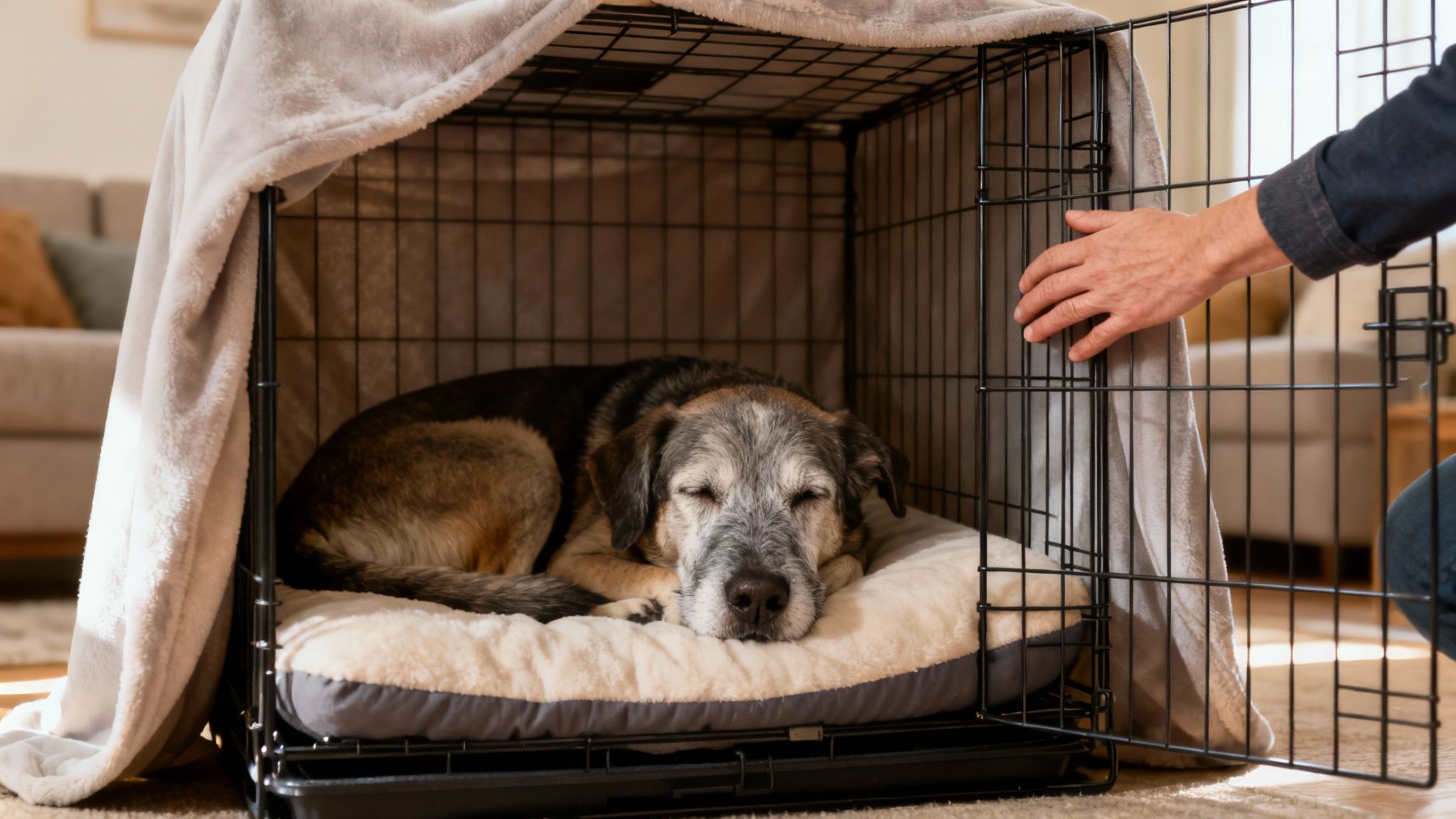
Welcome to the SetterFrens family! If you’ve just brought an adult or senior dog into your life, you might be wondering if crate training is even worth trying. The answer is a resounding yes. Unlike puppies, older dogs come with their own life experiences, habits, and sometimes, a bit of baggage. A crate, when introduced with plenty of patience and positivity, can become their personal sanctuary.
Try to see it from your dog's perspective. The world can be a loud, unpredictable, and overwhelming place. A crate offers a quiet, consistent space where they can decompress without being bothered. This sense of security is absolutely invaluable, especially for rescue dogs who are still getting used to a new and unfamiliar home.
The Real Benefits for an Older Dog
Giving your adult dog a den of their own is about so much more than just a place to sleep. It's a practical tool that supports their well-being in a few key ways:
- Stress Reduction: A crate gives them a safe haven during scary events like thunderstorms, fireworks, or even just when you have a lot of guests over.
- Behavior Management: It can help manage destructive chewing or other unwanted behaviors when you can't keep a close eye on them.
- Safer Travel: A dog comfortable in a crate is usually much calmer and more secure during car rides and stressful vet visits.
- Post-Op Recovery: If your dog ever needs surgery, a crate is the perfect spot for them to rest and recover safely without overdoing it.
At SetterFrens, we've heard countless heartwarming stories from our Puppicino Club. So many members have shared how their older rescues, once anxious and unsettled, blossomed into confident companions after being introduced to their very own cozy crate.
Debunking the Old Myths
The idea that older dogs are "stuck in their ways" just isn't true. They are incredibly adaptable and eager to learn, especially when you use positive reinforcement. That old saying about not being able to teach an old dog new tricks has been thoroughly busted.
In reality, many older pups master the basics of crate training in just a few weeks. Some might take a few months, depending on their personality and past experiences, and that's okay too. You can find more expert insights on training dogs of any age at Wagwalking.com.
Ultimately, crate training an older dog is an act of love. It’s about giving them a space where they can feel unconditionally safe and secure. With a little patience and a lot of treats, you can give your best friend the gift of their own personal retreat.
Choosing the Perfect Den for Your Best Friend
Picking the right crate for an older dog is so much more than just buying a box. Think of it as creating a personal, comfortable, and safe space that your best friend will actually want to hang out in. When you get this part right, the crate becomes their cozy retreat, which makes the whole training process feel less like a chore and more like a fun bonding experience.
The goal here is to create a "den" that feels like a true safe haven. This is especially important for an older dog, maybe even a rescue, who might be a little suspicious of new things. The right crate can be the key to helping them feel secure and settled. Let’s look at what's out there so you can find the perfect fit.
Crate Types and Materials
When you start browsing, you'll quickly notice three main styles: wire, plastic, and soft-sided. Each has its own vibe, and the best one for you really comes down to your dog's personality.
Wire Crates: These are the most common for good reason. They provide fantastic ventilation and let your dog see everything going on, which can be a real comfort for curious pups. Most of them also fold down, making them easy to store or take on the road. The only downside is that the open design can feel a bit exposed for a more anxious dog.
Plastic Crates: You might know these as "flight kennels." They're sturdy and more enclosed, offering a den-like feel that’s a game-changer for dogs who get overwhelmed easily or just prefer a private, cozy spot to chill out. They are a little bulkier, though, and don't offer the same 360-degree view.
Soft-Sided Crates: Made of fabric, these are super lightweight and portable. They're perfect for travel or for calm dogs who are already pros at being crated. Be warned, though: their biggest weakness is durability. They are not a good choice for dogs with a history of chewing or any pup who might try to bust out.
A quick tip from our SetterFrens community: If your dog seems a little nervous in a wire crate, just throw a blanket or a fitted crate cover over it! This instantly creates that secure, den-like atmosphere without you having to buy a whole new crate.
To make the choice a little easier, here's a quick look at the pros and cons of each type.
Crate Type Comparison for Older Dogs
| Crate Type | Best For | Pros | Cons |
|---|---|---|---|
| Wire | Home use, good ventilation, dogs who like visibility. | Excellent airflow, easy to clean, often collapsible for storage, allows dog to see their surroundings. | Can feel exposed for anxious dogs, may be noisy, some dogs can learn to open latches. |
| Plastic | Travel (airline-approved), anxious dogs, den-like security. | Provides a cozier, more private space; very durable and secure; easy to clean. | Bulkier and less portable, can get warm, less visibility for the dog. |
| Soft-Sided | Travel, temporary containment, already crate-trained dogs. | Extremely lightweight and portable, comfortable, folds down easily for storage. | Not durable for chewers or escape artists, harder to clean thoroughly. |
Ultimately, the best crate is the one that suits your dog's temperament and your lifestyle.
Getting the Size Just Right
Okay, this part is non-negotiable: you have to get the size right. A crate that’s too small will feel cramped and miserable. But a crate that’s too big can actually encourage accidents. A dog’s instinct is to keep their sleeping area clean, but if there's enough space to create a separate "bathroom," they just might.
Here's the golden rule for sizing: Your dog needs to be able to stand up without hitting their head, turn around comfortably, and lie down fully stretched out.
Get out the tape measure! Measure your dog from the tip of their nose to the base of their tail, and then from the floor to the top of their head. Add a few inches to those numbers, and you'll have the ideal crate dimensions.
Must-Have Crate Accessories
Now for the fun part—furnishing the new den! The right accessories can take a basic crate and turn it into a five-star doggy suite that your pup will love.
- Comfortable Bedding: An orthopedic bed is a wonderful investment for an older dog. It gives their aging joints the support they need. Just make sure you pick one that's durable and, most importantly, washable.
- Safe Chew Toys: Designate a special, high-value toy that your dog only gets inside their crate. This builds a powerful and positive association. A sturdy rubber toy stuffed with peanut butter or their favorite treats usually works like a charm.
- Crate Cover: As we mentioned, a simple cover can make a world of difference. It dials up the sense of security and privacy, helping your dog relax and settle in much faster.
- Spill-Proof Bowls: If your dog will be crated for longer stretches, clip-on water bowls are a great idea. That said, many of us prefer to just offer water right before and after crating to minimize the chance of a soggy bed.
Nailing the crate setup is the foundation of your entire training plan. By taking the time to consider your dog’s unique needs and making their new space as inviting as possible, you’re setting both of you up for a much smoother, happier journey.
Making the Crate a Happy Place
Alright, you’ve picked out the perfect crate. Now for the fun part: turning that plastic or metal box into a five-star doggy retreat your best friend actually wants to hang out in. The absolute secret to success with an adult dog is patience and positivity. We're not forcing anything here. The goal is to gently convince your dog that this new den is the best spot in the house.
Think of this process as a slow dance, not a sprint. It’s all about building trust and creating happy associations, one tasty treat at a time. By letting your dog set the pace, you ensure the crate becomes a safe, cozy sanctuary, not a punishment zone.
The Gentle Introduction
First impressions are everything, especially for an older dog who might be a little set in their ways or suspicious of new things. Your first job is to make the crate a totally neutral, non-threatening piece of furniture.
Start by setting up the crate in a social hub of your home, like the corner of the living room where everyone hangs out. Make sure you prop the door open so it can’t accidentally swing shut and spook your dog. Then, just walk away. Let them investigate on their own time. No pressure, no fanfare. It's just a new thing in the room.
Over the next few days, whenever you walk by, casually toss a few high-value treats near the crate, and then eventually just inside the entrance. Don't push or lure your dog. You want them to discover that awesome snacks just magically appear around this new object. This simple, hands-off approach lays a fantastic foundation of positive vibes.
This infographic breaks down the key things to consider when setting up your dog's new space.
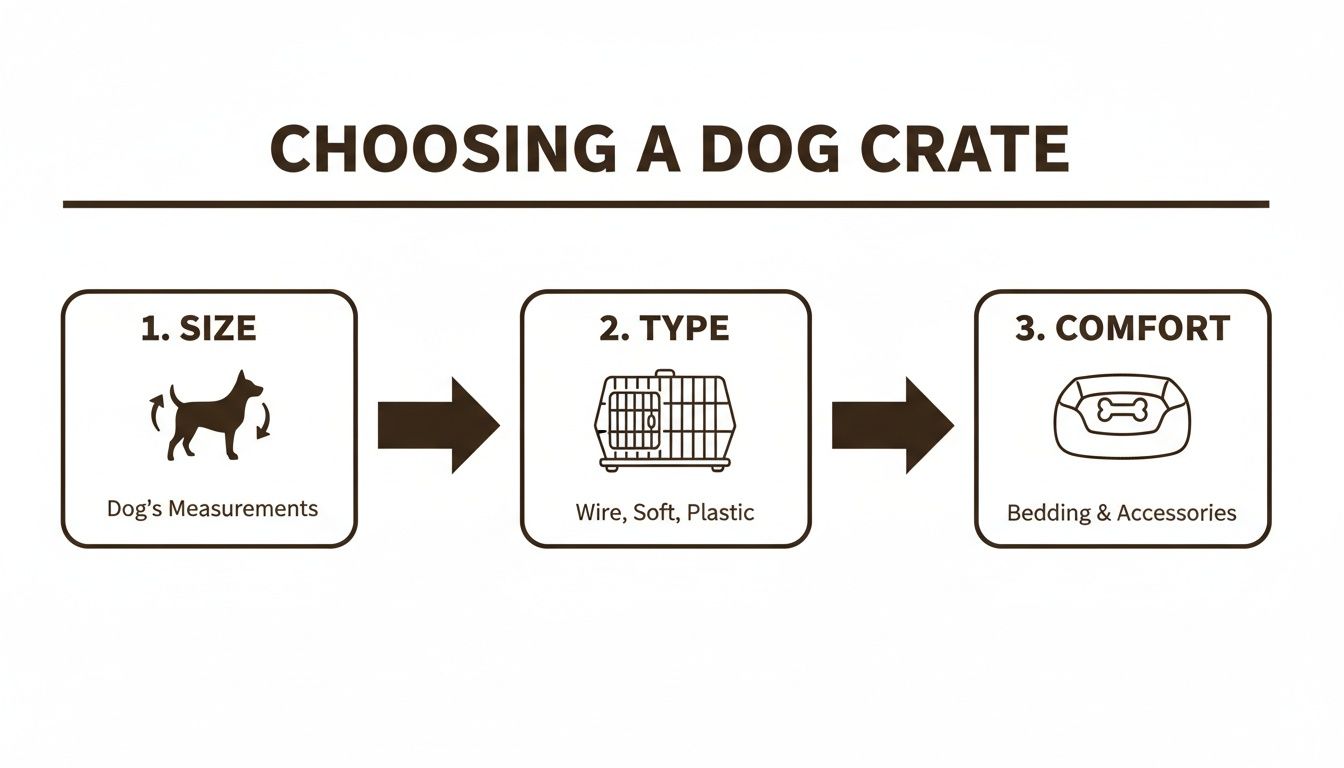
As you can see, it's not just about the crate itself, but also about making it a genuinely comfortable and inviting den.
Encouraging Them to Go In Willingly
Once your dog seems comfortable sniffing around and gobbling up the treats near the entrance, you can start nudging them to step inside. The key word here is encouraging, not forcing.
The "Treat Game" is our go-to for this.
- Get comfy on the floor near the crate with a handful of really good, pea-sized treats.
- Toss one treat just inside the door. When your dog pokes their head or a paw in to get it, give them some calm praise like, "Yes, good job!"
- Let them come right back out. No big deal.
- Repeat, tossing the next treat a tiny bit farther back.
Keep these sessions short and sweet—just a couple of minutes is plenty. We want it to stay fun. If your dog hesitates to go all the way in, that's totally fine! Just end on a positive note and try again later, maybe tossing the treat a little closer to the front next time. Success is your dog choosing to go in, without any physical prodding from you.
A Quick Reality Check: Every dog is different. If you have a rescue with a tough past, this step alone might take days or even weeks. Celebrate the small wins, like a single paw stepping over the threshold. Never, ever rush it.
Using Meals and Special Toys
Food is a powerful tool for building positive associations. A great way to do this is to start feeding your dog their regular meals inside the crate. At first, just put the food bowl right at the entrance so they only have to stick their head in to eat.
As they get more comfortable, you can gradually inch the bowl toward the back of the crate. Before you know it, they'll be walking all the way inside to eat their dinner. For this entire stage, leave the door wide open. The lesson here is: "Good things, like dinner, happen in this spot!"
You can also introduce a special, high-value toy that they only get inside the crate. Think of a puzzle toy stuffed with their favorite goodies or a durable Kong filled with some frozen peanut butter. This creates an exclusive, exciting activity that is tied directly to their den.
Closing the Door… for Just a Few Seconds
Okay, deep breath. After your dog is happily eating and walking into the crate on their own, it's time for the next milestone: closing the door. You have to do this very, very gradually to avoid triggering any fear.
While they're happily munching on their dinner or working on that special Kong, quietly swing the door shut for just one or two seconds. Then, immediately open it again. Don’t say a word. The goal is for the door closing to be a complete non-event.
Repeat this over several sessions, slowly adding a few seconds at a time.
- Close for 1-2 seconds, then open.
- Close for 5 seconds, then open.
- Close for 10 seconds, then open.
Always open the door while your dog is still calm and happy. If they start whining or scratching, you've gone a bit too fast. No worries. Next time, just back up and shorten the duration to whatever they were last successful with. This careful, step-by-step approach is how you build rock-solid confidence. For a more detailed breakdown, our full guide on how to crate train a dog has even more tips.
A Sample Daily Crate Training Schedule
Weaving these short, positive sessions into your daily routine is the key to making it stick. Consistency really is your best friend.
- Morning (7:00 AM): Play the "Treat Game" for 2-3 minutes before their morning walk.
- Breakfast (8:00 AM): Serve their breakfast in the crate, door open.
- Mid-Day (12:00 PM): Give them their crate-only puzzle toy inside. Practice closing the door for 5-10 seconds while they are busy with it.
- Dinner (6:00 PM): Serve dinner in the crate, this time closing the door for 20-30 seconds while they eat.
- Evening (9:00 PM): Wind down with one last 2-minute "Treat Game" session before everyone settles in for the night.
This gentle, consistent routine will slowly transform the crate from a strange box into your dog’s favorite spot in the house—a true den where they feel safe, secure, and happy.
Troubleshooting Common Crate Training Challenges
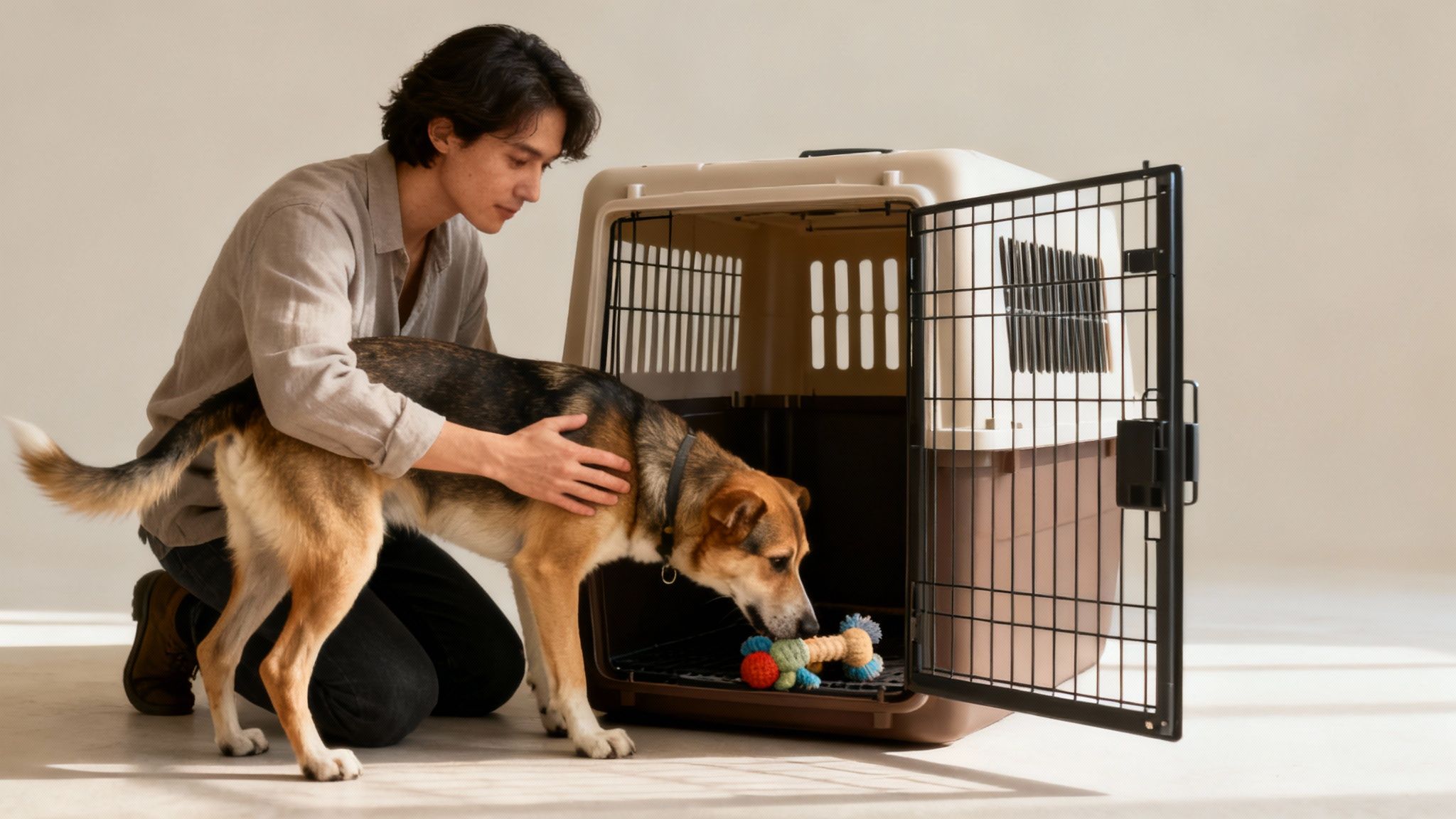
So, you’ve hit a snag. Take a deep breath—it happens to everyone. Even with a perfect plan and tons of patience, older dogs can throw us some curveballs. Behaviors like whining, barking, or even attempting a grand escape can be frustrating, but trust us, they’re almost never about defiance.
These are simply your dog's ways of telling you they’re anxious, bored, or confused. The key is to see these challenges not as failures, but as your dog asking for help. It’s a chance to listen and adjust your game plan. Let's figure out what your dog is trying to say and find a kind, effective solution together.
Decoding Whining and Barking
Whining is probably the number one issue people run into. The first thing you need to do is put on your detective hat and figure out the why behind the noise. Is it a few soft whimpers, or is it frantic, high-pitched barking? The sound and the situation will tell you a lot.
A few little whimpers when you first shut the door might just be your dog settling. No big deal. But non-stop, loud barking? That points to a bigger issue. One rule to live by: never let your dog out of the crate while they’re actively making a fuss. Doing so accidentally teaches them that noise is the magic button to open the door.
Here are the usual suspects behind the barking and what to do about them:
"I'm lonely or bored!" This is the classic protest bark. The best fix here is prevention. Make sure your dog has had a good walk and some playtime before going into the crate. A tired dog is a quiet dog, as they say. Giving them a special, high-value chew toy that they only get in the crate also works wonders.
"I have to go potty!" This is a request, and it usually sounds more urgent. If it’s been a few hours or it's the middle of the night, you should probably take this one seriously. Calmly take them out on a leash for a boring potty trip—no praise, no games—and then straight back to the crate.
"I'm really scared!" This is the sound of pure distress, often paired with panting or trembling. It's a clear sign you’ve moved too fast. Don't push through it. The best thing you can do is back up a few steps in your training and focus on rebuilding that positive association with the crate door wide open.
Addressing Escape Attempts
A dog trying to break out of their crate is a five-alarm fire. This isn't just a training problem; it's a major safety risk. The impulse might be to buy a "stronger" crate, but that's like putting a bigger lock on a burning building. You have to address the root cause, which is almost always confinement anxiety.
A dog trying to escape isn't being "bad"—they're panicking. The solution lies in making the crate a place of genuine comfort, not a place of containment. Forcing the issue will only make the fear worse.
If your dog is trying to break out, stop crating them when you leave. Immediately. Go right back to square one—making the crate a wonderful place with the door open, filled with amazing treats and toys. The goal is to completely change their emotional response to that space from one of fear to one of total relaxation.
Managing Separation Anxiety in the Crate
For many dogs, especially rescues, being left alone is their deepest fear. Being stuck in a crate can make that feeling a hundred times worse. What looks like a "crate problem" is often a separation anxiety problem in disguise.
If you suspect true separation anxiety is at play, the crate might not be the right tool right now. Instead, you'll want to focus on:
- Playing Spy: Set up a camera to see what your dog actually does when you leave. Do they start pacing and panting the second you're gone, even if they aren't in the crate? This is critical info.
- Practicing "See Ya Later": Start with super short departures. I'm talking "walk out the door, count to five, walk back in" short. The goal is to return before your dog even has a chance to get anxious.
- Trying a "Safe Room": Instead of the crate, use baby gates to create a dog-proofed safe zone. A small room with their bed, water, and some safe toys can feel less confining for some dogs.
You might also see fear-based reactions show up on walks. If your dog gets antsy or reactive outside, our guide on handling dog aggression on a leash can offer some more perspective on managing anxious behaviors.
Remember, troubleshooting is just part of the journey. Stay patient, listen to what your dog is telling you, and be sure to celebrate every tiny bit of progress. You'll get there.
Using the Crate for Better House Training
Let's be honest, one of the biggest wins with crate training older dog is how it can fast-track your house-training efforts. This is a game-changer, especially if you've just brought home a new adult rescue. The magic here isn't really magic at all—it’s all about a dog’s natural denning instinct. Dogs are surprisingly clean creatures and will go out of their way to avoid messing up their personal space.
When you get the crate size right, it becomes their little den. This taps directly into that instinct. It's not an instant fix, but it's a brilliant management tool that stops accidents before they happen, especially when you can't have your eyes on them 24/7. It basically sets your dog up to win.
Tapping Into Their Natural Instincts
Think of the crate as a safe zone that prevents your dog from rehearsing bad habits, like sneaking off to pee on the living room rug. By controlling their environment just a bit, you build a routine they can actually understand, which is the absolute foundation of good house training.
This kind of structure is a lifesaver overnight or for those times you have to pop out for a few hours. It simply removes the opportunity for a mistake, giving you peace of mind while gently nudging your dog toward the right potty habits.
The results really do speak for themselves. Housetraining older dogs gets a massive boost from crate training, with 82% of owners reporting zero accidents after 2-4 weeks, per Hill's Pet owner surveys. Dogs naturally avoid soiling their space, which can cut cleanup costs by $300 yearly on average. Discover more insights about crate training an adult dog at hillspet.com.
Establishing a Rock-Solid Potty Routine
Consistency is everything. We can't stress this enough. Your entire goal is to create such a predictable schedule that your dog knows exactly when and where potty breaks happen. The crate is your number one ally in building this rhythm.
Here’s a simple but incredibly effective game plan:
- First Thing in the Morning: The second your dog's paws hit the floor out of the crate, it's a straight shot to their potty spot outside. No detours, no distractions.
- After Every Crate Session: Every single time your dog comes out of the crate—even after a short nap—it's time for a potty break. Head right outside.
- Before Crating: Always give your dog a chance to go potty right before they head into their den, especially for a longer stay.
Making an immediate potty break a non-negotiable part of the routine reinforces the right behavior and makes indoor accidents far less likely. While we're focused on older dogs, many of these core principles are the same ones you'd use to potty train a puppy.
How Long Can an Adult Dog Be Crated?
One of the biggest mistakes people make is leaving their dog in the crate for far too long. A crate is a training tool, not a doggy daycare. Pushing your dog past what they can physically handle is just unfair. It sets them up to fail, leads to accidents, and can quickly poison their feelings about the crate.
For a healthy adult dog, a good rule of thumb is about four to six hours at a stretch during the day. Senior dogs are a different story; they often have less bladder control and will definitely need more frequent breaks. You have to tailor the schedule to your individual dog's age, health, and what they're telling you they need. And if you're looking for the perfect reward for a successful potty break, check out our favorite homemade dog treats recipes.
Just remember, the crate is here to help you prevent mistakes and build good habits. Stick to a consistent schedule, keep your expectations realistic, and you'll be well on your way to an accident-free home.
Your Crate Training Questions Answered
Still have a few questions swirling around? You’re definitely not alone. The journey of crate training an older dog can bring up some unique situations and a lot of "what ifs." We get a ton of great questions from our Puppicino Club members, so we've gathered the most common ones right here to give you clear, practical answers.
Think of this as your final checklist for success. We'll cover everything from how long your best friend can comfortably hang out in their new den to what to do when a dog is truly terrified of crates. Let’s dive in and get you the confident answers you need.
How Long Can My Older Dog Stay in a Crate?
This is a fantastic and super important question. For a healthy adult dog, a good rule of thumb is about four to six hours at a stretch during the day. But remember, this isn't a hard-and-fast rule. An older senior dog, for instance, will almost certainly need more frequent potty breaks and will be more comfortable with shorter stays.
Overnight is a bit different. Most healthy adult dogs can comfortably sleep in their crate for a full six to eight hours. The most critical thing is to never push your dog beyond what they can comfortably hold. A crate is a tool for safety and management, not a place for long-term confinement. Always make sure they get plenty of exercise and quality time with you before and after their crate time.
What if My Rescue Dog Is Terrified of the Crate?
Seeing your dog panic around a crate is heartbreaking, and it's a clear signal to stop everything and reassess. If your rescue shows extreme fear—like trembling, excessive drooling, or frantic attempts to escape—they may have a negative history with confinement. Forcing them will only make things much, much worse.
In this situation, your new motto is "slower than slow."
- Start by just having the crate in the room with the door permanently propped open.
- Toss a high-value treat near the crate. If your dog gets it, great! No pressure.
- Reward your dog with an amazing treat for simply looking at the crate from across the room.
- Gradually, over days or even weeks, reward them for taking a step closer, sniffing it, and eventually, maybe putting one paw inside.
- Never, ever force, push, or lure them in a way that makes them feel trapped.
Sometimes, the crate itself is the trigger. A dog traumatized by a wire crate might feel much safer in a cozier, enclosed plastic one, or even a soft-sided travel crate. If the fear is intense, consulting a certified professional trainer who specializes in positive reinforcement is the kindest and most effective path forward.
Should I Put Food and Water in the Crate?
Using food to build a positive association with the crate is one of the best tricks up your sleeve. Feeding your dog their regular meals inside the crate (with the door open at first) is a brilliant way to show them that wonderful things happen in this space. Special, crate-only chew toys or puzzle feeders are also fantastic for the same reason.
However, we generally don't recommend leaving a water bowl inside. They spill so easily, creating a damp, uncomfortable environment that can ruin the cozy vibe. A full water bowl might also encourage your dog to drink more than usual out of boredom, leading to a much faster need for a potty break. The best practice is to ensure your dog has plenty of fresh water available right before they go in and immediately after they come out.
Is It Cruel to Crate Train an Older Dog?
Absolutely not! When introduced with patience, positivity, and kindness, crate training is one of the most beneficial things you can do for an adult or senior dog. It’s not about punishment; it’s about providing security. A crate taps directly into a dog's natural denning instinct—their ancient desire for a small, safe space where they can truly relax.
The entire process should feel like a fun game, not a chore. By using high-value treats, genuine praise, and a gradual approach, you're teaching your dog that their crate is their personal sanctuary. A dog who has been properly crate trained doesn't see their crate as a prison; they see it as their cozy bedroom, a safe retreat from a sometimes-overwhelming world. It’s a gift of comfort and confidence.
Ready to create the perfect cozy corner for your best friend? Explore our curated selection of top-rated crates, comfy beds, and engaging toys at SetterFrens. Find everything you need to make your dog’s den a five-star retreat at https://setterfren.com.