To get a handle on your dog's whining, you first have to figure out why they're doing it. Is it for attention? A potty break? Pain? Excitement? Once you know the reason, you can respond the right way.
The golden rule is to ignore whining that's purely for attention while rewarding quiet behavior. Of course, you should always respond to whines that signal a genuine need or discomfort. Getting this right is all about becoming a better listener and learning to read your dog’s specific cues.
Learning to Speak Dog: What Your Pup's Whines Really Mean
Before you can quiet the noise, you have to decode the message. Think of this as your personal dog-to-human translation guide. A sharp, high-pitched whine by the door means something completely different than a long, low grumble from their bed.
Whining is one of the main ways dogs talk to us, right up there with body language. Nailing this part is everything, because you wouldn’t handle a whine for more playtime the same way you’d address one that signals a trip to the vet is in order.
The Usual Suspects: Common Reasons for Whining
Dogs are masters of context, and their whines are rarely random. By looking at the situation and their body language, you can start to connect the dots. Here are the most common culprits behind the noise:
- A Specific Need: This is the easy one. Your dog might need to go outside, their water bowl could be empty, or their favorite ball is stuck under the couch. It’s a direct request.
- A Bid for Attention: Pups are smart. They learn fast that a little noise can earn them a pet, a kind word, or even just a glance. If the whining stops the second you look at them, you’ve got an attention-seeker on your hands.
- Pure Excitement: Does the whining kick in the moment you grab the leash or say the magic "walk" word? That’s just pure, unadulterated joy bubbling over.
- Anxiety or Fear: Loud noises like fireworks, a new person in the house, or being left alone can all trigger anxious whining. This is often paired with other stress signals like pacing, panting, or a tucked tail.
- Boredom: A dog without a job to do will often invent one—and that job might be whining to let you know they're bored stiff. This is a clear signal they need more mental or physical exercise to burn off steam.
Here at SetterFrens, we believe that becoming a better listener not only helps solve noisy problems but also builds a much deeper, more trusting connection with your furry best friend. After all, life’s better with a wagging tail!
Decoding Common Whines: A Quick Reference Guide
Feeling overwhelmed? Don't be. Most of the time, you can get a pretty good read on what your dog is trying to say just by looking at the whole picture.
Use this cheat sheet to quickly identify the likely reason for your dog's whining based on the situation and their body language.
| Reason for Whining | What It Sounds and Looks Like | Your First Step |
|---|---|---|
| Needs Something | Sharp, insistent whines. Often standing by the door, food bowl, or what they want. May paw or nudge you. | Address the need. Take them out, fill their water, or retrieve the stuck toy. |
| Attention-Seeking | Whining starts when you're busy, stops when you give attention. Often makes direct eye contact. Body language is usually relaxed. | Ignore the whining completely. Turn your back. Reward them the instant they are quiet, even for a second. |
| Excitement | High-pitched, often accompanied by yips or barks. Tail wagging, bouncing, or spinning in circles. Happens during fun activities (e.g., pre-walk). | Keep your own energy calm. Ask for a simple command like "sit" before proceeding with the exciting thing. |
| Anxiety/Fear | Low-to-high pitched, often continuous. Paired with stress signals: tucked tail, pacing, panting, yawning, lip licking. | Remove them from the scary situation. Offer comfort and reassurance, but avoid overly coddling the fear. |
| Pain/Discomfort | Can be sudden, sharp, or a constant low whimper. May happen when they move a certain way or are touched. May also show other signs like limping or lethargy. | Stop what you're doing immediately. Gently examine them. If you can't find an obvious cause, call your vet. |
This table is a starting point. Your dog has their own unique "dialect," and the more you listen, the more you'll understand their specific language.
Why Your Response Is Everything
Understanding the "why" directly tells you "how" to react. Responding to a potty-related whine by taking your dog outside reinforces good communication. Awesome! But giving a treat to a dog whining for attention teaches them that making noise is a great way to get what they want. Not so awesome.
This is especially crucial for puppies. Their early experiences shape their behavior for life, which is why consistent, appropriate responses are the foundation of good training. Proper socialization is also a massive part of teaching puppies how to communicate calmly. For more on that, check out our guide on what puppy socialization really is and why it's so important.
By tuning into the subtleties of your dog's whines, you're not just trying to stop a noisy habit—you're learning their language.
How to Handle Attention-Seeking Whines

This is the one. The whine that can test the patience of even the most devoted dog parent. It's that quiet but persistent sound that’s pure, distilled, "Hey! Psst! Look at me!"
Our dogs are wicked smart. They learn incredibly fast that a little whimper is a powerful tool to get a pet, a kind word, or even just a quick glance. It's an effective strategy on their part, but one that can quickly become a constant, low-grade interruption to your day.
The secret to solving this is to completely flip the script. We have to teach our dogs that silence, not whining, is what earns them the loving attention they're after. This takes a clear game plan, consistency from everyone in the house, and a healthy dose of patience.
The Fine Art of Active Ignoring
When you're absolutely certain your dog is whining just for attention—and not because they genuinely need to go out or are in pain—the most powerful tool you have is your own inaction. We call this active ignoring, and it means strategically withdrawing every single form of attention, both good and bad.
This is more than just staying quiet. True active ignoring is a complete shutdown of engagement.
- No Eye Contact: Don't even glance in their direction. Seriously. Look at your phone, a book, the ceiling—anywhere but at your dog.
- Turn Away: Physically turn your back to them. This is a clear, universal signal that says, "I'm not available right now."
- Stay Mum: Do not scold, shush, or say "no." Any word you say, even if you’re annoyed, is still attention. It's a reward, and it accidentally tells them the whining is working.
The moment—the very second—the whining stops, that’s your cue. Instantly turn back, smile, and offer calm praise like, "Good quiet!" or give them a gentle scratch behind the ears. The timing here is everything. It marks the exact behavior you want to see more of: silence.
Why Is This So Hard, Though?
If ignoring your whining dog feels almost physically impossible, you're not alone. There's a biological reason for it.
Research from Aarhus University in Denmark found that dog whines are emotionally on par with the cries of a human baby. The study showed that on an emotional scale, dog whines scored a sadness rating of -1.68, which is nearly identical to a human infant’s cry at -1.69. That sound is literally designed to trigger a caregiving response in us. This is why staying consistent can feel like such a challenge. You can read more about how dogs have mastered this communication.
A Note From Our Pack: Be patient with yourself and your dog. You're both working against a powerful, instinctual response. The goal isn't to be cold; it's to be a clear, consistent, and kind teacher.
Reward the Quiet, Not Just Ignore the Noise
Ignoring the whine is only half the battle. The other, arguably more important, part is to actively reward the quiet. You have to catch your dog being good.
Instead of just waiting for the whining to start, make it a point to give your dog random, unprompted attention when they are lying quietly or chewing on a toy. Walk by and drop a treat, offer a quick belly rub, or just say, "You're such a good pup," and keep moving.
This teaches them a far more valuable lesson: good things happen when I'm calm and quiet, not just when I make a fuss.
For puppies who are just learning the ropes of life, these foundational lessons in self-soothing are huge. Reinforcing quiet behavior is a core principle we cover in our complete guide on how to train a puppy.
Let’s See It in Action
So, how does this look in the real world? Here are a couple of common scenarios.
- You're Working from Home: Your dog shuffles over to your desk and starts whining. You deliberately turn your chair so your back is to them. The whining might even get a little louder for a moment (this is called an "extinction burst"—it often gets worse before it gets better!). You stay silent and still. After 30 seconds, they give up, huff, and lie down. That's when you immediately turn, smile, and say, "Good quiet," then go right back to work.
- You're Eating Dinner: Your dog rests their head on your lap and lets out a soft, hopeful whine. You and everyone at the table agree to ignore it completely. You avoid all eye contact and just continue your conversation. The moment they back away and go lie on their bed, someone can toss them a dog-safe piece of carrot as a reward for being so polite.
By consistently applying this "ignore the bad, reward the good" method, you're not just stopping an annoying behavior. You're teaching your dog a more peaceful and effective way to communicate with you.
Soothing Whines Caused by Anxiety and Excitement
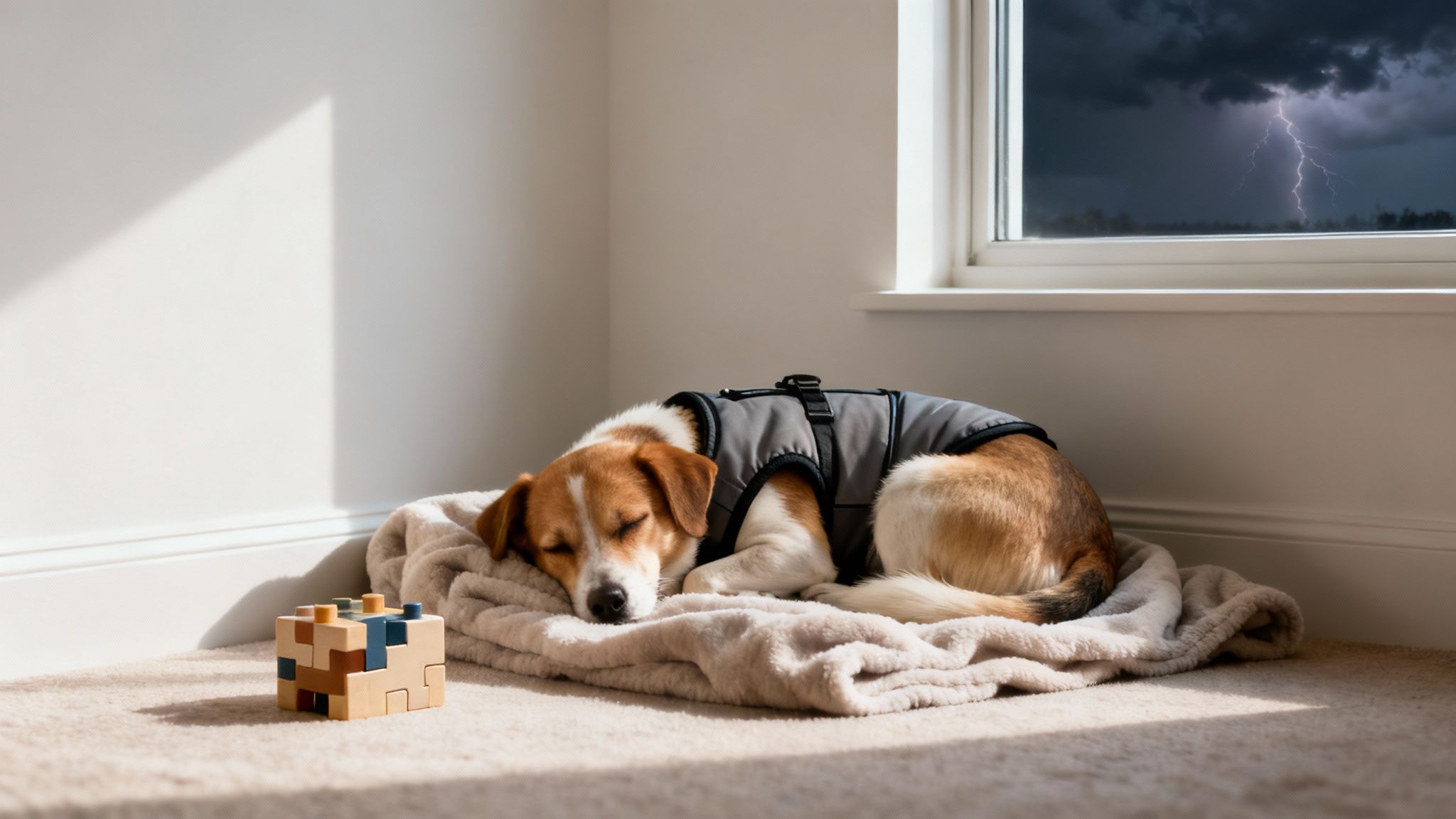
Sometimes, whining has nothing to do with wanting a treat or a potty break. It’s simply an overflow of big feelings your dog can't quite contain. Imagine a pot of water boiling over—that's your dog's emotional state, and the whine is just the steam escaping.
This emotional spillage usually comes from one of two places: anxiety or excitement. It could be the nervous whimpers during a thunderstorm or the high-pitched squeals when they see you grab the car keys. Either way, our job is the same: teach them how to handle these intense feelings without all the noise.
Calming the Anxious Whiner
Hearing your dog whine from anxiety is tough. They aren't trying to be difficult; they're genuinely distressed. While our first instinct might be to scoop them up for a cuddle, a better long-term strategy is to give them the tools to feel safe on their own.
Start by creating a "safe zone" for your pup. This is a cozy, comfortable spot that's all theirs—a place where only good things happen. It could be a crate with the door left open, a soft bed in a quiet corner of the house, or even a designated blanket.
Think of a dog's safe zone as their personal fortress of solitude. When you enrich it with comforting scents, familiar blankets, and high-value chew toys, you’re giving them a reliable retreat for when the world feels a little too loud.
To make this spot irresistible, introduce special, long-lasting chew toys or puzzle feeders that they only get in their safe zone. This helps redirect that nervous energy from whining into something productive and mentally engaging. Chewing is a natural stress-reliever for dogs. For more on making their den a happy place, check out our guide on how to properly crate train your dog.
You can also bring in some gear designed specifically for canine anxiety. These can be absolute game-changers, and you can find honest reviews of our top picks on SetterFren.com.
- Anxiety Vests: Products like the ThunderShirt apply gentle, constant pressure. It's like a calming hug for their nervous system, similar to swaddling a baby.
- Calming Diffusers: These plug-ins release dog-appeasing pheromones that mimic the comforting hormones a mother dog releases, fostering a sense of well-being.
- White Noise Machines: A machine that produces a steady, gentle sound can be a huge help in muffling startling noises like fireworks or construction, which are common anxiety triggers.
Managing the Overly Excited Whiner
On the flip side, you have the excitement whiner. This is the dog that starts vibrating with high-pitched squeals the second you even look at their leash. Their joy is wonderful, but the noise can be… a lot.
The key here isn't to crush their spirit, but to channel that frantic energy into a calm, focused behavior. We need to teach them that the fun stuff only happens when they are settled.
This is where a rock-solid "settle" or "place" command comes into play. The "place" command means sending your dog to a specific spot, like their bed or a mat, where they have to stay until you release them. It gives their buzzing brain a job to do.
Here's how to put it into practice when it's time for a walk:
- Reach for the leash. The moment the whining starts, freeze. Don't say a word.
- Wait for a tiny pause in the whining—even a half-second of silence as they take a breath.
- The instant they are quiet, calmly ask them to "sit" or go to their "place."
- Once they're sitting or lying down calmly, you can proceed with leashing them up. If the whining starts again at any point, stop and repeat the process.
This exercise is all about teaching impulse control. Your dog quickly learns that whining makes the fun stop, while calm behavior makes it happen. It takes a ton of patience and consistency at first, but soon enough, you’ll be able to grab the leash without triggering a five-alarm whine-fest. The goal is to build a new default behavior where they see the leash and automatically offer you a quiet sit.
Whining in Puppies and Senior Dogs
A whining puppy and a whining senior dog are often worlds apart in what they're trying to tell you. One is just learning how to communicate, while the other might be expressing the aches and confusion that come with age. Understanding their life stage is everything when it comes to responding with compassion and finding the right solution.
For a brand-new puppy, whining is their first and only language. It's not a sign they're being "bad"; it’s a critical survival tool hardwired into their DNA. They whine when they're cold, hungry, lonely, or scared—all very real and important feelings for a tiny creature in a big new world.
It's actually a biological tool for survival. A fascinating study that analyzed thousands of puppy whines found that these sounds carry specific identity information that helps mother dogs recognize their own offspring. It’s a direct line to their caregiver, signaling distress. You can read more about this on how puppies use whines for survival.
The Puppy Whining Playbook
Let's be real—those first few nights with a new puppy can be rough. They've just left their mom and siblings for the first time, and their new world can feel big and scary. Your job is to meet their needs while gently teaching them they're safe.
Here are a few things that really work in those early days:
- Make the Crate Awesome: The crate should be their personal happy place. Feed them meals in there. Casually toss in high-value treats when they aren't looking. The golden rule is to never use it for punishment. This builds a foundation of confidence, not anxiety.
- Create a Cozy Den: A warm, well-covered water bottle or a snuggle toy with a simulated heartbeat can be a game-changer. These mimic the warmth and comfort of their littermates and can be incredibly soothing.
- Plan for Potty Breaks: A young puppy simply can't hold it all night long. Set an alarm to take them out for a quiet, no-fuss potty break. This isn't playtime; it's strictly business. A quick trip out and right back into the crate helps them learn to settle back down quickly.
Our SetterFrens philosophy is simple: respond to a puppy's needs, but don't reward demanding behavior. It's a delicate balance of providing comfort while building their independence.
Understanding Our Senior Companions
When a senior dog who has been quiet for years suddenly starts whining more, it’s a huge red flag. This isn't some new behavioral quirk they've picked up; it's almost always a symptom of an underlying change. More often than not, the cause is medical, which makes your veterinarian your most important partner.
Age-related whining can come from a few different places. The chronic ache of arthritis might make it hard to get comfortable, leading to whimpers of discomfort. Hearing or vision loss can be disorienting and frightening, causing an anxiety they express vocally.
Senior Dog Whining Checklist
One of the biggest concerns for aging dogs is Canine Cognitive Dysfunction (CCD), which is often described as a form of doggie dementia. Whining is a classic symptom, especially at night or when your dog seems "lost" in a familiar room.
If your older dog's whining has picked up, start watching for other shifts in their behavior. Make a list of anything you notice to discuss with your vet.
- Disorientation: Do they get stuck in corners or seem confused about where they are?
- Changes in Interaction: Have they become more withdrawn, or conversely, much more clingy?
- Sleep-Wake Cycle Shifts: Are they pacing and whining at night but sleeping more during the day?
- House Soiling: Are they suddenly having accidents despite a lifetime of solid potty training?
- Activity Level Changes: Do they show less interest in playing or greeting people at the door?
A sudden increase in whining from your golden-oldie is their way of telling you something is wrong. A thorough vet check-up is the most loving and responsible first step you can take to help them.
When It's Time to Call the Vet About Whining
While most whining is just your dog trying to communicate a want, it's absolutely crucial to know when it might be their only way of saying, "I'm in pain." Honestly, learning to tell the difference between a whine for a cookie and a genuine cry for help is one of the most important skills you can develop as a dog owner.
Any sudden change in your dog's normal vocal habits should immediately raise a red flag. If your usually quiet dog suddenly starts whining, or the pitch and frequency of their whining changes out of nowhere, it's time to investigate.
Pain is Often the Culprit
The number one medical reason for a dog to suddenly start whining more is pain. Dogs are incredibly stoic creatures; it's a survival instinct left over from their wild ancestors where showing weakness could be a death sentence. A whine might be the very first, subtle clue they give you that something is physically wrong.
Often, this kind of whining is tied to specific actions. You might only hear it when your dog struggles to get up from their bed, tries to hop on the couch, or yelps when you pet them in a particular spot.
Pay close attention to these patterns. They’re like clues you can bring directly to your veterinarian. For example, whining that happens during movement often points to orthopedic problems like arthritis or a pulled muscle.
If there's one thing our pack at SetterFrens wants you to remember, it's this: never ignore a sudden change in whining, especially if it's paired with other symptoms. Your vet is your best partner in figuring this out.
Common Health Issues That Can Cause Whining
Pain can stem from a lot of different places, but whining is the universal signal. Keeping an eye out for other symptoms will help you and your vet get to the root of the problem much faster.
Here are a few common health problems that often lead to whining:
- Orthopedic Pain: This is a huge one, especially for older dogs or breeds prone to joint issues. Things like arthritis, hip dysplasia, or even a simple sprain can cause a lot of discomfort, leading them to vocalize.
- Dental Disease: A bad toothache or sore gums can make a dog absolutely miserable. You might notice them whining around mealtimes, dropping their food, or suddenly losing interest in their favorite chew toys.
- Stomach Upset: Nausea, cramping, or other gastrointestinal issues are common causes of whining. Be on the lookout for other signs like a poor appetite, vomiting, diarrhea, or a bloated-looking abdomen.
- Urinary Tract Issues: A urinary tract infection (UTI) or bladder stones can make urination incredibly painful. If your dog whines while trying to go to the bathroom or is asking to go out way more often, that’s a clear sign to call the vet.
What to Watch For and Tell Your Vet
When you do call your vet, being ready with specific observations can make a massive difference. The more detailed your report, the better they can understand the situation and decide on the next steps.
Before you go, try to jot down the answers to these questions:
- When did this start? Was it a slow, gradual increase, or did it happen overnight? Did it start after a specific event, like a fall or a particularly rough play session at the park?
- When does it happen most? Be specific. Is it when they're lying down, right after they eat, during walks, or only when you try to pick them up?
- Any other changes in behavior? Think about their appetite, energy levels, and how they're interacting with you. A dog in pain might become withdrawn, sleep more, or even get a little grumpy.
- Have you noticed any physical symptoms? This could be anything from limping and stiffness to them constantly licking one spot on their body. Even subtle things like panting more or a change in their posture are important clues.
By providing this level of detail, you become a vital part of the diagnostic team. Your observations at home are priceless because your dog can't just tell the vet where it hurts. You are their advocate, and speaking up for them is the first and most critical step toward getting them the relief they need.
Your 4-Step Action Plan for a Quieter Pup
Alright, let's pull all of this together. Think of this as your go-to cheat sheet—the quick-reference guide you can turn to when the whining starts and you need a plan, stat.
These are the strategies that work. They’re simple, they’re effective, and they’re all about tuning into what your dog is really trying to tell you.
Match the Method to the Moment
When you’re feeling overwhelmed by the noise, just come back to these core ideas. It's all about matching your response to the specific reason behind the whine.
-
For Attention-Seeking: Use the Ignore and Reward method. The second that attention-seeking whine starts, turn your back. No talk, no touch, no eye contact. The very instant they go quiet—even for a second—turn back and give them calm praise or a treat. They’ll quickly learn that silence, not whining, gets them what they want.
-
For Anxiety or Over-Excitement: Time to Redirect and Calm. When your dog is whining from big emotions, give their brain a new job to do. Ask for a "place" command, hand them a favorite puzzle toy, or start a quick, fun training game. This helps them shift their focus and learn to self-soothe instead of spiraling.
-
For Boredom: The answer is to Enrich and Engage. A tired dog is a quiet dog, but mental exercise is just as important as physical. Make sure their days are filled with interesting walks, short training sessions, and interactive toys. It's the ultimate boredom buster.
Feeling stuck on where to start? This little decision guide can help you figure out the best first step when a new whining fit begins.
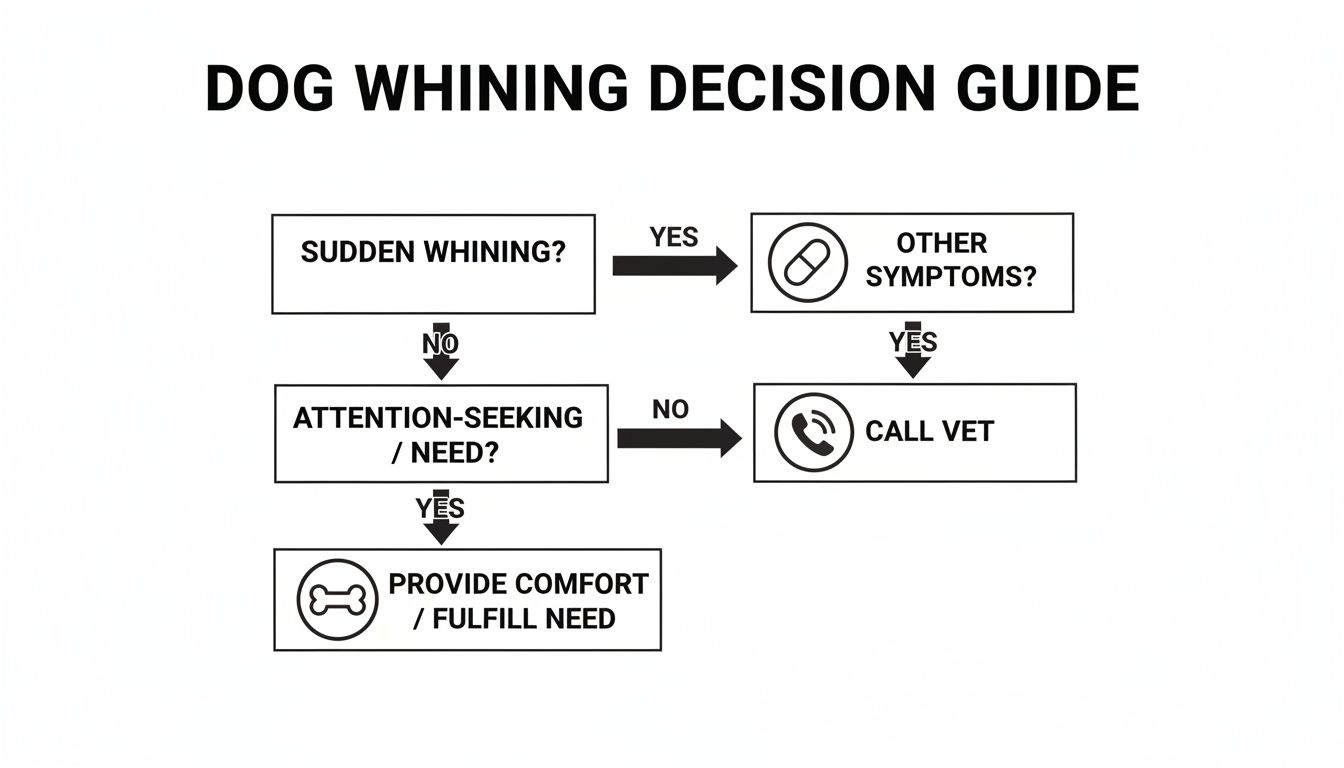
As the chart points out, if you notice a sudden spike in whining along with other symptoms like lethargy or a change in appetite, your very first move should be a call to your vet to rule out any underlying pain or illness.
The 3 Pillars of Lasting Quiet
Remember, teaching your dog not to whine isn't a magic trick—it’s about patiently building new habits together. True success is built on these three pillars.
Consistency: This is your number one tool. Everyone in the house needs to be on the same page, responding to whining in the exact same way, every single time. If one person gives in, it’s like hitting the reset button on your training.
Patience: You have to give it time. Your dog is un-learning an old habit and learning a new way to communicate. Some days will be better than others. Be kind to your dog—and to yourself—throughout the journey.
Positive Reinforcement: This is the only way to go. You're building a stronger, healthier bond by rewarding the quiet moments with praise, treats, and love. Never punish the whine; instead, teach the quiet.
Now, let's break it down even further.
Which Solution for Which Whine
Sometimes it helps to see it all laid out. Use this simple table to quickly match your dog's whining situation with the most effective strategy.
| If Your Dog Is Whining For… | Your Primary Strategy | A Key Tip to Remember |
|---|---|---|
| Attention | Ignore and Reward | The moment they stop, even for a second, reward the silence. |
| Excitement | Redirect and Calm | Give them a job, like "go to your bed" or work on a puzzle toy. |
| Boredom | Enrich and Engage | A 15-minute training session can be more tiring than a 30-minute walk. |
| Anxiety/Fear | Redirect and Calm | Focus on making them feel safe; never punish fear-based behavior. |
Think of these strategies as your core toolkit. By staying patient and consistent, you're not just stopping a noise—you're teaching your dog a better way to communicate and strengthening your relationship for years to come. You've got this.
Got Questions About Dog Whining? We've Got Answers.
Let's tackle some of the most common questions that pop up in our SetterFrens community. If you're stuck on a specific whining issue, this is the place to get some quick, clear advice.
Will My Dog Ever Stop Whining Completely?
Probably not, and honestly, that's a good thing. Whining is a core part of how dogs communicate, and you don't want to shut that down entirely.
The real goal isn't total silence. It's about curbing that incessant, demanding whining while still being able to understand and respond when your dog whines for a genuine reason, like needing to go out or being in pain.
Why Does My Dog Whine So Much in the Car?
Car whining almost always boils down to one of two things: major excitement or serious anxiety.
If it's anxiety, you need to change your dog's association with the car. Make it a fantastic place by using special toys or super high-value treats that only come out for car rides. For the over-excited pup, it’s all about teaching calmness. Practice getting in and out of the car without a fuss and reward quiet behavior on super short trips—even just to the end of the driveway and back.
Pro Tip: For anxious travelers, an anxiety vest or a calming supplement can be a game-changer. Just be sure to chat with your vet first to find the right option for your dog.
Does Punishing My Dog for Whining Actually Work?
In a word: no. Punishing a dog for whining is a classic mistake that almost always backfires. It can easily ramp up fear and anxiety, which, ironically, often leads to more whining.
Even worse, it erodes the trust you've built and doesn't show your dog what they should do instead. Positive reinforcement is always the kinder and far more effective path.
Is Whining a Sign of Dementia in Older Dogs?
It certainly can be. If you've noticed your senior dog whining more, especially at night or when they seem confused in their own home, it might be a symptom of Canine Cognitive Dysfunction (CCD).
Pay attention to other signs like aimless pacing or getting "stuck" in corners. If you're seeing a combination of these behaviors, it's definitely time to schedule a visit with your vet for a proper evaluation.
At SetterFrens, we believe life's better with a wagging tail and a good book. For more practical guides like this one, honest reviews of our favorite dog products, and a cozy community of people who just get it, come join our pack! Join our Puppicino Club to unlock member perks, and follow us at @setterfrens on TikTok and Instagram for heartwarming dog moments.