Choosing the right dog isn't just about picking the cutest puppy from the litter. It’s about taking a good, honest look at your life first and then finding a dog whose needs and personality genuinely fit into it. You have to be realistic about your home, your energy levels, and your family situation before you start scrolling through adorable photos. That's the real secret to finding a companion who will feel right at home with you, ready to curl up by your side for years to come.
Finding a Dog That Fits Your Life
Getting a dog is one of the best things you'll ever do. It’s a huge, exciting decision that brings so much joy, a few wet-nosed greetings, and a whole lot of love. But finding that perfect furry friend starts with some self-reflection, not an impulsive trip to the shelter. The first step is always looking at your own life and what you can realistically offer a new four-legged family member.
Think of it this way: you're designing the ideal life for a new best friend. To do that, you need to know the blueprint of your own world—your space, your daily rhythm, and your commitments. Getting this right is how you ensure your new dog won't just get by, but will truly thrive by your side.
Your Home is Their Whole World
Let's start with the most basic thing: where you live. Are you in a small city apartment where the nearest patch of grass is a shared park, or do you have a house with a big, fenced-in backyard? This one detail alone will narrow down your breed list significantly.
A high-drive breed like a Border Collie, for example, is going to go stir-crazy in a tiny apartment without several long, intense exercise sessions every single day. They need a job and room to move. All that pent-up energy often turns into problem behaviors like chewing or non-stop barking. On the flip side, a chill companion like a Basset Hound or a Cavalier King Charles Spaniel would be thrilled with daily walks and lots of couch time, making them fantastic apartment dogs.
An honest self-assessment is the foundation for choosing a dog breed that will thrive by your side. It’s not about getting the dog you want right now, but about welcoming the dog you can make happy for a lifetime.
When you think about your home, get practical. Ask yourself:
- Do I have a fenced yard? A secure fence is a lifesaver for many breeds, giving them a safe spot for potty breaks and a bit of freedom. For dogs with a strong prey drive, like Siberian Huskies or Greyhounds, a solid fence is pretty much non-negotiable.
- How much noise is too much? If you've got thin walls and neighbors right next door, a breed that loves to "talk"—like a Beagle or a Sheltie—might cause some friction. You might be better off with a quieter breed.
- Is my home ready for some chaos? A big, goofy Labrador with a tail that never stops wagging can clear a coffee table with one happy swipe. If your home is full of delicate items, a smaller, more graceful dog like an Italian Greyhound might be a better fit.
Your Energy vs. Theirs
Alright, time for some real talk about your activity level. Are you the type who’s out hiking every weekend, or is your ideal evening spent curled up with a good book from the SetterFrens collection and a hot drink? This is a huge piece of the puzzle because a dog's energy needs are non-negotiable.
So many people make the mistake of thinking, "I'll get an energetic dog, and it will force me to be more active!" That rarely works out. You need to be realistic about the exercise you're already doing and what you can truly commit to for the next 10-15 years, rain or shine.
A family that loves jogging and camping would be an amazing match for an Australian Shepherd or a Vizsla. These are canine athletes who need that kind of physical and mental workout to be happy. But if you're looking for a buddy for calm daily strolls and quiet nights, you’d be much happier with a Pug or a Shih Tzu. When energy levels don't match, it creates a ton of stress for everyone. Your perfect dog is one whose energy complements yours, not completely drains it.
Getting to Grips With Energy, Size, and Grooming
Alright, you've done the soul-searching and have a solid picture of your own life. Now for the fun part: matching that picture to the world of dogs. This is where we look at three fundamental traits—energy, size, and grooming needs—to figure out which kind of dog will truly thrive with you, not just get by.
Think of these as the non-negotiables. Getting them right from the start saves a world of frustration for both you and your future pup. A high-octane dog in a quiet home is a recipe for disaster (and chewed-up shoes), while a giant breed in a tiny apartment creates problems you never even thought of.
Matching Energy Levels for a Peaceful Home
A dog's energy level isn't just about how much they like to run. It's their mental engine, their need for a job, and their physical stamina all rolled into one. A mismatch here is probably the number one reason new owners feel completely in over their heads.
For instance, a Border Collie or an Australian Shepherd isn't just "active"—they are working dogs bred to go all day long. A quick walk around the block is barely a warm-up for them. These dogs need a purpose, whether it's agility training, complex puzzle toys, or long, challenging hikes. Without that mental and physical outlet, their brilliant minds often turn to destructive habits. It's no joke; active working dogs can burn roughly 35% more calories than your average couch potato pet, which really drives home their need for activity.
On the flip side, you have breeds like the Basset Hound, Bulldog, or Great Dane. They’re perfectly content with a more relaxed lifestyle. A couple of leisurely strolls and a prime spot on the sofa for a nap is their idea of heaven.
This simple flowchart can help you visualize how your home and lifestyle might connect with different types of dogs.
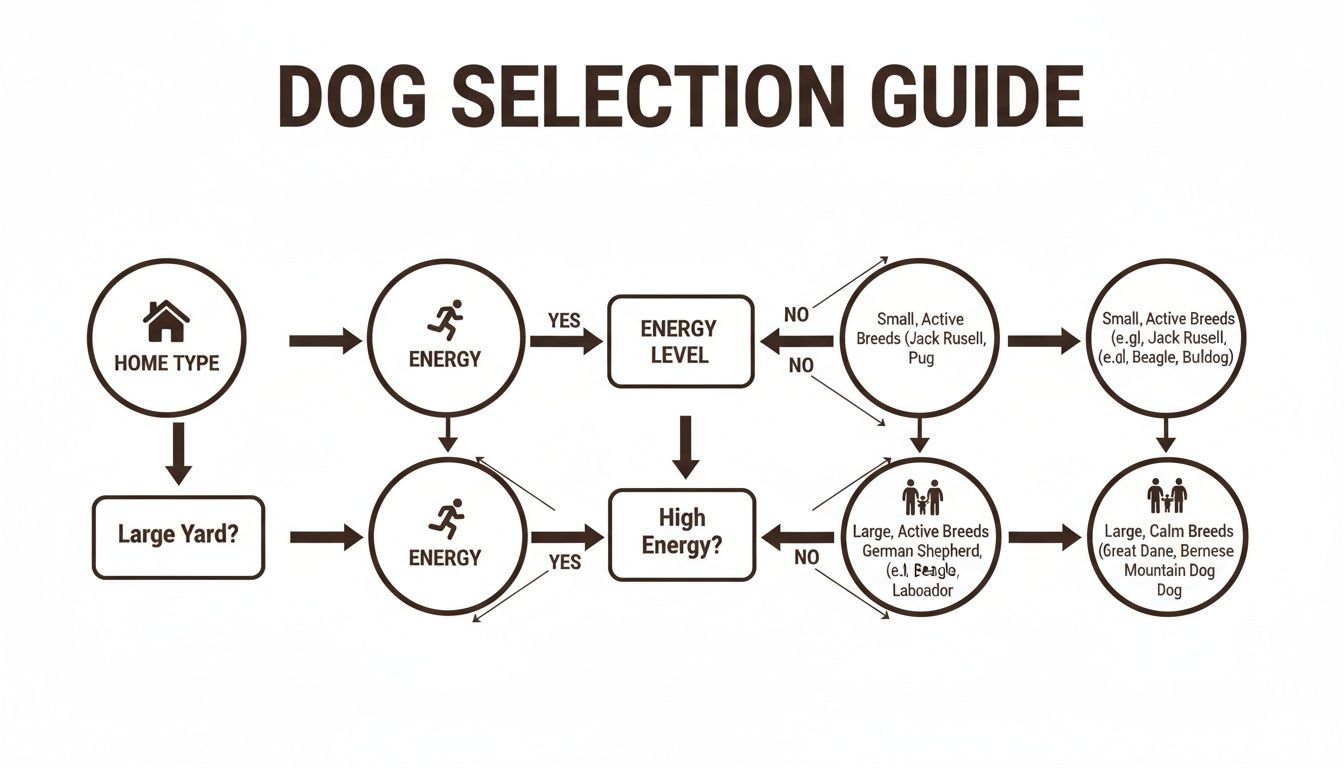
Seeing it mapped out like this makes it so much easier to see how your living situation points toward a certain kind of canine companion.
Why Size Really Does Matter
A dog's size affects way more than just how much space they take up on the bed. A Great Dane doesn't just need a bigger couch; they come with bigger food bills, higher vet costs (medications are often dosed by weight), and more expensive gear like crates and beds.
This is a huge reason why smaller breeds have become so popular. Just look at the French Bulldog—it's been the American Kennel Club's most popular breed for three years straight. Tipping the scales at a manageable 16-28 pounds, their small size is a perfect fit for modern city living, a factor that over 58% of pet owners say is a top priority.
Choosing a dog's size is about more than just physical space. It's about being honest about what you can manage financially, physically, and logistically for the next decade or more.
And don't forget about the "tail-swipe radius"! A big, happy dog like a Golden Retriever can clear a coffee table with one enthusiastic wag. If you live in a smaller home filled with breakables, a more compact and less clumsy friend might be a smarter choice.
The Unspoken Commitment of Grooming
Grooming is the one thing people consistently underestimate. A dog's coat dictates how much time and money you'll be spending on upkeep just to keep them healthy and comfortable.
Some dogs are wonderfully low-maintenance:
- Short-coated dogs like Beagles or Greyhounds are pretty much wash-and-wear. A quick brush once a week is usually all they need.
- Minimal shedders like Poodles and Bichon Frises are a dream for allergy sufferers, but that comes with a catch. They need professional grooming every 6-8 weeks to keep their hair from turning into painful mats. That's a serious recurring expense.
Then you have the dogs that are basically a part-time grooming job:
- Double-coated breeds like Siberian Huskies and German Shepherds "blow" their coat twice a year, unleashing a storm of fluff. They need serious, frequent brushing to manage the shedding and keep their skin healthy.
- Long-haired dogs like the Old English Sheepdog or Afghan Hound require daily brushing. It’s not optional—it’s essential to prevent painful tangles.
Before you fall for that adorable fluffy puppy, get real about what you're willing to do. If daily brushing sounds like torture, stay away from the high-maintenance fluff balls. But if you're up for the challenge, our guide has some great dog grooming tips for doing it at home to get you started.
Lifestyle Needs vs Breed Traits: A Quick Match Guide
This table helps you quickly align your lifestyle factors (living space, activity level) with corresponding dog breed traits (size, energy) to start narrowing down your choices.
| Your Lifestyle Factor | Ideal Dog Trait | Example Breeds |
|---|---|---|
| Apartment/Small Home | Small Size, Lower Energy | French Bulldog, Cavalier King Charles Spaniel, Bichon Frise |
| Active, Outdoorsy Family | High Energy, Medium-Large Size | Australian Shepherd, Labrador Retriever, Vizsla |
| Busy Professional, Limited Time | Lower Energy, Low Grooming | Greyhound, Basset Hound, Whippet |
| Home with a Large Yard | Any Energy Level, Adaptable Size | Golden Retriever, Bernese Mountain Dog, German Shepherd |
| Allergies in the Household | Hypoallergenic Coat | Poodle, Portuguese Water Dog, Soft Coated Wheaten Terrier |
Using a simple matching tool like this can instantly help you filter out breeds that would be a poor fit, saving you time and helping you focus your search on dogs that are more likely to be your perfect companion.
Thinking About the Long Haul: Health, Temperament, and Training
Let's be honest, the puppy phase is impossibly cute, but it's also fleeting. The real journey begins when you start thinking about the next 10, 12, or even 15 years together. This is where the big three—health, temperament, and trainability—come into play. Getting these right isn’t just smart; it’s the kindest thing you can do for your future dog and for yourself.
A dog’s potential health issues can dramatically shape your life together. Some purebreds, through generations of breeding, have become more susceptible to certain genetic conditions. Knowing this ahead of time isn't about being pessimistic; it's about being a prepared, responsible owner who can avoid future heartache and staggering vet bills.

For instance, everyone loves big, beautiful German Shepherds and Labradors, but it's crucial to know they can be prone to hip dysplasia. Similarly, those adorable flat-faced breeds like Pugs and French Bulldogs can sometimes struggle with breathing problems. A little research now empowers you to ask the right questions later, whether you're at a shelter or visiting a breeder.
Unpacking Your Dog's Personality
Every dog is an individual, absolutely. But breed temperament is a real thing, shaped by what that dog's ancestors were bred to do for centuries. It gives you a fantastic starting point for what to expect from their personality.
Are you picturing a four-legged friend who lives for cuddles and praise? A Golden Retriever or a Cavalier King Charles Spaniel might be your soulmate. These breeds are often hardwired to please their people and thrive on being part of the family.
On the flip side, some breeds were developed to be more independent. Think of the dignified Shiba Inu or the powerful Akita. They are fiercely loyal companions but are often more reserved and less gushy than other dogs. They don't live for your every command, and that's okay—if it's what you're looking for.
Finding the right temperament match is like finding a friend who just gets you. It’s about choosing a dog whose social and emotional needs click with the kind of relationship you want to build.
Take a moment to think about your own personality, too. If you're a quiet introvert who loves cozy nights in, a super-high-energy, in-your-face dog might feel more like a hurricane than a companion. But that same dog would be a dream come true for a bustling, active family.
Trainability, Intelligence, and Your Experience Level
When we talk about a dog's "intelligence," it’s not just about their IQ. It’s really about their willingness to work with you and how they learn. This is a massive factor to consider, especially if this is your first time bringing a dog home.
Some breeds are a dream to train because they pick things up so quickly. Take the German Shepherd, one of the world's most popular breeds. Their smarts are legendary; they can often learn new commands in just 5-15 repetitions! But that big brain needs a job. Owners should also be aware of potential health issues like degenerative myelopathy, which can lead to annual care costs of $2,000 to $3,000. You can see how they stack up against other popular breeds on this list from PetsRUs.com.
Here’s a quick way to think about trainability:
- The Eager Beavers: Poodles, Golden Retrievers, and Border Collies are famous for their trainability. They genuinely seem to enjoy learning and are a great fit for anyone interested in obedience, agility, or just teaching fun tricks.
- The Independent Thinkers: Breeds like Beagles and Basset Hounds were bred to follow a scent trail for miles, not to hang on your every word. They are absolutely trainable, but you’ll need a bit more patience and creativity (and probably better treats!).
- The Sensitive Souls: Some dogs, like Greyhounds or Whippets, have a much softer nature. They respond beautifully to gentle, positive training but can easily shut down if you’re too harsh.
Your own experience level is a huge piece of this puzzle. If you're new to dog ownership, picking a notoriously stubborn or complex breed can lead to a ton of frustration for both of you. You'll have a much more rewarding experience by choosing a dog known for being a bit more agreeable.
Ultimately, a well-trained dog is a happy dog. That foundation is built on early, positive training and good socialization. To get a head start, you should learn about what puppy socialization truly means and why it's so critical for raising a confident, well-adjusted adult dog.
The True Cost of Owning a Dog
It's easy to fall in love with a pair of puppy-dog eyes, but that wagging tail comes with a real-world price tag. Honestly, getting your finances in order before you bring a dog home is one of the most responsible things you can do. Thinking about the budget now prevents heartache later and lets you pick a dog that truly fits your life, not just your heart.
So, let's pull back the curtain on what it really costs to give a dog a great life. We can sort these expenses into two buckets: the stuff you'll buy right at the beginning and the costs that will become a regular part of your life.
The Initial Investment
Getting your home ready for a new four-legged family member is an exciting first step. You're not just puppy-proofing; you're creating a welcoming, safe space for them to land.
Here are the typical one-time costs you should plan for right out of the gate:
- Adoption or Breeder Fee: This is the big one. It can be anywhere from $50-$500 for a wonderful dog from a rescue to $1,500-$4,000+ for a puppy from a reputable breeder.
- First Vet Visit: Think of this as their "new patient" appointment. It usually includes a full check-up, initial vaccinations, deworming, and a microchip, often running $200-$500.
- The Welcome Home Kit: You'll need all the essentials: a leash, collar, ID tags, food and water bowls, a cozy bed, and a crate for training. Set aside $150-$300 for these basics.
- Spay/Neuter Surgery: If your dog isn't already "fixed," this is a crucial step. The procedure typically costs between $200-$700, depending on your dog's size and your vet's location.
Budgeting for a dog isn’t just about covering food and toys. It’s about building a financial safety net so you can say "yes" to the best care possible when life throws you a curveball.
Ongoing and Unexpected Expenses
Once you're settled in, the regular expenses kick in. This is where the breed you choose really starts to impact your wallet. A Great Dane's monthly food bill, for example, is going to look a lot different than a Chihuahua's. It's just a fact of life.
Here’s a snapshot of the recurring costs to bake into your budget:
- Food: High-quality dog food can range from $50 to $150+ per month. This fluctuates wildly based on your dog's size, age, and any special dietary needs.
- Preventative Meds: Flea, tick, and heartworm prevention are absolutely essential. Plan for $30-$70 per month to keep them safe.
- Grooming: Some dogs just need a nail trim now and then. But if you have your heart set on a Poodle or a Doodle, be prepared for professional grooming every 6-8 weeks, which can easily cost $70-$150 a pop.
- Annual Vet Check-ups: A yearly exam and booster shots are key to long-term health, typically costing $100-$300.
- The "Oh No!" Fund: This is the one people forget. An unexpected accident or illness can result in emergency vet bills hitting $1,000 or more in the blink of an eye. Pet insurance or a dedicated savings account isn't a luxury—it's a necessity.
Laying all these costs out isn't meant to scare you; it's meant to empower you. When you can honestly match a breed's needs to what you can comfortably afford, you're setting everyone up for a lifetime of happy, stress-free companionship.
Finding Your Dog: Adoption vs. Reputable Breeders
Alright, you’ve done the hard work of looking inward and figuring out what kind of dog truly fits your life. You have a shortlist of breeds that seem like a great match, and now comes the really exciting part—actually finding your new best friend!
This is where the path splits. You can either go the route of adoption through a shelter or rescue, or you can find a responsible breeder. Both are fantastic ways to bring a dog home, and there’s no single "right" answer. It’s all about finding a healthy, happy dog from a source you trust. Let's break down what each option looks like.

The Heartwarming Path of Adoption
Adopting a dog is one of the most rewarding things you can do. Local shelters and breed-specific rescues are full of incredible dogs of all ages, from spunky puppies to sweet seniors, just waiting for a second chance.
When you adopt, you’re doing more than just getting a pet; you're saving a life and helping to combat pet overpopulation. The staff and volunteers at these places are your best allies. They know these dogs inside and out—their quirks, their history, their favorite toys—and can give you an honest look at their personalities to help you find a perfect match.
Adopting a rescue dog is an incredible act of kindness. You're giving a deserving animal a fresh start, and in return, you get a loyal friend whose gratitude you'll feel every single day.
Working with a Responsible Breeder
If your heart is set on a specific purebred dog and you want a clearer picture of its potential temperament and health history, then working with a reputable breeder is the way to go. A truly great breeder is a steward of their breed. They pour their hearts into raising healthy, well-socialized puppies and become a support system for you for the life of your dog.
It’s so important to know that a responsible breeder is the polar opposite of a puppy mill or a casual backyard breeder. They would never sell to a pet store, and they’ll insist you come to their home to meet the puppies and their mom. Expect them to have just as many questions for you as you have for them—they want to make sure their pups are going to amazing homes.
Look for these green flags that tell you you've found a good one:
- Total Transparency: They'll gladly show you health clearances for the parent dogs, proving they screen for genetic conditions common in that breed.
- A Home Environment: The puppies are raised right in the house, getting used to the sights and sounds of family life from day one.
- Deep Knowledge: They're a walking encyclopedia on their breed and will be your go-to for advice for years to come.
- Patience is a Virtue: Good breeders usually have a waitlist. They will never pressure you into a fast decision.
This focus on health is non-negotiable. Take Golden Retrievers, for example. They're consistently one of the most popular dog breeds in the world, but a staggering 19.7% can be affected by hip dysplasia. A responsible breeder works tirelessly to screen for issues like this, which is a huge part of what you're investing in.
Preparing for Your New Arrival
Once you've found "the one," it's time to get your home ready! A little prep work makes the transition from their old life to their new one much smoother and less stressful for your new dog (and for you!).
Here's a quick "welcome home" checklist to get you started:
- Puppy-Proof Your Space: Get on your hands and knees and look for trouble. Tuck away cords, secure trash cans, and move anything you value out of chewing range.
- Set Up Their Den: Create a cozy, safe spot that’s just for them, complete with a bed, crate, and a few toys. This gives them a place to retreat to.
- Schedule a Vet Visit: Get a check-up on the books for that first week. It’s the perfect way to start a relationship with your vet and get a health baseline.
- Stock Up on Supplies: Make sure you have food, bowls, a collar with ID tags, a leash, and some basic grooming tools before they walk through the door.
By picking your source with care and getting your home ready, you’re setting the stage for a wonderful life together. If you've landed on a specific breed like an Irish Setter, we've got even more detailed tips on how to find and buy Irish Setter puppies from sources you can trust.
Still Have Questions? Let’s Talk It Out.
After all that research, it's totally normal for a few "what if" questions to be rattling around in your head. Picking a friend for the next decade (or more!) is a huge decision, and you want to get it right. These are the kinds of things our SetterFrens community brings up all the time, so we’ve pulled together the most common ones right here.
Getting this right is all about finding a companion who just fits, and the little details often make the biggest difference. Let's clear up those last-minute questions so you can finally move forward with total confidence.
What About Mixed-Breed Dogs?
Oh, we love a good mutt! Rescues and shelters are full of incredible mixed-breed dogs, and they often come with a wonderful secret weapon: genetic diversity. This "hybrid vigor" can sometimes mean they're less prone to some of the inherited health issues that can plague certain purebreds. The best part is the wonderful surprise of it all—you might get a dog with the goofy grin of a Lab and the smarts of a Poodle.
Of course, the flip side of that surprise is unpredictability. It can be harder to guess their final adult size, true temperament, and energy needs. If you’re leaning this way, a great tip is to look for mixes where you know at least one of the parent breeds. And for fun, some phone apps can do a surprisingly decent job of guessing a dog's heritage from just a photo!
Should I Get a Puppy or an Adult Dog?
This is the big one, isn't it? The truth is, there's no right answer—only what's right for you. Bringing home a puppy is an amazing, heartwarming journey. It's also a massive amount of work. Think of it as a full-time job for the first few months, filled with potty training, socializing, and making sure they don't chew the furniture.
Adopting an adult dog, on the other hand, has some serious perks:
- No Guessing Games: Their personality, size, and energy level are already fully baked. What you see is what you get!
- Often House-Trained: Many adult dogs have already mastered the basics of living in a home.
- Skip the Puppy Mayhem: You get to bypass the entire needle-teeth teething phase, the constant nipping, and those 3 AM potty breaks.
An adult dog might bring some emotional baggage from their past, but a little patience and a lot of love can help them blossom into the most grateful and loyal friend you could ever imagine.
Choosing between a puppy and an adult isn’t about which is "better." It’s a gut check on your own capacity for training versus your desire for predictability. Both paths lead to a whole lot of love.
Do I Need to Think About "Working" Breeds Differently?
Yes, one hundred percent. Breeds from the working group—think Siberian Huskies, German Shepherds, or Border Collies—are a whole different ball game. These dogs were bred for generations to do intense, demanding jobs, and that drive doesn't just disappear because they're living in a suburban home.
These dogs don't just need a walk around the block; they need a purpose. That might mean advanced obedience training, agility courses, or even canine sports. It’s not just about exercise, either. Research shows an active working dog can burn roughly 35% more calories than a more sedentary pet, so their diet needs to fuel that engine. Without a real outlet for their brains and bodies, they can get bored, anxious, and incredibly destructive.
How Can I Be Sure a Breed Is Good With My Kids?
When you’ve got kids in the picture, temperament is everything. You'll want to zero in on breeds known for being patient, gentle, and sturdy enough to handle a bit of clumsy affection. This is why breeds like Beagles, Golden Retrievers, and Bernese Mountain Dogs consistently top the "best family dog" lists.
But no matter what breed you choose, making it work comes down to two golden rules:
- Early Socialization: The dog needs positive experiences with children from a young age.
- Teaching Kids Respect: Your children have to learn how to be gentle and safe around a dog.
Always, always supervise interactions between your dog and young children, even with the most trusted family pet. This keeps everyone safe and helps them build that beautiful, lifelong bond you're dreaming of.
We hope this guide has made the process of choosing your future best friend a little less daunting and a lot more exciting! At SetterFrens, we believe life's better with a wagging tail and a good book. Join our Puppicino Club to unlock member perks, book updates, and dog-friendly treats. Stay part of the fun by following @setterfrens on TikTok and Instagram for heartwarming dog moments, product tips, and behind-the-scenes content from our growing pack! Find your next great read and more pup-care advice at https://setterfren.com.