
To stop your dog from whining, you have to get to the root of it. Is it a genuine need, like a potty break? Are they feeling anxious? Or are they just trying to get your attention? The secret is to ignore the whines that are all about getting attention but always respond when it's a real need. This is how you teach your dog that whining isn't a magic button to get what they want, leading to a much quieter, happier home for everyone.
Cracking The Code: Why Your Dog Whines
That high-pitched, sometimes heart-wrenching sound isn't just noise—it's one of your dog's primary ways of talking to you. Think of yourself as a detective. The whine is your biggest clue, and your first job is to figure out what your pup is trying to say.
Is it that sharp, urgent whine that clearly means, “I really need to go outside right now!”? Or is it more of a low, drawn-out grumble that translates to, “You’ve been staring at that screen for an hour, and I’m so, so bored”?
Figuring out the "why" is the most important step. Dogs, just like people, have a lot of nuance in how they communicate. Their whines are surprisingly complex. In fact, studies have recorded an incredible variety, with some dogs making between 26 to 71 unique sounds. These aren't just simple noises; they can be single-toned or combine multiple frequencies into intricate calls. You can dive deeper into the science behind this in this in-depth research on dog whines. This complexity is exactly why context is everything.
Common Reasons for Whining
To become a master decoder, start by looking at the situation. A whine by the back door right after dinner means something totally different than a whine coming from the crate at 3 AM.
Here are some of the most common triggers:
- Attention-Seeking: This is the classic "pay attention to me!" whine. It often happens when you're busy with something else—working, reading a good book, or maybe enjoying a treat from the Puppicino Club.
- Excitement: Some dogs just can't contain their joy! They'll whine when they see the leash come out, hear your car pull into the driveway, or greet a visitor. This one is usually paired with a furiously wagging tail and a full-body wiggle.
- Appeasement or Anxiety: A dog might whine when they feel nervous or are trying to show they aren't a threat. This is pretty common during social situations, especially for young pups still learning the ropes. You can learn more in our guide to understanding puppy socialization.
- Pain or Discomfort: A sudden start to whining, especially if it comes with other signs like limping or seeming tired, can be a clear signal that your dog is in pain.
SetterFrens Tip: Try keeping a small journal for a few days. Jot down when your dog whines, what was happening at the time, and what the whine sounded like. This simple log can reveal patterns you might otherwise miss.
Putting the Clues Together
As a quick reference, here’s a simple table to help you start decoding those whines on the fly.
A Quick Guide to Decoding Your Dog's Whines
| Type of Whine | What It Likely Means | Your Best First Action |
|---|---|---|
| Urgent & High-Pitched | "I need something now!" (Potty, water, etc.) | Check their basic needs immediately. Take them outside for a potty break. |
| Low & Grumbly | "I'm bored" or "I'm feeling neglected." | Ignore the whine, but initiate playtime or a walk a few minutes later when they are quiet. |
| Yelping or Sudden | "Ouch, that hurts!" or "I'm in pain." | Stop what you're doing and check your dog for any signs of injury. If it continues, call your vet. |
| Excited & Breathy | "Yay! Something amazing is happening!" | You can let this one slide, or you can work on training a calm greeting or response to exciting events. |
| Anxious & Repetitive | "I'm scared" or "I'm feeling stressed." | Remove your dog from the stressful situation. Offer comfort and work on confidence-building exercises. |
Remember, this is just a starting point, but it's a great tool for making quick, informed decisions.
Once you start paying attention to the context, you'll get much better at telling a genuine need apart from a clever tactic to get their way. A dog whining to go out will usually stand by the door. A bored dog might bring you a toy and then whine. An anxious dog might tuck their tail and avoid eye contact.
Recognizing these signals is your superpower. It allows you to respond appropriately—addressing a real need without accidentally reinforcing demanding behavior. This foundation of understanding is what will make the training strategies we cover next so much more effective.
How to Respond When Your Dog Starts Whining
That high-pitched sound starts, and your first instinct might be to cuddle them, scold them, or just give them whatever they want to make it stop. I get it. But how you react in that very moment is what will shape their behavior for the long haul.
Your mission is to teach your dog that whining isn't a magic button to get what they want. At the same time, you have to make sure you're not ignoring a legitimate need. It’s a delicate dance, but once you get the steps down, it becomes second nature.
The Power of Ignoring and Rewarding
When you're dealing with a dog whining purely for attention, your most powerful tool is often the hardest to use: the cold shoulder. It feels counterintuitive, but it's incredibly effective. The moment the whining begins, you have to completely withdraw all attention.
Don't look at them. Don't talk to them. You might even need to physically turn your back or walk out of the room for a minute. This sends a crystal-clear message: Whining makes my favorite person disappear.
But the real magic happens next. The instant they go quiet, even for a second, turn back and reward them. This reward doesn't always have to be a treat. It can be calm praise ("Good quiet!"), a gentle ear scratch, or an invitation to play.
You’re not punishing the noise; you're celebrating the silence. This is the heart of positive reinforcement, and it’s a game-changer for building a strong, respectful bond with your dog.
Shifting Focus with Smart Redirection
Ignoring isn't always the right move, especially if the whining is coming from a place of boredom or pent-up energy. This is where you become a master of redirection. The goal is to snap them out of the whining mindset and onto a better activity.
Instead of even acknowledging the whine, grab a toy and initiate a game of tug. Or, ask for a simple command they know well, like "sit" or "touch."
Here are a few scenarios where this works beautifully:
- Boredom Whines: Stuff a puzzle toy with some high-value treats. It gives them a productive "job" that engages their brain.
- Excitement Whines: Is your dog whining like crazy as you grab the leash? Ask for a calm "sit" before you clip it on. The walk only starts when they’re quiet and composed.
- Attention Whines: Kick off a quick, fun training session. A few rounds of "shake" or "stay" can redirect their focus and reinforce your connection in a positive way.
Figuring out the right move in the heat of the moment can be tough. This flowchart is a handy cheat sheet to help you diagnose the whine and choose the right response.
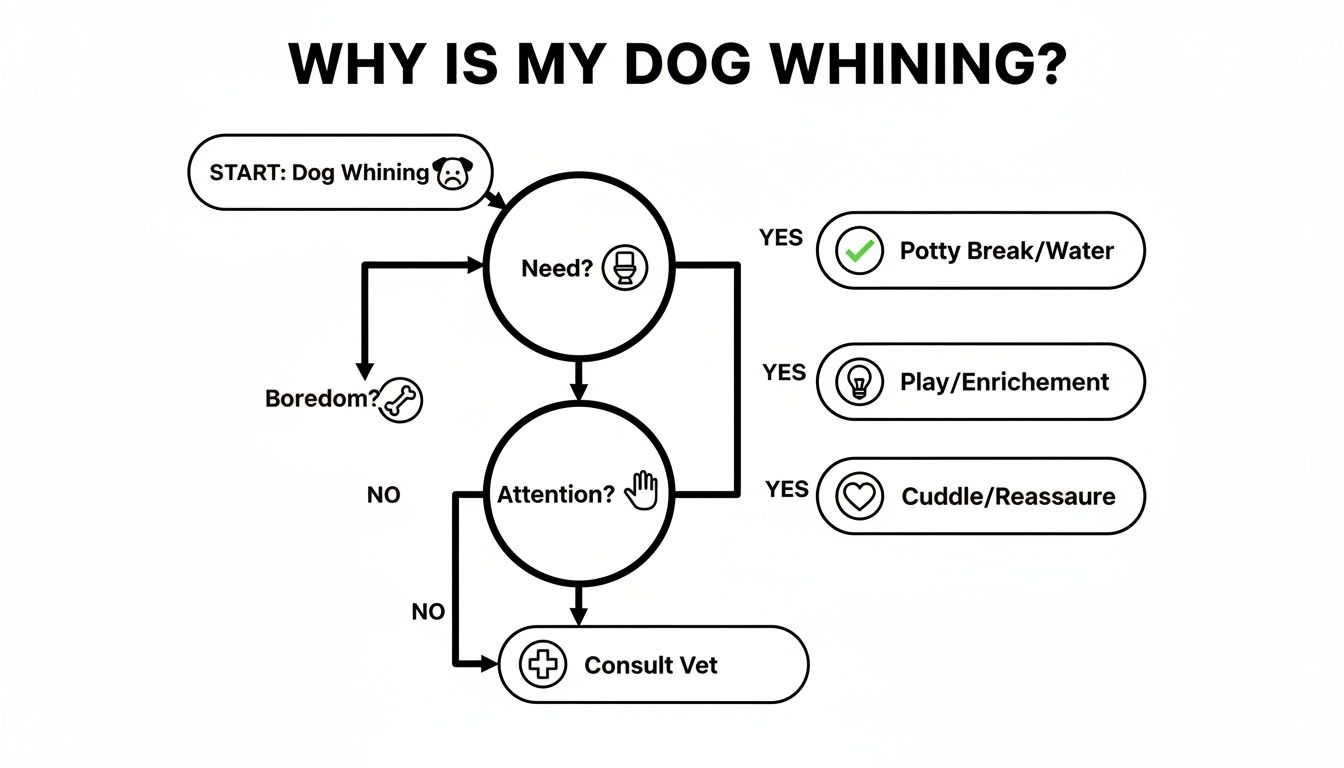
This quick visual guide helps you sort through the possibilities—is it a real need, just boredom, or a plea for attention?—and points you toward the best immediate action.
Calming Techniques for Anxious Whines
Now, if you suspect the whining is rooted in anxiety or fear, ignoring it is the wrong call. Your dog isn't trying to manipulate you; they're genuinely distressed and need you to be their rock. Your response should be all about calm reassurance and creating a sense of security.
Guide them to their safe space—maybe their crate with a favorite blanket, or just a quiet corner of the room where you can sit with them calmly. Offering a long-lasting chew or a LickiMat can also do wonders. The simple act of licking and chewing is a natural self-soothing behavior for dogs.
Ultimately, your response in these crucial moments sets the stage for everything that follows. By consistently ignoring demand whining, redirecting boredom, and comforting true anxiety, you’ll teach your dog far better ways to communicate their needs. Before you know it, you'll have a quieter, more peaceful home for everyone.
Building a Proactive Plan to Prevent Whining
The best way to deal with whining is to get ahead of it. Instead of just reacting when the noise starts, the goal is to create a lifestyle for your dog where they don't feel the need to whine in the first place. A fulfilled dog—one who is mentally and physically tired in a good way—is almost always a quiet dog. This is all about proactively meeting their needs so boredom and anxiety don't have a chance to set in.
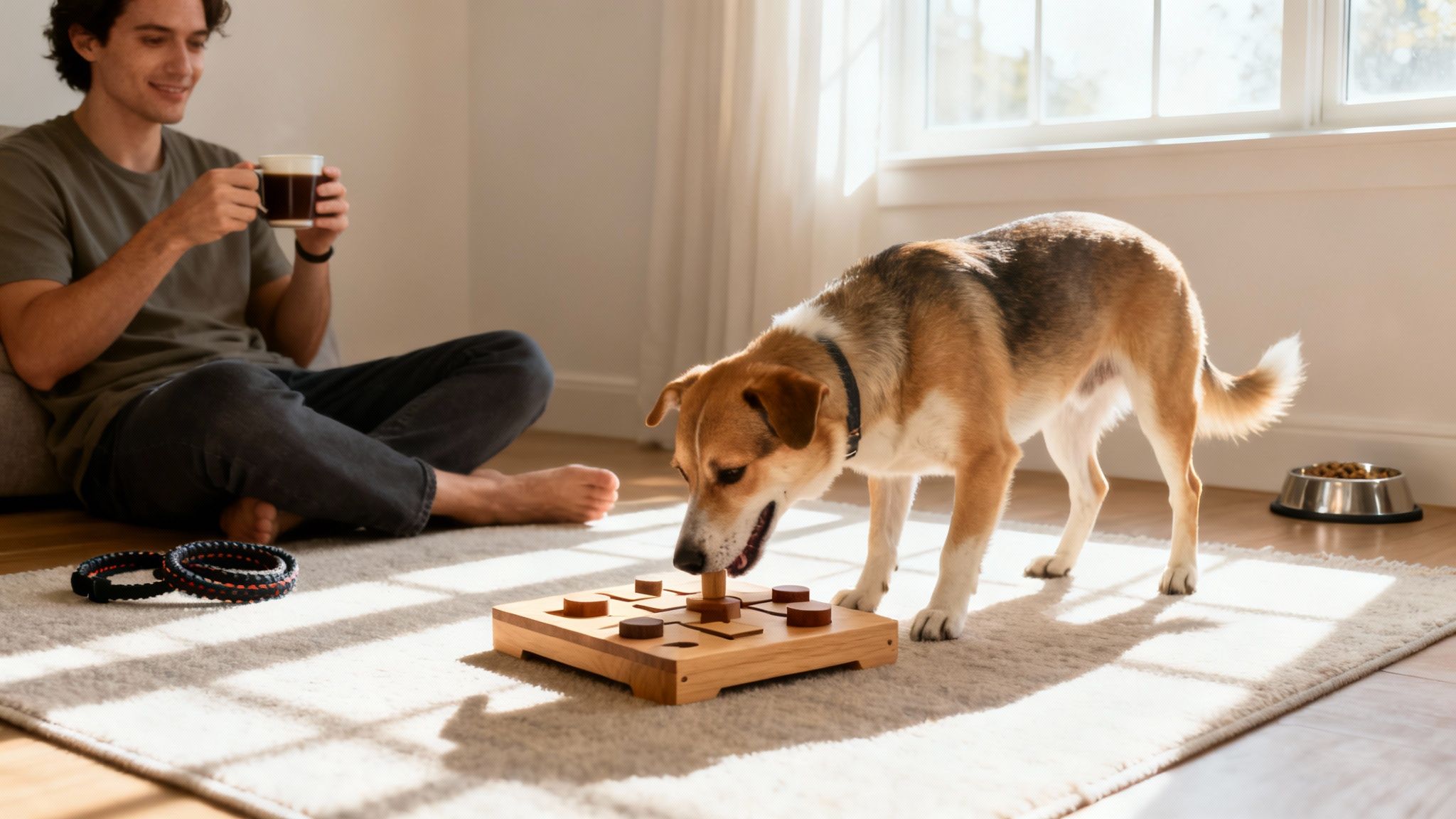
It all starts with a predictable daily routine. Dogs thrive on knowing what’s coming next; it gives them a real sense of security. A consistent schedule for meals, walks, potty breaks, and even playtime can dramatically cut down on the uncertainty that often fuels anxious whining. When your dog knows that a walk always follows your morning coffee, they're much less likely to start whining at the door, trying to guess when it's time to go.
Weaving Enrichment into Your Day
Now, a predictable routine doesn't have to be a boring one. Mental stimulation is just as critical as a long walk, especially when you’re trying to prevent whining that’s born from sheer boredom. This is where enrichment comes in, and it's a total game-changer.
Enrichment is basically giving your dog a "job" that lets them use their natural instincts to sniff, chew, and problem-solve. The best part? You don't need a bunch of time or expensive gear to make a real difference.
Here are a few of our favorite go-to enrichment ideas:
- Puzzle Feeders: Ditch the food bowl and use a puzzle toy instead. It turns a 2-minute meal into a 15-minute brain-draining activity that satisfies their need to work for their food.
- Scent Games: Hide a few tasty, high-value treats around the living room and let your dog "find it!" This taps right into their powerful nose and is incredibly satisfying for them.
- DIY Obstacle Course: On a rainy day, use some pillows, blankets, and chairs to create a fun little course for them to navigate. It’s a great way to build confidence and burn off some pent-up energy.
These simple activities are fantastic for busting boredom and making your dog feel more confident, which directly reduces their urge to whine for your attention.
The Art of Capturing Calmness
This is one of the most powerful—and most overlooked—strategies in a trainer's toolbox. We call it "capturing calmness," and it’s beautifully simple. You just have to notice and reward the quiet, relaxed moments, no matter how brief they are.
Is your dog just chilling on their bed while you're reading? Don't take it for granted! Calmly walk over and drop a small treat between their paws. No "good boy!" or excited praise, just a quiet acknowledgment of the behavior you want to see more of.
By rewarding quiet moments, you're teaching your dog that calmness is a currency. It's the key to earning your attention and affection, making it a far more effective strategy for them than whining ever was.
This technique helps your dog connect the dots: when they're settled, good things happen. Over time, you'll find they start offering that calm behavior on their own. It’s a foundational concept, and for anyone serious about building these skills, exploring something like structured dog training can give you a complete playbook for success.
Ultimately, a solid daily plan is your best defense against whining. And if you're just starting out with a new pup, our guide on how to train a puppy offers even more tips to get you started on the right paw. By building a life filled with routine, fun mental challenges, and positive reinforcement for being calm, you're doing more than just stopping a bad habit—you’re building a happier dog and a more peaceful home.
How to Handle Specific Whining Situations
Not all whines are created equal, so your strategy shouldn't be one-size-fits-all. A dog whining for attention needs a very different response than a dog whining out of fear. Let's break down some of the most common—and frustrating—whining triggers with real-world advice you can start using today.
Tackling Attention-Seeking Whines
This is the classic. You've just settled in with a good book, and the whining starts. Your dog isn't hurt or in need—they just want your focus, and they want it now. It’s so tempting to give in with a quick "hush," but that just tells them their tactic worked.
The key is to teach them that silence, not whining, is what gets your attention. The moment the whining begins, turn your back or even leave the room for a few seconds. The instant they fall quiet, return and offer calm praise or a gentle pat. This simple switch powerfully teaches them that being quiet is what makes the good stuff happen.
Managing Excitement Whining
Does your dog start a high-pitched concert the second you grab the leash? Or maybe when friends arrive at the door? That’s excitement whining. While it comes from a place of pure joy, it can get overwhelming fast. Our goal isn't to squash their happiness, but to channel it into calmer behavior.
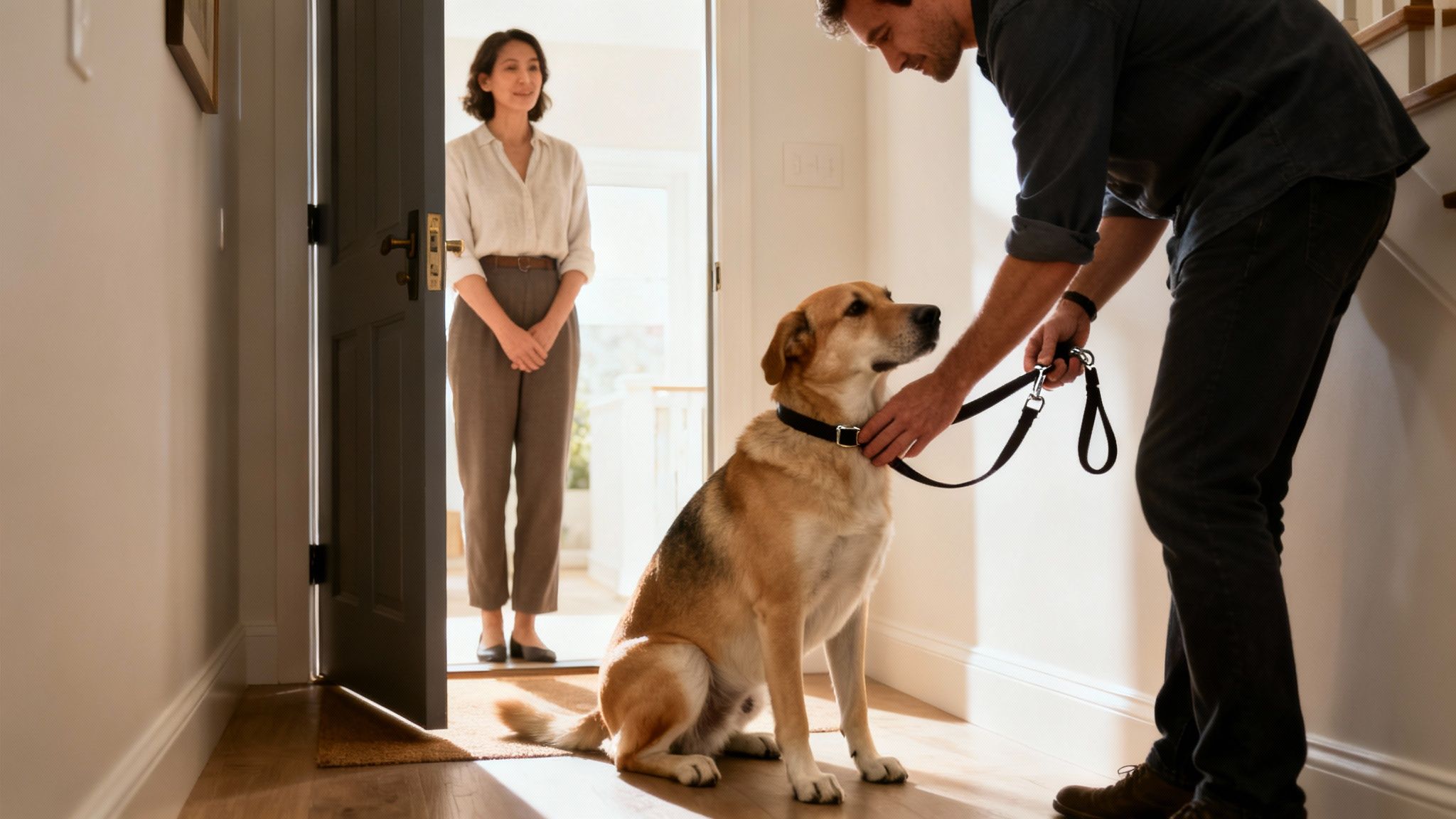
- Leash Excitement: If they whine when you touch the leash, immediately put it down and walk away. Wait a moment, then try again. Repeat this little dance until you can pick up the leash without a peep. The walk only begins once they’re composed.
- Guest Arrivals: This is a perfect time to use a "go to your place" command. Teach your dog to go to their bed or a mat and stay there as guests come inside. Reward them with some high-value treats for staying calm and quiet while you greet your visitors.
It's easy to get frustrated, but remember how powerfully that sound affects us. A fascinating study found that humans perceive dog whines as being just as sad as a human baby's cry. This emotional pull is why we instinctively want to comfort them, making it so important to learn the difference between true distress and a simple demand.
Addressing Anxiety and Fear-Based Whining
Unlike whines for attention or excitement, you should never ignore a whine rooted in anxiety. This is a genuine cry for help. It might be triggered by separation anxiety when you're getting ready to leave, or by something outside like a thunderstorm. In these moments, your job is to be their source of security.
For mild separation anxiety, start with very short departures. Just walk to the door and come right back, then gradually increase how long you’re gone. It also helps to give them a special puzzle toy they only get when you leave, creating a positive association with your absence.
For specific fears, like loud noises, exploring different strategies for managing storm anxiety in dogs can make a world of difference. Creating a cozy "safe zone" with their favorite blanket and some calming music can also offer a ton of comfort.
When Whining Might Signal Pain
Finally, if the whining is sudden, persistent, and totally out of character, it's time to stop being a trainer and start being a caregiver. A dog whining for no obvious reason, especially if it's paired with limping, lethargy, or a loss of appetite, could be a sign of physical pain.
In this case, your first and most important move is to consult your veterinarian. They can rule out any underlying health problems. Never dismiss a whine that could be your dog’s only way of telling you, "I hurt."
Puppy Whining vs. Adult Dog Whining
A tiny puppy crying in its crate and a full-grown dog whining at the back door might sound the same to us, but they’re often coming from completely different places. Knowing your dog's life stage is a massive part of getting the training right—what works for a ten-week-old furball could make things worse for a mature dog, and vice-versa.
One-size-fits-all solutions just don't cut it here. You have to tailor your approach to the "why" behind the whine.
The Puppy Perspective: All About Survival
When a young puppy whines, it's pure, hardwired instinct. It’s how they communicated with their mom and littermates to get their needs met. A little whine can mean "I'm cold," "I'm hungry," or "I'm scared and lost!" It’s a sound designed to get an immediate, caring response.
That instinct doesn't just switch off when they come home with you. Think about those first few nights of crate training—that’s a classic example. A puppy crying in their crate isn't trying to give you a hard time. They're genuinely distressed, experiencing being truly alone for the first time and calling out for the family they've always known.
Research shows that puppy whines have unique acoustic qualities that are incredibly effective at triggering a maternal response, signaling urgent needs like warmth or food. It’s a critical survival tool, not a learned manipulation tactic. You can learn more about how these early vocalizations are a key to survival on PNAS.org.
When you're dealing with a whining puppy, your goal should be to meet their needs and reassure them, all without accidentally teaching them that whining is the ultimate attention-getter. For instance, if they're crying in the crate at night:
- Check the essentials first. Always take them out for a quick, no-fuss potty break to make sure that's not the problem.
- Offer comfort, but don't give in. Try moving the crate next to your bed where they can see and smell you. Sometimes just dangling your fingers near the door is enough to let them know they aren't alone.
- Ease their discomfort. Teething is a huge reason for puppy whining. Make sure they have plenty of safe chew toys to help soothe their sore gums.
Understanding Adult Dog Whining: It's a Learned Behavior
By the time a dog is an adult, whining has often morphed from a survival tool into a very effective learned behavior. If your grown dog whines a lot, they’ve probably figured out that it's the fastest way to get what they want from you.
Maybe it started with a real need, but if every little whine was rewarded with a treat, a walk, or a cuddle, they learned a simple equation: whining = results. This is where you have to put on your detective hat and start "un-training" the habit. An adult dog whining at the dinner table isn't worried about starving; they're running a pretty clever campaign for a piece of that steak.
With adult dogs, the strategy flips. You need to teach them that it's the quiet, calm behavior that gets them the good stuff. This means actively ignoring the demanding whines and waiting for those moments of silence to offer praise and rewards.
If you're bringing an older rescue dog home, getting them comfortable in a crate can be a unique challenge. We've got some great tips on how you can successfully crate train an older dog in our guide.
The bottom line is simple: address a puppy's whine with nurturing and care to build their confidence. But for an adult dog, you need to address their learned whining with consistent training to reshape how they communicate.
When to Call a Professional
Let's be real—while you can tackle most whining issues at home with a bit of patience and consistency, some situations are just out of our league. Knowing when to call in the professionals is a crucial part of being a responsible dog owner.
It’s not admitting you've failed; it's recognizing that your dog needs a specialist. Think of it like this: you wouldn't try to fix a broken bone at home, right? Same principle.
Red Flags That Mean It's Time for an Expert
If your dog's whining comes with a side of more serious behavior, it’s a sign that you're dealing with something more than a simple bid for attention. These are the moments when it's wise to get an expert opinion.
Keep an eye out for these warning signs:
- Aggression: This is a big one. If ignoring the whining leads to growling, snapping, or even biting, you need professional guidance immediately.
- Destructive Behavior: Is the whining paired with shredded pillows, chewed-up door frames, or other household destruction? This often points to serious distress, like separation anxiety.
- Compulsive Actions: When the whining is accompanied by obsessive pacing, tail-chasing, or constant licking, it can signal a deep-seated anxiety that requires a professional approach.
- You're Stuck: You've tried everything in this guide, you've been consistent, and… nothing. If you're seeing zero improvement, a fresh set of expert eyes can make all the difference.
Reaching out for help isn’t throwing in the towel. It’s being your dog’s best advocate and making sure they get the support they need to be happy and calm.
First Stop: Your Veterinarian
Before you even start looking up trainers, your very first call should be to your vet. This is especially true if the whining seemed to pop up out of nowhere. Pain is a huge, often hidden, reason for whining.
A vet visit is non-negotiable if you notice any of these signs along with the whining:
- Changes in eating or drinking habits
- Limping, stiffness, or hesitation to jump or play
- Unusual lethargy or just seeming "off"
- Suddenly hiding or avoiding being touched
Your vet needs to rule out common culprits like arthritis, dental problems, an upset stomach, or an injury. Never, ever assume a new whining habit is just behavioral until a vet gives your dog a clean bill of health.
Trainer or Veterinary Behaviorist?
Once you've confirmed there's no underlying medical issue, you have two main paths for professional help.
- Certified Professional Dog Trainer (CPDT): These pros are fantastic for learned behaviors. Think attention-seeking, excitement whining, or demand barking. A good trainer will work with you to build a practical, effective training plan you can implement at home.
- Veterinary Behaviorist (DACVB): This is a veterinarian who has gone on to specialize in animal behavior. They are the go-to experts for the heavy-hitters: severe anxiety, deep-rooted phobias, or aggression. Because they are vets, they can also prescribe medication to support the behavior modification plan, which can be a game-changer in serious cases.
Picking the right pro for the job is key. It ensures your dog gets the specific help they need, paving the way for a much quieter and more peaceful life together.
Got Questions About Whining? We've Got Answers
In our SetterFrens community, we see the same questions about whining pop up all the time. Trust us, you're not alone in wondering about this stuff! Let's tackle some of the most common concerns to get you and your pup on the right track.
"Will My Dog Ever Grow Out of Whining?"
It’s a common hope, but the short answer is usually no. While puppies are naturally whiny as they learn to navigate the world, most dogs won't just "grow out of it" without a little help from you.
Think of it this way: whining is often a learned behavior. If it works—getting them attention, a treat, or a trip outside—why would they stop? The trick is to show them that being quiet and calm is what actually unlocks all the good things in life. With a bit of consistency, you can absolutely guide them out of the habit.
"Should I Try a Bark Collar for Whining?"
This is a big one, and we generally steer people away from using punishment-based tools like shock or citronella collars. They might seem like a quick fix, but they come with some serious downsides.
Here’s the deal:
- You're silencing the symptom, not solving the problem. A collar might quiet the noise, but it does nothing to address the boredom, anxiety, or even pain that's causing the whining in the first place.
- It can make things worse. Punishing a dog for expressing fear or stress can ramp up their anxiety. This can lead to other, more challenging behaviors down the road.
Positive reinforcement is a far more effective—and kinder—way to go for a lasting solution.
A Quick Tip from Experience: The goal isn't just to make the noise stop. It's to understand what your dog is trying to tell you and then teach them a better way to communicate. Focus on building that two-way street of trust and understanding.
"Is It Okay to Cuddle My Dog When They Whine?"
This one is all about context. You have to play detective and figure out why they're whining.
If your dog is genuinely scared—maybe there's a thunderstorm booming outside or fireworks are going off—then absolutely, go ahead and offer calm, reassuring comfort. You are their safe person, and it’s okay to act like it.
But if they're whining for attention while you're trying to watch a movie? Cuddling them in that moment is like giving them a gold star for the behavior. You've just taught them that whining is the fastest way to get your affection. In those situations, it's far better to ignore the whining and wait for a quiet moment before you shower them with love.
At Setterfrens LLC, we’re firm believers that a well-understood pup is a happy pup. We believe life’s better with a wagging tail and a good book. Our guides are all about helping you build that incredible bond. For more training tips, our favorite book recommendations, and plenty of fun dog stories, come explore everything we have to offer at Setterfren. Join our Puppicino Club to unlock member perks and stay part of the fun by following @setterfrens on TikTok and Instagram