Welcome to the SetterFrens family, where we believe life’s better with a wagging tail and a good book! For first graders, this is a magical year where letters and sounds click together to form words, sentences, and incredible stories. But how do we keep that spark alive and turn decoding into a delightful adventure? The key is moving beyond rote memorization and making reading a joyful, interactive experience. This is where truly effective reading activities for first graders come into play, transforming foundational skills into a lifelong passion.
Forget boring drills and endless worksheets. We’ve curated a list of the 8 most engaging, practical, and fun reading activities for first graders. Designed for teachers in the classroom and parents at home, these ideas will build essential skills like phonics, fluency, and comprehension while fostering a genuine love for books. As part of the SetterFrens community, we know that connecting learning to a child's interests, like our furry friends, makes it even more meaningful.
Inside this guide, you’ll find actionable strategies to:
- Turn story time into an interactive performance.
- Make phonics feel like an exciting game.
- Build a community of confident, independent young readers.
We'll show you how to implement each activity step-by-step, complete with differentiation tips and recommendations for fantastic dog-themed books. Let's get started on this wonderful journey and help your first grader unleash their reading potential!
1. Interactive Read-Aloud Sessions with Pet-Themed Stories
An interactive read-aloud is more than just reading a book to a child; it’s a dynamic, shared experience that brings stories to life. For first graders, who are buzzing with energy and imagination, this method turns passive listening into active participation. By choosing pet-themed stories, especially ones featuring lovable dogs, you tap into a subject that naturally captivates young readers.
This activity involves reading a story aloud with enthusiasm while strategically pausing to ask questions, encourage predictions, and invite children to make sounds or perform actions related to the story. This multi-sensory approach transforms story time into one of the most engaging reading activities for first graders, helping them build crucial comprehension, vocabulary, and listening skills.
How It Works
The goal is to create a "dialogic" reading environment, where the child and the reader have a conversation about the book. This isn’t a performance; it’s a partnership. As you read, you become a guide, prompting children to think critically about the plot, characters, and illustrations.
Key Insight: The magic of an interactive read-aloud lies in the pauses. Stopping to ask "What do you think the puppy will do next?" or "Can you make a happy bark like the dog in the picture?" gives children ownership of the story and deepens their connection to the text.
Actionable Tips for Implementation
To make your read-aloud session a roaring success, try these practical tips:
- Choose the Right Book: Select stories with engaging plots, clear illustrations, and opportunities for interaction. Books from series like Biscuit by Alyssa Satin Capucilli or Clifford the Big Red Dog by Norman Bridwell are fantastic choices. Of course, the original books from our curated SetterFren.com selection are designed specifically for this kind of joyful, shared reading.
- Practice Your Voices: You don’t need to be a professional voice actor, but using different tones for different characters can make the story much more exciting. A high-pitched squeak for a small puppy or a deep, friendly voice for a big dog helps children distinguish characters and stay engaged.
- Use Props: A simple prop, like a stuffed dog, can make the experience more tangible. The stuffed animal can "listen" to the story with the children or even be used to act out scenes from the book.
- Create a Cozy Nook: Designate a special, comfortable spot for reading. Think pillows, a soft rug, or beanbag chairs. A cozy environment signals that it's time to relax and get lost in a good story.
- Incorporate Real-Life Connections: When reading about a puppy learning a new trick, you can connect it to real-world experiences. For tips on this, exploring resources on how to train a puppy can provide authentic details to share with your young readers. You can learn more about puppy training and behavior to enrich these discussions.
2. Guided Reading Groups with Leveled Dog-Themed Texts
Guided reading is a powerful instructional approach where a teacher works with a small group of students who share a similar reading level. By using carefully selected dog-themed texts, you can provide targeted support and instruction that feels more like a fun club than a lesson. This method allows you to meet each first grader exactly where they are on their reading journey, helping them build confidence and skills with books that are just right for them.
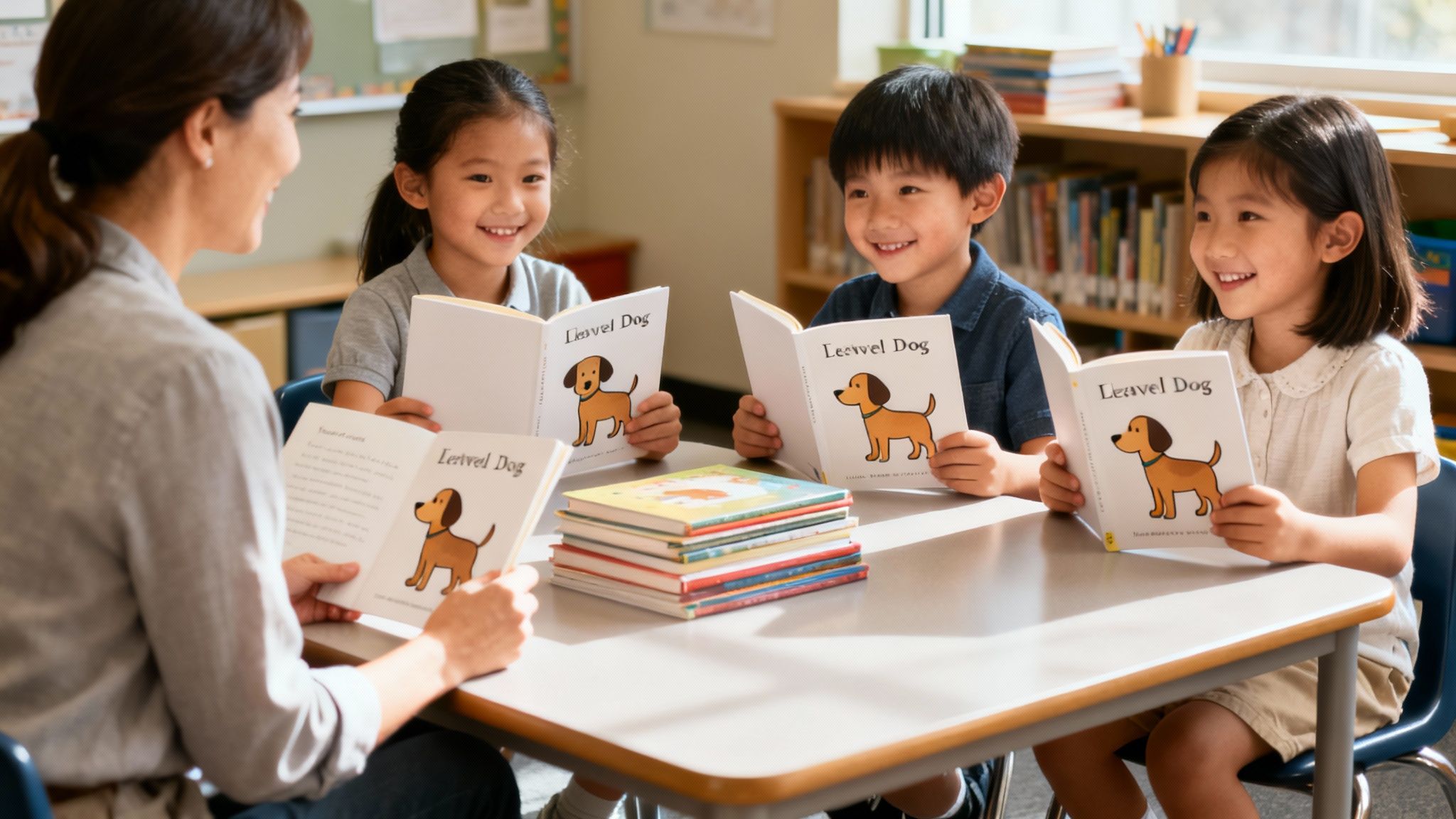
This small-group setting is one of the most effective reading activities for first graders because it offers a perfect balance of support and independence. Students get to tackle new challenges in a low-pressure environment, practicing decoding, fluency, and comprehension strategies with direct coaching from the teacher. Choosing engaging, pet-centric stories ensures that motivation remains high throughout the process.
How It Works
The core of guided reading is matching students with "just-right" books that are not too easy and not too hard. The teacher introduces the story, provides a purpose for reading, and then listens in as each child reads the text softly to themselves. The teacher can then provide immediate, individualized feedback, prompting students to use strategies they’ve learned.
Key Insight: Guided reading’s strength comes from its personalized nature. Rather than a one-size-for-all lesson, you can address a specific skill a student needs, like decoding a tricky word or making an inference about a character, right in the moment it’s most relevant.
Actionable Tips for Implementation
To run your guided reading groups smoothly and effectively, consider these practical tips:
- Accurate Grouping: Use tools like running records or other informal assessments to determine students' instructional reading levels. Groups should be flexible, allowing students to move as they progress.
- Select Engaging Texts: Motivation is key. Use high-interest, leveled readers that will excite your students. Dog-themed collections are perfect for this, and the leveled stories on SetterFren.com are created to align with developmental reading stages while keeping the content fun.
- Set a Clear Purpose: Before reading, give students something specific to focus on. For example, "As you read today, I want you to look for clues that tell us how the puppy is feeling."
- Plan for Other Students: While you work with a small group, the rest of the class needs meaningful, independent activities. Set up literacy centers with tasks like word work, listening stations, or partner reading.
- Focus on Strategies: Use this time to explicitly teach and reinforce comprehension strategies. Prompt students to make predictions, ask questions, and connect the story about a dog's adventure to their own lives.
3. Book Buddy Pairs and Cross-Grade Reading Partnerships
Pairing a first grader with an older student creates a powerful mentorship that boosts confidence and skill. This collaborative approach turns reading from a solitary task into a shared adventure, where a younger child learns from an experienced peer. By setting up partnerships, often with third or fourth graders, you build a supportive community of readers right in the classroom or school.
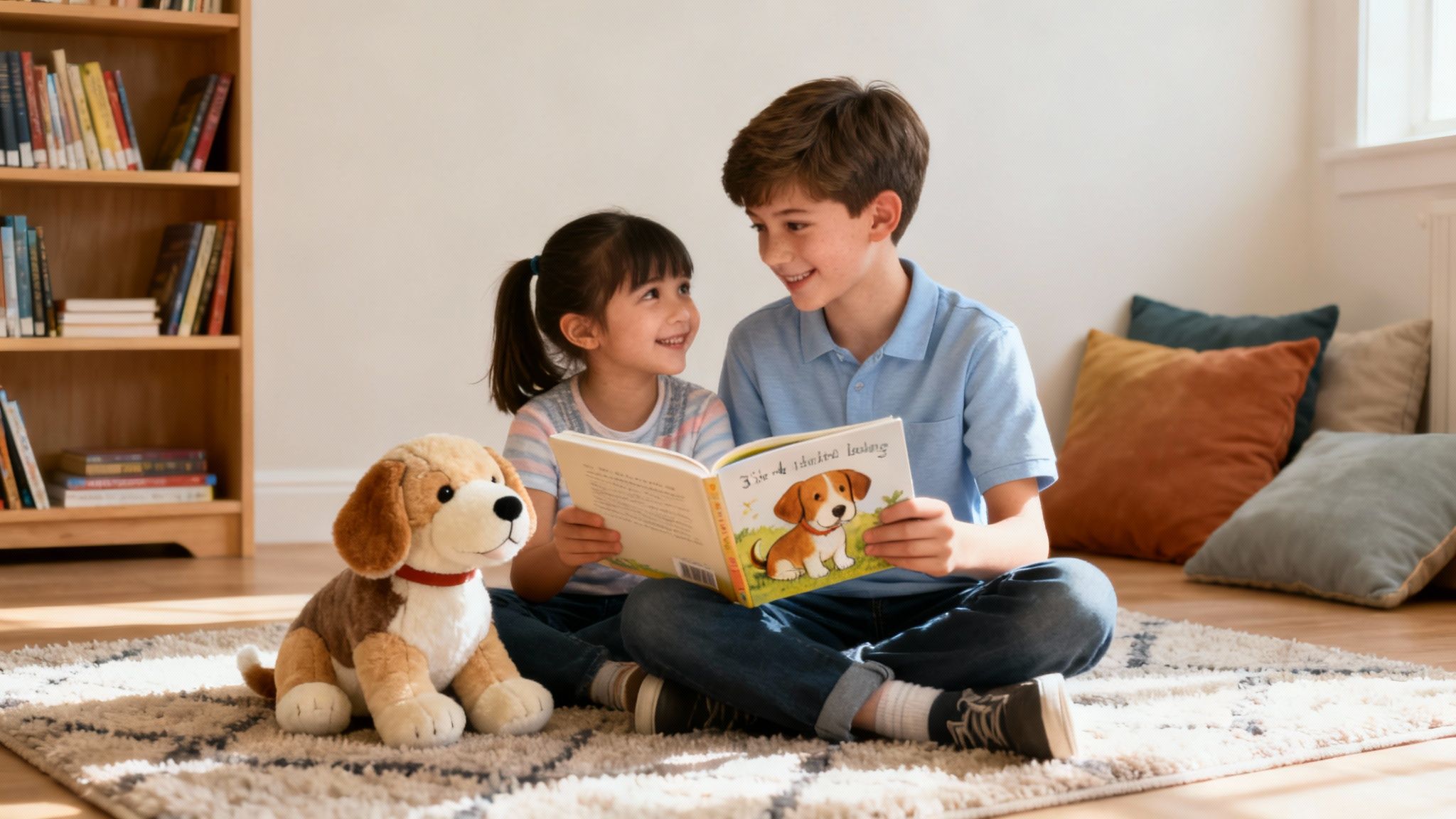
This method involves structured sessions where the older "buddy" reads to the younger one, they take turns reading, or they discuss a story together. Using engaging animal or pet-themed narratives, like the heartwarming tales from SetterFren.com, makes the experience even more delightful. This peer-to-peer model is one of the most effective reading activities for first graders because it provides a safe, low-pressure environment to practice and grow.
How It Works
The core idea is to foster a positive reading relationship that benefits both students. The first grader gets a patient, relatable mentor who can model fluent reading, help with tricky words, and ask thoughtful questions. The older buddy develops leadership, empathy, and a deeper understanding of reading concepts by having to explain them to someone else.
Key Insight: The magic of a book buddy partnership is the shift in dynamic. For a first grader, reading with a "big kid" feels special and less intimidating than reading with a teacher, which often encourages them to take more risks and build fluency.
Actionable Tips for Implementation
To ensure your book buddy program is a fantastic success, consider these practical strategies:
- Train Your Mentors: Before pairing them up, hold a brief training session for the older students. Teach them how to offer positive encouragement, ask open-ended questions, and use strategies like "echo reading" where they read a line and the younger buddy repeats it.
- Select High-Interest Books: Choose books with captivating plots and vibrant illustrations that appeal to both age groups. Dog-themed stories are often a huge hit, providing a common interest to bond over. Books from the SetterFren.com library are perfect for this, as they are designed for shared reading experiences.
- Structure the Sessions: Provide a simple framework for each meeting. For example, the first 5 minutes can be for catching up, the next 15 for reading, and the final 5 for a simple follow-up activity like drawing a favorite scene or discussing the main character.
- Match Personalities, Not Just Levels: While reading ability is a factor, pairing a shy first grader with a patient, gentle older student can be more impactful than a perfect academic match. Observe student personalities to create supportive pairs.
- Celebrate the Partnership: Acknowledge the effort and connection both buddies are building. You can host a small celebration at the end of a semester or provide official "Reading Buddy" certificates or badges from our Puppicino Club to make their achievement feel special.
4. Phonics-Based Games and Word Work Activities with Dog Themes
Turning phonics practice into a game is a brilliant way to capture a first grader's attention and make learning stick. Instead of rote memorization from flashcards, phonics-based games use playful competition and hands-on manipulation to teach decoding, sight words, and word families. By adding a fun dog theme, you connect these essential literacy skills to characters and concepts that children already love.
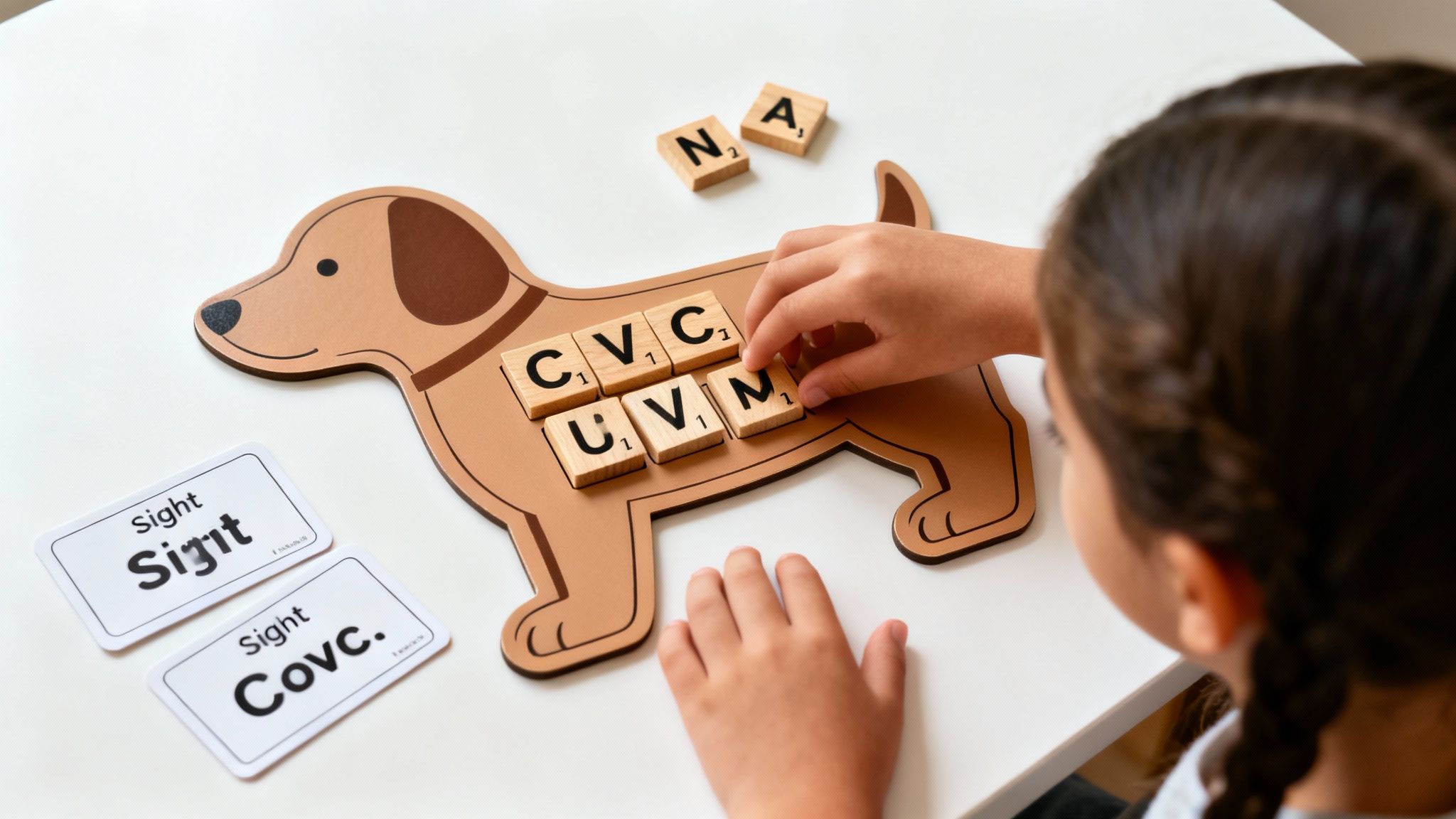
These activities transform abstract phonetic rules into tangible, exciting challenges. Whether it's a "Doggie Word Building" game with letter tiles or "Puppicino Phonics Bingo," this approach makes practice feel like playtime. This method is one of the most effective reading activities for first graders because it builds foundational skills through joyful, low-pressure interaction.
How It Works
The core idea is to embed phonics concepts within the rules of a game. Children learn about letter sounds, blends, and digraphs while trying to win a game, match cards, or move a piece around a board. The dog theme adds a narrative layer, making tasks like sounding out "ch" more exciting when it helps their favorite character from a SetterFren.com book win the race.
Key Insight: The power of game-based learning is that it shifts the focus from "work" to "fun." When a child is engrossed in playing, they absorb phonetic patterns and sight words incidentally, leading to deeper and more durable learning.
Actionable Tips for Implementation
To get the most out of your phonics games, try these practical tips:
- Create Themed Word Lists: Develop lists of words related to dogs (e.g., fetch, spot, bark, treat) that target specific phonics skills, like short vowels or consonant blends. This makes the practice relevant and engaging.
- Use Fun Game Pieces: A plushie of a SetterFren.com character or a small dog figurine makes a much more exciting game piece than a generic plastic marker. This simple swap increases a child's investment in the game.
- Incorporate Movement: Have children jump or clap for each sound in a word. To help children excel in tasks involving precise movements, such as tracing letters or manipulating small game pieces, incorporating specific fine motor skills development activities can be incredibly beneficial.
- Rotate Games Regularly: Keep things fresh by introducing new games or variations on existing ones. This prevents boredom and maintains high engagement. You can find inspiration from resources like our printable road trip bingo and adapt the format for phonics.
- Let Kids Be the Teacher: Encourage students to teach a favorite phonics game to a family member. This reinforces their understanding of the rules and the underlying literacy concepts.
5. Independent Reading Time with Choice Books and Reading Logs
Independent reading is where a first grader’s identity as a reader truly begins to blossom. This activity sets aside dedicated quiet time for students to select their own books and read by themselves, building essential stamina, confidence, and a genuine love for stories. By giving them the power of choice, we transform reading from a required task into a personal adventure.
Pairing this freedom with simple, visual reading logs helps children track their progress and feel a sense of accomplishment. This combination of autonomy and accountability makes independent reading one of the most powerful and foundational reading activities for first graders, fostering skills that will last a lifetime.
How It Works
The core idea is to create a structured yet flexible environment, often known as DEAR (Drop Everything And Read) time or as part of a Reader's Workshop model. Students choose "just right" books from a curated library and settle in for a sustained period of quiet reading. A reading log, often featuring stickers or simple charts, serves as a motivating tool to celebrate their journey through different books.
Key Insight: The true power of independent reading isn't just about decoding words; it's about students discovering their own tastes. When a child chooses a book about a silly dog because they love animals, they are making a personal connection to literacy that is far more meaningful than any assigned text.
Actionable Tips for Implementation
To make independent reading a cherished part of the day, try these practical tips:
- Curate a Tempting Library: Organize books with the covers facing out. Use colorful baskets to group them by theme (like pets and dogs), author, or reading level. A visually appealing library invites exploration.
- Host "Book Talks": Briefly introduce new books to the class with excitement. A one-minute preview of a hilarious story from the SetterFren.com collection can make it the most sought-after book in the library.
- Make Logs Fun: Design simple, visual logs. Instead of just writing titles, let children draw a picture of their favorite part or use fun, dog-themed stickers for each book they finish. Celebrate when a log is filled!
- Embrace Rereading: Encourage students to reread their favorite books. Rereading builds fluency, confidence, and a deeper understanding of the story, so it should always be celebrated.
- Create a Cozy Atmosphere: Just like for read-alouds, a comfortable space makes all the difference. Define the reading corner with a soft rug, pillows, or special chairs to signal that this is a special, enjoyable time.
6. Shared Reading and Big Book Instruction with Repetitive Texts
Shared reading uses oversized "Big Books" or projected digital texts to create a collective reading experience for the entire class. This whole-group approach allows every child to see the words and illustrations clearly, turning story time into a powerful instructional moment. By selecting books with repetitive patterns and predictable plots, you empower first graders to join in, building their confidence and sight word vocabulary together.
This method transforms reading from a solitary task into a community celebration. As the teacher models fluent reading, pointing to each word, children follow along, chime in on familiar phrases, and begin to internalize foundational skills. It stands out as one of the most effective reading activities for first graders because it offers a supportive, low-pressure environment where every student can feel like a successful reader.
How It Works
The core of shared reading is a joyful, collaborative atmosphere where the teacher and students read with each other, not to each other. The teacher guides the process, but the students are active participants from start to finish. Using a pointer to track the text reinforces left-to-right directionality and one-to-one correspondence between spoken and written words.
Key Insight: The power of shared reading comes from repetition and predictability. When students can confidently predict what comes next in a book like "Brown Bear, Brown Bear, What Do You See?", they aren't just reciting; they are actively making connections between patterns, sounds, and letters.
Actionable Tips for Implementation
To make your shared reading sessions dynamic and impactful, consider these strategies:
- Select Engaging Texts: Choose Big Books with rhythmic language, repeating phrases, and clear, engaging illustrations. Classics like The Very Hungry Caterpillar by Eric Carle are perfect, as are the Big Book editions of SetterFren.com stories, which leverage children's love for dogs to maximize engagement.
- Use a Pointer: Always use a pointer or your finger to track the words as you read. This simple action is crucial for modeling print concepts and helping students follow along.
- Invite Participation: Explicitly invite students to join in on the repetitive parts. You can pause and gesture to the class, encouraging them to chant the familiar phrase with you.
- Animate Your Reading: Use expressive voices, animated facial expressions, and gestures to bring the story to life. Modeling expressive reading teaches children that reading should be fun and full of feeling.
- Reread Favorites: Don't be afraid to revisit the same Big Book multiple times. Each rereading builds fluency, deepens comprehension, and solidifies word recognition, making it a valuable and beloved classroom routine.
7. Comprehension Activities: Story Retelling with Props and Puppets
Turning a beloved story into a live performance is a powerful way for first graders to deepen their understanding of a narrative. Story retelling with props and puppets transforms passive reading into an active, kinesthetic experience where children internalize plot, character motivations, and dialogue by acting them out. Using familiar items like dog plushies or simple character cutouts makes the story tangible and memorable.
This hands-on method is one of the most effective reading activities for first graders because it builds comprehension and oral language skills simultaneously. By reenacting a story, children must recall the sequence of events, understand character perspectives, and use descriptive language, all while having tremendous fun. It bridges the gap between reading the words and truly living the story.
How It Works
The goal is to empower children to become storytellers themselves. After reading a book together, you provide simple tools that allow them to retell the main events. This could be a full-blown puppet show, a simple reenactment with plush toys, or a reader's theater-style performance. The focus is on expression and comprehension, not a perfect recitation.
Key Insight: The magic of this activity lies in physical interaction. When a child makes a puppet "run" away from a big, friendly dog or uses a plush toy to act out a scene, they are cementing the story's sequence and emotional arc in their memory through movement and play.
Actionable Tips for Implementation
To make your story retelling a blockbuster hit, try these practical tips:
- Gather Your Props: You don’t need an elaborate setup. Simple items work wonders. Character plushies from the SetterFren.com shop are perfect, ready-made puppets for their stories. You can also create stick puppets using downloadable character templates; check out our guide on how to draw dogs step-by-step to inspire your own creations.
- Create Simple Sequence Cards: For longer stories, draw or print simple pictures depicting the main events (beginning, middle, end). This visual guide helps children organize their retelling and remember key plot points.
- Embrace Different Roles: Let children choose which character they want to portray. This gives them ownership and encourages them to think deeply about that character’s feelings and actions throughout the story.
- Use a Makeshift Stage: A cardboard box can become a puppet theater, and a blanket draped over two chairs can set the stage for a grand performance. The environment helps spark imagination. To deepen understanding of how physical objects can enrich a story, consider consulting a guide on choosing props that enhance narrative for more ideas.
- Record the Performance: Use a phone to record the children's puppet show or play. Watching it back together is a joyful way to celebrate their hard work and reinforces the story one more time.
8. Family Reading Partnerships with Take-Home Book Programs
A family reading partnership extends learning beyond the classroom walls, transforming reading from a school task into a cherished family routine. This structured program involves sending books home with first graders to read with their families, fostering a collaborative home-school literacy environment. By including dog-themed stories, you provide a wonderful, shared interest that sparks natural conversation and connection.
This approach strengthens the home-school bond and reinforces that reading is a valuable, enjoyable activity for everyone. It's one of the most impactful reading activities for first graders because it builds a supportive literacy culture at home, which is crucial for a child's long-term academic success and love for reading.
How It Works
The core idea is to create a simple, consistent system for children to take books home, read with a family member, and share their experience. This isn't about assigning homework; it's about facilitating joyful, shared moments centered around a story. The program is supported by materials like reading logs, discussion prompts, and family engagement resources to guide the interaction.
Key Insight: The success of a take-home book program lies in its accessibility and celebration of effort. Providing simple, non-judgmental tools like a reading log where a child can draw a star for each book read with family makes participation feel like an accomplishment, not a chore.
Actionable Tips for Implementation
To build a thriving family reading partnership, try these practical tips:
- Choose Appealing Books: Select high-interest books that families will enjoy together. Dog-themed books from SetterFren.com are perfect because their heartwarming stories and lovable characters appeal to both children and adults, making the shared reading experience more engaging.
- Provide Simple Guides: Create simple, one-page guides with open-ended questions like, "What was your favorite part of the story?" or "How do you think the puppy felt when…?" Translate these into multiple languages to support all families in your community.
- Use Fun Incentives: Offer small, exciting rewards for participation. Dog-themed incentives like SetterFren.com stickers, character bookmarks, or even a chance to be featured in a "Family Reading Pups" bulletin board can motivate young readers.
- Host Celebration Events: Organize occasional family reading nights with a fun theme. A "Paws for Reading" event where families can share their favorite books or participate in a craft can build a strong sense of community.
- Offer Flexible Options: Acknowledge that every family is different. Provide access to audiobooks or digital versions of the stories for families with varying schedules or literacy needs. This ensures everyone can participate.
First-Grade Reading Activities Comparison
| Approach | 🔄 Implementation complexity | ⚡ Resource & time efficiency | ⭐ Expected effectiveness | 📊 Key outcomes | 💡 Ideal use cases / tips |
|---|---|---|---|---|---|
| Interactive Read-Aloud Sessions with Pet-Themed Stories | Moderate — prep voices/props and manage group | High — low-cost materials; short sessions | ⭐⭐⭐⭐ — strong for engagement & listening | 📊 Improved listening, comprehension, vocabulary, classroom community | 💡 Daily/weekly story time; use props, repetitive texts, dog characters |
| Guided Reading Groups with Leveled Dog-Themed Texts | High — requires assessment, planning, flexible grouping | Moderate — time-intensive; needs leveled book sets | ⭐⭐⭐⭐⭐ — excellent for targeted progress | 📊 Improved decoding, fluency, tailored skill gains | 💡 Small groups (4–6), use Running Records and leveled dog readers |
| Book Buddy Pairs and Cross-Grade Partnerships | Moderate — coordinate pairs and train older students | High — low-cost, scheduled short sessions | ⭐⭐⭐⭐ — effective for fluency and confidence | 📊 Better oral fluency, social skills, mentorship benefits | 💡 Pair thoughtfully, train mentors, schedule 2–3x weekly sessions |
| Phonics-Based Games and Word Work Activities with Dog Themes | Moderate — create/manage materials and routines | Moderate — upfront prep; many low-cost DIY options | ⭐⭐⭐⭐ — effective for phonics automaticity | 📊 Improved decoding, sight-word recognition, engagement | 💡 Rotate games, track progress, integrate dog visuals and kinesthetic play |
| Independent Reading Time with Choice Books and Reading Logs | Low–Moderate — set up library and routines | Moderate — daily time; investment in book collection | ⭐⭐⭐⭐ — builds stamina and motivation over time | 📊 Increased reading stamina, fluency, intrinsic motivation | 💡 10–15 min daily; display covers forward; use visual reading logs |
| Shared Reading and Big Book Instruction with Repetitive Texts | Low — whole-class delivery; needs big-format texts | High — efficient whole-class repetition | ⭐⭐⭐⭐ — strong for sight words and confidence | 📊 Improved sight-word recognition, oral fluency, group participation | 💡 Use predictable texts, track print, invite chorus reading |
| Comprehension Activities: Story Retelling with Props and Puppets | Moderate — create/organize puppets and space; rehearse | Low–Moderate — prep-heavy; performance time needed | ⭐⭐⭐⭐ — deepens comprehension and oral language | 📊 Better sequencing, retelling skills, expressive language | 💡 Use puppets for shy readers; connect retellings to writing; record performances |
| Family Reading Partnerships with Take-Home Book Programs | Moderate — logistics, communication, multilingual materials | Low–Moderate — book management and admin time | ⭐⭐⭐⭐ — extends practice and family engagement (variable) | 📊 Increased home reading volume, family involvement, literacy habits | 💡 Provide simple multi-language guides, incentives, and digital options |
Keep the Pages Turning and the Tails Wagging
Guiding a first grader on their reading journey is one of the most rewarding adventures a parent or teacher can undertake. Throughout this article, we’ve explored a comprehensive toolkit of eight powerful, engaging, and delightfully dog-themed reading activities for first graders. From the communal joy of Interactive Read-Alouds to the focused skill-building of Phonics-Based Games, each strategy is a stepping stone toward building a confident, enthusiastic, and lifelong reader.
The path to literacy isn't a straight line; it's a winding trail filled with exciting discoveries, a few tricky spots, and plenty of opportunities for fun. The activities we’ve detailed are designed to meet young readers exactly where they are, providing the structure, support, and playful motivation they need to thrive. Whether you are creating Book Buddy partnerships or setting up a cozy corner for Independent Reading, you are doing more than just teaching skills. You are building a positive, lasting relationship with books.
Key Takeaways for Your Reading Toolkit
Let's recap the core principles that make these first-grade reading activities so effective:
- Connection Over Correction: The primary goal is to foster a love for stories. By using pet-themed narratives and fun props, you create an environment where children feel safe to explore and make mistakes. This positive association is the foundation upon which all other skills are built.
- Variety is the Spice of Literacy: A balanced literacy approach is crucial. Combining whole-group activities like Shared Reading, small-group instruction like Guided Reading, and individual practice ensures that every learning style and need is addressed. No single activity is a magic bullet; their power lies in how they work together.
- Engagement is Everything: First graders learn best when they are actively involved. Activities that incorporate movement, props, partner work, and choice are far more impactful than passive listening. Think of it as the difference between watching a dog play fetch and throwing the ball yourself. Active participation solidifies learning.
Your Actionable Next Steps
Feeling inspired? The best way to start is to simply pick one or two activities that resonate with you and your young readers. You don't need to implement everything at once. Start small, observe what works, and gradually build a routine that feels both effective and enjoyable.
Remember to tailor each activity to the specific needs and interests of your child or students. Is a student struggling with letter sounds? Double down on Phonics-Based Games with a doggy twist. Is another reader ready for a challenge? Introduce them to a new chapter book series during their Independent Reading time.
The most impactful reading instruction happens when we blend evidence-based strategies with genuine, heartfelt connection. By infusing these reading activities for first graders with themes they adore, like the loyal companionship of a dog, we transform learning from a task into a treat.
Ultimately, the goal is to help every first grader see reading not as a chore, but as a gateway to new worlds, exciting ideas, and endless possibilities. You are their guide on this incredible journey. By providing a rich variety of experiences, celebrating their progress, and sharing in their discoveries, you are giving them a gift that will last a lifetime. Keep the pages turning, celebrate every milestone, and watch as their confidence and love for reading grow, one wagging tail at a time.
Ready to stock your first grader's library with stories that will capture their heart and imagination? SetterFrens LLC is your go-to destination for enchanting dog-themed children's books that perfectly complement the reading activities in this guide. Explore our curated collection and join our Puppicino Club at Setterfrens LLC to find the perfect book to bring your next reading adventure to life. And don't forget to follow the fun @setterfrens on TikTok and Instagram for heartwarming dog moments and more