So, you're curious about feeding your dog a raw diet? You've come to the right place. This guide is your friendly, no-nonsense introduction to what raw feeding is all about. We'll break down the core ingredients and the big ideas behind it, helping you figure out if this is the right move for your best friend.
What a Raw Dog Food Diet Really Means
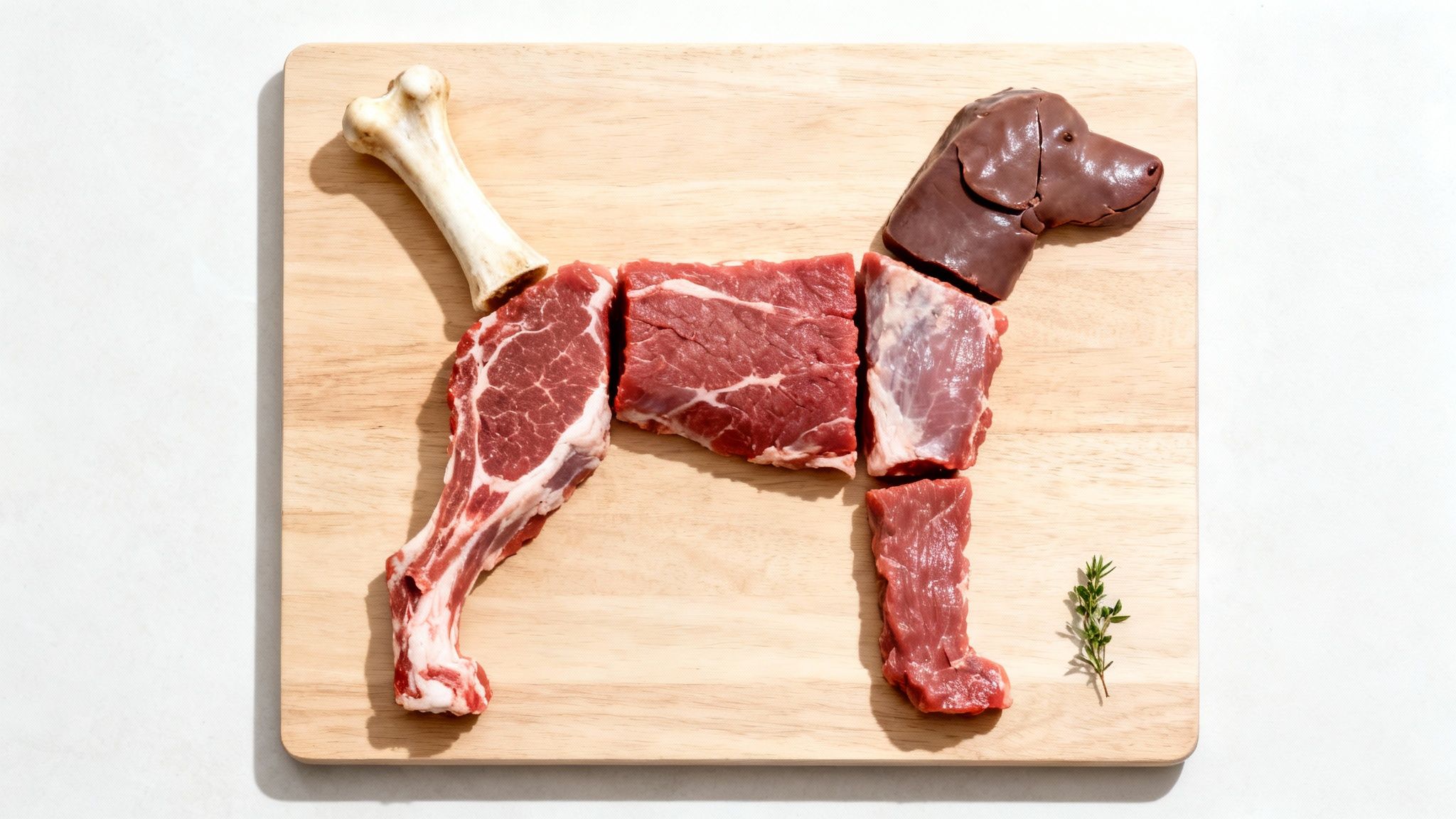
Let's demystify raw feeding. It might sound complicated, but at its heart, it’s about getting back to basics. A raw dog food diet is simply a way of feeding that focuses on uncooked meat, edible bones, and organs—the kinds of things dogs' ancestors ate in the wild for thousands of years.
This isn't just some fringe trend. It's part of a bigger shift in how we view our dogs' health. The global raw dog food market was recently valued at around $12.8 billion, and it's set to keep growing fast. That boom shows a real hunger from pet parents for diets that help their dogs feel their absolute best. You can dig into more data about this growing market trend to see just how many people are making the switch.
The Building Blocks of a Raw Diet
Think of a raw diet like building a complete meal from scratch. Each component plays a vital role.
- Muscle Meat: This is the cornerstone of the meal, delivering the protein, amino acids, and B vitamins your dog needs to thrive. It should make up the biggest portion of their bowl.
- Edible Bones: Forget cooked bones—they're a major no-go. Raw bones, on the other hand, are a fantastic source of calcium and phosphorus, which are essential for strong skeletons and clean teeth.
- Organs: Don't skip the organs! These are nature's multivitamins. Parts like the liver and kidneys are incredibly dense with nutrients you just can't get from muscle meat alone.
Two Main Philosophies: BARF vs. Prey Model
As you start exploring, you'll hear about two main approaches to raw feeding. They both aim for the same goal—a healthier dog—but they get there in slightly different ways.
The BARF model stands for "Biologically Appropriate Raw Food." This approach includes muscle meat, bones, and organs, but it also adds dog-friendly fruits, vegetables, and sometimes supplements to round out the meal.
The Prey Model, on the other hand, tries to mimic the composition of a whole prey animal. It follows a strict ratio of about 80% muscle meat, 10% bone, and 10% organ meat, with no plant-based ingredients at all.
To help you see the difference clearly, here’s a quick comparison.
Two Popular Raw Feeding Models at a Glance
This table breaks down the core components and philosophies of the BARF and Prey Model diets to help you quickly understand the fundamental differences.
| Feature | BARF Model (Biologically Appropriate Raw Food) | Prey Model |
|---|---|---|
| Core Philosophy | Mimics an ancestral diet but includes plant matter for added nutrients. | Strictly replicates the composition of a whole prey animal. |
| Muscle Meat | Typically 70% of the diet. | Typically 80% of the diet. |
| Edible Bone | Typically 10% of the diet. | Typically 10% of the diet. |
| Organ Meat | Typically 10% (5% liver, 5% other secreting organs). | Typically 10% (5% liver, 5% other secreting organs). |
| Fruits & Veggies | Typically 10% of the diet. | None. This model avoids all plant matter. |
| Supplements | Often includes extras like fish oil, kelp, or seeds. | Generally avoids supplements, relying on whole ingredients. |
Both paths are completely valid, and the "right" choice really comes down to what you're comfortable with and what helps your specific dog flourish. This guide will give our SetterFren community the clear, practical insights needed to explore this exciting journey.
Weighing the Benefits and Potential Risks
Every decision we make for our dogs comes with its own list of pros and cons, and choosing their food is one of the biggest. The raw dog food diet is no exception—it’s a topic that gets dog lovers talking, and for good reason. Before you make a change, it's crucial to look at the whole picture: the exciting benefits you might see and the real-world risks you need to manage.
Here at SetterFren, our goal is to give you the straight scoop. We’re not here to sell you on one way of feeding, but to arm you with the information you need to decide what feels right for your dog and your family. So, let’s get into what this journey could look like.
The Potential Upsides of a Raw Diet
Ask anyone who has switched their dog to raw, and you'll likely hear a story of transformation. While every dog is unique, there are a few key benefits that get people excited about this way of feeding.
- Shinier Coats and Healthier Skin: This is often the first thing people notice. The high-quality fats and proteins in raw food can do wonders for a dog's skin, often reducing itchiness and bringing out a beautiful, glossy shine in their coat.
- Improved Digestion and Smaller Stools: Raw diets are packed with nutrients your dog’s body can actually use, without all the starchy fillers. This means they absorb more good stuff, which often leads to smaller, firmer, and far less smelly poops. That's a win for everyone.
- Cleaner Teeth and Fresher Breath: Forget dental chews. Gnawing on raw meaty bones is nature's toothbrush. It helps scrape away plaque and tartar, which can lead to healthier gums and put an end to that classic "doggy breath."
- Increased Energy and Vitality: A diet built on high-quality, easily digestible protein is fantastic fuel. Many owners report their dogs have more stamina for walks and a renewed spring in their step.
A raw diet is all about getting back to basics. It aims to mirror what a dog’s ancestors thrived on—whole proteins, healthy fats, and essential nutrients, without the processed carbs that fill out many bags of kibble.
Acknowledging the Potential Risks
Now for the other side of the coin. It’s just as important to talk about the concerns raised by vets and long-time dog owners. Understanding these risks isn’t meant to scare you off, but to help you make safety your top priority from day one.
Bacterial Contamination
This is the big one, and it affects both you and your dog. Raw meat can carry bacteria like Salmonella, E. coli, and Listeria. A healthy dog’s gut is pretty tough, but there’s still a chance they could get sick.
The bigger risk is often for the humans in the house. Cross-contamination can happen on kitchen counters, in dog bowls, or even from a loving lick. This is why super-strict hygiene is non-negotiable, and we’ll cover exactly how to handle raw meat safely later on.
Nutritional Imbalances
Just throwing some mince in a bowl is not a raw diet. A meal of only muscle meat, for example, would be dangerously low in calcium and other minerals. Over time, an unbalanced DIY diet can cause serious problems, from weak bones to organ issues.
That’s why following a proven model like BARF or Prey Model is so critical—it ensures your dog gets the right mix of meat, bone, and organs. If you're not feeling confident about playing chef, commercially prepared raw meals are a fantastic, worry-free way to get started.
The Dangers of Bones
Raw meaty bones are a cornerstone of this diet, but they have to be handled with care. Choosing the wrong kind of bone can lead to scary situations.
- Choking hazards can happen if a dog tries to gulp down a piece that’s too big.
- Broken teeth are a real risk if you give hard, weight-bearing bones from large animals like cattle.
- Digestive blockages can occur if bone fragments get stuck.
The golden rule here is simple: always supervise your dog when they're chewing on a bone and choose one that's the right size for them. And one more thing—never, ever feed cooked bones. They become brittle, splinter easily, and are incredibly dangerous.
Choosing Your Path: Commercial vs. DIY Raw Food
So, you're ready to dip your paws into the world of raw feeding. Awesome! The first big decision you'll face is whether to buy pre-made raw meals or make them yourself. This choice is a cornerstone of your raw feeding journey, and it really comes down to your lifestyle.
Think of it this way: are you a meal-kit delivery person or a from-scratch home chef? One offers foolproof convenience, while the other gives you total control over the ingredients. Both paths can lead to a healthy, happy dog, so let's break them down to see which one feels right for you.
The Convenience of Commercial Raw Food
For anyone just starting out, commercial raw diets are a fantastic entry point. They take all the guesswork out of the equation. These meals are professionally formulated by animal nutritionists to be complete and balanced right out of the bag, which is a huge relief when you're worried about getting the nutrients just right.
You'll find them in a few different forms:
- Frozen: These are the most common, usually shaped into patties or nuggets that you just thaw and serve. Simple.
- Freeze-Dried: Super lightweight and shelf-stable, making them perfect for travel or for anyone short on freezer space. Just add a little water, and you're good to go.
- Dehydrated: Similar to freeze-dried, this food has had the moisture removed, just through a different process. It's another super convenient option.
Frozen meals really dominate the market, making up an estimated 70% of sales. They hit that sweet spot of being affordable while still packing a serious nutritional punch. The other 30% is split between the freeze-dried and dehydrated options, which are quickly becoming popular for their sheer ease of use. If you want to dive deeper into the numbers, this raw pet food industry analysis has some great insights.
SetterFren Tip: When you're browsing brands, look for a label that says the food is "complete and balanced" according to AAFCO (Association of American Feed Control Officials) standards. That's your seal of approval, telling you it meets all your dog's essential nutritional needs. Join our Puppicino Club for honest reviews of top raw food brands!
The Control and Customization of DIY Raw Food
If you're the type who loves to get hands-on, making your dog's food from scratch can be incredibly rewarding. The DIY approach gives you two massive wins: complete control over every single ingredient and, often, a lower price tag. This is perfect if your dog has tricky allergies or if you're passionate about sourcing ingredients from local farms.
But let's be real—this path is a commitment. It’s a lot more involved than just throwing some ground meat in a bowl. You'll need to be prepared to:
- Do Your Homework: Get comfortable with the right ratios of muscle meat, bone, and organs based on the feeding model you choose (like BARF or Prey Model).
- Find Good Sources: You'll need to track down reliable suppliers for everything from chicken backs and green tripe to beef liver.
- Get the Right Gear: A sturdy meat grinder, a digital kitchen scale, and a good amount of freezer space are pretty much non-negotiable.
- Block Out Prep Time: Be ready to spend a few hours at a time chopping, grinding, and portioning out meals, usually in big batches.
For the right person, the DIY route is an amazing way to connect with your dog's health on a whole new level. And hey, if you enjoy making their meals, you might get a kick out of our guide on how to make homemade dog treats too!
Ultimately, there's no single "best" choice—only the one that works for you and your life. Whether you go for the grab-and-go ease of commercial food or the custom-tailored approach of a DIY diet, you're taking a great step toward a more natural way of feeding your best friend.
How to Safely Transition Your Dog to a Raw Diet
Switching your dog's food isn't a race—it's a journey. Think of it like this: you wouldn't go from sitting on the couch to running a marathon overnight. A gentle, gradual approach is the secret to keeping your pup's digestive system happy and making the change a win for everyone.
Giving you practical, step-by-step guidance is what we're all about here at SetterFren. Our goal is to give you the confidence you need to care for your pup like a seasoned pro. Whether you’ve decided to go with a commercial pre-made raw food or you're diving into the DIY world, the transition process is the most critical first step.
This handy infographic breaks down the two main paths you can take, helping you see the whole journey from start to finish.
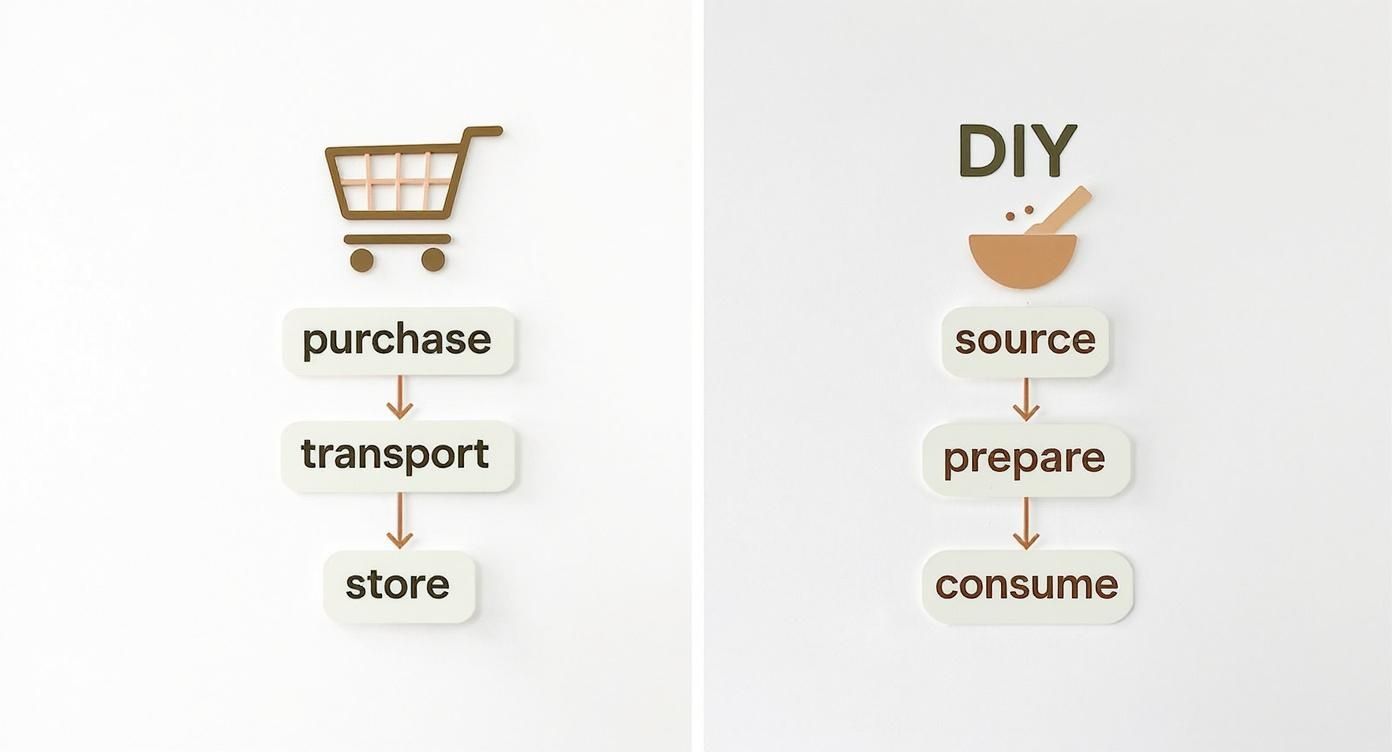
As you can see, the commercial route is all about convenience, while the DIY approach gives you total control. No matter which you choose, a thoughtful transition is non-negotiable.
The Slow and Steady Switch
For the vast majority of dogs, especially those with sensitive stomachs or ones who have eaten the same kibble for years, the slow transition is the safest bet. This method simply involves mixing the new raw food with their old food over 7 to 10 days. This gives their gut bacteria time to get acquainted with all the new, nutrient-dense ingredients.
Here’s a simple schedule to get you started.
Sample 10-Day Slow Transition Schedule
This table lays out a gentle, day-by-day plan to help your dog's digestive system adjust smoothly. Just follow the ratios!
| Day | Old Food Percentage | New Raw Food Percentage |
|---|---|---|
| Day 1-3 | 75% | 25% |
| Day 4-6 | 50% | 50% |
| Day 7-9 | 25% | 75% |
| Day 10+ | 0% | 100% |
By day 10, if all is going well, you've done it! Your dog is now fully transitioned.
This gradual process is perfect for most dogs and is what we always recommend if you're bringing a new pup home. For more on that, check out our guide on how to care for a new puppy—a smooth dietary transition is a huge part of a successful welcome!
The Clean Break Method
Some dogs have what we lovingly call "iron stomachs." These are usually younger, healthy dogs with tough digestive systems that aren't easily upset. For these guys, a 'clean break' or 'cold turkey' switch might work just fine.
With this approach, you simply stop feeding the old food one day and serve up the new raw food the next. Many long-time raw feeders actually prefer this method, believing it prevents the digestive system from having to juggle two completely different types of food at once.
A Quick Word of Caution: The 'clean break' is absolutely not for every dog. If your pup has a history of GI issues, is getting on in years, or has any underlying health conditions, please stick with the slow transition. It's always the safer path.
What to Expect During the Transition
As your dog’s body adjusts, you're going to see a few changes. Don't panic! Most of these are completely normal parts of the process.
- Changes in Stools: It's common to see some looser stools for the first few days as their system adapts. However, if diarrhea hangs around for more than a day or two, that's your cue to slow the transition way down.
- Minor Tummy Gurgles: A little bit of gas or some noisy gurgling is also normal. Just keep an eye on your dog and be ready to add an extra day or two at your current food ratio if they seem uncomfortable.
- Increased Thirst: Don't be surprised if your dog starts drinking more water. This is a common reaction as they get used to a diet with much higher moisture content.
The most important thing is to watch your dog and listen to what their body is telling you. Go at their pace, and never be afraid to take a step back. A successful switch is one that ends with a happy, healthy pup who loves their new meals.
Mastering Kitchen Safety for Raw Feeding
Let's be honest: handling raw meat for your dog can feel a little intimidating at first. The key is to approach it with the same care you would when prepping a chicken dinner for your family. We like to think of our kitchens as having two zones: one for human food and one for the dog's meals. This simple mindset shift makes all the difference.
This part of the guide is all about giving you the confidence to handle raw food safely. We'll walk through a simple checklist of habits that will quickly become second nature. The goal here is to take any worry out of the equation and replace it with clear, easy steps that fit right into your daily routine.
Your Raw Feeding Hygiene Checklist
Good habits are everything when it comes to feeding raw. While bacteria like Salmonella or E. coli are a real consideration, they're also completely manageable with the right practices. You wouldn't handle raw chicken and then chop up a salad without washing your hands and tools, right? The exact same logic applies here.
Here are the non-negotiables for your raw prep routine:
- Wash Your Hands, Always: This is rule number one. Before and after you touch raw meat, scrub your hands with warm, soapy water for at least 20 seconds.
- Keep a Dedicated Set of Tools: It's a great idea to have a specific cutting board, a few knives, and some bowls that are only for your dog's food. A color-coded system—like a red cutting board just for the dog's meat—is a fantastic way to avoid any mix-ups.
- Sanitize Every Surface: Once the meal is prepped, it's time to clean up. Wipe down and sanitize everything that the raw meat touched, including your countertops, utensils, and the sink. A simple solution of vinegar and water or your favorite pet-safe disinfectant gets the job done.
Smart Storage and Thawing Techniques
How you store and thaw the food is just as critical as how you handle it. Keeping things at the right temperature is your best line of defense against nasty bacteria, protecting both your pup and your family.
First off, raw dog food should always live in the freezer, kept at 0°F (-18°C) or colder. When you're ready to thaw a meal, the safest place is in the refrigerator. Please, never thaw raw meat on the kitchen counter! Leaving it at room temperature invites the outer layers into the bacterial "danger zone" (between 40°F and 140°F), where germs can multiply like crazy.
A good rule of thumb is to only thaw what you'll need for the next 24-48 hours. This keeps the food fresh and minimizes the time it spends out of the freezer, which is exactly what you want for your furry friend's safety.
Once it's thawed, keep the food in a sealed, airtight container in the fridge and make sure to use it within a day or two. And one last tip: never refreeze raw meat once it has been thawed. Doing so can mess with the quality and introduce unnecessary risks. Following these straightforward steps will help you serve up all the benefits of a raw diet with total peace of mind.
Building a Balanced Raw Meal for Beginners
Okay, so you're ready to actually make a raw meal for your dog. Let's get into it! This is where the rubber meets the road, and we want to show you just how straightforward putting together a balanced raw meal can be, without needing a degree in canine nutrition.
You’re not alone in wanting this for your dog. The interest in fresh, less-processed diets is exploding. The market for raw, fresh, and frozen dog food has already hit $1.984 billion USD and is only growing. It’s a clear sign that pet parents everywhere are looking for high-protein, natural options for their dogs. You can actually explore the raw dog food market growth insights here to see the data for yourself.
The BARF Model Ratios in Real Life
We're going to use the BARF model (Biologically Appropriate Raw Food) as our framework. It’s one of the most popular and well-rounded methods out there, especially when you're just starting. It’s all about a simple, easy-to-remember ratio.
The whole idea behind the BARF model is creating a complete nutritional package. It’s not just a slab of meat—it’s about mimicking what a dog's ancestors would have eaten in the wild, which includes everything from muscle and bone to the stomach contents of their prey.
Here are the basic building blocks you’ll be working with:
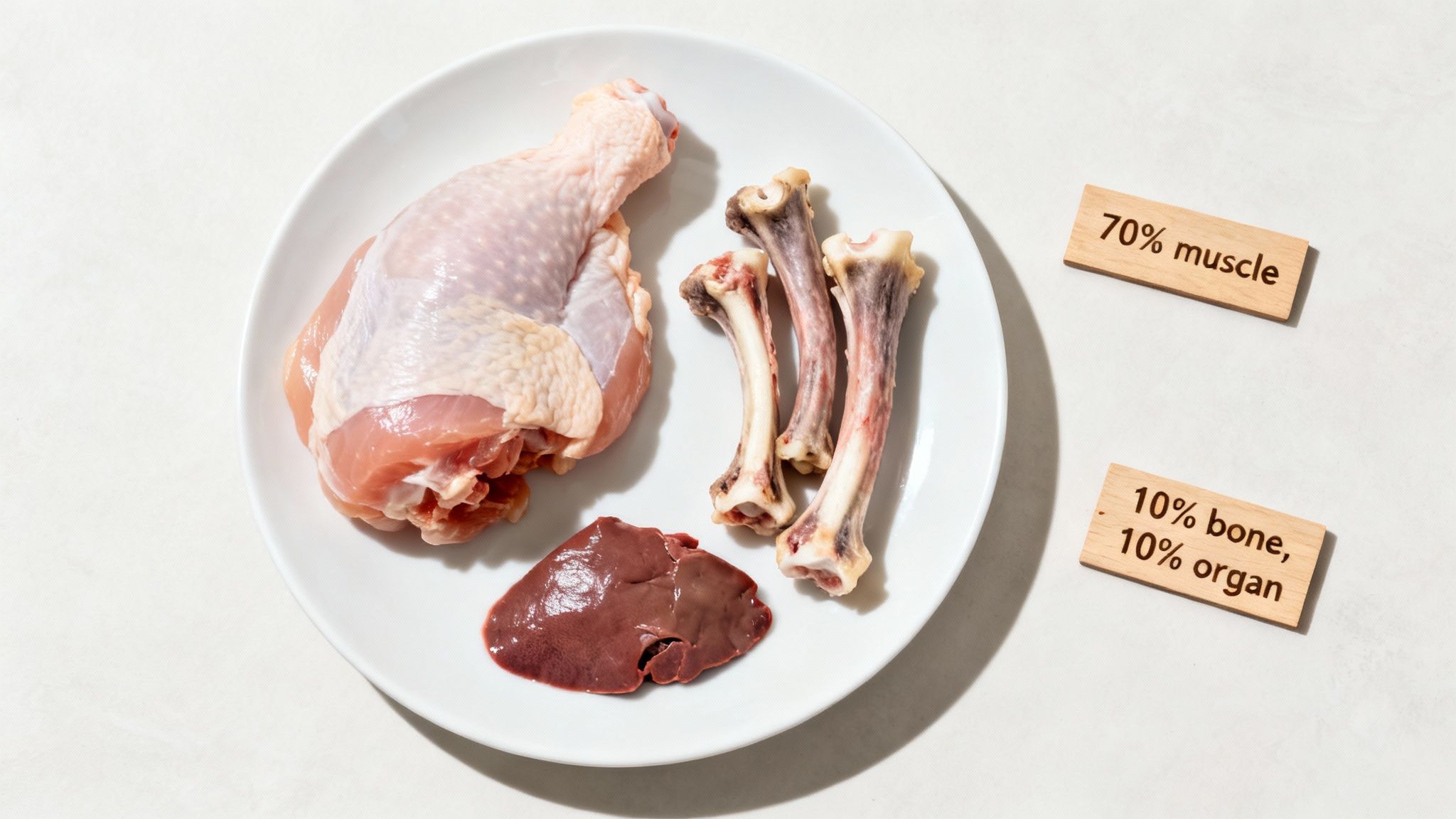
- 70% Muscle Meat: The protein-packed foundation of the meal.
- 10% Edible Bone: Absolutely vital for calcium and phosphorus.
- 10% Organ Meat: This is nature's multivitamin, dense with essential nutrients.
- 10% Fruits & Vegetables: For fiber, antioxidants, and a variety of micronutrients.
So, what does that actually look like in a bowl? It’s simpler than you think. Your muscle meat might be some ground beef, the bone could be a chicken wing, and the organ meat a chunk of beef liver. See? Totally doable.
Two Simple Starter Meal Ideas
Ready to give it a whirl? Here are two super simple "recipes" to get you started. They show just how easy it is to assemble a balanced meal right in your own kitchen. Just remember the golden rule: introduce new proteins one at a time to see how your dog's system handles them.
Starter Meal 1: The Chicken Dinner
This is a classic first meal for a reason. Chicken is easy for most dogs to digest and it's available everywhere.
- Muscle Meat & Bone (80%): A whole chicken leg quarter is perfect. It's a natural package of muscle meat and edible bone all in one.
- Organ Meat (10%): Add a small piece of chicken liver.
- Veggies (10%): A spoonful of puréed pumpkin or some finely chopped spinach works great.
Starter Meal 2: The Beef Bowl
Once your dog has aced the chicken dinner, it's time to try a red meat like beef.
- Muscle Meat (70%): Use ground beef or beef chunks.
- Bone (10%): A raw turkey neck is a fantastic and relatively soft bone source.
- Organ Meat (10%): Add a small chunk of beef kidney or liver.
- Fruits & Veggies (10%): Mix in a few puréed blueberries and some finely grated carrots.
Think of these as templates. Feel free to swap out ingredients based on what you can find at the store. The most important thing is to stick close to those ratios. And if you're feeding a growing puppy, their needs are a bit different. Make sure to check out our complete guide on the best dog food for puppies to get them started on the right paw.
Got Questions? Let's Talk Raw Feeding
It's totally normal to have a few questions swirling around after digging into a new topic like this. Let's tackle some of the most common things people ask us in the SetterFren community when they're thinking about switching to a raw diet. Our goal is to give you clear, straightforward answers so you can feel good about your next steps.
How Much Raw Food Does My Dog Actually Need?
A really solid starting point is to aim for 2-3% of your dog's ideal adult body weight in food each day. So, if you have a 50-pound dog, you'd be looking at feeding them somewhere between 1 and 1.5 pounds of food daily.
But honestly, that's just a guideline. Every single dog is different.
- Puppies & High-Energy Pups: These guys are burning through calories for growth and play, so they'll probably need a bit more.
- Older & Less Active Dogs: Couch potatoes and senior dogs might need a little less to keep them at a healthy weight.
The best thing you can do is keep an eye on your dog's physical condition. You should be able to feel their ribs easily, but not see them sticking out. Adjust their portions based on what you see and feel—you know your dog best!
Are You Sure Raw Chicken Bones Are Safe?
Yep, they are! Raw chicken bones are generally safe and are an amazing natural source of calcium. Since they haven't been cooked, they're soft and flexible, which means most dogs can crunch them up and digest them without a problem.
Here's the most important rule to remember: NEVER, ever feed cooked bones. Cooking makes bones brittle, causing them to splinter into sharp, dangerous pieces that can lead to choking or serious internal injuries. Just be sure to supervise your dog anytime you give them a raw, meaty bone to chew on.
Is This Raw Food Thing Going to Break the Bank?
The cost can really swing one way or the other, depending on how you approach it. Buying pre-made, high-quality commercial raw food will often cost more than a bag of premium kibble. You’re essentially paying for the convenience and the peace of mind that it's nutritionally complete.
On the flip side, going the DIY route can be surprisingly budget-friendly. This is especially true if you can find a local butcher or a farm co-op to buy your ingredients from in bulk. Many raw feeders in our community say that even if their monthly food bill goes up a bit, they end up saving money on vet visits down the road because their dogs are just healthier overall.
At SetterFren, we're all about empowering dog parents with good information. Whether you're at the very beginning of your research or just want to find a great dog-themed book to enjoy, our community is here for you. Stay part of the fun by following @setterfrens on TikTok and Instagram, and visit us at https://setterfren.com.