Training a puppy is a hands-on adventure fueled by patience, positive reinforcement, and clear communication. From day one, you’ll turn each lesson into a fun game, using tasty treats and enthusiastic praise to guide your new companion toward good habits.
Your Puppy Training Adventure Begins
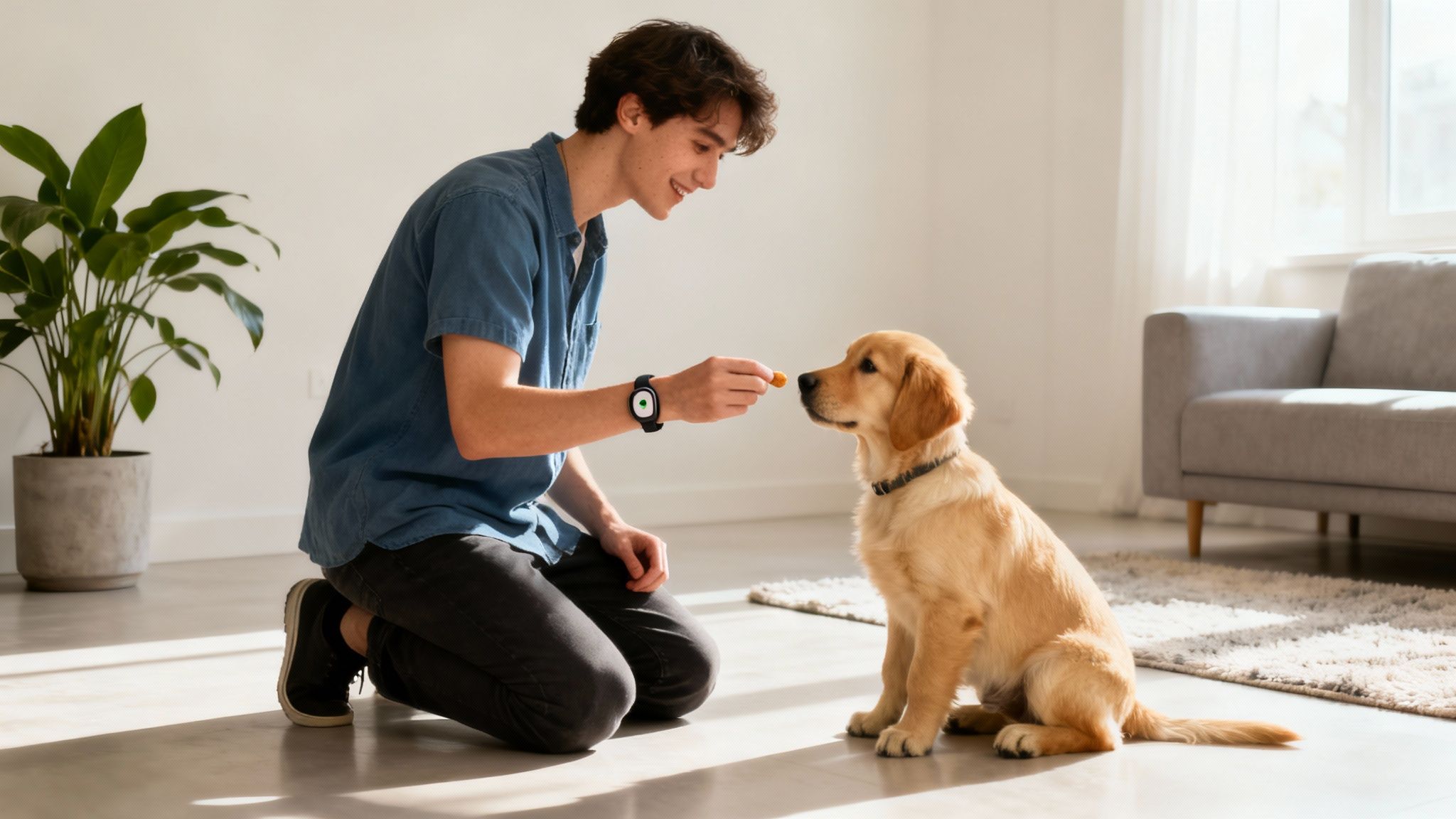
Bringing a puppy home feels like unlocking a lifetime of joy. You’re about to build trust, share laughs, and tackle challenges side by side. Think of this guide as your pocket-sized mentor—packed with down-to-earth tips that turn training from a chore into quality bonding time.
At SetterFren, we believe life's better with a wagging tail. That's why we swear by positive reinforcement. It just means rewarding every small win with a treat, a toy, or a happy cheer. It’s simple: happy puppies learn faster.
Setting The Stage For Success
Consistency is your secret weapon. Puppies thrive when they know what to expect:
• Offer a treat right after they nail a command.
• Use the same verbal cue and hand signal every time.
• Keep sessions short—around 5 minutes—to match their attention span.
You’ll also want to tackle the basics of housebreaking and chewing before they become habits. Our detailed roadmap on how to care for a new puppy walks you through everything from the first night cuddles to creating a puppy-proof zone.
Before diving in, let’s get you prepped:
Below is a quick-start table to kick off your first week on the right paw.
Your First Week Puppy Training Checklist
A quick-start guide to the essential items and mindset you'll need for a successful first week of training.
| Essential Gear | Key Mindset | Initial Goal |
|---|---|---|
| Treat pouch & treats | Patience & consistency | Establish potty routine |
| Crate & cozy bedding | Calm leadership | Introduce crate as safe spot |
| Clicker or marker word | Positive attitude | Teach “sit” and “come” basics |
Use this as your launchpad. Keep it on the fridge or taped to your training area for a daily reminder of your puppy’s targets.
Every training moment is an investment in a confident, well-adjusted companion.
Why Puppy Training Matters More Than Ever
Demand for expert guidance has soared—pet owners worldwide invested in professional training programs to foster strong, lasting bonds. In fact, the global pet training services market reached USD 12.43 billion in 2025. These figures show that a structured approach pays off: fewer accidents, less chewing, and a happier dog who truly gets you. For a deeper dive into industry trends, check out the growth of the pet training market.
Building a Solid Foundation with House Training
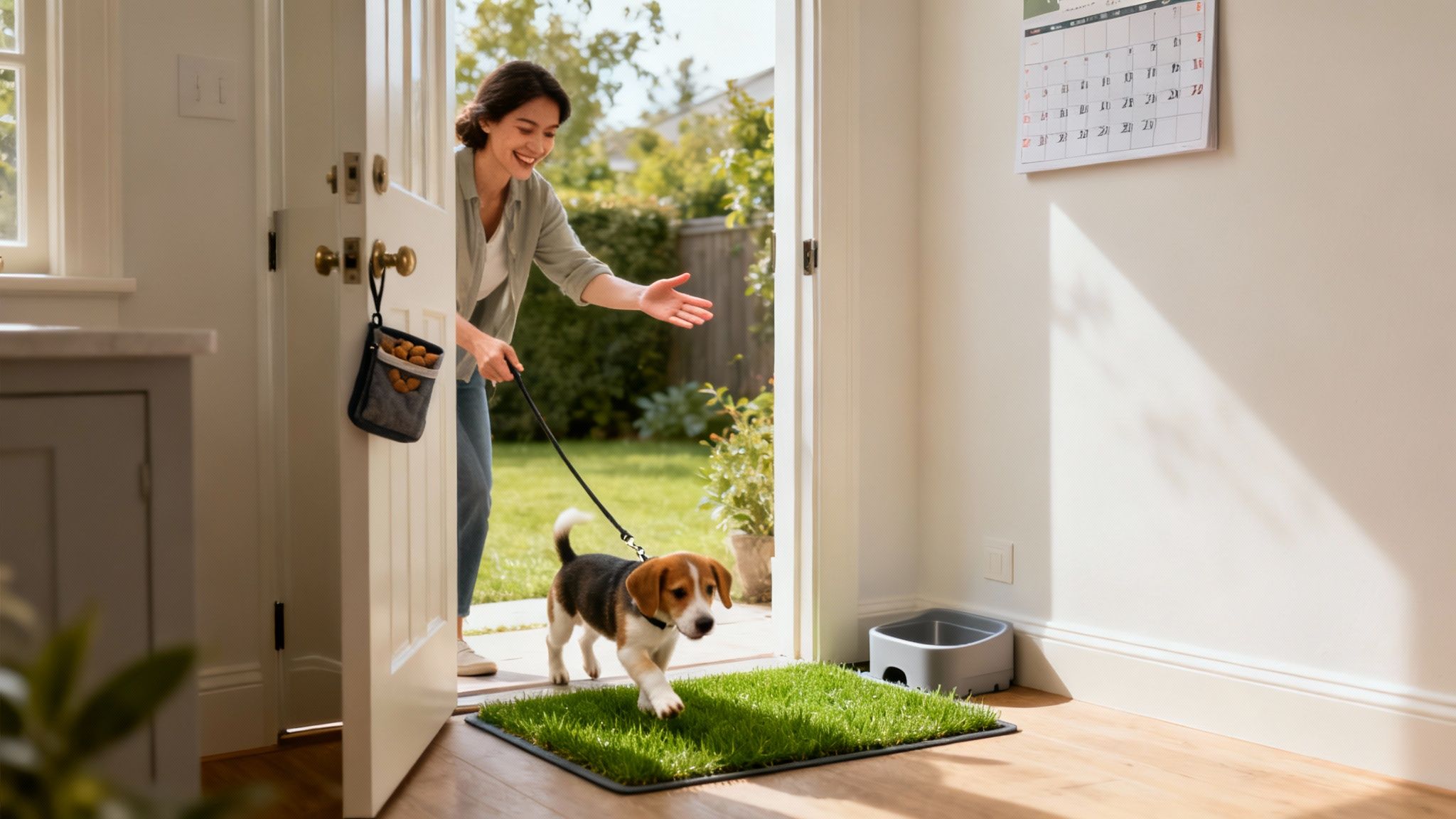
Let’s be honest: getting your puppy to go potty outside is a game-changer. It's the first major hurdle for most new puppy parents. When you get this right, you’re not just saving your floors; you’re building a foundation of trust and clear communication.
By focusing on creating good habits from day one, you'll spend a lot less time with a scrub brush and a lot more time enjoying those puppy cuddles.
Creating a Potty Schedule
Puppies are creatures of habit, and a predictable routine is your best friend. Their tiny bladders can’t hold it for long, so it's up to us to give them plenty of chances to succeed.
Most pups need to relieve themselves within 10-20 minutes of eating or waking up. A good rule of thumb is to take them out immediately during these key moments:
- First thing in the morning when they wake up
- Right after a good play session or training practice
- As soon as they wake up from a nap (or a car ride)
- One last time before you both turn in for the night
On top of that, try to take your pup out roughly every two hours in the beginning. This schedule lines up perfectly with how their bladder control develops.
“Consistency is the secret to house training success. Puppies thrive on predictability.”
You can even tie these potty breaks into your own routine. For example, make it a habit to take the puppy out right before you brew your morning coffee. This helps cement the schedule for both of you.
Recognizing Your Puppy's Signals
Your puppy will try to tell you when they need to go, but their signals can be subtle at first. You just have to learn their language. Keep an eye out for sudden changes in behavior, like sniffing the ground intently or circling in one spot.
These are classic "I gotta go!" signs:
- Intense sniffing of the floor or carpet
- Circling in a tight little pattern
- A sudden pause in play or a restless wander away from you
The moment you spot one of these cues, drop everything and calmly guide your puppy outside. Don't panic or scold; just get them to the right spot. This teaches them where to go instead of making them scared to go in front of you.
Designing a Potty Spot Your Pup Will Love
Creating a designated outdoor potty zone helps eliminate any confusion. Pick one specific spot in your yard and stick to it. The goal is to make your puppy associate that single patch of grass with doing their business.
- Choose an area that's close to the door for those frantic, last-minute dashes.
- Try to keep the surface consistent, whether it's grass, mulch, or a patch of turf.
- As they start to sniff around, introduce a verbal cue like "go potty" in a calm, encouraging voice.
- The second they finish, praise them enthusiastically and offer a high-value treat.
Every time they succeed in their special spot, you're strengthening the connection between the command, the location, and the reward. Before you know it, just saying "go potty" will trigger a happy little sprint to the door.
Handling Accidents With Calm Cleanup
Accidents are going to happen. It's just part of the process, so don't get discouraged. The key is how you handle them. A quick, thorough, and frustration-free cleanup is all you need.
It's absolutely critical to use an enzyme-based cleaner. Regular soaps won't cut it, as they don't break down the odor-causing particles that attract your puppy back to the same spot.
| Step | Product Type | Why It Matters |
|---|---|---|
| Spot treatment | Enzyme cleaner spray | Removes the specific scent that tells a puppy, "This is a bathroom!" |
| Deep clean | Pet accident solution | Penetrates carpets and flooring to eliminate any lingering odors. |
| Routine check | Odor neutralizer | Helps keep the whole area smelling fresh and discourages remarking. |
Whatever you do, stay away from ammonia-based cleaners. They actually smell a bit like urine to a dog, which can inadvertently encourage them to mark the area again. A homemade solution of vinegar and water can also work in a pinch.
Next Steps To Keep the Momentum Going
Once you feel like you have accidents mostly under control, it's tempting to relax the rules. Don't! Stick to that potty schedule religiously for at least another two weeks. Repetition is what builds that rock-solid muscle memory.
To keep things from feeling like a chore, you can even turn potty breaks into a mini-training session. After a successful trip outside, toss their favorite toy for a minute of praise-filled play. You can also mix in a quick command, like asking for a "sit" before they get their potty treat.
“By weaving training into daily life, you transform chores into bonding moments.”
By the end of week three, you'll likely notice your puppy starting to signal more clearly when they need to go out. Keep piling on the positive reinforcement, and you'll see their confidence soar.
Building Consistency Over Time
True house-training success isn't about one perfect week; it's about building consistent habits over months. This long-term repetition is what sharpens their bladder control and makes the whole process second nature.
Take a moment at the end of each day to think about what went well and what didn't. Did you miss a signal? Did they have an accident after a particularly exciting play session? Noting these patterns helps you adjust.
For extra support, you might consider joining a community like the Puppicino Club at SetterFren. Connecting with other puppy owners for tips, tricks, and a bit of moral support can make a huge difference. You'll unlock member perks, book updates, and dog-friendly treats!
And remember, every puppy learns at their own pace. It's easy to fall into the trap of comparing your pup's progress to someone else's. Just focus on celebrating your own dog's small wins along the way.
Here are a few key habits to track:
- Morning and evening bathroom success rate
- How quickly they respond to your "go potty" cue
- Any new ways they're starting to signal their needs to you
Teaching Your Puppy the Fun Stuff: Basic Commands
Alright, with house training underway, we can get to the really fun part—teaching your puppy their first commands. This isn't about old-school, rigid obedience. It's about turning learning into a game and building an incredible bond with your new best friend. We're all about positive reinforcement here, which just means using tasty treats, over-the-top praise, and fun toys to show your pup they’re getting it right.
Think of it like you're creating a secret language between the two of you. Every successful "Sit" and happy tail wag strengthens your connection.
The Lure and Reward Trick
So, how do you show a puppy what you want without physically moving them? The secret is the "lure." You simply use a high-value, super-tasty treat to guide their nose, and their body will naturally follow. This is way better than trying to push their bottom down, which often just confuses and frustrates them.
Here's the gist: hold a yummy, pea-sized treat right by their nose. As you move the treat, they'll follow it. The second they move into the position you want—like a sit or a down—you mark the moment with an excited "Yes!" and pop the treat in their mouth.
This little trick is gold because it lets your puppy feel like they figured it out all on their own. That confidence makes them excited to play the training game again and again.
Mastering the 'Sit' Command
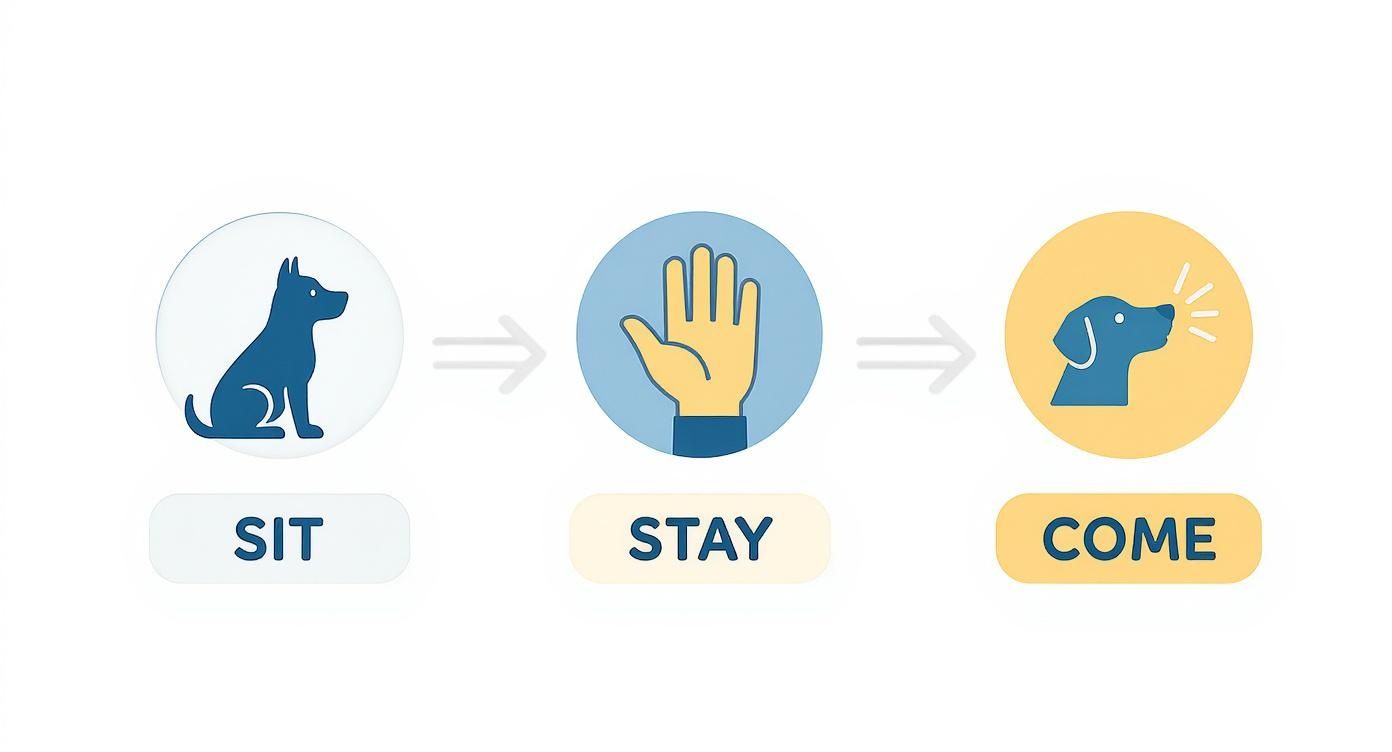
The "Sit" is the classic first command for a reason. It’s incredibly useful and pretty easy for most puppies to pick up. A good "Sit" becomes their polite way of saying "please," whether they're waiting for their dinner bowl or for you to clip on their leash.
- Grab a delicious treat and hold it between your thumb and index finger.
- Let your puppy sniff it right in front of their nose. You've got their full attention now.
- Slowly move the treat up and back over their head, like you're drawing a small arc. To keep their eyes on the prize, their head will go up, and their butt will naturally go down.
- The very instant their rump hits the floor, say "Yes!" in your happiest voice and give them the treat.
Keep these first sessions super short and sweet—just a minute or two is plenty. Do about three to five repetitions and always end on a high note with lots of praise. You want them to walk away thinking, "Wow, that was easy and fun!"
Teaching the All-Important 'Come' Command
If you teach only one command, make it this one. A solid recall (getting your dog to come when called) is a lifesaver. It can prevent your puppy from darting into a busy street or getting into another dangerous situation. The goal is to make the word "Come!" sound like the best party in the world is happening right where you are.
Start inside, in a quiet room with no distractions. If you have a partner, have them gently hold your puppy while you walk a few feet away. Crouch down, open your arms wide, and call their name followed by "Come!" in your most excited, cheerful voice.
As they start running toward you, pile on the praise. The moment they reach you, give them a jackpot reward—that means several small, amazing treats, one after another, plus tons of affection. This teaches them that coming back to you is always the best choice they can make.
A quick but crucial tip: Never, ever call your puppy to "Come" for something they hate, like a bath, nail trim, or being put in their crate for bedtime. You have to protect the positive vibe of that word at all costs.
The Life-Saving 'Leave It' Cue
"Leave It" is your emergency brake. It teaches your puppy impulse control and can stop them from gobbling up something dangerous, whether it's a dropped pill on the kitchen floor or a sketchy-looking piece of pizza on the sidewalk. This one is non-negotiable.
You'll want to teach this in stages, building up the difficulty over time.
- Stage 1: The Easy Win. Put a boring treat (like a piece of their regular kibble) inside your closed fist. Let your puppy sniff, lick, and paw at your hand. They'll eventually get frustrated and pull away. The split second they back off, say "Yes!" and reward them with a much better treat from your other hand.
- Stage 2: Adding the Word. Once they're ignoring the boring treat in your fist pretty consistently, it's time to add the cue. As you present your closed fist, say "Leave It." When they ignore your hand, praise them and give them the good stuff from your other hand.
This teaches them a fantastic lesson: ignoring one thing often leads to getting something way better directly from you.
Making Your Training Treats Work for You
The treats you use can be the difference between a frustrating training session and a wildly successful one. For new or difficult commands, you need to bring out the big guns—something your puppy finds absolutely irresistible. Think small, soft, and a little stinky. The pet industry certainly gets it; the global market for dog training services hit an impressive USD 39.96 billion in 2025, with basic obedience being a huge driver. If you're curious, you can check out the full dog training market report.
But you don't have to buy expensive treats. If you want to use healthy, high-value rewards, why not make your own? Our guide to homemade dog treats recipes is full of easy ideas that will have your puppy laser-focused on you.
Think about your treats in tiers. This helps your puppy understand how well they're doing.
| Treat Type | Best For | Why It Works |
|---|---|---|
| Kibble | Reinforcing known commands | Low-value, great for everyday practice without piling on the calories. |
| Soft Training Bites | Learning new commands | High-value and easy to chew quickly, so you can keep the training pace up. |
| Freeze-Dried Liver | "Jackpot" rewards for recall | Extremely high-value with a powerful scent that cuts through distractions. |
By matching the treat to the task, you can clearly communicate what's expected. A simple "Sit" in the living room might earn a piece of kibble, but a fast "Come" from across the yard? That definitely calls for a jackpot of the good stuff.
Mastering Socialization For A Confident Dog
A puppy who greets life with a wagging tail isn’t born that way—it’s shaped by gentle, positive experiences during a crucial window. Between 3 to 16 weeks, their little brain soaks up everything around them. Getting this right lays the groundwork for a fearless, happy companion.
Think of yourself as your pup’s personal guide, leading them through new sights, sounds, smells, and textures in bite-sized, exciting bursts.
The Golden Rule Of Socialization
Every encounter should end on a high note. Pair new experiences with tasty treats, favorite toys, or hearty praise. If your puppy hesitates or shies away, give them space—forcing the issue can breed fear.
Instead, let curiosity lead the way. If they’re unsure about a friendly stranger, have the person toss a treat near your pup without staring. That simple gesture teaches your dog that new faces bring good things.
The secret to successful socialization is quality over quantity. A handful of calm, positive encounters is far better than a dozen overwhelming ones.
If you’d like to dive deeper into building those positive foundations, check out this guide:
https://setterfren.com/what-is-puppy-socialization/
Navigating New People And Pups
When you introduce your puppy to others, pick your moments:
• People Introductions: Begin with calm adults. Ask them to crouch down and let your pup come forward. Looming over or grabbing at your puppy’s head can feel threatening.
• Dog Introductions: Only bring your puppy to meet friendly, vaccinated adult dogs you trust. A relaxed, well-mannered dog is the best mentor.
• Puppy Playdates: Short sessions—around 10-15 minutes—with pups of similar size and temperament work wonders. Step in if play escalates; everyone should end on a playful note.
Puppy Socialization Do's And Don'ts
Here’s a quick reference to keep your socialization sessions on track:
| Socialization Goal | Positive Approach (Do) | Negative Approach (Don't) |
|---|---|---|
| Meeting New People | Let strangers toss treats at a comfortable distance | Dragging puppy into close contact |
| Interacting With Dogs | Arrange calm, supervised time with vaccinated adults | Forcing play with unknown or overly excited dogs |
| Exposure To Sounds | Introduce noises at low volume paired with treats | Cranking up sound suddenly and ignoring stress |
| Trying Different Surfaces | Encourage exploring textures with treats | Pushing puppy onto surfaces they clearly avoid |
| Car Rides | Start with short, fun trips that end at parks | Only using the car for vet visits |
Use this table as a checkpoint: focus on gentle wins and steer clear of any heavy-handed moves.
Making The World A Friendly Place
Socialization isn’t just about people and pups—it’s everything your dog encounters:
• Scary Sounds: The vacuum can feel like a monster. Sprinkle treats around it when it’s off, then gradually run it in another room while you play with your puppy. Move closer over several sessions.
• Weird Surfaces: Carpet, tile, grass or a wobbly cushion—drop treats on each one and let your pup explore at their own pace.
• Car Rides: Turn the car into a treat zone. Start by sitting inside with the engine off, hand out goodies, then take brief joyrides to fun destinations, not just the vet.
By guiding your puppy through these real-world scenarios, you’ll build a resilient dog ready to face new challenges with confidence and a happy wiggle.
Dealing with Those Common (and Annoying) Puppy Behaviors
Let's be real: even the sweetest, most innocent-looking puppy is going to push your buttons. It’s not because they’re "bad"—they’re just figuring out this big, new world, and that often involves some less-than-ideal behaviors. Nipping, chewing everything in sight, and jumping up are all part of the puppy package.
Think of yourself less as a disciplinarian and more as your puppy's patient guide. When you understand why they're doing what they're doing, you can show them a better way. Most of these antics are just normal puppy instincts that need a proper outlet.
Taming the Teething Monster
Puppies explore with their mouths, plain and simple. It’s how they learn about textures and objects, much like a human baby grabs for everything. Once teething kicks in, that chewing instinct goes into overdrive as they try to soothe their sore gums. Unfortunately, their go-to teething rings are often your new sneakers or the leg of the dining room table.
The solution here is a one-two punch: manage their environment and redirect their focus.
- Puppy-Proof Everything: Seriously, get down on the floor and see the world from their level. You'll be amazed at what you find. Tuck away cords, move houseplants, and get anything you value onto a higher shelf. Baby gates will be your best friend for blocking off rooms where you can't keep a close eye on them.
- Make a Better Offer: The second you catch your pup gnawing on something off-limits, resist the urge to scold. Instead, make a trade. Offer them something way more exciting, like a frozen Kong toy or a tough chew. Wiggle it, make it seem like the best thing ever, and shower them with praise the moment they make the switch.
This simple act teaches them a crucial lesson: "I can't chew on that, but I can chew on this."
Putting a Stop to Nipping and Play Biting
Ah, the nipping phase. This is how puppies played with their brothers and sisters, and now they're trying it out on you. While it's rarely aggressive, those little piranha teeth are no joke!
Our main goal here is to teach bite inhibition—that's a fancy term for learning to control how hard they bite. You need them to understand that human skin is super delicate.
The moment you feel your puppy's teeth on your skin (even if it's gentle), let out a sharp, high-pitched "Ouch!" and immediately pull your hand away. The sound should be surprising enough to make them pause. After a few seconds of calm, you can go back to playing, but this time, offer a toy for them to bite on instead of your hand.
This is exactly how puppies learn boundaries from each other. If one pup bites a littermate too hard, the other yelps and the game stops. This teaches the biter to be more gentle if they want the fun to continue.
If the "Ouch!" trick isn't cutting it, try a quick "time-out." The instant their teeth make contact, calmly say "Too bad" and step out of the playpen or leave the room for about 30 seconds. They'll quickly learn that nipping makes their favorite person—you!—disappear.
Keeping All Four Paws on the Floor
Jumping up is a puppy's classic, over-the-top way of saying "HI! I'M SO HAPPY TO SEE YOU!" They're just trying to get closer to your face to greet you properly. While the intention is sweet, it can be a real problem, especially with guests, kids, or older relatives.
The trick is to teach them a better, more polite way to say hello. The golden rule is simple: attention only happens when all four paws are firmly on the ground.
- Become a Statue: When your pup jumps on you, turn your back to them, cross your arms, and look away. Don't speak. Any word, even a frustrated "No!" or "Off!", is still attention in their eyes.
- Reward the Calm: The instant those front paws hit the floor, turn back and reward them with calm praise and maybe a treat. If they jump again, just repeat the process and turn away. They'll catch on quickly.
- Get Your Friends to Help: Practice makes perfect, so enlist some friends. Give them clear instructions before they even walk through the door: ignore the jumping, reward the calm. Consistency from everyone is what makes this training stick for good.
A pro tip is to keep a leash and a jar of high-value treats right by the front door. This way, you're always prepared to manage your puppy and reward them for good choices when guests arrive.
As a proud member of the SetterFren community, you're already doing an amazing job by looking for positive ways to train your pup. If you want more tips and to connect with a whole network of supportive dog lovers, come join our Puppicino Club. You'll find exclusive content and a friendly community of people who are right there with you, navigating the wild ride of puppyhood. Remember, every little challenge is just another chance to build an incredible bond.
Got Puppy Questions? We've Got Answers.
Even with the best plan in the world, raising a puppy can sometimes feel like you're just winging it. Don't worry, we've all been there! We've pulled together some of the most common questions from our SetterFren community to give you quick, practical answers for those moments when you feel a little stuck.
Think of this as your cheat sheet for the tricky stuff—from wondering if you've missed the boat on training to figuring out why your pup seems to have forgotten everything overnight. Let's clear things up so you can get back to the fun part.
When Is the Right Time to Start Training My Puppy?
The best time to start is right away—as soon as you bring that little furball home, which is usually around 8 weeks old.
Now, don't picture formal, rigid training sessions. In the beginning, it's all about gently setting up good habits. Focus on establishing a predictable routine for potty breaks, making the crate a happy place, and managing those sharp little puppy teeth when they get nippy. Their brains are like sponges at this age, so every positive interaction builds a foundation for the well-behaved dog they'll become.
Help! My Puppy Is So Stubborn. What Do I Do?
First, take a deep breath. What looks like stubbornness is almost always just a classic case of puppy confusion. Your pup isn't trying to give you a hard time; they're probably just unsure of what you want, or, let's be honest, that butterfly in the yard is way more interesting than you are right now.
When you feel like you're hitting a wall, try this:
- Take a step back. Go back to the very basics of the command in a super quiet spot with zero distractions.
- Up the ante. Is your reward really a reward? A boring piece of kibble might not be enough to hold their attention for a tough new skill. Try a tiny piece of cheese or chicken.
- End on a high note. Always stop the session before your puppy gets frustrated. A successful five-minute session is infinitely better than a 15-minute struggle that leaves you both feeling defeated.
A little secret from one dog owner to another: Training is a two-way street. If your puppy isn't getting it, they might just be telling you the lesson is too confusing, too long, or too boring. Listen to what they're showing you.
How Long Should Our Training Sessions Actually Be?
For young pups, shorter is always better. Aim for just 5 minutes at a time, but do it a few times throughout the day. Their attention spans are notoriously short, and pushing them too long will only lead to burnout for everyone involved.
The real trick is to weave these mini-sessions into your everyday life. Have them practice "Sit" before you put their food down. Work on a three-second "Stay" while you open the door. This makes learning feel like a fun game, not a chore.
The pet training world is always evolving, and it's easier than ever to get support right from your phone. Online resources and apps are fantastic for getting quick tips or structured lessons. This shift to digital tools is just one part of a bigger trend making great pet care more accessible to everyone. If you're curious about how technology is changing the game, you can explore more pet training market analytics.
The puppy journey is a rollercoaster of incredible highs and "what did you just eat?!" lows, but you're not in it alone. At SetterFren, we're a cozy community of dog lovers who get it. We believe life’s better with a wagging tail and a good book. We're all about sharing the wins, the questions, and a whole lot of cute puppy pictures along the way.
Stay part of the fun! Follow @setterfrens on TikTok and Instagram for heartwarming dog moments, product tips, and behind-the-scenes content from our growing pack!
Discover the SetterFren community and shop our collections at SetterFren.com