
Bringing a puppy home for the first time is pure chaos and joy. But once the initial excitement settles, the real work of caring for your new family member begins. The key is to have a plan for creating a safe space and a solid routine from the moment they walk through the door. If you can nail these first steps, you’ll make the transition so much smoother for both you and your puppy.
Your Puppy’s First Days at Home
Let’s be real: the first 48 hours can be a lot. It’s less about getting everything perfect and more about building a foundation of safety, routine, and trust. Many new owners experience the “puppy blues” when they realize just how much constant supervision a tiny puppy needs. Don’t worry, that’s completely normal. The time and energy you pour in now will pay off in a big way down the road. Your main job is to make your home feel like a safe harbor.
This all starts with getting down on your hands and knees to see the world from their perspective. What looks like a boring corner to you could be a minefield of tempting—and dangerous—things for a curious puppy to chew on.
Creating a Puppy-Proof Sanctuary
Before your pup even arrives, you need to turn your home into a fortress of safety. Loose electrical cords are a huge no-no; tuck them away behind furniture or use cord covers. You’d be surprised how many common houseplants are toxic to dogs—things like lilies, tulips, and philodendrons. It’s best to move them to a room the puppy can’t access or give them to a friend.
Don’t forget about low cabinets, especially in the kitchen and bathroom where you keep cleaning supplies. Childproof latches are your best friend here. Finally, do a final sweep of the floors for any small items that could be swallowed, like coins, buttons, or small toys.
Here’s a quick checklist to run through:
- Living Room: Secure cords, check your plants for toxicity, and clear away any small, chewable decor.
- Kitchen: Latch any low cabinets, make sure all food is off the counters, and get a trash can with a lid they can’t open.
- Bathroom: Put all medications and cleaners high up in a closed cabinet and get in the habit of keeping the toilet lid down.
Setting Up Their Personal Den
A crate isn’t a cage; it’s your puppy’s own personal den. Think of it as their safe space, a spot where they can retreat when they’re tired or overwhelmed. Make it cozy with a soft bed and a tough chew toy. I always recommend putting the crate in a common area like the living room. This helps your puppy feel like part of the family, not like they’re being sent away.
Your puppy’s crate should be their happy place. Never, ever use it as a punishment. I like to feed them their meals in there and give them special, high-value toys they only get in the crate. This builds a really positive connection.
This infographic breaks down some of the most critical needs for a new puppy, from potty breaks to sleep schedules.
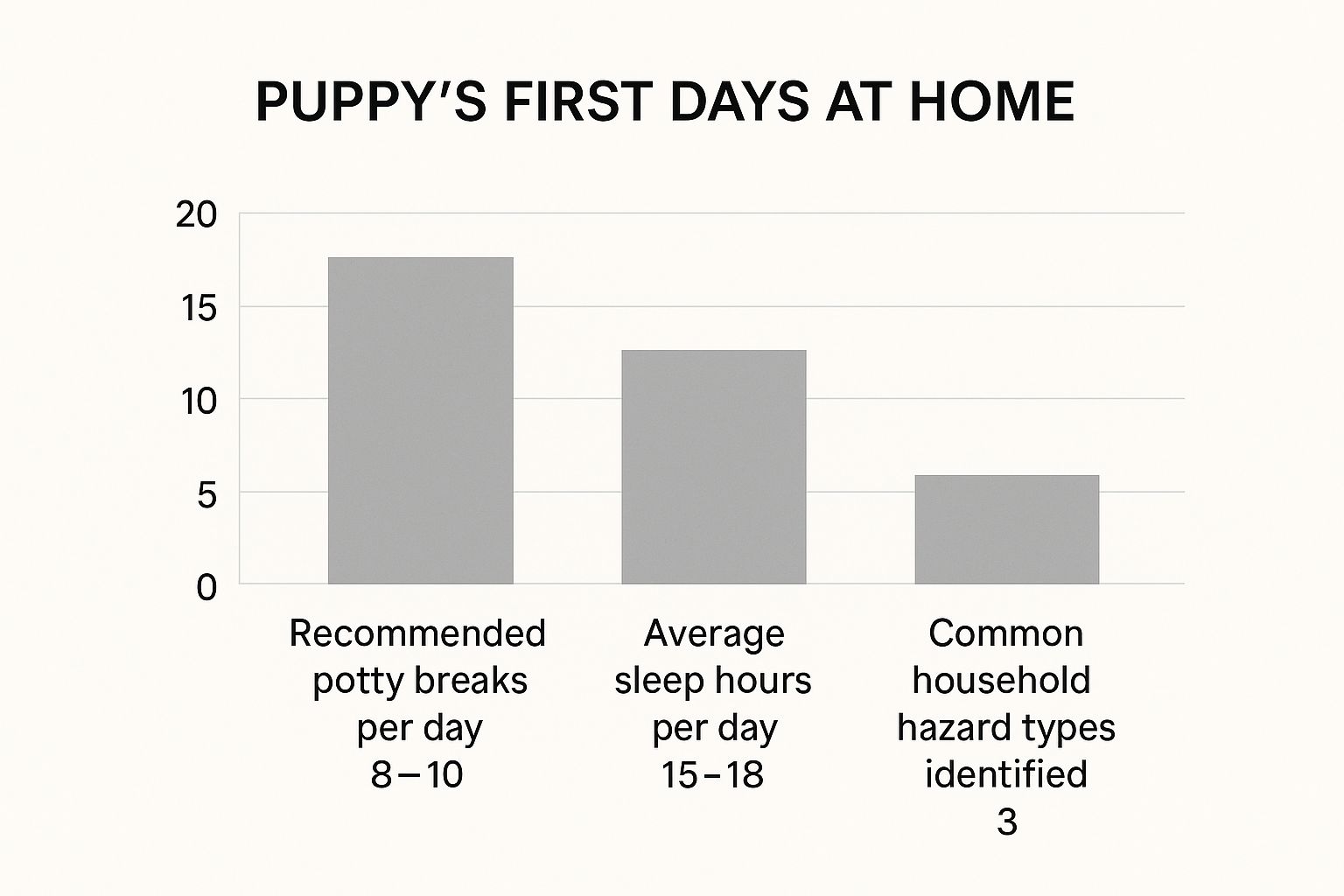
As you can see, puppies need to go out constantly and sleep a ton. This is why having a predictable schedule from day one is so important.
Initiating a Potty Schedule Immediately
House training starts the second you get home. Before you even go inside, take your puppy straight to their designated potty spot in the yard. Just wait there with them—it might take a minute. The moment they go, shower them with praise and a tasty treat. This one simple act starts teaching them exactly where you want them to do their business.
Young puppies have tiny bladders and need to go out all the time: first thing in the morning, right before bed, after every nap, after every play session, and after every meal. A good starting point is to take them out every hour. Accidents are going to happen, so don’t get discouraged. Consistency is the secret to success.
Building a Healthy Puppy Nutrition Plan
What you put in your puppy’s bowl is so much more than just a meal; it’s the building block for their entire future. Good nutrition fuels everything from strong bones and a shiny coat to a healthy immune system and a sharp mind. It can feel like there are a million options out there, but I promise, it’s not as complicated as it seems.
First things first, remember that every puppy is an individual. A tiny Chihuahua has completely different nutritional requirements than a Great Dane that will one day tower over him. Always choose a food specifically formulated for your puppy’s expected adult size. For example, large-breed puppy formulas are designed with carefully balanced calcium and phosphorus levels to encourage slow, steady bone growth, which is critical for preventing joint issues down the road. You can learn more about how to take care of larger breeds of dogs in our detailed guide.
How To Read a Puppy Food Label
Think of the ingredients list on a dog food bag as its resume. You want to see a high-quality, named protein source—like “chicken,” “lamb,” or “salmon”—listed as the very first ingredient. This tells you that real meat is the star of the show, not a cheap filler.
Be wary of foods with vague ingredients like “meat and bone meal” at the top of the list, or those that rely heavily on corn, wheat, and soy. Your goal is to find a nutrient-dense food that packs a punch for your energetic, growing pup.
Choosing the right food is one of the biggest things you can do for your new puppy. Along with training and vet care, great nutrition is a cornerstone of responsible ownership, helping ensure dogs stay in their forever homes.
This kind of commitment is a big deal. Shelters and rescues in the U.S. see about 5.8 million dog and cat intakes every year, with around 4.19 million finding homes through adoption. Giving your puppy the best start possible is a huge part of making sure they never become one of those statistics.
Getting on a Feeding Schedule
Puppies are creatures of habit. A consistent feeding schedule not only helps with their digestion but is also a game-changer for house training.
Young pups between 8-12 weeks old need a lot of fuel and typically do best with three to four small meals spaced throughout the day. As they get older, you can gradually cut this down to two meals a day, usually somewhere around the six-month mark.
It’s tempting, but try to avoid “free-feeding” (leaving a full bowl of food out all day). This makes it really hard to track how much your puppy is actually eating, can easily lead to weight gain, and throws a wrench in your potty-training routine.
Sample Puppy Feeding Schedule by Age
This table gives you a general idea of how feeding frequency changes as your puppy gets older. Think of it as a starting point—your vet and the guidelines on your specific puppy food bag will give you the most accurate advice.
| Puppy’s Age | Meals Per Day | Typical Daily Food Amount (cups) |
|---|---|---|
| 8-12 Weeks | 3-4 meals | Consult food packaging and vet |
| 3-6 Months | 3 meals | Follow guidelines for weight |
| 6-12 Months | 2 meals | Adjust based on activity level |
| 12+ Months | 1-2 meals | Transition to adult food |
Always start with the feeding guide on the bag, but watch your puppy. If they seem too thin or are getting a little chunky, you may need to adjust the amount. Your vet can help you figure out the perfect portion.
Common Feeding Hurdles and How to Clear Them
Got a puppy who inhales their food in ten seconds flat? This is super common. A slow-feeder bowl or a puzzle toy can be a fantastic solution. These make your puppy work a bit for their food, which slows them down, helps with digestion, and gives their brain a little workout.
On the flip side, what if you have a picky eater? The biggest piece of advice I can give is to avoid caving and adding human food to their bowl. This can create a picky monster and unbalance their diet. Instead, try adding a splash of warm water or a single tablespoon of wet puppy food to make their kibble more enticing. Sticking to a routine is your best friend when it comes to a finicky pup.
Foundational Puppy Training and Commands
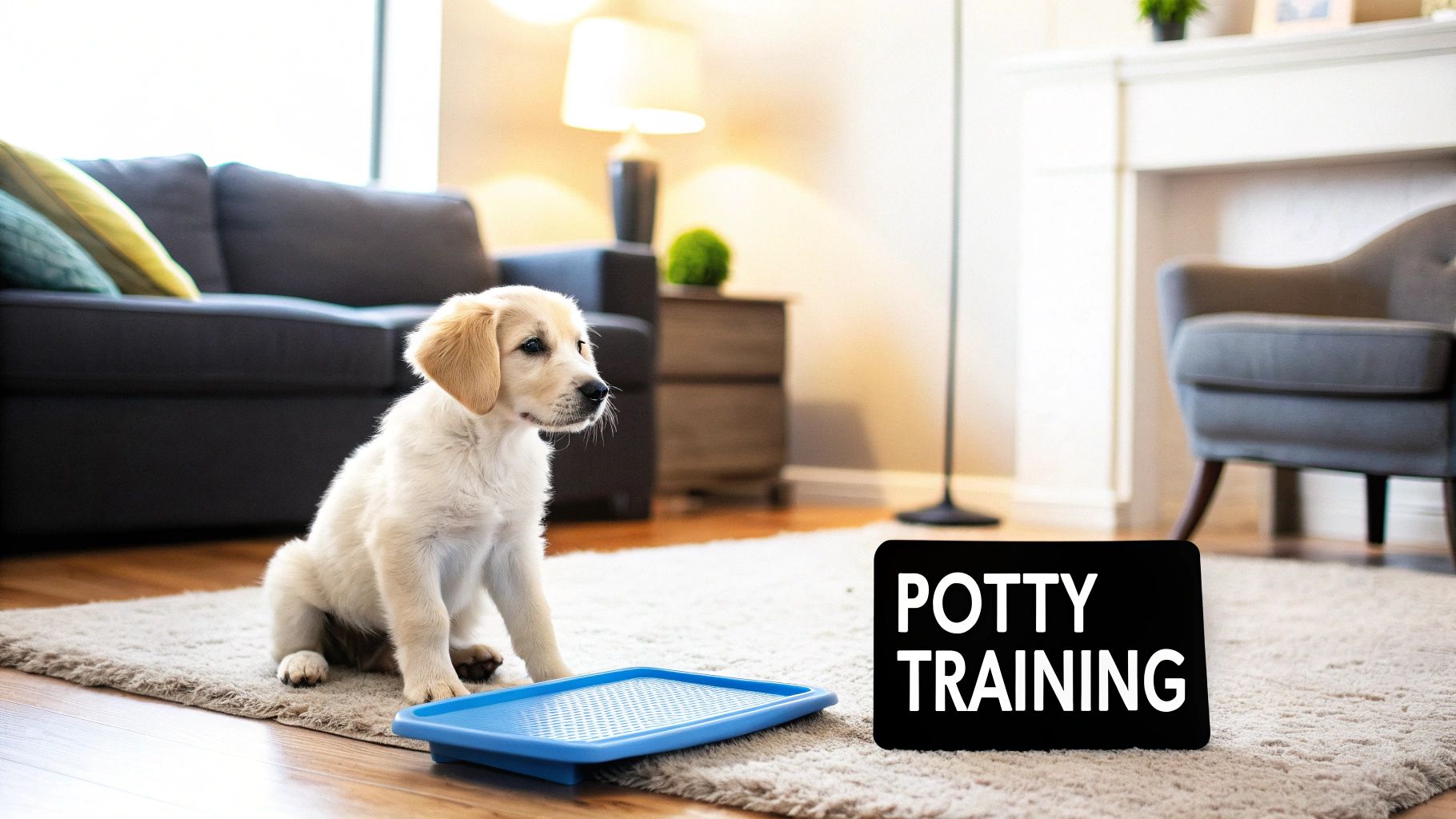
Think of training as the language you and your puppy will learn to speak together. It’s not about being the “alpha” or asserting dominance; it’s about building trust through clear communication. When you make it a fun game with lots of positive reinforcement, you’re not just teaching commands—you’re strengthening your bond for life.
There are two non-negotiable pillars to get right from the start: potty training and a few basic commands. Nailing these two things will make your life so much easier and help your puppy feel secure and understand what’s expected of them.
The Blueprint for Successful Potty Training
Potty training is all about management and consistency. The real goal is to prevent accidents before they happen, not to scold your puppy after the fact. I’ve found the most effective method by far is pairing a predictable schedule with consistent crate training.
You have to remember just how tiny a puppy’s bladder is. A good rule of thumb is that they can hold it for about one hour for every month of age. So, your two-month-old puppy needs a potty break at least every two hours—and honestly, probably more often than that, especially when they’re active.
Here’s a schedule that sets you both up for success:
- First thing in the morning: Before you even think about coffee, carry your puppy straight outside to their designated spot.
- After every meal or big drink: Food and water get the system moving, so a trip outside right after is a must.
- After every nap: Just like in the morning, waking up triggers the need to go.
- After playtime: All that fun and excitement stimulates the bladder. Always end a play session with a potty break.
- Right before bed: One last chance to empty the tank for the night.
Every single time you go out, head to the same spot. Use a simple cue, like “go potty,” in a calm, encouraging voice. The second they finish, throw a little party! Enthusiastic praise and a super tasty treat make it clear they did the right thing in the right place. That immediate reward is what locks in the lesson.
Teaching Foundational Commands
Once your puppy is starting to get the lay of the land, you can start weaving in some basic commands. The key here is to keep training sessions short and sweet—think 5 to 10 minutes, max. Any longer and you’ll lose their attention.
Use small, high-value treats to lure your puppy into position. The instant they do what you want, mark the behavior with an enthusiastic “Yes!” or a clicker, and immediately give them the treat. This creates a powerful connection in their mind and makes learning feel like a fun puzzle.
Essential Commands to Start With
Here are the first few commands that give you the most bang for your buck.
Sit: This is the classic for a reason—it’s usually the easiest for them to pick up and it builds a great foundation for other commands.
- Grab a treat and hold it near your puppy’s nose.
- Slowly lift the treat up and back over their head. As their head follows the treat up, their butt will naturally go down.
- The moment their rear hits the floor, say “Yes!” and give them the treat.
- After a few reps, start saying “Sit” just before you lure them with the treat.
Come: This one can literally be a lifesaver. You want your puppy to think “Come!” is the best word in the world.
- Start in a quiet space without a lot of distractions.
- Get down on their level, say their name and then “Come!” in an upbeat, excited voice.
- When they get to you, make it a huge deal with praise and treats. A crucial tip: never, ever call your puppy to you for something they don’t like, such as a bath or to be put in their crate.
Leave It: This command is all about teaching self-control and can stop your pup from eating something dangerous. Start with a boring piece of kibble on the floor, covered by your hand. Let them sniff and paw at it. The second they pull back or look away, praise them and give them a much better treat (like a piece of chicken) from your other hand. They quickly learn that ignoring the boring thing gets them something amazing.
Stay: This command takes more focus, so you have to build up the duration slowly.
- Ask your puppy for a “Sit.”
- Put your hand up in a “stop” gesture and say “Stay.”
- Wait for just one second, then reward them.
- Over many sessions, gradually add a second at a time, and then slowly add distance.
Training is a journey, not a race. Every puppy has their own learning curve, so stay patient, keep it positive, and don’t forget to celebrate the small wins. The work you put in now is an investment that will pay off for years to come with a well-mannered, happy companion.
Navigating Puppy Health and Grooming
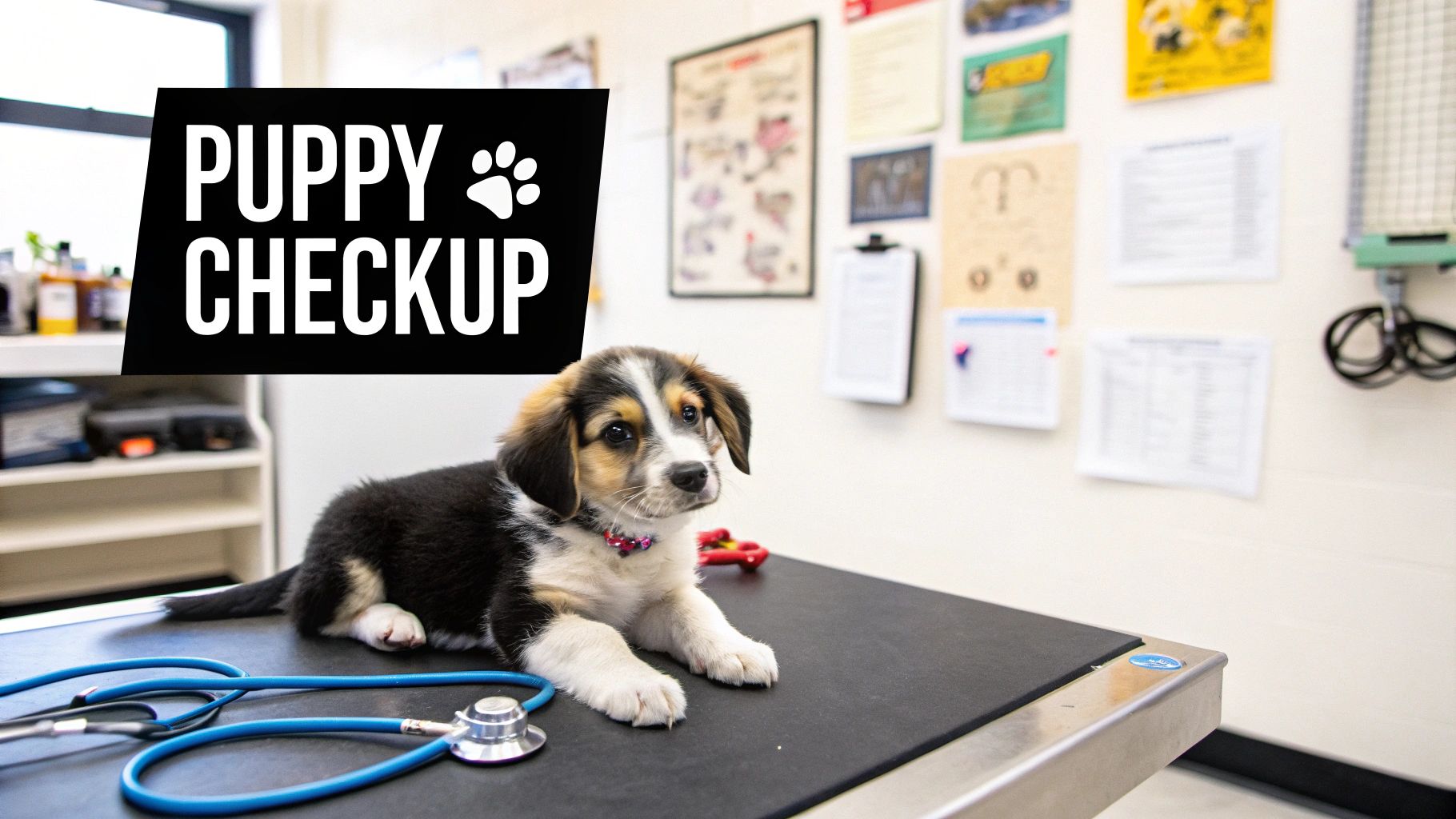
Keeping your new puppy healthy goes way beyond just feeding them right. It’s about being proactive from day one. Your very first move? Finding a great veterinarian you trust. This person will be your go-to expert for years to come, so it’s one of the most important relationships you’ll build for your pup.
You’ll want to schedule that first appointment within a week of bringing your little one home. This initial check-up isn’t just a formality; it establishes a health baseline and gives the vet a chance to spot anything you might have missed.
Your Puppy’s First Vet Visit
That first trip to the vet is a big deal. They’ll do a full nose-to-tail physical exam, listening to their heart, checking their eyes and ears, and making sure everything looks right. But this visit is just as much for you as it is for your puppy.
This is your golden opportunity to ask everything. Seriously, there’s no such thing as a silly question here.
I always recommend new puppy owners jot down a list of questions beforehand. Things like:
- Based on my puppy’s breed, what food do you recommend?
- What’s the best schedule for flea, tick, and heartworm prevention in our area?
- When should we start thinking about spaying or neutering?
- Can you show me what to look for at home, like checking their teeth or ears?
Getting these answers early on sets you both up for success.
Core Vaccinations and Prevention
A puppy’s immune system is still a work in progress, which makes them incredibly vulnerable to diseases that are easily preventable. This is where a strict vaccination schedule is non-negotiable. Your vet will map out the exact plan, but most puppies get their first round of core vaccines between 6 to 8 weeks old.
After that, they’ll need boosters every 3 to 4 weeks until they hit about 16 weeks of age. This series is what protects them from the big ones: distemper, parvovirus, and adenovirus. The rabies shot usually comes a bit later, typically around 12 to 16 weeks.
Beyond vaccines, we have to talk about parasites. Fleas, ticks, and heartworms are a year-round threat in most places. Your vet will get your puppy started on the right monthly preventative to keep them safe.
Your commitment to proactive health care—vaccinations, spaying/neutering, and proper socialization—is crucial. It’s one of the most effective ways to ensure dogs remain in their loving homes and out of shelters.
It’s a sobering thought, but around 3.1 million dogs end up in U.S. shelters every year. Responsible care from the very beginning, like ensuring your puppy gets all their shots and is spayed or neutered, makes a huge difference in keeping that number down.
Spaying and Neutering Considerations
The “when” and “why” of spaying or neutering is a major health decision you’ll make for your dog. It’s about more than just preventing puppies; it has massive health benefits. Spaying virtually eliminates the risk of certain uterine infections and dramatically lowers the risk of mammary cancer. Neutering prevents testicular cancer and helps with prostate issues down the line.
The timing, however, isn’t one-size-fits-all. For smaller breeds, vets often suggest doing the procedure between 6 and 9 months old. For larger breeds, there’s growing evidence that waiting until they’re closer to being fully grown can be better for their joint development. This is a crucial conversation to have with your vet to decide what’s best for your specific dog.
At-Home Grooming as a Bonding Experience
Grooming is so much more than just keeping your puppy looking cute. It’s a fantastic way to bond and a critical part of their healthcare. When you’re brushing them or checking their ears, you’re also doing a mini-health check, spotting any strange lumps, bumps, or skin irritations before they become big problems.
The trick is to start early. Get your puppy used to you gently handling their paws, looking in their ears, and touching their mouth. Keep sessions short, fun, and full of treats.
- Brushing: A few times a week keeps their coat from getting matted, removes loose hair, and helps spread their natural skin oils.
- Nail Trims: Long nails can actually be painful and cause problems with how they walk. Start getting them used to the clippers (or a grinder) now.
- Ear Cleaning: A quick peek in their ears each week for any redness or funky smells can head off infections.
If you make grooming a positive, rewarding part of their routine, it’s something they’ll tolerate—and maybe even enjoy—for life. For a deeper dive, take a look at these grooming tips to get your pet ready for spring that are helpful any time of year.
How To Socialize Your Puppy For a Confident Future
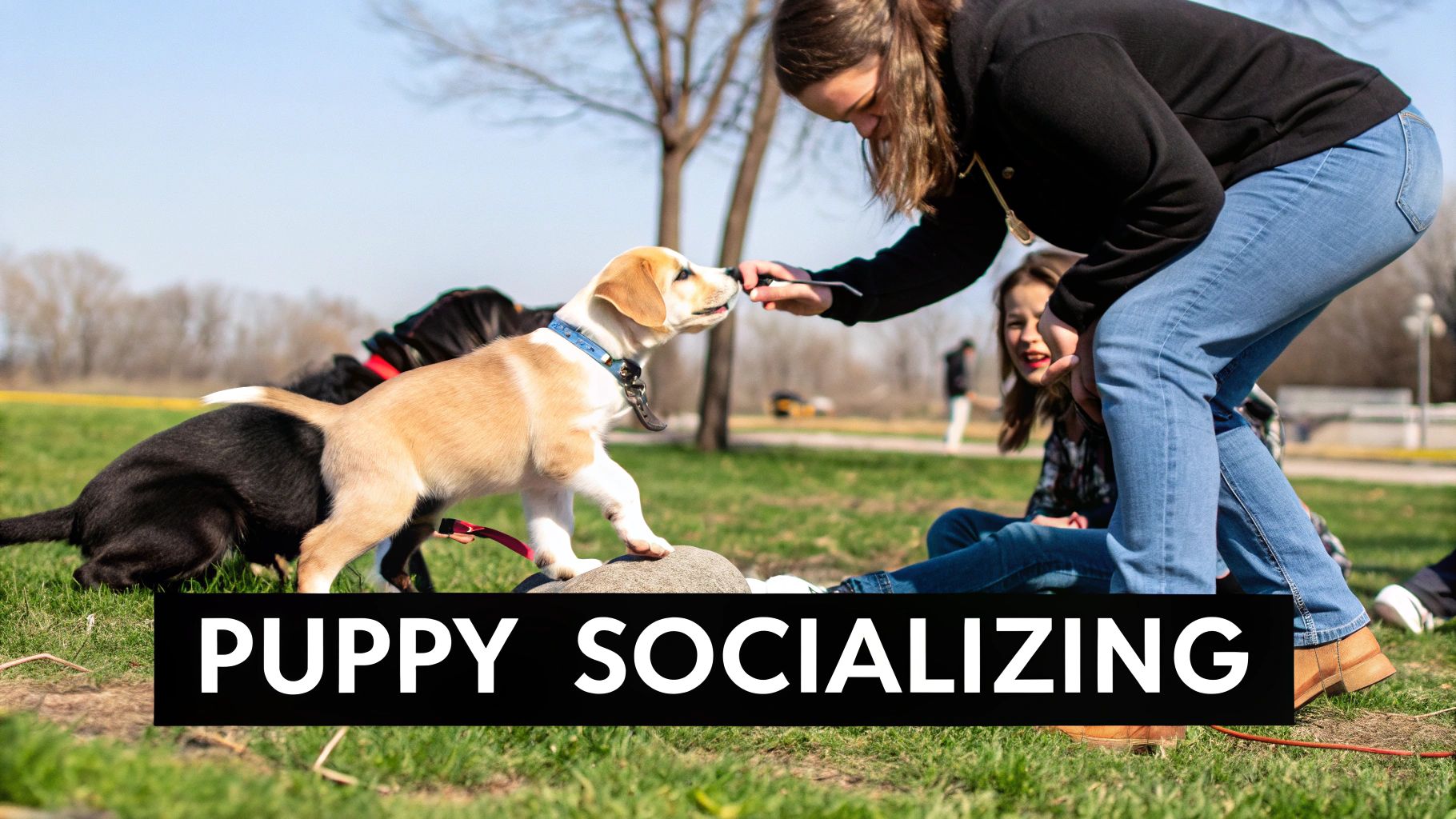
Of all the things you’ll do for your new puppy, socialization is probably the single most important gift you can give them. This isn’t just about letting your pup run wild at the dog park; it’s the thoughtful process of showing them the world is a safe, fun place, which in turn builds a confident, well-adjusted adult dog.
This is your chance to shape how your puppy sees new things for the rest of their life, but the window of opportunity is surprisingly small.
The prime time for this is called the “critical socialization window,” which happens between 3 and 16 weeks of age. During this brief period, their brains are like little sponges, soaking up information about what’s safe and what’s not. Positive experiences now lay the groundwork for a friendly, easygoing companion. A lack of good experiences, on the other hand, can lead to fear and reactivity down the road.
Mastering the Art of Positive Exposure
Successful socialization is all about quality over quantity. The goal is to provide controlled, positive exposure—not to overwhelm your puppy by throwing them into a situation they aren’t ready for. Think of yourself as the curator of your puppy’s first adventures, making sure each one is a confidence-booster.
The trick is to pair every new thing with something your puppy loves, like high-value treats, praise, or a favorite toy.
For example, when a loud truck rumbles past for the first time, don’t get tense. Casually toss your puppy a piece of chicken and tell them they’re a good dog in a happy voice. They quickly learn that loud noises predict amazing things happening.
Always keep an eye on their body language. A tucked tail, flattened ears, or trying to hide are huge signs that they’re stressed. If you see this, it’s your cue to create more distance from the scary thing or just end the session on a positive note. You can always try again another day.
Socialization is a marathon, not a sprint. One fantastic, confidence-boosting encounter is worth more than ten stressful, rushed ones. The quality of each new experience matters far more than the quantity.
A Practical Socialization Checklist
To raise a truly well-rounded dog, you’ll want to introduce your puppy to a wide variety of sights, sounds, surfaces, and people. Just remember to keep every interaction short, sweet, and positive.
Structured play is another fantastic way to build confidence while keeping your puppy mentally stimulated. You can find some great ideas for fun games to kill boredom that also strengthen your bond.
To help you get started, I’ve put together a simple checklist to guide you through safely exposing your puppy to new experiences during this critical development period.
Puppy Socialization Checklist
| Category | Experiences to Introduce | Key Tip |
|---|---|---|
| New Sounds | Vacuum cleaner, doorbell, traffic noise, children playing | Introduce sounds from a distance first, pairing them with tasty treats. |
| New Surfaces | Grass, pavement, carpet, sand, wet ground, crunchy leaves | Encourage exploration with praise; never force them to walk on a surface they fear. |
| New People | People with hats, beards, sunglasses, children of all ages | Ensure all interactions are calm and allow the puppy to initiate contact. |
| New Dogs | Healthy, vaccinated, and well-behaved adult dogs and puppies | Prioritize quality over quantity. One-on-one playdates are often best. |
| New Objects | Strollers, bicycles, umbrellas, skateboards, plastic bags | Let your puppy investigate stationary objects first before seeing them in motion. |
Try to work on one or two new things from this list each day, always watching your puppy to make sure they’re having a good time.
Teaching Bite Inhibition Through Play
Socialization isn’t just about the outside world—it also involves teaching crucial life skills. One of the most important is bite inhibition, which is just a fancy term for teaching a puppy how to control the pressure of their jaw.
Puppies start learning this from their littermates. If one puppy bites another too hard during play, the bitten pup yelps and the game stops. That’s a powerful lesson.
You can and should continue this lesson at home. When you’re playing and your puppy’s sharp teeth make contact with your skin, let out a high-pitched “Ouch!” and immediately withdraw your hand and your attention for a few seconds. This teaches them that human skin is sensitive and that biting makes the fun stop. After a moment, redirect their mouth onto an appropriate chew toy to show them what they are allowed to bite.
Got Puppy Questions? We’ve Got Answers
Bringing home a new puppy is a whirlwind of joy, cuddles, and… a million questions. No matter how many books you read, the reality of a tiny, energetic creature taking over your life can be a lot to handle. Let’s tackle some of the most common worries new puppy parents have so you can feel more confident and less overwhelmed.
It’s completely normal to feel a bit of “puppy blues” in the first week. You might even wonder if you’ve made a terrible mistake. Trust me, most of us have been there! These feelings pass. Knowing what to expect can make all the difference.
How Much Should My Puppy Be Sleeping?
You’re going to be shocked by this one: your new puppy needs a ton of sleep. We’re talking 18 to 20 hours a day. This isn’t laziness; it’s crucial for their development. Their little bodies and brains are growing at an incredible rate, and all that work happens while they’re snoozing.
Don’t be surprised if they conk out mid-play. It’s totally normal. Your job is to provide a quiet, cozy spot—like their crate—where they won’t be bothered. Proactively enforcing nap times is also a game-changer. An overtired puppy is a bitey, hyperactive gremlin, so don’t be afraid to put them down for a nap.
A well-rested puppy is a happy puppy (and makes for a happy owner). Think of their crate as their bedroom—a safe den, never a punishment. When they look sleepy, it’s time for quiet time.
When Is It Safe to Take My Puppy on a Walk?
I know you’re dying to show off your new sidekick, but you have to put their health first. The general rule is to wait until about one to two weeks after they’ve finished their entire series of puppy shots, which is usually around 16 weeks of age. Before they’re fully vaccinated, they are extremely susceptible to dangerous diseases like parvovirus.
Your vet will give you the official green light, so always check with them first. In the meantime, you can still get a head start on socialization without putting them at risk:
- Carry your puppy around a pet-friendly store or a park.
- Let them experience the world from the safety of a pet stroller.
- Arrange playdates in your own fenced yard with adult dogs you know are healthy and fully vaccinated.
How Do I Get My Puppy to Stop Biting Me?
Ouch! Those needle-sharp puppy teeth hurt. Nipping is a totally normal part of teething and how puppies explore their world, but it’s up to you to teach them that your skin is off-limits. The goal is to teach bite inhibition—how to be gentle with their mouth.
When your puppy nips you during play, let out a sharp “ouch!” and immediately pull your hand away. For a few seconds, completely ignore them. This is exactly what their littermates would do to say, “Hey, that was too rough!” Once they’ve settled, redirect their attention to an appropriate chew toy.
What’s the Best Way to Introduce My Puppy to Other Pets?
Introducing a new puppy to your current pets takes patience and a solid plan. Never just throw them together and hope for the best.
If you have another dog, the first meeting should be on neutral ground, like a quiet park or a neighbor’s yard. Keep both dogs on a leash and let them have a short, positive sniff-and-greet. Then, end the interaction on a high note before anyone gets overexcited or stressed.
Introducing a puppy to a resident cat is a much slower dance. Start by swapping scents by giving each pet a blanket with the other’s smell. Use baby gates to create separate zones so they can see and smell each other without any physical contact. Reward them both with treats for calm, non-reactive behavior. The key here is to go at the cat’s pace and never, ever force it.
At Setterfrens LLC, we believe every puppy deserves a home that’s ready for them. From our engaging children’s books to our practical guides for pet owners, we create resources to help you on this amazing journey. Check out our stories and tips at https://setterfren.com.
Article created using Outrank