
Welcome to the SetterFren family, where we believe a happy pup and a good book make life complete! Professional grooming sessions are fantastic, but establishing a consistent grooming routine right in the comfort of your home does more than just keep your dog looking sharp. It's a powerful way to deepen your bond, build trust, and stay in tune with their health by catching potential issues like lumps or skin irritations early. Think of it as dedicated one-on-one time, filled with gentle touches, reassuring words, and maybe a treat or two.
This guide is your cozy companion, packed with practical and effective dog grooming tips at home. We're moving beyond the basics to give you actionable steps that turn a necessary chore into a cherished ritual. From mastering the perfect brush stroke for a tangle-free coat to learning the secrets of pristine paw pad care, we'll walk you through everything you need to know.
These aren't just tasks to check off a list; they are opportunities for connection that keep your best friend healthy, comfortable, and happy. Ready to unleash your inner groomer and make every grooming session a positive experience? Let’s get started and keep those tails wagging! And for more tips and heartwarming moments, be sure to follow our pack @setterfrens on TikTok and Instagram.
1. Regular Brushing and De-matting
Think of regular brushing as the cornerstone of all your at-home dog grooming efforts. It's more than just a quick once-over; it's a foundational practice that removes loose hair, prevents painful mats, and distributes natural oils for a shiny, healthy coat. This simple habit also gives you a chance to check your dog's skin for any bumps, ticks, or irritations before they become bigger problems.
For most breeds, a good brushing session 2-3 times a week is perfect. However, if you have a long-haired companion like a Golden Retriever or a Poodle, daily brushing is essential to prevent tangles from forming into stubborn mats. Consistent grooming doesn’t just keep your pup looking great; it can also reduce the frequency and cost of professional grooming visits. Many Poodle owners who incorporate daily brushing report their dogs are more comfortable and their groomer’s job is much easier.
How to Get Started
To make brushing a positive experience, follow these simple but effective dog grooming tips at home:
- Choose the Right Tools: Not all brushes are created equal. Use a slicker brush for working through tangles, a pin brush for long or silky coats, and a rubber curry brush for short-haired dogs. Brands like FURminator and Safari Pet Products offer great options for every coat type.
- Create a Calm Environment: Start when your dog is relaxed, perhaps after a walk or a nap. Keep initial sessions short and sweet (5-10 minutes) and use plenty of praise and high-value treats to build a positive association.
- Master the Technique: Always brush in the direction of hair growth. If you encounter a mat, don’t pull. Instead, gently hold the hair at the base to prevent pulling the skin and work on the tangle from the outside edges inward with your slicker brush or a de-matting comb.
SetterFren Pro Tip: For a truly professional setup, consider a grooming table. It keeps your dog secure and saves your back, turning a chore into a calm, controlled bonding session.
2. Nail Trimming and Care
Nail trimming is a critical, yet often overlooked, component of at-home dog grooming that directly impacts your dog's comfort and health. Properly maintained nails prevent painful overgrowth, which can force your dog to alter their gait, leading to skeletal strain, joint problems, and even arthritis over time. Keeping nails short prevents them from splaying the toes and ensures your dog can walk and run comfortably on any surface.
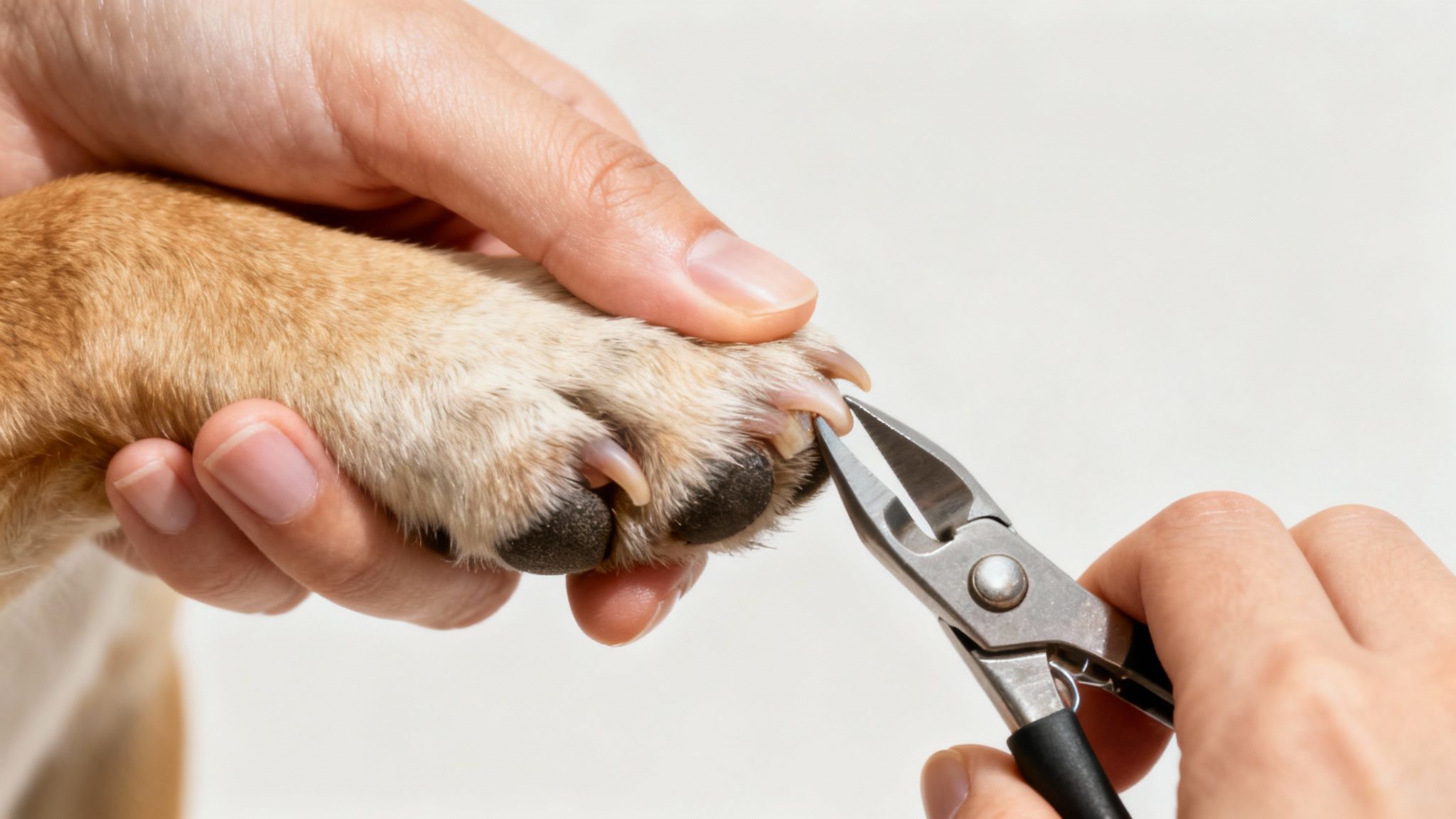
For most dogs, a nail trim every 3-4 weeks is ideal, or whenever you hear that telltale "click-clack" on your hardwood floors. Many owners report their senior dogs moving with noticeably more ease after starting a consistent nail care routine. Similarly, many find that dogs trained with a grinder are often more cooperative than those who only experience traditional clippers, making the process less stressful for everyone involved. This is a key part of responsible ownership, much like the other essentials you'll find in our guide on how to care for a new puppy.
How to Get Started
To make nail trimming a safe and positive experience, here are some dog grooming tips at home you can implement immediately:
- Choose the Right Tools: A high-quality pair of guillotine or scissor-style clippers like those from Miller's Forge are a great start. Alternatively, a nail grinder, such as a Dremel, offers a fantastic way to smooth nails and avoid accidentally cutting the quick.
- Create a Calm Environment: Introduce the clippers or grinder slowly. Let your dog sniff them, touch them to their paws without trimming, and reward them with treats and praise. Keep the first few sessions very short, trimming just one nail per session if needed.
- Master the Technique: For light-colored nails, trim only the clear or white tip, avoiding the pink "quick" inside. On black nails, trim tiny slivers at a time until you see a small black dot in the center of the nail, which indicates you are approaching the quick. Always have styptic powder on hand to quickly stop any bleeding if you accidentally nick the quick.
SetterFren Pro Tip: After trimming, use a nail grinder to smooth any sharp edges. This prevents snagging on carpets or furniture and gives a clean, professional finish that your pup (and your floors) will appreciate.
3. Ear Cleaning and Inspection
Think of your dog's ears as delicate ecosystems that need regular maintenance to stay healthy. Routine ear cleaning and inspection are critical at-home grooming tasks, especially for floppy-eared breeds. This practice removes wax, dirt, and debris, preventing painful infections, mites, and yeast buildup. It also provides a crucial opportunity to spot early warning signs like redness, swelling, or unusual discharge before they escalate into serious health issues requiring a vet visit.
This is particularly vital for breeds like Cocker Spaniels and Basset Hounds, whose ear shape creates a warm, moist environment perfect for bacterial growth. Many owners find that incorporating a weekly ear check into their dog grooming tips at home routine dramatically reduces the frequency of ear infections, especially for dogs with known allergies. Consistent cleaning keeps the ear canal clean and dry, making it a less hospitable place for problems to start.
How to Get Started
To make ear cleaning a safe and stress-free part of your grooming schedule, follow these steps:
- Gather the Right Supplies: You'll need a veterinary-approved ear cleaning solution and clean cotton balls or pads. Never use water, alcohol, or cotton swabs, as they can cause irritation or push debris deeper into the ear canal. Trusted brands like Virbac Epi-Otic and Zymox offer excellent, gentle solutions.
- Create a Positive Association: Introduce ear cleaning when your dog is calm and relaxed. Use a happy, reassuring tone and have high-value treats ready to reward cooperation. Start by simply handling your dog's ears gently before moving on to the cleaning process.
- Follow the Correct Technique: Gently hold your dog’s ear flap up to expose the canal. Squeeze the cleaning solution into the ear until it's full, then massage the base of the ear for about 30 seconds. You should hear a squishing sound. Let your dog shake their head to loosen the debris, then use a cotton ball to gently wipe away any wax and liquid from the visible parts of the ear.
SetterFren Pro Tip: For extra comfort, warm the cleaning solution bottle in a bowl of warm water for a few minutes before use. A room-temperature solution is much more pleasant for your dog than a cold one, making the experience far more cooperative.
4. Teeth Brushing and Dental Care
Often overlooked in at-home grooming, dental care is a critical part of your dog's overall health and well-being. Regular teeth brushing does more than just combat bad breath; it actively prevents painful tartar buildup, gum disease, and tooth decay. This simple routine is one of the most effective dog grooming tips at home for preventing serious health issues, as oral bacteria can travel to and affect the heart, kidneys, and liver.
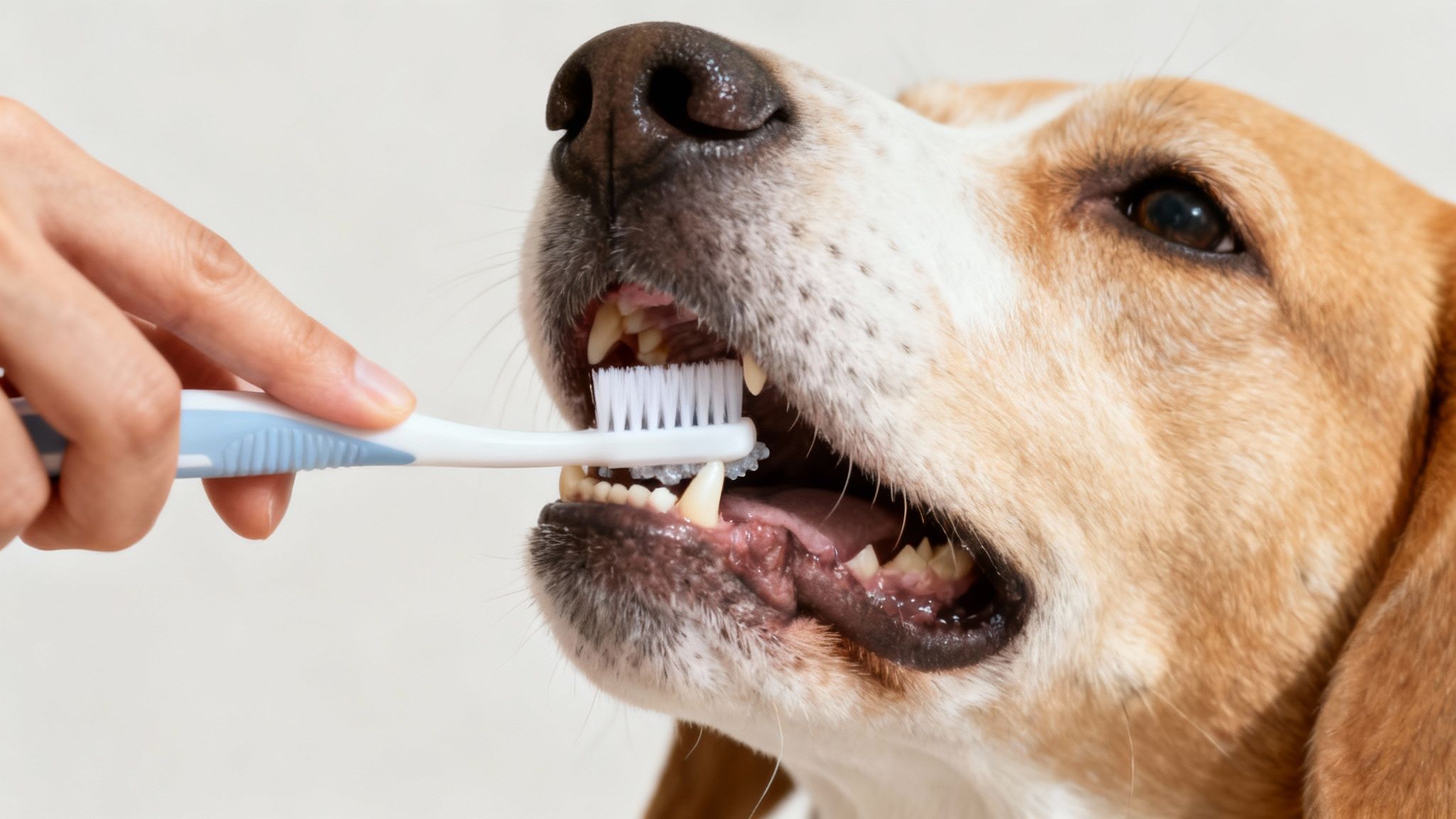
Daily brushing is the gold standard, but even sessions 3-4 times a week offer significant benefits. Veterinary dental specialists note that dogs with consistent brushing routines often avoid expensive professional cleanings until they are 7-10 years old, compared to just 3-4 years for those without. Similarly, many small breed owners who incorporate daily brushing report a dramatic reduction in the need for dental extractions.
How to Get Started
Introducing teeth brushing requires patience and positivity. Follow these steps to make it a stress-free part of your dog's routine:
- Choose the Right Tools: Always use a toothpaste specifically formulated for dogs, as human toothpaste contains fluoride and xylitol, which are toxic to them. Look for enzymatic toothpastes from brands like Virbac C.E.T. or Oxyfresh that help break down plaque. A soft-bristled toothbrush or a finger brush designed for pets is essential.
- Create a Calm Environment: Pick a time when your dog is calm and relaxed. Let them taste a small amount of the toothpaste (beef or poultry flavors are often a hit) off your finger first to create a positive association. Keep initial sessions very short, just 30-60 seconds.
- Master the Technique: Lift your dog's lip and gently brush the outer surfaces of their teeth and gums in a circular motion. Focus on the gum line, where tartar accumulates most. Don't worry about the inner surfaces initially, as the tongue naturally helps keep them cleaner.
SetterFren Pro Tip: For dogs who resist a traditional brush, a finger brush can feel less intimidating. You can even start by simply rubbing the toothpaste on their teeth with your finger, gradually working your way up to a full brushing session.
5. Bathing and Coat Conditioning
Think of bath time as a deep-cleaning reset for your dog’s coat and skin. A proper bath removes dirt, eliminates odors, and washes away loose hair, but adding a conditioning step is what truly elevates your dog grooming at home. Conditioning helps replenish moisture, detangle fur, and leaves the coat feeling soft and healthy. This routine also provides a great opportunity to check your dog’s skin for any issues like hot spots, ticks, or rashes that might otherwise go unnoticed.
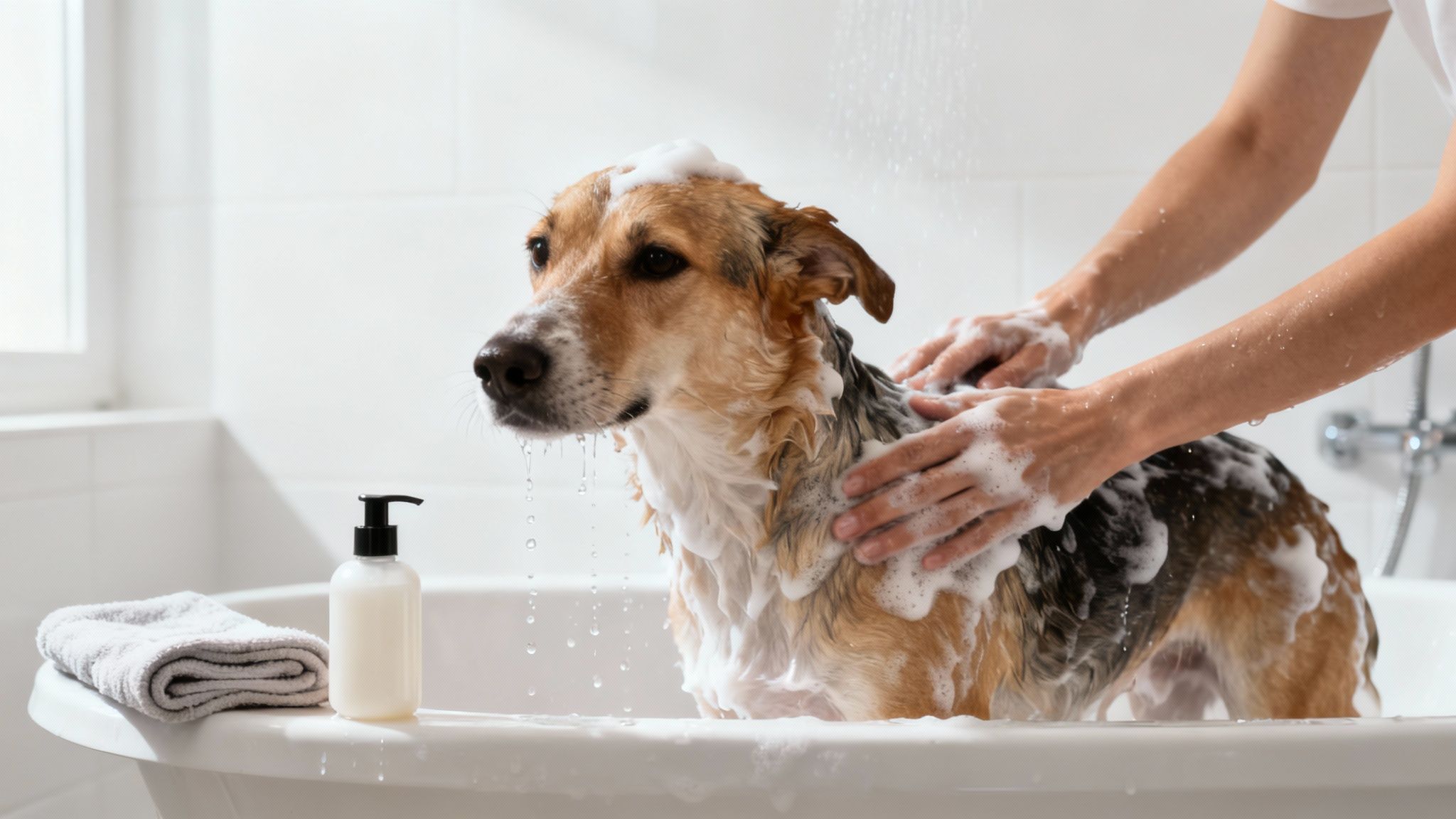
The right bathing frequency is crucial; too often can strip natural oils, while not enough can lead to skin problems. Most dogs do well with a bath every 4 to 12 weeks, depending on their breed, coat, and how much dirt they get into. Dogs with allergies or skin conditions, for example, often benefit from more frequent, gentle washes with hypoallergenic shampoos. For a double-coated breed like a Golden Retriever, a quality conditioner is essential to keep their dense undercoat and shiny topcoat in prime condition.
How to Get Started
To turn bath time from a struggle into a spa-like experience, follow these practical steps:
- Gather Your Supplies: Before you start, have everything ready: dog-specific shampoo and conditioner, towels, a non-slip mat for the tub, and treats. Great brands like Earthbath and Burt's Bees for Dogs offer gentle, natural options perfect for at-home use.
- Use the Right Technique: Use lukewarm water, testing it on your wrist first. Wet your dog thoroughly before applying shampoo, lathering in the direction of hair growth. The most important step is to rinse, rinse, and rinse again until the water runs completely clear to prevent skin irritation from residue.
- Don’t Skip the Conditioner: After rinsing out the shampoo, apply conditioner and let it sit for a few minutes as directed. This step helps close the hair cuticle, locking in moisture and making the post-bath brush-out much easier. Squeeze excess water out with your hands and towel-dry gently before using a low-heat dryer or letting them air dry completely.
SetterFren Pro Tip: Always brush your dog thoroughly before the bath. Water tightens existing tangles and mats, making them nearly impossible to remove afterward. A pre-bath brush-out is a non-negotiable step for a smooth grooming session.
6. Eye and Tear Stain Care
Keeping your dog's eyes clean is a critical, yet often overlooked, part of at-home grooming that goes far beyond aesthetics. Consistent eye care helps prevent infections, removes uncomfortable discharge, and allows you to monitor for health issues like conjunctivitis or blocked tear ducts. This simple routine is especially vital for preventing the reddish-brown tear stains that can accumulate on light-colored fur.
For breeds prone to staining, like Maltese, Poodles, and West Highland White Terriers, daily attention can make a world of difference. Proper care not only keeps your pup looking bright-eyed and healthy but also prevents the stained fur from becoming crusty, irritating, and potentially leading to skin infections. Integrating this into your dog grooming tips at home routine ensures their comfort and overall well-being.
How to Get Started
To make eye care a safe and stress-free part of your grooming schedule, follow these gentle but effective steps:
- Gather the Right Supplies: Always use products specifically designed for canine eyes. Veterinary-approved saline solution or specialized eye wipes are perfect for gentle cleaning. Avoid using human eye drops or products not intended for pets. Brands like Eye Envy and Vetericyn offer excellent, safe options.
- Establish a Gentle Routine: Choose a calm moment when your dog is relaxed. Dampen a soft cotton ball or a clean cloth with the saline solution or use a pre-moistened wipe. Gently wipe away from the corner of the eye to clear away any gunk or discharge. Never touch the eyeball directly.
- Manage Stains and Fur: For existing tear stains, use a topical remover formulated for this purpose. To prevent irritation, keep the hair around your dog’s eyes trimmed short so it doesn’t poke or rub against the cornea. Some owners also find that using filtered water and a high-quality diet can help reduce the minerals that contribute to staining.
SetterFren Pro Tip: If you notice excessive tearing, green or yellow discharge, or significant redness and swelling, it's time to call your vet. These can be signs of an underlying health issue that requires professional medical attention.
7. Paw Pad Care and Trimming
Think of your dog's paws as their personal all-terrain tires; they need regular maintenance to function properly. Paw pad care is a crucial yet often overlooked aspect of at-home dog grooming. This practice involves trimming the hair between the pads, checking for debris, and moisturizing, which prevents painful matting, reduces slipping on smooth floors, and helps you spot injuries or infections early.
Proper paw maintenance is essential for your dog’s mobility and overall comfort. For example, dogs with long hair growing between their pads often have reduced traction, making them prone to slips and falls on hardwood or tile floors. During winter, exposure to road salt and ice can cause severe irritation and cracking, but regular moisturizing can prevent this painful damage. For larger breeds of dogs, healthy paws are especially critical to support their weight comfortably.
How to Get Started
To make paw care a stress-free part of your dog grooming tips at home, follow these key steps:
- Choose the Right Tools: Safety is paramount when working on sensitive paws. Use a small pair of round-tipped grooming scissors or a mini electric clipper specifically designed for paw trimming. Never use sharp-pointed scissors. For moisturizing, use a dedicated paw balm like Musher's Secret or Burt's Bees Paw Balm.
- Create a Calm Environment: Introduce paw handling slowly and positively. Choose a time when your dog is relaxed. Gently hold their paw and reward them with treats and praise for calm behavior. Keep initial sessions very short.
- Master the Technique: Carefully trim the hair so it is level with the paw pads, ensuring you don’t cut the pad itself. Spread the toes gently to check for and remove any trapped dirt, thorns, or debris. After cleaning, apply a thin layer of paw balm to any dry or cracked areas.
SetterFren Pro Tip: Always trim your dog's nails before tackling the paw pad hair. Shorter nails provide a much clearer and safer view of the area you're working on, reducing the risk of accidental nicks.
8. Anal Gland Expression and Hygiene
While it might not be the most glamorous topic, understanding your dog’s anal glands is a crucial part of at-home grooming and overall wellness. These small sacs, located on either side of the anus, secrete a scented fluid that dogs use for marking territory. Normally, they empty naturally during bowel movements, but sometimes they can become impacted, leading to discomfort, scooting, and even infection.
This issue is particularly common in smaller breeds like Chihuahuas and Poodles, but any dog can be affected. Learning to spot the signs of a problem and understanding the basics of anal gland care can save your dog from significant pain and prevent costly vet visits. Proper hygiene in this area is a key, albeit often overlooked, aspect of any comprehensive dog grooming routine at home.
How to Get Started
Addressing anal glands requires caution and confidence. If you're hesitant, it's always best to have a veterinarian or professional groomer handle it first. For those ready to learn, here are the steps:
- Identify the Signs: Watch for your dog "scooting" its bottom on the floor, excessively licking the area, or having a sudden, foul "fishy" odor. These are classic signs that the glands are full and need attention.
- Use the External Method: This is the safest approach for at-home care. With a gloved hand and a paper towel or warm, damp washcloth, locate the glands at approximately the 4 and 8 o'clock positions around the anus.
- Apply Gentle Pressure: Gently bring your thumb and forefinger together, applying firm but gentle pressure to encourage the fluid to express onto the paper towel. Never squeeze forcefully, as this can cause pain and injury. If nothing comes out easily, stop and consult your vet. A healthy diet rich in fiber can also promote natural expression.
SetterFren Pro Tip: After a successful expression, clean the area with a pet-safe wipe to prevent irritation and lingering odors. If you notice swelling, blood, or pus-like discharge, contact your veterinarian immediately as this could indicate an infection or abscess.
8-Point Home Dog Grooming Comparison
| Item | 🔄 Implementation complexity | ⚡ Resource requirements | ⭐ Expected outcomes | 📊 Ideal use cases | 💡 Key advantages / Tips |
|---|---|---|---|---|---|
| Regular Brushing and De-matting | Low–Moderate; technique + patience | Brushes (slicker, pin, curry); detanglers | ⭐⭐⭐ — Fewer mats, healthier coat | All breeds; daily for long-haired dogs | Prevents mats; start calm; brush with hair growth |
| Nail Trimming and Care | Moderate; risk of cutting quick | Clippers or grinder, styptic powder | ⭐⭐ — Improved comfort, gait preservation | All dogs; seniors; indoor dogs with clicking nails | Trim every 3–4 weeks; use grinder for safety; reward training |
| Ear Cleaning and Inspection | Low–Moderate; careful technique required | Veterinary ear solution, cotton balls/wipes | ⭐⭐ — Reduced infections and wax buildup | Floppy-eared breeds; allergy-prone dogs | Warm solution, massage base; weekly–biweekly; inspect for odor |
| Teeth Brushing and Dental Care | Moderate–High; requires conditioning | Dog toothpaste, soft or finger brush | ⭐⭐⭐ — Less tartar, better systemic health | All dogs; especially small breeds and puppies | Daily ideal (3–4× wk minimum); enzymatic toothpaste; short sessions |
| Bathing and Coat Conditioning | Moderate; physical effort and drying needed | Dog shampoo, conditioner, towels/dryer | ⭐⭐ — Clean, conditioned coat; skin inspection | Dirty/active dogs; double-coated or allergy-prone breeds | Every 4–12 weeks; rinse thoroughly; use lukewarm water |
| Eye and Tear Stain Care | Low; gentle handling essential | Saline or specialized eye wipes | ⭐ — Reduced staining; early issue detection | Light-coated breeds (Maltese, Poodle, WHWT) | Wipe gently; trim surrounding hair; consider diet/water changes |
| Paw Pad Care and Trimming | Low–Moderate; careful trimming between pads | Round-tipped scissors/clippers, paw balm | ⭐⭐ — Better traction; fewer debris-related injuries | Long-haired dogs; winter/salted sidewalks | Trim every 4–8 weeks; moisturize dry pads; check for foreign bodies |
| Anal Gland Expression and Hygiene | High; sensitive area, technique-sensitive | Gloves, tissues; vet or groomer assistance | ⭐ — Prevents impaction when needed | Small breeds; dogs that scoot or show discharge | Prefer professional initially; increase dietary fiber; be gentle |
Keep the Good Times (and Good Grooming) Rolling
Congratulations! You've officially navigated the essentials of at-home dog care, from the tip of their tail to the pads on their paws. By embracing the practical dog grooming tips at home we've shared, you're not just maintaining your pup's appearance; you're actively investing in their long-term health, happiness, and comfort. Each gentle brush stroke, careful nail trim, and soothing bath becomes a building block for a stronger, more trusting relationship.
Think of grooming not as a chore, but as a ritual. It’s a dedicated time to check in with your dog, spotting potential issues like skin irritations, ear infections, or dental problems before they escalate. This proactive approach can save you from stressful, expensive vet visits down the road. More importantly, it reinforces the deep bond you share, turning what could be a scary experience into a familiar and positive routine filled with praise and rewards. You are your dog's most trusted advocate, and these grooming practices are a powerful way to show them you care.
Your Grooming Journey: Key Takeaways
Mastering at-home grooming is an ongoing process built on patience and consistency. Let’s recap the most crucial takeaways to keep you on the right track:
- Consistency is King: Regularity is the secret ingredient. Brushing a few times a week is far more effective than a marathon de-matting session once a month. Likewise, frequent, short nail trims are less stressful than a major clip every few months.
- Positive Reinforcement Wins: Always aim to create positive associations. Use high-value treats, lavish praise, and keep sessions short and sweet, especially in the beginning. Your goal is for your dog to see the grooming kit and wag their tail, not run and hide.
- Observe and Adapt: Your dog's body tells a story. Pay close attention to any changes in their skin, ears, teeth, or paws. Notice any flinching or signs of discomfort? That’s your cue to slow down, reassess your technique, or consult a professional. Every dog is an individual, and your approach should be tailored to their specific needs and temperament.
By transforming grooming into a positive, predictable part of your life together, you're doing more than just keeping your pup clean. You are nurturing their well-being and strengthening the incredible human-animal bond. It's an act of love, and now you have the tools to do it with confidence and skill. Happy grooming!
For more practical how-to guides, honest reviews of grooming tools, and a curated selection of dog-themed books to enjoy with your freshly pampered pup, visit us at Setterfren.com. Our cozy online community at Setterfrens LLC is dedicated to helping you care for your pup like a pro. Join our Puppicino Club to unlock member perks and dog-friendly treats, and follow @setterfrens to stay part of the fun