Starting a consistent dog dental care routine at home is one of the best things you can do for your four-legged family member. It’s about so much more than just tackling bad breath—it's a core part of their long-term health, helping you get ahead of painful problems before they even start. A few minutes a day can genuinely add happy, healthy years to your pup's life.
Why Your Dog’s Dental Health Is a Big Deal
Here at SetterFrens, we know life is just better with a wagging tail and a good book. That means doing everything we can to keep our pups feeling their absolute best, from nose to tail. We spend a lot of time thinking about shiny coats and fun walks, but what’s going on inside their mouths is just as critical. Try to think of dental care not as another chore, but as a true act of love—a simple way to protect them from pain and more serious health issues down the road.
The tough reality is that dental problems in dogs are incredibly common. It’s a huge shift from a few decades ago when it was an overlooked issue. Now, vets and experts see it as an essential daily habit. In fact, by the time they're three years old, a staggering 80% of dogs already show signs of periodontal disease. It's the single most common health problem vets see in our pets.
We're not saying this to scare you, but to empower you. A simple, consistent routine can completely change that statistic for your dog.
It's More Than Just a Pretty Smile
Letting plaque and tartar build up does a lot more than just cause "doggie breath." When all that nasty bacteria from the mouth gets into the bloodstream, it can travel to and damage vital organs like the heart, liver, and kidneys.
Good dental hygiene is a cornerstone of your dog's overall wellness. It prevents pain, protects vital organs, and strengthens the incredible bond you share with your pup.
By taking a proactive approach, you're not just cleaning teeth; you're safeguarding their entire body. This commitment to their well-being is just like any other part of their care, like the good habits we cover in our guide to at-home grooming.
Getting Started Is Easier Than You Think
Jumping into a new care routine can feel a bit overwhelming, but we promise, you only need a few key things to get going. Having the right tools on hand makes the whole process smoother and less stressful for both you and your pup.
Of course, a happy dog is a healthy dog, and that includes plenty of fun and exercise! Getting out and exploring together, like finding the best dog beaches in Florida for pet-friendly fun, is another fantastic way to boost their overall well-being.
Your At-Home Dog Dental Care Starter Kit
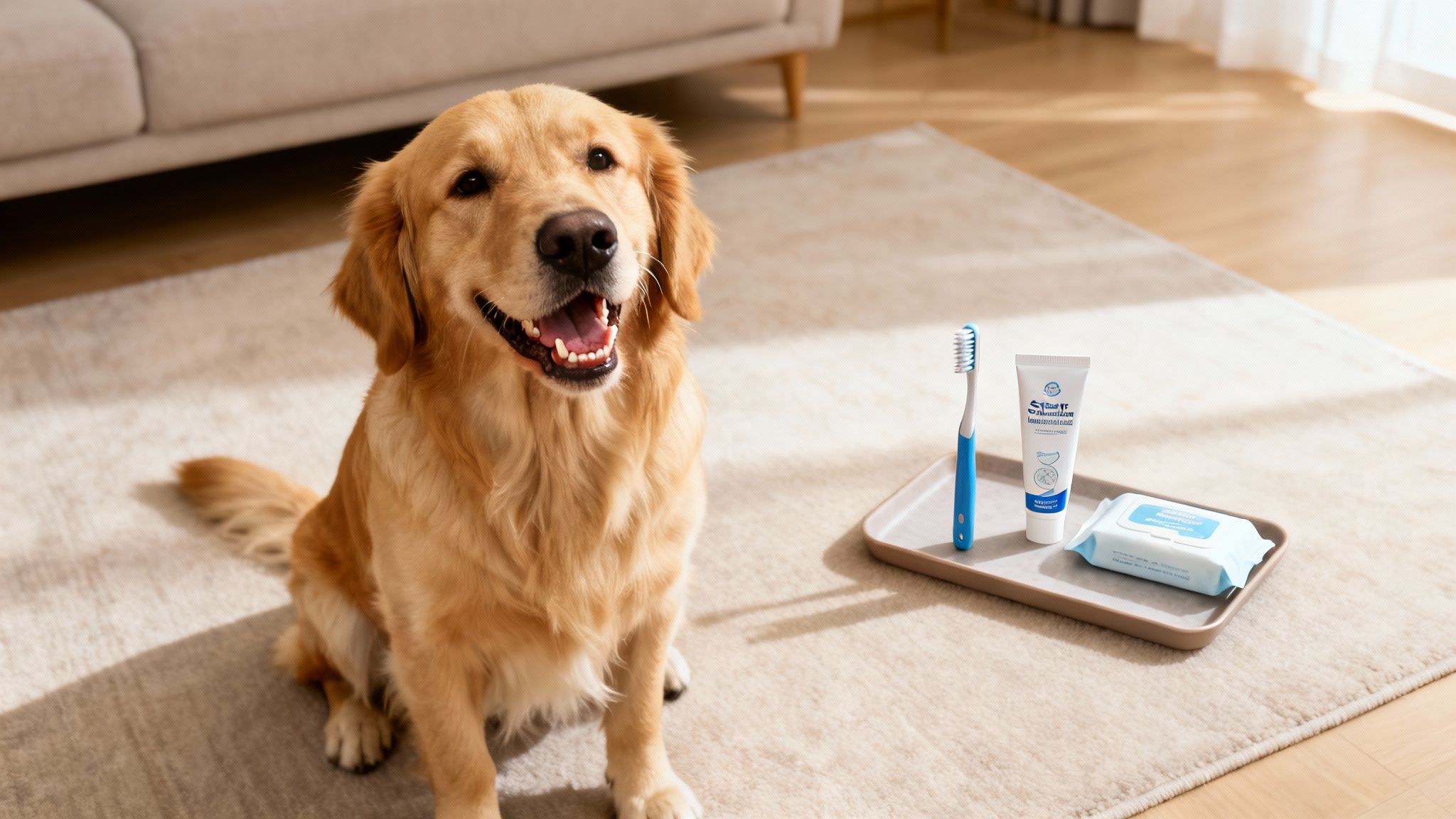
Here's a quick look at the essential items you'll need to begin your dog's home dental care routine, with our tips on what to look for in each product.
| Tool | What to Look For | SetterFrens Tip |
|---|---|---|
| Dog-Specific Toothbrush | An angled head, soft bristles, and a long handle. Finger brushes are great for puppies or small dogs. | Start with a finger brush to get your dog used to the sensation, then "graduate" to a long-handled brush. |
| Enzymatic Dog Toothpaste | Flavors like poultry or beef are usually a hit. NEVER use human toothpaste—it often contains xylitol, which is toxic to dogs. | Let them have a tiny lick of the toothpaste first as a treat! It helps build a positive association right from the start. |
| Dental Wipes | Textured wipes pre-moistened with a gentle, safe cleaning solution. | Wipes are a fantastic alternative for dogs who absolutely refuse a toothbrush or for a quick clean-up on the go. |
| Water Additives | A VOHC (Veterinary Oral Health Council) approved formula that helps reduce plaque just by drinking. | This is a great "passive" tool to supplement brushing, but it shouldn't be your only line of defense. |
| High-Value Treats | Small, soft, and extra tasty treats your dog absolutely loves. | These are your secret weapon for rewarding patience and cooperation during and after your brushing sessions. |
Having these items ready will set you up for success and make dental care a positive experience you can both look forward to.
Turning Toothbrushing into a Happy Habit
Let's be real: turning toothbrushing into something your dog enjoys is all about patience, praise, and taking tiny, happy steps. Instead of gearing up for a wrestling match, think of it as a special bonding moment. The whole idea is to build trust and make your pup feel safe and comfortable with the process, so it becomes a routine they actually look forward to.
Your goal is to create a positive vibe from the very beginning. The principles are pretty much the same as basic obedience training, where you reward calm behavior. If this kind of positive reinforcement is new to you, our guide on how to train a puppy is a fantastic starting point for building these cooperative habits.
This approach doesn't just boost their dental health; it deepens their trust in you. The big push for at-home dog dental care comes from a simple fact: untreated dental problems are incredibly common and wildly expensive. Professional cleanings can run you hundreds of dollars a pop, which is why vets are now championing daily brushing as a powerful, budget-friendly way to fight plaque and push back those pricey procedures.
Setting the Scene for Success
Before you even think about grabbing the toothbrush, consider the environment. Timing is everything. Aim for a moment when your dog is relaxed and mellow, like after a long walk or a good nap. Definitely don't try it when they have the zoomies or right before dinner when they're bouncing off the walls with anticipation.
Find a quiet corner where you won't be interrupted. Your calm, confident energy is contagious and will signal to your dog that this is a safe, normal part of the day.
A Slow and Steady Introduction to the Tools
The first few "sessions" won't involve any actual brushing. This is the get-to-know-you phase, all about gentle introductions and making it a great experience. Let's break it down.
- Meet the Toothpaste: Start by putting a tiny dab of dog-safe enzymatic toothpaste on your finger and just let them lick it off. Most dogs go nuts for the poultry or beef flavors. Do this for a few days until they get excited about their special "treat."
- Touch the Gums: Once they love the toothpaste, put a little more on your finger and gently rub it along their outer gums. We're talking a few seconds, max. Follow it up immediately with tons of praise and maybe a favorite toy or treat.
- Introduce the Toothbrush: Now, let your dog sniff and check out the toothbrush. You can even put a little toothpaste on it for them to lick off, without any attempt to brush. This helps them see this weird new object as a friend, not a foe.
The point of these first steps isn't to get their teeth sparkling clean. It's to teach them that you touching their mouth is a positive, rewarding experience. Keep it short, upbeat, and always end on a high note.
Once they’re totally cool with these steps, you can try gently brushing a few front teeth for just a couple of seconds. From there, you can slowly increase how long you brush and how many teeth you cover over several days or even weeks. Always keep an eye on their body language for any signs of stress. With a little consistency, you'll build a healthy habit that protects their smile for years to come.
Exploring What to Do When Brushing Isn't an Option
While daily brushing is hands-down the best thing you can do for your dog's teeth, let's be real—life happens. Some days you’re short on time, and some dogs are just not having it with the toothbrush, no matter how much chicken-flavored paste you use.
But here's the good news: if brushing isn't in the cards, you don't have to throw in the towel on your dog's dental health. There are some fantastic alternatives out there that can seriously help in the fight against plaque and tartar. Think of them as your backup crew.
This little flowchart is a great way to figure out your next move based on how your dog is feeling about the whole process.
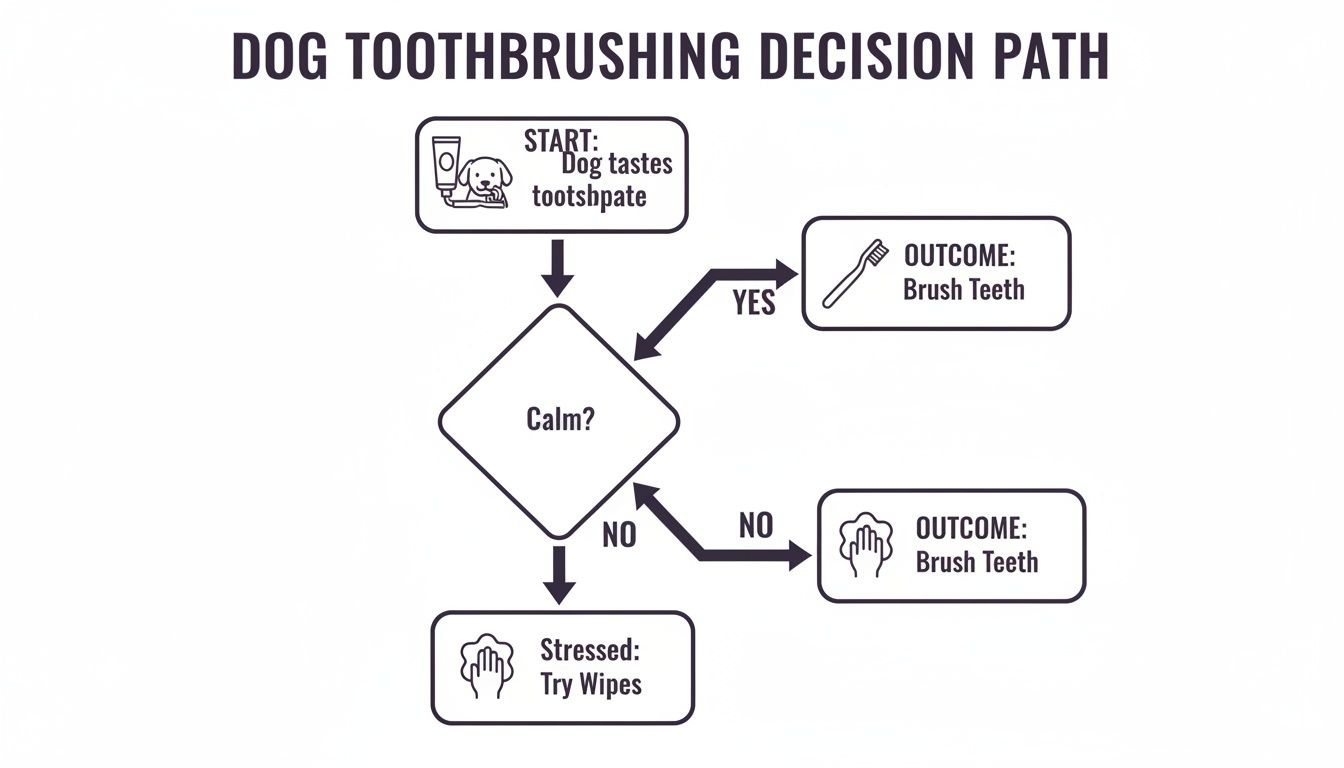
As you can see, your dog’s comfort is the number one priority. If they’re stressed, it’s time to pivot to a gentler method like wipes.
Dental Wipes and Pads: The Next Best Thing
For a dog that’s suspicious of a toothbrush, dental wipes are a game-changer. These are little textured pads you wrap around your finger, which feels a lot less weird to your dog than a plastic stick. You just gently wipe the surface of their teeth to physically scrub away that sticky plaque.
Wipes are especially awesome for:
- Puppies: They're a perfect way to get them comfortable with you handling their mouth.
- Senior Dogs: A much gentler approach for older dogs with sensitive gums.
- On-the-Go Cleaning: Super easy to pack for a quick dental cleanup when you're traveling.
No, they won't get into the nooks and crannies quite like bristles can, but that wiping action is a million times better than doing nothing at all.
Gels, Sprays, and Water Additives
If your dog is completely against having anything put in their mouth, these products are your best friends. They work on a chemical level to combat bacteria and freshen that doggy breath, no scrubbing required.
- Dental Gels: You apply a dab of this directly onto the gums. As your dog licks, they spread the gel all over their teeth, letting the active ingredients get to work.
- Oral Sprays: A quick spritz in the mouth is all it takes. It's fast and easy, though be warned—some dogs get a little jumpy at the sound!
- Water Additives: This is the ultimate "set it and forget it" solution. Just add a capful to your dog's water bowl each morning, and it works its magic all day long.
To help you decide what might work best, here’s a quick comparison of the different at-home options you can mix and match.
Comparing Home Dental Care Options
| Product Type | Best For | Effectiveness Level | Pro-Tip |
|---|---|---|---|
| Toothbrush & Paste | All dogs (if tolerated) | ★★★★★ | The gold standard for physically removing plaque. |
| Dental Wipes | Brush-resistant dogs, puppies, seniors | ★★★★☆ | Great for daily surface cleaning and getting dogs used to mouth handling. |
| Dental Gels | Dogs who won't allow scrubbing | ★★★☆☆ | Apply before bed so the gel can work overnight without being disturbed by eating or drinking. |
| Oral Sprays | Quick breath freshening, fussy dogs | ★★☆☆☆ | Best used as a supplement to other methods; less effective on its own for plaque removal. |
| Water Additives | All dogs, especially resistant ones | ★★☆☆☆ | An effortless way to provide continuous, low-level antibacterial action throughout the day. |
Ultimately, finding the right combination for your specific dog is what matters most.
The best routine is the one you can actually stick to. Don't be afraid to mix and match these alternatives to build a personalized dog dental care at home plan that keeps your pup's smile healthy and bright.
Choosing Safe and Effective Dental Chews
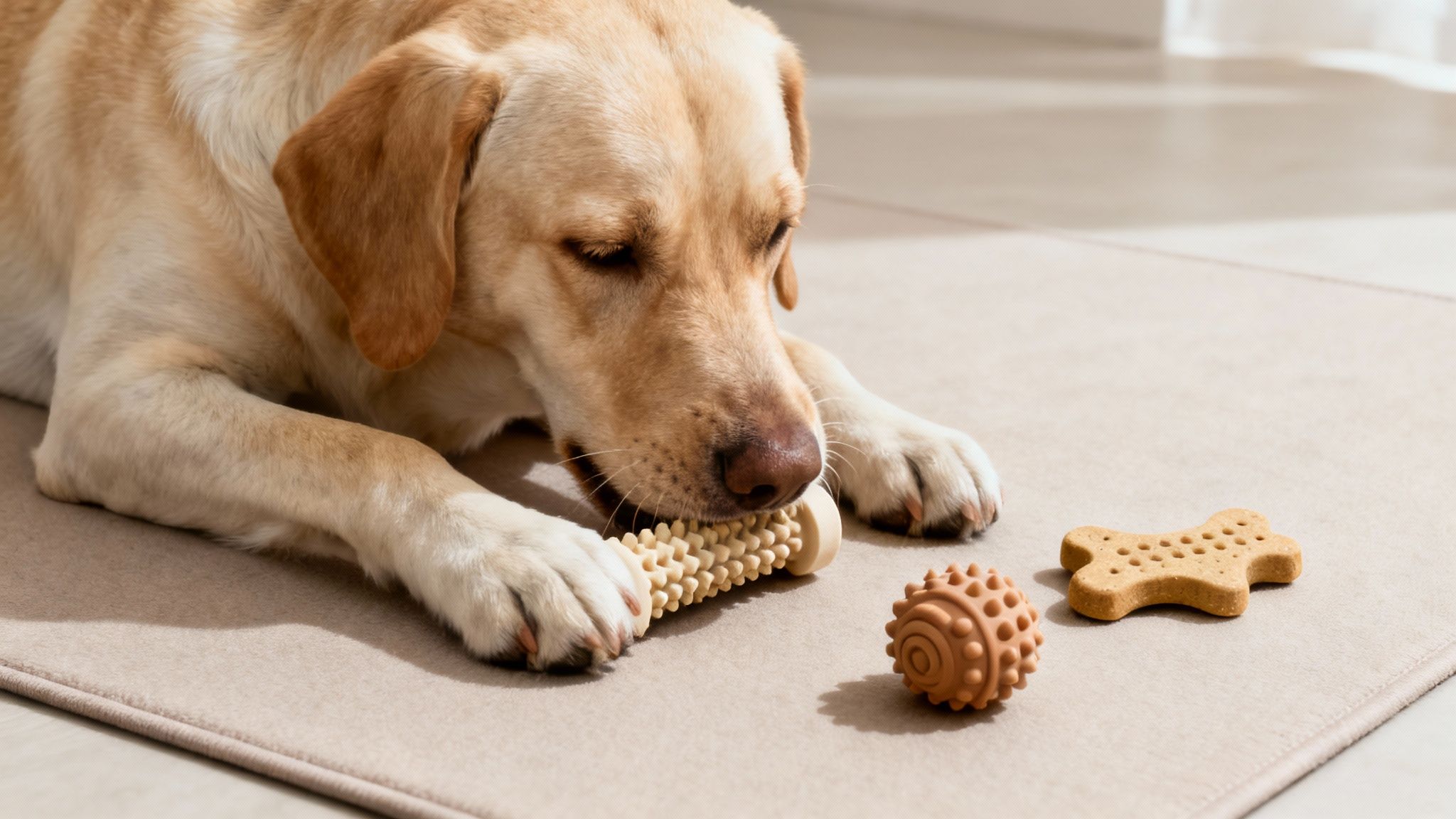
What dog doesn't love a good chew? Dental chews are a fantastic way to supplement your brushing routine. They give your pup a fun "job" to do while the chewing action helps scrape away plaque. But walk down any pet store aisle, and it's easy to feel lost in a sea of marketing claims.
Let's be honest: not all dental chews are created equal. Some are incredibly effective at cleaning teeth, while others are little more than a calorie-packed treat. The whole world of dog dental care at home has exploded. The global market for these products was valued at around USD 2.74 billion in 2023 and is projected to hit USD 5.00 billion by 2032.
With so many options out there, knowing what to look for is more important than ever.
The VOHC Seal: Your Shortcut to a Good Chew
One of the easiest ways to cut through the noise is to look for the Veterinary Oral Health Council (VOHC) Seal of Acceptance. This isn't just a fancy sticker; it means the product has been through rigorous scientific testing and is proven to effectively reduce plaque or tartar.
Think of it as a vet-approved shortcut. When you see that VOHC seal, you can feel confident you’re buying a chew that actually works.
What Makes a Dental Chew Safe?
Effectiveness is great, but safety is everything. A chew that’s too hard can lead to a painful and expensive fractured tooth. We always tell people to use the "thumbnail test": if you can't make a dent in the chew with your thumbnail, it’s probably too hard for your dog.
Here are a few popular chews that vets often warn against because they are just too hard:
- Real Bones (cooked or raw): These can splinter easily or crack teeth.
- Antlers: These are extremely hard and a very common cause of painful slab fractures.
- Hard Nylon Chews: While durable, some are so rigid they pose a real risk, especially for aggressive chewers.
Always pick a chew that's the right size for your dog. A treat that’s too small can quickly become a choking hazard, while one that's too big might be too much for them to handle. And no matter what, always supervise your dog when they're enjoying a chew.
Your top priority should always be safety. A good dental chew should be tough enough to clean teeth but soft enough to prevent injury. Always supervise chewing sessions.
Don't Forget to Check the Ingredients
Beyond the chew's texture, take a quick peek at the ingredient list. You want to see simple, digestible ingredients. Some chews even contain breath-freshening ingredients like parsley or mint, which is a nice little bonus!
If you like having complete control over what your pup eats, you can even make your own. Our guide to homemade dog treat recipes has some fantastic ideas you can adapt for dental health.
Ultimately, the best dental chew is one your dog finds both safe and enjoyable. By looking for the VOHC seal, checking for appropriate hardness, and supervising your pup, you can make treat time a powerful part of your dog dental care at home routine.
Knowing When It's Time to See the Vet
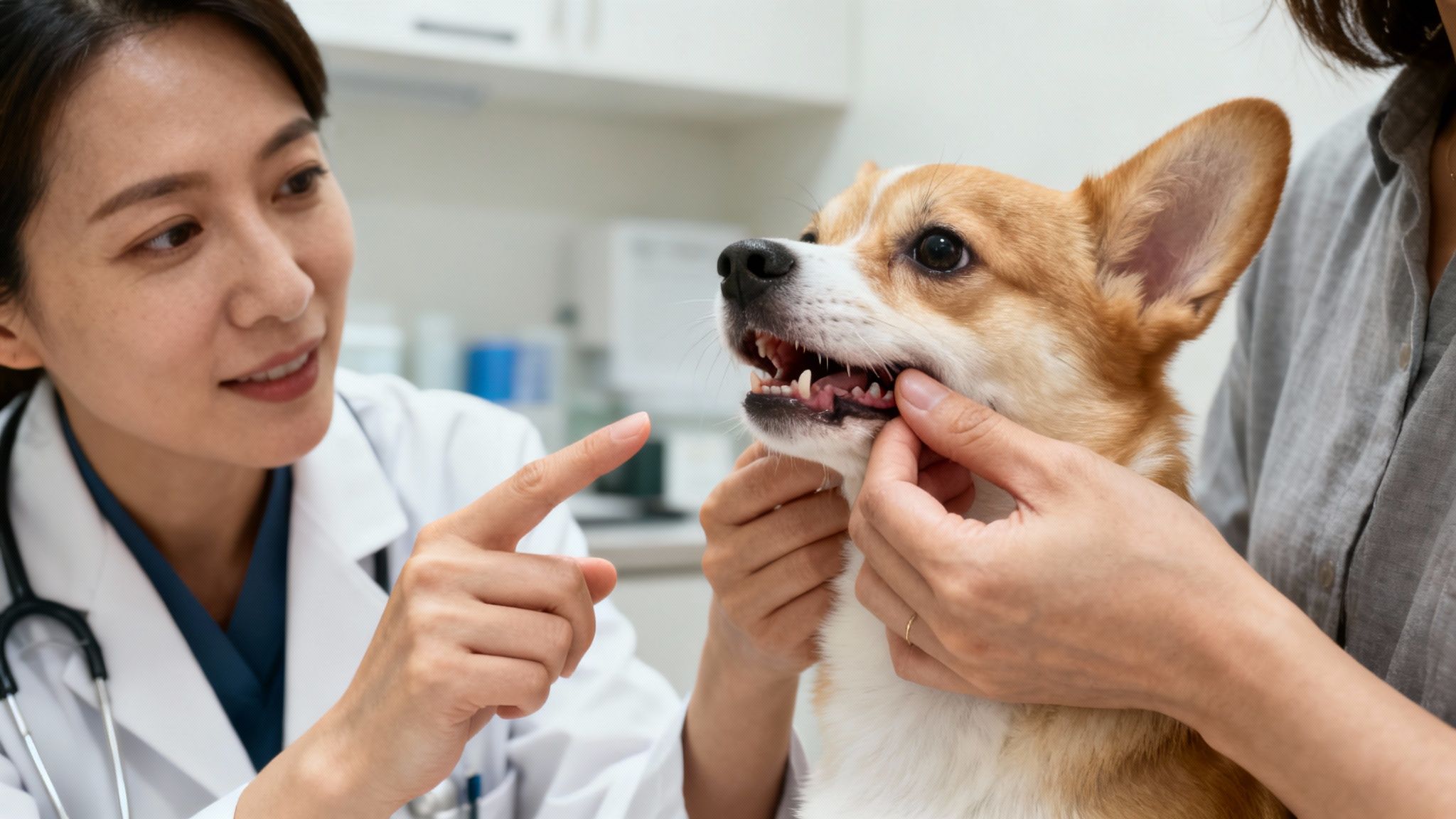
Your consistent efforts with dog dental care at home are the absolute cornerstone of a healthy mouth. But you can't go it alone. Think of it as a partnership—you’re the daily manager, and your vet is the specialist you call in when things get tricky.
Knowing when to make that call is one of the most powerful ways you can advocate for your pup's health.
Even with the best home routine, some issues simply need professional attention. Your veterinarian has the tools and training to see things you can't, especially below the gumline where most painful dental problems hide. An annual dental check-up is a great baseline, but there are certain red flags that mean you should book an appointment much sooner.
Telltale Signs Your Dog Needs a Dental Check-Up
Your dog can't just tell you when their mouth hurts, so it's up to us to become sharp-eyed detectives. If you spot any of the following symptoms, it's a clear signal to get a professional opinion.
- Persistent Bad Breath: We're not talking about regular "doggie breath." If the odor is unusually foul, strong, or suddenly gets worse, it almost always points to an underlying infection that needs attention.
- Red, Swollen, or Bleeding Gums: Healthy gums should be a nice bubblegum pink (unless your dog has naturally dark gums, of course). Any angry-looking redness or swelling, especially right where the tooth meets the gum, is a classic sign of gingivitis.
- Yellow-Brown Tartar Buildup: That hard, crusty stuff on their teeth is tartar. Unlike the softer plaque you brush away, this is basically mineralized gunk, and it won't come off with a toothbrush. It takes special tools to remove safely.
- Changes in Chewing Habits: Have you noticed your dog dropping food, chewing on only one side of their mouth, or suddenly turning their nose up at hard kibble or favorite chew toys? Pain is almost always the culprit.
- Pawing at the Mouth or Face: This is a pretty direct sign of discomfort. Your dog is trying to tell you, "Hey, something hurts in here!"
- Loose or Broken Teeth: This is a big one. Any wiggly or visibly damaged tooth is a serious issue that needs immediate veterinary care to prevent infection and manage what is almost certainly severe pain.
Catching these signs early can make a world of difference. It often means preventing a small, manageable problem from spiraling into something much bigger, more painful, and way more expensive to fix.
Think of yourself as your dog's first line of defense. Noticing a subtle change in their eating habits or breath is the first critical step in addressing painful dental disease before it progresses.
The Role of Professional Dental Cleanings
If your vet recommends a professional cleaning, it's going to be performed under anesthesia. We know that can sound a little scary to many pet owners, but it's the only way to do a truly thorough and safe cleaning.
Anesthesia allows your vet to meticulously clean below the gumline, take detailed dental X-rays to check the health of the tooth roots (where the real trouble often hides), and fix any painful issues without causing your dog a bit of stress or fear. It’s a necessary step for maintaining long-term oral health and a vital part of your partnership in keeping that tail wagging for years to come.
Your Dog Dental Care Questions, Answered
Here at SetterFrens, we hear a ton of great questions about what at-home dog dental care really looks like. If you've ever felt unsure if you're doing enough, or what to do when your dog just isn't cooperating, you're in good company. Let's dig into some of the most common questions we see from our community.
How Often Should I Really Be Brushing My Dog's Teeth?
In a perfect world? Every single day. Plaque is a sneaky beast and starts building up just hours after a meal. Daily brushing is the gold standard for wiping it away before it can harden into tartar, which is much tougher to deal with.
But let's be realistic—life happens. If daily brushing just isn't in the cards, don't throw in the towel. Aiming for at least 3-4 times a week still makes a massive difference. Consistency is the name of the game, and some brushing is infinitely better than none.
Can I Just Use My Own Toothpaste?
This is one we hear all the time, and the answer is a hard no. Human toothpaste is packed with ingredients that are great for our enamel but can be toxic to dogs, especially things like fluoride and the artificial sweetener xylitol. It’s also designed for spitting out, and since our dogs swallow instead, those ingredients can cause serious stomach upset or worse.
Always, always grab a toothpaste made just for dogs. They’re formulated to be safely swallowed and often come in dog-approved flavors like beef or chicken, which can help make the whole process feel more like a treat.
My Dog Hates Having Their Teeth Brushed. What Now?
First off, take a deep breath. If your dog is fighting you on brushing, the best thing you can do is hit the reset button and slow way down. Patience is your superpower here. Keep your training sessions super short, positive, and always end on a high note with tons of praise or a favorite treat.
If the toothbrush continues to be a major battle, it’s time to switch up your game plan. You can still build a powerful routine using a few different tools:
- Dental Wipes: A great alternative for dogs who find a brush too invasive. They’re perfect for a quick daily wipe-down of the tooth surfaces.
- Water Additives: This is as easy as it gets. A few drops in their water bowl can provide all-day antibacterial benefits.
- VOHC-Approved Chews: Put your dog’s natural chewing instinct to work! Giving these daily helps scrape away plaque through mechanical action.
Combining these alternatives can go a long way in keeping your dog's mouth healthy.
Are Anesthesia-Free Cleanings a Good Option?
They might sound like a gentler, easier choice, but veterinary professionals are pretty unified on this one: it's best to steer clear. Anesthesia-free cleanings are mostly cosmetic. They focus on scraping tartar off the part of the tooth you can see, but they can't address the real problem lurking below the gumline.
A proper, deep cleaning simply isn't possible on a dog who is awake. Anesthesia allows the vet to do a complete oral exam, take crucial X-rays to see the health of the tooth roots, and safely clean away the hidden bacteria that lead to painful dental disease.
Sometimes, dental problems require medication. If you find yourself struggling with pill time, getting some tips on how to mask the taste of a pill for your dog can be a real lifesaver.
At SetterFrens, we're a cozy online community built for dog lovers who believe life’s better with a wagging tail and a good book. Along with our curated selection of dog-themed books, SetterFren.com features honest reviews of the top dog products and practical how-to guides to help you care for your pup like a pro. Join our Puppicino Club to unlock member perks, book updates, and dog-friendly treats. Stay part of the fun by following @setterfrens on TikTok and Instagram for heartwarming dog moments, product tips, and behind-the-scenes content from our growing pack