
It’s a scene every dog lover dreads: your perfectly sweet, book-cuddling pup spots another dog on a walk and suddenly turns into a lunging, barking, snarling mess. It’s embarrassing, stressful, and can leave you feeling completely lost.
This behavior is often called leash aggression, but a better term is leash reactivity. More often than not, it's a big, loud reaction rooted in fear or frustration, not a genuine desire to be aggressive. When a dog is on a leash, their natural ability to create distance or simply run away from something scary is gone. That leaves them feeling cornered, and for many dogs, the only option left is to put on a big, defensive show.
Why Does My Dog Act So Aggressive On a Leash?
If you've ever asked yourself why your friendly companion acts so differently on a leash, you are absolutely not alone. This is one of the most common challenges we see in our SetterFren community, and it can make owners feel isolated and dread their daily walks.
The first step toward progress is getting to the "why" behind the reaction. To truly help our pups, we have to try and see the world from their perspective. A leash fundamentally changes a dog's options. Their natural "fight or flight" instinct gets stripped down to just one choice: fight.
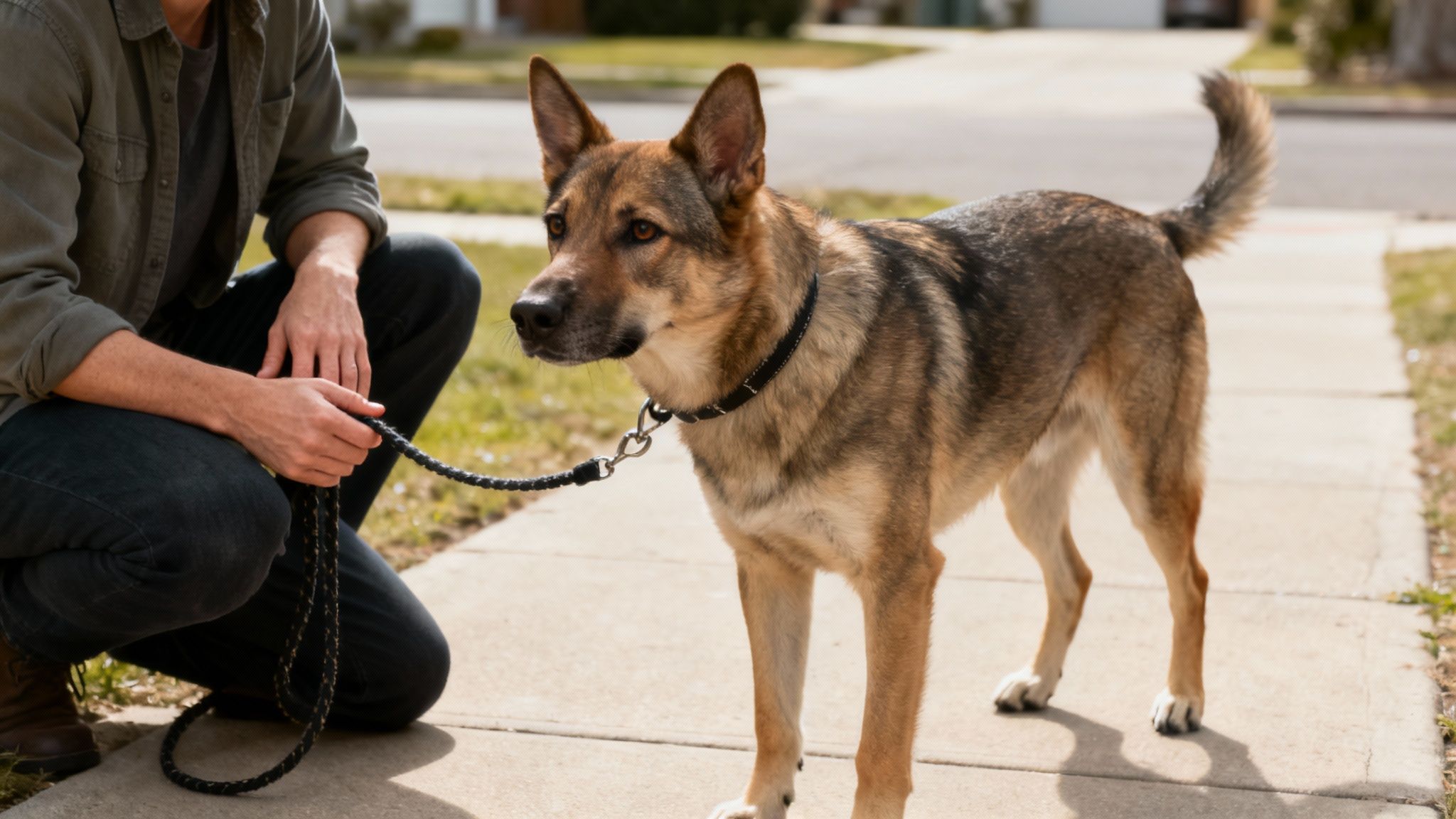
Unpacking the Root Causes
At its core, leash reactivity is an emotional response. It’s usually driven by intense feelings of fear, anxiety, or deep frustration. The physical restraint of the leash is a huge factor—it prevents a dog from using its normal body language to communicate or from simply moving away to de-escalate a situation.
Let's turn the page on the most common reasons this happens:
- Barrier Frustration: Some dogs are incredibly social and just want to say hi to every dog they see! The leash holds them back, and that excitement boils over into a full-blown tantrum of barking and pulling.
- Fear and Anxiety: A single bad experience, like being charged by an off-leash dog, can create a lasting fear. For other dogs, the issue stems from a lack of positive, controlled exposures during their critical developmental window. Our guide on puppy socialization dives deep into how crucial those early experiences are for building a confident adult dog.
- Feeling Trapped: That tension you feel in your hand travels right down the leash to your dog. They know they can’t escape if something scary approaches, so they preemptively act tough to ward off the perceived threat.
To help you pinpoint what might be setting your dog off, let's look at some common triggers.
Common Triggers for Leash Aggression
Every dog is different, but certain sights and sounds are frequent culprits for on-leash reactions. Recognizing your dog’s specific triggers is the first step in managing and eventually changing their response.
| Trigger | Why It's a Problem | Your Dog's Likely Feeling |
|---|---|---|
| Another dog walking directly toward you | Head-on approaches are confrontational in the dog world. | Threatened, Anxious |
| People wearing hats or carrying large items | Unfamiliar silhouettes can appear strange and intimidating. | Fearful, Suspicious |
| Bicycles, skateboards, or strollers | Fast, unpredictable movement can trigger a prey drive or fear. | Overstimulated, Frightened |
| Loud noises (trucks, construction) | Sudden, startling sounds can put an already anxious dog on high alert. | Startled, Anxious |
Understanding what sets your dog off allows you to be proactive. You can start creating distance before your dog has a chance to react, which is the foundation of any good training plan.
Understanding the "why" isn't about making excuses for your dog's behavior. It’s about gathering the intel you need to build a training plan that tackles the root emotion, not just the barking and lunging you see on the surface.
Shifting your mindset is key. Your dog isn't giving you a hard time; they're having a hard time. Once you fully embrace that, you can start rebuilding their confidence and making your walks an enjoyable way to bond again.
Gearing Up for Success: Your Leash-Reactivity Toolkit
Before you even think about hitting the pavement, let’s chat about gear. Having the right equipment can make a world of difference. This isn’t about finding a magic wand to fix reactivity, but about choosing tools that help you communicate clearly and stay in control. That control is what helps your dog feel safe with you.
Think of it this way: your gear should support your training, not become a crutch or a quick fix. In fact, the wrong equipment can sometimes make a tense situation even worse.
Harnesses and Leashes: The SetterFren Setup
So many folks in our SetterFren community swear by a good front-clip harness. It’s a real game-changer. Unlike a standard back-clip harness that can actually encourage your dog to pull harder (like a sled dog!), the front-clip design gives you gentle steering power. When your dog lunges, the pressure on the leash guides them back toward you. It’s a simple, painless way to redirect their focus.
We always recommend pairing that harness with a sturdy, no-frills 6-foot standard leash. It’s the perfect length—long enough for a bit of sniffing freedom but short enough to keep your dog safely within reach. Your leash is your lifeline, so make sure it's a reliable one.
A quick but important note: Please, please avoid retractable leashes if you're working with a reactive dog. That constant tension on the line can seriously ramp up their anxiety, and you have almost zero control if they suddenly decide to bolt.
The Secret Weapon: High-Value Treats
Your training toolkit isn't just about what your dog wears—it's also about what gets them excited. And honestly, the most powerful tool you have is a pocket full of absolutely irresistible, high-value treats.
We're not talking about their dinner kibble here. We're talking about the good stuff. The small, smelly, delicious morsels your dog would walk over hot coals for.
- So, what works? We’ve had the best luck with soft, bite-sized pieces of boiled chicken, tiny cubes of cheese, or those extra-stinky training treats you can get at the pet store.
- Why is this so important? A treat that’s just okay won’t be enough to break your dog's focus when they see another dog. A truly high-value reward is powerful enough to snap their attention away from a trigger and back to you. It's how you start to change their mind, helping them learn that seeing another dog means amazing snacks are coming from their favorite person.
A simple treat pouch you can clip to your belt makes it easy to grab a reward in a split second. And while you're getting your gear in order, don't forget the basics. A solid, up-to-date ID tag is an absolute must. If you're looking for a modern option, we did a full review of the Q-Node Dog Tag that's worth a look.
Managing Distance and Finding Your Dog's Threshold
Alright, let's get down to the nitty-gritty of training. The single biggest key to success with a leash-reactive dog isn't some secret command or fancy tool; it's all about mastering distance and observation. It all comes down to understanding your dog’s threshold—that sweet spot where they can see another dog (or whatever their trigger is) but are still calm enough to think and listen to you.
Picture an invisible bubble around your dog. Inside that bubble, they're cool, calm, and connected. The second a trigger crosses into that space, their brain gets hijacked by emotion, and all that training goes right out the window. Your most important job is to become an expert at knowing exactly where that line is.
Becoming a Master of Observation
So, how do you find this magic line? Start by taking your dog somewhere you can see triggers from a long way off, like the edge of a big park or a quiet field. Now, just watch. A relaxed dog has a soft, wiggly body, maybe a gentle, sweeping tail wag, and floppy ears.
As a trigger gets closer, you're looking for the tiny, subtle tells that they're starting to feel uneasy:
- Their body gets just a little bit stiff.
- Their ears prick forward and stay locked on target.
- Their mouth closes, and their eyes get hard.
- Their tail goes high and stiff, maybe with a fast, twitchy wag.
The second you spot any of these, you’ve found their threshold. That’s our training distance. Any closer, and you're pushing them into the red zone where they're just going to react.
The entire goal here is to keep your dog "sub-threshold." You want them in a headspace where they can actually learn. If you constantly push them over the edge, you're just reinforcing their fear and frustration, which will only set you back.
This proactive approach is everything. A 2020 study that looked at 286 dog walking sessions found that when at least one dog was leashed, it significantly cut down on the chances of a tense, close-quarters interaction. It's a great reminder of how your leash is a powerful tool for creating that much-needed space. You can dig into the full findings on safe dog walking to see just how much of a difference it makes.
The Emergency U-Turn: Your Lifesaving Move
Let's be real—sometimes a trigger pops up out of nowhere. A dog suddenly rounds a corner, or a kid on a scooter zips past without warning. For those "oh, puppicino!" moments, you need an escape plan. The emergency U-turn is your go-to.
It’s wonderfully simple. The instant you see a trigger that’s way too close for comfort, chirp "This way!" in a happy, upbeat tone, and immediately pivot and walk briskly in the other direction. As soon as your dog turns with you, praise them and pop a super tasty treat in their mouth. The key is to make it a fun game of "let's go this way!" instead of a panicked yank on the leash.
This is where having the right gear makes all the difference.
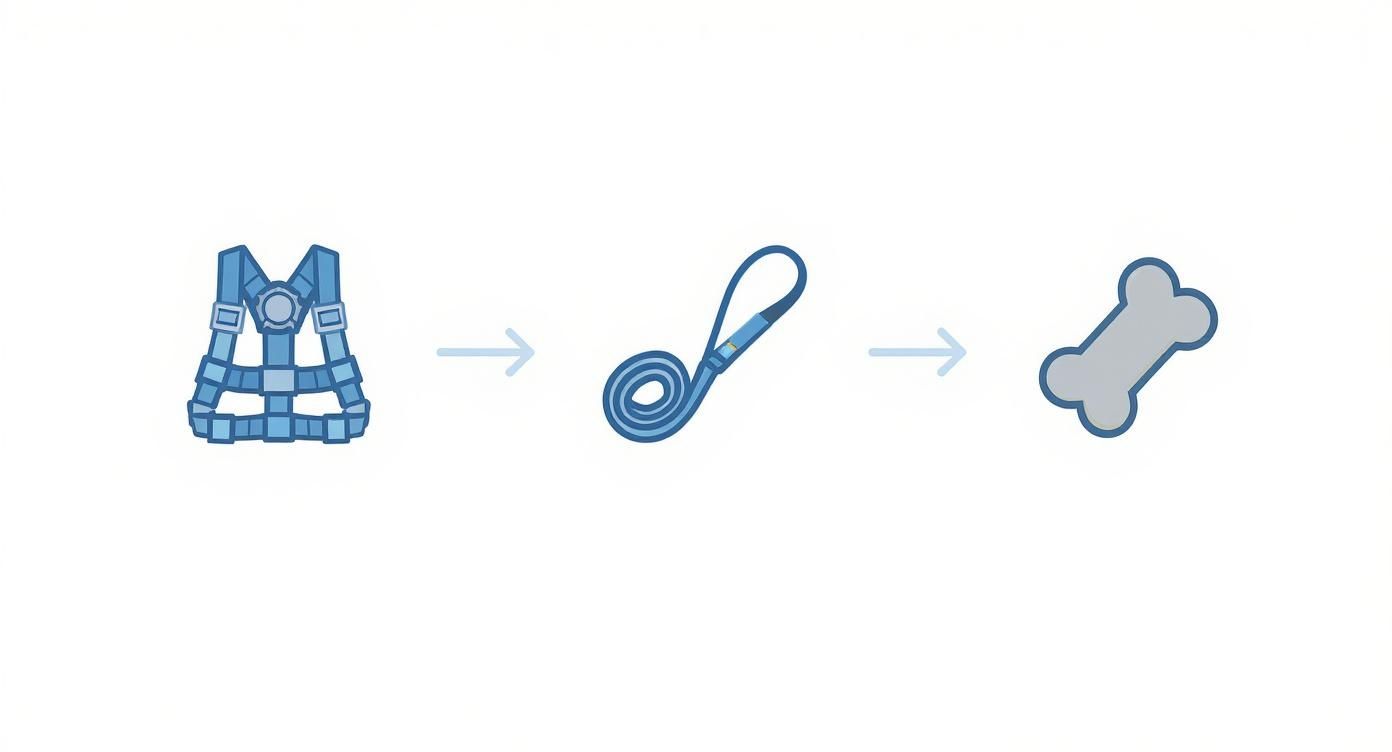
When you've got a solid harness, a standard leash (not a retractable one!), and amazing treats ready to go, you can pull off a smooth U-turn without fumbling.
Changing Your Dog’s Mind About Triggers
Once you get good at keeping your dog under their threshold, we can start to change how they actually feel about seeing other dogs. This is where the real magic happens. We're going to shift our focus from just preventing a reaction to actively changing how your dog feels about seeing another dog on a walk. This is all about building up their confidence and turning a stressful situation into a fun training game.
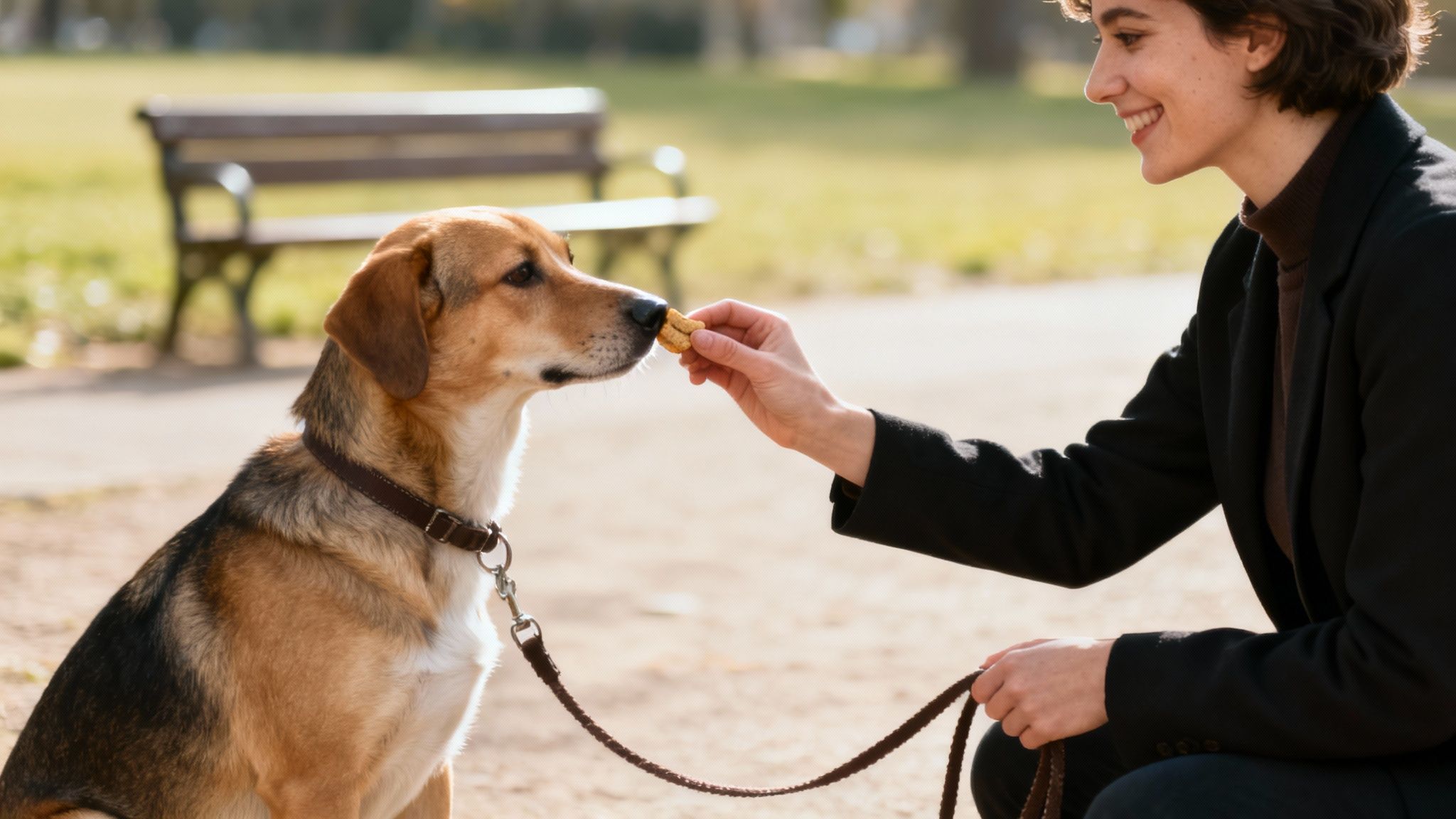
The idea is to show your pup they have better, more rewarding options than resorting to barking and lunging. We'll do this by playing some simple, predictable "pattern games" that give them a clear job to do whenever a trigger shows up.
These little games are powerful because they start to rewire your dog's brain. Instead of seeing another dog and thinking, “Uh oh, danger!” they'll start to think, “Oh hey, that means the fun game with the amazing snacks is about to start!” It’s a proactive way to build a new, positive association.
A Fun Favorite: The "1-2-3" Game
One of the most effective and easiest games to teach is what we call the "1-2-3" game. It’s wonderfully simple and gives your dog a predictable rhythm to focus on, which helps them tune out the trigger and tune back in with you.
Here’s the breakdown:
- See the Trigger: The second your dog clocks another dog (from a safe distance where they're not reacting), start the game with a happy, upbeat tone.
- Count and Treat: Say "One," and pop a treat in their mouth. Then say "Two," and give another treat. Finally, say "Three," and deliver a jackpot—a few treats at once or something extra special.
- Keep it Going: As long as the other dog is in sight, keep the 1-2-3 pattern going. The moment the trigger is gone, the game and the treats stop.
This repetition is key. It teaches your dog that another dog's presence predicts a fun and rewarding counting game with you. It gives their brain a simple, structured task, making it much harder to fixate on the thing that usually causes them to worry.
For this to work, you absolutely need high-value rewards. We’re talking about the good stuff! If you need some ideas, check out our favorite homemade dog treats recipes—they’re guaranteed to keep your pup focused.
Key Takeaway: By giving your dog a simple, rewarding job, you're not just distracting them. You're teaching them a brand new coping skill and replacing an old, reactive habit with a positive one.
To give you a few more tools for your training walks, here are some of the go-to techniques trainers use. Each one has a slightly different application, but they all work on the same principle of creating a positive association.
Positive Reinforcement Techniques at a Glance
| Technique Name | Best For | How It Works |
|---|---|---|
| "Look at That" (LAT) | Dogs who are quick to stare or fixate on triggers. | Reward your dog the instant they look at the trigger, before they react. This teaches them that looking at the trigger and then back to you is rewarding. |
| "Find It" | Creating a quick, positive distraction on the ground. | When you see a trigger, toss a handful of treats on the ground and say "Find it!" This encourages sniffing, which is naturally calming for dogs. |
| "1-2-3" Game | Dogs who need a predictable, rhythmic pattern to focus on. | As described above, you count to three, giving a treat on each number. It creates a predictable and rewarding routine whenever a trigger is present. |
Playing these games consistently is what builds that new, confident response over time. Don't be afraid to switch it up and see which one your dog responds to best!
Using the Environment to Your Advantage
Sometimes, the best training tool isn't a treat—it's the world around you. Learning to use your surroundings can provide instant relief in a tense moment and give your dog a much-needed mental break.
Think of it as creating your own pop-up visual barriers. If you see another dog approaching and the distance is closing a little too fast, you can strategically move behind a parked car, a big tree, or a dense hedge. This simple act of breaking their line of sight can be enough to prevent a reaction and help your dog reset.
This "duck and cover" move isn't about avoiding the problem forever; it's a smart management technique for the here and now. It shows your dog that you’re in control and will help them feel safe. By combining these quick environmental moves with your pattern games, you’re building a powerful and flexible toolkit for much calmer, more confident walks together.
When Should You Call a Professional?
Tackling leash reactivity on your own is a huge undertaking, and it's completely normal to feel like you're in over your head sometimes. Reaching out for professional help isn't a sign of failure—far from it. It’s one of the smartest and most responsible things you can do for your dog.
The methods we've covered are a great foundation, but some dogs and situations just need a more seasoned expert to guide the way. So, when is it time to make that call? Honestly, trust your gut. If you feel lost, overwhelmed, or just plain stuck, that's your sign. A good professional can cut through the confusion and give you a clear, personalized roadmap.
Red Flags That Mean You Need Backup Now
Some behaviors are more than just a training challenge; they're giant, waving red flags. If you see any of these signs, don't wait for things to escalate. It's time to bring in a pro.
- Your Dog Has a Bite History: This is a big one. If your dog has ever bitten another animal or a person, professional intervention is no longer optional—it's essential for safety.
- The Reactivity Is Getting Worse: You've been trying everything, but the barking, lunging, and growling are only becoming more intense or happening more often. This means your current approach isn't working, and you need a new game plan.
- You're Afraid or Anxious: Your dog feels everything you feel right through that leash. If you’re dreading walks, constantly tense, or worried you can't control your dog, an expert can help rebuild your confidence and give you the skills to feel secure again.
While any dog can struggle with reactivity, some research helps put things into perspective. One study on reported aggression incidents found that 17.1% involved crossbreeds and 15.7% involved Pit Bull types. This isn't about blaming breeds; it's about understanding the need for responsible handling and proactive training, especially with powerful dogs. You can dive deeper into the breed distribution in aggression cases in the full study.
Finding the Right Kind of Help
The dog training world can feel like the Wild West, so it’s crucial to know who you’re hiring. The right expert can make all the difference, while the wrong one can do more harm than good.
Here's a quick look at who's who:
Certified Professional Dog Trainer (CPDT-KA): Think of these folks as your first line of defense. They’ve passed rigorous exams on training theory and animal learning, and they stay up-to-date on the latest methods. For most leash reactivity cases, a CPDT-KA is an excellent place to start.
Veterinary Behaviorist (DACVB): A DACVB is a veterinarian who has gone through years of specialized residency training in animal behavior. If you think medication might be needed to help manage deep-seated anxiety or fear, a veterinary behaviorist is the ultimate expert to consult.
As you search, make sure you find someone who uses force-free, positive reinforcement techniques. Run the other way from anyone promising a "quick fix" or pushing punishment-based tools like prong or shock collars. Those methods often suppress the behavior while making the underlying fear and anxiety much, much worse.
The goal isn't just to stop the barking; it's to build a foundation of trust and confidence that leads to a lifetime of better, happier walks together.
A Few Common Questions About Leash Reactivity
As you start working on your dog's leash aggression, a ton of questions will bubble up. It's totally normal! In our SetterFren community, we see the same concerns from loving dog owners time and time again.
So, we've pulled together the most common ones to give you some quick, practical answers. Think of this as a little extra support to keep you going on this important journey with your pup.
Is Leash Aggression Something My Dog Can Be "Cured" Of?
We think it's much healthier to frame it as "management" instead of a "cure." Can a dog with leash reactivity learn to walk calmly past other dogs? Absolutely! A huge number of them do with the right training. The real goal is to give your dog better coping skills so the reactions become less intense and happen way less often.
Real, meaningful improvement is completely within reach. You just have to learn to celebrate the small victories. The first time your dog sees another dog and looks at you instead of lunging? That's a huge win. Progress, not perfection, is the name of the game.
What About Using a Prong or Shock Collar to Stop the Lunging?
Here at SetterFren, we are all about force-free, positive training. That's a hard no from us. While aversive tools like prong or shock collars might seem like a quick fix, they don't solve the root problem—the fear, anxiety, or frustration that's causing the reaction in the first place.
In fact, these tools almost always make dog aggression on leash much worse. Your dog quickly learns that the sight of another dog predicts a painful jab in the neck or a shock. This just pours gasoline on the fire of their fear and can escalate their aggressive displays.
We always recommend humane tools, like a good front-clip harness, paired with training that actually builds your dog's confidence from the ground up.
What Should I Do if an Off-Leash Dog Runs Up to Us?
This is every reactive dog owner's nightmare, and it's a genuinely scary situation. Your one and only job in that moment is to be your dog's advocate and create space. Fast.
Here’s what you can do:
- Be a Blocker: Immediately get your body between your dog and the oncoming dog. You become the physical barrier.
- Find Your "Big" Voice: Yell in a loud, firm voice, "GET YOUR DOG!" or "MY DOG IS NOT FRIENDLY!" Don't be timid—your dog’s safety is on the line.
- Throw a Treat Scatter: If you have them, toss a handful of high-value treats on the ground toward the other dog. It's a fantastic way to distract them for a few crucial seconds while you escape.
- Beat a Hasty Retreat: As soon as you can, make a quick U-turn and walk (or jog!) in the other direction.
How Long Until I Start Seeing Results?
This is the million-dollar question, and the honest answer is: it depends. Every dog's journey is different. Progress hinges on things like how severe the reactivity is, how long it's been going on, and how consistent you are with the training.
Some people see little glimmers of hope in just a few weeks. For others, it’s a slow and steady marathon that takes months.
Patience is your superpower here. The key is to manage your dog's environment to prevent them from going over their threshold. Every big reaction can feel like a step backward, so focus on creating positive, controlled experiences, no matter how small. Every single calm moment is a win.
Here at SetterFren, we believe every walk should be a joy, not a battle. It’s a chance to connect with your best friend. Our whole community is built around sharing real-world advice and stories to help you and your pup thrive. Check out our other guides and books to find even more ways to strengthen that amazing bond. Visit SetterFren.com today