

So, you're thinking about crating an older dog and wondering if you've missed the boat. Let me put that worry to rest right now: you absolutely can teach an old dog new tricks. With a bit of patience and a whole lot of love, giving your senior companion their own special space can be a wonderful decision for their comfort and security.
Why Crating Your Older Dog Is a Wonderful Idea
Welcome to the SetterFrens family! We know you're here because you want the absolute best for your seasoned pup, and we believe life’s better with a wagging tail. The thought of introducing a crate to an older dog, especially one who’s never seen one, can feel a little intimidating. But let's ditch the outdated idea of a crate as a cage. Think of it instead as your dog’s personal den—a safe, cozy bedroom that's all theirs.
I’ve heard from so many people in our Puppicino Club about how a crate became a total game-changer for their senior dog. One member told me their rescue pup, terrified of fireworks, now retreats to their crate as a secure den during storms. Another found it was the perfect quiet escape for their older dog in a busy, multi-pet home.
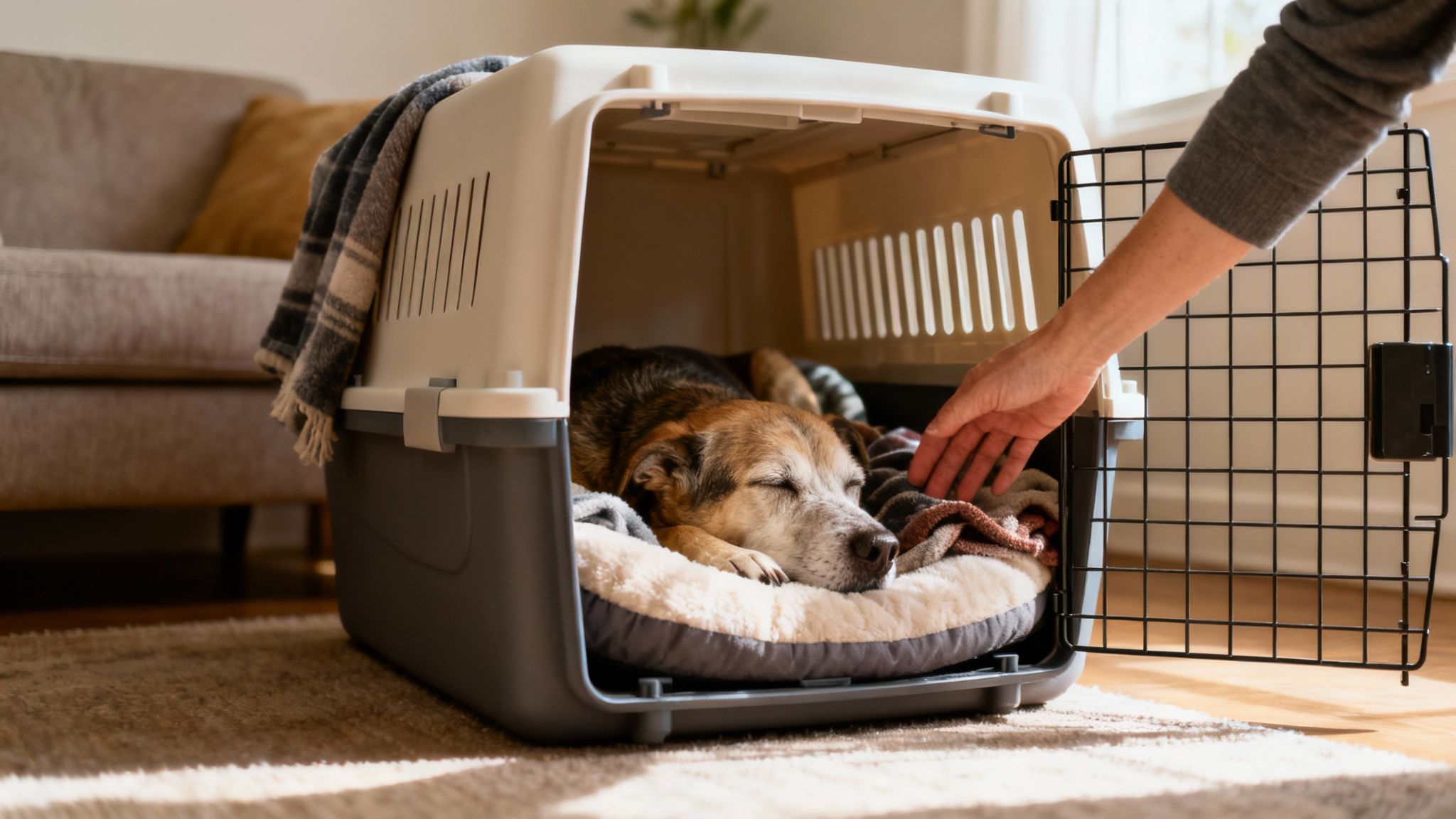
Unlocking the Benefits of a Crate
That old myth about old dogs and new tricks? Totally busted. Crate training a senior is not only doable but incredibly effective when you make it a positive experience. Experts agree that even dogs with a mysterious past can learn to love their crate if you take it slow and build trust with plenty of praise and tasty treats.
The benefits go way beyond just giving them a quiet spot to chill. A crate offers a sense of structure and safety that many dogs—especially anxious ones—genuinely crave.
- A Personal Safe Haven: It's a designated spot where they can go to decompress, knowing they won’t be bothered. This is a lifesaver in a home with kids or other high-energy pets.
- Support for House Training: For newly adopted seniors or dogs who are starting to have accidents, a crate is an invaluable tool for managing messes and reinforcing potty routines.
- Safer Travel: A crate keeps your precious cargo secure in the car, whether you're just heading to the vet or embarking on a longer road trip.
The real magic happens when your dog starts walking into their crate all on their own. That’s the ultimate sign they see it not as confinement, but as their personal sanctuary—a place of pure comfort and security.
This focus on comfort and well-being should carry through every part of your senior dog’s life. It’s just as important in their daily routine as it is for things like gentle dog grooming for older dogs. By meeting their needs with kindness and patience, we can help make their golden years truly golden.
Setting Up Your Senior Dog's Crate: Their Own Private Retreat
Turning a simple crate into your older dog's favorite spot in the house is the real secret to success. This isn't just about containment; it's about creating a personal, cozy den they will voluntarily choose for a nap. Let's get hands-on with picking the right crate and outfitting it for ultimate comfort and security.
Think about your dog's individual needs. A senior pup with creaky arthritic joints will need something different than a recently adopted older dog feeling a bit unsure of their new surroundings. Making the right choice from the get-go makes the entire training process feel less like work and more like a fun new game.
Finding the Right Crate Style
Not all crates are built the same, and this is especially true when you’re shopping for a senior. Here at SetterFrens, we love sharing honest reviews of top dog products, and crates are no exception. The market is full of options, but a few main types stand out.
Here's a quick comparison to help you decide which crate is the best fit for your older dog's comfort and your lifestyle.
Choosing the Right Crate for Your Senior Dog
| Crate Type | Best For | Pros | Cons |
|---|---|---|---|
| Wire Crates | Most dogs; allows for customization with covers and beds. | Excellent airflow; great visibility so they don't feel isolated; easy to clean. | Can feel too exposed without a cover; some dogs may chew the bars. |
| Plastic Crates | Anxious dogs who prefer a more enclosed, den-like feel. | Creates a cozy, secure feeling; durable and often airline-approved. | Less ventilation; can be bulky and harder to store; tougher to clean. |
| Soft-Sided Crates | Calm, non-destructive dogs and for travel. | Very lightweight and portable; folds down easily for storage. | Not secure for escape artists or chewers; can be difficult to clean thoroughly. |
For most senior dogs, I've found that a good-quality wire crate paired with a fitted cover really hits the sweet spot. It gives them the security of an enclosed space while still letting them see what's going on around them.
Furnishing the Den: A Comfort Checklist
Once you’ve got the crate, it's time for the fun part: interior decorating! This is all about making the space feel safe, comfortable, and uniquely theirs. A well-appointed den is what makes crating an older dog so much easier.
Here's what you'll need:
- Orthopedic Bedding: This is non-negotiable for seniors. A thick orthopedic or memory foam bed provides critical support for tired joints and makes the crate a truly restful spot. Just make sure the cover is removable and washable for those inevitable messes.
- A Touch of Home: Grab an old t-shirt you've worn or a blanket they already love to snuggle with. Your scent is one of the most comforting things in the world to your dog and helps them immediately form a positive connection to their new space.
- Crate-Only Goodies: Pick out a high-value chew toy or a special puzzle feeder that they only get when they are inside the crate. This creates a powerful sense of anticipation and makes "crate time" feel like a reward.
The right setup transforms the crate from a box into a beloved piece of furniture. When your senior dog starts choosing to nap in their den, you'll know you’ve succeeded in creating their personal sanctuary.
Location, Location, Location
Where you put the crate is just as important as what you put inside it. So many people make the mistake of sticking it in an isolated spot like a laundry room or basement, which can make a dog feel like they're being punished or excluded.
Instead, find a quiet corner in a room where the family hangs out, like the living room or your home office. This way, your dog can feel like part of the family action while still having a safe place to retreat when they need some peace. They get to relax without feeling lonely. Making sure they are comfortable is a huge part of their overall well-being, a topic we touch on in our guide on at-home dog grooming tips.
Getting the physical setup right is the foundation for everything that follows. Without a thoughtful introduction, dogs can quickly develop fear-based behaviors around a crate. But when you take the time to create a positive environment, you completely change that outcome. You’re not just training them to tolerate a kennel; you’re giving them a personal retreat they'll love for years to come. For more on this, check out the great insights on how dogs perceive crates on Dogsthat.com.
Making the Crate a Happy Place
Alright, let's get to the fun part: turning that plastic or metal box into your senior dog’s favorite spot in the house. When you're crating an older dog, the goal isn't just to get them to tolerate it. We want them to genuinely love their little den. Forget about rigid, old-school training methods. This is all about a gentle, trust-building process that makes your dog think the crate was their idea all along.
The first rule of thumb is simple: the crate door stays open. At the beginning, your dog needs the freedom to investigate this new piece of furniture on their own terms, without a hint of pressure. This whole initial phase is just about sparking curiosity and building good vibes.
Starting with an Open-Door Policy
To kick things off, we're going to turn the crate into a magical treasure chest. When your dog isn't looking, casually toss a few really tasty, high-value treats inside. Don’t make a big production out of it. The idea is for them to "discover" the goodies on their own, encouraging that little voice in their head to think, "Hey, awesome things happen in here!"
The goal for now is just to have them pop their head in, snag a treat, and walk right back out. Do this a few times a day. If your dog is a bit on the fence about it, start by placing the treats right at the entrance. As they get braver, you can toss them a little further back.
Setting up the crate to feel like a den from the get-go is a huge part of this. This little guide nails the simple but critical steps to creating a welcoming space right from day one.
This straightforward flow—picking the right crate, adding comfy bedding, and popping in a special toy—is the foundation for making the crate a place they want to be.
Introducing Crate Games
Once your dog is happily sniffing around the open crate for those surprise treats, it’s time to dial up the fun with some "Crate Games." These aren't stuffy training drills; they're just playful ways to build an even stronger positive association.
- Mealtime Magic: This one is a game-changer. Start feeding your dog their meals inside the crate. At first, just put the bowl right at the entrance. As they get comfortable, you can slide it toward the back. This forges a powerful link between the crate and something they already adore—dinner!
- Toy Treasure Hunts: Take a favorite toy or a puzzle feeder stuffed with yummy snacks and hide it inside the crate for them to find. This gets them entering the space with a sense of excitement and a fun mission to accomplish.
- "Find It" Fun: Toss a treat inside and say an enthusiastic "Find it!" then praise them like they just won the lottery when they go in to get it. Keep the door open and the energy light and happy.
For these games to really work, you need treats that are worth the effort. If you need some ideas, we've got a fantastic guide on delicious and healthy homemade dog treats that are perfect for this.
The most important ingredient here is patience. Never, ever force your dog inside. Let every single interaction be their choice, gently guided by your praise and tasty rewards.
This isn't just my opinion; it's an approach backed by experts. Phased methods, like the one outlined by the San Francisco SPCA, are designed to build confidence step-by-step. They start with these open-door treat games, move to rewarding the dog for going in on their own, and only then introduce closing the door for a few seconds. This gentle ramp-up is so important. In fact, kennel welfare data shows that dogs in shelters can start showing fear behaviors within just two days of being crated without proper, positive conditioning. By building happy experiences from the very start, you're preventing that stress before it even begins.
The First Door Closure
That first time you close the door is a big milestone, so it needs to be handled with finesse. Your mission is to make it a complete and total non-event for your dog.
Wait until your dog is happily munching on their dinner or working on a high-value chew toy inside the crate. Then, quietly swing the door shut for just a second—literally one second—and open it right back up. Don't say a word. The first few times, do this while they're completely absorbed in their food or toy.
From there, you can slowly, gradually increase the time.
- Close the door for 1-2 seconds, then open.
- Close the door for 5 seconds, then open.
- Close the door for 10 seconds, then open.
If at any point your dog seems anxious—maybe they start whining, pawing at the door, or get that worried look—you've moved too fast. No big deal. Just take a step back to the duration where they were last comfortable and hang out there for a while before trying to move forward again.
Reading Your Dog’s Body Language
Throughout this entire process, your dog's body language is your roadmap. Learning to read their subtle cues will tell you exactly when to push forward and when it's time to ease off the gas.
Signs of a Happy, Relaxed Dog:
- A loose, wiggly body posture
- Soft, almond-shaped eyes (not wide and staring)
- A gentle, sweeping tail wag
- Willingness to lie down and chill out
Signs of a Stressed-Out Dog:
- Panting when it's not hot, or excessive drooling
- Lots of lip licking or yawning (when they aren't actually tired)
- Whining, barking, or whimpering
- Pacing back and forth, unable to settle
- A low or tucked tail, or showing the whites of their eyes ("whale eye")
Keeping a close eye on these signals is the key to making sure this whole experience stays positive. By building this foundation of trust and fun, you're not just "training" your dog—you're giving them a safe haven they'll cherish for the rest of their years.
Navigating Common Crating Challenges
Even with the best plan, you’re bound to hit a few bumps in the road when crate training an older dog. It's totally normal. One day they love it, the next they're whining, barking, or acting like the crate floor is made of hot lava. The most important thing is to stay cool and remember this is just their way of talking to you.
Your job is to put on your detective hat and figure out what’s really going on. Are they just lodging a minor protest, or is it a sign of real distress? Learning to spot the difference is a game-changer and will tell you exactly how to respond without feeling discouraged.
Decoding Your Dog's Protests
Vocalization is usually the first hurdle. A bit of grumbling when you first shut the door isn't a big deal, but non-stop noise is almost always a sign that something’s up.
Let's break down what those sounds might mean:
- The "I'm Bored" Whine: This is often a low-key, on-and-off whine. It’s your dog’s way of saying, "I'm not freaking out, but I'd rather be doing something else." The fix is usually prevention—a good walk beforehand and a special, high-value chew toy that they only get in the crate.
- The "I Need to Potty" Bark: This one sounds more urgent and demanding. If you think they need to go, calmly take them outside on a leash for a quick, boring potty trip. No fun, no praise, just business. As soon as they’re done, it’s right back into the crate.
- The "I'm Scared" Cry: Pay close attention to this one. It sounds like genuine distress—panicked barks, high-pitched yelps, or howling. This isn't a simple protest; it's a cry for help. If you hear this, you’ve probably moved a little too fast.
When you hit a roadblock, the best thing you can do is take a small step back. Go back to the last thing your dog was comfortable with—even if that was just having the door closed for five seconds—and build from there. Progress isn’t always a straight line.
Handling Sudden Crate Refusal
What do you do if your dog was a crate-training rockstar and now suddenly wants nothing to do with it? This happens more often than you'd think. Before you get frustrated, run through a quick mental checklist. Did a loud noise spook them while they were inside? Could they be feeling a bit under the weather? Maybe the bedding just needs a good wash.
If you can’t pinpoint a cause, it's time to rewind the training. Go right back to square one with fun Crate Games, amazing treats, and feeding their meals inside. The only way forward is to rebuild that positive connection. Remember, you’re working on your dog's schedule, not yours. If you're also seeing some potty training regression, understanding how to potty train an older dog can offer some helpful, overlapping strategies.
Separation Anxiety Versus Crate Anxiety
It is absolutely crucial to know if you're dealing with a dog who dislikes their crate or a dog with true separation anxiety. They are not the same thing. A dog with crate anxiety is usually fine as long as you're home, but panics when crated. A dog with separation anxiety panics whenever you leave, crate or no crate.
Signs of true separation anxiety often include:
- Destructive behavior, especially around doors and windows.
- Excessive drooling, panting, or pacing.
- Having accidents in the house only when left alone.
- Trying frantically to escape the crate, sometimes to the point of injury.
The value of getting this right is huge. One study showed that in shelters, 42-62% of dogs who weren't introduced to confinement properly showed signs of stress, like pacing. A well-introduced crate at home becomes a safe space that can help prevent this kind of anxiety from taking root. You can dig deeper into how a dog's environment affects their well-being in this detailed animal welfare research.
When to Call for Professional Help
While you can work through most minor issues with patience, some situations really do need an expert. If your dog is showing signs of severe separation anxiety, has a traumatic history with confinement, or is hurting themselves trying to escape, it's time to bring in a professional.
Look for a certified professional dog trainer (CPDT-KA), a veterinary behaviorist (DACVB), or a certified separation anxiety trainer (CSAT). These pros can build a custom plan for your dog's specific issues and keep them safe and happy. For a refresher on the basics, our guide on how to properly crate train a dog is a great resource that covers the fundamentals for any age.
Working through these challenges is just part of the process. With a big dose of patience, empathy, and a willingness to listen to what your dog is telling you, you can get through these hurdles together and make their crate the sanctuary it was always meant to be.
Weaving the Crate into Your Daily Life
Alright, so your dog is starting to see their crate as a pretty cool spot. That’s a huge win! Now, the goal is to make crate time a normal, seamless part of your daily rhythm, not some random event that happens out of the blue.
Consistency is everything, especially with an older dog. A predictable routine helps them understand what’s coming next, which is incredibly comforting. It turns the crate from a question mark into a familiar place for a nice, quiet nap. This structure is one of the kindest things you can do for them as they learn this new skill.
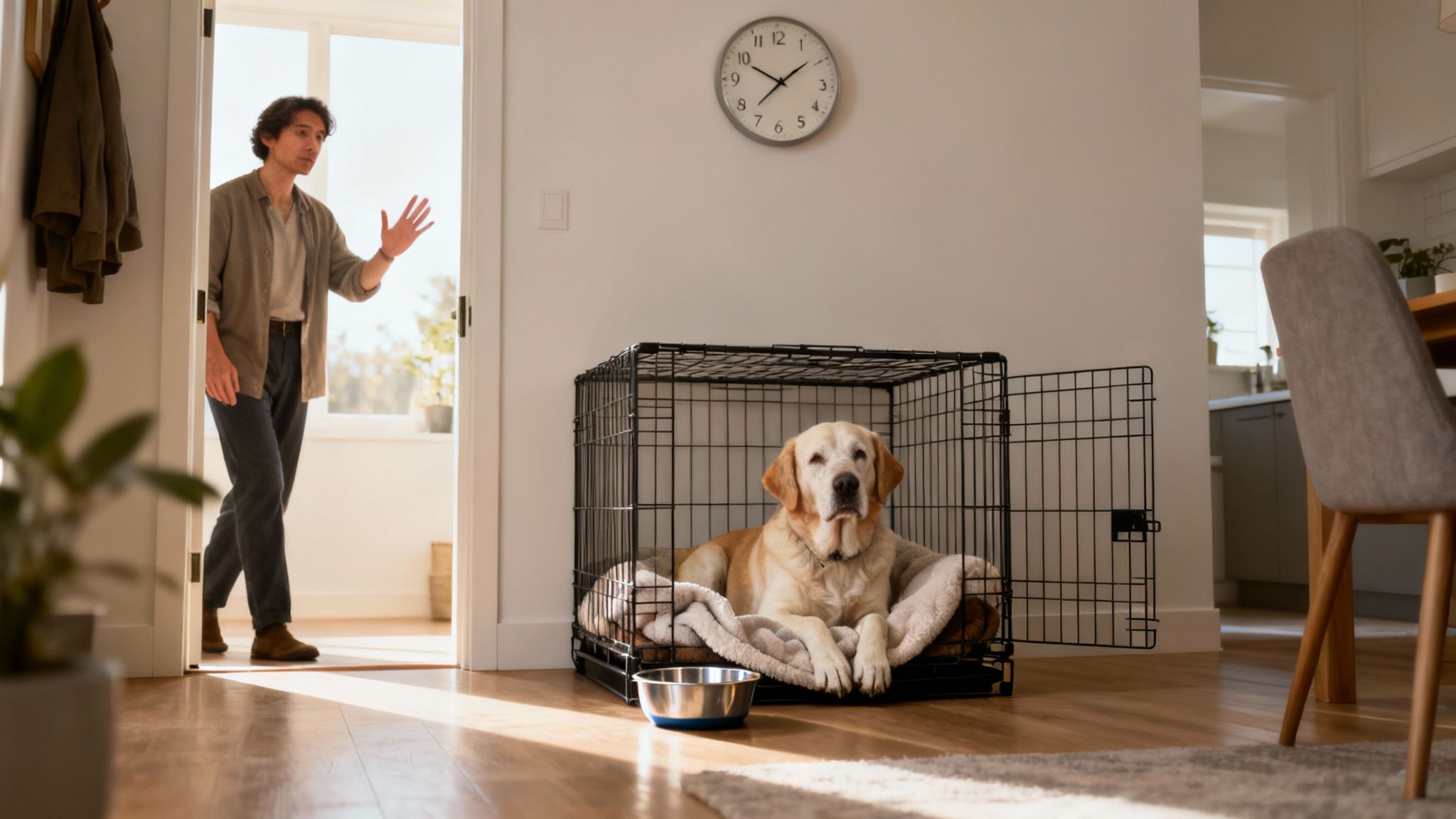
Sketching Out a Daily Schedule
A good schedule doesn't mean you need a stopwatch, but it should have a familiar flow. The trick is to start small and gradually add more time, always making sure your dog is comfortable and successful.
Here are a couple of real-world examples to get you started:
If You Work From Home
- Morning: After their morning potty break and breakfast, guide them into the crate with a tasty chew toy while you settle into your work. Start with just 30-60 minutes.
- Mid-Day: Time for a break! Let them out for a potty trip, a little playtime, and some attention.
- Afternoon: Pop them back in for another short session, maybe during a time you really need to focus, like during a video call.
- Evening: Keep the crate door open. Let them snooze in there if they want to.
If You Work Outside the Home
- Morning: A good walk and a potty break are non-negotiable before you head out. Give them plenty of time to fully empty their bladder.
- Departure: About 10-15 minutes before you leave, lead them into their crate with a special, long-lasting treat (like a frozen Kong).
- Return: When you get home, say a calm hello before letting them out. Then, it's straight outside for another potty break.
Every dog learns at their own pace. Some seniors will get the hang of this in a few weeks, while others might take a couple of months, especially if they’re unlearning old habits. Experts often recommend starting with sessions of just a few minutes for dogs with a rocky history. For a deeper dive, check out this guide on building a positive crate training foundation on fetchpet.com.
The Art of the Low-Key Goodbye
This is a game-changer. One of the best things you can do to prevent crate anxiety is to make your comings and goings as boring as possible. We often work our dogs up with long, emotional goodbyes or over-the-top greetings, which just fuels their stress.
Instead of a big, dramatic farewell, keep it cool. A simple, "I'll be back," is all it takes. When you get home, ignore any barking or whining for a few seconds. Wait for a moment of quiet before you open the door, then greet them gently. This simple shift teaches them that you leaving isn't a five-alarm fire and you coming back is just a normal part of the day.
This approach takes all the drama out of the equation. It helps your dog stay chill and reinforces the idea that the crate is a place for relaxing, not for worrying.
The Golden Rules of Crating
To keep the crate a happy, safe space, a few rules are absolutely essential. Think of these as the foundation of trust you’re building with your dog.
- Rule #1: Potty Break First, Always. Never, ever put your dog in their crate without giving them a chance to relieve themselves first. It’s not fair to them and sets them up for an accident and a whole lot of stress.
- Rule #2: The Crate Is Never, Ever for Punishment. This is the big one. Using the crate as a time-out spot will poison all the positive feelings you’ve worked so hard to build. It must always be a sanctuary.
- Rule #3: Know Their Limits. A healthy adult dog shouldn't be crated for more than 6-8 hours at a time. For seniors, that number is often much lower due to bladder control and overall comfort. If you have a long workday, arranging for a dog walker or a neighbor to give them a mid-day break is the right thing to do.
Your Top Crate-Training Questions Answered
Let's wrap up by tackling some of the most common questions we hear from fellow dog lovers in our SetterFrens community. Think of this as a quick-reference guide to give you a little extra confidence as you start this process. After all, teaching an old dog a new trick (like loving their crate) is a journey you take together.
Every dog is its own unique character, so what works for one might need a few tweaks for another. These FAQs cover those big "what if" scenarios and offer some straightforward advice to help you make your senior dog's crate their favorite spot in the house.
How Long Can I Leave My Older Dog in a Crate?
You’ll often hear that a fully trained adult dog can handle 6-8 hours in a crate, but that number really doesn't apply to seniors. Older dogs often have less bladder control and simply can't "hold it" as long as they used to. Pushing them too long is a recipe for stressful accidents.
The best way to figure this out is to start small. I'm talking just a few minutes at a time. Watch your dog closely and gradually increase the duration from there. If you're gone for a full workday, it's so much kinder to arrange for a dog sitter or a friendly neighbor to swing by for a midday potty break. The golden rule here is simple: never leave them crated longer than they can comfortably and physically wait.
What if My Rescue Dog Is Terrified of the Crate?
This is a tough one. If you see extreme fear—shaking, panicked barking, drooling, or desperately trying to claw their way out—it's a huge red flag. It often points to a traumatic past experience with being confined, and it means you need to slow way, way down. Patience isn't just a virtue here; it's a requirement.
Start by just having the crate in the room, but take the door completely off. Don't push them, don't lure them, just let it exist. Reward any tiny, voluntary step they take, even if it's just a quick glance in the crate's direction or a sniff from across the room.
For a true phobia, the kindest and most effective thing you can do is bring in a professional. A certified professional dog trainer (CPDT-KA) or a veterinary behaviorist can create a plan to help your dog overcome their fear without accidentally making it worse.
Should I Cover the Crate?
So many dogs love a covered crate! It really dials up that cozy, den-like vibe. A cover can block out distracting sights and sounds, which is a game-changer for anxious dogs or any pup living in a busy, chaotic household. A simple blanket or a fitted crate cover both work perfectly.
The one non-negotiable is plenty of ventilation. You've got to make sure air can still flow freely so it doesn't get hot or stuffy inside. The only way to know for sure is to try it out. Drape a blanket over it and see what your dog does. If they settle down faster, you've got a winner. If they start chewing on the fabric, take it off immediately for their safety.
Is It Cruel to Crate a Dog That's Never Used One?
I get this question all the time, and the answer is a firm "no"—as long as you do it with tons of patience and positivity. The goal is to build a safe sanctuary, not a prison. When the crate is introduced as the magical place where special treats appear and peaceful naps happen, most dogs eventually learn to love having their own little room.
What is cruel is forcing a terrified dog inside, leaving them for far too long, or ever, ever using it as punishment. When you do it right, giving your senior dog their own den is a profound act of love and a true gift of security for their golden years.
At SetterFrens, we believe that a happy dog makes for a happy home. We hope this guide helps you and your senior companion find comfort and security together. For more dog-friendly tips, book recommendations, and heartwarming stories, be sure to join our community. You can also follow us @setterfrens on TikTok and Instagram for heartwarming dog moments and behind-the-scenes content from our growing pack