

Of course you can! The old myth about not being able to teach an old dog new tricks? Let's toss that one out. With a little patience and a lot of positive reinforcement, almost any dog can learn to love their crate, seeing it as their very own safe space.
It’s all about building trust and giving them a comforting spot to call their own—a cozy den where they can curl up with their favorite thoughts (and maybe dream about a good book).
Why It's Never Too Late to Crate Train an Older Dog

Here at SetterFren, we know that a happy life often includes a wagging tail and a good book, and that's just as true for our senior sidekicks. Introducing a crate to an adult dog isn't about locking them up; it's about giving them a sense of structure and security they might be craving.
Dogs have a natural denning instinct. A crate acts like a cozy, private den—a quiet spot they can escape to when the house gets a little too chaotic or a thunderstorm rolls in.
And this isn't just a hopeful theory. A 2020 survey found that among owners who adopted an older dog (age 5 and up) and gave crate training a try, a whopping 79% said their dogs adapted successfully in just 4 to 6 weeks. It’s a great reminder that our adult dogs are more than capable of learning. You can dig into more of these encouraging stats and learn more about crate training an older dog.
For a quick overview of what you're getting into, this table breaks down the main benefits and what you need to think about before you start.
Crate Training Your Older Dog At a Glance
| Benefit | What It Means For Your Dog | Key Consideration |
|---|---|---|
| Sense of Security | Provides a safe, predictable den to retreat to, reducing anxiety. | The crate must always be a positive place, never used for punishment. |
| Household Management | Keeps them safe and out of trouble when you can't supervise them. | Proper sizing is crucial; it should be just big enough to stand up and turn around in. |
| Travel & Vet Visits | Makes car rides, vet trips, or stays away from home far less stressful. | Your dog's past experiences (if any) with crates could affect their initial reaction. |
| Aids in Recovery | Offers a calm, confined space for rest after surgery or injury. | Comfort is key. Make it inviting with soft bedding and familiar toys. |
Thinking through these points helps set both you and your dog up for a smoother, more positive training experience from day one.
The Real-World Perks of a Crate
Beyond being a personal sanctuary, crate training has some seriously practical perks that make life easier for everyone. A dog who is happy in their crate is usually much calmer during trips to the vet, the groomer, or when traveling. The crate becomes a familiar, portable home base that brings comfort to unfamiliar situations.
I like to think of a crate as a dog's personal bedroom. It's where their favorite blanket is, where surprise treats magically appear, and where they can enjoy a good chew toy in peace.
A crate gives your dog a predictable, safe space that is entirely their own. This consistency is especially comforting for senior dogs, helping to reduce anxiety and build their confidence in their surroundings.
Ultimately, choosing to crate train your older dog is an investment in their happiness and your peace of mind. It's a fantastic way to deepen your bond and give your companion a gift they'll appreciate for years to come.
Setting Up the Perfect Crate Haven
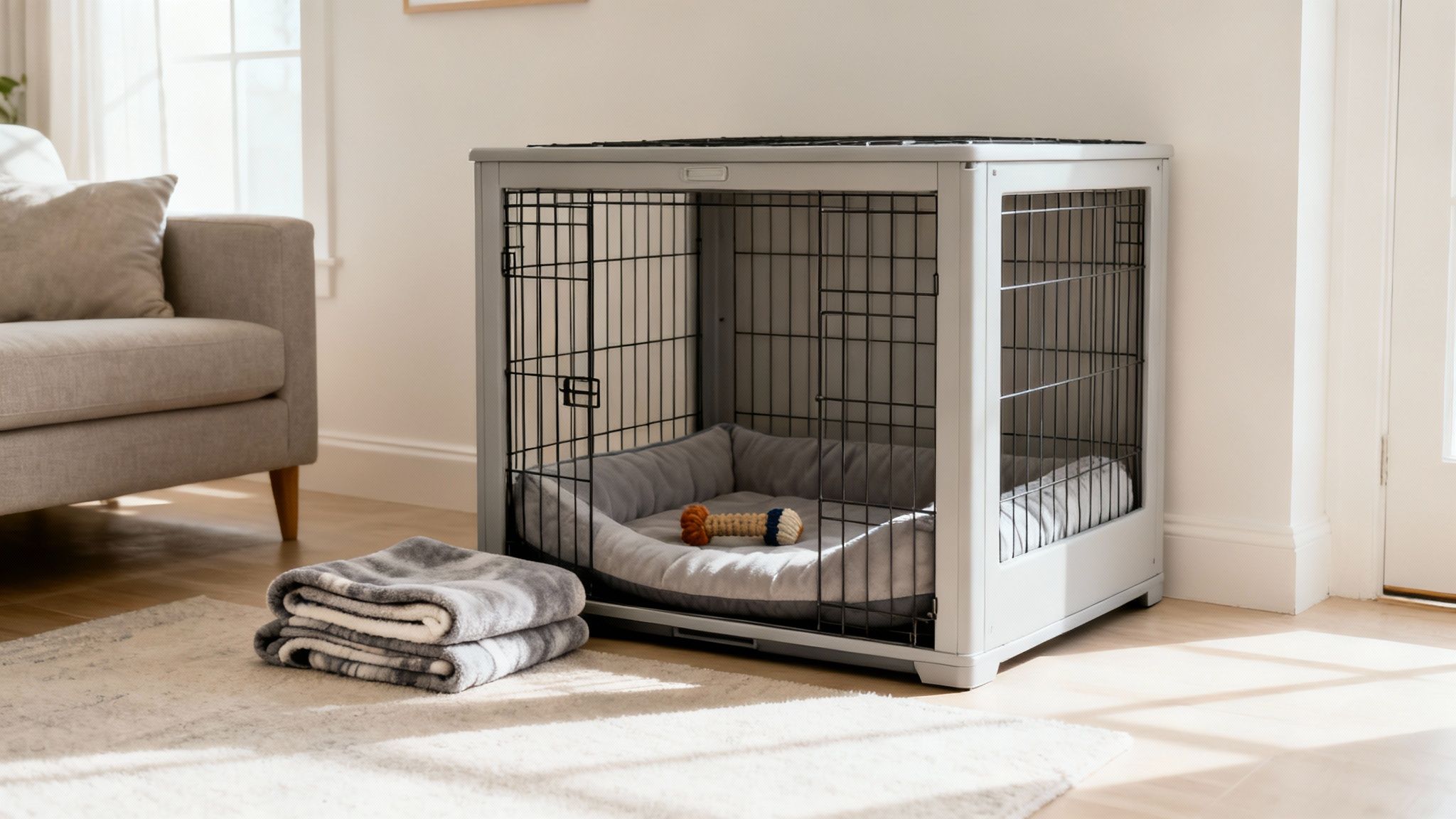
Before we even get to the training part, our first job is to turn that crate from a simple box into your dog's personal sanctuary. This is especially true for older dogs—they need to see this new space as a safe retreat, not a punishment.
Honestly, the secret to successfully crate training a senior dog almost always starts with getting the setup just right.
Finding the Right Size and Style
Let's talk about the crate itself. The size is non-negotiable. Your dog needs enough room to stand up, turn around completely, and lie down stretched out. But be careful—too much space can invite them to use one corner as a bathroom, which kind of defeats the purpose of house-training reinforcement.
For our senior companions, I always suggest looking for crates that are easy to get in and out of. Avoid anything with a high lip they have to awkwardly step over. A sturdy wire crate is great for airflow, but some dogs actually prefer the cozy, den-like feel of a plastic or enclosed one. You know your dog best!
At SetterFren, we’re huge believers in comfort, especially for our senior pups. A great setup makes the crate a destination, not just a place they're sent. Think of it as their own private bedroom—a spot they want to hang out in.
Making It Irresistibly Cozy
Okay, you’ve got the crate. Now for the fun part: making it the most comfortable spot in the house.
- Orthopedic Bedding: Aging joints can be achy. A supportive, orthopedic bed can make a world of difference and turn the crate into a five-star snoozing spot.
- Familiar Scents: Grab an old t-shirt you've worn or a favorite blanket. Your scent is incredibly comforting and can help ease any anxiety they might feel.
- Safe Chew Toys: Tossing in a special, durable toy that they only get in the crate creates a wonderful positive association. Crate time becomes treat time!
Some of these principles for creating a secure space are timeless. They're actually pretty similar to what we suggest in our guide on how to care for a new puppy, because feeling safe and comfortable is universal for dogs of all ages.
Finally, where you put the crate matters. I recommend a corner of the living room or family room. This way, your dog can still feel like part of the family action but isn't in a high-traffic zone where they might get disturbed. It’s the perfect balance of inclusion and peace.
Making a Gentle and Positive First Impression
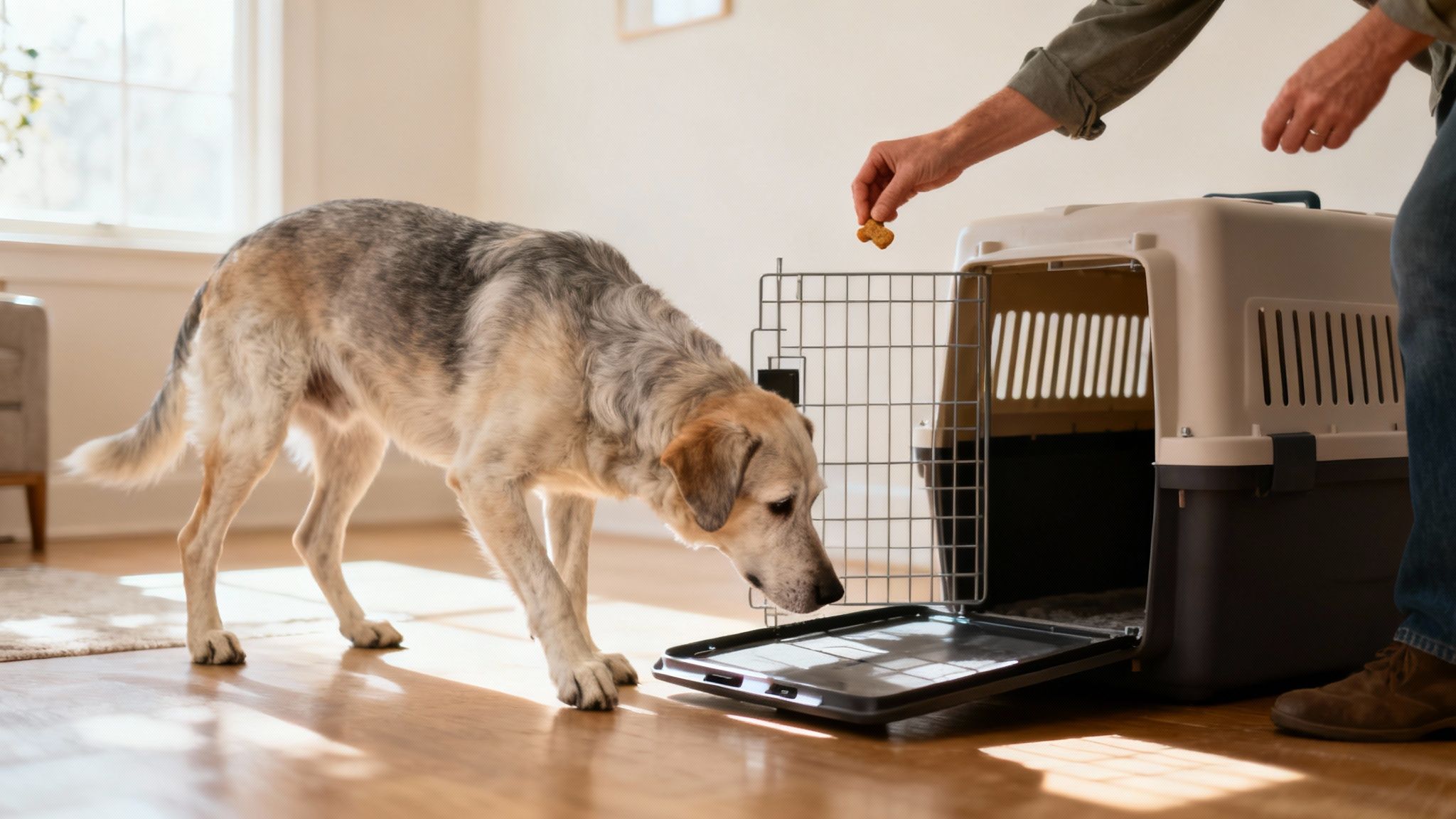
Alright, this is where the real work—and fun—begins. Patience is your superpower when it comes to crate training an older dog. Unlike a puppy who’s a blank slate, your adult dog has a lifetime of experiences and habits. Our entire goal here is to make every single interaction with that crate a good one. No pressure, ever.
First things first, let the crate become the most boring piece of furniture in your house. Seriously. Plop it down in a corner of the living room or family room, prop the door wide open so it can't swing shut, and then… ignore it. Let your dog sniff it, walk past it, and get used to it just being there.
Sparking Curiosity and Creating Good Vibes
Once your dog has accepted the crate as part of the landscape, it's time to add a little sparkle. The magic here is letting your dog believe this is all their idea. We’re simply going to make the crate the source of amazing things.
Start by casually dropping some really high-value treats near the outside of the crate. Don't make a big show of it. Just a little "oops, dropped some chicken" kind of vibe. When they're happily snatching those up, start tossing them just inside the doorway.
The key is to let them explore at their own pace. If your dog pokes their head in, grabs the treat, and immediately backs out, that’s a win! That’s a huge step. Give them a calm "good job" and let them be. You're building confidence by showing them they're in total control.
A dog's willingness to enter the crate is built on trust, not force. Never push, shove, or lock them in during these early days. Every tiny, voluntary step forward is a victory.
Connecting the Crate to Mealtime
Here's one of my favorite tricks for fast-tracking positive association: link the crate to dinner. It's simple but incredibly effective.
Start by putting their food bowl right next to the open crate door. After a few meals like that, move the bowl just inside the entrance so they have to stick their head in to eat. Over the next several days, slowly inch the bowl further and further to the back of the crate. All the while, that door stays securely propped open. This routine quickly teaches your dog that great things, like their dinner, happen inside this space.
- Pro Tip: Make these crate-side meals extra special. A dollop of plain yogurt, some wet food mixed in, or a sprinkle of something delicious can make the experience even more exciting. If you need some ideas, we have some fantastic recipes for homemade dog treats and meal enhancers they'll love.
By weaving the crate into the best parts of your dog’s day, you're doing more than just training. You're actively reshaping their opinion. You're showing them this new den isn't something to be wary of—it's actually the best seat in the house.
Gradually Building Time and Comfort in the Crate
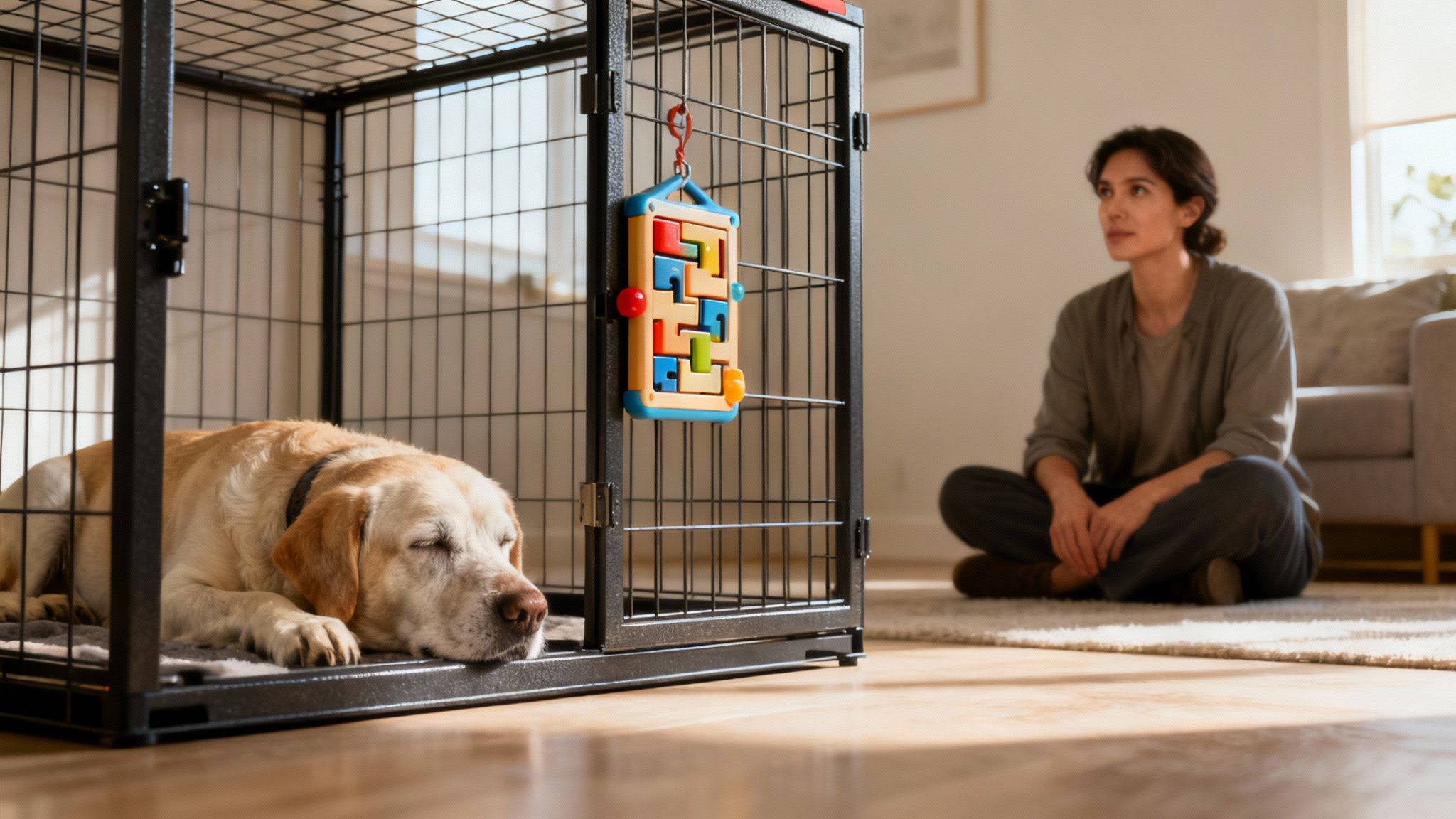
Alright, your dog is starting to see the crate as a pretty decent hangout spot. Now, let's carefully add the one ingredient that can be tricky: time. The whole point here is to build their confidence, layer by layer. Remember, when it comes to crate training an older dog, we're running a marathon, not a sprint.
We’re going to start ridiculously small. The next time your dog wanders into their crate, casually close the door for just a second or two. Then, before they even have a chance to think about it, open it back up and give them some quiet praise. No big fuss. Just a simple, positive interaction. Do this a few times a day.
Turning Seconds into Minutes
Once your dog doesn’t even flinch when the door closes for a moment, you can start adding a few more seconds. The golden rule here is to always open the door before they get anxious. You want them to learn that you control the door and will always let them out while they are still calm. This ends every practice session on a win.
Here’s a tip we swear by at SetterFren: introduce a special "crate-only" treat. Think of a durable puzzle toy stuffed with peanut butter or a delicious, long-lasting chew they only get inside the crate. This simple trick can completely change their attitude, turning crate time from something they tolerate into something they genuinely look forward to.
Building positive associations is the absolute cornerstone of successful crate training. It's all about teaching your dog that the crate predicts wonderful, calming experiences, not abandonment.
This patient, rewards-based approach isn't just a nice idea—it works. Research has actually shown that 88% of owners who used positive reinforcement were able to successfully crate train their older dogs. Compare that to just 42% who tried using more forceful methods. It's a powerful reminder that kindness gets you so much further. If you're interested, you can read up on the science behind these positive training methods to learn more.
A Sample Progression Schedule
Every dog is an individual, so this is just a starting point. Pay close attention to your dog's body language and never push them past their comfort zone.
- Days 1-3: Close the door for just 5-10 seconds at a time while you stay right there with them.
- Days 4-7: If they're comfortable, work up to 30-60 seconds, still staying in the same room.
- Week 2: Now try for 2-5 minutes. You can sit on the couch and read a book while they relax.
- Week 3: Time to practice short departures. Leave the room for just a minute, then come back and reward them for being calm.
By moving at your dog’s pace and making the crate a five-star den with the best snacks, you're not just training them—you're giving them a safe space they'll love for a lifetime.
Let's be real—even if you follow every step perfectly, you're probably going to hit a few bumps in the road when crate training an older dog. Don't sweat it. That's totally normal, and having a few tricks up your sleeve will make all the difference.
The number one complaint I hear is about whining and barking. Before you jump to conclusions, put on your detective hat. Could they just need to go potty? Did they get a good walk in today? Seriously, a tired dog is almost always a quiet dog, so a quick game of fetch before crating can be a game-changer.
What to Do When Your Dog Protests
Okay, so you've ruled out the obvious needs. Now it sounds like you're dealing with a protest. This is where your patience gets tested. The absolute hardest thing to do—but the most critical—is to ignore attention-seeking whining. Every time you open the door or even talk to them while they're fussing, you're accidentally teaching them that noise works.
Instead, wait for a quiet moment. It might only be a three-second pause between whines, but that’s your window. As soon as you get that sliver of silence, calmly open the door and praise them. You're rewarding the quiet, not the protest.
A dog’s past experiences can really shape how they feel about a crate. If you have a hunch they've had a bad run-in with one before, you'll need to focus on counter-conditioning. It’s all about creating so many new, amazing associations with the crate that it completely rewrites their old story.
Is It a Mild Complaint or Genuine Distress?
This is a big one. You have to learn the difference between a dog who's just complaining and one who is truly panicking. Protest barking is one thing, but real anxiety looks much different.
Watch for signs of true distress, like:
- Excessive, ropey drool or frantic, heavy panting.
- Non-stop, desperate digging or chewing at the crate bars.
- Shaking uncontrollably or hurting themselves trying to get out.
These are not behaviors you can just ignore. They're often red flags for separation anxiety, a much deeper issue that needs more than just basic crate training to solve. Sometimes, a lack of good experiences in their younger years can lead to these kinds of anxieties. Our guide on what is puppy socialization dives into how those early days build a dog's confidence for life.
If you spot any of these signs of genuine fear, it’s time to stop and take a step back. You'll likely need to rewind your training to the very beginning or even bring in a certified professional dog trainer to help you create a plan that makes your dog feel safe.
Your Crate Training Questions Answered
We get a ton of fantastic questions from our SetterFren community about the nitty-gritty details of this process. Answering "can you crate train an older dog?" is really just scratching the surface. So, let's dive into some of the most common things people ask.
How Long Does It Take to Crate Train an Older Dog?
Honestly, there’s no magic number here. Every single dog has their own unique personality and history that they bring to the training mat.
For a dog who's pretty easygoing and doesn't have any bad past experiences, you could be looking at them being fully comfortable in about 4 to 6 weeks. In fact, a 2020 AKC survey found that most successfully trained older dogs hit their stride right in that timeframe.
But if your rescue has some separation anxiety or a bad history with being confined, you'll need to pack your patience. It could easily take a few months. The most important thing is to celebrate those small victories and focus on making steady, positive progress. Don't worry about the calendar.
Should I Crate My Older Dog at Night?
This really depends on your dog and what you're trying to achieve. If your adult dog is already perfectly house-trained and sleeps through the night without redecorating your living room, you probably don't need to. Lots of dogs are perfectly content snoozing on a comfy bed in your room.
On the other hand, crating at night can be an absolute lifesaver if you're still working on house-training or if your dog tends to get restless and pace around. A great tip is to place the crate in your bedroom. This way, they can feel your presence nearby, which is incredibly comforting and helps them settle down much faster. Just make sure they get one last potty break right before bedtime!
One thing is non-negotiable: Never, ever use the crate as a punishment. The second you send a dog to their crate for being "bad," you start to poison the well. Their crate needs to be their safe, personal den—a place of comfort, not a consequence.
What Are Signs My Dog Is Genuinely Distressed?
This is a crucial one. It's so important to learn the difference between a dog who is just fussing a bit and one who is truly panicking. A little bit of whining or a few barks can be normal protest, but genuine distress means you need to stop and rethink your approach.
Keep an eye out for these signs of true anxiety:
- Excessive Drooling: We're not talking about a little slobber. Think thick, ropey strands of drool.
- Frantic Behavior: This looks like persistent, desperate attempts to chew or dig their way out. It’s not just a casual nibble.
- Physical Signs: Uncontrolled shaking, heavy panting when it isn't hot, or even self-injury from trying to escape.
If you spot any of these behaviors, your dog is way out of their comfort zone. It means you’ve moved too fast. You'll need to go back several steps in your training to the last point where they felt confident and safe. If these signs persist, it's probably a good time to reach out to a certified professional dog trainer for guidance.
At SetterFren, we believe that life’s better with a wagging tail and a good book. For more dog-friendly book recommendations, product reviews, and practical pup-care guides, be sure to join our community at https://setterfren.com. Stay part of the fun by following @setterfrens on TikTok and Instagram for heartwarming dog moments and product tips from our growing pack