
Absolutely. Let's get one thing straight right away: the old saying "you can't teach an old dog new tricks" is total nonsense. You can crate train an older dog, and it's one of the best things you can do for them. With a little patience and the right game plan, dogs of any age can learn to see their crate as a safe, personal den.
Why Crate Training an Older Dog Is Worth the Effort
When you bring an adult dog home, you're also bringing home their entire history. Unlike a puppy, they have established habits and maybe even some anxieties from past experiences. But their ability to learn is still firing on all cylinders.
Many people hesitate, wondering if it's worth the trouble. The answer from trainers and vets is a clear yes! The key isn't their age; it's about building a positive connection. You just need to move at your dog's pace and show them that the crate is a place of comfort, not punishment.
It's a Den, Not a Cage
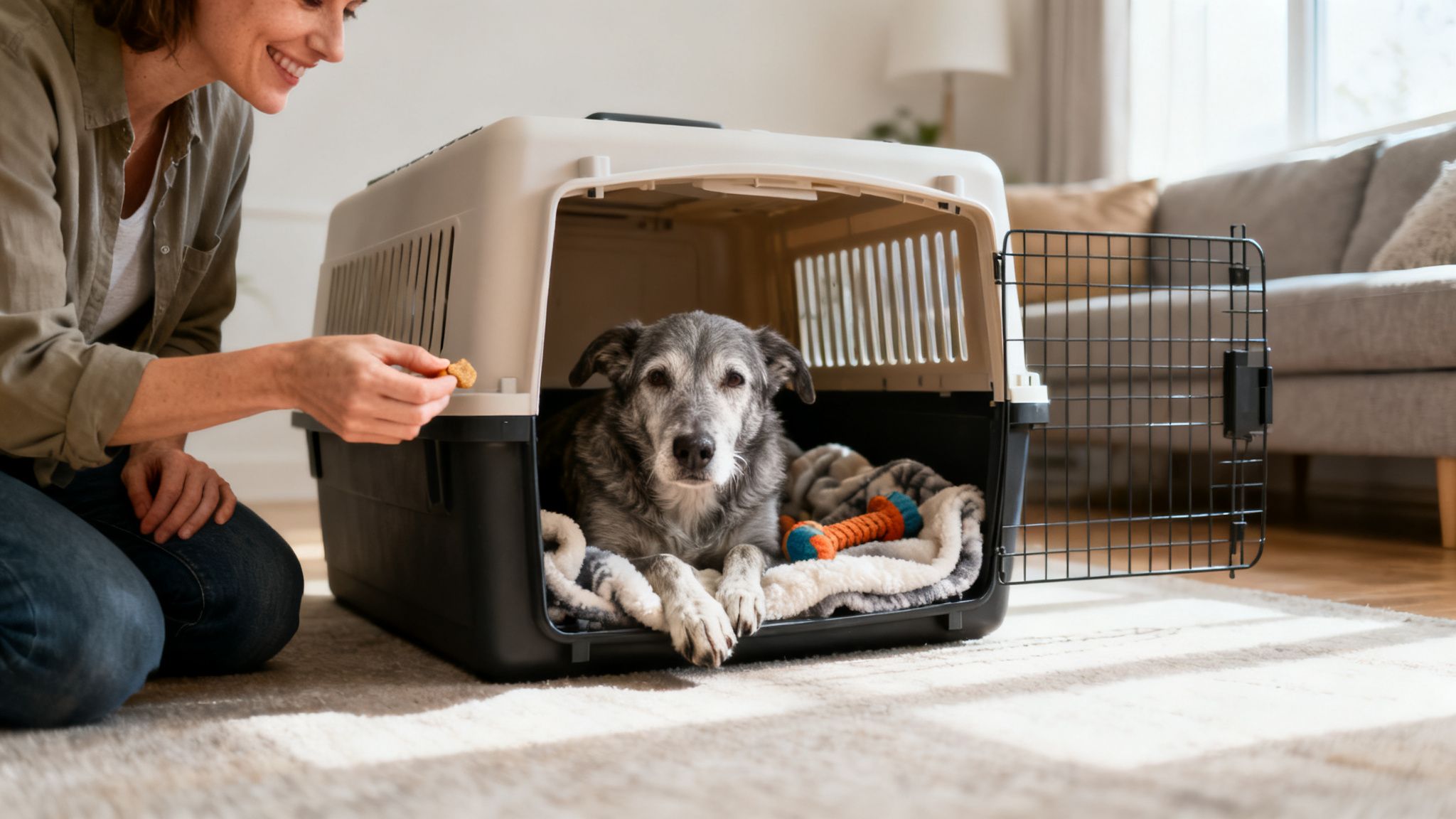
The biggest hurdle is often our own perspective. If you think of the crate as a "cage," you'll project that energy. For a dog, a properly introduced crate taps into their natural denning instinct. It becomes their personal retreat from a busy household.
This is a game-changer for rescue dogs, who often crave a secure spot to call their own. A crate can give them that sense of safety during scary moments like thunderstorms, fireworks, or even just when new people visit.
To help you get started, here's a quick look at why this is such a great idea.
Why Crate Training an Adult Dog Is Worth It
| Benefit | Why It Matters for Older Dogs | Quick Tip |
|---|---|---|
| Sense of Security | Provides a predictable safe haven, which is crucial for dogs with unknown histories or anxiety. | Make it extra comfy with their favorite blanket and a durable chew toy. |
| Household Management | Prevents destructive behaviors (like chewing furniture) when you can't supervise them. | Never use the crate as a punishment. It must always be a positive place. |
| Safer Travel | Makes car rides, vet visits, and overnight stays far less stressful for everyone involved. | Practice short, happy car rides with the crate to build confidence. |
| Peace of Mind for You | Knowing your dog is safe, secure, and not getting into trouble when you're away is priceless. | Start with very short absences (just a few minutes) and gradually increase the time. |
Ultimately, this process is all about building trust and proving to your dog that their crate is the best seat in the house.
At SetterFrens, we believe life’s better with a wagging tail and a good book. A huge part of that is creating a secure and happy home for our dogs. A crate isn't just a tool; it's a personal sanctuary your dog can count on.
We've put together a comprehensive resource that walks you through every step of the process. For a deep dive, check out our guide on how to crate train a dog.
Choosing the Right Crate for Your Dog
Alright, let's start with the basics. Finding the perfect crate is your first big win when you decide to crate train an older dog. This isn't just about picking a box; it's about finding your dog their own personal den—a safe space that belongs entirely to them. Getting this right from the get-go makes the whole process so much smoother.
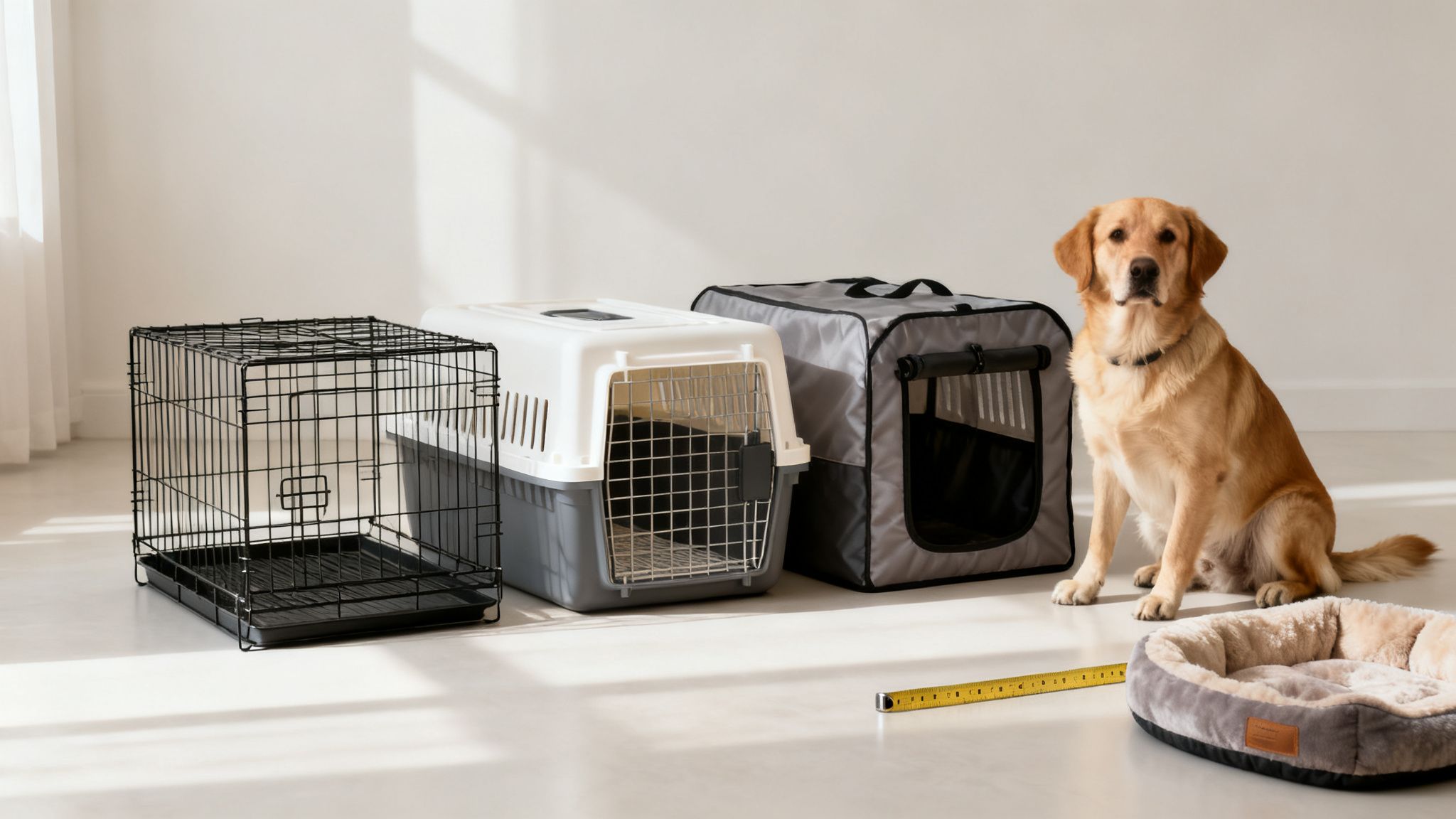
There are a few different styles out there, and the best one really depends on your dog's personality and your lifestyle.
Wire Crates: These are fantastic for visibility and airflow. If your dog is a bit of a social butterfly and likes to keep an eye on things, a wire crate is a great choice. They're also durable, a breeze to clean, and usually fold up for easy storage or travel.
Plastic Crates: Often called "travel kennels," these offer a cozier, more enclosed feeling. This style works wonders for anxious dogs who feel safer and more secure when they're not so exposed. They're also the standard for most airline travel.
Soft-Sided Crates: Super lightweight and portable, these are perfect for well-behaved dogs during trips or just for some quiet time around the house. A word of caution, though: they're not a good match for heavy chewers or escape artists.
Getting the Size Just Right
This part is crucial. The crate needs to be the right size for your dog’s comfort and safety. The golden rule is simple: it should be just big enough for your dog to stand up, turn around completely, and lie down with their paws stretched out.
If you go too big, you might run into problems. A common mistake is buying a huge crate, thinking you're being generous, but your dog might see all that extra space and decide one end is for sleeping and the other is a perfect spot for a potty break. That pretty much defeats one of the main goals of crate training.
For a detailed walkthrough on measuring your dog, check out these excellent dog kennel size recommendations. It’ll help you pick a crate that feels like a snug retreat, not a cavernous, empty room.
At SetterFrens, we always say the crate should feel like your dog's personal bedroom. You wouldn't want a room that's way too cramped or uncomfortably large, and neither do they. A perfect fit is key to making them feel safe and secure.
Turning the Crate Into a Cozy Sanctuary
Once you’ve brought the right crate home, it's time for the fun part: turning it into the most inviting spot in the house. Your mission is to build overwhelmingly positive vibes around it right from the start.
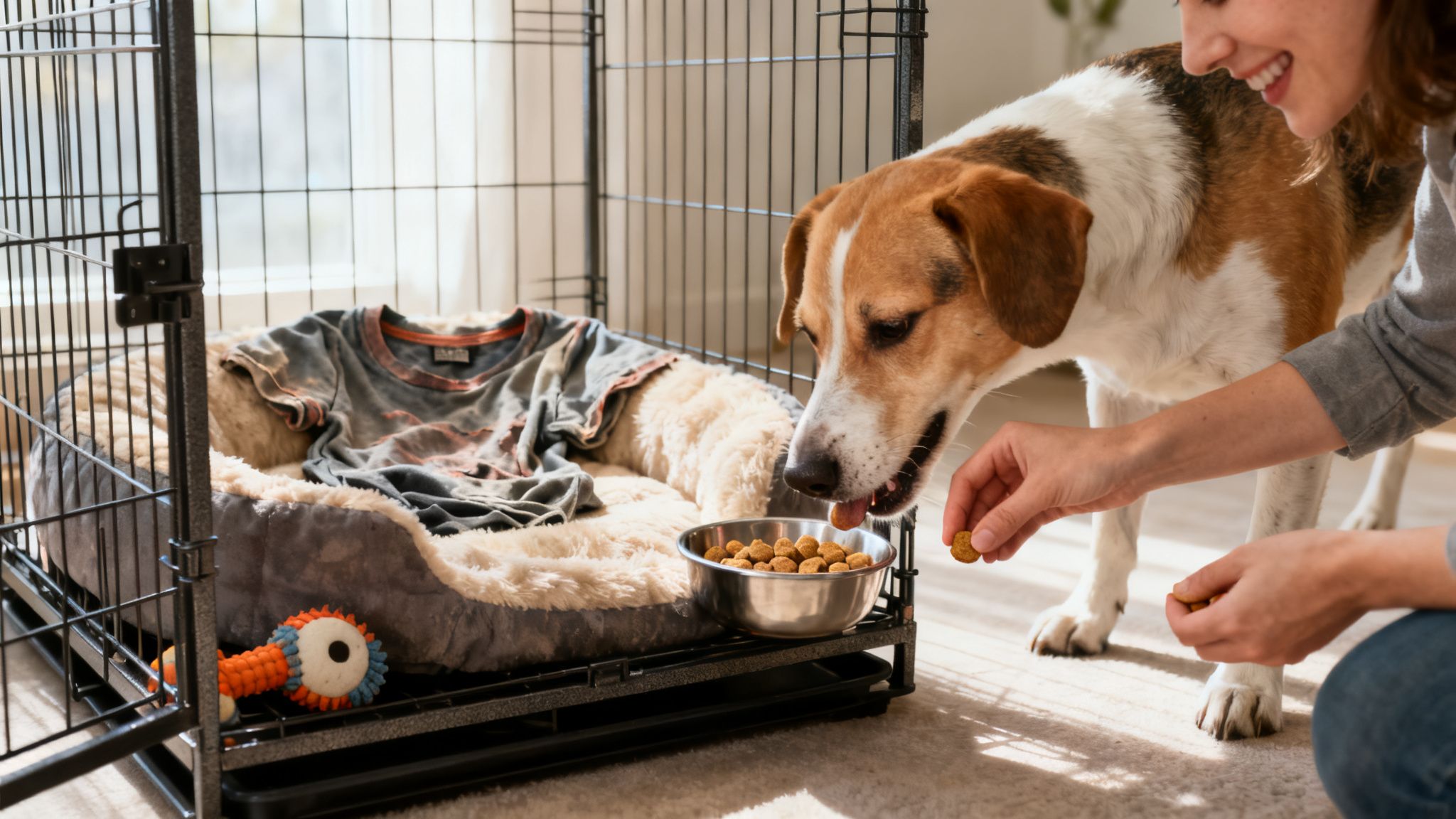
Think comfort. A soft, plush bed or a warm fleece blanket can instantly make the space more appealing. A little trick we love is to toss in an old t-shirt or blanket that smells like you. It's a huge comfort for them, especially when you have to leave them alone.
Finally, introduce a special, high-value chew toy that your dog only gets inside the crate. This one little move is a game-changer. It creates excitement and makes them actually look forward to their private time. Suddenly, it's not just a crate; it's the magical place where the absolute best treats and toys appear.
Making the Crate a Happy Place
Here's where the real work begins, and it all boils down to one simple concept: positive association. We need to convince your dog that this new crate isn't a punishment zone, but their own personal five-star retreat.
The best way to do this? Turn training into a game. We're going to make the crate the source of all things wonderful, and for this entire first phase, the door stays wide open. No pressure, no force.
Starting with Crate Games
First things first, let's just make good things happen near the crate. For a few days, just hang out next to it with your dog. Offer some pets, play with a favorite toy, or just sit quietly together. The goal is to get them comfortable with its presence and show them it's nothing to be suspicious of.
Next, it's time for our favorite starter game: the treat toss. Stand a few feet away and casually toss a really good, high-value treat right inside the crate's entrance. When your dog goes in to grab it, give them a calm "Good boy!" and let them walk right back out.
Repeat this a few times, gradually tossing the treats a little further back. Soon, they'll have to put all four paws inside to get their prize. This simple game is huge—it teaches them that going into the crate is their choice, and it leads to something delicious.
Introducing a Verbal Cue
Once your dog is trotting into the crate for treats without hesitation, you can start adding a verbal cue. As you toss the treat, use a simple, upbeat phrase like "Kennel up!" or "Go to your den!"
Keep it light and happy. This isn't a command; it's more like a fun announcement. Over time, your dog will connect that phrase with the fun game and tasty rewards, which will make things much easier down the road.
At SetterFrens, we believe every interaction is a chance to build trust. Celebrate every tiny victory—a curious sniff of the crate, a single paw stepping inside. Your positive energy is contagious and reassures your dog that this is a good thing.
Building Duration with Meals
So, your dog now willingly goes into the crate. Fantastic! Now we need to encourage them to stay a little longer, and the easiest way to do this is with their regular meals.
Simply place their food bowl at the very back of the crate. And remember, the door stays open!
At first, your dog might grab a mouthful and back out to eat it on the floor. That's totally fine! Just stay nearby and let them repeat the process. As they get more comfortable, you'll find they stay inside to finish the whole bowl. This builds a powerful, positive link between the crate and something they already love: dinner.
- Tip for Hesitant Dogs: If your dog is still a bit nervous, start with the food bowl right at the entrance. Over a few meals, slowly move it further back as their confidence grows.
The First Door Closures
Once your dog is happily eating full meals inside the crate with the door wide open, it's time to test the waters with closing it. And we mean briefly.
Close the door, praise them, and open it again almost immediately—before they even have a second to feel trapped. We're talking one or two seconds, max.
Repeat this over a few days, slowly increasing the time to five seconds, then ten. The absolute key here is to always open the door while they are still calm and quiet. This teaches them two critical things: the closed door is no big deal, and they can trust you to let them out.
If you’re hunting for treat ideas that will get your dog truly excited for training, we've got some great recipes. Find your pup's next obsession in our guide to homemade dog treats. By moving at your dog's pace and making every step a positive one, you're building a rock-solid foundation for crate success.
Working Through the Inevitable Training Bumps
Let’s be real: even the best-laid plans can hit a snag. If your older dog starts whining, barking, or showing stress, don't throw in the towel. Setbacks are completely normal, especially when you're working with a dog who has a whole life story you're not privy to.
The most important thing is to play detective and figure out why it's happening. Is this just a little grumbling and boundary-testing, or is it genuine, full-blown distress? Knowing the difference is everything.
Whining and Barking
A bit of protest is almost guaranteed. A few soft whines or a couple of barks when you first shut the door is often just your dog's way of saying, "Hey, I'm not so sure about this." But if that soft protest turns into frantic, non-stop barking or a high-pitched, anxious whine, that’s your cue to slow down.
Your dog isn't being stubborn; they're communicating their discomfort. This is a clear signal to take a big step back. Go back to the fun stuff—games, high-value treats, and feeding meals inside the crate with the door wide open. When you do try closing the door again, make it for just a few seconds. For more specific strategies, our guide on how to stop my dog from whining can be a huge help.
Spotting Real Anxiety
A little fussing is one thing, but genuine anxiety is another beast entirely. It’s critical to spot the signs of true distress so you can step in before the fear takes root.
A dog in the grips of anxiety might:
- Pant heavily or drool excessively when the temperature is cool.
- Try to escape, sometimes frantically chewing or digging at the bars.
- Have an accident in the crate, even if they're perfectly house-trained.
- Tremble, shake, or pace nonstop in the small space.
If you spot these behaviors, your dog is having a panic attack. This is no longer a training issue; it's a deep-seated fear response. Calmly let them out and end the session. Forcing a panicked dog to "cry it out" will only cement the crate as a place of terror.
It's also a good idea to rule out any physical discomfort. Sometimes what looks like a behavioral problem is actually pain. Understanding common senior dog health problems can help you see the situation from their perspective and adjust your training to keep them safe and comfortable.
A Special Note for Rescue Dogs
Rescue dogs, especially those with unknown or rough histories, often need an extra dose of patience and understanding. If their past involved being confined in a negative way, you're not just training; you're actively undoing trauma. You have to move at their pace, not yours.
Start by simply taking the door off the crate and placing it in a common area for a week or even longer. Don't push them towards it. Let them explore it on their own terms. If they so much as sniff it, shower them with praise and a delicious treat. Your calm, reassuring energy is the most powerful tool you have for showing them they're finally safe.
Integrating Crate Time Into Your Daily Routine
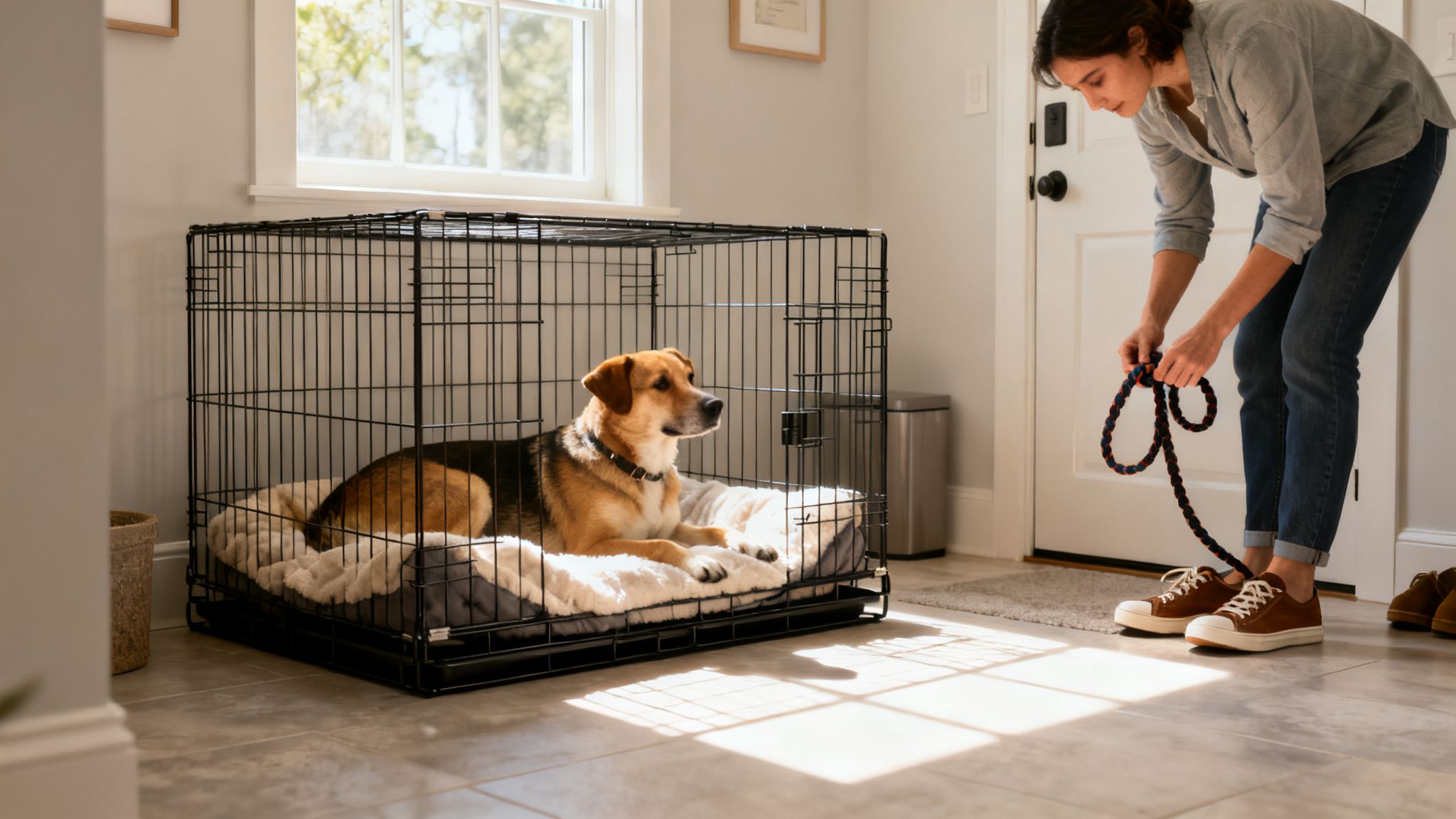
Alright, your dog is starting to see their crate as their own personal den. That's a huge win! Now, the real magic happens when we start weaving that safe space into the rhythm of your daily life.
The whole point is to make crate time feel as normal as their morning walk or dinnertime zoomies. Consistency is everything at this stage. We're gently stretching the time they spend inside, all while proving one crucial thing: you always come back.
Building a Predictable Routine
Dogs are creatures of habit—they find immense comfort in knowing what’s coming next. A predictable routine strips away the anxiety of the unknown. So, think about your own schedule. When will the crate be most helpful? When you're at work? Running errands? When the super-excitable kids from next door come over?
Let's start small. Ask them to hang out in their crate for 15-20 minutes while you’re still home. Maybe you’re making dinner in the kitchen or catching up on a show. This little step teaches them that the crate doesn't automatically mean you're vanishing. It's just a place to chill.
The single best piece of advice we can give is to make your departures and arrivals incredibly boring. A low-key "see you later" and a quiet return without a big, dramatic reunion shows your dog your comings and goings are no big deal.
The Perfect Pre-Crate Ritual
You can set your dog up for a successful crating session long before they even step a paw inside. Think about it: a dog that's tired and content is way more likely to settle down for a nap than one who's buzzing with energy.
Before any extended crate time, try to build in this simple sequence:
- A Brisk Walk: A good 20-30 minute walk is fantastic for burning off that physical fizz. Don't forget to let them sniff around—that's like mental yoga for a dog and is just as important as the exercise itself.
- A Potty Break: This one’s a no-brainer, but it's critical. Always give them a final chance to go potty right before they head into the crate. This prevents discomfort and potential accidents.
- A Calming Activity: A few minutes of quiet petting or giving them a simple puzzle toy helps their brain switch from "go-go-go" to "time to relax."
This little ritual becomes a clear signal to your dog that it's time to wind down and rest.
Sample Morning Schedule for Working Pet Parents
Wondering how this fits into a busy work week? It's totally achievable. Here’s a look at what a morning routine could be when you can crate train an older dog:
- 7:00 AM: First thing's first—wake up and take your dog out for a walk and potty break.
- 7:30 AM: Breakfast time. A great trick is to feed them their meal inside the crate (with the door open) to keep building that positive connection.
- 8:00 AM: A few minutes of light fetch or a quick training game to get their brain working.
- 8:15 AM: One last potty break before you have to leave for the day.
- 8:30 AM: Calmly ask your dog to "kennel up." Give them that special, high-value chew toy they only get in the crate, and quietly head out.
This kind of structure helps your dog understand the flow of the morning. It’s not a surprise; it’s just the part of the day where they get to relax in their cozy spot until you come home.
Common Crate Training Questions & Honest Answers
Let's tackle some of the biggest questions we hear from folks crate training an older dog. These are the things that pop up right when you think you've got it all figured out, so let's get you some straight answers.
How Long Does This Actually Take?
This is the million-dollar question, isn't it? The honest-to-goodness answer is that it completely depends on your dog. Every single one is different. A laid-back dog with no bad history might take to their crate in just a few weeks.
On the other hand, if you're working with a rescue who has some anxiety or past trauma tied to being confined, you could be looking at a few months. The key is to let your dog set the pace. Pushing them too fast will only set you back. Focus on celebrating the tiny victories along the way—that’s what builds their confidence and trust in you.
Help! My Older Dog Is Having Accidents in the Crate.
First things first, a quick trip to the vet is always a good idea to rule out any medical problems, especially if you have a senior pup.
If the vet gives you the all-clear, it's likely behavioral. Your first move should be to check the crate size. Your dog needs enough room to stand up and turn around comfortably, but not so much space that they can create a bathroom at one end and a bedroom at the other.
Also, make sure you're giving them plenty of chances to go potty right before they go into the crate. And when an accident does happen—because it might—grab an enzymatic cleaner. This stuff is magic because it completely breaks down the scent molecules, so your dog won't be tempted to use that spot again.
Is It Cruel to Crate Train an Older Dog?
Not at all! When you introduce it the right way—with tons of patience and positive vibes—the crate becomes their personal safe space, not a jail. Think of it as their own private den where they can go to feel secure, which is a massive comfort for many adult and rescue dogs.
Can I Crate My Dog While I'm at Work?
Yes, you can, but only once they're fully trained and truly comfortable being in there. Even then, an adult dog really shouldn't be left in a crate for more than 4-6 hours at a stretch.
If you have a typical 8-hour workday, you absolutely need a plan for a midday break. This could mean hiring a dog walker, asking a friendly neighbor to pop in, or looking into a local doggy daycare. That break is non-negotiable for a potty trip, a good stretch, and a bit of mental engagement to keep them happy.
Here at SetterFrens, we're all about creating a world where every dog feels safe, secure, and loved. For more real-world tips, heartwarming stories, and our favorite product finds, come join our Puppicino Club! You can also check out our practical how-to guides and dog-themed books at https://setterfren.com. Stay part of the fun by following @setterfrens on TikTok and Instagram for heartwarming dog moments, product tips, and behind-the-scenes content from our growing pack