
Welcome to SetterFren, where life is better with a wagging tail and a good book! Bringing home a new puppy is like opening the first chapter of a wonderful story, one filled with excitement, joy, and a few unexpected plot twists. But just like any great narrative, a little guidance can help shape a happy ending. That's why we've compiled this comprehensive roundup of the best puppy training tips to help you and your new furry family member write your success story together.
This guide is your roadmap to a well-behaved companion. We'll move beyond generic advice and dive into actionable, compassionate strategies designed for modern dog lovers. Forget dense theory; we’re focused on practical steps you can implement today. Inside, you'll discover how to create a foundation of trust through positive reinforcement, master the essentials of housebreaking, and tackle common challenges like nipping and leash pulling. Our goal is to help you build a lifelong bond with your pup, turning potential chaos into confident companionship.
Whether you're navigating the critical socialization window, teaching the perfect 'sit,' or establishing a consistent daily routine, these proven techniques will empower you to care for your pup like a pro. Think of this as your training playbook, with each tip representing a crucial building block for a happy, well-adjusted dog. Ready to turn the page and begin this exciting chapter? Let’s unleash your puppy’s full potential.
1. Start Early with Socialization (8-16 Weeks)
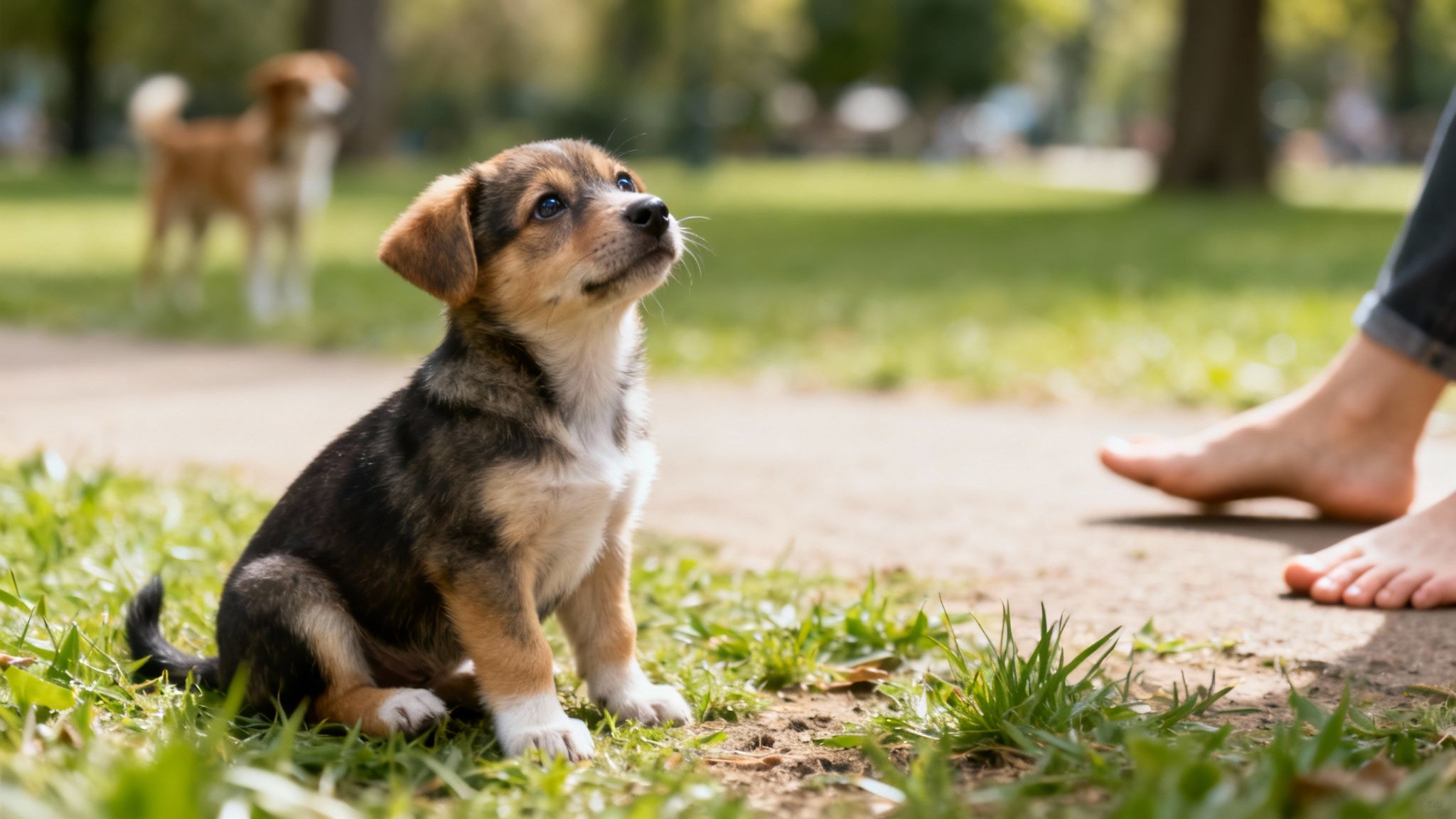
One of the most crucial and time-sensitive puppy training tips is to begin socialization as early as possible. This process involves gently exposing your puppy to a wide variety of new sights, sounds, smells, people, and other animals between the critical developmental window of 8 to 16 weeks of age. The goal isn't to overwhelm them, but to create a library of positive experiences they can draw upon for the rest of their lives.
Proper socialization helps your puppy grow into a well-adjusted, confident adult dog. It significantly reduces the likelihood of fear-based behaviors, anxiety, and aggression later on. A well-socialized pup learns to calmly navigate the world, from the noisy vacuum cleaner at home to a bustling outdoor market. Think of it as building a strong emotional foundation for your furry family member.
Why This Window is So Important
Pioneered by experts like Dr. Ian Dunbar, this approach recognizes that a puppy's brain is incredibly receptive during this period. What they learn now will shape their reactions to new things for years. Missing this window can make it much harder to address fear and reactivity in the future.
How to Socialize Your Puppy Safely
Implementing this tip requires a thoughtful and safe approach. Always prioritize your puppy’s well-being and ensure their veterinarian has cleared them for certain activities based on their vaccination schedule. For a deeper dive into creating a safe and effective plan, you can learn more about the essentials of puppy socialization.
Here are some practical ways to get started:
- Diverse Environments: Let your puppy walk on different surfaces like grass, pavement, carpet, and wood. Visit pet-friendly stores where they can experience new smells and quiet activity.
- Controlled Meetings: Arrange short, supervised playdates with well-behaved, fully vaccinated adult dogs or other puppies in a puppy class.
- Sensory Exposure: Introduce them to everyday household sounds like the doorbell or a blender at a low volume, rewarding them for calm behavior.
- People and Places: Take them for car rides and let them meet different types of people-men, women, children, people with hats or glasses-always ensuring the interactions are positive.
Key Insight: The goal of socialization is positive exposure, not forced interaction. Always let your puppy approach new things at their own pace and never push them into a situation where they feel scared or overwhelmed. Keep experiences short, sweet, and full of praise.
2. Positive Reinforcement Training
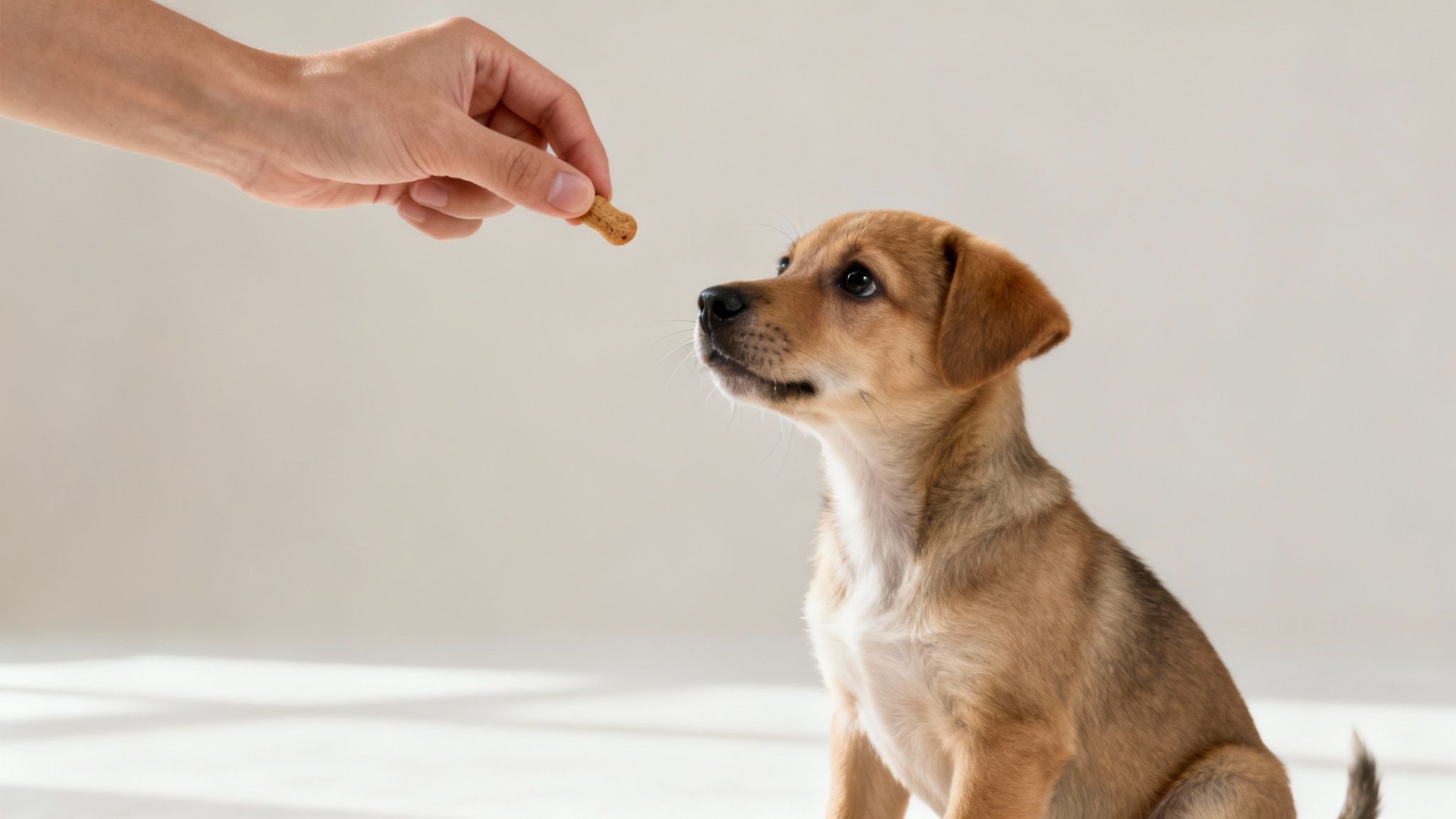
At the heart of modern, effective puppy training lies the principle of positive reinforcement. This science-backed method focuses on rewarding your puppy for behaviors you want them to repeat. Instead of punishing mistakes, you actively teach them what to do by making the learning process a fun and rewarding game. When your puppy performs a desired action, like sitting when asked, you immediately follow it with something they love, such as a tasty treat, enthusiastic praise, or a favorite toy.
This approach builds a strong, trusting bond between you and your puppy, as they learn to associate you with positive experiences. It encourages a dog who is eager to learn and confident in their choices, rather than one who acts out of fear or intimidation. By focusing on what your puppy does right, you create a joyful and cooperative learning environment that sets the stage for a lifetime of good behavior.
Why This Method is So Effective
Pioneered by behaviorists like Karen Pryor and popularized by trainers like Victoria Stilwell, positive reinforcement taps into how dogs naturally learn. Dogs repeat behaviors that result in good outcomes. This method is not just about giving treats; it's about clear communication and building a positive emotional connection, which is fundamental to successful training.
How to Use Positive Reinforcement Correctly
Applying this technique effectively requires good timing and consistency. The reward must come immediately after the desired behavior for your puppy to make the connection. To build a solid foundation, you can learn more about the fundamentals of puppy training.
Here are some practical ways to get started:
- Reward Timing is Key: Deliver the reward (a treat, praise, or toy) within 2-3 seconds of the desired behavior. For example, the moment your puppy's bottom hits the floor for a "sit," say "Yes!" and give them a treat.
- Use High-Value Treats: For new or difficult commands, use extra-special treats like small pieces of chicken or cheese. For easier tasks, their regular kibble or a simple "Good dog!" will work.
- Keep Sessions Short: Puppies have short attention spans. Keep training sessions to just 5-10 minutes a few times a day to keep them engaged and prevent frustration.
- Combine Rewards: Always pair a food treat with verbal praise ("Good sit!") and a gentle pat. This helps you eventually phase out constant treats, as your praise will become a reward in itself.
Key Insight: Positive reinforcement is about teaching, not bribing. The goal is to use rewards to mark and encourage a good choice, then gradually rely more on praise and life rewards (like getting to go outside after sitting patiently at the door) as the behavior becomes a habit.
3. Crate Training for Safety and Housebreaking
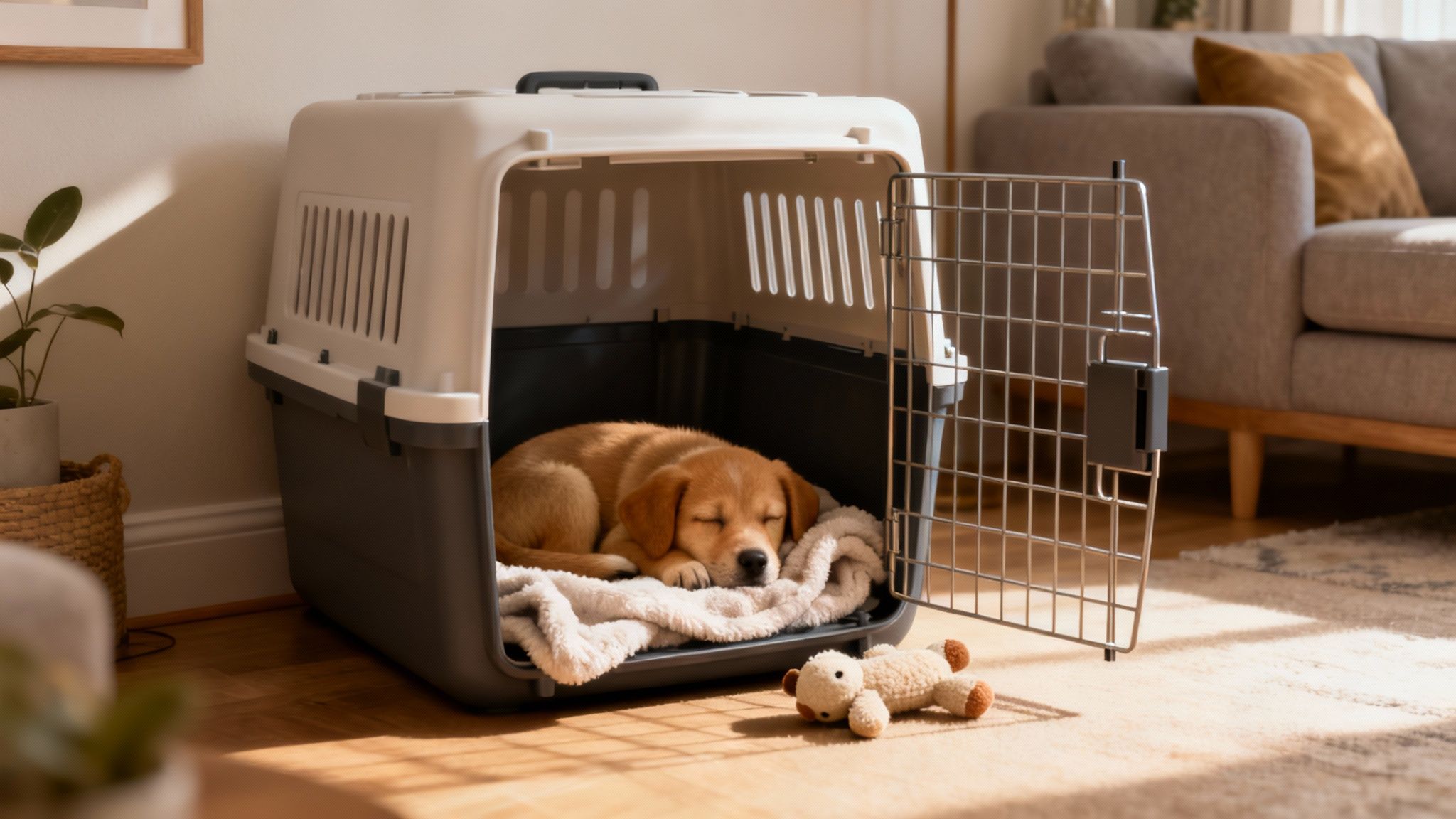
Crate training is one of the most effective and compassionate tools in your puppy-raising toolkit. This technique involves teaching your puppy to see a crate not as a cage, but as their own personal den: a safe, comfortable, and secure space. It taps into a dog's natural instinct to seek out a den, making it invaluable for housebreaking, preventing destructive chewing, and giving your pup a peaceful retreat.
Properly introduced, a crate becomes a sanctuary your puppy will voluntarily seek out for rest. It’s an essential management tool that keeps them safe when you can't supervise them and significantly speeds up the potty training process. It provides structure and security, which are crucial for a young puppy learning the rules of a human household.
Why This Instinct-Based Method Works
Endorsed by experts and organizations like the ASPCA, this approach recognizes that dogs are den animals. A crate mimics this environment, providing a space that is just theirs. This helps them learn to control their bladder, as dogs instinctively avoid soiling their sleeping area. It also provides a safe, familiar space when traveling or visiting new places.
How to Introduce a Crate Positively
The key to successful crate training is making it a wonderful place to be. Never use the crate as a form of punishment. For more guidance on choosing the right gear, from crates to chew toys, check out our honest reviews of top dog products at SetterFren.com.
Here are some practical steps to get started:
- Make it a Dining Destination: Start by feeding your puppy all their meals inside the crate with the door wide open. This builds a strong positive association with the space.
- High-Value Treats: Casually toss high-value treats or a favorite toy into the crate when your puppy isn't looking. Let them discover these wonderful surprises on their own.
- Gradual Door Closing: Once they are comfortable entering, briefly close the door while they enjoy a special chew toy, opening it before they get anxious. Slowly increase the duration.
- Location, Location, Location: Keep the crate in a central part of your home, like the living room, so your puppy feels like part of the family pack, not isolated.
Key Insight: A puppy's bladder control is limited. A good rule of thumb is they can "hold it" for one hour per month of their age, plus one. A three-month-old puppy can generally hold it for about four hours. Never leave them in the crate longer than they are physically able.
4. Consistent Command Training (Sit, Stay, Come)
Establishing clear communication is at the heart of a great relationship with your puppy, and that begins with consistent command training. Teaching foundational cues like "sit," "stay," and "come" does more than just impress your friends; it builds your puppy's confidence, enhances their impulse control, and creates a shared language between you. These commands are essential tools for safety, management, and forming the basis for all future learning.
A puppy who understands and reliably responds to these basic cues is easier to manage in daily situations, from preventing them from dashing out an open door to recalling them safely at the park. This training establishes you as a predictable and trustworthy leader, which is one of the most effective and kindest puppy training tips you can implement. It’s about building a partnership based on positive reinforcement and mutual understanding.
Why This Foundation is Essential
Legendary trainers and modern positive reinforcement experts alike emphasize these commands because they are the building blocks of a well-behaved dog. A reliable "come" can be a life-saving command, while a solid "stay" teaches crucial impulse control. These early lessons in focus and patience will pay dividends for years, making every other aspect of training and daily life smoother.
How to Teach Basic Commands Effectively
Success in command training hinges on consistency, patience, and positive reinforcement. Keep sessions short, fun, and engaging, especially for a young puppy's short attention span. Remember, this is a core part of the bonding experience you share.
Here are some practical ways to get started:
- Lure and Reward: To teach "sit," hold a high-value treat near your puppy's nose and slowly move it up and over their head. As their head goes up, their rear will naturally go down into a sit. The moment they do, say "Yes!" and give them the treat.
- Build Duration: For "stay," start with just a few seconds before rewarding them. Gradually increase the time and distance, always setting them up for success.
- Make "Come" a Party: Use a long training lead in a safe, enclosed area. Say your puppy's name followed by an excited "Come!" and reward them enthusiastically with treats and praise the second they get to you. Never call your puppy to punish them.
- Team Consistency: Ensure everyone in the household uses the exact same one or two-word commands and hand signals to avoid confusing your puppy.
Key Insight: Always end your training sessions on a positive note. If your puppy is struggling with a new concept, end with a command they know well, like "sit," and give them a big reward. This ensures they always associate training with success and fun.
5. Master Bite Inhibition Training
Puppy mouthing is a normal, natural behavior, but one of the most essential puppy training tips is teaching them to control the force of their bite. This is known as bite inhibition. It’s the process of teaching your puppy that human skin is sensitive and that hard biting during play is unacceptable. This skill is crucial for safety, ensuring your cute, nippy puppy doesn’t grow into an adult dog that bites too hard, even unintentionally.
Puppies initially learn bite inhibition from their mother and littermates. If a puppy bites a sibling too hard, the other puppy will yelp and stop playing, providing immediate feedback. Your role is to continue these lessons in their new human family. By teaching your puppy to be gentle with their mouth, you're building a foundation of trust and safe interaction that will last a lifetime.
Why This Skill is Non-Negotiable
This concept, heavily emphasized by experts like Dr. Ian Dunbar, is a cornerstone of raising a safe and well-behaved dog. A dog with good bite inhibition is less likely to cause serious injury if they ever bite out of fear or pain. It's not about stopping mouthing altogether, but about teaching them to be gentle and understand pressure.
How to Teach a Soft Mouth
Implementing bite inhibition training requires consistency from everyone in the household. The key is to clearly communicate that hard bites stop all the fun. At SetterFren, we know that safe play builds the strongest bonds, and a gentle mouth is a huge part of that.
Here are some practical ways to get started:
- Mimic Littermate Feedback: If your puppy bites you too hard during play, let out a high-pitched "Ouch!" or "Yelp!" Immediately withdraw your hand and pause all play for about 15-30 seconds.
- Redirect, Don't Punish: Never hit or physically punish your puppy for mouthing. Instead, always have an appropriate chew toy ready. If they start to mouth your hand, redirect their mouth onto the toy and praise them for chewing it.
- Avoid Rough Hand Play: Do not use your hands as toys by wiggling your fingers to entice play. This encourages the puppy to see hands as appropriate bite targets. Always use a toy as the intermediary.
- Reward Gentle Play: When your puppy is playing with you and using a soft mouth or licking instead of nipping, offer calm praise and continue the game. This reinforces the behavior you want to see.
Key Insight: Consistency is the secret to success. Every single time your puppy's teeth make painful contact with your skin, the fun must stop. This clear and consistent consequence is the most effective way for them to learn the rules of gentle play.
6. Potty Training and Accident Management
One of the first and most pressing challenges for any new puppy parent is housebreaking. This essential training involves establishing a consistent bathroom routine, rewarding your puppy for eliminating in the correct spot, and learning how to manage inevitable accidents without resorting to punishment. The core of this process is built on patience, vigilant supervision, and understanding your puppy's physical needs and limitations.
Successful potty training creates a clean and harmonious home environment, preventing damage and frustration for both you and your pup. More importantly, it reinforces your role as a reliable leader and strengthens your bond. By teaching your puppy where and when it's appropriate to go, you're providing them with clear expectations, which reduces their anxiety and helps them feel secure in their new home.
Why Consistency is King
A puppy's bladder control is limited, especially in the first few months. They don't have accidents out of spite; they simply can't hold it for long. A predictable routine helps their bodies adjust and teaches them to anticipate bathroom breaks. Without consistency, your puppy will become confused about the rules, making the entire process longer and more stressful.
How to Implement a Potty Training Plan
Building a successful housebreaking strategy requires a proactive, not reactive, approach. This is one of the most important puppy training tips because it sets the stage for future learning and good household manners. You are teaching your puppy a lifelong skill, so patience is paramount.
Here are some practical ways to get started:
- Create a Strict Schedule: Take your puppy out first thing in the morning, last thing at night, and immediately after waking up from a nap, after every meal, and after a play session. For very young puppies, this may be every 30-60 minutes.
- Supervise Actively: When your puppy is not in their crate or a puppy-proofed area, keep them tethered to you with a leash or within your direct line of sight. This prevents them from sneaking away to have an accident.
- Designate a Potty Spot: Always take your puppy to the same spot in your yard. The lingering scent will encourage them to go. Use a consistent verbal cue like "go potty" as they begin to eliminate.
- Clean Accidents Properly: Do not punish your puppy for an accident. Instead, clean the spot immediately and thoroughly with an enzymatic cleaner (like Nature's Miracle) to completely eliminate odors that might attract them back to the same area.
Key Insight: The golden rule of potty training is to praise success and ignore mistakes. Celebrate every successful potty trip with enthusiastic praise, a high-value treat, and a little playtime. This positive reinforcement makes them eager to repeat the correct behavior.
7. Leash Training and Walking Etiquette
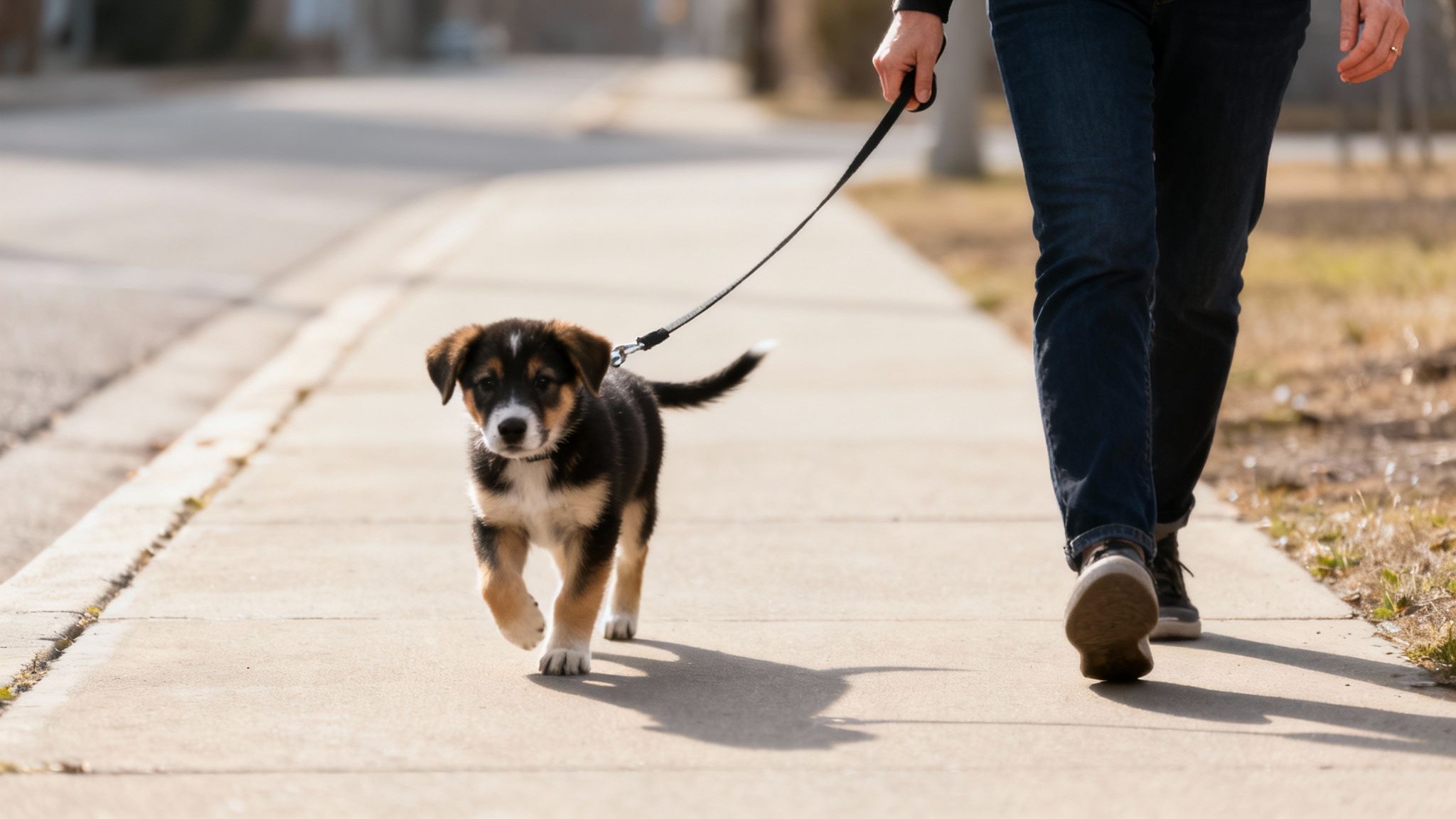
Teaching your puppy to walk calmly on a leash is one of the most practical and important skills you can impart. This training, often called "loose-leash walking," is about more than just preventing pulling; it's about establishing communication and ensuring walks are enjoyable and safe for both of you. It transforms chaotic tugs-of-war into pleasant strolls, building a stronger bond between you and your pup.
Proper leash etiquette is a foundational skill that opens up a world of adventures, from neighborhood walks to visits to pet-friendly cafes. A puppy who understands how to walk politely without lunging or yanking is a joy to take anywhere. This training establishes you as a calm, confident leader and helps prevent the development of reactivity issues that can make public outings stressful.
Why This Skill is Essential
Walks are a primary form of physical exercise and mental stimulation for your dog. If every walk is a battle of wills, both you and your puppy will start to dread them. Mastering loose-leash walking early on prevents this frustration and sets the stage for a lifetime of positive shared experiences. It's a key part of our mission at SetterFren to help you build that happy, healthy life with your companion.
How to Teach Good Leash Manners
Successful leash training starts with patience and the right tools. Begin in a low-distraction environment, like your hallway or backyard, before venturing into busier areas. Bad habits can be hard to break, so consistency from day one is crucial. For guidance on handling challenging behaviors on walks, you can learn more about managing leash reactivity.
Here are some practical tips to get you started:
- Introduce Gear Early: Let your puppy wear their collar or harness around the house for short periods to get comfortable before you even attach a leash.
- Stop When They Pull: The moment your puppy pulls and the leash tightens, stop walking. Only move forward again when they release the tension. This teaches them that pulling gets them nowhere.
- Reward the Right Position: Use high-value treats to reward your puppy whenever they are walking nicely by your side (the "heel" position). This makes staying close to you a positive choice.
- Use the Right Tools: A standard 6-foot leash offers better control than a retractable one. A front-clip harness can also be a game-changer, as it gently redirects your puppy back toward you when they try to pull.
Key Insight: Keep your initial training sessions very short and overwhelmingly positive, just 5-10 minutes at a time. The goal is to make walking with you more rewarding than anything else in the environment. End each session on a high note before your puppy gets tired or frustrated.
8. Managing Jumping and Unwanted Behaviors
One of the most common challenges puppy owners face is managing instinctual yet undesirable behaviors like jumping on people, mouthing, or counter-surfing. Addressing these actions early is a crucial puppy training tip that prevents them from becoming ingrained habits. The goal is not to punish the puppy, but to teach them appropriate alternative behaviors through redirection and consistent management.
Effectively managing these behaviors helps create a calm and polite adult dog that is a joy to have around guests and in public. By teaching your puppy what you want them to do instead of just saying "no," you build a stronger bond based on positive communication. This proactive approach sets clear boundaries and helps your puppy understand how to successfully navigate human social rules.
Why This Approach is So Effective
Puppies jump, mouth, and explore because these are natural dog behaviors. Pushing them down, yelling, or engaging in a struggle often reinforces the action because, to a puppy, any attention is good attention. Ignoring the unwanted behavior and rewarding a desirable one (like sitting calmly) teaches them a more effective way to get what they want: your praise and affection. This method is fundamental to positive reinforcement training.
How to Manage Unwanted Behaviors
Consistency from every member of the household is the most important factor for success. Everyone must agree on the rules and apply them every single time to avoid confusing the puppy. This is one of the best puppy training tips for creating lasting change.
Here are some practical ways to get started:
- Jumping: When your puppy jumps, turn your back immediately and ignore them. Once all four of their paws are on the floor, turn back and reward them with calm praise. Teach an alternative behavior like "sit" for greetings.
- Mouthing and Nipping: If your puppy mouths you, yelp "ouch!" in a high-pitched voice and briefly withdraw your hand. Immediately redirect their mouth to an appropriate chew toy. This teaches them that human skin is sensitive.
- Counter-Surfing: Manage the environment by keeping counters clear of temptation. Use baby gates to restrict access to the kitchen when you're not there. Teach a strong "place" or "leave it" command to redirect them if you catch them in the act.
- Furniture Privileges: If you don't want your dog on the furniture, be consistent from day one. Redirect them to their own comfy bed and reward them for choosing to rest there.
Key Insight: The secret to managing unwanted behaviors is redirection, not reaction. Instead of focusing on stopping the bad behavior, focus on teaching and rewarding the good behavior you want to see. Patience is essential, as it can take several weeks of consistency to see reliable results.
9. Establish Routine and Structure
One of the most effective and often overlooked puppy training tips is to establish a predictable daily routine. Puppies, much like human toddlers, thrive on consistency and predictability. A structured schedule for feeding, potty breaks, training, play, and sleep helps them feel secure, learn faster, and understand the rules of their new home.
This sense of order significantly reduces anxiety and prevents many common problem behaviors before they start. When a puppy knows what to expect and when, they are less likely to engage in destructive chewing, excessive barking, or have accidents in the house. A consistent routine is the framework upon which all other training is built, creating a calm and well-behaved companion.
Why This Predictability is So Important
A structured day helps regulate your puppy's biological rhythms, making house training much more manageable. You'll quickly learn to anticipate when they need to go outside, when they'll be full of energy for training, and when they're ready to settle down for a nap. This predictability removes guesswork and sets your puppy up for success.
How to Build a Puppy-Friendly Schedule
Creating a routine doesn't mean your life has to become rigid, but key events should happen around the same time each day. A great first step is to write down a schedule and post it where everyone in the family can see it, ensuring everyone is on the same page.
Here are some practical ways to get started:
- Consistent Meal Times: Feed your puppy at the same times every day. A young pup might eat three or four small meals, and a regular schedule helps regulate their digestion and potty needs.
- Scheduled Potty Breaks: Take your puppy out first thing in the morning, last thing at night, after every meal, after every nap, and after playtime. Frequent, scheduled breaks are key to house-training.
- Dedicated Training Time: Set aside one or two short 10-15 minute sessions for training each day. Tying these sessions to a specific event, like before their morning meal, makes it easy to remember.
- Structured Sleep: Establish a consistent bedtime and wake-up time. Crate training can be an invaluable tool for creating a safe, quiet den that signals it's time to rest.
Key Insight: A routine is your secret weapon for managing a puppy's energy and expectations. It teaches them patience and self-control by showing them there is a time and a place for everything, from wild playtime to quiet crate time.
10. Using Appropriate Training Tools and Equipment
Having the right gear can make a world of difference in your training sessions, turning them from frustrating to fun and effective. Selecting appropriate, humane training tools enhances communication between you and your puppy, ensures their safety, and sets them up for success. The goal is to use equipment that facilitates learning through positive reinforcement, not intimidation or discomfort.
This approach is about working smarter, not harder. Tools like clickers, proper harnesses, and high-value treats are designed to make the learning process clearer and more enjoyable for your pup. By choosing science-backed equipment, you build a foundation of trust and avoid the pitfalls of aversive tools that can create fear and anxiety. This is one of the most practical puppy training tips for new owners.
Why the Right Tools Matter
The equipment you use directly impacts your puppy’s experience and willingness to learn. A comfortable harness prevents choking and neck strain, while a clicker provides crystal-clear feedback at the exact moment your puppy does something right. These positive associations speed up learning and strengthen your bond. In contrast, tools like prong or shock collars rely on pain and fear, which can damage trust and lead to behavioral problems.
How to Choose and Use Your Training Gear
Equipping yourself correctly from the start prevents bad habits and ensures training is a positive journey. Always introduce new tools gradually and with plenty of praise and rewards. At SetterFren, we believe in training with kindness, and choosing the right gear is a huge part of that philosophy.
Here are some essential tools and how to use them effectively:
- Front-Clip Harness: A no-pull harness like an Easy Walk gently discourages pulling without putting pressure on your puppy’s throat. It gives you better control on walks.
- Clicker and Treat Pouch: A clicker marks the exact behavior you want to reward. "Charge" the clicker by clicking and immediately giving a treat several times. Soon, your puppy will associate the sound with a reward, making it a powerful training tool. A treat pouch keeps rewards handy for quick reinforcement.
- High-Value Treats: Use small, pea-sized, soft treats that your puppy loves. This allows for rapid-fire rewards during a session without overfeeding them.
- Long Training Lead: A 15-foot lead is excellent for safely practicing recall ("come") in an open space like a park, giving your puppy freedom while keeping them secure.
Key Insight: Your training tools should be aids, not crutches. The ultimate goal is for your puppy to respond to your verbal cues and hand signals. Always pair tools with positive reinforcement like praise, pets, and treats to build a strong, lasting connection.
Top 10 Puppy Training Tips Comparison
| Technique | 🔄 Implementation Complexity | ⚡ Resource Requirements | ⭐📊 Expected Outcomes | 💡 Ideal Use Cases & Key Advantages |
|---|---|---|---|---|
| Start Early with Socialization (8–16 weeks) | Moderate–High — time-sensitive; careful progression during critical window | High — time, supervised exposures, vaccination checks, possible trainer coordination | ⭐⭐⭐⭐⭐ — strong long-term confidence; fewer fear/aggression issues (high impact) | Preventative for all new puppies; foundation for future training; tip: vet clearance before group exposures |
| Positive Reinforcement Training | Moderate — requires precise timing & consistency | Moderate — treats, clicker optional, regular short sessions | ⭐⭐⭐⭐⭐ — reliable long-term behavior change; strong human–dog bond | Best for teaching behaviors without fear; ideal for sensitive dogs and complex commands; tip: use high-value, small treats |
| Crate Training for Safety & Housebreaking | Low–Moderate — gradual conditioning over days/weeks | Moderate — appropriately sized crate, bedding, time for conditioning | ⭐⭐⭐⭐ — accelerates housebreaking; provides safe den and travel familiarity | Housebreaking, travel, unsupervised safety; key advantage: prevents destruction; tip: never use as punishment |
| Consistent Command Training (Sit, Stay, Come) | Moderate — daily short sessions, household consistency required | Low–Moderate — treats, leash, short focused time blocks | ⭐⭐⭐⭐ — improves safety, impulse control, foundational obedience | Core for safety and public manners; ideal early training focus; tip: one-word cues and practice in varied environments |
| Bite Inhibition Training | Moderate–High — immediate, consistent responses needed | Low — supervision, appropriate chew toys, caregiver education | ⭐⭐⭐⭐ — reduces risk of harmful bites; improves mouthing control | Critical for households with children and other pets; advantage: safety; tip: yelp/withdraw attention and redirect to toys |
| Potty Training & Accident Management | Moderate — routine and patience; setbacks normal | Low–Moderate — frequent outings, supervision, enzymatic cleaner | ⭐⭐⭐⭐ — most puppies housebroken by 4–6 months with consistency (measurable progress) | Essential for all owners; advantage: household harmony; tip: schedule frequent breaks and never punish accidents |
| Leash Training & Walking Etiquette | Moderate — gradual exposure to gear and distractions | Moderate — 6-ft leash, harness (front-clip recommended), treats, time | ⭐⭐⭐⭐ — safer public outings; reduces pulling and escapes | Daily walks, public safety, exercise; advantage: strengthens bond; tip: stop when pulling and reward slack leash |
| Managing Jumping & Unwanted Behaviors | Moderate — requires consistent response from all humans | Low — time, alternative behaviors/toys, household coordination | ⭐⭐⭐ — reduces social problems and injury risk if consistent | Social interactions and guest visits; advantage: prevents ingrained habits; tip: ignore jumping and reward calm greetings |
| Establishing Routine & Structure | Moderate–High — household-wide adherence needed | Low — scheduling effort, consistent commitment | ⭐⭐⭐⭐ — reduces anxiety; accelerates learning and housebreaking (measurable reduction in issues) | Universal for new puppies; advantage: predictability and security; tip: post a written schedule and stick to it |
| Using Appropriate Training Tools & Equipment | Low–Moderate — select and learn proper use | Moderate–High — cost for quality harnesses, clickers, treats, leads | ⭐⭐⭐⭐ — improves timing, safety, and training efficiency | Supports all training types; advantage: prevents injury and speeds progress; tip: avoid aversive collars and invest in proper fit |
Your Happily Ever After Starts Now
And just like that, you've reached the final chapter of our guide. But for you and your new furry family member, this is truly just the beginning. The journey of raising a well-behaved, happy, and confident dog is one of the most rewarding experiences you can have, and it all starts with the foundation you build today.
We've explored a comprehensive toolkit of the best puppy training tips, from the foundational magic of positive reinforcement to the practical necessity of crate training and housebreaking. Think of each tip not as a separate task, but as an interconnected piece of a beautiful puzzle. Your efforts in early socialization will make leash training in a busy park less stressful. Mastering bite inhibition will make playtime safer and more enjoyable for everyone. It's all part of the same conversation you're having with your puppy.
The Heart of the Matter: Consistency and Connection
If you take only one thing away from this entire guide, let it be this: consistency is your superpower. A command taught with enthusiasm on Monday but ignored on Tuesday will only create confusion. A routine that is followed religiously for a week and then abandoned will set back your potty training progress. Your puppy thrives on predictability; it helps them understand their world and what is expected of them.
But training is so much more than just rules and commands. It's about building a language of love and trust. Every time you reward a "sit" with a tasty treat, you're not just reinforcing a behavior; you're saying, "I see you, I understand you, and I appreciate you." Every calm and patient correction for jumping is a lesson in appropriate communication. This process forges an unbreakable bond that will be the bedrock of your relationship for years to come.
Remember this: You are not just training a puppy. You are raising a lifelong companion. The goal isn't a perfectly obedient robot, but a happy dog who understands how to navigate the human world with confidence and joy.
Your Action Plan for Success
Feeling a little overwhelmed? That’s completely normal. Let's break down your next steps into a simple, actionable plan:
- Review and Prioritize: Look back at the ten tips we covered. Which one feels most urgent for you right now? Is it potty training? Maybe it's managing that needle-sharp puppy biting. Pick one or two key areas to focus on for the next week.
- Gather Your Tools: Ensure you have everything you need. This includes high-value treats, a comfortable crate, an appropriate leash and collar, and engaging chew toys. Being prepared prevents frustration.
- Schedule It In: Don't leave training to chance. Block out several short, 5-10 minute training sessions on your calendar each day. Consistency is easier to achieve when it's part of your planned routine.
- Celebrate the Small Wins: Did your puppy go a whole day without an accident? Celebrate! Did they finally choose a chew toy over your shoe? Amazing! Acknowledging progress, no matter how small, will keep both of you motivated.
The journey ahead is filled with muddy paws, chewed-up slippers, and moments that will test your patience. But it will also be filled with sloppy kisses, joyful greetings, and the quiet comfort of a loyal friend sleeping at your feet. By applying these best puppy training tips with a patient heart and a consistent hand, you are paving the way for a truly magical "happily ever after" with your new best friend. We're wagging our tails for you!
Ready to continue the journey with a community that gets it? At Setterfrens LLC, we believe that life is better with a dog by your side and a good story to share. Explore our curated selection of dog-themed books and practical how-to guides to find more inspiration for your life with your pup. Join our Puppicino Club to unlock member perks, book updates, and dog-friendly treats. Stay part of the fun by following @setterfrens on TikTok and Instagram for heartwarming dog moments, product tips, and behind-the-scenes content from our growing pack