Choosing the best dog food for senior dogs isn't just about picking a different bag off the shelf. It’s about finding a recipe with fewer calories, top-notch protein to keep their muscles strong, and a little extra help from ingredients like glucosamine and chondroitin to support those hardworking joints. Since every old-timer is different, the right food is always one that fits their unique health, energy, and size.
Caring for Your Senior Dog in Their Golden Years
Welcome to one of the sweetest chapters you'll share with your best friend. Here at SetterFrens, we believe life's better with a wagging tail, and a dog’s golden years are something to be cherished. Giving them the right food is one of the best ways to show how much you care. It’s not about managing old age; it’s about being proactive to keep that tail wagging for years to come.
Think of it this way: just as we might swap our high-impact running shoes for comfy walking sneakers as we get older, our dogs need their gear—in this case, their food—updated for their new lifestyle. Their metabolism naturally slows, their joints might feel a little stiffer, and their energy needs just aren't what they used to be. This guide is here to walk you through it all, so you can make these changes with total confidence, like a pro.
The Pillars of Senior Dog Nutrition
To help you get started, we've pulled together this quick-reference table. It breaks down the most important nutritional shifts that make a real difference for a senior dog's health.
Senior Dog Nutrition At a Glance
| Nutritional Need | Why It Matters for Seniors | What to Look For on the Label |
|---|---|---|
| High-Quality Protein | Helps maintain lean muscle, which is crucial as dogs naturally become less active. | Look for named animal sources like "deboned chicken" or "salmon" listed first. |
| Controlled Calories | Prevents unhealthy weight gain that puts extra stress on aging joints and vital organs. | Often labeled as "senior," "mature," or "healthy weight" formulas. |
| Joint Support | Ingredients like glucosamine and chondroitin help support cartilage and keep them mobile. | Check for "glucosamine hydrochloride" and "chondroitin sulfate" in the ingredients. |
| Increased Fiber | Promotes healthy digestion and regular bowel movements, a common concern for older pups. | Ingredients like brown rice, beet pulp, or pumpkin are excellent sources. |
Understanding these fundamentals is the key to decoding food labels and finding the perfect match for your faithful companion.
Of course, great care goes beyond the food bowl. Small, thoughtful choices in their daily routine can make a big impact. When it comes to feeding gear, something as simple as a durable and space-saving collapsible silicone bowl can make meals on the go much easier. Creating a safe, cozy den is just as important, and you can find great tips on how to crate train an older dog in our detailed guide.
Understanding Your Senior Dog's Changing Needs
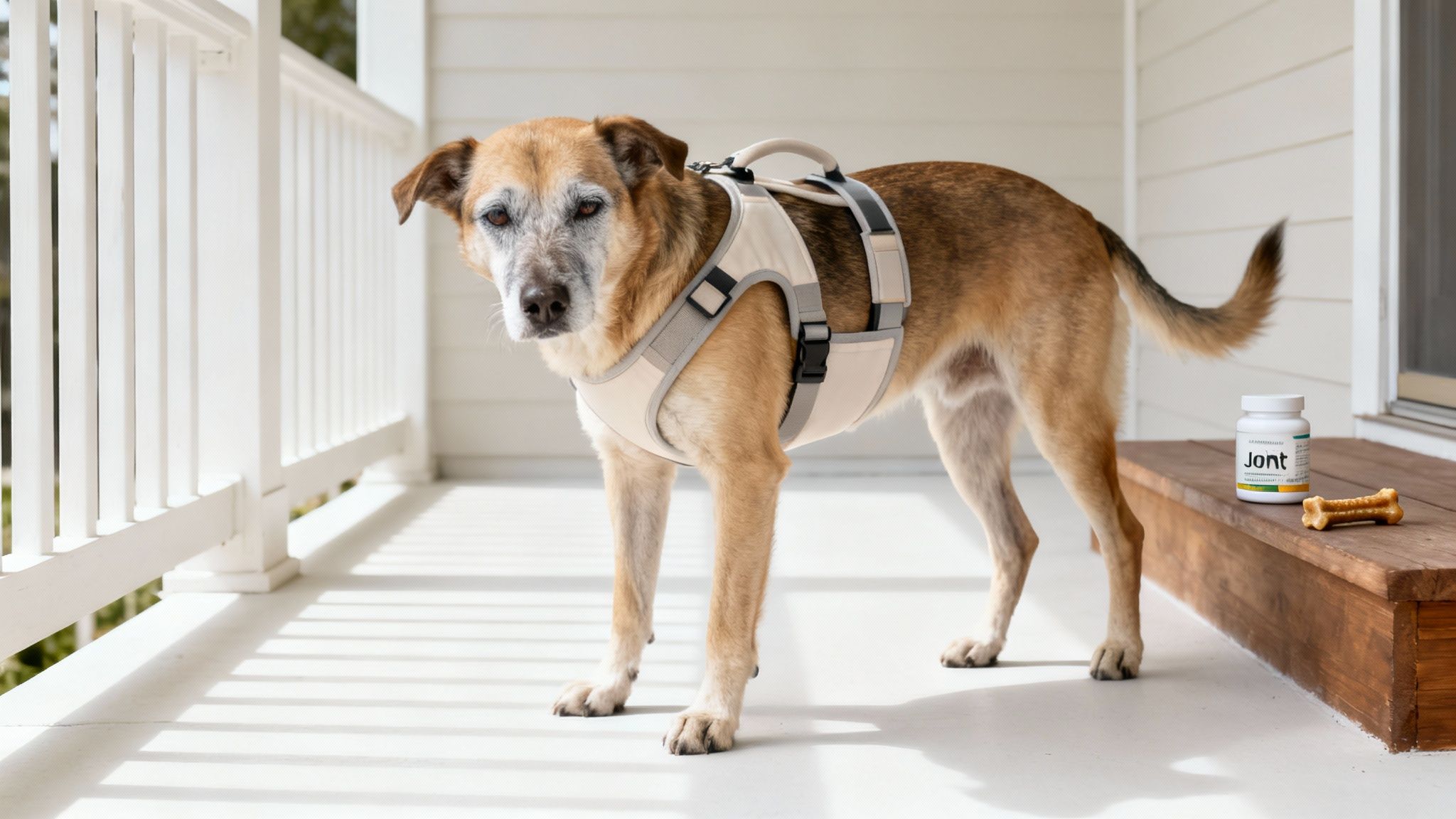
As our dogs enter their golden years, their bodies start telling a new story. I like to think of a senior dog as a classic, well-loved book. The cover is a little softer, but the story inside is richer than ever. Understanding these changes is the key to choosing the best dog food for senior dogs—one that truly supports their health and happiness.
One of the biggest shifts happens in their metabolism. Just like us, older dogs tend to slow down. Those marathon fetch sessions often turn into leisurely strolls and long, cozy naps. This natural drop in activity means their engine isn't burning fuel as quickly, which can easily lead to weight gain.
Even a few extra pounds can put a lot of strain on their aging frame, especially their joints and internal organs. That's why you'll find that senior-specific dog foods are often formulated with fewer calories while still being packed with every essential nutrient they need to feel their best.
Supporting Joints and Mobility
Have you noticed your old friend is a bit slower getting up after a nap? Or maybe they hesitate before hopping onto the couch? That’s not just them being lazy; it's often a sign of stiffening joints, a common reality for aging dogs. In fact, roughly 50% of dogs over the age of 10 show signs of arthritis.
This is where specific nutrients can act like a dedicated support crew for their mobility.
- Glucosamine and Chondroitin: Think of these as the lubricant for the hinges on a favorite old door. They are natural compounds that help support cartilage—the cushion between bones—making movement easier and more comfortable.
- Omega-3 Fatty Acids: Usually sourced from fish oil, these healthy fats are fantastic for their anti-inflammatory properties. They can help soothe achy joints while also contributing to a shiny coat and healthy skin.
By picking a food fortified with these ingredients, you’re helping to keep your dog’s internal "hinges" in good working order, allowing them to enjoy their daily adventures with greater ease.
Protecting Sensitive Systems
A senior dog's internal systems have been working hard for a long time, and some of them start to need a little more TLC. Their digestive tract and teeth are two key areas that really benefit from dietary adjustments.
Older dogs can sometimes be prone to an upset stomach or constipation. A diet with high-quality fiber from sources like pumpkin or beet pulp can do wonders for promoting regular, healthy digestion. It simply helps their system run efficiently without any extra strain.
Dental health is another huge piece of the puzzle. Years of chewing can lead to sensitive gums, plaque buildup, or even missing teeth, which can make crunching on hard kibble difficult or even painful. While good dental hygiene is a must, their food plays a big role, too. Some senior kibbles are designed to be easier to chew, and wet food can be a lifesaver for dogs with serious dental challenges. For more tips on keeping them looking and feeling great, check out our guide on at-home dog grooming.
Your senior dog's diet isn't just about managing age; it's about proactively supporting their body's changing mechanics. The right food acts as a toolkit, providing targeted support for their metabolism, joints, and organs exactly when they need it most.
Finally, we have to think about organs like the kidneys and heart, which also feel the effects of time. The kidneys, in particular, work tirelessly to filter waste from the body. High-quality, easily digestible protein is vital because it's less work for their system to process, reducing the load on their kidneys. At the same time, controlled levels of phosphorus and sodium are important for supporting both kidney and heart health long-term.
When you understand these physiological shifts, you can look beyond the clever marketing on a bag of dog food. You start to see ingredients not just as a list, but as a team of tiny helpers working to keep your best friend comfortable, healthy, and full of life.
How to Read a Dog Food Label Like an Expert
Stepping into the dog food aisle can feel like walking into a library where you don't speak the language. Every bag shouts promises, but the real story is written in the fine print. Let's cut through that noise. Reading a dog food label isn't as intimidating as it looks—think of it as checking the recipe before you serve a meal.
The ingredient list is your roadmap, and it’s written in order of weight. Whatever’s listed first is what makes up most of the food. For your senior pal, you want to see real, high-quality ingredients right at the top of that list. This is your first—and most important—clue in finding the best dog food for senior dogs.
Cracking the Ingredient Code
The first five ingredients tell you almost everything you need to know about the food's quality. This is where you want to see named, specific protein sources. Seeing "deboned chicken" or "salmon meal" listed first is a fantastic sign. These are powerhouse ingredients packed with the amino acids your older dog needs to keep their muscles strong.
On the flip side, some ingredients are giant red flags.
- Vague Proteins: Be wary of mystery meats. Phrases like "meat by-products" or "animal meal" mean the source is generic and can change with every batch. These often contain lower-quality, less digestible parts of an animal.
- Artificial Junk: Watch out for artificial colors like Red 40, synthetic flavors, and chemical preservatives like BHA or BHT. Your dog doesn’t care if their kibble is a fun color, and these additives bring zero nutritional value to the bowl.
- Cheap Fillers: Ingredients like corn, wheat, and soy are often used to bulk up food cheaply. They aren't inherently evil, but if they’re listed before a quality protein, it’s a sign that the food is more filler than fuel.
A great dog food label reads like a wholesome recipe you'd be proud to make yourself. It's built on real, identifiable ingredients and skips the confusing, generic terms that hide what's really inside.
Getting the hang of this is a game-changer. If you're just starting to learn about dog nutrition, our guide on the best dog food for puppies offers some fantastic foundational knowledge that really helps, no matter your dog's age.
Understanding the Guaranteed Analysis
Next up, you'll find the guaranteed analysis. This is basically the nutrition facts panel for pet food. It gives you the minimum percentage of crude protein and fat, along with the maximum percentage of fiber and moisture.
For a senior dog, you're generally looking for a profile that includes:
- High-quality protein to help maintain muscle mass.
- Moderate fat levels for energy without packing on pounds.
- Increased fiber to keep their digestion running smoothly.
But remember, these numbers don't tell the whole story. The source of those nutrients is what truly matters. A food with 30% protein from "meat by-products" is miles behind a food with 25% protein from "deboned chicken." Quality over quantity, always.
The AAFCO Statement Is Your Seal of Approval
Finally, scan the bag for the AAFCO nutritional adequacy statement. This little sentence is a huge deal. It confirms the food is "complete and balanced" for a specific life stage, like "adult maintenance" or "growth." For your golden-years companion, you'll want to see a formula approved for "adult maintenance" or, even better, one specifically for "senior" dogs.
Think of this statement as a third-party audit. It’s your assurance that the food meets the established nutritional standards your dog needs to thrive. It’s a non-negotiable checkpoint for any bag you consider bringing home.
Comparing Senior Dog Food Ingredient Lists
To make this crystal clear, let's put two hypothetical ingredient lists side-by-side. It’s amazing what you can spot when you know what to look for.
| Feature | High-Quality Example | Lower-Quality Example |
|---|---|---|
| First Ingredient | Deboned Chicken | Corn |
| Protein Sources | Chicken Meal, Salmon Meal | Meat and Bone Meal, Poultry By-Product Meal |
| Carbohydrates | Brown Rice, Sweet Potatoes, Peas | Wheat Flour, Soybean Meal |
| Fat Source | Chicken Fat (preserved with mixed tocopherols) | Animal Fat (source unspecified) |
| Key Additives | Glucosamine, Chondroitin Sulfate, Dried Kelp | Artificial Colors, BHA (preservative) |
See the difference? It might feel like you're learning a new language at first, but once you master these checkpoints, you'll be able to confidently pick a food that truly nourishes your best friend from the inside out.
Choosing the Right Type of Senior Dog Food
Now that you can decipher a dog food label like a pro, let's walk down the pet food aisle and look at the different options. There's no single "best" food for every senior dog; the right choice really comes down to what fits your dog's specific needs, your lifestyle, and your budget.
Think of it like deciding on dinner for yourself. Some nights, a crunchy, satisfying salad hits the spot. Other times, all you want is a warm bowl of soup. Our senior dogs aren't so different. Getting familiar with the main food types—from classic kibble to those fancy new fresh meals—is the next step in making the best nutritional decisions for your old friend.
Dry Kibble: The Convenient Classic
For many of us, dry kibble is the default choice, and it's easy to see why. It's incredibly convenient, stays fresh for a long time, and is usually the most affordable option. That familiar crunch can also be good for their teeth, helping to scrape away a bit of plaque with every bite.
But for some older dogs, especially those with sore gums or missing teeth, hard kibble can be tough to get through. It's also low in moisture, so you have to be extra sure your pup is drinking enough water to stay properly hydrated.
Wet Food: The Palatability Champion
If you've got a picky eater on your hands or a dog with a sensitive mouth, wet food can be a game-changer. It’s soft, easy to chew, and its high moisture content—often 75% or more—is a huge bonus for hydration and supporting aging kidneys. Plus, that rich, meaty smell is often all it takes to convince a reluctant senior to clean their bowl.
The main trade-offs are the higher price tag and the fact that it doesn't last long once opened. Because it’s so tasty, you’ll also need to be strict with portion sizes to keep your less-active senior from packing on extra pounds.
This decision guide can help you quickly run through the most important checkpoints when you're staring at the wall of options, whether they're wet, dry, or something in between.
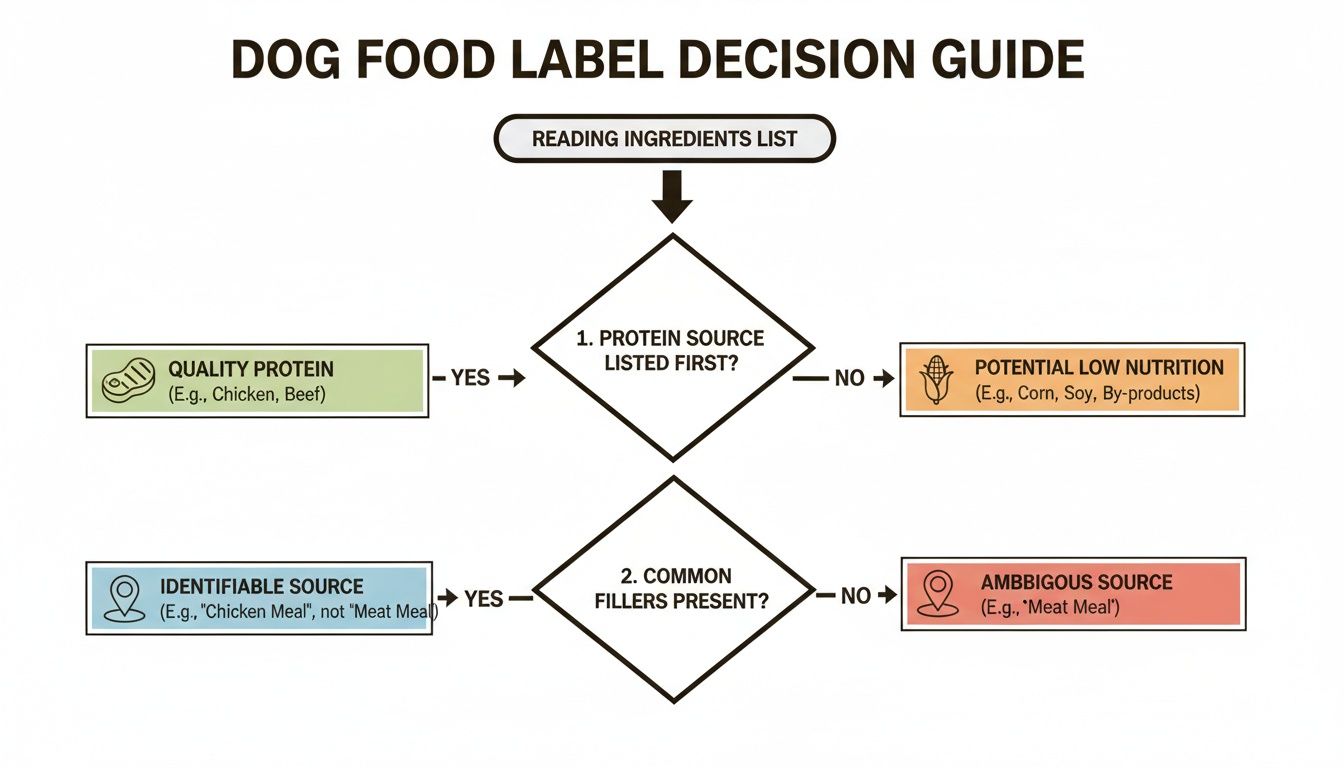
Ultimately, this just reinforces the core idea: no matter the format, your focus should always stay on high-quality protein and steering clear of junk fillers.
Fresh and Freeze-Dried: The Modern Contenders
Fresh, refrigerated, and freeze-dried foods are getting a ton of attention lately, and for good reason. They often use human-grade ingredients that are minimally processed, which can make them easier for older dogs to digest and absorb nutrients from. Freeze-dried foods, in particular, give you the nutritional punch of raw ingredients but with the convenience and shelf-life of kibble.
This isn't just a niche trend; the numbers are pretty staggering. In the U.S., sales of refrigerated and frozen dog food recently shot up by 13.4%, adding $208 million to the market. This reflects a huge shift in how we think about feeding our pets, with an estimated 70% of owners buying fresh pet food in 2025, a big jump from just 52% in 2023. You can discover more insights about these pet food trends on PetfoodIndustry.com.
The ideal food type for your senior dog is one that meets their health needs, tempts their taste buds, and fits realistically into your daily routine. There’s no single "best" type—only what's best for your unique companion.
At the end of the day, the format of the food is far less important than what's actually in it. Whether you go with crunchy kibble, a savory wet food, or a premium fresh diet, your new label-reading skills will ensure you’re giving your senior the nourishment they need to thrive in their golden years.
Getting Ready for Your Senior Dog's Vet Visit
Your veterinarian is your single best partner when it comes to figuring out the right diet for your senior dog. They have the complete picture: your dog's breed, their entire health history, and what’s happening with them right now. A good vet visit is a real conversation, and coming in prepared makes a world of difference.
Think of it like getting ready for a parent-teacher conference. You bring all your day-to-day observations from home, and the vet provides the expert medical insight. When you put those two pieces together, you can build a food plan that truly helps your companion enjoy their golden years.
This is what we're all about at SetterFrens—being an informed, proactive partner in your dog's care.
Your Vet Visit Checklist Questions
To make sure you walk in feeling confident, we've put together a few key questions to ask. Feel free to jot them down or just pull this page up on your phone during the appointment.
- What’s my dog’s ideal body weight? You can't adjust their diet properly if you don't have a target to aim for.
- How many calories should they be getting each day? Your vet can give you a specific daily calorie goal based on their ideal weight and how active (or inactive) they are.
- Are there any supplements you’d recommend? This is a great time to ask about things like glucosamine and chondroitin for joint support or omega-3s for their skin and coat.
- Is there anything we should be avoiding in their food? Be sure to mention any weird symptoms you’ve noticed, like itchy skin, ear infections, or an upset stomach.
This simple list turns a routine check-up into a strategic planning session. You'll walk out with clear, actionable advice that's made just for your best friend.
Talking About Prescription and Therapeutic Diets
Sometimes, a regular senior food from the pet store just doesn't cut it. This is especially true if your dog is managing a specific health issue like kidney disease, heart problems, or severe arthritis. In these situations, your vet might bring up a prescription or therapeutic diet.
These foods are specially formulated to tackle medical problems head-on. A kidney support diet, for instance, will have carefully controlled levels of high-quality protein and phosphorus to ease the burden on their organs. It's really important to mention any changes you've seen in your dog—like if they're drinking or peeing a lot more, or if their energy has tanked. These are often the clues that a therapeutic diet could help.
The market for these specialized foods is growing like crazy. Veterinary-recommended diets are a huge part of the global expanded dog food market, which hit $317 million in 2024 and is expected to reach $519 million by 2034. These foods are engineered for incredibly high digestibility—sometimes allowing for up to 90% nutrient absorption—which is perfect for a senior dog's less efficient digestive system. You can read the full research about this growing market on intelmarketresearch.com.
Teaming up with your veterinarian takes the guesswork out of choosing the best food for your senior dog. They are your most valuable resource for building a diet that supports a long, happy, and healthy life.
By asking the right questions, you're not just a pet owner; you're your dog's best advocate. You'll be able to make confident choices that give them the exact nutrition they need to thrive.
How to Switch Your Senior Dog to a New Food
Alright, you've done all the research and picked out the perfect new food for your old friend. That's a huge step! But don't just swap the bags out yet. The final, and arguably most important, part is the transition itself.
Making a sudden change can really throw a senior dog's digestive system for a loop. Think of it like this: you wouldn't go from eating salad every day to suddenly having a rich, heavy meal without expecting some… consequences. It’s the same for them. A slow, gradual switch is the secret to keeping their tummy happy.
The 7-Day Transition Schedule
For most dogs, a one-week transition plan is the sweet spot. It gives their gut bacteria and digestive enzymes enough time to get acquainted with the new ingredients. Just remember to keep an eye on them for any signs of trouble, like loose stools or gas.
Here’s a simple schedule that works wonders:
- Days 1-2: Start with a mix of 75% old food and just 25% new food.
- Days 3-4: Move to an even split: 50% old food and 50% new food.
- Days 5-6: Now, tip the scales with 25% old food and 75% new food.
- Day 7: You’ve made it! Time for 100% new food.
If you know your dog has a sensitive stomach, don't hesitate to stretch this out over 10 or even 14 days. There's no rush.
The right pace is your dog's pace. Pay attention to their digestion, their energy levels, and their appetite. They’ll let you know if things are moving too fast or if the new food is a hit.
What If Your Dog Is a Picky Eater?
Some dogs, especially seniors who are very set in their ways, can be a bit suspicious of new things. If your pup gives you a look and turns their nose up, don't worry. A little encouragement can go a long way.
Try adding a splash of warm, low-sodium chicken or beef broth to their bowl. The aroma can make the new food much more appealing. Sometimes, even hand-feeding them a few pieces like they’re special treats can convince them to give it a try.
It’s actually a great time to be looking for senior-specific diets. With dogs living longer than ever, the demand for specialized nutrition has exploded. Industry trends show a boom in senior dog food options, with innovative formulas coming from brands like Orijen and Hill's Prescription Diet. Since small and medium breeds make up a huge chunk—around 60-70%—of the pet population, you'll find tons of great choices tailored for them, which means you’re sure to find something that tempts even the fussiest eater.
Common Questions About Senior Dog Nutrition
Walking the path of senior dog care brings up a ton of questions, and you're definitely not alone in asking them. As part of the SetterFrens community, we're all about sharing clear, practical advice to help you feel confident every step of the way. Let's dig into some of the most common things we hear from fellow dog lovers.
Our goal is to tackle these concerns head-on and give you the straightforward answers you deserve. Think of this as a quick chat with a trusted friend, clearing up any confusion about what really is the best dog food for senior dogs.
When Is a Dog Officially Considered a Senior?
This is a fantastic question, and the answer isn't a single birthday. A dog's "senior" status really hinges on their breed and size. Giant breeds like Great Danes might be considered seniors as early as age 5 or 6.
On the flip side, smaller pups like Chihuahuas might not hit their golden years until they're 10 to 12 years old. A good rule of thumb is that a dog enters their senior phase in the last 25% of their expected lifespan. Of course, your vet can give you the most accurate assessment for your best friend.
Can I Just Feed Less of Their Regular Adult Food?
It's a logical thought—fewer calories, right? But simply cutting back on their regular adult food isn't the best game plan. Senior-specific formulas are balanced with a completely different purpose in mind.
Senior dog foods are designed with a unique nutritional blueprint. They typically have fewer calories to prevent weight gain, more fiber for healthy digestion, and added nutrients like glucosamine to support aging joints. Just reducing their adult food could accidentally shortchange them on essential vitamins and minerals they need more than ever.
My Senior Dog Is Losing Weight—Should I Be Worried?
Yes, any unexplained weight loss in a senior dog is a red flag that warrants a vet visit right away. It's so important to rule out underlying health issues, which could be anything from dental pain that makes chewing a chore to more serious medical conditions.
Once your vet gives your dog a clean bill of health, you can start looking into senior diets made to help maintain a healthy weight and muscle mass. Some seniors actually need more calories to stay strong, not fewer.
Are Grain-Free Diets a Good Choice for Seniors?
For the vast majority of senior dogs, wholesome grains are a fantastic source of energy and beneficial fiber. A grain-free diet is really only necessary if your dog has a confirmed grain allergy or sensitivity, which is actually pretty rare.
The most important factor is always the overall quality and balance of the ingredients in their bowl. If you suspect a food allergy is behind issues like itchy skin or an upset stomach, your veterinarian is your best partner in sleuthing out the true cause.
At SetterFrens, we believe a well-nourished dog is a happy dog. We hope this guide helps you feel empowered to make wonderful choices for your senior companion. For more tips, book recommendations, and heartwarming dog moments, join our Puppicino Club!