

Choosing a new dog is one of the most exciting decisions a family can make. It’s a journey that promises years of wagging tails, wet-nosed greetings, and unconditional love. But with hundreds of breeds out there, each with its own unique personality and needs, finding the one that fits perfectly with your lifestyle, home, and family dynamic can feel overwhelming. How do you know which pup will be a patient playmate for your kids, a happy companion for your daily adventures, and a cherished member of your pack?
This guide is here to simplify that process. Here at SetterFrens, we believe life’s better with a wagging tail and a good book, so we've curated this comprehensive list to help you discover some of the best dog breeds for families. We’ll move beyond just cute photos and explore the crucial details: temperament, energy levels, grooming requirements, and which breeds thrive in apartments versus homes with big backyards.
Our goal is to give you the actionable insights you need to make an informed choice, not just a quick one. We'll break down the pros and cons of ten fantastic breeds, from the ever-popular Golden Retriever to the gentle giant Newfoundland. While we focus on family-specific traits, you might also find it interesting to learn about the general popularity of different breeds by exploring these 7 popular dog breeds in the USA and what makes them so beloved.
Let's dive in and find the pup that will complete your family and fill your home with countless heartwarming moments.
1. Golden Retriever
It’s no surprise the Golden Retriever consistently tops lists of the best dog breeds for families. With their signature sunny disposition and flowing golden coat, these dogs are the quintessential family companion. Originally bred in Scotland for retrieving waterfowl during hunts, their gentle mouths and eager-to-please nature have translated perfectly into a patient, loving, and trustworthy friend for households of all shapes and sizes.
Their intelligence and trainability are legendary. This is the breed that starred in the Air Bud movies, after all! Beyond Hollywood, their calm demeanor and smarts make them exceptional service and therapy dogs, bringing comfort to hospitals and assistance to individuals with disabilities. Their loyalty and friendly attitude make them a joy to have around, and they typically get along wonderfully with children, other pets, and even strangers.
Why They're a Great Family Fit
Goldens thrive on being part of the "pack." They are incredibly social and form strong bonds, making them ideal for families who want a dog to be involved in daily activities. Their patience with kids is remarkable, and they often become a child's best friend and shadow. Their playful, sometimes goofy, energy is infectious and brings a lot of laughter and fun into a home.
SetterFren's Pro-Tip: A well-socialized Golden Retriever is a friend to everyone. Expose them to different people, sounds, and environments from a young age to build a confident, well-adjusted adult dog.
Care and Training Essentials
To keep your Golden happy and healthy, consistency is key. These energetic dogs need daily exercise to manage their energy and prevent boredom.
- Exercise: Aim for at least 60 minutes of activity per day. This can include brisk walks, games of fetch in the yard, or swimming, which most Goldens absolutely love.
- Grooming: That beautiful double coat requires regular maintenance to prevent matting. Brush them several times a week and be prepared for seasonal shedding. A professional grooming session every 6-8 weeks can help keep their coat in top shape.
- Training: Start training early. Their intelligence makes them fast learners, but it's important to be consistent. If you're starting with a new puppy, establishing a routine from day one is crucial. For a complete guide on getting started, you can learn more about how to train a puppy with our practical tips.
- Health: Be proactive about their health. Goldens can be prone to certain conditions like hip and elbow dysplasia, so regular vet check-ups are a must to keep them feeling their best for years to come.
2. Labrador Retriever
For decades, the Labrador Retriever has reigned as one of America's most popular dogs, and it’s easy to see why. Their famously friendly, outgoing, and high-spirited personality makes them one of the best dog breeds for families. Originally from Newfoundland, they were bred to be hardworking companions for fishermen, retrieving nets and fish from the icy waters, which instilled in them a resilient and adaptable nature.
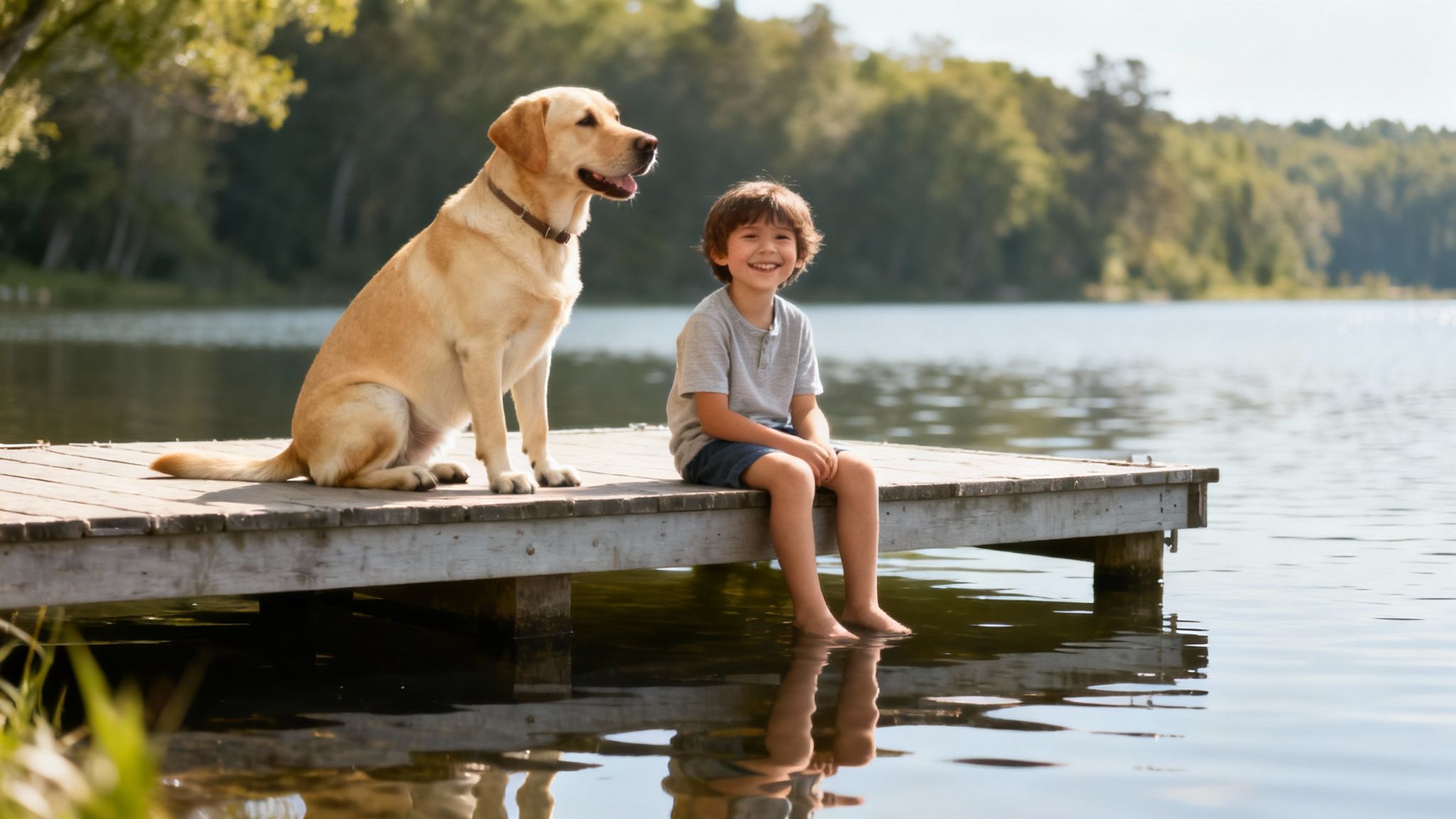
This breed’s intelligence and eagerness to please are unmatched, making them exceptional working dogs in fields like search and rescue, guide dog services, and even military operations. But it's their reliable and even-tempered disposition that truly cements their place in the family home. Labs approach life with an infectious enthusiasm that brings joy and activity to any household, getting along famously with kids, other pets, and new friends.
Why They're a Great Family Fit
Labs are the definition of a "people dog." They thrive on inclusion and want to be part of every family adventure, from hiking trips to lazy movie nights on the couch. Their sturdy build and energetic spirit make them fantastic playmates for active children, and their patient nature allows them to handle the hustle and bustle of a busy family life with grace. They form deep, loyal bonds and have a knack for sensing emotions, often offering a comforting nudge when it's needed most.
SetterFren's Pro-Tip: A tired Lab is a happy Lab. Channel their boundless energy into positive activities like fetch or swimming to prevent common puppy behaviors like mouthing and jumping.
Care and Training Essentials
To keep your Labrador happy, healthy, and well-behaved, a consistent routine focusing on their physical and mental needs is crucial.
- Exercise: Plan for at least 60-90 minutes of vigorous activity daily. This can include running, swimming (a natural favorite!), or long games of fetch to satisfy their retrieving instincts.
- Grooming: Their short, dense double coat is relatively low-maintenance but does shed. Brush them weekly to remove loose hair and manage shedding, with more frequent brushing during seasonal changes.
- Training: Begin training and socialization early. Labs are highly food-motivated, which makes positive reinforcement training incredibly effective. Use puzzle toys and interactive feeders to provide mental stimulation and prevent boredom.
- Health: Labs are prone to weight gain, so monitor their diet carefully with portion-controlled meals of high-quality food. Regular vet check-ups are essential to screen for potential issues like hip dysplasia and keep them in top condition.
3. Beagle
With their soulful eyes, floppy ears, and perpetually wagging tails, Beagles are merry little hounds that pack a big personality into a compact frame. Originally bred in England for hunting hare, their curious nature and incredible sense of smell are legendary. This heritage has gifted them with a friendly, pack-oriented mindset, making them one of the best dog breeds for families looking for a smaller, yet active, companion.

From the iconic Snoopy in the Peanuts comic strip to the diligent "Beagle Brigade" that protects U.S. agriculture at airports, these dogs have captured hearts worldwide. Their amiable and gentle temperament makes them fantastic playmates for children, and their smaller size is well-suited for various living situations, from apartments to houses with yards. They are funny, clever, and their single-minded pursuit of an interesting scent is both a charming quirk and a training challenge.
Why They're a Great Family Fit
Beagles are social butterflies that thrive on companionship, whether from humans or other dogs. Their playful and energetic demeanor makes them excellent partners for active kids who love to explore the outdoors. They are generally not aggressive and view life with a happy-go-lucky attitude, bringing a joyful and comedic presence into any home. Their loving nature ensures they quickly become an integral and cherished part of the family unit.
SetterFren's Pro-Tip: A Beagle's nose rules its world. Always keep them on a leash or in a securely fenced area. Once they catch an interesting scent, their recall can become non-existent, so safety is paramount.
Care and Training Essentials
Keeping your Beagle content involves engaging both their body and their powerful nose. A consistent routine helps manage their hound-dog tendencies and channels their energy positively.
- Exercise: Plan for 45-60 minutes of activity each day. This should include brisk walks where they can sniff to their heart's content, plus some playtime like fetch or scent games.
- Grooming: Their short, dense coat is relatively low-maintenance. A weekly brushing will help remove loose hair and keep their coat healthy. Be sure to clean their long ears regularly to prevent infections.
- Training: Beagles are intelligent but can be stubborn due to their independent hunting instincts. Use positive reinforcement with high-value treats to keep them motivated. Patience and consistency are your best tools for success.
- Health: These hounds are prone to obesity, which can strain their joints. Monitor their food intake carefully and keep treat portions small. Regular vet visits will help manage potential health issues like hip dysplasia or ear infections.
4. Bulldog (English Bulldog)
Don’t let that famously furrowed brow and stout build fool you; the Bulldog is one of the most gentle and affectionate companions you could ask for. Originally bred in England for the brutal sport of bull-baiting, the modern Bulldog has left its aggressive past far behind, evolving into a sweet-natured, docile, and incredibly loyal family pet. Their calm and patient temperament makes them one of the best dog breeds for families, especially those with children.
Their reputation as a symbol of gentle strength is well-earned. You'll often see them as beloved mascots for universities and sports teams, or even as charming characters in children's books, representing tenacity with a heart of gold. This breed's loving nature and low-key energy have made them a favorite in homes that appreciate a laid-back, cuddly friend who is content with short walks and long naps.
Why They're a Great Family Fit
Bulldogs are known for forming strong, loving bonds with their entire family, and they are particularly patient and tolerant with children. Their low exercise needs make them adaptable to various living situations, including apartments, as long as they get a daily stroll. They are courageous and will act as a good watchdog, yet they are friendly and unlikely to be aggressive toward visitors.
SetterFren's Pro-Tip: Bulldogs thrive in climate-controlled environments. Their short snout makes them susceptible to overheating, so never leave them outside unattended on warm days and always provide plenty of fresh water.
Care and Training Essentials
Caring for a Bulldog means paying close attention to their unique health and grooming needs. Their loving nature makes them a joy to train, though they can have a stubborn streak.
- Exercise: A couple of short, 15-minute walks per day is usually sufficient. Avoid strenuous activity, especially in hot or humid weather, to prevent breathing difficulties.
- Grooming: Their short coat is low-maintenance, but their facial wrinkles need daily cleaning to prevent skin infections. A quick wipe with a soft, damp cloth is all it takes to keep them clean and dry.
- Training: Bulldogs respond best to positive reinforcement with plenty of treats and praise. Keep training sessions short and fun to hold their attention. Early socialization will help them grow into well-behaved adults.
- Health: As a brachycephalic (short-faced) breed, Bulldogs are prone to respiratory issues, as well as hip dysplasia and skin allergies. Regular vet check-ups are essential to monitor their health, and investing in pet insurance is a wise choice given potential breed-specific health costs.
5. Cavalier King Charles Spaniel
With their soulful, expressive eyes and elegant, silky coats, the Cavalier King Charles Spaniel is the aristocrat of lap dogs. Historically cherished by royalty, these small, gentle companions were bred for one primary purpose: to be a loving friend. Their affectionate and eager-to-please nature makes them one of the best dog breeds for families seeking a smaller, less boisterous companion who thrives on cuddles and closeness.
Their temperament is their defining feature. Cavaliers are incredibly sweet-natured, patient, and rarely meet a person or animal they don't like. This adaptability and gentle spirit make them exceptional therapy dogs, bringing quiet comfort to hospitals and nursing homes. Their desire for human connection is paramount, and they are happiest when curled up on a lap or participating in mellow family activities, making them a truly integrated member of the household.
Why They're a Great Family Fit
Cavaliers live to love and be loved. They form incredibly strong bonds with their people, including children, and are known for their unwavering patience and gentle play style. Unlike more independent breeds, they crave constant companionship, making them a perfect "shadow" for stay-at-home parents or families who can include their dog in most daily routines. Their small size makes them well-suited for both apartment living and homes with yards.
SetterFren's Pro-Tip: A Cavalier's biggest fear is being left alone. To prevent separation anxiety, create a positive association with your departure by offering a special puzzle toy and never make a big fuss when leaving or returning.
Care and Training Essentials
Caring for a Cavalier means prioritizing their social and physical health to maintain their cheerful disposition.
- Exercise: A daily walk and some light indoor playtime are usually sufficient. They enjoy leisurely strolls rather than strenuous hikes, making them a great fit for less active families.
- Grooming: That beautiful coat needs attention. Brush them several times a week to prevent tangles and mats, paying special attention to their long ears. Regular ear cleaning is also crucial to prevent infections.
- Training: Cavaliers are intelligent and eager to please, making them responsive to positive reinforcement. Keep training sessions short, fun, and filled with praise and treats. Harsh methods will only frighten this sensitive breed.
- Health: These dogs are prone to certain genetic health issues, most notably Mitral Valve Disease (MVD). It's essential to work with a reputable breeder who screens for these conditions and to schedule regular veterinary check-ups, including heart screenings, throughout their life.
6. Collie
Thanks to the timeless star power of Lassie, the Collie is an icon of canine loyalty and intelligence. This elegant breed, with its majestic coat and expressive eyes, is more than just a pretty face; it’s one of the best dog breeds for families seeking a sensitive, devoted, and gentle companion. Originally bred in the Scottish Highlands for herding sheep, their instinct to protect and care for their flock translates beautifully to looking after their human family members, especially children.
Collies are renowned for their incredible smarts and intuition. They seem to have an uncanny ability to understand human emotions, offering a comforting nudge when you’re down or sharing in your joy. This high level of intelligence makes them remarkably trainable and eager to please. Their dignified yet friendly nature ensures they are watchful protectors of the home while still being polite and welcoming to invited guests.
Why They're a Great Family Fit
Collies are deeply devoted to their families and thrive on companionship. They form powerful bonds and are known for being particularly gentle and patient with children, often taking on a watchful, guardian-like role. Their herding background means they are naturally attentive and prefer to keep their "flock" together, making them a wonderful, ever-present part of family life. Their playful spirit and desire to be involved in all activities make them a joy to have around.
SetterFren's Pro-Tip: A Collie’s herding instinct can sometimes manifest as nipping at heels, especially in puppies. Gently redirect this behavior towards appropriate toys and games like fetch to satisfy their natural drives in a positive way.
Care and Training Essentials
A Collie’s striking appearance and sharp mind require dedicated care to keep them at their best. Consistency in exercise, grooming, and training will ensure a happy, well-adjusted dog.
- Exercise: Plan for 45-60 minutes of daily activity. They enjoy long walks, jogging, or engaging in canine sports like agility that challenge both their body and mind. Puzzle toys are great for mental stimulation.
- Grooming: That luxurious double coat needs regular brushing, at least two to three times a week, to prevent mats and tangles. Expect heavier shedding seasonally, when daily brushing will be necessary.
- Training: Collies are sensitive souls who respond best to positive reinforcement and gentle guidance. Start their training and socialization early to build a confident, well-behaved companion. Their intelligence means they pick up on commands quickly.
- Health: Collies can be predisposed to certain genetic conditions, including eye anomalies and hip dysplasia. Responsible breeders will screen for these issues, and regular vet visits are essential for a long and healthy life.
7. Pug
For families seeking a companion with a huge personality packed into a small, sturdy frame, the Pug is a top contender. With their unmistakable wrinkled face, curled tail, and expressive eyes, these dogs are charming clowns who live to love and be loved. Originating from China where they were cherished by emperors, Pugs were bred purely for companionship, a role they still excel at today.
Their comical and mischievous nature is legendary. Pugs are not built for long runs or intense outdoor adventures; they are professional snugglers and born entertainers. Their adaptable and affectionate temperament makes them one of the best dog breeds for families living in apartments or homes without large yards. They are social butterflies that typically get along well with children, other dogs, and even cats, thriving on being the center of their family's universe.
Why They're a Great Family Fit
Pugs are true house dogs that form incredibly strong bonds with their people. They are relatively low-energy, content with short walks and indoor playtime, making them a perfect match for families with a more relaxed or urban lifestyle. Their small size makes them manageable for most households, and their playful yet gentle demeanor is well-suited for respectful children. A Pug's main goal in life is to be near its humans, offering endless affection and laughter.
SetterFren's Pro-Tip: Pugs are a brachycephalic (flat-faced) breed and can easily overheat. Always ensure they have access to a cool, air-conditioned space and fresh water, especially during warmer months.
Care and Training Essentials
Caring for a Pug involves attention to their unique physical needs to ensure they stay happy and healthy. Consistency in their routine is key to managing their well-being.
- Exercise: A couple of short 15-20 minute walks and some indoor play are usually sufficient. Avoid strenuous activity, especially in hot or humid weather, to prevent breathing difficulties.
- Grooming: While their coat is short, Pugs shed a surprising amount. Brush them weekly to manage shedding. Their facial wrinkles need to be cleaned and dried regularly to prevent skin infections.
- Training: Pugs can be a bit stubborn but are intelligent and eager to please. Use positive reinforcement and keep training sessions short and fun. House-training can sometimes require extra patience, so consistency is vital.
- Health: Be mindful of their health. Pugs are prone to breathing issues, eye problems, and obesity. Use a harness instead of a collar to protect their airway, and monitor their food intake carefully. Regular vet check-ups are crucial for catching any potential issues early.
8. Irish Setter
With their stunning mahogany coat and graceful, athletic build, the Irish Setter is a picture of elegance and energy. These exuberant dogs are more than just a pretty face; they are boundless bundles of joy, perfect for active families looking for a spirited companion. Originally bred in Ireland as tireless gundogs, their enthusiasm and stamina have been channeled into a deeply affectionate and playful nature, making them one of the best dog breeds for families who love the great outdoors.
Their friendly, outgoing temperament makes them fantastic playmates for older children and a welcoming presence for visitors. Irish Setters are known for their clownish antics and a perpetual puppy-like demeanor that can last well into their adult years. They are incredibly loyal and form strong, loving bonds with their families, thriving on companionship and involvement in all household activities. Their intelligence and eagerness to please make them trainable, although their mischievous streak requires a patient and consistent approach.
Why They're a Great Family Fit
An Irish Setter’s zest for life is contagious. They are the perfect canine partner for families who enjoy hiking, running, and exploring. Their sweet-natured disposition and love of play make them wonderful companions for kids, and they will happily spend hours chasing a ball or romping in a securely fenced yard. They truly want to be a central part of the family unit, and their affectionate nature ensures there’s never a dull moment.
SetterFren's Pro-Tip: An Irish Setter’s high energy needs an outlet. Involve them in dog sports like agility or scent work to provide both physical exercise and mental stimulation, which helps prevent boredom-related mischief.
Care and Training Essentials
To keep your Irish Setter happy, you must commit to meeting their high energy and grooming needs. A structured routine is vital for this intelligent breed.
- Exercise: Plan for at least 60-90 minutes of vigorous activity every day. This means more than a simple walk; they need opportunities to run freely in a safe area, go on long hikes, or join you for a jog.
- Grooming: That beautiful, silky coat requires regular brushing, at least 2-3 times a week, to prevent tangles and mats, especially around the ears, chest, and tail. Professional grooming every couple of months will help keep their coat healthy and manageable.
- Training: Early socialization and consistent training are non-negotiable. Their intelligence is coupled with an independent spirit, so keep training sessions fun, positive, and engaging. For tips on starting off on the right paw, check out how to learn more about how to train a puppy on our blog.
- Health: Irish Setters can be predisposed to conditions like bloat and hip dysplasia. Regular vet visits and a high-quality diet are essential for their long-term health and well-being.
9. Newfoundland
Don't let their immense size fool you; the Newfoundland is the definition of a gentle giant. Known affectionately as the "nanny dog," this breed possesses a sweet, patient temperament that makes them one of the best dog breeds for families with children. Originally bred as working dogs for fishermen in Canada, they have a natural love for water and a legendary instinct for rescue, famously embodied by Nana in J.M. Barrie's Peter Pan.
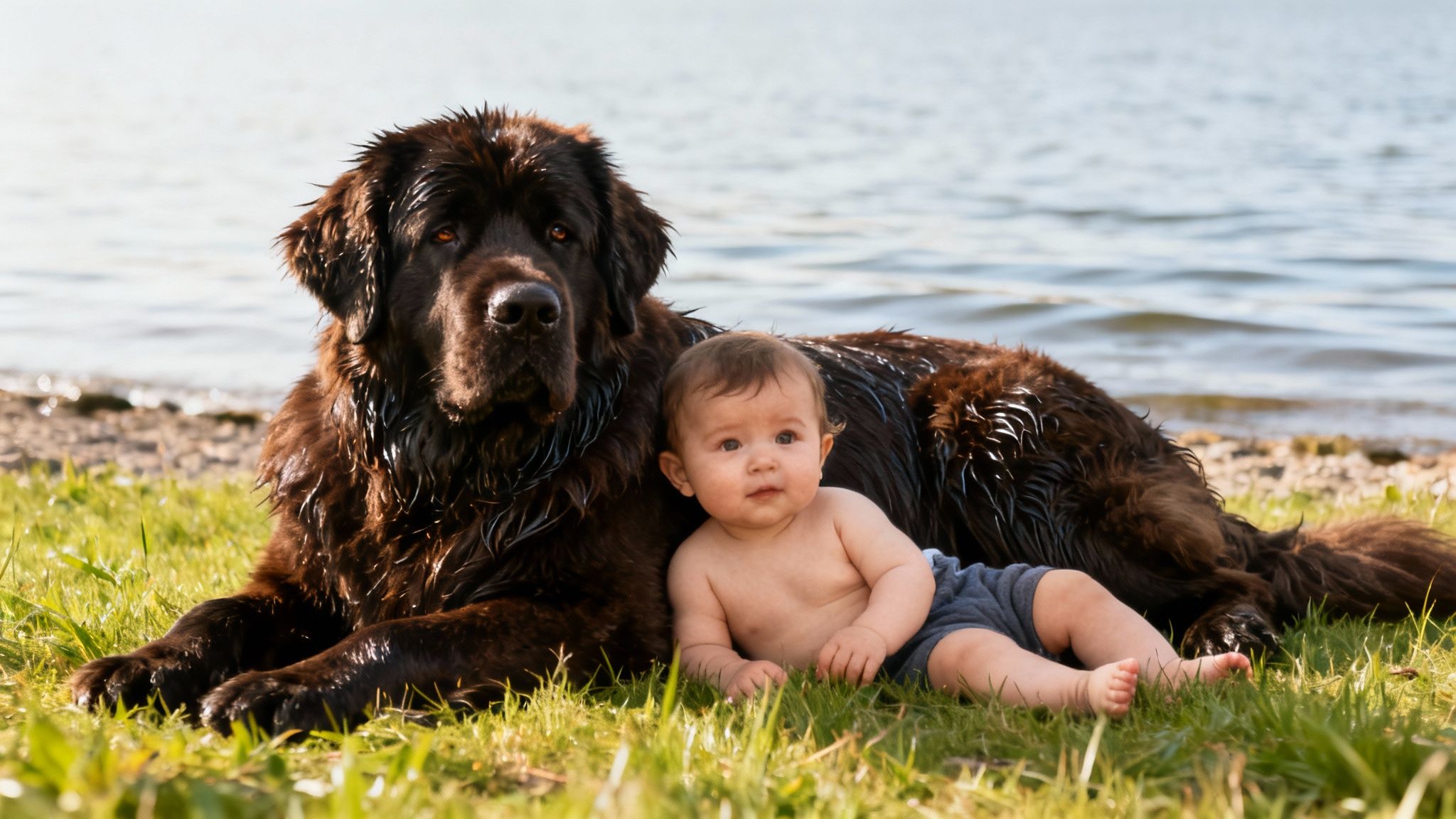
This breed's hallmark is its calm and docile nature. Newfoundlands are remarkably good-natured and protective of their family pack, especially with little ones. Their loyalty and courage are matched only by their massive, fluffy cuddles. They are true homebodies who thrive on being close to their people, offering a steady and reassuring presence in any household lucky enough to have one.
Why They're a Great Family Fit
Newfoundlands are built for family life, showing incredible tolerance and gentleness towards children. They are devoted companions that will happily lounge at your feet but are also ready to serve as a watchful guardian. Their quiet and sweet disposition means they are more likely to lean on a stranger for a pet than to bark excessively, making them a peaceful addition to the home.
SetterFren's Pro-Tip: A Newfoundland's webbed feet and water-resistant coat make them incredible swimmers. If you live near water, swimming is the perfect low-impact exercise to keep them fit and happy.
Care and Training Essentials
Caring for this gentle giant requires a commitment to their specific needs, especially given their size and coat.
- Exercise: A daily walk and some moderate playtime are usually sufficient. They are not high-energy dogs, but regular, gentle exercise is crucial to prevent obesity.
- Grooming: Their thick double coat requires brushing two to three times a week to prevent matting and manage shedding. Be prepared for a significant "coat blow" twice a year.
- Training: Despite their size, they are sensitive souls who respond best to gentle guidance and positive reinforcement. Early socialization is key to nurturing their confident, calm demeanor.
- Health: Due to their large frame, they can be prone to conditions like hip dysplasia and certain heart issues. If you want to dive deeper into their specific needs, you can explore these 5 simple tips to take care of larger breeds of dogs for more guidance.
10. Cocker Spaniel
With their soulful, expressive eyes and long, silky ears, the Cocker Spaniel is a charming and affectionate breed that has captured hearts for generations. Famously depicted in Disney's Lady and the Tramp, these dogs carry a sweet and gentle disposition. Originally bred in Spain and later developed in England as hunting dogs, their role was to flush out game birds, a heritage that gives them an active and alert nature balanced by a desire to be a loving homebody.
Their compact, medium size makes them adaptable to various living situations, from apartments to houses with yards. Known for being "merry," their tails rarely stop wagging, reflecting their cheerful personality. This eager-to-please attitude, combined with their intelligence, makes them both trainable and devoted companions. Their sensitive and loving nature means they form deep bonds with their families, making them one of the best dog breeds for families seeking a true companion.
Why They're a Great Family Fit
Cocker Spaniels are incredibly affectionate and thrive on being close to their people. They are gentle enough for well-behaved children and playful enough to keep everyone entertained. Their adaptable energy levels mean they're happy to join in on a family hike but are equally content to curl up on the sofa for movie night. This blend of sporting spirit and companionable calm makes them a versatile fit for many households.
SetterFren's Pro-Tip: Cocker Spaniels are sensitive souls. They respond best to gentle, positive reinforcement training methods. Harsh corrections can cause them to become timid or anxious, so always lead with patience and praise.
Care and Training Essentials
Maintaining a Cocker Spaniel's health and iconic good looks requires a dedicated routine. Their needs are manageable but consistent attention is a must.
- Exercise: Plan for 30-60 minutes of daily activity. This can include walks, playtime in a secure area, or participation in dog sports like agility, which they often excel at.
- Grooming: That gorgeous coat is high-maintenance. Daily or near-daily brushing is essential to prevent painful mats and tangles. Professional grooming every 6-8 weeks is typically needed to keep their coat trimmed and healthy. For a full rundown, you can get our best at-home dog grooming tips to supplement professional care.
- Training: Their intelligence makes them quick learners, but early socialization is key to building a confident and well-rounded dog. Keep training sessions fun and engaging to hold their attention.
- Health: Be mindful of their long ears, which can be prone to infections; regular cleaning is crucial. They can also be susceptible to certain eye conditions, so routine vet check-ups, including eye exams, are highly recommended.
Top 10 Family-Friendly Dog Breeds Comparison
| Breed | Care Complexity 🔄 | Exercise & Grooming ⚡ | Health & Lifespan ⭐ | Family Fit / Expected Outcomes 📊 | Ideal Use Cases 💡 |
|---|---|---|---|---|---|
| Golden Retriever | Moderate — consistent exercise routine and regular grooming; easy to train | High exercise (1–2 hrs/day); heavy shedding; regular brushing/pro groom | 10–12 yrs; prone to hip dysplasia and some cancers; recommend health screening | Excellent with children; highly social; may develop separation anxiety if isolated | Active families, therapy/service work, homes with outdoor space |
| Labrador Retriever | Moderate — firm/consistent training and diet management needed | Very high exercise; short dense coat (less grooming than Goldens); water activities beneficial | 10–12 yrs; hip/elbow dysplasia and obesity risks; monitor weight | Excellent for active families; reliable and adaptable; can be exuberant with small kids | Active homes, service/guide dogs, water-loving families, hunting |
| Beagle | Moderate–High — scent-driven independence requires consistent training and secure fencing | Moderate exercise; low grooming; needs scent games and mental enrichment | 12–15 yrs; generally hardy but prone to obesity if overfed | Good for families wanting smaller, energetic dogs; may vocalize and follow scents | Apartments/smaller homes that provide enrichment; scent-work or active play |
| Bulldog (English) | High — intensive health management, climate control, and wrinkle care | Low exercise needs; minimal coat care but daily wrinkle cleaning required | 8–10 yrs; significant brachycephalic and orthopedic risks; expect higher vet costs | Excellent for low-activity families; not suited to hot climates or strenuous activity | Apartment dwellers or calm households seeking a low-energy companion |
| Cavalier King Charles Spaniel | Moderate — needs constant companionship, regular grooming, and heart screening | Moderate exercise; regular brushing and ear care | 12–15 yrs; high risk of mitral valve disease; buy from health-tested breeders | Excellent for companion-focused families; prone to separation anxiety | Therapy/companion roles, apartments, families prioritizing close contact |
| Collie | Moderate–High — intelligent breed needs mental work and coat maintenance | High exercise and mental stimulation; frequent brushing (especially Rough Collies) | 12–14 yrs; Collie Eye Anomaly and hip concerns possible | Excellent for active families; protective and highly trainable; may herd children | Families wanting intelligent, loyal dogs; obedience, herding, and dog sports |
| Pug | High — attentive management of breathing, weight, and temperature | Low exercise; minimal grooming but wrinkle and eye care essential | 12–15 yrs; notable brachycephalic and eye issues; heat-sensitive | Excellent for apartments and busy families; may snore and have breathing noises | Urban living, lap-companion, low-activity households seeking personality |
| Irish Setter | Moderate–High — requires committed exercise schedule and coat maintenance | Very high exercise (1–2+ hrs/day); regular brushing for silky coat | 12–15 yrs; athletic but needs secure fencing due to prey drive | Excellent for very active families; exuberant with children; needs outlets for energy | Running/hiking families, dog sports, active outdoor households |
| Newfoundland | High — large-size logistics, regular grooming, and experienced handling advised | Moderate exercise; heavy shedding and high grooming; large food/vet costs | 8–10 yrs; hip dysplasia, heart disease, bloat risks; health screening recommended | Excellent "nanny" dogs for families with space and water access; gentle with kids | Water-loving families, rescue/water-safety roles, homes with room for a giant breed |
| Cocker Spaniel | Moderate — regular professional grooming, ear care, and gentle training | Moderate exercise; daily brushing; pro groom every 6–8 weeks | 12–15 yrs; ear infections, hip and eye issues possible; monitor ears | Excellent for families seeking a medium-sized, affectionate companion | Families wanting trainable, adaptable indoor/outdoor pets with grooming commitment |
Making the Final Choice and Welcoming Your New Pup
You’ve explored the playful spirit of the Golden Retriever, the steadfast loyalty of the Labrador, and the charming antics of the Beagle. We’ve journeyed through the gentle nature of the Collie and the affectionate cuddles of the Cavalier King Charles Spaniel. From the sturdy Bulldog to the majestic Newfoundland, each of these ten breeds offers a unique and wonderful path to family companionship. But the journey from reading a list to bringing home a furry family member is where the real magic happens.
The goal was never to declare one single “best” dog breed for families, because that perfect pup doesn’t exist in a vacuum. The best dog is the one that fits seamlessly into your family’s unique rhythm, lifestyle, and heart.
From List to Living Room: Your Action Plan
Making a final decision can feel overwhelming, but breaking it down into thoughtful steps ensures you’re prepared for the wonderful responsibility ahead. This isn't just about picking a puppy; it's about committing to a decade or more of love, care, and adventure.
1. The Family Huddle:
Before you even think about visiting a shelter or breeder, gather everyone in your household for an honest conversation. Use the profiles in this article as a guide.
- Energy Match: If your family loves weekend hikes and outdoor adventures, an energetic Irish Setter might be a great fit. If cozy movie nights are more your speed, a laid-back Bulldog could be your perfect match.
- Grooming Commitment: Be realistic about how much time you can dedicate to brushing and professional grooming. The luxurious coat of a Collie requires a different level of upkeep than the short, easy-care coat of a Pug.
- The "Who Does What" Chart: Who will be responsible for morning walks? Who handles feeding? Who is on poop-scoop duty? Getting this clear from the start prevents future conflicts and ensures your new dog's needs are consistently met.
2. Deepen Your Research:
Once you’ve narrowed it down to one or two breeds, it’s time to go beyond the summary.
- Connect with Owners: Join breed-specific online forums or local Facebook groups. Ask current owners what they wish they had known before getting their dog. Their firsthand experiences are invaluable.
- Talk to the Experts: Reach out to veterinarians, professional trainers, and groomers in your area. They have practical, real-world experience with a wide variety of breeds and can offer insights you won't find online.
- Consider the Long-Term: Bringing a dog into your family is a profound commitment. As you prepare, it's natural to think about their future health and happiness. Learning about preventative care and nutrition is a great first step, and understanding how to help your dog live longer will equip you to provide the best possible care from day one.
The True "Best Breed" is a Partnership
Ultimately, choosing one of the best dog breeds for families is less about the breed's pedigree and more about the strength of your commitment. The love, patience, and consistency you provide are what will truly shape your dog’s temperament and solidify their place in your family. Whether you choose a purebred puppy from a reputable breeder or a wonderful mixed-breed dog from a local rescue, you are embarking on one of life’s most rewarding adventures.
The pitter-patter of paws, the unconditional greetings at the door, and the shared moments of joy will enrich your family's life in countless ways. Welcome this new chapter with open hearts and a readiness for the beautiful, messy, and unforgettable journey of dog parenthood.
SetterFrens is a cozy online community built for dog lovers who believe life’s better with a wagging tail and a good book. Along with our curated selection of dog-themed books, SetterFren.com features honest reviews of the top dog products and practical how-to guides to help you care for your pup like a pro. Join our Puppicino Club to unlock member perks, book updates, and dog-friendly treats. Stay part of the fun by following @setterfrens on TikTok and Instagram for heartwarming dog moments, product tips, and behind-the-scenes content from our growing pack