Welcome to SetterFrens, where we believe life’s better with a wagging tail and a good book! Figuring out your dog's exercise needs is one of the biggest keys to a happy, healthy life together. While a good rule of thumb is that most dogs need anywhere from 30 to 120 minutes of activity each day, that's just a starting point. After all, a Border Collie's idea of a good time is worlds away from a Basset Hound's, which is exactly why a one-size-fits-all approach to exercise just doesn't cut it.
Matching Your Dog's Energy to Your Lifestyle
Picking a dog is so much more than just falling for a pair of puppy-dog eyes. It’s really about finding a furry friend whose energy and daily needs actually mesh with your own lifestyle. It’s amazing how often a simple mismatch in activity levels is the real culprit behind common behavior problems like destructive chewing, non-stop barking, or even anxiety. This guide is designed to take the guesswork out of that equation for you.
Before we jump into specific breeds, it’s helpful to understand the big three factors that shape a dog's exercise needs: breed, age, and overall health. A working dog like a Border Collie was literally bred for all-day endurance and feels most fulfilled when it has a "job" to do. On the other hand, a Basset Hound was bred to follow a scent trail at a slow, deliberate pace and is perfectly happy with a long, meandering sniffari. Respecting what your dog was originally bred for is a game-changer for preventing boredom and keeping them mentally and physically balanced.
A Quick Glance at Energy Levels
To help you visualize this, we've put together a simple chart that breaks down the general energy categories you'll see across the dog world.
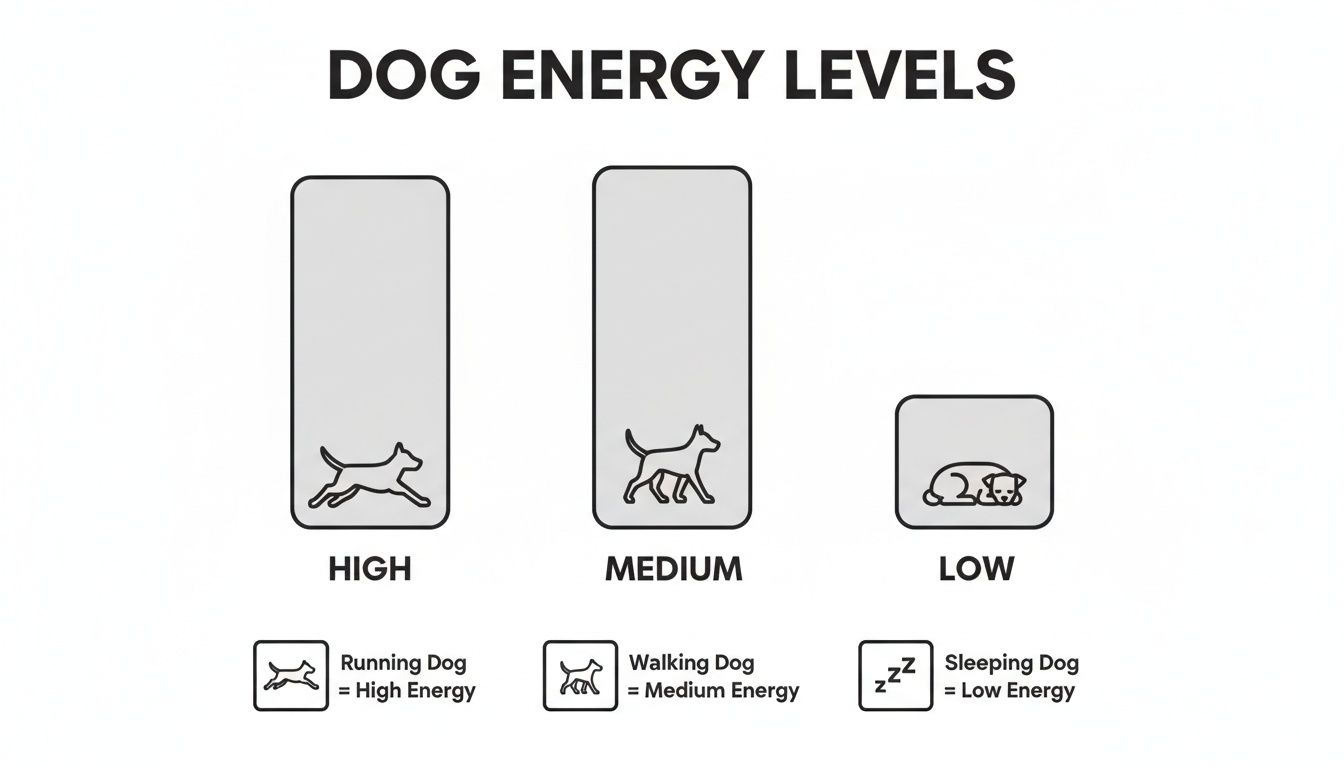
As you can see, high-energy breeds truly need vigorous, heart-pumping activity, whereas their low-energy cousins are content with much calmer, gentler routines.
Quick Guide to Dog Energy Levels by Breed Group
To give you an even clearer high-level view, here's a quick breakdown of the general energy levels you can expect from the major AKC breed groups. Think of it as a cheat sheet to get you started!
| Breed Group | General Energy Level | Typical Daily Exercise | Best Suited For |
|---|---|---|---|
| Herding Group | High to Very High | 60-120+ minutes of vigorous activity | Active owners, jobs like agility/herding |
| Sporting Group | High | 60-120 minutes of running, swimming, fetch | Outdoorsy families, hunters, runners |
| Working Group | Medium to High | 45-90 minutes of structured exercise | Experienced owners with space & time for training |
| Hound Group | Varies (High/Scent, Low/Sighthound) | 30-60+ minutes depending on type | Owners who can provide secure off-leash areas |
| Terrier Group | High | 45-60 minutes of energetic play & walks | People who enjoy a feisty, tenacious personality |
| Toy Group | Low to Medium | 20-45 minutes of walks & indoor play | Apartment dwellers, seniors, first-time owners |
| Non-Sporting Group | Varies Widely | 30-60 minutes depending on the breed | A wide range of owners, from active to relaxed |
This table is a great starting point, but remember that individual dogs will always have their own unique personalities and needs.
As you prepare your home for a new companion, creating a safe and fun space for them to play is crucial. Part of that is choosing the best ground cover for dogs to keep their paws safe and your yard looking great. Getting your home ready is a huge step in setting your future pup up for success.
Now, let's dive into the specifics! As we explore the dog exercise requirements by breed, you'll get a crystal-clear picture of what each type of dog truly needs to thrive.
High-Energy Sporting and Herding Dogs
If you've ever met a Border Collie, Labrador Retriever, or Australian Shepherd, you know they're the athletes and Einsteins of the dog world. These breeds, and others from the Sporting and Herding groups, weren't bred to lounge on the sofa. They were developed for tough, demanding jobs that required serious stamina, smarts, and a get-it-done attitude.
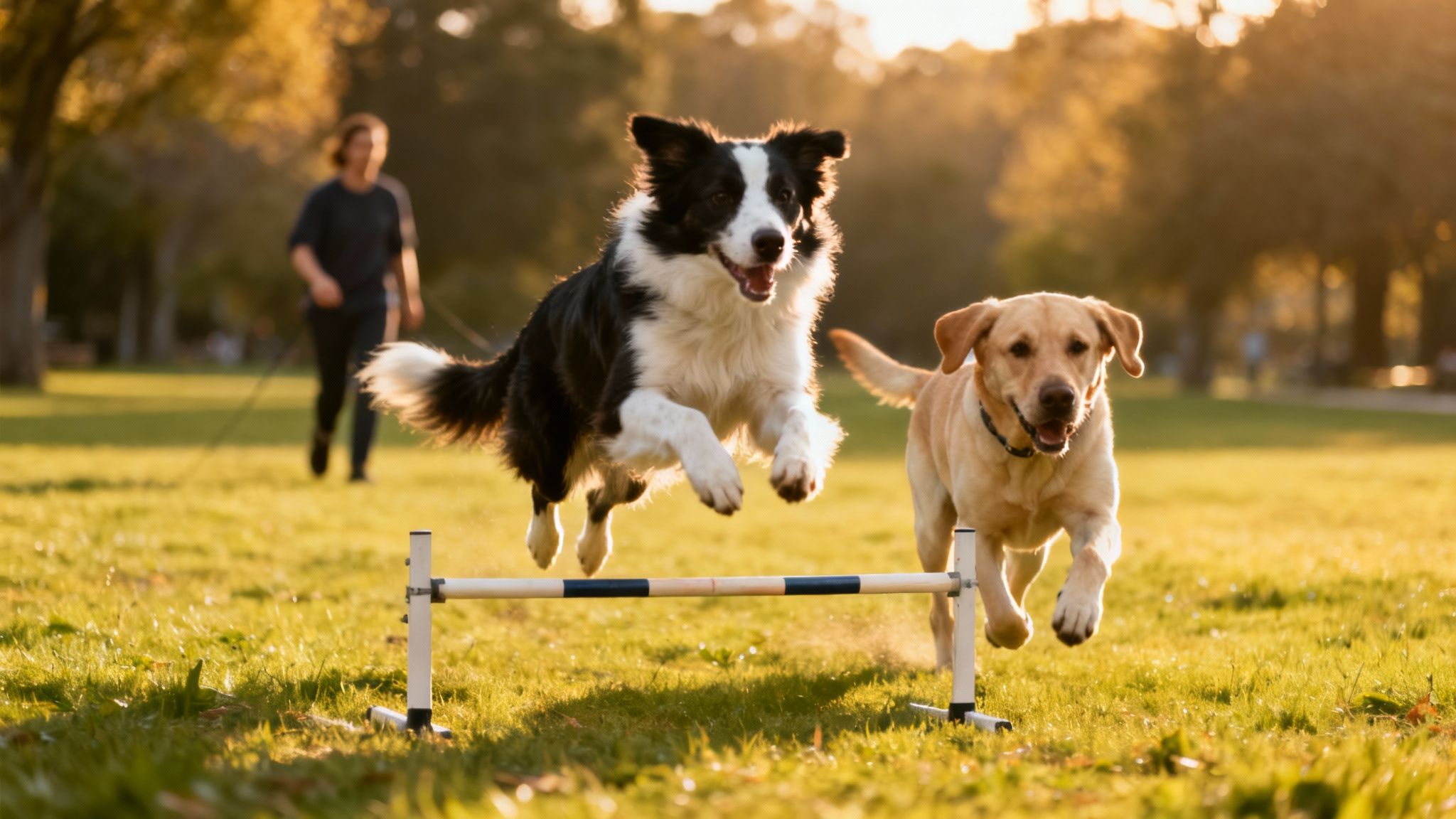
For these high-drive dogs, a quick walk around the block is barely a warm-up. They truly need vigorous, structured activities that challenge their bodies and, just as importantly, their minds. Without a real outlet for all that energy, they can get bored and frustrated, which is when you start seeing things like chewed-up furniture, non-stop barking, or a newly "landscaped" backyard.
Simply put, these dogs need a job to feel happy and fulfilled. That doesn't mean you need to buy a flock of sheep, but it does mean finding purposeful activities that tap into their natural instincts.
Meeting Their High-Octane Needs
To keep these canine athletes balanced and well-behaved, you should aim for at least 90 minutes of vigorous activity every day. The key is to mix physical workouts with mental challenges. Just running a dog ragged isn't the goal; you have to work out their brain, too.
Here’s what a great daily routine might look like:
- Morning (30-45 minutes): Kick off the day with something intense. Think a long run, a fast-paced game of fetch with a ball launcher, or a good swim session at a local dog-friendly spot.
- Midday (15-20 minutes): Give their brain a workout to break up the day. A quick session of advanced obedience training, learning a few new tricks, or tackling a tough puzzle toy can be surprisingly tiring.
- Evening (30-45 minutes): End the day with another round of physical activity. This could be a brisk walk where you practice commands like "sit" and "stay" at intersections, or maybe some fun agility or flyball practice in the yard.
Sporting dogs like Labs and Goldens were bred for all-day tasks, like retrieving birds from icy water. That history is baked into their DNA, giving them incredible stamina and drive. Research actually shows that when these types of breeds get less than 90 minutes of activity a day, they're far more likely to get into trouble. You can read up on some of these exercise findings from Wisdom Panel.
Tips for Urban Owners
Keeping a high-energy dog in a city or apartment might seem like a huge challenge, but it's totally doable with some creativity. It's all about making the time you have together count. Weekend hiking trips or visits to large, secure dog parks can be a godsend.
Look into local dog sports classes, too. Activities like agility, nose work, or dock diving are fantastic outlets that burn both physical and mental energy. By giving these workaholic dogs the 'job' they crave, you'll have a happy, healthy companion, no matter what your address is.
Spirited and Tenacious Terrier Dogs
Don't let their compact size fool you. Dogs in the Terrier group are feisty, smart, and absolutely packed with a can-do attitude. From the zippy Jack Russell to the dignified West Highland White Terrier, these pups were originally bred for a tough job: hunting vermin. That work required courage, tenacity, and a ton of energy, and those traits are still very much alive in them today. Understanding that history is the key to figuring out what makes them tick.
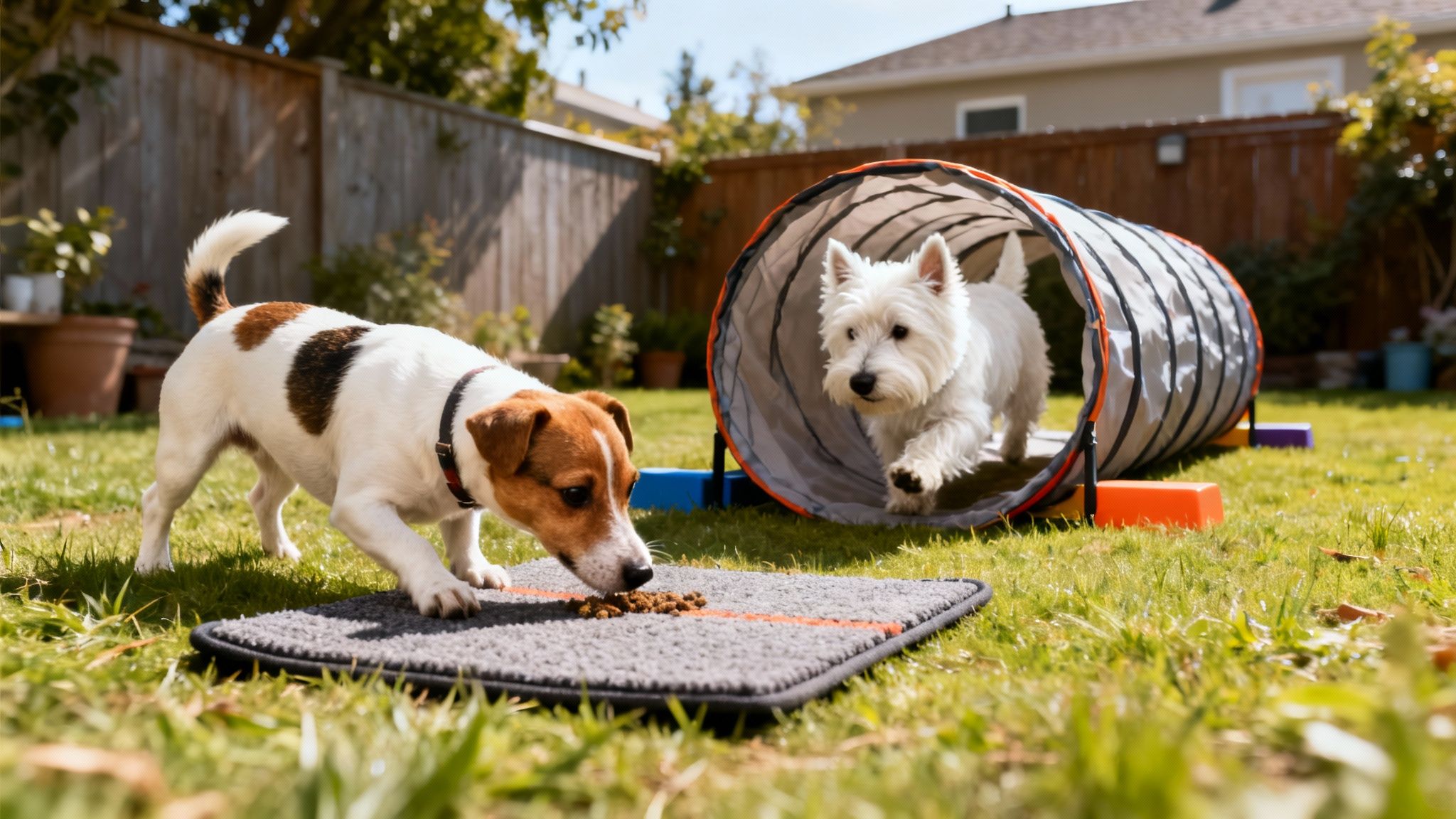
Unlike a Sporting dog that might happily run for miles, a Terrier's energy often comes in short, explosive bursts. They thrive on activities that let them do what they were born to do: chase, dig, and solve problems. A simple walk around the block is nice, but it's rarely enough to satisfy their busy minds and athletic bodies. A bored Terrier is a mischievous Terrier, which can lead to some… creative landscaping in your garden or a whole lot of barking.
The real goal with a Terrier is to channel all that natural instinct into positive, structured fun. It’s the secret to keeping them happy, healthy, and out of trouble.
Tapping into the Terrier Mindset
To keep your tenacious little companion content, you should aim for around 60 minutes of varied, engaging activity each day. The most important word there is varied. Terriers get bored in a heartbeat, so mixing up their routine is absolutely crucial to keep them engaged and prevent them from inventing their own, often destructive, fun.
A good exercise plan for a Terrier needs to be a blend of physical workouts and mental puzzles. Think of it as a gym session for both their body and their brain.
Whether we're talking about a smaller Westie or a larger Airedale, most Terriers need about an hour of daily exercise to stay fit and mentally balanced. It's surprising, but despite their size, their needs are often on par with much larger Sporting and Herding dogs. This all comes back to their history as relentless hunters, which is why mentally stimulating activities are just as vital as physical ones. For a deeper dive, check out the insights from the experts at Merck Animal Health.
Perfect Activities for Your Feisty Friend
To really satisfy your Terrier's unique drives, try working in activities that play to their natural strengths. Just letting them run around the yard won't cut it; they need purposeful play that feels like they have a "job" to do.
Here are a few fantastic ways to keep them busy:
- Scent Work: Hide some high-value treats or a favorite toy around the house or yard and let them use that powerful nose. It's an incredible way to burn through mental energy and satisfies their deep-seated instinct to hunt.
- Agility Courses: You don't need a professional setup! A simple DIY agility course with tunnels and low jumps gives them a fantastic outlet for their energy and smarts. It’s a structured challenge they can really sink their teeth into.
- Durable Puzzle Toys: Food-dispensing toys are a non-negotiable for any Terrier owner. We've reviewed some of the top products on SetterFren.com, and they make your dog work for their meal, which is incredibly satisfying for their problem-solving brains.
- Flirt Pole: This is an amazing tool for channeling their prey drive in a safe, controlled way. A flirt pole lets them chase, pounce, and burn off that signature explosive energy without chasing the neighborhood wildlife.
By providing these kinds of outlets, you’re giving their independent spirit a positive direction. A busy Terrier is a happy Terrier, and a happy Terrier makes for an even happier home.
Powerful Working and Driven Hound Dogs
When we get into the world of Working and Hound dogs, we’re talking about breeds built for some serious power and purpose. These dogs aren't just pets; they're specialists with instincts honed over generations. Think of the Siberian Husky, born to pull sleds for miles, or the Boxer, a guardian with explosive strength. Their exercise needs are just as unique as their job descriptions.
It's a similar story with the Hound group, which is really a tale of two very different skill sets. You've got your scent hounds, like the ever-popular Beagle, who were bred to follow a trail for hours on end. Then you have the sighthounds, like the Greyhound, engineered for pure, breathtaking speed. The real secret to a happy life with one of these dogs is tapping into that unique historical purpose.
Meeting the Needs of Working Breeds
Working breeds need a job, plain and simple—one that challenges their bodies and their brains. A Siberian Husky, for example, absolutely thrives on endurance activities and needs a solid 60-90 minutes of vigorous exercise every single day. A casual stroll around the block just isn't going to cut it; these guys crave activities that feel like their sled-pulling heritage.
For these powerful dogs, you have to think beyond a simple game of fetch. Consider activities that give them a real workout:
- Backpacking: Letting your dog carry a properly fitted pack on hikes gives them a wonderful sense of purpose and a physical challenge.
- Cart-Pulling or Bikejoring: These sports are fantastic outlets for any breed that was literally born to pull.
- Long-Distance Running: For the true endurance champs like Huskies, running alongside you is a perfect way to burn off that boundless energy.
A Boxer, on the other hand, does better with strength-based play mixed with good cardio, needing about 45-60 minutes of daily activity. Their explosive energy is a great match for short, intense games of fetch or tug-of-war, rounded out with a brisk walk.
Channeling the Instincts of Hounds
When it comes to Hounds, understanding their specific hunting style is everything. You can't lump them all together, as their needs are incredibly different even within the same group.
The biggest challenge with Hounds is managing their powerful instincts. A Beagle's nose will lead them anywhere, and a Greyhound's prey drive can kick in instantly. Because of this, off-leash exercise must be done with extreme care in securely fenced areas.
Here’s a quick look at how their needs stack up:
| Hound Type | Primary Drive | Ideal Exercise (30-60 mins daily) | Key Considerations |
|---|---|---|---|
| Scent Hounds (Beagle, Basset Hound) | Following a scent trail for long distances. | Long, meandering "sniffaris" on a long lead; scent work games. | Prone to wandering off on a trail; a secure leash is a must. |
| Sighthounds (Greyhound, Whippet) | Spotting and chasing prey with incredible speed. | Short, intense sprints in a safely enclosed area like a fenced park. | Not built for endurance; they tire quickly after sprints. |
For a scent hound, a walk is less about the distance covered and more about letting them explore the world with their nose. For a sighthound, giving them a safe, fenced space where they can truly open up and run is absolutely non-negotiable. By tailoring activities to their specific drives, you’re meeting their dog exercise requirements by breed and honoring the very thing that makes them so special.
Compact Toy and Non-Sporting Companion Dogs
It’s one of the biggest myths out there: small dogs get enough exercise just by zipping around the living room. While they certainly aren't training for a marathon, breeds in the Toy and Non-Sporting groups absolutely need a consistent routine to be happy and healthy. Think about it—from the stocky Pug to the tiny Chihuahua and the brilliant Poodle, these dogs were bred to be companions, and that means engaging with them both physically and mentally.
When their needs aren't met, you can start to see some surprising behavior problems pop up, like non-stop barking or separation anxiety. A solid daily routine is your best tool for keeping their little bodies in shape and their clever minds busy. For most of these dogs, you're looking at about 20-45 minutes of dedicated activity per day, which is easy to break into a couple of shorter sessions.
Tailoring Exercise for Small Statures
The trick to exercising Toy and Non-Sporting dogs is to always respect their unique physical traits. A lot of these breeds come with specific health considerations you just can't ignore when planning their activities.
For instance, brachycephalic (flat-faced) breeds like Pugs, French Bulldogs, and Shih Tzus can struggle with breathing, especially when it gets hot. Their workouts need to be low-intensity and planned for the cooler morning or evening hours to avoid overheating. Think short, leisurely walks and fun indoor games—that's their sweet spot.
On top of that, many Toy breeds have fragile bones, which makes them prone to injury. High-impact stuff, like leaping off the back of the sofa, is a big no-no. It's much safer to stick with gentle, controlled movements.
It's easy to forget that a five-minute walk for a tiny dog burns way more energy, relative to their size, than it does for us. What feels like a quick trip to the corner for you can be a real workout for them. This is why a few short outings are often much better than one long, exhausting one.
Activities Perfect for Companion Pups
Even for the smallest of dogs, variety keeps things interesting. A good routine mixes different kinds of stimulation so they don't get bored. For these compact companions who might not need a huge yard but still love some safe outdoor time, a guide to the perfect dog run for small dogs can be a game-changer.
Here are some fantastic ideas to work into their daily schedule:
- Engaging Walks: Let them use their nose! A 15-20 minute "sniffari," where they get to lead the way and explore all the smells, is incredibly enriching and does a great job of tiring them out mentally.
- Indoor Games: A classic game of hide-and-seek with a favorite treat or a gentle game of fetch down a hallway is perfect for burning off steam, especially on rainy days.
- Puzzle Toys: For smart cookies like the Poodle or Bichon Frise, these are practically essential. Making them think and work for their food is one of the best forms of mental exercise you can provide.
- Training Sessions: Keep them short and sweet. A 10-minute session practicing basic commands or learning a fun new trick is a wonderful way to strengthen your bond and work their brain. You’d be surprised how much it can tire them out
Adjusting Exercise for Puppies and Seniors
A dog’s exercise needs aren't static—they change right along with them as they grow. While understanding the dog exercise requirements by breed gives you a great starting point, you’ve got to tweak that routine as your furry friend moves from a rambunctious puppy to a dignified senior. Their stage in life is a huge factor in keeping them happy, healthy, and safe.
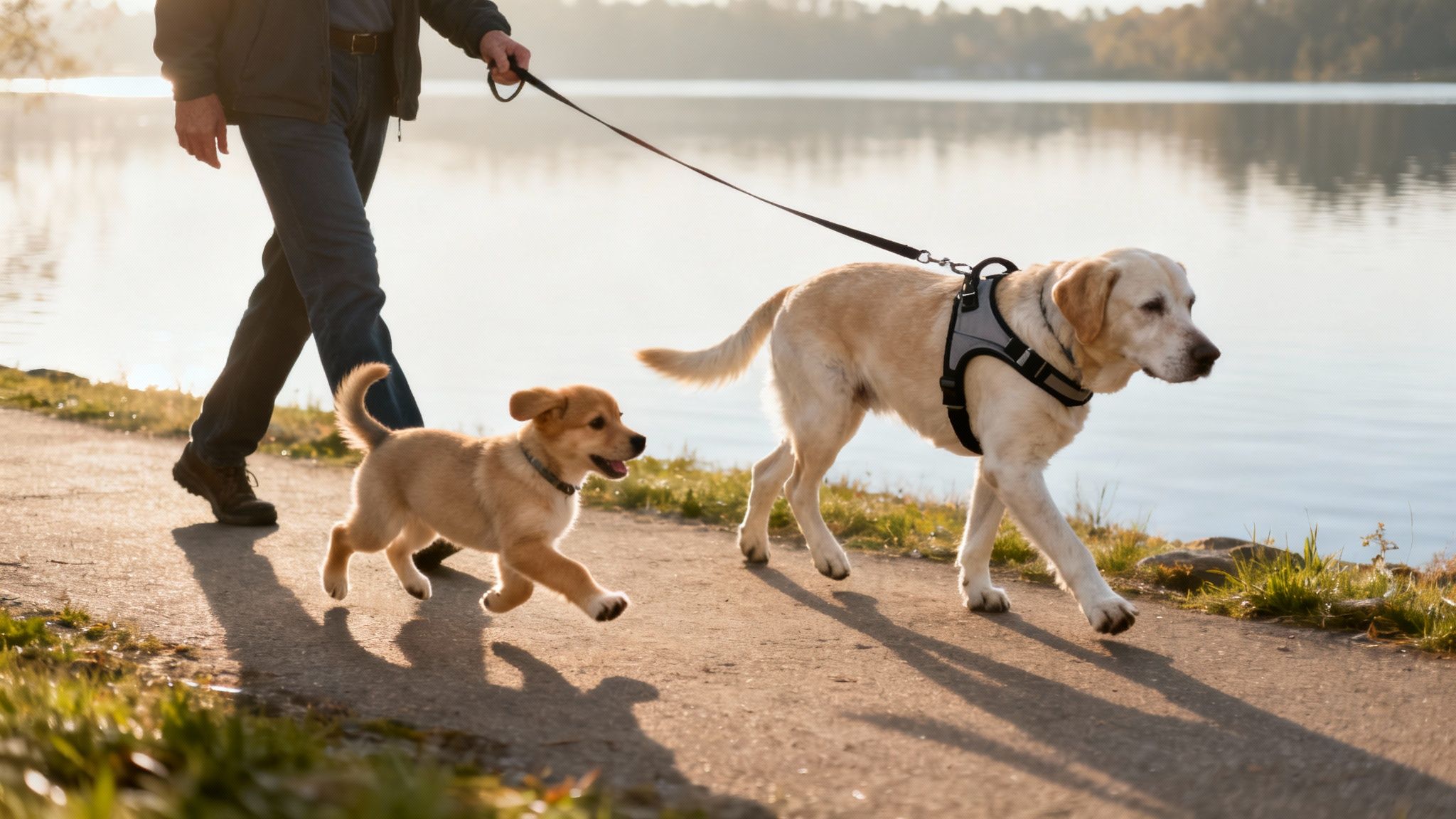
When it comes to the little guys, a gentle touch is the name of the game. Puppies might seem like they have endless energy, but their bodies are still under construction. Their growth plates are soft and can be easily damaged, so too much high-impact exercise can set them up for joint issues later in life.
A good guideline to follow is the "five-minute rule." The idea is to allow five minutes of structured exercise for every month of your puppy's age, done once or twice a day. So, for a four-month-old pup, you’re looking at around 20 minutes of dedicated walking or playtime. This approach helps prevent them from overdoing it while still providing plenty of opportunities to explore the world and learn.
Caring for Your Senior Companion
As your dog enters their golden years, their needs will shift again. The focus moves from burning off zoomies to simply maintaining good mobility, muscle mass, and a healthy weight. Those long, strenuous hikes or intense games of fetch should be replaced with gentler activities that are kinder on their aging joints.
Think leisurely strolls, a nice swim, or short and sweet training sessions. These are all fantastic ways to keep their mind and body engaged without causing any strain. The key is to watch them closely for cues. If they start to look stiff or tired, that's your sign to wrap it up for the day.
With seniors, it's all about quality, not quantity. A slow, 20-minute "sniffari" where they can just meander and take in all the smells is often way better for them than a forced march that leaves them sore tomorrow.
Learning to spot the signs of over-exertion—like excessive panting, lagging behind, or limping—is a crucial skill for any dog owner. Your best bet is always to work with your vet to craft an exercise plan that’s just right for every chapter of your dog's life. And if you're bringing an older dog into your family, you might find our guide on how to crate train an older dog helpful in making them feel secure.
Common Questions About Dog Exercise
Figuring out your dog's fitness routine can feel like a bit of a puzzle. Getting a handle on the "why" behind their need for activity is the key to providing fantastic care and keeping your friend happy and healthy for the long haul. Let's tackle some of the most common questions that pop up.
How Do I Know If My Dog Is Getting Enough Exercise?
Honestly, your dog’s behavior is the biggest clue. A dog that’s getting the right amount of exercise is usually pretty chill and relaxed around the house. If they're not, you'll see the signs.
Watch for clues that they're under-exercised, like chewing on your shoes, barking at everything that moves, pacing around restlessly, or starting to pack on a few extra pounds. On the other hand, a dog getting too much exercise might seem constantly sore, totally wiped out, or suddenly uninterested in their favorite game of fetch.
What Are the Best Exercises for Dogs in Apartments?
Living in an apartment doesn't mean your dog can't be well-exercised; you just have to get a little more creative. The trick is to lean into enriching indoor activities that work their brain. Think puzzle toys, scent games where you hide treats around the room, and quick, fun training sessions.
You'll want to balance that mental work with some quality time outdoors. Brisk leash walks, trips to a local dog park (if your dog enjoys it!), or even weekend hikes are perfect for letting them stretch their legs. This combination of mental and physical activity keeps them perfectly content, even without a big backyard.
Can Mental Stimulation Replace Physical Exercise?
Not quite, but they’re two sides of the same coin. Mental workouts are incredibly important, but they work with physical exercise, not in place of it. A focused 15-minute training session can tire a dog out just as much as a 30-minute walk because it makes them think so hard.
A truly balanced routine has a healthy dose of both to keep your dog's body in shape and their mind engaged. Sometimes, what seems like boundless energy is really just boredom in disguise—which is why a good puzzle toy can be a game-changer. And if your walks are becoming a source of stress, have a look at our guide on what to do about dog aggression on a leash for some practical advice.
Here at SetterFrens, we know that an active pup is a happy pup. For more practical how-to guides, honest product reviews, and a cozy community that's just as obsessed with dogs as you are, come see everything we have to offer at https://setterfren.com. Join our Puppicino Club to unlock member perks and stay part of the fun by following @setterfrens on TikTok and Instagram