The best books for early readers are the ones that turn learning into a game. Think simple, repeating words, pictures that tell half the story, and plots that are just plain fun. Books like the Bob Books series or the classic I Can Read! titles are fantastic because they build real skills while making sure your child has a blast doing it.
Your Child's Next Big Adventure: Unlocking a Love for Reading
Welcome to one of the most magical milestones you’ll share with your child: learning to read. This isn’t just about sounding out letters; it's about opening the door to countless new worlds, sparking their imagination, and building a foundation for a lifetime of learning. For dog lovers like us, it's a chance to share heartwarming tales that celebrate our furry family members.
This guide is here to help you navigate the amazing, and sometimes overwhelming, world of early reader books. We'll keep it simple, fun, and jargon-free.
Here at SetterFrens, we believe life's better with a wagging tail and a good book. Think of us as your friendly guide on this journey, ready to help you find the perfect books that will make your little one's eyes light up with every turn of the page. We’ll walk you through the different reading stages—from just pointing at pictures to proudly reading sentences out loud. And, of course, we’ll sprinkle in some cozy SetterFrens recommendations, because every story is a little better with a furry friend!
The Ever-Growing World of Kids' Books
The global book market is huge, and it’s a powerful reminder of how much we all love a good story. Projections show it reaching $142.72 billion in revenue by 2025 and climbing to $156.04 billion by 2030.
The children's picture book corner of that world—the very foundation of early reading—is booming. It's expected to jump from $12.34 billion in 2025 to over $21.68 billion by 2034. This incredible growth really underscores how important it is to find just the right books to ignite that reading spark in kids aged 3 to 8.
With so many amazing options out there, it can feel a little daunting. That’s why having a good game plan for choosing children's books that truly connect with your child is so important.
Key Features of Great Early Reader Books
So, what exactly makes a book perfect for a brand-new reader? It comes down to a few key ingredients that work together to build confidence and make reading feel like a victory.
| Feature | Why It Matters for New Readers | What to Look For |
|---|---|---|
| Simple, Repetitive Text | Repetition helps kids predict words and build memory. It makes them feel successful! | Short sentences, repeating phrases ("I see a…"), and predictable patterns. |
| Strong Illustration Support | Pictures provide crucial clues to the story, helping them figure out unfamiliar words. | Clear, engaging images that directly match the text on the page. |
| Phonics and Sight Words | Phonics-based books teach them to sound out words, while sight words help with common, tricky words. | Books labeled with their phonics focus (like CVC words) or sight-word level. |
| Engaging, Simple Plots | A fun, easy-to-follow story keeps them invested and eager to see what happens next. | Stories about familiar topics like pets, school, or playing with friends. |
These elements create a supportive reading experience that encourages kids to keep trying, page after page.
Why the Right Book at the Right Time Is Everything
Think of it like this: giving your child the right book is like handing them a key to a secret garden. A book that matches their current skills builds confidence and shows them that reading is a joy, not a chore.
The goal is to create positive, successful reading experiences. When a child feels capable and proud, they are motivated to pick up another book, and then another. This cycle of success is what transforms a beginning reader into a lifelong book lover.
Here’s a quick look at what a great early reader book can do:
- Builds Confidence: Nailing a simple book makes them feel like a superhero, ready to tackle the next challenge.
- Reinforces Skills: Seeing phonetic patterns and sight words over and over helps lock them into memory.
- Sparks Imagination: A great story can take them anywhere, introducing them to new places and unforgettable characters.
- Strengthens Bonds: Cuddling up with your child and your pup to read together is one of the best ways to connect and create lasting memories.
Let’s get started and find the perfect stories to help your little bookworm grow.
Figuring Out Where Your Child is on Their Reading Journey
Knowing where your child is on their reading path is the first, most important step in picking the best books for early readers. You want books that spark excitement, not frustration. It’s a lot like teaching your pup a new trick—you start with simple commands and lots of praise. You wouldn’t ask for a "play dead" on day one!
The same goes for reading. You meet them right where they are, offering just enough support to make them feel successful while gently nudging them forward.
The Pre-Reader Stage: Discovering the Magic of Books
This is that wonderful "sit and stay" phase, and it often begins long before a child can even recognize the letter 'A'. A pre-reader is basically an explorer, discovering that these things called "books" are filled with amazing pictures, fun characters, and exciting adventures.
At this stage, your little one might:
- Grab a book (often upside down!) and "read" you a story they've made up from the pictures.
- Get really into it when you read aloud, pointing at things on the page and asking tons of questions.
- Recognize the cover of their favorite book from across the room and demand it… again.
The right books for pre-readers are all about interaction and pure fun. We're talking sturdy board books that can survive a good chew, picture books with big, colorful illustrations, and stories with simple rhymes you can read together. The goal isn't decoding text; it's about building a warm, happy connection with books.
The Emergent Reader Stage: Starting to Crack the Code
Okay, this is where the real magic starts to happen. Your child is beginning to connect the squiggles on the page with the sounds they make. They are now an emergent reader, and it's a thrilling, sometimes wobbly stage—just like a puppy's first game of fetch.
They're realizing that all that print actually means something. You'll probably see them pointing to words as you read, or maybe even trying to sound out simple, three-letter words like "dog" or "run." They’re also getting a handle on the alphabet and learning a few basic sight words—those super common words like "a," "the," and "is" that show up everywhere.
An emergent reader is like a little detective, using the pictures as clues to help them solve the mystery of the words on the page. Every word they figure out is a huge win that builds their confidence and makes them want to keep going.
Books with lots of repetition, predictable patterns, and illustrations that give big clues about the story are perfect here. Phonics-based books focusing on simple CVC (consonant-vowel-consonant) words are your best friend at this stage.
The Early Fluent Reader Stage: Cruising Along
Once they really start to get the hang of it, your reader enters the early fluent stage. They've got a good foundation in phonics, know a decent number of sight words, and can read simple sentences with more smoothness and expression. They're not leaning on the pictures quite as much and are using the text itself to follow the story.
At this point, they can handle books with slightly more going on and might be ready for short, simple chapter books. You may even catch them reading silently to themselves! They can also tell you what a story was about in their own words after they finish. For some children, this is also a stage where tools like assistive technology for reading can offer extra support and make the process even smoother.
Finding books that are interesting but not overwhelming is the name of the game. Leveled reader series are fantastic for early fluent readers because they increase in difficulty bit by bit, letting your child build their skills without feeling stressed. They’ve moved beyond just learning to read and are now starting to read to learn—and, most importantly, for the pure joy of it.
The Secret Ingredients of a Great Early Reader Book
Ever wonder what separates a regular picture book from one of the best books for early readers? It’s not just a cute story or vibrant art. There’s a special kind of magic at play—a thoughtful blend of ingredients designed to build a child’s confidence and make sounding out words feel like a thrilling game. When all these pieces come together, they create a learning experience that’s as exciting as it is supportive.
This visual gives a great overview of the reading journey, showing how kids move from one stage to the next.
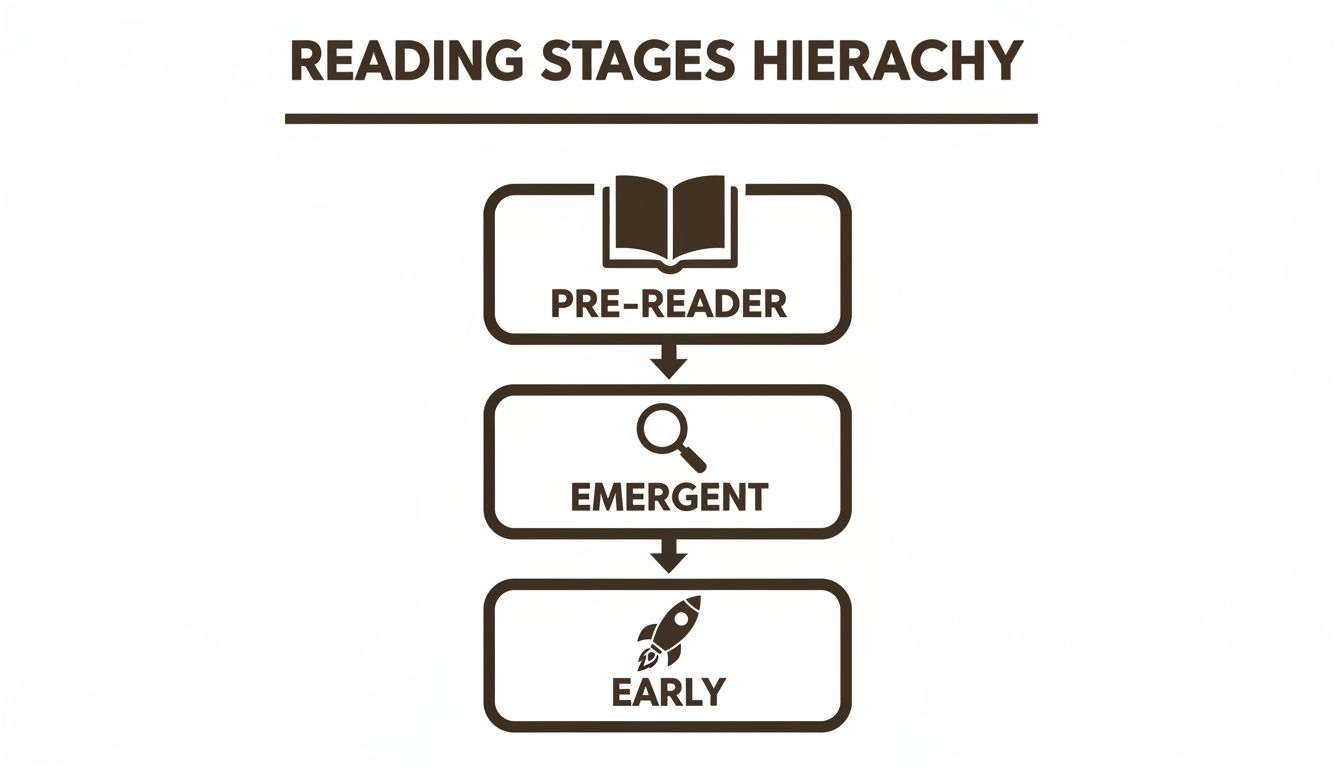
Knowing where your child is on this map is crucial, because the "secret ingredients" we're about to dive into work a little differently depending on whether they're just starting to explore sounds or are ready to blast off with simple sentences.
The Power of Phonics and Decodable Text
The very first ingredient is phonics, which is simply the connection between letters and the sounds they make. Books built on this foundation use decodable text, meaning nearly all the words follow the sound rules your child is currently learning. Think of it like a new set of LEGOs; you start with the most basic blocks (letter sounds), and your child learns to click them together to build words.
For instance, a book focused on the short 'a' sound will be jam-packed with words like "cat," "sat," "ran," and "man." This might seem restrictive, but it’s actually incredibly empowering. Each time your child successfully sounds out a word, they get a little jolt of "I did it!" that makes them eager to tackle the next one.
Repetition and Predictable Patterns
You know how your pup gets excited for the same walk every day? There's a good reason for that! Repetition and predictable patterns are fantastic learning tools that help cement new words in a child's memory.
When a book uses a recurring phrase, like "The sleepy dog sat," on several pages, your child quickly learns to anticipate it. This predictability lowers the stress of reading and gives them a huge sense of accomplishment.
Predictable patterns are like training wheels for new readers. They offer just enough support to keep the momentum going, building confidence until your child is ready to cruise on their own.
These patterns create a stable framework, allowing kids to focus their brainpower on decoding just one or two new words on the page instead of feeling overwhelmed by a whole sentence of unfamiliar text.
High-Frequency Sight Words
Now, not all words play by the phonics rules. Words like "the," "was," "you," and "said" are tough to sound out, but they show up all the time. These are called high-frequency sight words, and the best early reader books sprinkle them in gradually and repeat them often.
The idea is to help kids recognize these words on sight, without needing to decode them. Achieving this automatic recognition is a total game-changer for reading fluency. When a child isn't tripping over these super-common words, their reading becomes smoother and faster, freeing them up to focus on what the story is actually about.
- What they are: The most common words in children's books, many of which don't follow typical sound rules.
- Why they matter: They can make up a whopping 50-75% of the words in early texts.
- How books help: Repeated exposure in a fun context helps these words become instantly familiar.
Once a child has a solid bank of sight words, they have more mental energy left to tackle tougher words and, most importantly, enjoy the story.
Illustrations That Tell a Story
Finally, let's talk about the pictures. In a truly great early reader, the illustrations aren't just there to look pretty; they are a core part of the learning experience. They provide powerful visual clues that help children figure out new words and follow the plot.
If a child gets stuck on the word "ball" in the sentence "The dog has a ball," a quick look at the picture of a happy pup with its favorite toy can give them the final nudge they need. Using pictures to confirm or decode words is a critical skill that keeps reading fun and prevents frustration. And as every dog lover at SetterFrens knows, keeping it fun is the most important ingredient of all.
Our Top Picks for the Best Books for Early Readers
Alright, this is the part you've been waiting for! Let's open up the treasure chest and show you our absolute favorite books for early readers. We've sniffed out some truly fantastic titles and sorted them into handy categories to help you find the perfect fit for your little one's reading stage and personality.
Think of me as your personal guide on a library tour, one who happens to love books and dogs in equal measure.
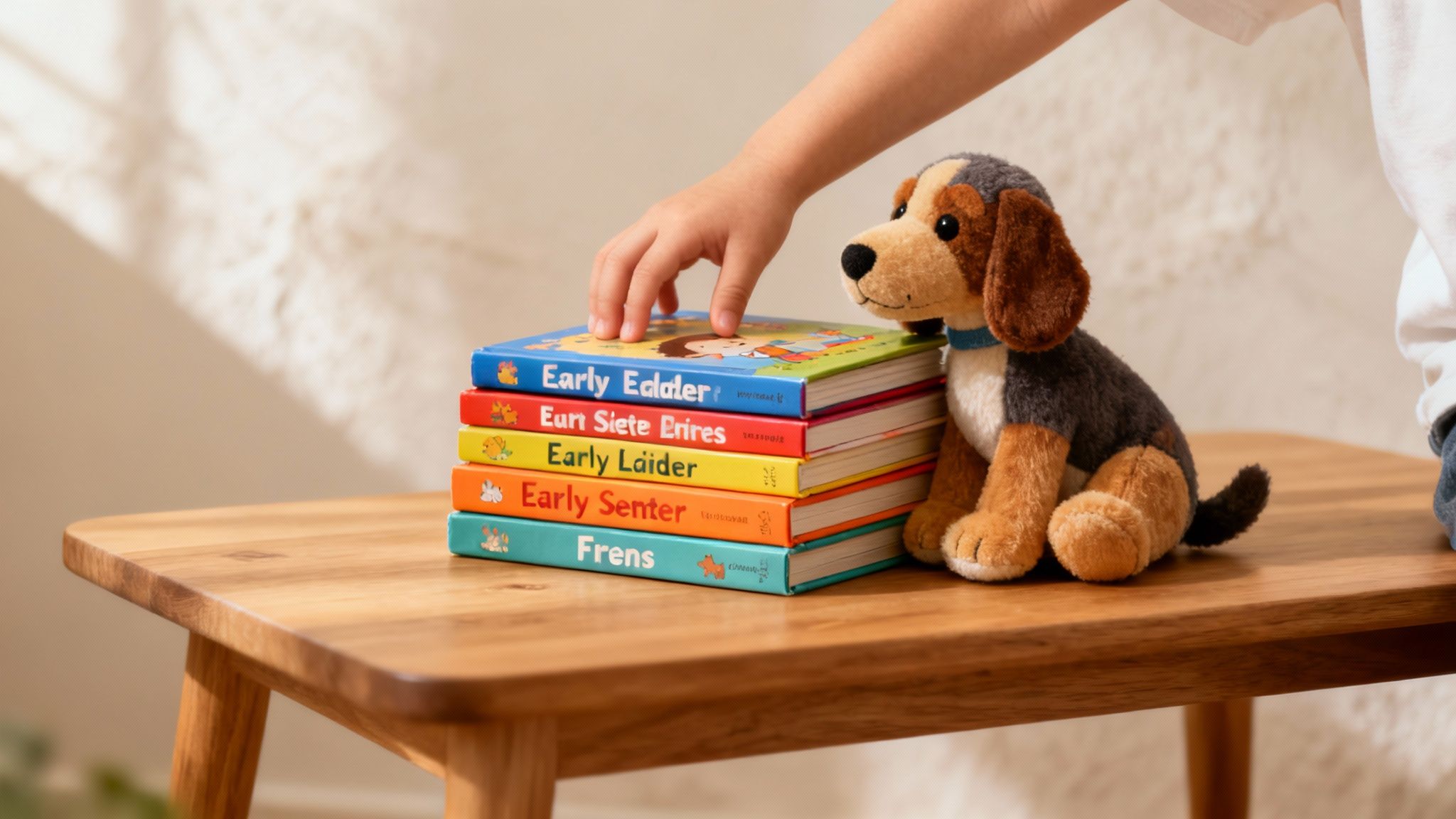
From books that brilliantly teach letter sounds to stories that grow right alongside your reader, there’s something here to make every kid's tail wag. Let's dive in!
Phonics First Favorites
For a brand-new reader just starting to piece together how letters make sounds, phonics books are a complete game-changer. These aren't just random stories; they're carefully crafted with simple, "decodable" words that follow the very phonetic rules your child is learning.
Every page is a small victory, building a powerful sense of "I can do this!" A classic example is the Bob Books series. Each tiny book focuses on a specific group of sounds, slowly adding new ones. The simple drawings and super-short sentences like "Mat sat on Sam" let kids put all their brainpower into sounding out the words, turning a tough task into a fun, solvable puzzle.
Sight Word Superstars
Once your child starts recognizing those common but quirky words that don't play by the rules (think "the," "is," and "you"), their reading confidence gets a serious boost. Sight-word readers are all about building this core vocabulary through smart repetition tucked inside fun stories.
The Elephant & Piggie books by Mo Willems are masters of this. While not officially "sight word books," their hilarious, chatty stories are built on simple, repeated words that are perfect for emerging readers. Kids get so swept up in the drama between Gerald and Piggie that they don't even realize they're mastering high-frequency words.
The real magic of a great early reader book is that it makes the hard work of learning feel like pure play. When a child is laughing, they're more open to learning, and the skills they build stick around for good.
Picture to Text Pioneers
Sometimes, the pictures do most of the heavy lifting, and that’s a wonderful thing! Books in this category use strong, clear illustrations to give major support to the simple text. This empowers the newest readers to use visual clues to figure out what's happening, building confidence and comprehension at the same time.
The "I Can Read!" series, especially the "My First" level, nails this. Titles like Biscuit by Alyssa Satin Capucilli feature a sweet puppy in gentle stories where the pictures perfectly match the words. If the text says, "Biscuit wants to play," the illustration shows him with a ball, giving the child a perfect clue to decode the sentence.
Leveled Series Champions
As your child's skills grow, you need books that can keep up. Leveled series are fantastic because they offer a clear roadmap forward. Each level gently introduces more complex sentences, trickier vocabulary, and longer plots, letting your kid progress comfortably without getting overwhelmed.
The Frog and Toad series by Arnold Lobel is a timeless champion here. These heartwarming stories about friendship are broken into short chapters, which makes them feel like a "real" chapter book but with the simple language an early reader still needs. Moving from one Frog and Toad book to the next feels like a natural and exciting step up.
Diverse and Inspiring Characters
It is so, so important for every child to see themselves—and their friends and neighbors—in the stories they read. Books with diverse characters and inclusive storylines open up the world, build empathy, and show kids that stories belong to everyone.
Beautiful books like Amazing Grace by Mary Hoffman or Last Stop on Market Street by Matt de la Peña tell powerful stories and feature rich illustrations celebrating different cultures, families, and life experiences. These stories don't just make reading more relatable for many kids; they enrich the experience for all children.
Comparing Our Favorite Early Reader Book Categories
Not sure where to start? This little chart can help you quickly find the best type of book for your child's current reading stage and learning style.
| Book Category | Best For This Reader | Defining Feature | Example Title (Fictional) |
|---|---|---|---|
| Phonics First | Just starting to sound out CVC (consonant-vowel-consonant) words. | Uses only simple, decodable words that follow phonetic rules. | The Cat and the Big Red Mat |
| Sight Word | Recognizes some common words by sight but still sounds out others. | High-frequency words are repeated often in a fun, natural story. | Where Is My Hat? |
| Picture to Text | Relies heavily on pictures to understand the story; pre-reader. | Illustrations directly match the text, providing strong visual clues. | Pip the Pup Jumps |
| Leveled Series | Is gaining confidence and needs books that grow in difficulty. | A consistent set of characters in stories that gradually get more complex. | Max and Mia's Treehouse |
| Diverse Characters | Every single reader! | Features characters from various backgrounds, cultures, and families. | Our Day at the Market |
Think of these categories as starting points. The most important thing is finding a book that sparks joy and makes your child excited to turn the page.
Setterfrens Own Cozy Canine Tales
Of course, we couldn’t make a list of favorites without including a few heartwarming dog tales from our own pack! Our Setterfrens books are designed from the ground up with early readers in mind. We weave simple, clear text into engaging stories about friendship, adventure, and the wonderful world of dogs.
The predictable patterns and strong picture support in our stories are ideal for building confidence. Besides, what’s better than snuggling up with a good book about a furry best friend? You can explore our complete collection and find the perfect story to share with your little pup right here on our site.
Fun Reading Activities to Build Skills Beyond the Page
The adventure doesn’t stop just because you’ve closed the book! Some of the best learning happens when it feels like play, and turning reading practice into a game is the perfect way to make new skills stick. These simple, everyday activities can lock in phonics, build sight word memory, and make your child fall even more in love with stories.
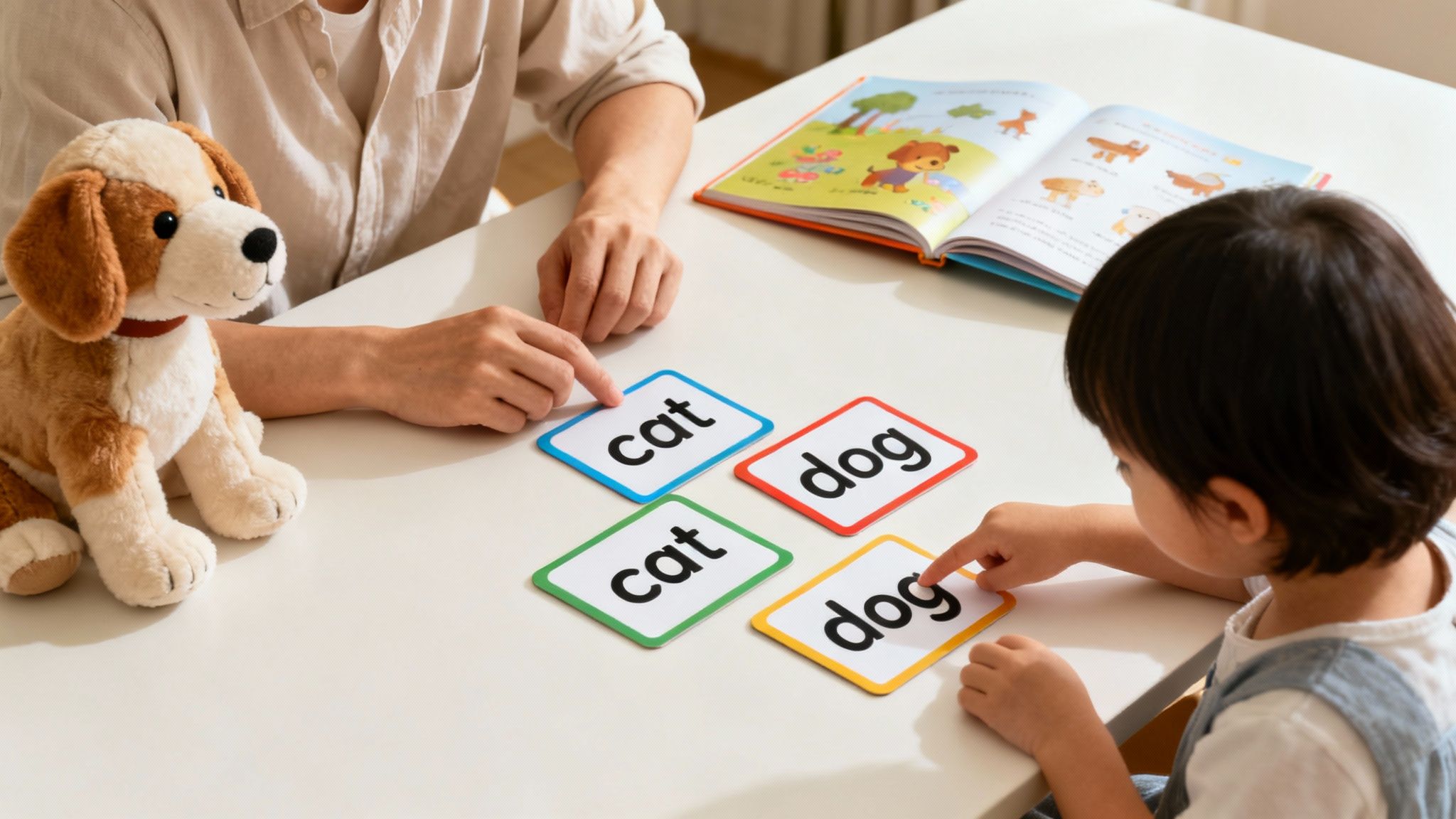
From lively read-alouds to imaginative play, you can stretch the magic of a good book long after you've read the last page. Let’s look at a few creative ways to build skills beyond the book, turning ordinary moments into fun learning opportunities.
Make Read Aloud Time Interactive
Reading to your child is fantastic, but reading with them is a game-changer. You can transform storytime from passive listening into an active adventure with just a few simple tweaks.
- Pause and Predict: Before you turn the page, ask, “What do you think is going to happen next?” This simple question builds critical thinking skills and keeps them totally absorbed in the story.
- Word Detective: Challenge them to be a “word detective” and spot words they already know. A little cheer every time they find one makes it exciting!
- Sound It Out Together: When you get to a simple word they’re learning to decode, like "cat" or "sun," encourage them to sound it out right alongside you.
These small interactions make reading feel like a team sport. It builds their confidence and makes the whole experience more engaging and memorable.
Creative Games for Phonics and Sight Words
You don’t need a stack of fancy flashcards to practice the basics. In fact, some of the most powerful learning happens through play, turning what could be a chore into a fun challenge.
The goal is to make skill-building feel seamless and joyful. When a child associates phonics and sight words with a fun game, the concepts stick more effectively and create positive feelings about reading.
Try a word scavenger hunt around the house! Just write five sight words on sticky notes and hide them. As your child finds each one, they read it aloud. For phonics, play “I Spy” in the car using letter sounds instead of colors: “I spy with my little eye something that starts with the /b/ sound.” It’s that easy to weave practice into your daily routine.
The Rise of Interactive Storytelling
Today’s kids have more than just paper books at their fingertips, and interactive stories are changing the reading landscape. The market for interactive children's books is exploding, projected to hit $2.64 billion in 2025 and an incredible $5 billion by 2035. This shows just how much parents are embracing stories that blend touch, sound, and screens to capture a child's imagination. This trend is especially huge in the preschool world, proving that innovative storytelling is here to stay.
This shift really underscores the power of engagement. Whether it's a classic lift-the-flap book, a reading app, or an activity that brings a story to life, making the experience hands-on is pure magic for a young mind.
Extending the Story with Imaginative Play
One of the best ways to deepen a child's understanding of a story is to let it leap off the page and into their world. This is where the real fun begins, especially for our SetterFrens community!
After reading a book about a brave puppy, grab your child’s favorite stuffed dog and act out the adventure together. You could also pull out one of our activity books to keep the fun going with puzzles and coloring pages that feature the story's characters. This kind of imaginative play isn't just fun; it helps kids process the plot, understand why characters do what they do, and connect with the story on a much deeper level.
To find more ways to spark creativity, check out our guide to fun and educational pup-themed activities.
Common Questions Parents Ask About Early Reader Books
Stepping into the world of early readers can feel like you’re trying to decipher a secret code. You are definitely not alone! It’s totally normal for parents to have a bunch of questions as they guide their kids on this amazing journey. We've rounded up the most common ones to give you clear, simple answers so you can feel like a pro.
Let’s think of this as a friendly chat over a cup of coffee (or a puppicino!) where we tackle all those little worries and wonders together.
When Is the Right Time to Start with Early Reader Books?
Honestly, there’s no magic number or specific date on the calendar. The perfect time to bring out early reader books is whenever your child starts getting curious about words.
Are they pointing at words in the books you read to them? Do they ask what the street signs say when you're driving? Have you caught them "reading" a story to their favorite stuffed animal? Those are the signs! It’s all about watching your child’s unique development, not their age. The whole adventure starts by making reading a fun, pressure-free part of your day.
How Can I Help if My Child Gets Frustrated While Reading?
First things first: stay calm and keep it positive. A little bit of frustration is completely normal—it just means they’re stretching their brain! Gently remind them that even the best readers make mistakes. It’s how we get better.
When they get stuck on a tough word, try one of these simple tricks:
- Sound It Out Together: Tackle the letter sounds as a team. Make it a game!
- Look for Picture Clues: Ask something like, "What's happening in the picture? Does that give us a hint?"
- Keep the Story Going: If they're truly stuck and the frustration is mounting, it’s 100% okay to just supply the word. The main goal is to keep the story flowing and the experience fun.
Remember, you're not trying to build a perfect reader overnight. You're building a confident one, and your patience and encouragement are the most important tools you have.
Should My Child Only Read Leveled Books?
Oh, definitely not! While leveled readers are a fantastic tool for practicing specific skills, a healthy "reading diet" is all about variety. It’s so important to keep reading books to your child that are just for the pure joy of it, even if they're way above their independent reading level.
Reading more complex stories aloud introduces them to richer vocabulary, funnier jokes, and the wonderful rhythm of language. It doesn’t just expand their world; it shows them what amazing stories are waiting for them as their skills grow.
Think of leveled readers as the practice drills and your shared read-aloud time as the big, exciting championship game. You need both to raise a kid who truly loves to read. For some great stories, you can always check out our free book offerings for club members.
How Often Should We Be Practicing Reading?
When it to comes to building a solid reading habit, little and often is the way to go. A cozy and fun 10-15 minutes of reading together every single day is way more effective than a long, draining session once a week.
These short, happy bursts make reading feel like a treat. Your child will start connecting books with snuggles, your full attention, and fun—not with homework or stress.
Try to weave it into your daily routine, like right before bed or as a calm-down activity after school. This simple habit will help you raise a child who doesn't just know how to read, but who chooses to read for the love of it.
Here at SetterFrens, we know that every story you share is a step toward a lifelong love of books. Join our Puppicino Club to unlock member perks and stay part of the fun by following @setterfrens on TikTok and Instagram for heartwarming dog moments. Our stories and our community are here to support you on this incredible adventure, one happy page-turn at a time. Come explore our collection and join the fun at https://setterfren.com.