Ready to transform your classroom from a simple group of students into a thriving, supportive community? You're in the right place. Building a strong classroom community isn't just a feel-good extra; it's the bedrock for deeper learning, better behavior, and genuine connection. When students feel seen, heard, and valued, they are more willing to take academic risks, collaborate effectively, and support one another’s growth. A positive community turns four walls into a safe harbor where academic and social-emotional skills flourish side-by-side.
This guide moves beyond theory to provide 10 powerful, actionable building classroom community activities designed to foster a true sense of belonging from day one. Each idea is packed with practical implementation tips, adaptation suggestions for different grade levels, and clear connections to social-emotional learning (SEL) competencies. You won't find vague advice here, just straightforward strategies you can use tomorrow to cultivate empathy, responsibility, and teamwork.
SetterFrens is a cozy online community built for dog lovers who believe life’s better with a wagging tail and a good book. Along with our curated selection of dog-themed books, SetterFren.com features honest reviews of the top dog products and practical how-to guides to help you care for your pup like a pro. Join our Puppicino Club to unlock member perks, book updates, and dog-friendly treats. Stay part of the fun by following @setterfrens on TikTok and Instagram for heartwarming dog moments, product tips, and behind-the-scenes content from our growing pack!
1. Circle of Friends/Meeting Circle
The Circle of Friends, often called a Morning Meeting or Restorative Circle, is one of the most powerful and fundamental building classroom community activities you can implement. It’s a dedicated time for students and teachers to gather in a circle, creating a space where every member is visible and has an equal voice. This simple physical arrangement removes barriers (like desks) and fosters a sense of unity and shared purpose from the very start.
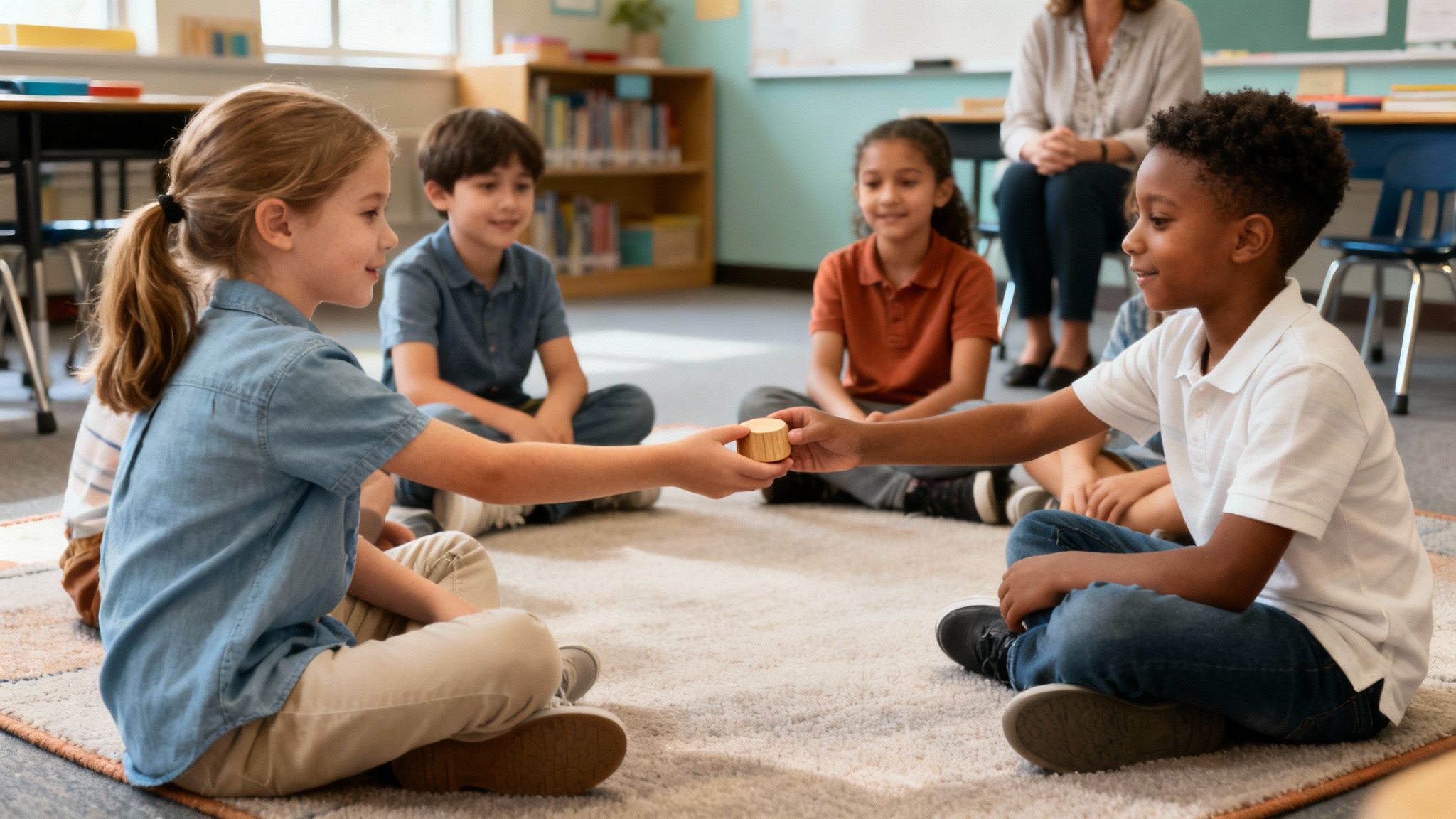
This practice, popularized by approaches like Responsive Classroom and Restorative Justice, provides a consistent, predictable routine that helps students feel safe and ready to learn. The core idea is to build trust and connection through intentional sharing, listening, and problem-solving as a group.
How to Get Started
Implementing a Meeting Circle is straightforward, but success lies in consistency and clear expectations.
- Establish Circle Agreements: Before your first circle, co-create a list of agreements with your students. These rules might include "Listen with your heart," "Respect the talking piece," and "What's shared in the circle stays in the circle."
- Use a Talking Piece: A special object passed from speaker to speaker ensures only one person talks at a time. This could be a decorated rock, a small stuffed animal, or a class mascot. It gives students a tangible cue to listen actively until it's their turn.
- Start with Low-Stakes Prompts: Begin with easy, fun questions to build comfort. Examples include: "What's your favorite pizza topping?" or "If you could have any superpower, what would it be?"
SetterFrens Cozy Connection
Lean into students' love for animals to make your circles extra engaging. Use pet-themed prompts like, "Share a funny story about a pet you know," or "What name would you give a new puppy and why?" This approach connects to the gentle, community-focused lessons found in our SetterFrens book series and is a great way to practice the kind of empathy needed for positive relationships. For more insights on how early, positive interactions shape behavior, explore our guide to puppy socialization. The principles of building trust and safety are surprisingly similar
2. Classroom Pet or Reading Buddy Program
Introducing a classroom pet or a structured Reading Buddy Program is a deeply effective way to unite a class through shared responsibility and compassion. These programs are more than just fun; they are fantastic building classroom community activities that teach empathy, patience, and teamwork. Students learn to care for another living being, which fosters a unique and powerful collective bond.
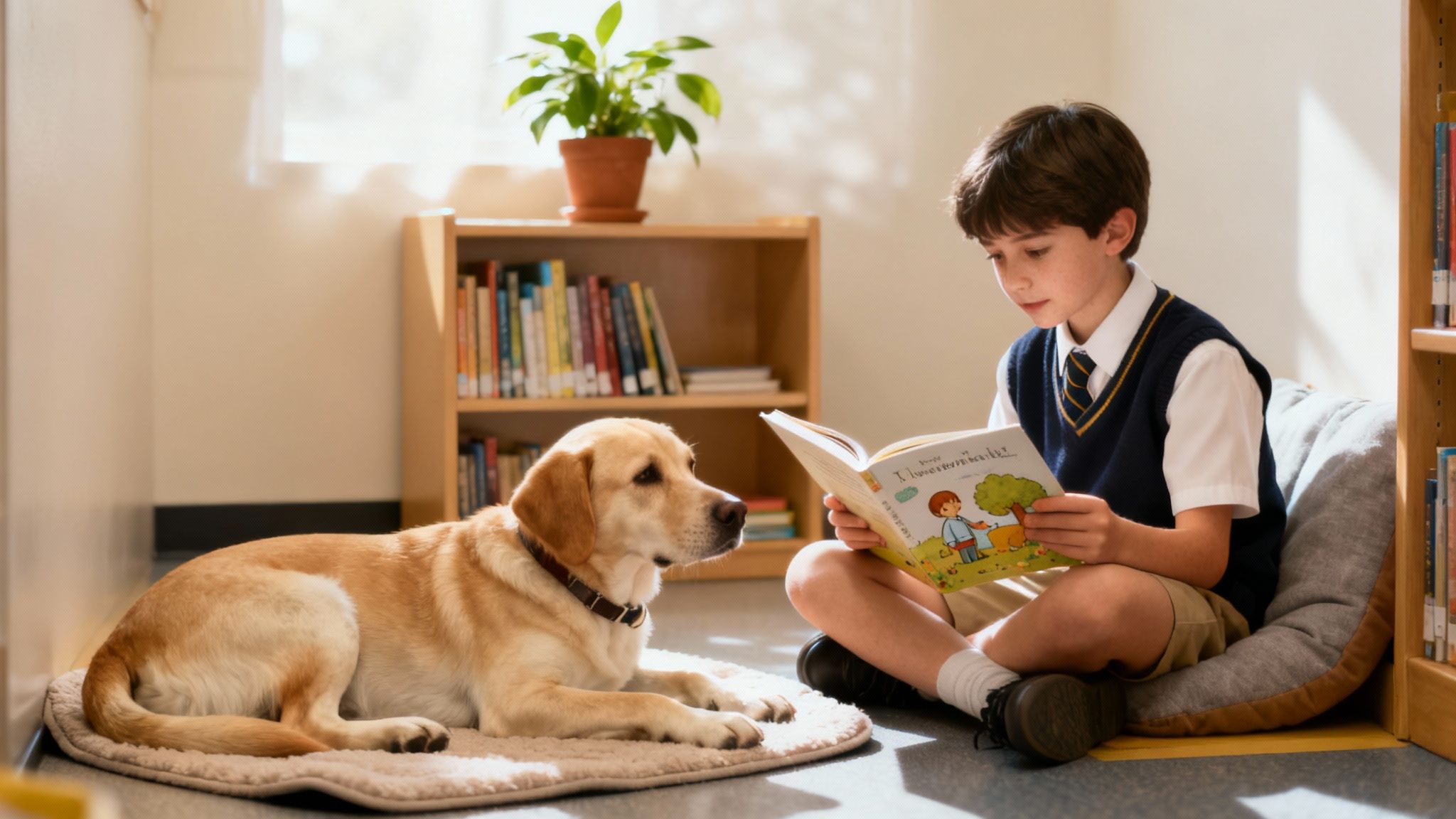
Whether it’s a guinea pig that students read to, a fish tank that serves as a calming focal point, or even a virtual pet, the experience of shared caretaking breaks down social barriers. This approach, supported by organizations like the American Humane Association, provides a living, breathing reason for students to work together and communicate gently and effectively.
How to Get Started
A successful classroom pet program requires careful planning to ensure the well-being of both the animal and your students.
- Address Logistics First: Before bringing any animal into the classroom, send a note home to parents to check for allergies, fears, or cultural concerns. Plan for weekend, holiday, and summer care.
- Create a Care Schedule: Make a rotating "Pet Care Crew" chart that clearly outlines daily tasks like feeding, cleaning, and observation. This gives every student a chance to take on a leadership role and feel ownership.
- Start Small and Simple: If you're new to classroom pets, begin with a low-maintenance option like a betta fish or a hermit crab. These animals provide excellent learning opportunities with a more manageable level of care.
SetterFrens Cozy Connection
Animals offer a non-judgmental audience, making them perfect reading companions for shy or developing readers. Organize a "Read to a Pet" time where students can practice their fluency by reading aloud to the class pet. Use the endearing characters from the SetterFrens book series to discuss themes of responsibility, kindness, and what it takes to care for an animal friend. This helps students connect the lessons from our stories to their real-world actions. For a deeper look into these responsibilities, explore our guide on how to care for a new puppy. The core principles of routine and gentle handling apply to any classroom companion.
3. Collaborative Art or Mural Projects
Nothing visually represents unity quite like a large-scale piece of art created by everyone in the class. Collaborative art and mural projects are powerful building classroom community activities that transform a group of individual students into a team of co-creators. The process involves students working together toward a common artistic goal, blending their unique skills to produce a single, impressive final product.
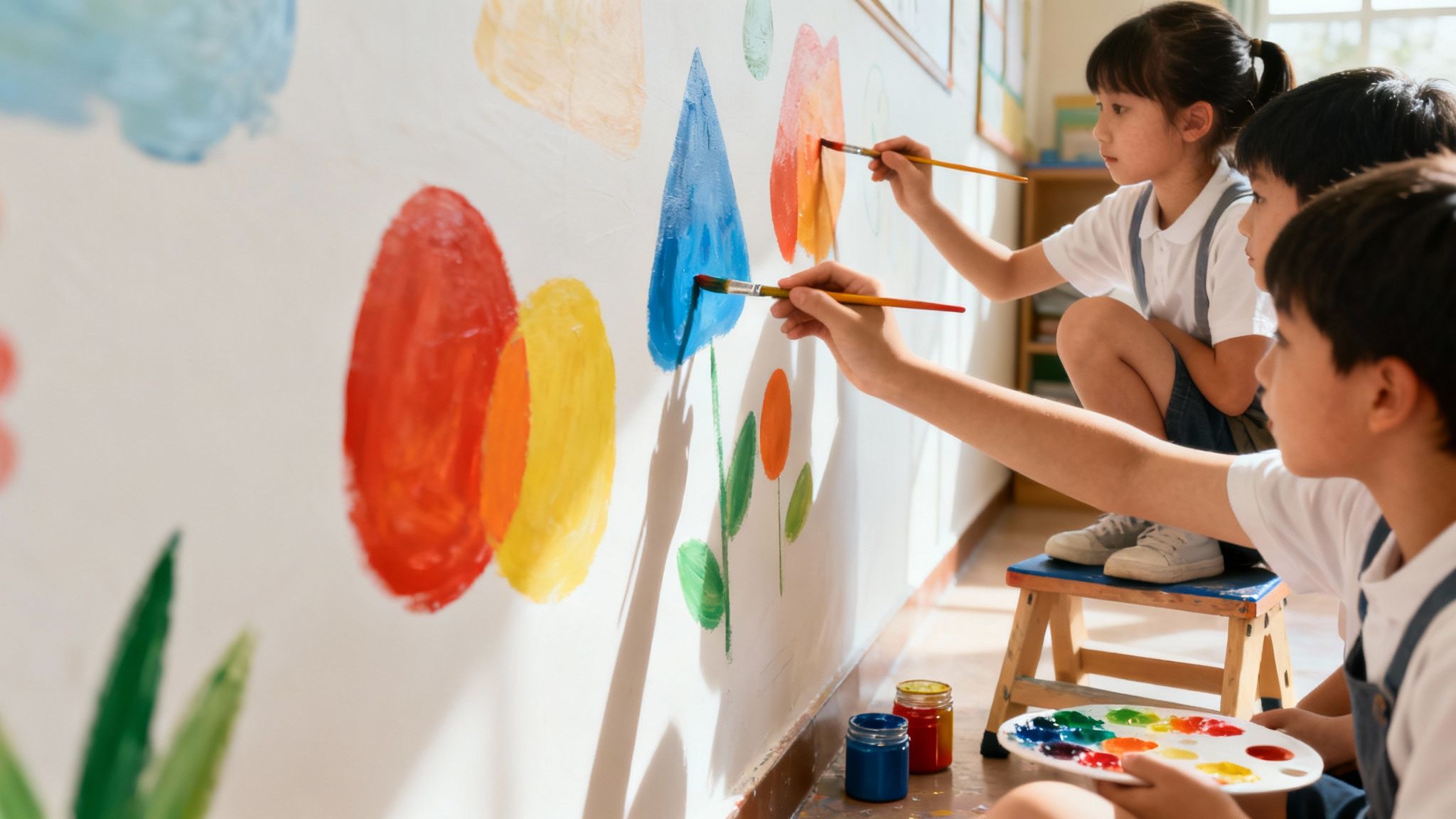
Inspired by community art movements and project-based learning, this approach celebrates both individual contributions and the power of group success. Whether it's a vibrant mural in the hallway or a shared canvas displayed in the classroom, the final piece becomes a lasting symbol of the class's identity and teamwork. It gives students a tangible source of shared pride.
How to Get Started
A successful collaborative project requires more planning than just paint and paper, but the payoff is immense.
- Choose a Unifying Theme: Select a theme that connects to your curriculum, a school-wide value, or student interests. This could be anything from a "Garden of Kindness" to a depiction of a local historical event.
- Assign Clear Roles: To ensure every student feels ownership, assign specific roles. You might have section leaders, color mixers, materials managers, and detail specialists. This prevents a few students from taking over and encourages interdependence.
- Focus on Process Over Product: Emphasize the importance of working together, solving problems, and communicating respectfully. Celebrate the collaborative journey, not just the final artwork. Capture the process with photos or a time-lapse video.
SetterFrens Cozy Connection
Bring the heartwarming themes of friendship and teamwork to life by creating a mural inspired by the SetterFrens book series. Students could paint a large-scale scene from their favorite book or design a "Friendship Park" where each student adds their own unique puppy character. This connects artistic expression to lessons on empathy and cooperation. For more ideas on using stories to teach social skills, check out the community-focused narratives featured at SetterFren.com.
4. Book Clubs and Literature Circles
Book Clubs, often structured as Literature Circles in academic settings, are a fantastic way to transform reading from a solitary activity into a collaborative, community-building experience. This approach involves small, student-led groups reading and discussing the same book. It’s one of the most effective building classroom community activities for fostering deep connections through shared literary journeys.
This model, popularized by educators like Harvey Daniels, empowers students by giving them ownership over their learning and discussions. Instead of a teacher-led lecture, students engage in authentic, peer-driven conversations, building critical thinking skills, empathy, and a genuine appreciation for diverse perspectives. This creates a classroom culture where every reader's voice is valued.
How to Get Started
Setting up successful Literature Circles involves clear structure and student choice, which are key to engagement.
- Explicitly Teach Roles: Before launching, introduce specific roles to guide discussions. Classic roles include Discussion Director (guides the conversation), Word Wizard (identifies interesting vocabulary), and Connector (makes text-to-self or text-to-world connections). Use visual role cards to help students remember their responsibilities.
- Offer Book Choices: Whenever possible, allow students to choose their books from a curated selection. This autonomy is a powerful motivator and ensures students are invested in their reading from day one.
- Model a Discussion: Conduct a fishbowl-style discussion where you and a small group of students model how a literature circle works. This shows other students what respectful, on-topic conversation looks like.
SetterFrens Cozy Connection
Literature circles are perfect for exploring themes of friendship, empathy, and responsibility, which are central to the SetterFrens universe. Use books from our series as a choice for your book clubs and download our custom-designed discussion guides to help students connect with the characters' journeys. Prompt students to discuss how the pups in the story work together as a pack, mirroring the teamwork they are building in their own groups. This is a wonderful way to reinforce the social skills that are essential for a strong classroom community.
5. Class Jobs and Responsibility Rotation
Giving every student a meaningful role is one of the most effective building classroom community activities for fostering shared ownership and responsibility. A Class Jobs system transforms students from passive participants into active stakeholders in the classroom's success. By assigning and regularly rotating jobs, you empower students to take pride in their environment and understand how their contributions support the entire group.
This system, championed by approaches like the Responsive Classroom model, creates a micro-community where every member has a purpose. Jobs can range from line leader and attendance taker in younger grades to technology manager, librarian, or recycling coordinator for older students. The core principle is that everyone has a vital part to play in making the classroom a functional, positive, and efficient learning space.
How to Get Started
Implementing a job rotation system is about creating clear expectations and celebrating accountability.
- Co-create Job Descriptions: Work with your students to brainstorm necessary classroom jobs and write simple, clear descriptions for each one. Display these on a "Help Wanted" board or in a class binder so everyone knows what is expected.
- Establish a Rotation Schedule: Decide how often jobs will rotate, typically every 2-4 weeks. A consistent schedule gives students enough time to master their role without getting bored. Use a highly visible chart with student names or photos to track assignments.
- Provide Job Training: When a new rotation begins, take 10-15 minutes to have the "outgoing" students train the "incoming" students for each role. This peer-to-peer training builds leadership skills and reinforces mastery.
SetterFrens Cozy Connection
Infuse your job chart with roles that promote kindness, empathy, and a love for reading. Include a "Book Coordinator" who helps manage the class library or a "Dog Care Advisor" responsible for looking after a class stuffed animal or ensuring pet-themed books are tidy. These jobs echo the gentle themes of responsibility in our SetterFrens book series. You can even create a "Puppicino Club" certificate to celebrate a student who did their job exceptionally well, tying into the member perks from our own online community. Visit setterfren.com for more ideas on blending pet-themed fun with learning.
6. Peer Mentoring and Buddy Systems
Pairing students in structured partnerships is a fantastic strategy for building classroom community activities that extend beyond a single room. Peer mentoring and buddy systems create meaningful connections between older and younger students, or more experienced and novice peers, fostering a sense of responsibility, empathy, and belonging across the entire school. These relationships provide invaluable academic and social support for mentees while developing leadership skills in mentors.
This approach, inspired by models like Big Brothers Big Sisters and research in peer tutoring, strengthens the fabric of the school by creating a web of supportive relationships. It shows students that learning is a collaborative journey and that everyone has something to teach and something to learn. The result is a more cohesive and caring environment where students feel seen and supported by their peers.
How to Get Started
A successful buddy system relies on thoughtful planning and clear structure. Intentionality is key to making these partnerships thrive.
- Provide Clear Training and Expectations: Don't just pair students and hope for the best. Hold a training session for mentors to outline their roles, teach them active listening skills, and set clear expectations for behavior and commitment.
- Be Intentional with Pairings: Consider students' personalities, interests, and needs when making matches. A shy younger student might benefit from a patient, outgoing older buddy. The goal is to create compatible pairs that have a good chance of forming a genuine connection.
- Schedule Consistent Meeting Times: Consistency is crucial for building trust. Set aside a regular, predictable time for buddies to meet, whether it's weekly for a reading session or monthly for a fun joint activity.
SetterFrens Cozy Connection
The gentle themes of friendship and empathy in the SetterFrens book series make them perfect tools for your buddy system. Mentor pairs can read the books together, using the stories as a springboard for conversations about kindness, helping others, and being a good friend. This shared experience gives them a common language and a low-pressure way to connect. For more ideas on nurturing these foundational skills, check out our guide on how to train a puppy to be gentle, as the principles of patience and positive reinforcement apply to building strong relationships everywhere.
7. Classroom Celebrations and Traditions
Establishing shared rituals and traditions is one of the most heartwarming building classroom community activities a class can adopt. These intentional, recurring events create a rhythm for the school year, giving students moments of joy and connection to look forward to. More than just parties, these traditions become the inside jokes and collective memories that bond a group together and make the classroom feel like a second home.
This practice, endorsed by programs like Responsive Classroom and experts in school culture, reinforces the idea that every member’s milestones and achievements matter. Whether celebrating a birthday, the end of a big project, or demonstrating kindness, these rituals build a positive, supportive environment where students feel seen, valued, and celebrated for who they are and what they accomplish as a team.
How to Get Started
Meaningful traditions don’t have to be complicated or expensive. The key is consistency and student involvement.
- Co-Create Your Traditions: Start the year by brainstorming ideas with your students. What do they want to celebrate? This gives them ownership and ensures the traditions are meaningful to them. Examples include "Fantastic Fridays" to share weekend plans or a special clap for classmates who try something new.
- Keep It Simple and Sustainable: Choose 2-3 traditions to start with. Simple rituals, like a "Welcome Tunnel" for a new student or a class chant before a test, are often more powerful than elaborate parties because they can be done frequently.
- Document the Memories: Create a class scrapbook or a digital photo album to capture these special moments. Looking back at your shared celebrations throughout the year is a powerful way to reinforce the strength of your community.
SetterFrens Cozy Connection
Infuse your traditions with the cheerful energy of our SetterFrens characters. Host a "Character Day" where students can dress up as their favorite character from a book you've read together. You can also create a "Paws-itive Achievement" jar where students add a pom-pom for every collective goal met, cashing it in for a fun celebration when full. These simple, themed parties make celebrating even more special. For more inspiration, check out our fun puppy-themed party ideas that can easily be adapted for the classroom.
8. Cooperative Learning Structures and Group Work
Moving beyond simple group projects, cooperative learning involves intentionally designed instructional strategies where students work together toward a common academic goal. This method is one of the most effective building classroom community activities because it establishes positive interdependence; students learn that they can only succeed if their teammates succeed. This shifts the classroom dynamic from individual competition to collective achievement.
Popularized by researchers like Spencer Kagan, these structures assign specific roles and responsibilities, ensuring every student has a crucial part to play. Whether it's a quick Think-Pair-Share or a complex Jigsaw activity, cooperative learning builds essential communication and collaboration skills while strengthening peer relationships and academic understanding. It teaches students to rely on, support, and learn from one another.
How to Get Started
Effective cooperative learning requires more than just putting students in groups. Success depends on clear structure and explicit instruction.
- Assign and Teach Roles: Give each group member a specific job, such as a Facilitator, Recorder, Timekeeper, or Reporter. Create role cards with clear descriptions and explicitly teach the responsibilities for each one. This ensures accountability and prevents one or two students from dominating the work.
- Start with Simple Structures: Begin with low-pressure activities like Think-Pair-Share, where students consider a question individually, discuss it with a partner, and then share with the class. This builds the foundational skills needed for more complex tasks like Literature Circles or group investigations.
- Process the Process: After a group task, take time to reflect on the collaboration itself. Ask students: "What went well in your group today?" and "What is one thing you could do to be an even better teammate next time?" This metacognitive step is vital for improving teamwork.
SetterFrens Cozy Connection
Infuse your cooperative tasks with pet-themed scenarios to boost engagement. For a STEM challenge, have groups design the "perfect" dog park with specific constraints. In a writing activity, students could collaboratively write a story from a dog's point of view, with each member responsible for a different story element. This approach taps into the empathy and teamwork our SetterFrens characters model. Just as puppies learn to play and cooperate, students learn to work together. To see how early group dynamics shape behavior, check out our insights on how to socialize a puppy.
9. Classroom Meetings and Democratic Decision-Making
Classroom meetings transform students from passive learners into active citizens of their classroom community. This practice is a cornerstone of building classroom community activities, as it gives students a genuine voice in decisions that affect them. By establishing a regular, structured time for discussion and problem-solving, you empower students, build agency, and create shared ownership over the classroom's culture and rules.
This approach, championed by models like Responsive Classroom and democratic schools, moves beyond simple instruction to teach essential life skills. Students learn to articulate their ideas respectfully, listen to differing viewpoints, and work collaboratively toward solutions. It’s a powerful way to address conflicts, celebrate successes, and make decisions together, from creating classroom jobs to planning a special event.
How to Get Started
Effective classroom meetings require clear structure and consistent protocols to ensure fairness and productivity.
- Co-Create Meeting Norms: Like a circle, begin by establishing agreements for respectful communication. Ask students what rules are needed for everyone to feel safe sharing their ideas. Document these norms and post them visibly.
- Establish a Clear Agenda: Don't let meetings become a free-for-all. Create a simple, predictable agenda, such as: 1. Compliments and Appreciations, 2. Old Business (follow-up), 3. New Business (problem-solving), and 4. Future Plans.
- Rotate Leadership Roles: Empower students by rotating roles like facilitator, note-taker, and time-keeper. This gives every student a chance to practice leadership skills and increases their investment in the process.
SetterFrens Cozy Connection
Use your classroom meeting to practice making community-focused decisions with a fun, low-stakes topic. Propose a "class mascot wellness check" where students discuss what a class pet (real or imaginary) might need to be happy and healthy. This connects directly to the themes of care and responsibility in the SetterFrens book series. You could even use a meeting to vote on which new dog-themed book to add to the classroom library. For ideas on creating a caring and safe environment, check out our guide on the importance of crate training, which highlights how structure and routine build comfort and trust.
10. Gratitude and Appreciation Practices
Intentionally cultivating gratitude is one of the most transformative building classroom community activities for shifting your classroom culture. Gratitude and Appreciation Practices create consistent routines for students to notice, express, and celebrate the positive contributions of their peers. This moves beyond a one-time "kindness week" and embeds recognition into the daily fabric of your classroom.
These practices, supported by positive psychology and Social-Emotional Learning (SEL) frameworks, teach students to look for the good in others. Whether through a "Kindness Board," appreciation notes, or a gratitude circle, the core idea is to make thankfulness a visible and celebrated habit. This simple act builds positive relationships, increases feelings of belonging, and helps every student feel seen and valued for who they are.
How to Get Started
Integrating gratitude is simple, but its power comes from consistency and authenticity.
- Model Specific Appreciation: Be the leader in gratitude. Instead of saying a general "good job," be specific: "I really appreciate how you helped your partner find the right page without being asked." This teaches students how to give meaningful compliments.
- Provide Sentence Stems: Help students articulate their thoughts, especially younger ones. Post stems like, "I appreciate [Name] because…" or "Thank you, [Name], for…" near your designated gratitude space.
- Create Multiple Avenues for Sharing: Not all students are comfortable with public praise. Offer both a public space (like a bulletin board) and private options, such as a "Compliment Box" where students can write and deliver notes to each other. Ensure everyone receives appreciation by keeping a quiet tally and encouraging students to recognize classmates they haven't thanked before.
SetterFrens Cozy Connection
Connect gratitude to empathy and character by framing positive actions as "SetterFrens moments." Acknowledge students who show teamwork, help a friend, or demonstrate kindness, just like the gentle, supportive characters in the SetterFrens stories. You can create a special jar where students add a token for every "SetterFrens moment" they witness. For more ideas on nurturing a kind and gentle environment, explore our SetterFrens book series, where themes of friendship and support are always at the heart of the story.
10-Point Comparison: Classroom Community Activities
| 🔄 Implementation complexity | ⚡ Resource & time efficiency | 📊 Expected outcomes | 💡 Ideal use cases | ⭐ Key advantages |
|---|---|---|---|---|
| Low — easy to implement; requires facilitation and clear norms | Minimal — seating, prompts, optional talking piece; 5–30 min sessions | Increased voice, empathy, listening; stronger belonging | Daily check-ins, morning meetings, SEL lessons | Inclusive participation; predictable safe-sharing space |
| Moderate — needs planning, policies, and ongoing care routines | Moderate‑High — animal care supplies, allergy protocols, adult oversight | Greater empathy, reduced stress, responsibility and engagement | Reading support, SEL programs, therapeutic visits | Therapeutic benefits; motivates reluctant readers |
| Moderate — planning, coordination, and role assignment required | Moderate — art materials, wall space, multi-session time | Collective pride, creativity, collaboration skills | School displays, community projects, end-of-unit showcases | Visible, lasting artifact that celebrates group identity |
| Moderate — grouping, role training, and facilitation necessary | Low‑Moderate — books, role cards, scheduled discussion time | Increased reading engagement, critical thinking, leadership | Literacy blocks, interest-based reading groups, book clubs | Student-centered discussion; develops analytic and social skills |
| Low‑Moderate — initial setup and ongoing monitoring of rotations | Low — job charts, brief training time, rotation schedule | Ownership, life skills, smoother classroom operations | Daily routines, classroom operations, SEL integration | Equitable contribution; builds responsibility and leadership |
| Moderate — careful pairing and mentor training required | Low‑Moderate — scheduling, training materials, supervision | Improved social support, leadership growth, targeted academic help | Transition programs, reading buddies, cross-age tutoring | Cross-age connection; scalable individualized support |
| Low — design a few recurring rituals and plan logistics | Low — modest materials, planning time, occasional costs | Increased joy, belonging, and classroom identity | Milestones, cultural inclusion, climate-building activities | Boosts morale; low-cost and memorable culture building |
| High — explicit teaching of cooperation skills and structures | Low‑Moderate — role materials, structured tasks, facilitation time | Higher academic achievement, collaboration, communication | STEM challenges, literature circles, project-based learning | Academic gains via peer teaching; fosters interdependence |
| Moderate‑High — needs skilled facilitation and consistent protocols | Low — agenda tools, visible documentation, regular meeting time | Greater student agency, improved behavior, shared ownership | Class governance, problem-solving, advisory periods | Builds voice and democratic decision-making; sustainable change |
| Low — simple routines but requires consistency to be meaningful | Low — note cards, board space, brief sharing time | Stronger relationships, positive climate, increased inclusion | Morning routines, SEL warm-ups, culture-building rituals | Easy to implement; promotes positivity and psychological safety |
Join the SetterFrens Pack and Keep the Community Growing
You've just explored a treasure trove of ten powerful, engaging, and heartwarming building classroom community activities. From the daily ritual of a Morning Meeting Circle to the shared ownership of a Collaborative Mural, each idea is more than just a way to fill time; it's a foundational brick in the supportive, inclusive, and joyful classroom you're creating. This journey isn't about checking off a list, but about weaving a consistent thread of connection, respect, and belonging into the fabric of every school day.
The true magic happens not in a single activity, but in the rhythm you establish. A one-off Gratitude Practice is nice, but a weekly tradition builds a culture of appreciation. A single Book Club is fun, but ongoing Literature Circles create lifelong readers and critical thinkers who value diverse perspectives. By integrating these practices into your regular routine, you transform your classroom from a simple place of learning into a second home where students feel safe, seen, and celebrated.
The Heart of the Matter: Beyond the Activities
As we wrap up, let's distill the core principles that make these community-building efforts successful. Think of these as the "why" behind the "what."
- Consistency is Your Superpower: A predictable Classroom Meeting schedule or a reliable Class Jobs rotation provides a sense of stability and security. Students thrive when they know what to expect and understand their role within the group. This consistency builds trust, the bedrock of any strong community.
- Student Voice is Non-Negotiable: True community isn't built for students; it's built with them. Activities like democratic decision-making and Peer Mentoring empower students by giving them agency and ownership over their environment. When their opinions matter, their investment skyrockets.
- Shared Experiences Forge Bonds: Whether it's the collective pride in finishing a group art project, the shared laughter during a classroom celebration, or the collaborative problem-solving in a group work session, these are the moments that create a "we" instead of a "me" mentality. These shared memories become the stories your students tell for years to come.
Remember the power of our furry friends. Just as a loyal dog brings comfort and unconditional love, a Classroom Pet or even a simple Reading Buddy program can teach profound lessons in empathy, responsibility, and gentle care. These are the social-emotional learning skills that extend far beyond academic benchmarks.
Your Next Steps to a Stronger Classroom Community
Feeling inspired? The best time to start is now, but don't feel pressured to implement everything at once. Real, sustainable change happens incrementally.
- Start Small, Dream Big: Choose just one or two activities from this list that resonate with you and your students' current needs. Perhaps you'll begin with a simple "Circle of Friends" to check in each morning or introduce a Gratitude Jar to end the week on a positive note.
- Get Student Buy-In: Present the idea to your class with enthusiasm. Ask for their input on how to make it their own. For example, let them vote on the name for your classroom's reading buddy or brainstorm the responsibilities for the Class Jobs chart.
- Reflect and Adapt: Not every activity will be a perfect fit right away, and that's okay. Check in with your students regularly. Ask them what's working and what could be better. A community that learns and grows together is a community that lasts.
Ultimately, mastering the art of building classroom community activities is one of the most impactful things you can do as an educator. It creates an environment where academic risk-taking feels safe, where mistakes are seen as learning opportunities, and where every single student knows they are a valued member of the pack. You are not just teaching subjects; you are nurturing kind, collaborative, and confident human beings.
Ready to bring even more stories of friendship, loyalty, and teamwork into your classroom? The characters in the Setterfrens LLC book series embody the very same principles of community you're building every day. Explore our collection at Setterfrens LLC to find heartwarming tales and resources that perfectly complement your SEL and community-building goals.