Welcome to the SetterFrens family, where wagging tails and wonderful tales go hand-in-hand! When we talk about the best read aloud books for first graders, we're looking for stories with plots that grab you, characters you feel like you know, and illustrations that practically leap off the page and start a conversation. Think of classics like Where the Wild Things Are or modern favorites like The Day the Crayons Quit—books that are just as much fun for you to read as they are for your little one to hear.
The Magic of Reading Aloud in First Grade
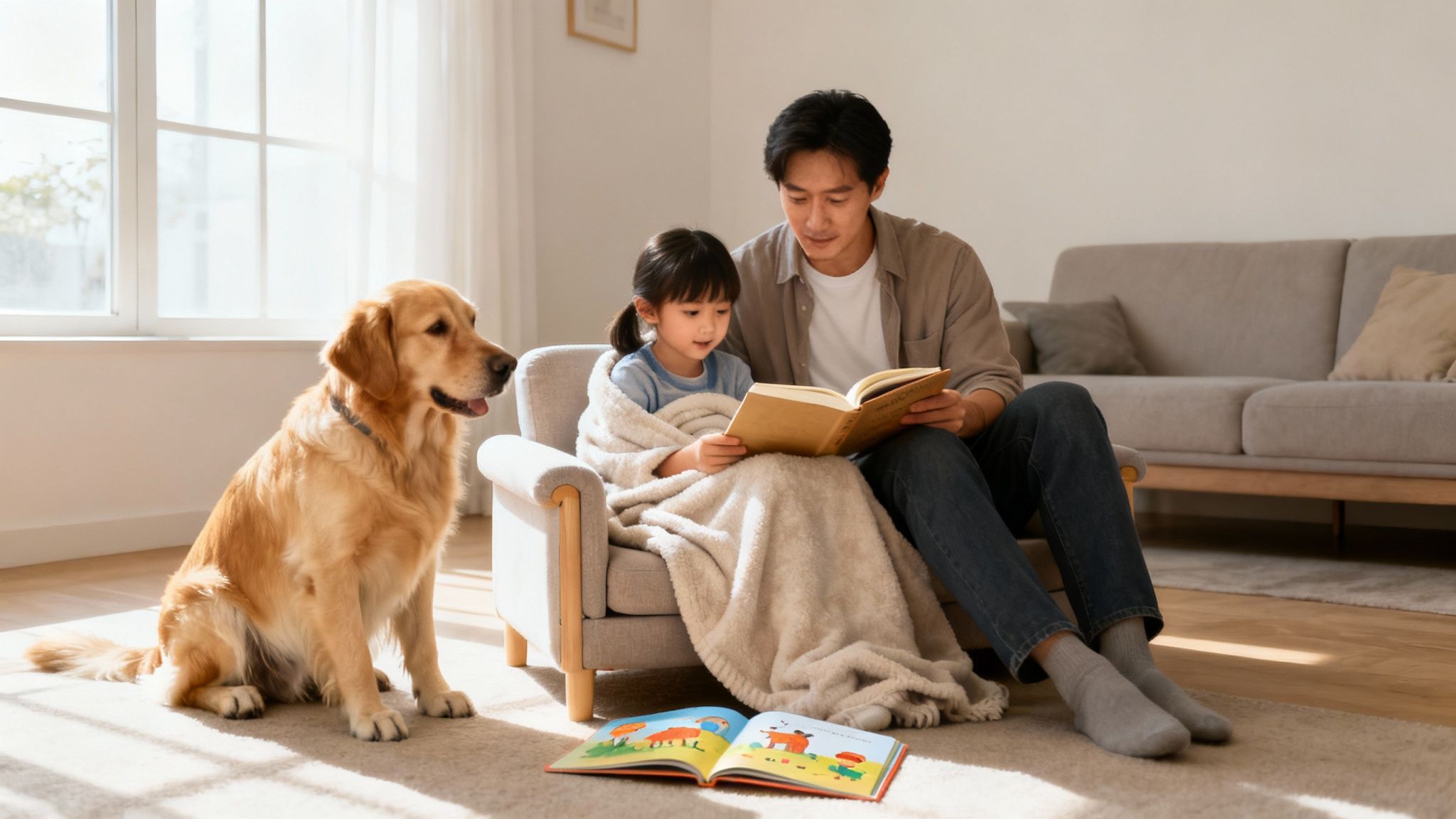
First grade is such a special time. It's that pivotal year when kids start crossing the bridge from learning to read to reading to learn. That simple, cozy act of sharing a story aloud is honestly one of the most powerful things you can do as a parent or teacher.
This daily ritual isn't just about filling the quiet moments before bedtime. It’s a real investment in your child's future, building crucial skills one exciting page at a time. Every story you share opens up a whole new world.
More Than Just Storytime
Reading aloud is so much more than just saying the words on a page; it nurtures a child’s growth in so many ways. When you crack open a book together, you're not just telling a story—you're actively helping to shape a young mind. This shared time is just as important for academic progress as it is for emotional development.
Reading aloud to young children is not only one of the best activities to stimulate language and cognitive skills; it also builds motivation, curiosity, and memory.
This dedicated time sends a clear message: reading is a source of joy and connection, not just another school chore. It’s a chance to cuddle up—maybe even with your favorite furry friend—and explore amazing new worlds together. That positive feeling is the secret ingredient to raising a lifelong book lover.
Key Benefits of a Read Aloud Routine
So, what exactly makes this time together so powerful? The benefits go way beyond just learning letters and words, creating a positive ripple effect across a child's entire education.
- Vocabulary Expansion: Kids get to hear words and sentence patterns that are way more advanced than what they can read on their own or what you might use in everyday chat. Their vocabulary grows without them even realizing it.
- Building Empathy: By following along with the ups and downs of different characters, children learn to see the world from other points of view. This is how they start building compassion and understanding.
- Strengthening Bonds: There's nothing quite like a shared story. Reading together creates a cherished routine and a special space for connection, making the bond between you and your child even stronger.
Ultimately, finding the best read aloud books for first graders is all about creating those moments of shared adventure. Think of this guide as your cozy roadmap to discovering those perfect stories and making every single storytime a memory in the making.
Why a Daily Story Is a First Grade Game Changer
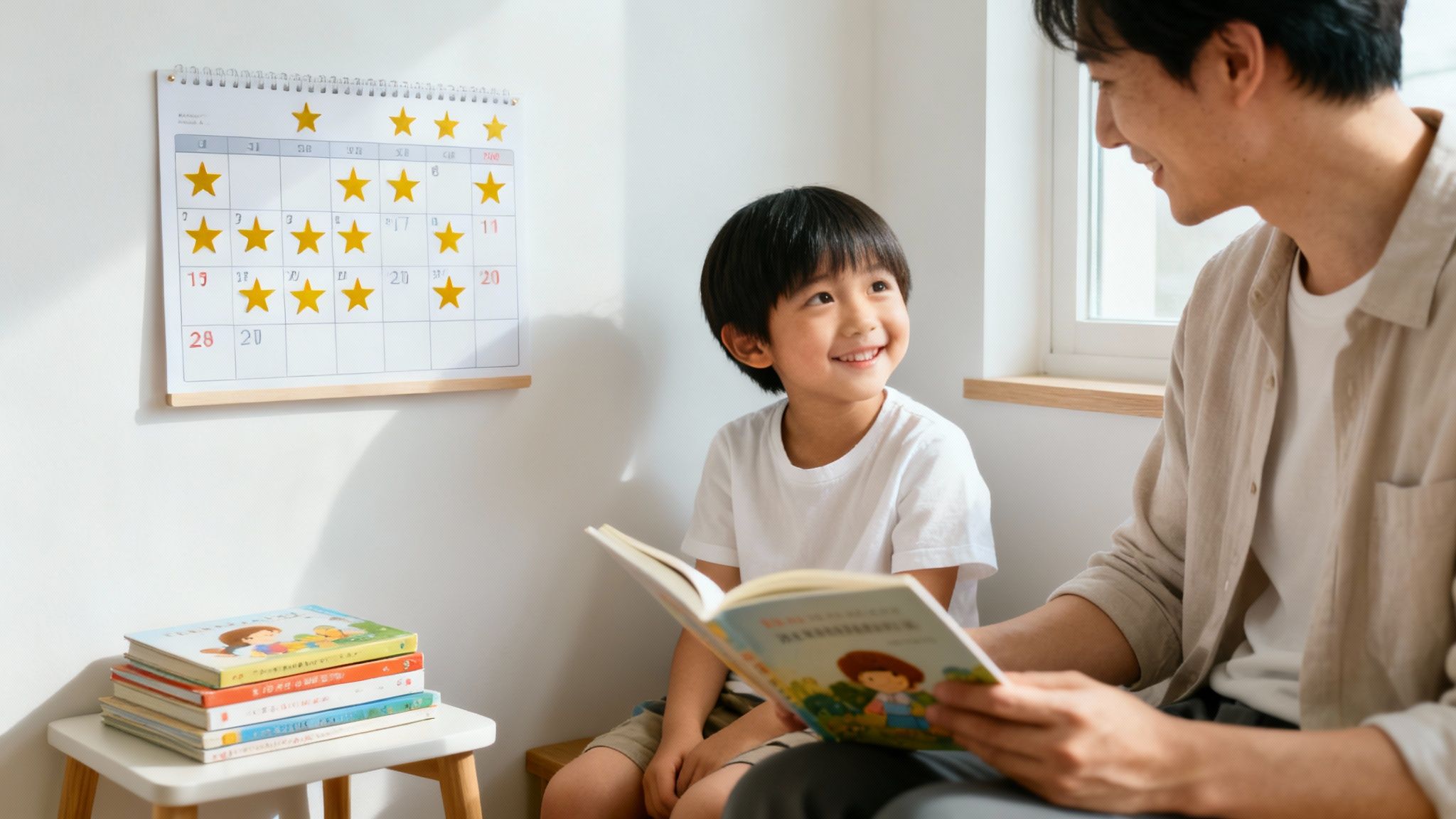
Diving into a book with your first-grader every day might seem like just a simple, cozy habit. But believe me, it’s one of the most powerful things you can do for their growing mind. It’s far more than a wind-down routine; it's a genuine game changer for building a love of reading that can last a lifetime.
When you read aloud, you're giving your child a VIP tour of the world of language. They get to hear words, sentence structures, and big ideas that they wouldn't run into in everyday chat or in the simple books they can read by themselves. This kind of exposure is rocket fuel for their vocabulary and listening skills.
Building Brains One Chapter at a Time
Think of a daily read-aloud as a workout for your child's brain. It flexes and strengthens cognitive muscles in a few really important ways, introducing new concepts that get them ready for bigger academic challenges later on.
This isn't just about them remembering the plot of a story. It’s about building the deep-down skills that make someone a great reader.
- Soaking Up Language: When a child hears you read with expression, they’re learning what fluent reading sounds like—the rhythm, the pauses, the emotion. It’s a live demonstration of how words on a page spring to life.
- Growing Their Attention Span: Let's be honest, getting a six-year-old to sit still can be a challenge! But consistently listening to a story helps stretch their ability to focus, a skill they need for pretty much everything in the classroom.
- Building a "Knowledge Library": Every book—whether it’s about dinosaurs, faraway planets, or a kid in a different neighborhood—adds a new file to their mental library. This background knowledge makes it so much easier for them to understand new things they encounter in the future.
This is exactly why finding the best read aloud books for first graders is such a big deal. The right books are the tools you use to build these foundational skills.
The Academic Ripple Effect
The magic of a daily 15-to-20-minute reading session creates a positive ripple effect that touches every school subject. When a child has strong listening skills and a rich vocabulary, they have the keys to unlock everything from tricky math word problems to science lessons.
The research on this is crystal clear: there's a huge link between being read to at home and doing well in school. Some major studies have even found that kids who are read to daily end up a full school year ahead of their peers! It’s no wonder that over 80% of K-2 teachers make daily read-alouds a priority, adding up to 100 hours of listening exposure over the school year. You can get a peek into how teachers use this strategy on teachstarter.com.
The single most important activity for building the knowledge required for eventual success in reading is reading aloud to children.
This powerful habit doesn’t just build better readers; it builds more confident and curious kids. By setting aside this time, you're showing them that learning is a fun, exciting adventure.
If you’re ready to start your own reading adventure, you can check out our collection of free dog-themed stories and find a new tale to share. Every single story helps build that solid foundation, one page at a time.
How to Choose the Perfect First Grade Read Aloud
Walking into a bookstore or library can feel a little overwhelming. With rows and rows of colorful covers staring back at you, how do you pick the right one? Don't worry, we're here to help you become a story-finding expert for your favorite six- or seven-year-old.
Think of this less like a test and more like a treasure hunt. We’re going to look past the reading levels on the back cover and focus on the real magic: the things that make a story stick. We're on the lookout for books that get those little gears turning, with characters that feel like new friends and pictures that pull you right into another world.
Look for a Plot That Pulls Them In
First graders have an incredible sense of wonder. The best read-alouds tap right into that with a story that's easy to follow but has just enough suspense to keep them leaning in, desperate to know what happens next. You'll want a clear beginning, a juicy middle, and a satisfying end, usually centered around a problem the main character has to figure out.
This doesn't have to be some epic dragon-slaying adventure (though those are great, too!). The most captivating plots often come from everyday life—the nervousness of making a new friend, the frustration of losing a favorite toy, or the triumph of finally learning to ride a bike. The goal is a storyline that hooks them from the very first sentence.
Find Characters They Can See Themselves In
Characters are the heart of any great story. For a first grader, seeing a character on the page who feels the same things they do—excitement, shyness, anger, or pure joy—is incredibly affirming. It’s a quiet way of telling them, "Hey, your big feelings are normal, and you're not the only one who feels this way."
As you're flipping through a book, look for characters who learn something or change a little by the end. These are perfect springboards for conversations about real-life stuff like kindness, getting back up after a mistake, and understanding someone else's point of view. A character they can cheer for makes all the difference.
A truly great children's book does more than just entertain; it opens a door to understanding the world and the people (and animals!) in it. It's a vehicle for empathy, sparking conversations that last long after the final page is turned.
For more fantastic tips on picking out stories your kids will love, check out this excellent guide to children's picture books.
Pay Attention to Rich Language and Incredible Art
Reading aloud is your chance to show your first grader how amazing language can be. You're not just saying words; you're performing them! Look for books that use delicious, descriptive words, playful rhymes, or catchy, repetitive phrases your child can't help but join in on.
And never, ever underestimate the power of the pictures! The illustrations are a huge part of the experience. They aren't just there to look pretty; they add layers to the story, give clues about what's happening, and spark so many great "I-spy" conversations. You want art that feels alive, showing emotion and detail that invites you to linger on each page.
To help you spot these winners on the shelf, here's a quick checklist you can keep in mind.
First Grade Read Aloud Selection Checklist
| Feature to Look For | Why It Matters | Book Example Snippet |
|---|---|---|
| A Clear Problem/Solution | Gives the story structure and keeps kids engaged to see how it gets resolved. | "But the wolf huffed and puffed and… the house of sticks fell down! 'Oh no!' cried the little pig. 'What will I do now?'" |
| Relatable Characters | Helps children connect with the story on an emotional level and build empathy. | "Leo was nervous. It was his first day at a new school, and his tummy felt like it was full of jumpy frogs." |
| Rich Vocabulary | Gently introduces new words in context, expanding their language skills naturally. | "The tiny mouse scurried across the enormous, glistening kitchen floor, hoping for a crumb." |
| Engaging Illustrations | Provides visual cues, deepens understanding, and tells parts of the story words can't. | A picture showing a character's sad expression, even when the text doesn't mention their feelings. |
| Repetitive Phrases or Rhymes | Encourages participation, builds reading confidence, and makes the story memorable. | "'I'll get you!' roared the giant. 'Fee-fi-fo-fum!'" |
Thinking about these features can turn a good storytime into a great one, building a foundation for a lifelong love of reading.
Mix It Up to Keep It Fresh
Finally, variety is the spice of storytime! Just like you wouldn't want to eat the same meal every day, kids get excited about reading when they're exposed to all sorts of different stories. A well-rounded reading "diet" keeps things interesting and opens their eyes to new ideas.
Try to rotate through a mix of these:
- Funny Books: Laughter is contagious! Sharing a silly story creates a powerful, positive connection with reading.
- Heartfelt Stories: Tales that explore feelings and relationships are fantastic for nurturing empathy and emotional intelligence.
- Non-Fiction Adventures: Feed their curiosity with books about real-life sharks, faraway planets, or how machines work.
- Fantasy and Make-Believe: Stories about magic and impossible worlds stretch their imagination and show them the endless possibilities of storytelling.
Keeping these simple ideas in your back pocket will help you confidently pick books that don't just entertain your first grader, but also help them grow. It's all about finding those gems that make you both snuggle in and say, "Can we read it again?"
Our Curated List of Must-Read First Grade Books
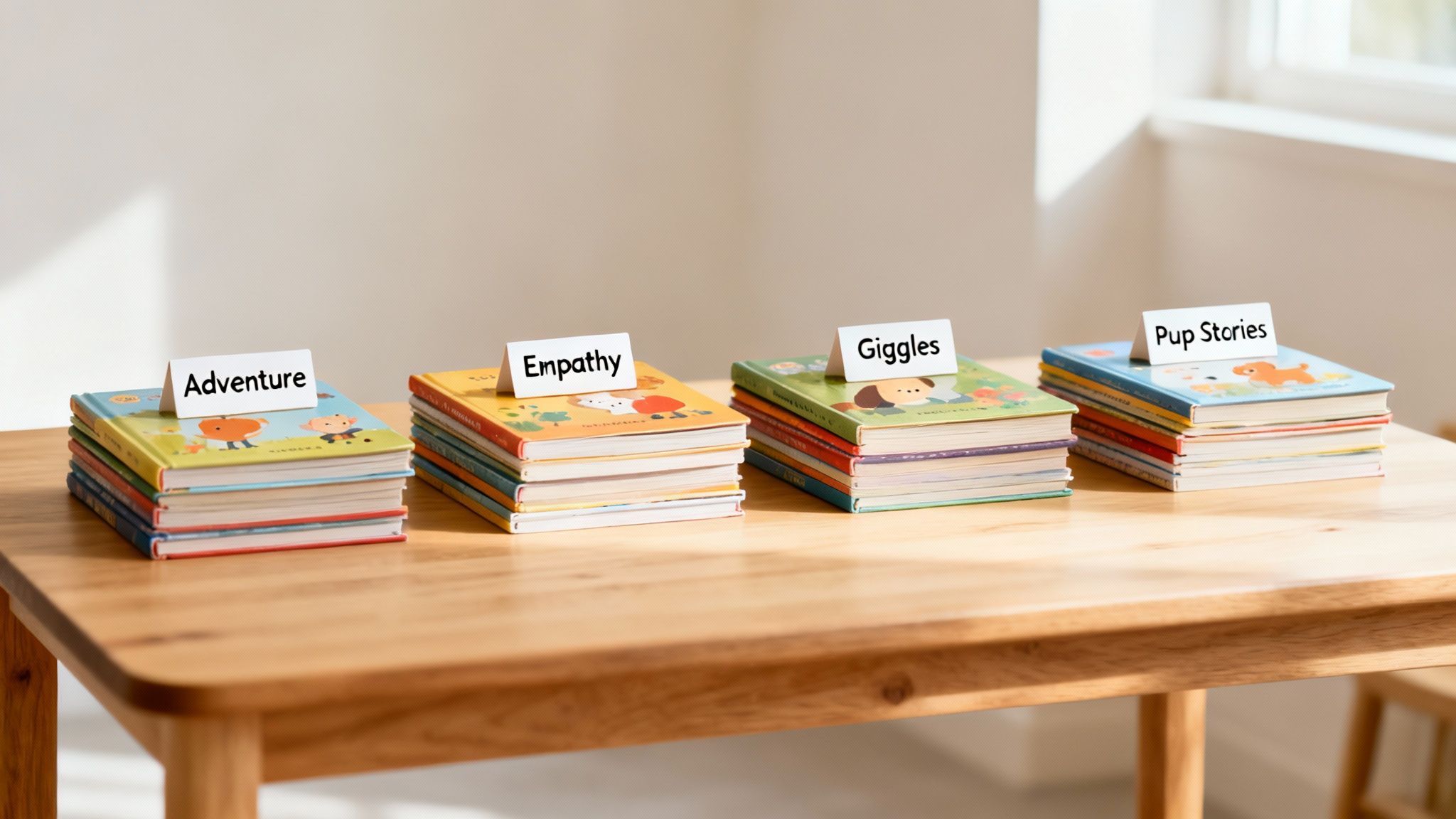
Alright, this is the part we’ve all been waiting for! We've covered the why and the how of reading aloud, so now it’s time to dive into the books themselves. Welcome to our hand-picked collection of the very best read-alouds for first graders.
These aren't just random titles pulled off a shelf. Every single one has been chosen to spark joy, get conversations started, and create those cozy storytime memories you’ll both look back on for years. We've even grouped them by theme to help you find the perfect book for any mood or moment.
Adventures That Spark Imagination
These are the stories that whisk you away to faraway lands, introduce you to brave heroes, and make you feel like anything is possible. They’re absolutely perfect for stretching a first-grader's growing sense of wonder.
- Where the Wild Things Are by Maurice Sendak: This timeless classic is a must. It so perfectly captures a child’s big, messy emotions and shows how imagination can be a safe harbor to explore them. It’s a fantastic opener for talking about managing our feelings and the deep comfort of coming home.
- The Princess in Black by Shannon Hale & Dean Hale: Who says princesses can't be superheroes? This series is a fun, action-packed read that smashes stereotypes with a ton of humor and heart. It's a great choice for showing kids that you can be both prim and powerful.
- Journey by Aaron Becker: A wordless picture book might seem like an odd choice for a read-aloud, but that's precisely where its magic lies! This breathtakingly illustrated story invites you and your child to become the storytellers, crafting the narrative of a lonely girl who draws a door to a whole new world. It’s an incredible tool for building creativity and storytelling skills together.
Stories That Build Empathy
At its heart, reading is about walking in someone else’s shoes for a little while. These books are brilliant for helping first graders see things from a new perspective, grow their kindness, and learn about the big, beautiful, diverse world all around them.
A great book is a friend that never lets you down. It can make you laugh, make you think, and most importantly, make you feel. It opens up the world and shows you that everyone has a story worth hearing.
These tales offer gentle yet powerful lessons in compassion.
- The Day You Begin by Jacqueline Woodson: This gorgeous book is like a warm hug for any child who has ever felt like an outsider. It tenderly explores the feeling of being different and the courage it takes to share your own unique story. It’s perfect for the start of a school year or any time a child needs a reminder that their voice truly matters.
- Last Stop on Market Street by Matt de la Peña: CJ isn't exactly thrilled about his weekly bus ride with his nana, but she gently helps him see the beauty in their routine and the vibrancy of their community. This book is a masterclass in finding wonder in the everyday. It’s a powerful story about gratitude and shifting your perspective.
- Each Kindness by Jacqueline Woodson: Not every story has a perfectly neat, happy ending, and that's an important lesson, too. This poignant book shows the lasting ripple effect of our choices—and of missed opportunities to be kind. It’s a thoughtful read that will spark deep conversations about friendship, regret, and the weight of our actions.
Hilarious Tales for Big Giggles
Sometimes, you just need a good laugh! Silly stories are one of the surest ways to build a positive, joyful connection with reading. Sharing a giggle over a ridiculous character or a zany plot twist makes storytime pure fun.
These books are practically guaranteed to get the whole family laughing.
- Don't Let the Pigeon Drive the Bus! by Mo Willems: This interactive book is pure genius. The Pigeon's hilarious begging and epic tantrums invite the reader to jump in and participate, making it feel more like a game than a story. It’s a fantastic way to teach kids about persuasion while they dissolve into giggles.
- The Book with No Pictures by B.J. Novak: The idea is so simple but so brilliant: a book without pictures forces the person reading it to say all sorts of silly words out loud. Kids find it absolutely hysterical to hear an adult say things like "BLUURF" and "GLIBBITY GLOBBITY." It's a joyful celebration of the pure power of words.
Pawsitively Awesome Pup Stories
As a community of dog lovers, we couldn't resist a special section for our four-legged friends! Stories about dogs are a wonderful way to explore big themes like loyalty, friendship, and unconditional love.
- Harry the Dirty Dog by Gene Zion: A classic for a reason! This is the charming tale of a white dog with black spots who hates baths so much that he runs away. His adventures get him so grubby that his own family doesn't even recognize him! It’s a sweet story about family, belonging, and the simple comfort of being home (and clean!).
- Gaston by Kelly DiPucchio: What happens when a bulldog is accidentally raised in a family of poodles? You get this wonderful story! It’s a heartwarming tale about what truly makes a family, proving that love is so much more important than what you look like. It’s a beautiful way to talk about identity and acceptance.
This list is just a launchpad for your own reading adventures. The real magic happens when you and your little listener discover the stories that you both fall in love with. For more curated titles and dog-themed fun, be sure to browse the full collection in the SetterFrens book shop. Happy reading!
Turn Storytime Into an Interactive Adventure
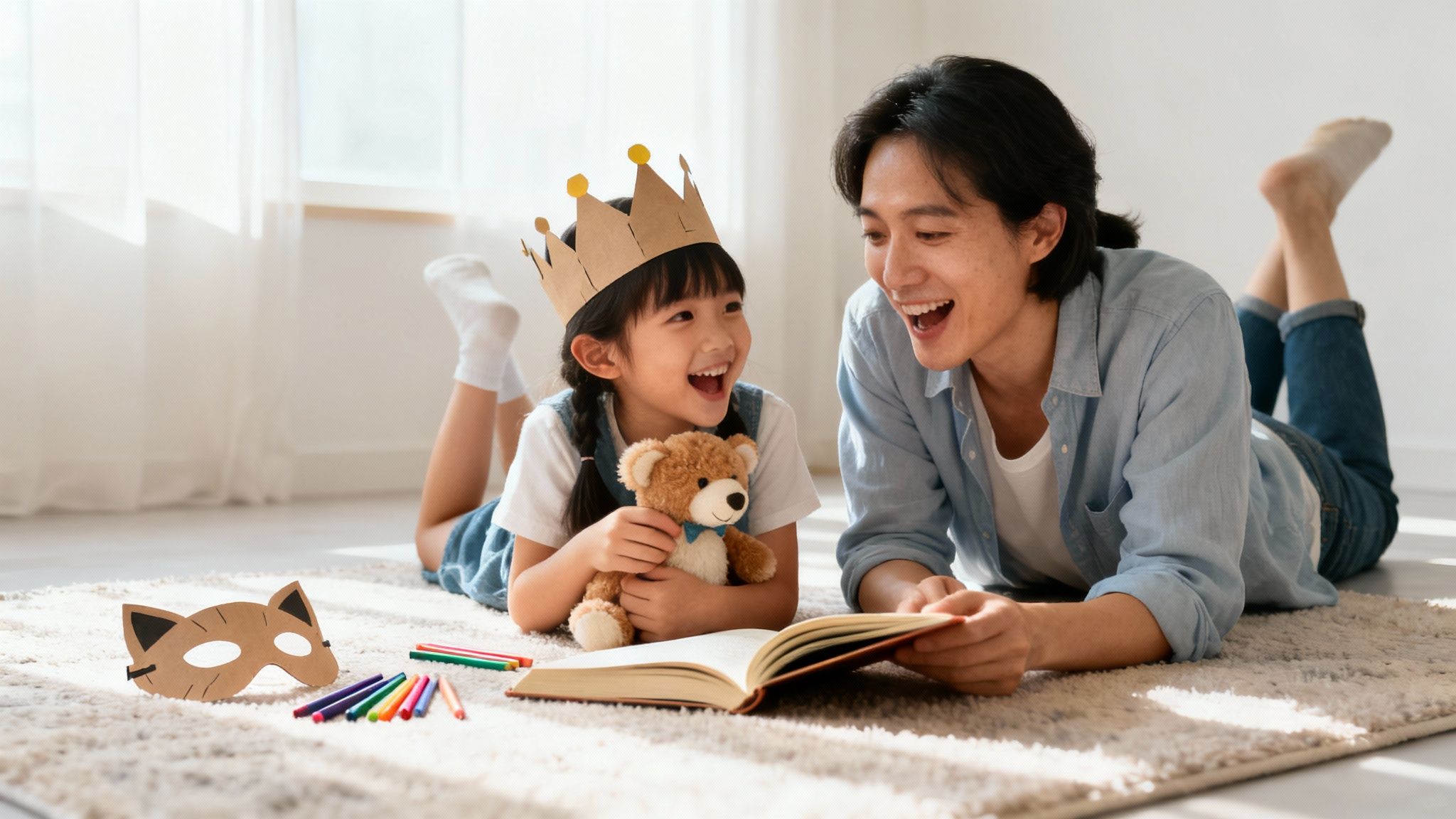
Okay, you've got a fantastic stack of read-aloud books for your first grader. Now what? The real magic happens when you turn storytime from a one-way performance into a shared adventure. Our goal is to make reading a lively conversation, not just a quiet listen.
Think of yourself as the director of a play, not just the narrator. Your energy is what pulls your little listener off the sidelines and right into the middle of the action. A few simple tweaks can make all the difference.
Bring the Story to Life
The best read-alouds are a full-body experience. It’s not just about the words; it’s about the sounds, the feelings, and the fun of sharing a story together. You don’t need a drama degree—just a willingness to be a little silly.
- Use Different Voices: You don't have to be a professional voice actor! A squeaky voice for a tiny mouse or a deep, rumbly one for a grumpy bear is all it takes. This simple trick helps kids track who’s talking and keeps them hooked.
- Vary Your Pace and Volume: Are the characters in a frantic chase? Speed up your reading! Is a character sharing a secret? Drop your voice to a whisper. This shows kids how to read with expression and helps them feel the story's emotional rhythm.
- Use Props: Don’t be afraid to get creative with what's around you. A blanket can instantly become a superhero's cape, or a flashlight can cast spooky shadows on the wall. You could even use special items like voice recorder plush toys to let kids record and play back character dialogue, which they absolutely love.
Spark Curiosity with Questions
Hitting the pause button to ask a question is one of the most powerful things you can do during a read-aloud. It gives your child a moment to think, process, and jump into the conversation.
The trick is to ask open-ended questions—ones that can't be answered with a simple "yes" or "no."
Pausing to ask, "What do you think will happen next?" or "Why do you think the character did that?" transforms a child from a listener into a co-creator of the story. It gives them ownership over the narrative and validates their predictions and ideas.
This isn't just about checking for understanding. It builds their confidence and shows them that their ideas about the story are just as important as the words on the page.
Extend the Fun Beyond the Final Page
The story doesn’t have to end when you close the book! Connecting the tale to your child's world is what makes the lessons and themes really stick. Here are a few easy ways to keep the magic going.
- Draw a Favorite Scene: Hand over some crayons and ask them to draw their favorite part of the story. It’s a fantastic way to see what really resonated with them and helps them process the narrative visually.
- Act It Out: Get on your feet and have some fun with a little dramatic play! Let them pretend to be the brave knight or the silly pigeon from the book. It’s a playful, physical way to explore a character’s feelings and motivations.
- Connect to Real Life: Chat about how the story relates to their own world. You can ask things like, "Have you ever felt brave like that?" or "What would you do if that happened to you at school?"
By making read-alouds interactive, you’re doing so much more than just reading. You’re building memories, sharpening their thinking skills, and planting the seeds for a lifelong love of stories. For more great ideas on creating fun family moments, check out our how-to guides.
Common Questions About Reading to First Graders
Even for those of us who have been reading to kids for years, questions pop up. It’s totally normal to wonder if you’re doing it “right.” Let’s walk through some of the most common ones so you can feel confident every time you open a book.
Think of this as your go-to guide for those little "what if" moments. The most important thing is simply showing up for storytime—your enthusiasm is the real magic.
What If My First Grader Can Already Read on Their Own?
First off, that’s fantastic! Celebrate that milestone. But don't pack away the read-aloud books just yet.
When a child can read independently, reading to them takes on a new, incredibly valuable role. You get to introduce them to stories with more complex plots, richer vocabulary, and deeper themes than they could handle on their own.
Think of it like this: they can play "Twinkle, Twinkle, Little Star" on the piano, but you can sit them down and let them experience a full symphony orchestra. Reading aloud models fluent, expressive reading and keeps that special storytime connection strong.
The goal of read-alouds isn't just about the mechanics of decoding words. It's about fostering a deep, joyful connection with stories. For an independent reader, it becomes a shared experience where you can explore bigger ideas together.
How Do I Handle a Fidgety Listener?
Ah, the classic scene: you’re getting to the climax of the story, and your little one is wiggling, squirming, or suddenly fascinated by a speck of dust on the floor. Don’t panic—this is peak first-grader behavior!
Instead of trying to force stillness, lean into it. A lot of kids actually listen better when their hands are busy.
- Offer quiet activities: A coloring page, some LEGOs, or a lump of modeling dough can work wonders for focus.
- Bring in a cuddle buddy: Sometimes, all they need is to snuggle up with a favorite stuffed animal or even the family dog.
- Keep it short and sweet: A focused 15-20 minutes is way more impactful than a 30-minute session filled with frustration.
Remember, as long as they’re listening (and you’ll know if they’re not!), they are soaking up the story.
SetterFrens is a cozy online community built for dog lovers who believe life’s better with a wagging tail and a good book. Along with our curated selection of dog-themed books, SetterFren.com features honest reviews of the top dog products and practical how-to guides to help you care for your pup like a pro. Join our Puppicino Club to unlock member perks, book updates, and dog-friendly treats. Stay part of the fun by following @setterfrens on TikTok and Instagram for heartwarming dog moments, product tips, and behind-the-scenes content from our growing pack