Training a Chihuahua is less about teaching commands and more about understanding their one-of-a-kind personality. If you want to get anywhere, you'll need a healthy dose of positive reinforcement, a boatload of patience, and a consistent approach to channel their clever but famously stubborn nature. Embrace that "big dog in a small body" attitude, and you'll build an incredible, trusting bond.
Understanding Your Chihuahua's Big Personality
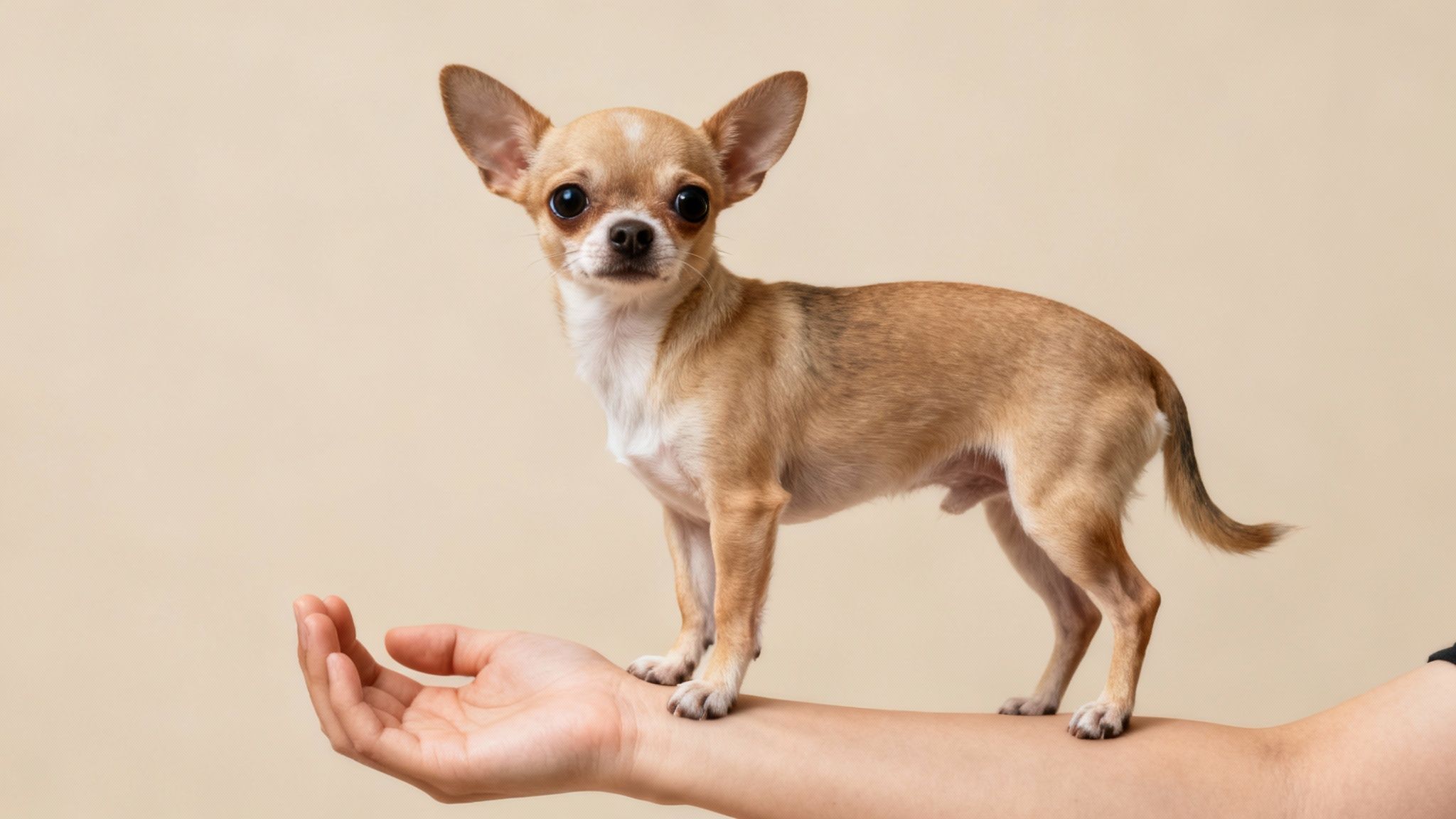
So, you've got a Chihuahua! Welcome to the wild, wonderful world of these pint-sized companions. Here at SetterFrens, we believe life’s better with a wagging tail and a good book, and Chihuahuas pack more personality into their tiny frames than just about any other breed out there.
Before we jump into the how-to of training, it's really important to get inside their clever, and let's be honest, often complex little minds. Understanding what makes your Chihuahua tick is the absolute foundation for a happy, well-behaved pup. These aren't just downsized Labradors; they have a distinct temperament all their own.
The Mighty Chihuahua Mindset
Chihuahuas are famous for their fierce loyalty and the incredible bond they form with their favorite person. They often see themselves as valiant protectors of their kingdom (your lap, the couch, you), which explains that surprisingly loud bark and their wariness around new people or situations. This isn't just random yapping; it's a deep-seated instinct to guard their family.
Of course, that protective streak can be a double-edged sword. While it's incredibly endearing, it can also lead to issues if it isn't channeled correctly. That’s precisely why learning how to train Chihuahuas from day one is so crucial—it builds their confidence so they feel secure, not scared.
It's a common myth that Chihuahuas are just naturally "yappy" or aggressive. The truth is, these behaviors almost always come from fear or not enough socialization. A confident Chihuahua is a quiet and calm one.
Don't forget how smart they are, either. These little guys are lightning-fast learners and can pick up on routines and commands with surprising speed. But that same intelligence can fuel a legendary stubborn streak. If a Chihuahua doesn't see the point in doing something, they just… won't. This is exactly why gentle, positive training methods aren't just an option; they're the only way forward.
Why Positive Training Is the Only Way
Trying to use forceful or harsh methods on a Chihuahua will backfire. Spectacularly. Their sensitive souls cause them to completely shut down when they face negativity, which only leads to more fear, anxiety, and a total breakdown of the trust you're trying to build.
Instead, your training toolbox should be filled with things they love:
- Praise and Affection: Never, ever underestimate the power of a happy "Good boy!" or a scratch behind the ears. Your approval is everything to them.
- High-Value Treats: We're talking tiny, pea-sized bits of boiled chicken or cheese. A delicious reward makes learning feel like the best game ever.
- Fun and Games: Weaving play into your training sessions keeps their busy minds engaged and stops them from getting bored.
Their popularity is soaring for a reason—that captivating personality is hard to resist. In fact, Chihuahuas have become the fourth most popular dog breed worldwide. This boom has really put a spotlight on the need for good training, since their natural suspicion of strangers can create problems if they aren't socialized properly. You can learn more about the breed's characteristics and training needs to get the full picture.
When you approach training with empathy, you’re doing so much more than just teaching "sit" or "stay." You’re building a lifelong partnership founded on mutual respect and genuine affection. That mindset is the real secret to unlocking the best in your tiny companion and making sure your life together is a truly joyful one.
Building a Partnership with Positive Reinforcement
Now that we've covered the big personality packed into your little Chihuahua, let's talk about the single best way to train them: positive reinforcement. This isn't just about tossing a treat their way now and then. It's a whole philosophy—a way of communicating that builds trust and makes your dog want to work with you. For a breed as clever and sensitive as a Chihuahua, it's really the only way to go.
Forget any old-school advice about being the "alpha." Harsh corrections and punishment-based methods just don't work with these dogs. In fact, they almost always backfire, creating fear and anxiety that shuts down their ability to learn. Positive reinforcement, on the other hand, turns training into a fun game you play together.
What Does Positive Reinforcement Actually Look Like?
In a nutshell, positive reinforcement means you reward your dog for doing something you like. That reward—whether it's a treat, a toy, or praise—makes them more likely to offer that behavior again. It’s a powerful, science-backed way to shape your dog's choices without resorting to force.
Think of it from your Chihuahua's perspective. When you ask for a "sit" and they get a tiny, delicious piece of chicken the moment their bottom hits the floor, they quickly connect the dots. Sitting becomes a fantastic idea! They aren't just obeying you; they're an active, eager participant in the training game.
The real magic happens when your Chihuahua starts thinking for themselves and offering good behaviors on their own. That's when you know you're building a true partnership, not just a relationship based on commands.
This simple concept is your key to teaching everything from potty training to more complex cues like coming when called. It’s all about catching them being good and making a big, happy deal about it.
Finding Your Chihuahua's "Paycheck"
Not all rewards are created equal, and Chihuahuas can be particularly discerning customers. To get the most out of your training, you need to discover what your individual dog finds truly motivating. We call these high-value rewards, and they should be way more exciting than their regular kibble.
Here are a few things that usually work like a charm:
- Amazing Treats: We're talking small, soft, and extra-tasty. Tiny bits of boiled chicken, freeze-dried salmon, or a small piece of cheese often do the trick. Remember, these pups are tiny, so keep treats pea-sized to avoid filling them up too quickly.
- A Favorite Toy: Does your Chi have a squeaky toy they go nuts for? A quick game of tug or a short toss can be a fantastic reward for a job well done.
- Praise and Cuddles: Never, ever underestimate the power of your own voice and affection! An enthusiastic, high-pitched "Yes! Good boy!" followed by a chest scratch can be just as rewarding as a treat for many Chihuahuas.
The secret is to mix it up. Keep your dog guessing what amazing reward is coming next, and they'll stay far more engaged in the game.
To help you get started, here's a quick guide to different positive reinforcement techniques and when to use them.
Positive Reinforcement Techniques for Chihuahuas
This quick-reference guide shows you effective positive reinforcement strategies and when to use them for the best results.
| Technique | Best For | Example |
|---|---|---|
| Food Luring | Teaching new physical cues like "sit," "down," or "spin." | Holding a treat over your Chihuahua's head and moving it backward to guide them into a natural sit position. |
| Capturing | Rewarding a naturally occurring behavior you want to encourage. | Your puppy lies down on their mat on their own. You say "Yes!" and toss them a treat on the mat. |
| Clicker Training | Marking the exact moment of a correct behavior with precision. | Teaching "touch." The instant your dog's nose touches your hand, you click and then give a treat. |
| Verbal Marker | Using a word (like "Yes!" or "Good!") to mark a behavior. | You're outside and your Chihuahua looks at you when you say their name. You say "Yes!" excitedly and reward them. |
Using a mix of these methods will keep your training dynamic and help your Chihuahua learn faster.
Keep It Short, Sweet, and Fun
One of the biggest mistakes people make is pushing for marathon training sessions. A Chihuahua's attention span is short, and trying to train for 30 minutes straight will only lead to frustration for both of you. You'll get so much more done with short, frequent sessions.
In fact, reward-based training has been shown to be up to 85-90% more effective than punitive methods for this breed. The experts agree: stick to sessions that are just 2-5 minutes long, but sprinkle them throughout your day. A few minutes before breakfast, another session during a commercial break—it all adds up. You can read more about effective Chihuahua training strategies to see just how well this approach works for them.
By making training a quick, happy part of their daily life, you’re doing so much more than just teaching commands. You’re building a rock-solid foundation of trust and communication. That positive bond is the real secret to helping your Chihuahua become the amazing little companion you know they can be.
Conquering Potty and Crate Training
Let's be honest, house training can be one of the biggest headaches for many Chihuahua parents. Their tiny bodies and equally tiny bladders mean they need to go out a lot more frequently than larger dogs, and accidents can feel inevitable. But don’t worry, you’ve absolutely got this! With a solid plan and a dash of patience, you can achieve a clean house and a happy pup.
The key to success is unwavering consistency. Because they're so small, a Chihuahua puppy might need a potty break every 30-60 minutes while they’re awake and playing. This frequency is both your biggest challenge and your greatest tool. The more chances you give them to get it right, the faster they'll learn the rules.
Mastering House Training Basics
First things first, pick a designated potty spot in your yard. Every single time you take your pup out, carry them directly to this spot. This is non-negotiable. It helps them build a super strong association between that specific location and doing their business.
Once you're at the spot, stand still and use a consistent cue like "Go potty" or "Hurry up."
The moment they finish, it’s party time! Lavish them with enthusiastic praise, a super tasty treat, and a little bit of play. This immediate reward is crucial; it teaches them that going potty outside is the most wonderful thing they can do.
This simple, positive feedback loop is the heart and soul of effective Chihuahua training.
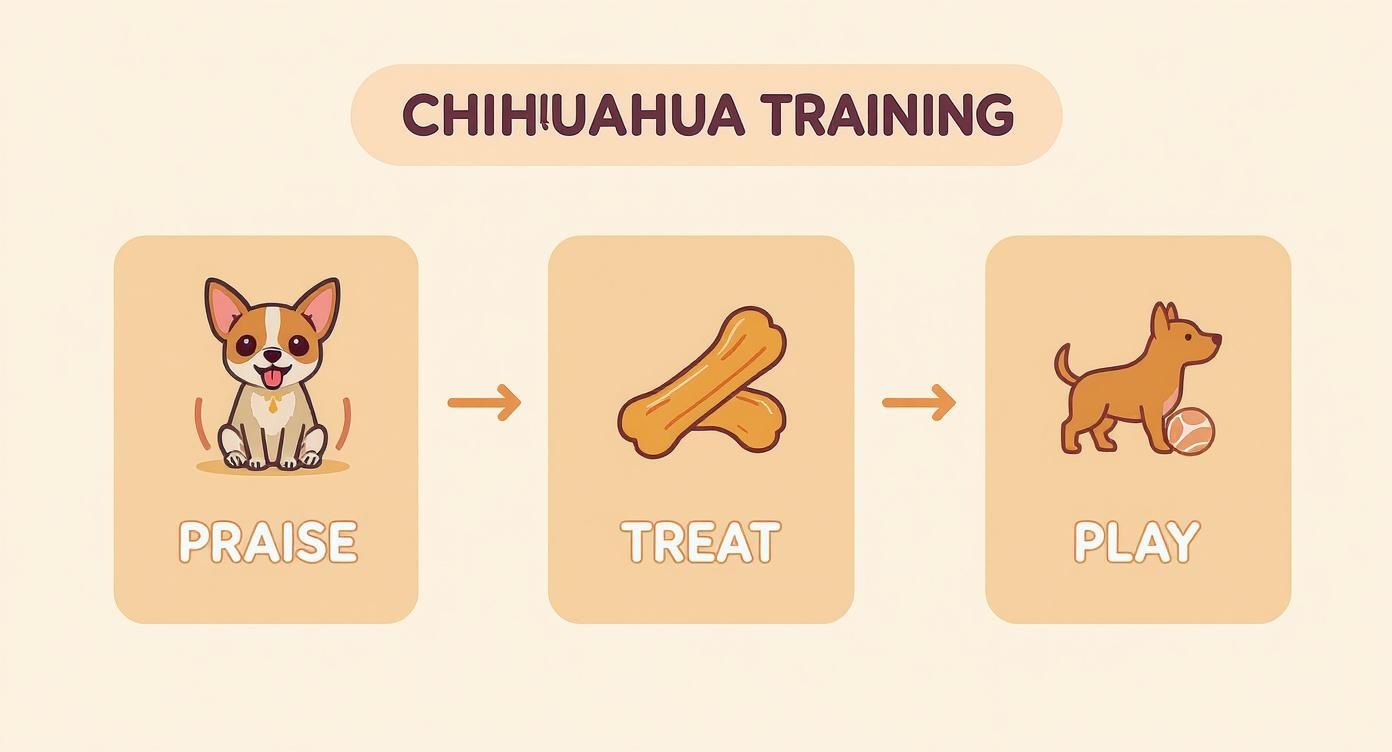
It’s a clear cycle: your praise reinforces the good behavior, a treat makes it memorable, and play solidifies the positive connection with both you and the training itself.
Accidents are going to happen, especially in the beginning. When they do, please don't scold or punish your Chihuahua. This will only create fear and anxiety, which can derail your house training efforts. Instead, calmly clean up the mess with an enzymatic cleaner (this is vital to eliminate odors that attract them back to the same spot) and make a mental note to be more vigilant.
Your Secret Weapon: Crate Training
We know a lot of owners feel guilty about "caging" their dog. But when you introduce it the right way, a crate isn't a jail—it's a safe, cozy den. It taps directly into a dog's natural instinct to have a secure space of their own. For potty training a Chihuahua, it's an indispensable tool.
Dogs naturally avoid soiling their sleeping area. By using a crate, you can manage your pup's environment and drastically reduce the chance of accidents when you can't watch them like a hawk. The crate should be just large enough for them to stand up, turn around, and lie down comfortably. If it's too big, they might decide one end is a bedroom and the other is a bathroom.
Crate training isn't just about preventing accidents. It's about giving your Chihuahua a personal sanctuary where they feel safe and secure. This builds their confidence and independence in the long run.
Start by making the crate the best place on earth. Toss high-value treats inside, feed them their meals in there, and leave the door open so they can explore it on their own terms. It should never, ever be used for punishment. For a complete walkthrough, check out our guide on how to crate train a dog for more detailed tips.
Creating a Potty Training Schedule
A predictable routine is your absolute best friend. A Chihuahua's body works on a schedule, and when you align your training with their natural rhythms, you're setting them up for success from day one.
Here’s a sample schedule you can adapt for your own Chi:
- First thing in the morning: The second you wake up, carry your Chihuahua straight to their potty spot.
- After every meal: Digestion gets things moving, so a potty break about 5-15 minutes after eating is essential.
- After every nap: Just like us, dogs often need to relieve themselves after waking up.
- During and after playtime: Excitement can bring on the urge to go! Take breaks during wild play sessions and always go out right after.
- Last thing before bed: One final trip to the potty spot before you turn in for the night helps them make it through until morning.
By sticking to this kind of schedule and using the crate as a management tool, you’re creating a predictable world for your pup. They'll quickly learn that there are plenty of right times and places to go, making indoor accidents a thing of the past.
Nurturing a Confident and Social Chihuahua
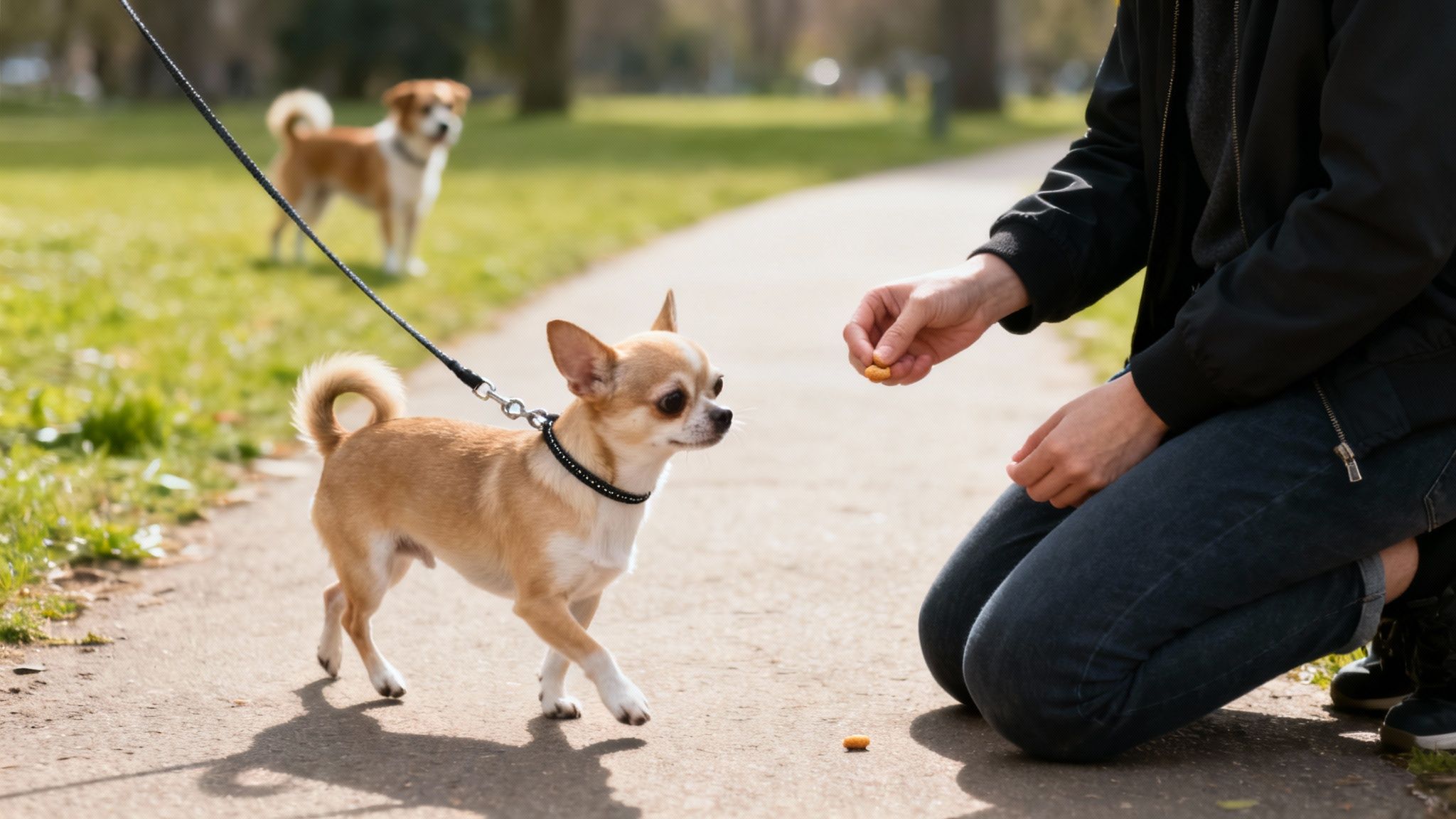
A well-socialized Chihuahua is an absolute pleasure—calm, curious, and ready for any adventure you throw their way. Getting there is all about safely introducing your pup to the big, wide world and building a foundation of confidence that will last a lifetime.
Socialization isn't just about playdates at the dog park. It’s about creating a huge library of positive experiences with new people, weird sounds (hello, vacuum cleaner!), and different places. By carefully managing these introductions, you're teaching your Chihuahua that the world is an exciting, safe place, not something to be feared.
Building Confidence Through Positive Exposure
The golden rule here is to move at your dog's pace. Never, ever force them into a situation that makes them uncomfortable. For a small dog, that can backfire in a heartbeat, creating anxiety instead of confidence. Think of it like you're building a "positive association bank"—every calm, happy experience is a deposit.
Let's say you're introducing your Chi to a new person. Have the person kneel down, avoid staring, and let your pup make the first move. A treat tossed from a few feet away can work wonders, teaching your dog that new people bring good things. For a deeper dive into this critical period, you should learn more about puppy socialization in our comprehensive article.
This early work is so important. These little dogs can be prone to stress-related issues, and good socialization makes a huge difference in their overall well-being. Considering their lifespan can be anywhere from 12-20 years, this early investment in their confidence pays dividends for years to come.
A Simple Socialization Checklist
To keep you on track without overwhelming your pup, here's a simple checklist of experiences to introduce in a positive, controlled way.
- Different Surfaces: Let them walk on grass, pavement, carpet, and wood floors. Getting used to new textures under their paws is a great confidence booster.
- Weird Noises: Gradually introduce everyday sounds like the doorbell, the washing machine, or distant traffic. Pair these noises with a tasty treat to build a positive connection.
- New People: Arrange calm meet-and-greets with friends of all types—people with hats, beards, or glasses. The key is to always let your Chihuahua initiate contact.
- Other Calm Dogs: Find a friend with a gentle, well-behaved adult dog. Let them meet in a neutral space, like a quiet park, on loose leashes. Keep that first interaction short and sweet.
Remember, it's about quality over quantity. One positive, calm experience is worth ten rushed, stressful ones. Always end on a high note, before your Chihuahua gets tired or overwhelmed.
Mastering Leash Manners for Relaxing Walks
Once your Chihuahua is feeling more confident about the world, it's time to tackle leash manners. For their size, they can be surprisingly strong pullers, and that protective nature can lead to a lot of barking at other dogs. The goal is to make your daily walks a relaxing joy, not a stressful tug-of-war.
Start by teaching your Chihuahua that right next to you is the best place on earth. In a quiet spot, reward them with a fantastic treat every time they walk calmly by your side on a loose leash. If they start to pull? Just stop walking. The second the leash goes slack, praise them and start moving again.
This simple "stop-and-go" method quickly teaches them that pulling gets them nowhere, but staying close keeps the fun walk going. When you see another dog coming, create some space and use treats to keep your Chi's attention on you. This redirects their focus, prevents that reactive barking, and turns your walks from a chore into a wonderful bonding experience.
Tackling Common Chihuahua Behavior Problems
Even the most well-behaved Chihuahua can have their moments. Let’s be honest, these little dogs have big personalities, and sometimes that means big challenges. But when you hit a snag, remember this: your Chi isn't trying to be "bad." They're communicating the only way they know how.
Think of yourself as a dog detective. Is that frantic barking a sign of boredom, fear, or a demand for attention? Is that ankle-nipping a playful gesture that’s gone too far? Figuring out the "why" is the first real step to solving the problem with kindness and patience.
The Mystery of the Non-Stop Barker
A Chihuahua's bark is truly a wonder of nature—so much sound from such a tiny body! But when it's constant, it can wear on anyone's nerves. The key to quiet is to first pinpoint the trigger. What sets them off? Is it the mail carrier, a squirrel in the yard, or just the sound of the wind?
Once you know what’s causing the racket, you can start to change the environment and teach a better response.
- Alert Barking: If your pup is the self-appointed neighborhood watch, limit their view. A simple roll of privacy film on the windows can work wonders by removing the constant visual stimulation.
- Boredom Barking: A busy brain makes for a quiet dog. Bust out the puzzle toys, have a five-minute training session, or play some scent games around the house. A little mental work goes a long way.
- Attention Barking: If the barking is aimed directly at you, this is your cue to play it cool. The moment they start, ignore them. The second they take a breath, calmly praise them and offer your attention. They’ll quickly learn that silence, not noise, gets them what they want.
Teaching a "quiet" cue is a game-changer. When they're barking, say "Quiet" in a calm, neutral tone. The instant they pause—even for a second—mark it with an enthusiastic "Yes!" and give them a super tasty treat. They'll start connecting the dots: silence is a very rewarding trick!
How to Handle Nipping and Ankle-Biting
Puppies explore with their mouths. It's totally normal. But those little needle teeth can hurt, and it's a habit you want to redirect from day one. In adult Chihuahuas, nipping often pops up during moments of high excitement, fear, or even their instinct to "herd" you around the house.
Whatever you do, don't punish the nip. Yelling or pushing them away can just ramp up the excitement or, worse, make them fearful of you. The goal is to teach them what to chew on instead.
It's a common reflex to yelp and pull your hand away fast when a puppy nips. But for a feisty Chi, that can seem like a fun game! You're much better off with a calm, boring reaction.
The moment you feel those teeth, say a simple "Oops!" and immediately make yourself boring. Freeze, or even get up and walk away for about 20-30 seconds. This sends a clear message: nipping makes the fun human go away.
When you return, come back with a toy in hand. By immediately offering an appropriate chew toy, you're not just stopping the "bad" behavior; you're showing them exactly what you want them to do.
Soothing Separation Anxiety
Chihuahuas are professional-level companions. They bond so deeply with their people, which is one of their best traits, but it can also make them prone to separation anxiety. This isn't just a case of the blues; it's genuine panic that can lead to destructive chewing, non-stop howling, and accidents in the house.
Your mission is to gently build their confidence and show them that alone time is safe and can even be a good thing.
Start by making your comings and goings no big deal. Ditch the dramatic goodbyes and over-the-top greetings when you get home. A calm, low-key attitude helps lower the emotional stakes of your presence.
When you do have to leave, give them a special high-value treat that they only get when they're alone. A frozen Kong or a tricky food puzzle can create a positive association, making them think, "Oh good, she's leaving! I get my favorite thing!"
If your dog’s anxiety also shows up as reactivity on walks, it often comes from the same place of insecurity. Learning to manage those triggers can have a halo effect on their overall confidence. For more on this, check out our guide to leash reactivity in dogs.
Below is a quick-glance table to help you match common Chihuahua behaviors with their likely causes and positive solutions.
Chihuahua Behavior Troubleshooting Guide
| Behavior Problem | Potential Cause | Positive Solution |
|---|---|---|
| Excessive Barking | Boredom, fear, attention-seeking, territorial instincts. | Manage the environment (e.g., window film), increase mental/physical exercise, teach a "quiet" cue with positive reinforcement. |
| Nipping/Biting | Puppy teething, overexcitement, fear, herding instinct. | Immediately withdraw attention when nipping occurs. Redirect their mouth to an appropriate chew toy. Never use physical punishment. |
| Separation Anxiety | Fear of being alone, hyper-attachment, boredom. | Make departures/arrivals low-key. Provide special "alone-time" toys. Practice short, positive separations to build confidence. |
| Leash Pulling | Excitement, anxiety, lack of training, desire to get somewhere fast. | Use a front-clip harness. Stop walking when the leash is tight and reward them for coming back to you. Keep training sessions short and fun. |
| House Soiling | Incomplete house training, medical issues, marking territory, submissive urination. | Rule out medical causes with a vet. Go back to house-training basics with a strict schedule and lots of rewards. Clean accidents with an enzymatic cleaner. |
Remember, changing behavior takes time and consistency. Celebrate the small wins, stay patient, and focus on building a relationship based on trust, not intimidation. You and your little dog will get there together.
Answering Your Top Chihuahua Training Questions
Over in our SetterFrens community, we hear from Chihuahua parents all the time. It's a fantastic place to share stories and, of course, ask for a little help when things get tricky. We've pulled together some of the most common questions we see, with real-world answers to get you through those head-scratching moments.
"Why on Earth Won't My Chihuahua Potty Train?"
If you're asking this, take a deep breath. You are definitely not alone. This is hands-down the number one frustration, but it's rarely about a "naughty" dog. It usually comes down to a small hiccup in the training plan and their teeny-tiny bladders that just can't hold it for long.
When you feel like you're at a standstill, the best thing to do is go right back to the beginning. Think of it as a reset. Get super strict about taking them out every 30-60 minutes while they’re awake, and always after eating or waking up from a nap. And when they do go outside? Make the reward ridiculously amazing—I'm talking a tiny morsel of boiled chicken or a sliver of cheese—and give it to them the instant they finish their business.
Here's a pro tip: Ditch the potty pads. I know they seem like a good idea, but they often muddy the waters by telling your dog that going potty inside is okay sometimes. To really nail the "outside is the only bathroom" rule, it's best to remove them completely and double down on those frequent outdoor trips.
"Is It Too Late to Train My Adult Chihuahua?"
Not a chance! It’s a total myth that you can't teach an old dog new tricks. While puppies are like little sponges, adult Chihuahuas are brilliant and are more than capable of learning new commands and better habits.
The main difference with an adult is that you're often undoing habits they've had for years. This means your greatest tool is patience. Your goal is to build a foundation of trust and show them that training is a fun game you play together, not a chore. Keep sessions short, fun, and packed with high-value rewards, and you’ll be amazed at what your adult Chi can learn.
"How Can I Help My Chihuahua Who Is Scared of Everything?"
It's easy to forget that from their perspective, the world is a land of loud, scary giants. That natural caution is a survival instinct. Our job isn't to throw them into the deep end, but to slowly show them that the world isn't so frightening after all.
The key is to build their confidence through positive experiences. This technique is called desensitization and counter-conditioning. Let's say the vacuum cleaner is Public Enemy No. 1. Don't chase them with it! Instead, turn it on in the farthest room in the house and start giving your Chi fantastic treats. Over days or weeks, you can slowly decrease the distance, always pairing the scary noise with something wonderful.
A few ground rules for helping a fearful dog:
- Let them set the pace. Never, ever force them to greet a person or investigate a scary object. Let them choose to approach when they feel ready.
- Be their safe space. You are their advocate. It is 100% okay to tell a stranger, "Sorry, he's a little nervous and isn't up for pets right now." Protecting them from being overwhelmed shows them they can trust you.
- Stay cool and calm. Your dog feeds off your energy. If you're relaxed and cheerful, you're sending them a powerful signal that everything is okay.
"Why Is My Chihuahua So Incredibly Stubborn?"
Ah, the classic Chihuahua stubborn streak! I like to reframe this: it's not stubbornness, it's intelligence. They're not just mindlessly obeying; they're constantly running a cost-benefit analysis in their little heads, asking, "Is this worth my time?"
If your Chi suddenly seems to be ignoring you, it’s time to play detective. Ask yourself:
- Is my "paycheck" good enough? A boring piece of kibble might not be enough to get them to perform. Amp it up with a tastier treat.
- Is this class too long? Their focus is fleeting. Five-minute sessions are far more effective than one 20-minute slog.
- Am I being clear? Make sure your hand signals and verbal cues are consistent. If they're confused, they're likely to just check out.
What we see as stubbornness is often just a breakdown in communication or motivation. Make the reward better and the request clearer, and you'll find that clever mind is suddenly very eager to work with you.
Training your Chihuahua is a journey, one that builds an incredible bond between you. For more practical how-to guides and honest reviews of the top dog products, explore everything we have to offer at SetterFrens. Join our Puppicino Club to unlock member perks and stay connected with our growing pack! https://setterfren.com