Welcome to the SetterFrens family, where we believe life’s better with a wagging tail and a good book. If mealtimes in your house have started to feel a little tense, you're not alone. What you're likely seeing is food aggression, which at its core is a form of resource guarding. It’s a primal instinct where a dog feels a desperate need to protect something valuable—in this case, their dinner.
What Food Aggression Really Means
Let's break down what’s actually happening when your pup stiffens up as you walk past their bowl. This isn't about your dog trying to be "dominant" or the "alpha." It's a flashing neon sign that they're feeling insecure, anxious, or genuinely worried that their precious meal is about to disappear.
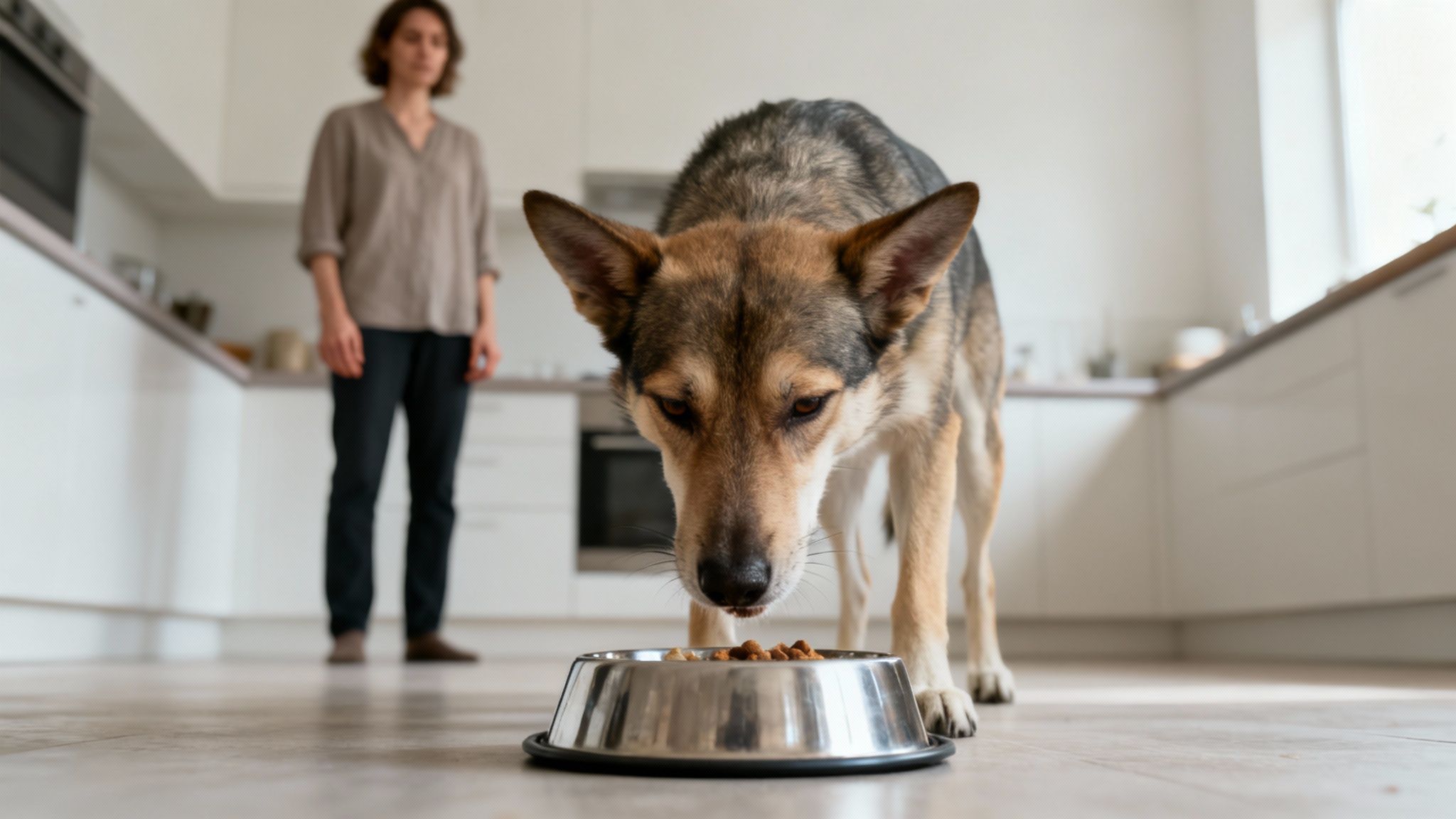
Think about it this way: imagine you finally got your hands on the last slice of your favorite pizza after a long, hungry day. If someone started inching towards your plate, you’d probably tense up and watch them like a hawk, right? That’s a glimpse into how your dog feels. They see their food as a critical resource for survival, and their instincts are screaming at them to protect it.
Unpacking the Instinct Behind Guarding
Resource guarding is a totally normal behavior that's been hardwired into dogs for thousands of years. For their wild ancestors, successfully defending a meal could literally mean the difference between life and death. Even though our well-fed pups now eat from shiny bowls in a warm kitchen, that ancient instinct can still bubble to the surface.
This protective streak is a challenge for dog owners everywhere, and it often comes down to genetics or past experiences. In fact, studies show that food aggression in dogs is often a genetic trait. Some dogs are simply predisposed to guard their food, even if they show no interest in guarding toys or their favorite spot on the couch. You can dive deeper into the science behind this at Happy Dog Training.
It's so important to remember this: a dog showing food aggression is not a 'bad dog.' They are a scared dog, communicating their fear and stress in the only way they know how. Getting this is the first, most critical step toward helping them feel safe again.
Our goal is to shift your perspective from frustration to compassion. Once you understand the insecurity driving the behavior, you can start building a more peaceful and trusting dinnertime for everyone.
The Spectrum of Food Guarding Behaviors
Recognizing the subtle (and not-so-subtle) cues your dog gives off is key to understanding their comfort level. The signs can range from barely noticeable to loud and clear. Here's a quick reference to help you identify the different levels of food guarding, from mild discomfort to severe warnings.
The Spectrum of Food Guarding Behaviors
| Severity Level | Common Behaviors You Might See |
|---|---|
| Mild | Gulping food down faster, a slight tensing of the body, or quickly looking back and forth at you. |
| Moderate | Freezing completely over the bowl, blocking you with their body, a "hard eye" stare, or a low, quiet growl. |
| Severe | Loud, rumbling growls, lip curling to show teeth, snapping the air, lunging, or biting. |
Paying close attention to your dog's body language is everything. The sooner you spot these signals and understand what they mean, the sooner you can intervene and create a safer, happier mealtime routine.
So, Where Does Food Guarding Actually Come From?
Okay, now that we know what food guarding looks like, let's get into the why. It's easy to see the growling and snapping and think you have a "bad dog," but that's almost never the case. This behavior is a complicated mix of instinct, life experience, and sometimes even physical pain. Getting to the root of it is the only way to help your dog feel safe and secure.
At its core, food guarding is an ancient survival instinct. For your dog's wild ancestors, a meal was a big deal—something they had to work hard for and couldn't afford to lose. Guarding that precious resource was simply a matter of survival. Even though your pampered pup has a guaranteed dinner, that old instinct can still fire up, especially if something triggers it.
The Most Common Triggers
There are a few usual suspects when it comes to what sets off this protective behavior. Pinpointing what's going on with your specific dog is key to figuring out the right way to help them. For many dogs, especially those from rescues, their past is a huge part of the puzzle.
A history of having to fight for food is a really powerful trigger. If a dog had to compete with littermates for every bite or spent time as a stray, they learned a tough lesson: food is scarce and you have to defend it. That deep-seated anxiety doesn't just vanish when they land in a loving home with a bottomless food bowl.
Competition with other pets is another big one. In a home with more than one animal, just having another dog or even a curious cat wander near the food bowl can feel like a major threat. This can lead to what we call intra-household aggression, where one dog feels like they constantly have to be on guard during mealtimes.
A lot of people mistakenly think resource guarding is about a dog trying to be "dominant" or the "alpha." The truth is, it's almost always rooted in fear. The dog isn't trying to control you; they're terrified of losing something incredibly valuable to them.
Genes, Health, and Things We Do By Accident
Beyond a dog's past and their current living situation, a few other things can play a role. And sometimes, we might be contributing to the problem without even realizing it.
- Genetics and Breed: Let's be honest, some breeds were literally created to be guardians. That natural instinct to protect can sometimes spill over into protecting things like food and toys. While any dog of any breed can guard their food, some may just be more naturally inclined to do so.
- Oops, I Reinforced It: Ever found yourself hovering nervously over your dog while they eat? Or maybe you've tried to snatch the bowl away to "test" them? We often do these things with the best intentions, but it can backfire by teaching the dog that we are a threat to their meal, making them feel they need to guard it even more fiercely.
- Hidden Medical Problems: This is a big one and should always be your first thought, especially if the guarding behavior is new. A sudden change in behavior can be a sign that your dog is in pain. Things like a sore tooth, an upset stomach, or arthritis can make a dog feel vulnerable and cranky, causing them to lash out when you get too close while they're eating.
Before you jump into any training plan, a trip to the vet is non-negotiable. A dog who is in pain can't learn, and simply treating an underlying medical issue might resolve the guarding completely. Once you understand the "why" behind the growl, you can approach the situation with the right tools and a lot more patience.
Creating a Safe Mealtime Environment
Before we even touch on training, the number one priority is safety. Period. When you're dealing with food aggression, making mealtimes calm and secure isn’t just a nice idea—it’s the bedrock for everything else you’re going to do. The goal right now is to lower the tension and stop scary incidents before they even have a chance to start.
Think of it this way: you can't have a meaningful chat with someone who feels backed into a corner. In the same way, your dog can't learn that you're not a threat to their food if every meal feels like a potential fight. So, the first step is to call a truce by simply managing the situation.
Establish Non-Negotiable Household Rules
Simple, crystal-clear rules are your best friend. Consistency is key here, as it removes the guesswork that feeds your dog's anxiety and creates a predictable routine for everyone in the house—two-legged members included.
- Rule 1: Give Them Space. This is the big one. Let your dog eat in peace. That means no petting, no walking right past their bowl, and absolutely no reaching toward it while they're eating.
- Rule 2: No "Testing" the Dog. Don't deliberately walk up to the bowl just to see if they'll react. All this does is prove their fears right—that you are a threat to their food. This will only make the aggression worse.
- Rule 3: Teach Children to Respect Mealtime. This is non-negotiable. Kids need to understand that a dog's food bowl is a strict "no-go" zone. Supervise every single interaction and teach them that a dog who is eating needs to be left completely alone.
These rules aren't about "giving in" to the dog. They're about de-escalating a potentially dangerous situation and creating a safe starting point from which you can begin to build trust.
Why Punishing a Growl Backfires
I get it. Your first instinct when your dog growls might be to scold them. But this is one of the most dangerous mistakes you can make. A growl isn't the aggression itself; it's a warning sign. It's your dog's way of screaming, "I'm really uncomfortable right now, please back off!"
Punishing a growl is like taking the batteries out of a smoke detector. You haven't put out the fire; you've just silenced the alarm. A dog who is taught not to growl is a dog who might skip the warning and go straight to a bite.
Instead of punishing this communication, listen to it. A growl is valuable information. It tells you exactly where your dog's boundaries are. When you respect that warning, you start showing your dog they don't need to escalate their behavior to be heard.
Simple Management Techniques for Immediate Safety
Management is all about changing the environment so the problem behavior doesn't happen in the first place. These are simple but incredibly effective things you can do today to make mealtimes safer for everyone.
1. Create a Stress-Free Dining Zone
Feed your dog in a separate, secure spot where they know they won't be bothered. This removes the very triggers—people walking by, another pet getting too close—that are causing the stress.
A few great options are:
- A separate room: The easiest solution. Just close the door and let them eat in peace.
- Behind a baby gate: This creates a clear visual and physical boundary.
- In their crate: For many dogs, a crate is their personal den, a safe haven. Feeding them in there gives them their own private dining room where they can fully relax. If you need help making the crate a happy place, check out our guide on how to crate train your dog.
2. Managing a Multi-Dog Household
If you have more than one dog, it is absolutely essential to feed them separately. Even if only one dog is showing signs of food guarding, the presence of another dog creates a sense of competition and amps up the tension for everyone. Feed them in different rooms or in their own crates to make sure everyone feels safe and secure.
Think of these management steps as your immediate safety net. By preventing confrontations, you lower everyone's stress—yours and your dog's—and create the peaceful foundation you need to start positive, effective training.
Positive Training to Build Mealtime Trust
Once you have a solid management plan in place, we can get to the really rewarding part: changing how your dog feels about you being near their food bowl. The goal here isn't to silence your dog's warnings; it's to soothe the anxiety that's causing them in the first place. We're going to stick to positive, science-backed methods that show your dog you're a friend, not a foe.
This whole process is built on two powerful concepts: desensitization and counter-conditioning. It’s a bit like helping a friend get over a fear of spiders. You wouldn’t start by dropping a tarantula in their lap, right? You’d probably start by looking at a cartoon spider from across the room, maybe while sharing their favorite snack.
We're going to apply that same gentle logic to your dog. We'll slowly get them comfortable with your presence during meals by pairing it with something wonderful. The goal is to change their internal monologue from, "Oh no, they're coming to steal my dinner!" to "Awesome, they're here to make my dinner even better!"
Starting the Training Journey
Your first step is almost laughably simple: just be there. Start by walking past your dog’s eating area from a distance they can handle. This magic distance is called their threshold—the point where they notice you but don't feel the need to react. If they freeze, stare, or stop eating, you’re too close. Back up a few feet.
Find that sweet spot where they're still relaxed, and just casually walk by a few times while they eat. That's it.
After a few successful sessions of just walking by, it's time to start the "good things happen when you approach" game. From that same comfortable distance, toss a super high-value treat (think tiny bits of chicken or cheese) in the direction of their bowl.
Don’t get any closer. Just toss and walk away. Over several mealtimes, you're sending a simple, powerful message: "My presence makes bonus treats appear out of nowhere."
This simple diagram breaks down the core idea of creating a safe setup: separate the dog, give the person space, and respect everyone's boundaries.
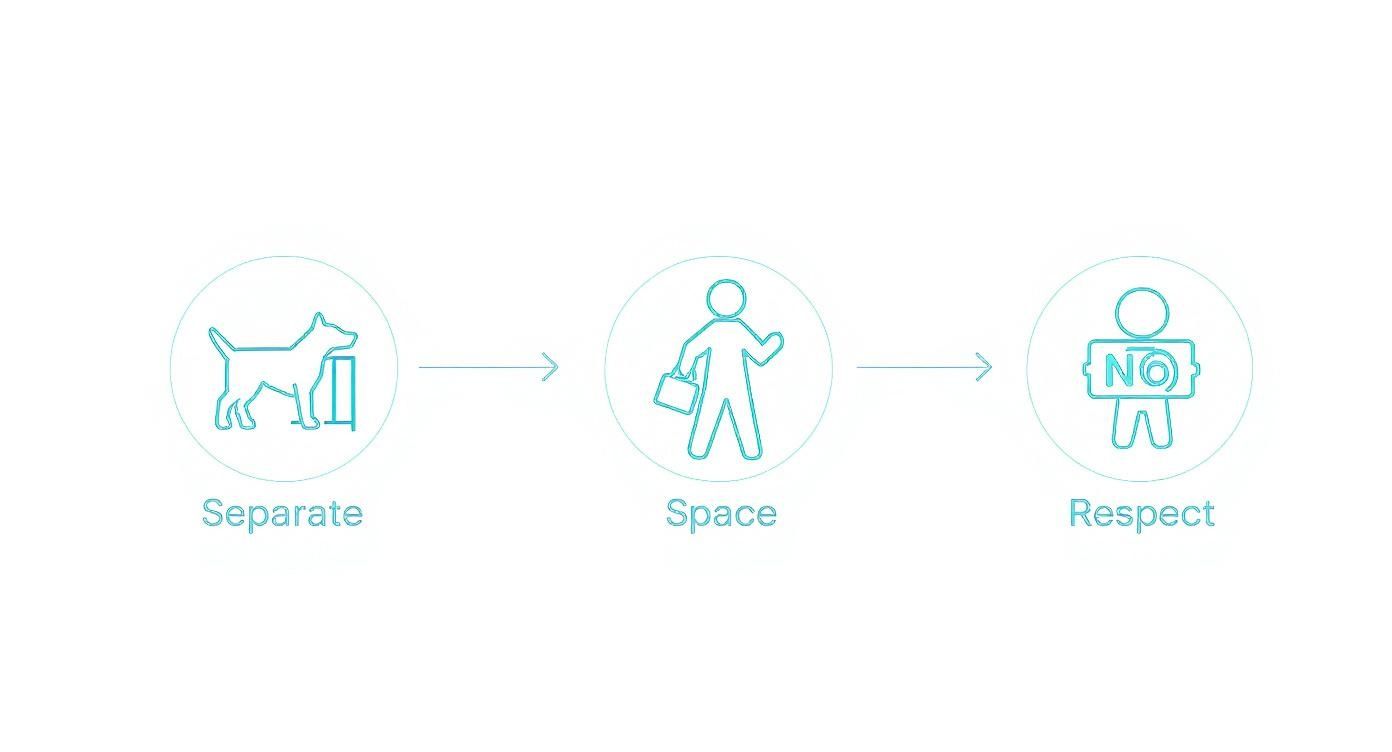
Think of these management steps as the essential safety net that allows you to do the positive training work without stress.
Introducing the Trade-Up Game
Another fantastic exercise for building trust is what I call the "trade-up" game. This is all about teaching your dog that giving something up to you actually leads to getting something better. It’s a fun, low-pressure way to change how they think about guarding their stuff.
Start with something your dog enjoys but isn't obsessed with, like a durable chew toy.
- Offer a Trade: While they're happily chewing, walk over with an amazing treat.
- Make the Exchange: Let them sniff the treat. The moment they drop the toy to take it, give them lots of praise and the treat.
- Give It Back: This is the most important part! Immediately give the toy right back to them.
The lesson here is profound: letting a human take something doesn't mean it's gone for good. It means something great happens, and then you get your thing back! This is a game-changer for a dog who guards resources. These same positive reinforcement principles are vital at any age, as we cover in our guide on how to train a puppy.
Reading Your Dog and Pacing the Training
Throughout all of this, let your dog's body language be your guide. If you see any signs of stress—freezing up, a hard stare, a low grumble—it just means you’ve moved a little too fast. No big deal. Just take a step back to the last point where they were comfortable and work from there.
Every dog learns at their own pace. This isn't a race to the finish line. The true goal is building genuine, lasting trust, and that can only happen when your dog feels safe. Celebrate the small victories and never push them past their comfort zone.
By focusing on the root cause, you’re doing real, meaningful work. And you’re not alone—studies show that resource guarding, including food aggression in dogs, is seen in about 9.2% of dogs in clinical and shelter settings. The most successful strategies, recommended by experts, are these positive ones that slowly build a dog's confidence. For more on these proven methods, the team at Best Friends Animal Society has some excellent resources.
By patiently using these games and techniques, you aren't just "fixing" a behavior problem. You're fundamentally rebuilding your dog's sense of security and making your bond with them stronger than ever.
Breed Tendencies and Guarding Behaviors
When you're faced with a growling dog at mealtime, it's only natural to ask, "Is it their breed?" The short answer is yes, genetics can play a role. But the real answer is a whole lot more complicated.
While any dog, of any breed or mix, can develop food aggression, certain breeds might be statistically more prone to guarding behaviors. It's really important to see this information for what it is: a statistical pattern, not a prophecy for your individual dog.
A breed's original job can give us some clues. Think about it—dogs bred for guarding, herding, or working independently often needed a strong instinct to protect what was theirs, including a hard-earned meal. This doesn't make them "bad" dogs; it just means being a little possessive might be written into their ancestral job description.
On the other hand, breeds developed for companionship or cooperative tasks, like many of the retrievers, might statistically show lower rates of guarding. But a dog’s life experience—their puppyhood, training, and current home environment—is a much bigger piece of the puzzle than their pedigree. A Golden Retriever from a rough background is far more likely to guard its food than a well-socialized Doberman.
A Look at the Data
Scientific studies give us some fascinating insights into how aggression can vary across different breeds, helping us move past stereotypes and look at actual trends.
Here's a look at what some of the research shows. Keep in mind, this is about statistical likelihood, not a label for every dog in that breed.
Aggression Prevalence Across Popular Dog Breeds
| Dog Breed | Relative Odds of Aggression (Compared to Baseline) |
|---|---|
| Rough Collie | 3.78x higher |
| Miniature Poodle | 2.97x higher |
| Miniature Schnauzer | 2.95x higher |
| German Shepherd | 2.62x higher |
| Spanish Water Dog | 2.49x higher |
| Golden Retriever | 0.42x (lower than baseline) |
| Labrador Retriever | 0.40x (lower than baseline) |
| Bernese Mountain Dog | 0.30x (lower than baseline) |
| Great Dane | 0.29x (lower than baseline) |
Source: Faunalytics, based on a comprehensive study of dog aggression.
These numbers show us that some breeds might have a higher statistical chance of showing aggressive behaviors, while others have a lower one. For a deeper dive, you can explore more insights about how breed and background influence aggression.
The biggest takeaway here? A breed’s reputation is not a reliable crystal ball for an individual dog's behavior. The "gentlest" breeds can guard resources fiercely, and breeds with tough-guy reputations can be total softies. Your dog is an individual first.
Beyond the Breed Label
At the end of the day, getting too hung up on breed can make you miss what’s really going on. A dog's behavior is a complex mix of genetics, early life experiences, ongoing training, and their overall health.
Knowing about potential breed tendencies is most helpful when you're thinking about bringing a new dog home. Our guide on how to choose a dog can walk you through these kinds of important considerations.
If you know a certain breed might be more inclined to guard, you can be proactive from day one. You can put extra effort into building positive, trusting associations around food right from the start, helping to build a foundation that can override any genetic nudge. This gets right to the heart of what we believe at SetterFrens: that compassion and understanding are the most powerful tools we have.
When You Should Call a Professional
Tackling food aggression on your own with smart management and positive training is a fantastic first step. For many dogs, it's enough to bring peace back to the dinner table. But some situations are just plain riskier, and trying to go it alone can be dangerous.
Knowing when to call in an expert isn't a sign of failure—it's a mark of a responsible, loving dog owner.
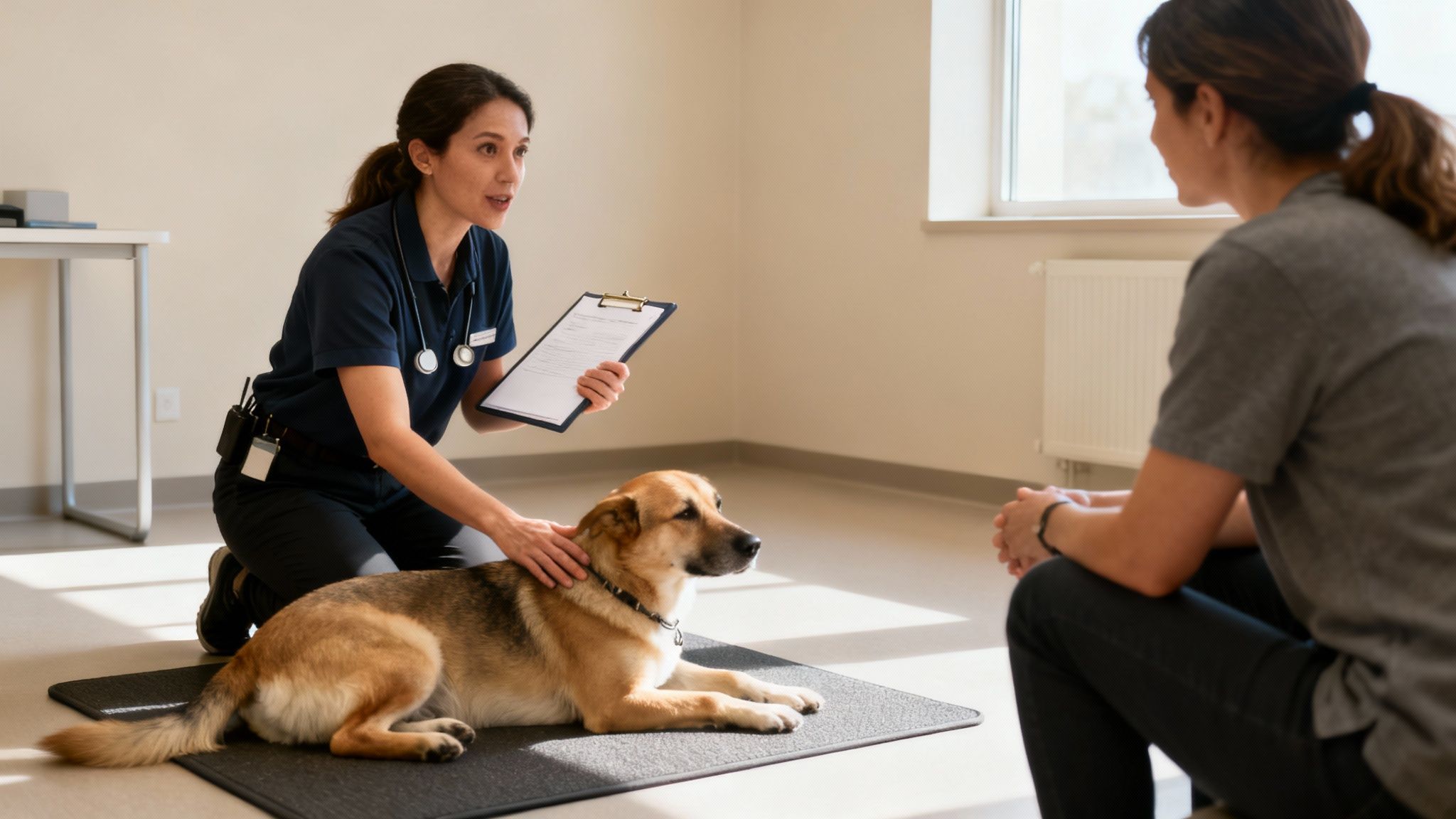
Think of a professional as your guide and safety net. They've seen it all before and can spot the subtle details, build a customized safety plan, and walk you through the training process without putting anyone in harm's way. Your courage in asking for help is one of the best things you can do for your dog.
Red Flags That Signal You Need an Expert
If you see any of the following signs, it’s time to stop the DIY training and get on the phone with a qualified professional right away. These are clear signs that the situation has moved beyond what can be safely handled with basic techniques.
- Any Bite Occurs: This is the big one. If your dog's teeth have made contact with a person's skin—even if it didn't break the skin—getting professional help is non-negotiable.
- The Aggression Is Worsening: Is the growling getting deeper? Are the lunges more frequent or faster? If your dog seems to be escalating, the current plan isn't working, and the risk is climbing.
- Guarding Is Spreading: A dog who starts by guarding their food bowl but now guards toys, their bed, or even a spot on the couch is showing a pattern of generalized resource guarding. This is a much more complex issue that requires a professional strategy.
Reaching out for professional help isn't admitting defeat; it’s an act of profound love and responsibility for your dog and your family. It's choosing the safest, most effective path forward for everyone.
Finding the Right Kind of Help
The world of dog behavior can feel like the Wild West, but there are two main types of certified professionals you should be looking for. It's so important to find someone who uses modern, science-based methods that build trust, not fear.
- Certified Dog Behavior Consultant (CDBC): These are the pros who specialize in serious behavior issues like aggression. They can do a deep dive into your specific situation, create a detailed behavior modification plan, and coach you through it.
- Veterinary Behaviorist (DACVB): This is a veterinarian who has gone through extensive, specialized training in animal behavior. They can do everything a behavior consultant can, but they can also prescribe medication if they determine that underlying anxiety is a major piece of the puzzle.
A great place to start your search is with reputable organizations like the Certification Council for Professional Dog Trainers (CCPDT) or the International Association of Animal Behavior Consultants (IAABC). These groups have directories of certified pros who are committed to ethical, positive methods, ensuring you and your pup are in the best possible hands.
Your Top Questions About Food Aggression, Answered
Let's dive into some of the questions we hear most often from the SetterFrens community. It's completely normal to feel a bit lost when facing this behavior, so we're here to give you some clear, practical answers to help you move forward with confidence.
Can You Ever Really "Cure" Food Aggression?
That's the million-dollar question, isn't it? While "cured" might not be the right word, food aggression is absolutely something you can manage. With the right approach, you can make it so safe and predictable that it's no longer a daily stressor.
The goal is to help your dog feel so secure that they no longer feel the need to guard their food. For many dogs, consistent, positive training works wonders. But it's smart to remember that the instinct might always be lurking under the surface, especially in more severe cases. Think of it like managing a chronic condition—safety always comes first. Even after you've made incredible progress, it's wise to stick with your safety routines, like giving your dog their own quiet space to eat.
Will Neutering or Spaying My Dog Stop Food Aggression?
This is a common thought, but neutering or spaying is not a magic wand for food aggression. While it's a super important part of responsible pet ownership for a whole host of health and population reasons, it's not going to fix this particular issue.
Food aggression is almost always rooted in anxiety, fear, or a learned behavior. It's not driven by hormones. So, while the surgery is a good idea for other reasons, it won't solve the guarding. The real work lies in a solid behavior plan that builds trust and gets to the heart of why your dog feels insecure.
The real secret is changing how your dog feels. We want to help them go from thinking, "I have to protect my food!" to "Oh, you're here? Cool. Maybe something even better is coming."
What if My Puppy Starts Growling Over Their Food Bowl?
If you're seeing this in a puppy, take a deep breath—this is actually the perfect time to step in. You can build positive habits now before the behavior gets locked in. First things first, give your pup a safe, quiet spot to eat where they won't be bothered by foot traffic or other pets.
And please, ignore any old-school advice that tells you to take their bowl away to "show them who's boss." That's a surefire way to make things worse. Instead, we're going to play a much better game.
- While your puppy is eating, just walk past their bowl, but keep a comfortable distance.
- Casually toss a super high-value treat (like a tiny piece of cheese or chicken) near their bowl.
- Then, just keep walking. No fuss, no drama.
This simple little exercise flips the script. It teaches your puppy that you approaching their bowl predicts amazing things, not a threat. And never, ever punish a growl. It's not defiance; it's your puppy's only way of saying, "Hey, I'm a little uncomfortable here."
Here at SetterFrens, our whole mission is to help you build an incredible bond with your dog, whether it's through our cozy dog-themed books or helpful guides just like this one. For more tips, heartwarming stories, and our favorite product finds, come join our pack and see what we're all about at https://setterfren.com.