
Bringing a rescue dog into your life is a huge decision, but it's also one of the most rewarding things you'll ever do. It's about more than just filling out forms and buying a dog bed; it's about finding the right furry friend to match your life and creating a bond that will last forever.
Why Adopting a Rescue Dog Is So Rewarding
If you're considering adopting a rescue, you're on the brink of an incredible journey. This isn't just about giving a dog a roof over its head. It’s about the quiet mornings with a furry head on your lap and the slobbery, tail-wagging greetings that make even the worst days better.
We hear it all the time from our SetterFrens community: rescue dogs have a special way of showing their gratitude. There's a profound sense of loyalty and unconditional love that comes from a dog who knows you've given them a second chance.
More Than Just a Second Chance
Let's bust a few myths right now. Shelters are full of incredible dogs with unique personalities and stories. You’ll find everything from playful puppies ready for an adventure to calm, senior dogs who just want a warm couch and a good ear scratch.
And if you have your heart set on a specific breed, don't rule out shelters. It’s a common misconception that they only have mixed breeds. The truth is, about 2 million dogs find new homes from U.S. shelters every year, and a surprising 25% of them are purebreds. A huge variety of dogs are just waiting for someone like you. You can dig into more of these numbers in these pet adoption statistics from World Animal Foundation.
When you choose to adopt, you're doing so much more than saving one life. You're finding a companion who will change your world for the better, creating a unique and powerful connection built on trust and a little bit of magic.
Ultimately, opening your home to a rescue is a promise—a promise of safety, love, and a fresh start. The gratitude they show in return is a daily reminder of the good you've put out into the world. So, let’s get you ready for the adventure ahead.
Finding the Right Dog for Your Lifestyle
The search for your new best friend is one of the most exciting things you'll ever do. But before you get lost in a sea of adorable faces online, it's crucial to take a good, hard look at your own life. Thinking about your home, your schedule, and your energy levels now is the key to finding a dog who will truly thrive with you.
Are you an active adventurer looking for a trail-running partner? Or are you more of a homebody who wants a furry space heater for movie nights? Being honest about your daily reality is the first step to finding a rescue dog who will slot right into your world.
Matching Personalities and Needs
One of the biggest mistakes people make is choosing a dog based on looks alone. That cute face might belong to a dog whose needs you're totally unprepared to meet. This is where the shelter staff and volunteers become your absolute best resource. They know these dogs inside and out.
They see the dogs at their best and their worst, and they can offer priceless insights you just can't get from a bio on Petfinder. Instead of asking "Is he friendly?", try digging a little deeper with questions like:
- How does this dog do when left alone?
- What’s their energy level like throughout the day, not just during a 5-minute meet-and-greet?
- Do you know anything about their history with kids, cats, or other dogs?
These are the details that really matter.
This decision tree is a great gut-check to see if you're truly ready for the commitment.
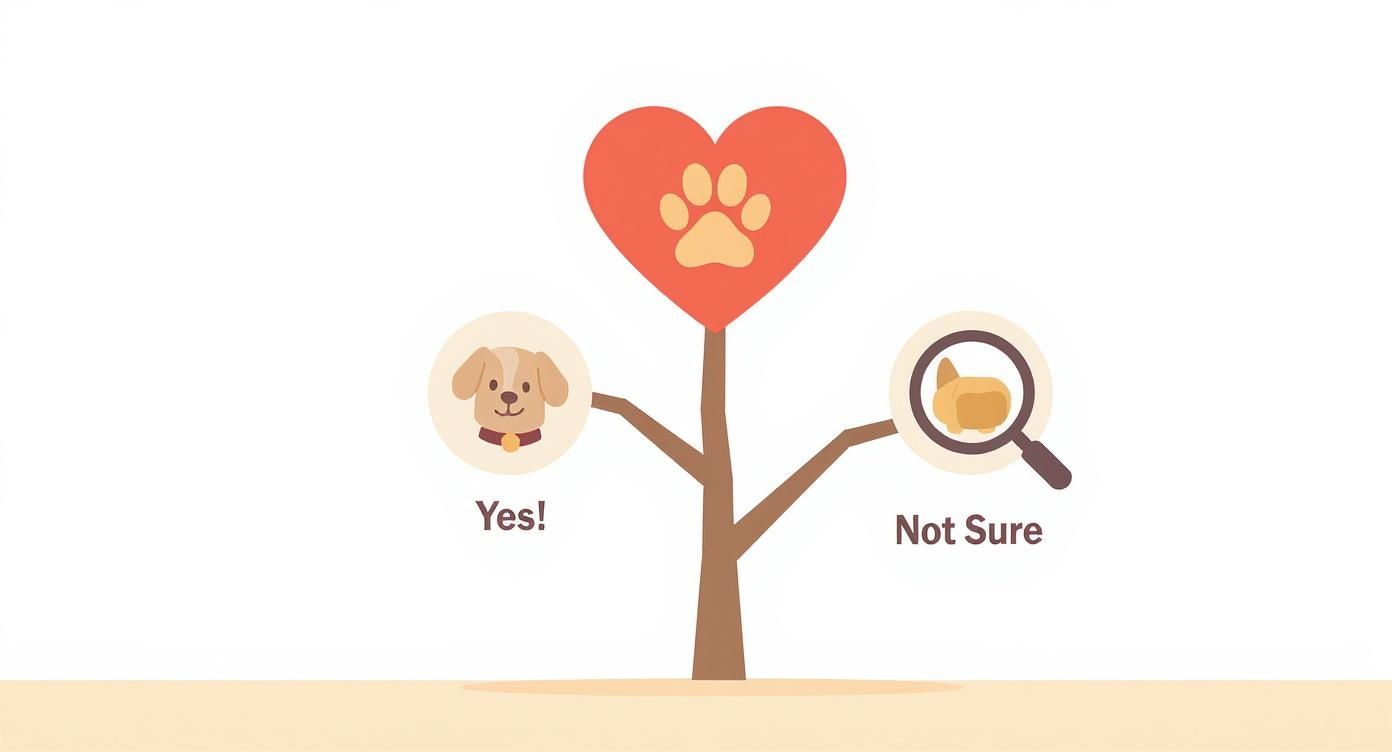
It’s a simple visual that can help you figure out if your heart and your home are prepared for this amazing journey.
Beyond the Shelter Profile
Remember, a shelter is a stressful place. A dog’s behavior behind the bars of a kennel is often not a true reflection of their personality. A dog who seems shy and shut-down might just be overwhelmed, ready to blossom into a playful goofball once they feel safe at home.
On the flip side, a dog who seems totally mellow in the shelter might reveal a ton of pent-up energy once they can finally relax and decompress.
Many rescue dogs come from heartbreaking situations—some were abandoned for getting "too old," while others were saved from outright neglect. Their ability to bounce back is incredible, but it means they need patient, understanding owners to help them learn to trust again.
Understanding these nuances is everything. For a more detailed breakdown of different breeds and temperaments, be sure to check out our guide on how to choose a dog that’s right for you. It’s a great resource we put together to help you narrow your search and find a companion who fits right into your pack.
Matching a Rescue Dog to Your Home
Still not sure what kind of dog you're looking for? Use this quick reference to see how different dog characteristics line up with various living situations and daily routines.
| Lifestyle Trait | Good Match Characteristics | Potential Breeds/Mixes to Look For |
|---|---|---|
| Apartment Dweller | Lower energy, quiet, comfortable in smaller spaces, crate-trained. | Greyhound, Basset Hound, "Bully" breed mixes, many senior dogs. |
| Active & Outdoorsy | High energy, durable, loves to run and explore, eager to please. | Shepherd mixes, Retrievers, Pointers, Border Collies, Heelers. |
| Family with Kids | Patient, tolerant, sturdy, history of being good with children. | Labrador and Golden Retriever mixes, Beagles, many mixed-breed dogs. |
| Busy Professional | Independent, lower-energy, happy with a daily walk and couch time. | Senior dogs (7+ years), Mastiff mixes, adult "lap dog" breeds. |
| First-Time Owner | Eager to please, trainable, adaptable, medium energy. | Poodle mixes, Spaniels, a well-socialized mutt recommended by staff. |
This is just a starting point, of course! The most important thing is to have an open and honest conversation with the rescue organization about the specific dog you're interested in. Their insights will be your best guide.
Tackling the Adoption Application and Interview
So, you’ve found a dog that’s stolen your heart. Amazing! Now comes the part that can feel a little like a job interview: the application and conversation with the rescue. It might seem intimidating, but try to remember their goal is the same as yours—to make sure this dog lands in a safe, loving home for good. They aren't trying to judge you; they're trying to be the best possible matchmakers.
Get ready for some detailed questions. Most applications dig into your living situation, your daily routine, and your history with pets. The single most important thing here is to be completely honest. Never owned a dog? That’s perfectly okay! In fact, telling them upfront helps them point you toward a more laid-back, beginner-friendly dog.
What the Rescue Staff Really Wants to Know
Adoption counselors are looking for one main thing: proof that you’ve truly thought this through. They want to see that you get what you're signing up for and are ready for the commitment. Coming prepared with a few key things can show them you’re serious and ready to go.
Here's what makes their ears perk up:
- A Vet Reference: If you've had other pets, have your vet's contact info ready. A quick, positive chat with your vet is often one of the strongest green flags for a rescue.
- Proof from Your Landlord: Renting? This is a big one. Have a copy of your lease or a letter from your landlord that explicitly states you can have a dog. Make sure you know about any size or breed restrictions, too. This single step prevents so much frustration for everyone involved.
- Your Game Plan: They want to hear that you've considered the day-to-day logistics. Who's on morning walk duty? What's the plan for potty breaks if you work in an office? Who will care for the dog when you go on vacation?
Think of the interview as a two-way conversation, not an interrogation. It's your chance to learn everything you can about the dog's background and quirks, just as much as it is their chance to get to know you.
Ultimately, they're looking for stability and preparedness. Some rescues even do a quick home visit. They’re not inspecting your housekeeping; they’re just checking for obvious safety issues, like a securely fenced yard or a solid plan for keeping a dog safe and happy in an apartment. The more prepared you are, the more you show them you’re ready for this incredible new chapter.
Getting Your Home Ready for Your New Dog
The day is almost here! You’re about to bring your new best friend home, and the excitement is probably through the roof. Before that happy "gotcha day," taking some time to prep your house will make a world of difference for a smooth transition.
A little forethought now helps your new pup feel safe and secure right from the start, which is a huge win for everyone.
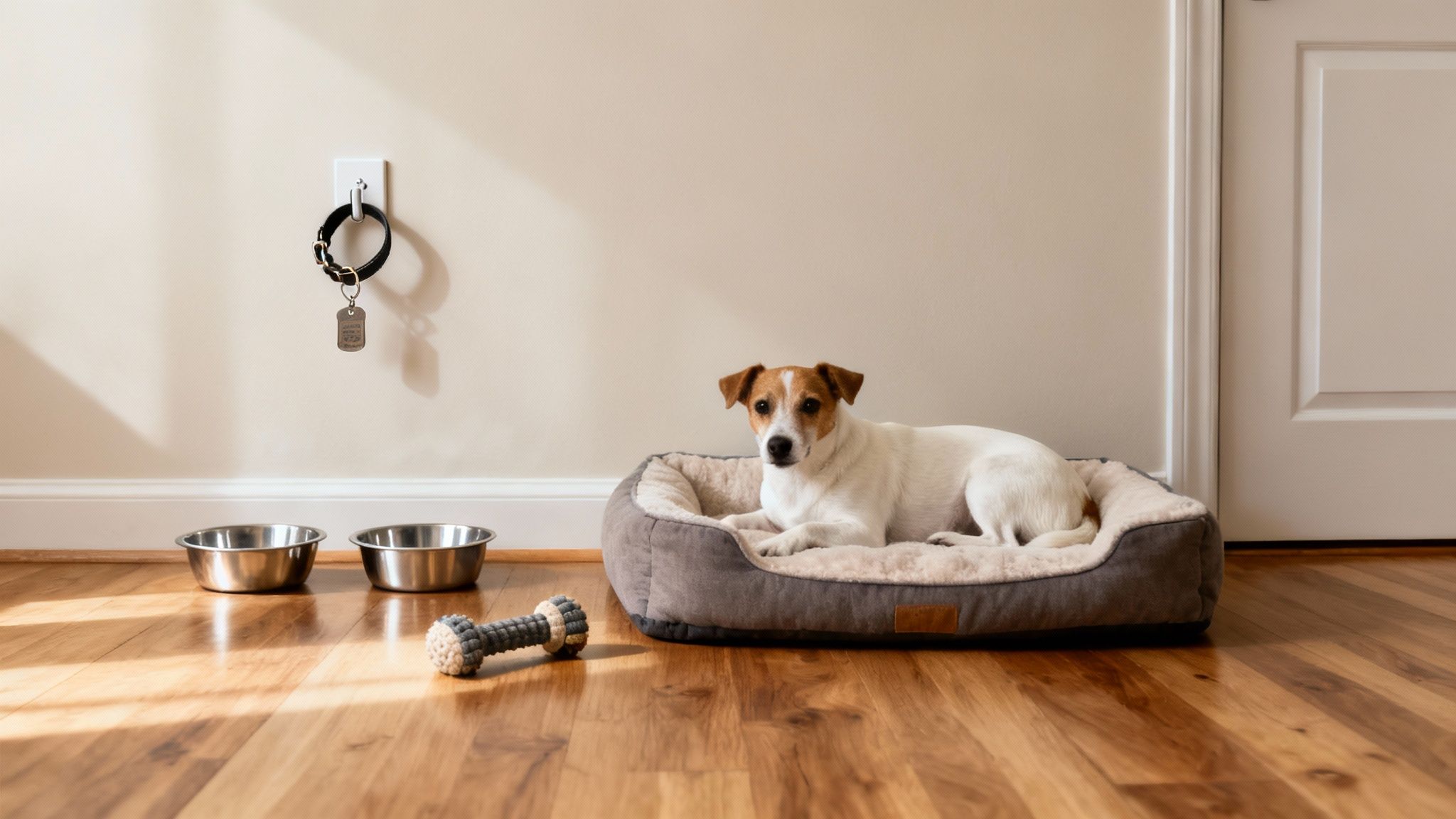
First things first: get down on your hands and knees and see the world from their point of view. Seriously. That pretty houseplant in the corner? It might be toxic. Those electrical cords tucked behind the TV stand? They look a lot like a fun new chew toy to a curious dog.
A "decompression zone" is a game-changer when you adopt a rescue dog. This is just a quiet, low-traffic spot—like a corner of the living room—with their bed, water, and a toy. It gives them a safe space to retreat to when they feel overwhelmed.
Your Essential Supply Checklist
Having all the essentials ready before they walk through the door means you can focus on them, not on a last-minute trip to the pet store. You don't need to go overboard, but getting the basics covered is non-negotiable.
Here’s a practical checklist to get you started:
- A comfortable bed: Find one that's the right size for them to stretch out on and, trust me, make sure it's machine washable.
- Food and water bowls: Stainless steel is a great choice—it’s tough, easy to sanitize, and won't hold onto bacteria.
- Collar/harness and a sturdy leash: Make absolutely sure the collar has an ID tag with your current phone number on it from day one.
- High-quality dog food: Ask the shelter or rescue what food they've been eating. Switching food suddenly can cause an upset stomach, so it's best to transition them slowly.
- Durable toys: Get a mix of things! A couple of tough chew toys for when they need to gnaw and an interactive puzzle toy can be a lifesaver for preventing boredom.
- Crate (optional but highly recommended): When you introduce it as a happy, safe place, a crate becomes their personal den—a cozy spot for them to chill out, not a punishment.
Thinking through these simple details is one of the most critical steps in learning how to adopt a rescue dog successfully. It's the first thing you can do to show your new companion that they’ve finally landed somewhere safe and loving, setting you both up for a wonderful life together.
Your Rescue Dog's First Few Weeks at Home
That car ride home is one for the books, isn't it? Bringing your new best friend through the front door for the first time is a feeling like no other. But that moment is just the starting line. The first few weeks are all about adjustment—for both of you. Patience is going to be your superpower as your dog figures out this new life and learns to trust you.
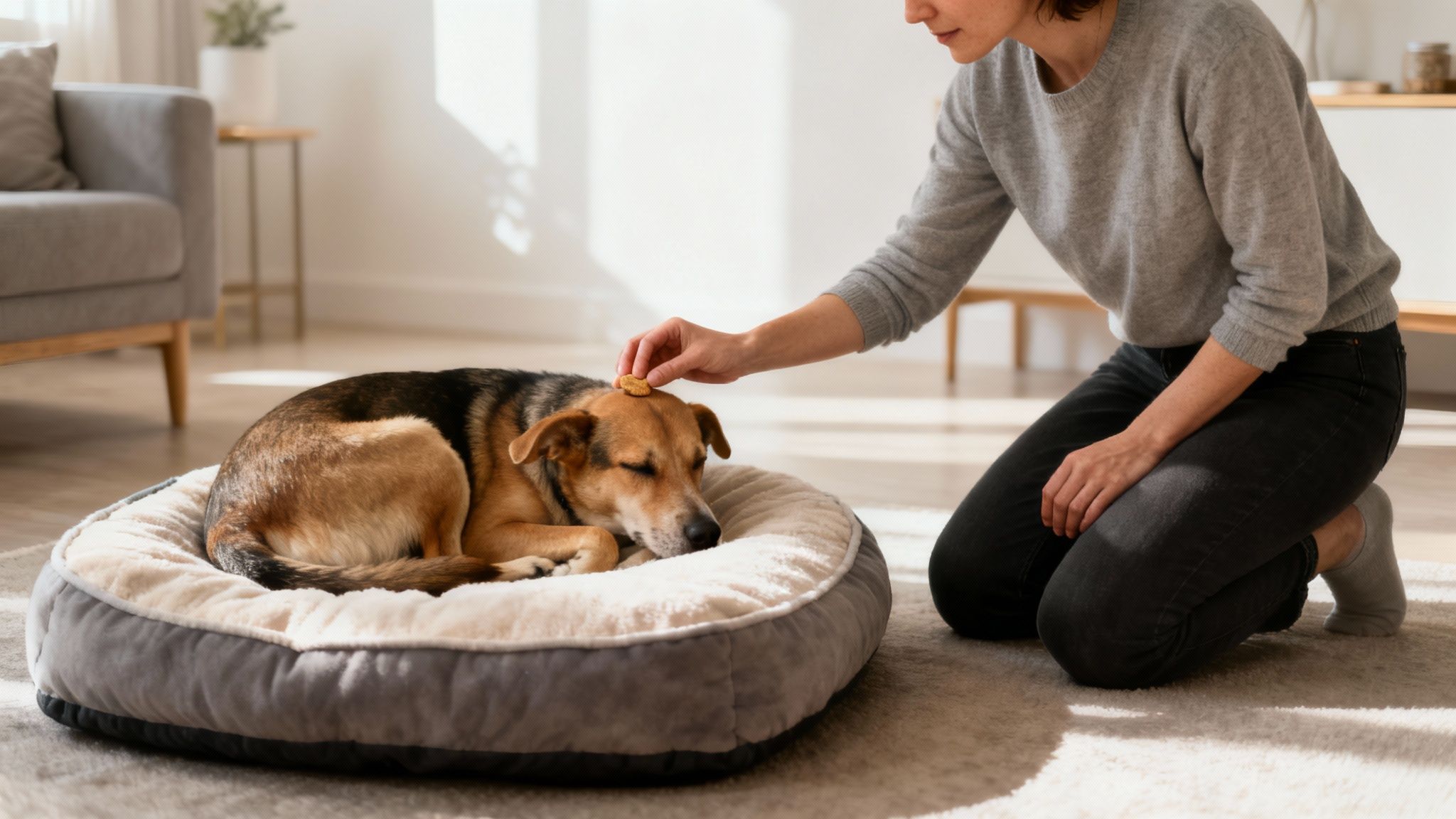
To keep your expectations in check, it helps to remember the "Rule of Threes." We've seen this rule play out time and time again with fosters and newly adopted dogs. It’s a simple, brilliant framework that helps you understand the emotional journey your dog is on as they decompress from their past.
Think of it like this:
- The First Three Days: For the first 72 hours, your dog is basically in survival mode. They're likely overwhelmed, scared, and totally out of their element. You might see them hide, skip a meal, or just seem shut down. Your job? Give them space. Let them be a fly on the wall.
- The First Three Weeks: Around the three-week mark, a little switch flips. They’re starting to figure out the daily rhythm of the house and realizing this might just be their forever home. You'll start to see flashes of their real personality peeking through.
- The First Three Months: By now, your dog should feel safe, secure, and truly at home. They know the house rules, they’ve bonded with you, and they finally feel like a real member of the family. The settling is done, and the real fun begins.
Creating a Gentle Routine
For a dog who's had a life full of uncertainty, consistency is the greatest gift you can give them. A predictable routine is the fastest way to build a foundation of trust. Keep feeding times, potty breaks, walks, and bedtime as consistent as you can.
This simple structure helps lower their anxiety because they learn what to expect and when. It shows them, in a language they understand, that you are reliable and they are safe.
Your new dog has no idea what the rules of your house are. Accidents are going to happen. Just breathe. Clean it up without a fuss and focus on celebrating the wins—like when they finally go potty outside.
Handling Common Settling-In Behaviors
Don't be surprised if your dog displays some confusing behaviors at first. Shyness, barking at every little sound, or even getting a bit possessive over a new toy are all totally normal. These are almost always signs of stress, not signs of a "bad dog." A calm, quiet environment will be your best tool.
It’s crucial to give them a space that’s all their own—a safe little sanctuary where they can go to decompress. A crate can be perfect for this, acting as a cozy den. To get it right, learn more about how to crate train a dog so it becomes their favorite spot in the house. When the world feels too big, they'll have a safe place to retreat.
Common Questions About Adopting a Rescue Dog
It’s totally normal to have a million questions spinning in your head when you start thinking about adoption. Bringing a rescue dog into your life is a huge, wonderful decision, and it’s smart to get into the details. We've pulled together some of the most common questions we hear from the SetterFrens community to help you feel ready for this adventure.
How Much Does It Cost to Adopt a Rescue Dog?
Adoption fees can feel like a big number at first, but when you break it down, they're an amazing value. You can expect fees to range anywhere from $50 to $500, and this usually depends on the shelter, the dog’s age, and any medical care they’ve needed.
That one-time fee almost always covers spaying or neutering, the first round of vaccinations, a microchip, and sometimes even deworming. If you were to pay for all of those vet services out of pocket, you’d be spending a lot more. The fee is a great deal for you and helps the rescue care for the next dog who needs their help.
Remember, the adoption fee is just the starting point. Don't forget to budget for the ongoing costs of good food, yearly vet visits, toys, and an emergency fund for those unexpected moments. Being prepared is part of being a great dog owner.
Can I Adopt If I Live in an Apartment?
Absolutely! So many fantastic dogs are perfectly happy living in apartments. What rescues really care about is your ability to provide a loving home, consistent exercise, and a solid routine—not how many square feet you have.
From small, spunky terriers to surprisingly mellow senior Great Danes, plenty of lower-energy dogs make incredible apartment pets. It's all about matching the dog's needs with the lifestyle you can realistically offer.
What If I Have Other Pets at Home?
This is a big one, and the key is patience. Most shelters will insist on a "meet and greet" on neutral territory, like an outdoor yard, so you can see how everyone gets along. This first meeting is a super important step.
Once you bring your new dog home, the real work begins, and it should always be slow and supervised.
- Give them their own space. Use baby gates or separate rooms to keep everyone apart at first. This lets them get used to each other's smells and sounds without the pressure of a face-to-face meeting.
- Keep it positive and short. When they are together, keep the interactions brief and happy. Shower them with praise and treats for calm, friendly behavior.
- Don't rush it. Building a solid friendship between pets can take days, weeks, or even a few months. Let them set the pace.
Doing introductions the right way can make all the difference, and it's a common topic in our Puppicino Club community. Patience now will pay off with a peaceful multi-pet household later.
At SetterFrens, we believe there’s a perfect home for every dog because life’s better with a wagging tail and a good book. Join our Puppicino Club to unlock member perks, book updates, and dog-friendly treats. Stay part of the fun by following @setterfrens on TikTok and Instagram for heartwarming dog moments, product tips, and behind-the-scenes content from our growing pack!
Find your next great read and dog care guide at https://setterfren.com.