Ever wish you knew what your dog was really thinking? Well, here's a little secret from one dog lover to another: they're telling you all the time. Learning how to read dog body language is like cracking a cozy code. A simple ear twitch, a subtle shift in weight, or the speed of a tail wag can tell you if they're happy, nervous, or just plain curious.
Your Dog Is Always Talking—Are You Listening?
Here at SetterFren, we believe the deepest connections with our dogs come from real communication. Since they can't sit us down for a chat over a puppicino, they use a rich language of posture, facial expressions, and tail movements to get their point across. It's so easy to miss these signals or get them wrong, which can lead to confusion and stress for everyone in the pack.
For instance, most people think a wagging tail automatically means a happy dog. But it's actually just a sign of emotional arousal—that wag could signal excitement, but it could also mean frustration or even a warning. Think about a yawn. You might assume your pup is tired after a long day of adventure, but often, it's a way for them to cope with anxiety in a new situation. Getting a handle on these details is the key to a more trusting, harmonious life together.
The real magic happens when you move beyond basic commands and start having a two-way conversation. When you understand what your dog is trying to tell you, you can advocate for their needs and make them feel truly safe and heard.
This guide is designed to help you become fluent in "dog talk." We'll walk through the most common signals so you can finally feel confident in what your pup is communicating. This skill is also a huge part of their overall development, which we explore more in our guide on what is puppy socialization.
Once you start tuning in, you'll be able to:
- Prevent misunderstandings: You'll spot the early signs of stress or fear before they escalate into bigger problems.
- Strengthen your bond: Responding to their needs builds an incredible amount of trust and deepens your connection.
- Ensure safer interactions: You'll know how to manage greetings with new people and other dogs with much more confidence.
Get ready to see your dog in a whole new light.
What Your Dog's Tail Is Really Saying
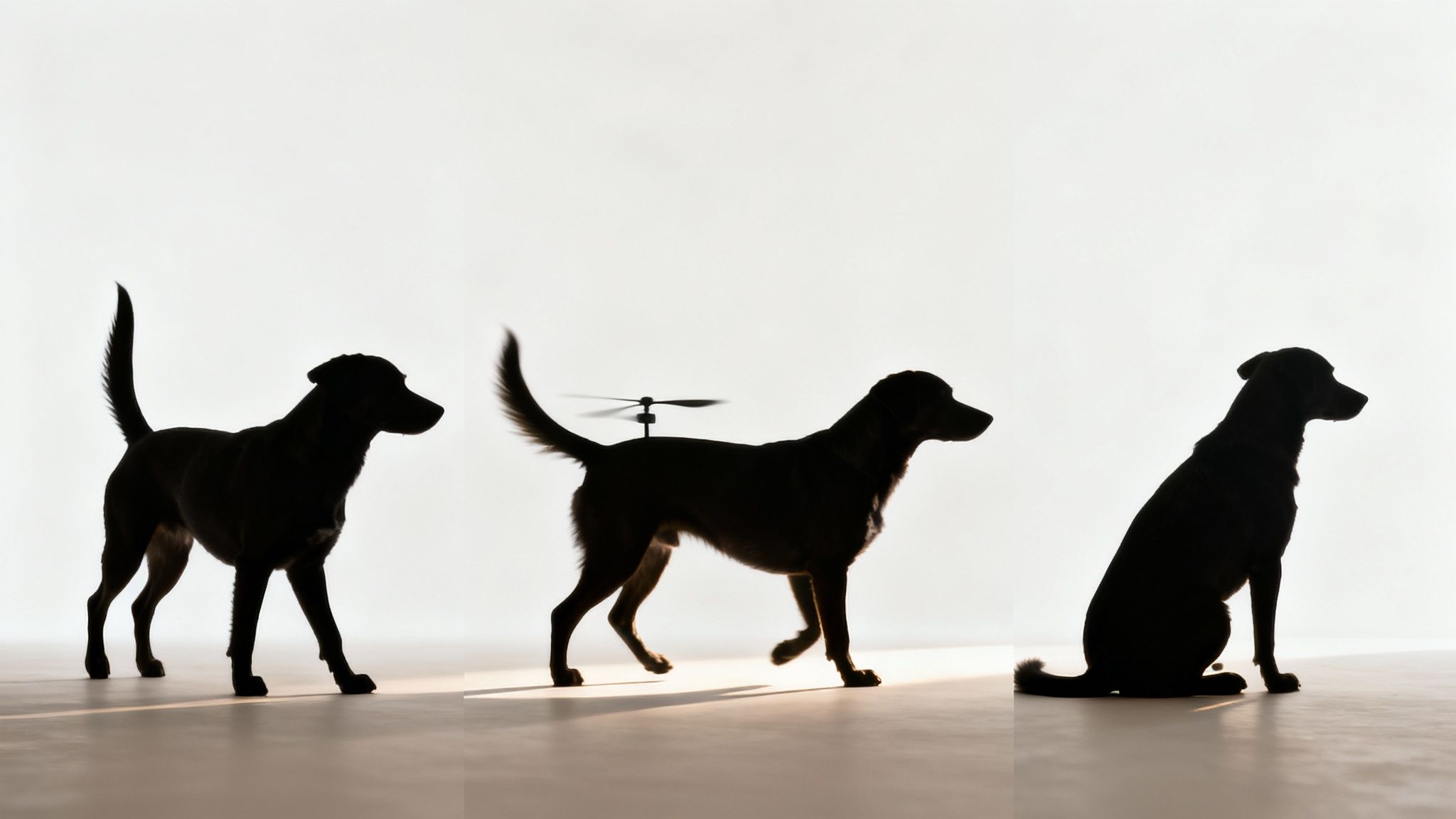
It’s one of the biggest myths in the dog world: a wagging tail means a happy dog. While that’s sometimes true, it's a huge oversimplification. A wagging tail is really just a sign of emotional arousal—and that arousal could be anything from pure joy to serious agitation.
To get the real story, you have to look at the way the tail is moving. Think of it less like a simple "happy" switch and more like a furry emotional barometer. The speed, direction, and height of that tail will tell you everything you need to know.
Decoding the Wag
First, pay attention to the speed. Is it a long, slow, sweeping wag that makes your dog’s entire body wiggle from the shoulders back? That’s the classic, relaxed "I'm so happy to see you" greeting. It’s loose and fluid.
But what about a high, stiff, fast wag that seems to vibrate at the tip? That’s a totally different signal. This often points to high arousal or agitation. Picture your dog staring down a squirrel in the backyard—that intense, twitchy wag isn't joy; it's a sign of hyper-focus and excitement that could tip into frustration.
Believe it or not, even the direction of the wag can give you a clue. Some studies have found that dogs tend to wag more to their right side when they see something they like (like you!). A wag that’s biased more to the left can be a sign they’re feeling uncertain or even negative about whatever they’re looking at.
The real jackpot of happiness is the 'helicopter wag.' When your dog’s tail spins in a full circle, it's an unmistakable sign of pure, unadulterated joy. You’ll usually see this when you walk through the door after being away.
Tail Height and What It Means
The height of the tail adds another crucial layer to the story. A tail held high, sometimes flagged straight up, usually signals confidence and assertiveness. It’s your dog saying, "I'm here, and I'm feeling sure of myself."
On the flip side, a tail tucked tightly between the legs is a clear giveaway for fear, stress, or submission. This is a dog trying to make itself smaller and appear non-threatening.
A relaxed, content dog will typically hold its tail in a neutral, natural position. Of course, you have to know your dog's "baseline." A Greyhound’s neutral tail position is naturally much lower than a Beagle's, and a Pug's is always curled up. Once you know what's normal for your pup, you'll immediately notice when something shifts.
To help you put it all together in the moment, here’s a quick reference our pack always finds useful.
Quick Guide to Common Tail Signals
This little cheat sheet breaks down the most common tail signals to help you quickly figure out what a dog might be feeling. Just remember to always look at the tail in combination with the rest of the dog's body language.
| Tail Position/Movement | What It Likely Means | Context to Consider |
|---|---|---|
| Slow, Broad Wag | Relaxed, happy, friendly | Your dog's entire body is loose and wiggly. |
| High, Stiff, Fast Wag | Agitation, arousal, warning | Look for other tense body cues like stiff legs or a hard stare. |
| 'Helicopter' Wag (Circular) | Extreme happiness and excitement | Often seen when greeting a beloved family member. |
| Tucked Between Legs | Fear, anxiety, submission | The dog may also be cowering or avoiding eye contact. |
Watching a dog's tail is a fantastic way to tune into their emotional state, but it's just one piece of the puzzle. When you combine these tail cues with their posture, ears, and facial expressions, you'll start to see the full picture.
Decoding Your Dog's Facial Expressions
We all know the tail tells a tale, but your dog's face is just as expressive—you just have to know what to look for. The real story is often told through a combination of their eyes, ears, and mouth. It’s a language of subtle shifts that, once you learn it, gives you a direct line into how your dog is feeling.
Let's start with the eyes. When your pup is happy and relaxed, you'll see a soft gaze with normal-sized pupils. It’s an easy, comfortable look. But a hard, fixed stare? That's something else entirely. It's often a sign of a challenge or a potential threat.
You also need to watch for the classic "whale eye." This is when your dog turns their head away but keeps their eyes locked on something, showing the whites. It's a dead giveaway that they're feeling stressed or anxious about whatever they're looking at.
Ears, Mouth, and Calming Signals
Next, tune into the ears. Ears pricked up and pointing forward mean your dog is alert and focused on something that's caught their interest. On the flip side, ears pinned back flat against their head can signal fear, anxiety, or even submission. It’s their way of trying to look smaller and non-threatening.
A dog’s mouth speaks volumes, too. A relaxed dog often has a slightly open, soft mouth, maybe even panting gently. But pay attention if you see a tightly closed mouth or pulled-back lips, as this often points to stress. The same goes for heavy panting when it's not hot outside.
And don't forget the more subtle gestures! Things like lip licking (when there's no food around) or yawning (when they're not tired) are classic calming signals. These are your dog's go-to moves for trying to diffuse a situation that’s making them uncomfortable.
A dog that's focused and ready to learn often shows a unique combination of these expressions. They might have wide eyes and erect, forward ears, but their mouth will be closed and their body language will lack aggressive cues.
This attentive state is the sweet spot for training. In fact, research highlights a strong connection between these facial cues and a dog's learning ability. Dogs showing this focused, alert expression tended to perform better in training exercises, proving they were engaged and not just stressed out. You can dive deeper into these fascinating findings on canine learning and body language.
Noticing these subtle shifts can help you create a more positive and effective training environment. And speaking of keeping things positive, making sure your pup is comfortable in all situations is key, which is why we’ve put together some dog grooming tips for a stress-free session at home.
How Posture Reveals Your Dog's True Intentions
While a wagging tail or a happy face gives you some great clues, a dog's overall posture tells the whole story. Think of it as their full-body announcement to the world. Learning to read their stance is how you truly grasp what they're feeling in the moment.
A confident, happy dog carries themselves with a certain ease. They stand tall, their body looks loose and relaxed, and their weight is planted evenly on all four paws. They just look comfortable in their own skin.
On the flip side, a dog that’s cowering or making themselves look small is almost always feeling scared or anxious. They’re trying to shrink, sending a clear signal that says, "I'm no threat, please leave me be."
Common Postural Cues
Beyond the general vibe, dogs use very specific postures as direct invitations or warnings. The most obvious and joyful one is the play bow—front end down, rump in the air. This is the universal doggy sign for "Let's play!"
Have you ever seen your dog lift one paw? This little gesture can mean a few things, and context is everything. It might show they're focused and anticipating something, like when they're waiting for you to throw the ball. Other times, it can signal they're feeling a bit insecure or unsure about a situation.
Think of posture as the framework that holds all the other signals together. A stiff, frozen body with a high tail is a very different message than a loose, wiggly body with that same high tail.
Pay close attention to how your dog shifts its weight, too. It’s a major tell. Leaning forward usually signals interest and an intent to move toward something. Shifting their weight back, even slightly, is often a sign they're getting ready to retreat or want more space.
Catching these subtle shifts can help you head off a tense interaction before it even starts. In fact, a study involving over 50,000 dogs revealed just how important this is for owners. It found that 49.9% of dogs showed fear or anxiety primarily through their body language. You can read more about these important findings on dog behavior.
Reading Dog Body Language in Real Life
Alright, you've got the basics down. You can spot an ear twitch, a tail wag, and a lip lick. But the real magic happens when you start piecing these signals together in the real world. That’s when you go from just seeing what your dog is doing to truly understanding what they're feeling.
Let's talk about a classic scenario: the on-leash greeting. We've all been there. Another dog is approaching, and things can get tense fast, mostly because leashes take away a dog's ability to create space naturally.
The very first thing to look for is a tiny shift in weight. Is your dog leaning forward, all curious and eager? Or are they subtly leaning back, maybe shifting their weight to their hind legs? That almost invisible move is often their opening line in the conversation.
Navigating Everyday Interactions
If you see your dog suddenly go stiff, clamp their mouth shut, and lock eyes with the other dog—that's a clear "I'm not comfortable." This is your cue to step in. Don't force a nose-to-nose meeting. Instead, we always recommend arcing away, creating a gentle curve in your path. This takes the pressure off and avoids the head-on approach that dogs find so intimidating. If this is a constant struggle, our guide on managing dog aggression on leash has a ton of practical tips.
What about when someone new comes to your house? A guest walks in, and your dog starts yawning (when they aren't tired) or flicking their tongue out for a quick lip lick. These are classic calming signals. They're your dog's polite way of saying, "This is a little stressful for me." The best thing you can do is ask your guest to just ignore your dog for a few minutes. Let your pup decide when and if they want to say hello.
This is where looking at the whole picture becomes so important. A dog’s overall posture gives you an instant read on their mood.
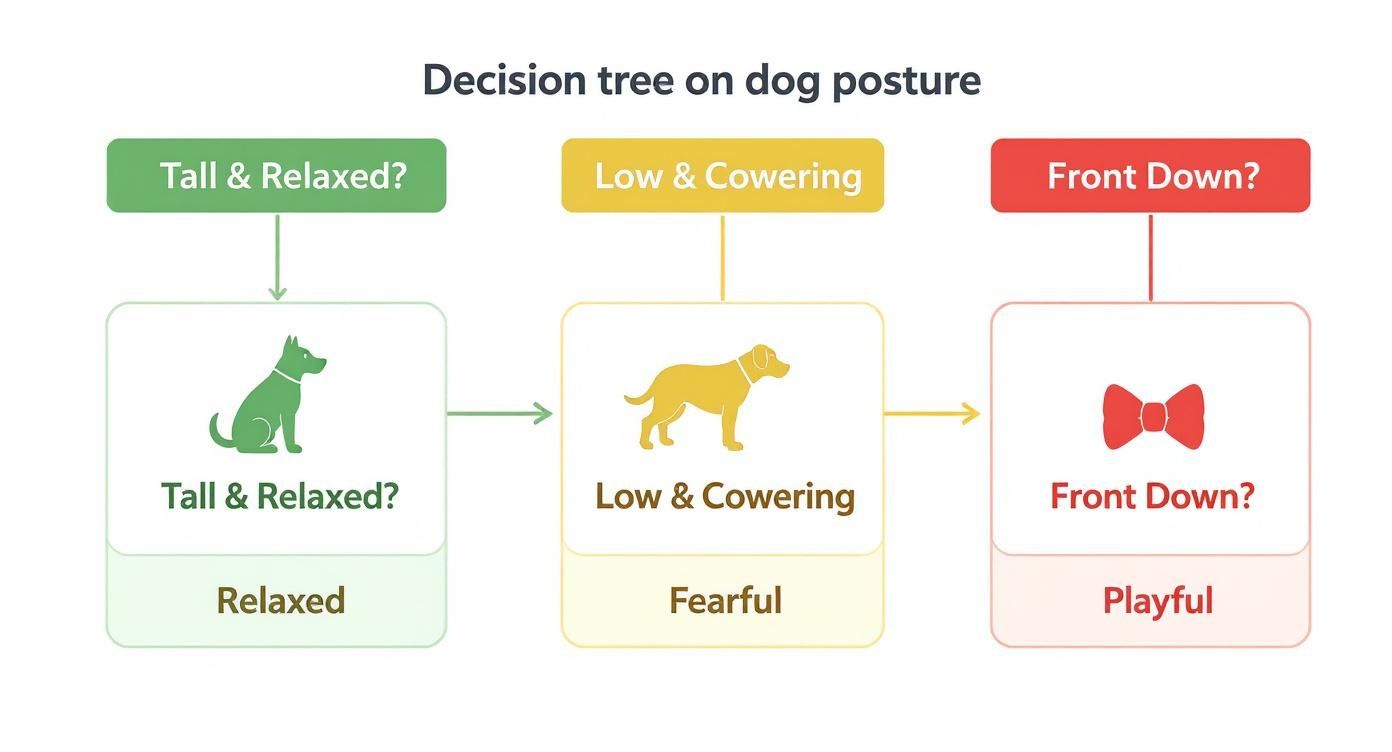
As you can see, it's all about context. A low, cowering body is an obvious sign of fear, while a relaxed, loose posture screams confidence and play.
Advocating for Children and Dogs
Now, when kids are in the mix, we have to be extra sharp. Children, bless their hearts, are not great at picking up on the subtle stuff.
A dog showing the whites of their eyes (often called whale eye) or repeatedly trying to walk away is sending a clear message: "I need space." It's our job as the adults to see that and intervene.
By learning to read these signals, you become your dog’s best advocate. You can prevent stressful situations before they start, ensuring every interaction is a positive one for your furry friend.
And the good news is, people can learn this stuff—even little kids! Research has shown that education makes a huge difference. Before a lesson on dog safety, only about 55% of four-year-olds could spot risky behaviors like growling or staring. A year after a short training session? That number shot up to 76%. It just goes to show that a little knowledge goes a long way. You can learn more about the long-term benefits of this training and see how powerful it can be.
Let's Tackle Some Common Dog Body Language Puzzles
Even when you start getting the hang of reading your dog, some signals can still feel like a total mystery. If you've ever found yourself scratching your head, trust us, you're in good company. Let's clear up a few of the most common questions we hear from fellow dog people.
Is a Wagging Tail Always a Happy Tail?
This is the big one, and the answer is a firm no. It's probably the most widespread myth in the dog world, and it can get people into trouble.
A wagging tail simply means a dog is emotionally stimulated. That's it. The type of wag is what tells the real story. Think of a happy-go-lucky Golden Retriever with that full-body, loose, wiggly wag—that's genuine joy. But a tail held high and stiff, wagging in short, fast bursts? That's a sign of high arousal that could tip into aggression. It's a warning, not a welcome.
The key is to always look at the entire dog, from the tip of their nose to the tip of that tail, to get the full picture.
My Dog Yawns All the Time, Even When He's Not Tired. What's That About?
Ah, the classic stress yawn! This is what we call a "calming signal." Dogs often do this when they're feeling a bit anxious, stressed out, or uncertain about what's happening.
You've probably seen it before. Maybe your dog starts yawning in the vet's waiting room, or when a loud thunderstorm rolls in. They might even do it when a new person leans over them a little too quickly. It’s their way of trying to de-escalate a situation and tell everyone (and themselves), "Hey, let's all just calm down a bit." It's a self-soothing mechanism and a way to communicate that they aren't a threat.
When a dog rolls over to show its belly, context is everything. With you on the couch, it's a clear invitation for a belly rub. But if they do it when another dog approaches, and their body is stiff with a tucked tail, they're not asking for pets. They're showing appeasement and saying, "I'm not a threat, please don't hurt me."
How Do I Know If My Dog Is Playing or Fighting?
This can be nerve-wracking, especially at the dog park. The most obvious, can't-miss-it signal is the "play bow"—front end down, butt in the air. This is the universal doggy sign for "Everything I do now is just for fun!"
But if you miss the bow, here are a few other clues to watch for:
- Play is bouncy and inefficient. Think big, goofy, clumsy movements. Their bodies are loose and wiggly, and you'll often see a relaxed, open mouth that looks like a smile.
- Aggression is stiff and efficient. The dog's body will be rigid, and their movements will be direct and deliberate. Look for a hard stare, curled lips showing teeth, and listen for a low, rumbling growl.
When you're not sure, the safest call is always to intervene calmly. Create some space, call your dog away, and end the interaction. Learning their language isn't just fascinating; it's how you become their best advocate and keep them safe.
At SetterFren, we're all about strengthening that incredible bond you share with your dog because we believe life’s better with a wagging tail and a good book. Understanding is the first step. From our curated selection of dog-themed books to our practical guides, we're here to help you and your pup thrive together. Follow @setterfrens on TikTok and Instagram for heartwarming moments and behind-the-scenes content from our growing pack