Crate training is all about showing your dog that their crate is the best spot in the house—their own little den. You'll use tasty treats and a lot of praise to create a wonderful association, slowly encouraging them to spend more time inside. The real secret? Patience. Every single interaction needs to be positive, and before you know it, that crate will become their favorite personal retreat, a cozy nook to curl up in.
Why a Crate Is Your Dog's Safe Space
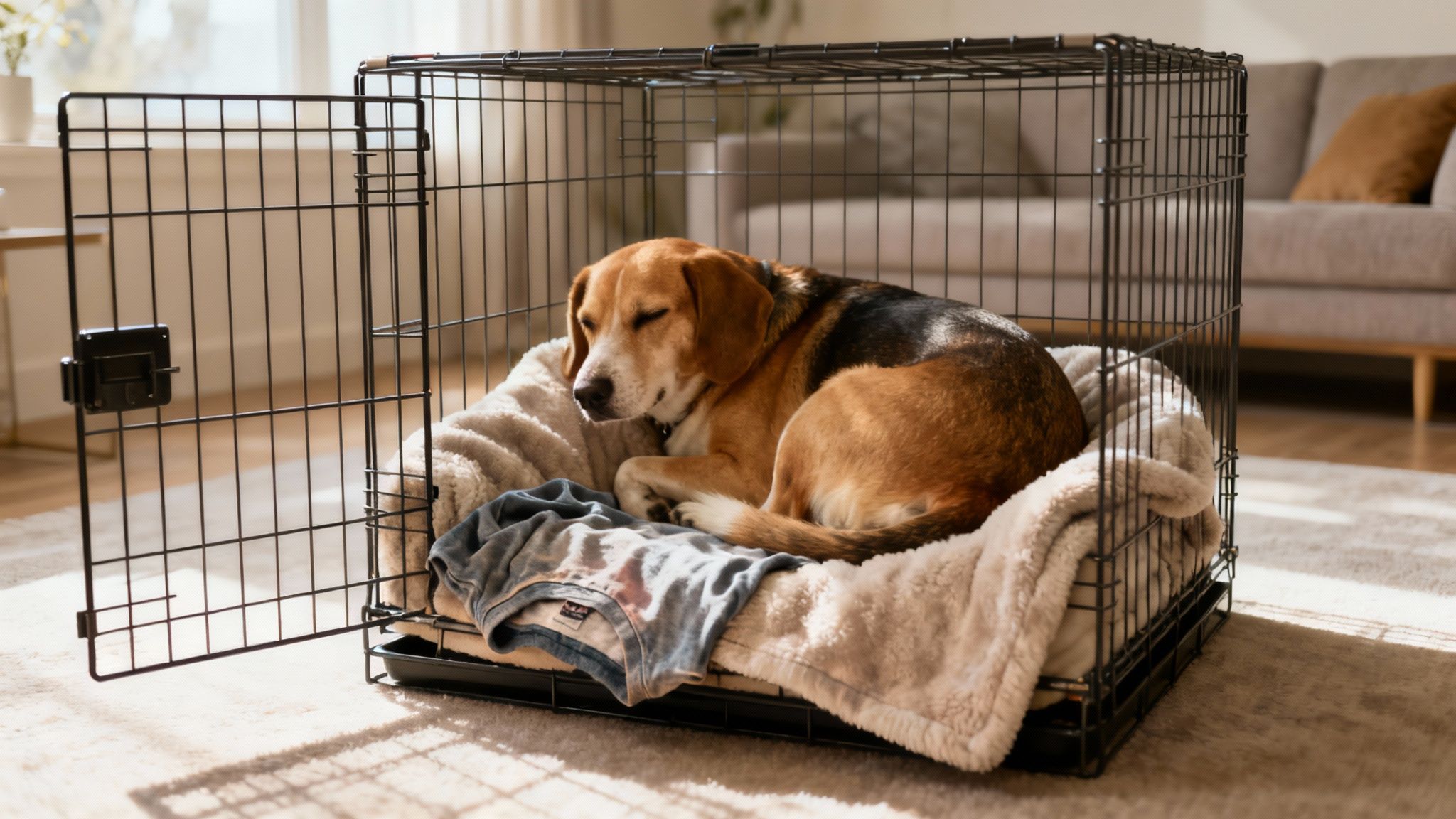
Welcome to our guide to happy crate training here at SetterFren! Before we jump into the "how-to," let's clear something up. A crate isn't a cage or a time-out corner. It's a cozy den that taps right into your dog's natural instinct to find a small, secure space to call their own.
Think of it as their personal bedroom—a private spot where they can go to chill out, feel safe, and decompress from the world.
When you introduce the crate with kindness and patience, it becomes an amazing tool for both you and your dog. It gives them a sense of security when things get a little overwhelming, like during a loud thunderstorm or when you have a house full of guests.
The Real-World Benefits for You and Your Pup
Understanding just how much a crate can improve your day-to-day life makes the training feel so much more worthwhile. For a new puppy, it's a game-changer for potty training, since dogs have a built-in instinct not to mess where they sleep. For more tips on this, check out our complete guide on how to care for a new puppy.
Here are a few other ways it makes life easier:
- Prevents Destructive Behavior: A crate keeps your curious puppy safe—and your favorite sneakers in one piece—when you can't keep a close eye on them.
- Simplifies Travel: A dog who sees their crate as a happy place is a confident traveler, whether you’re just going to the vet or hitting the road for a family vacation.
- Creates a Calm Retreat: It provides a guaranteed quiet spot for your dog to escape to whenever they need a break from the household hustle and bustle.
The goal is to make the crate a place your dog chooses to go. When they see it as their personal sanctuary, training becomes less of a chore and more of a fun bonding activity.
This positive association is also a lifesaver in emergencies. Rescue and shelter organizations are huge advocates for crate training because it dramatically reduces stress for dogs in unexpected situations. Volunteers have seen firsthand that crate-trained dogs handle chaotic events like natural disasters or a temporary shelter stay much better, showing far less anxiety. You can learn more about why this training is so vital at Whole Dog Journal.
Choosing the Perfect Crate for Your Pup
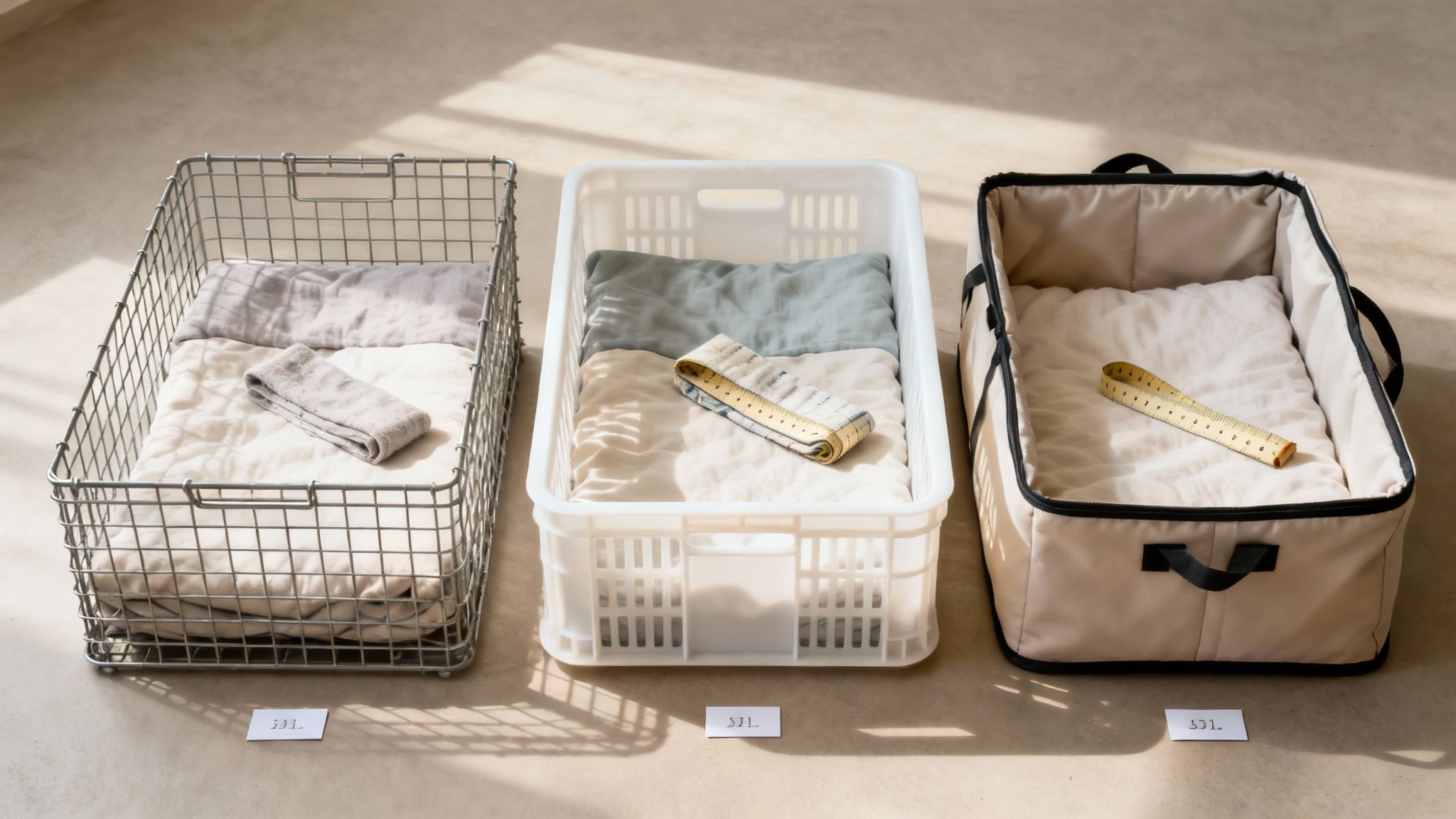
Alright, your first mission—should you choose to accept it—is finding the right crate. This step is a big deal. Think of it less like a cage and more like your dog’s very own bedroom. Your goal is to find a space that feels like a cozy, safe den, not a giant, empty room where they feel lost.
The right size is key. It needs to be just big enough for your dog to stand up, turn around completely, and lie down stretched out. Any bigger, and you risk them turning one end into a bedroom and the other into a bathroom, which definitely defeats one of the main purposes of crate training!
Sizing It Up Just Right
Time to get out the tape measure. This isn't rocket science, but getting it right will make all the difference.
You’ll need to measure two things:
- Height: Measure your pup from the top of their head to the floor while they’re standing. Tack on an extra two to four inches to that number.
- Length: Now, measure from the tip of their nose to the base of their tail (not the tip!). Again, add two to four inches.
Got a puppy? Here’s a pro tip: buy the crate that will fit them when they're fully grown, but make sure it comes with a divider panel. This lets you shrink the usable space down to the perfect puppy-sized den and expand it as they grow. It saves you money and helps keep the training consistent.
Picking the Best Crate Style
Not all crates are created equal, and the best one for you really boils down to your dog's personality and how you plan to use it. A crate that's perfect for a calm little Yorkie on a road trip won't be the right fit for a rambunctious Labrador puppy. Here at SetterFren, we’ve worked with just about every kind, and they each have their place.
To help you decide, here’s a quick rundown of the most common types.
Crate Type Comparison for Your Pup
| Crate Type | Best For | Pros | Cons |
|---|---|---|---|
| Wire Crate | Everyday home use, puppies | Great ventilation, easy to clean, often includes a divider | Offers less privacy, can be noisy |
| Plastic Crate | Travel, dogs who prefer privacy | More enclosed and den-like, required for most air travel | Less ventilation, can be harder to clean |
| Soft-Sided Crate | Experienced travelers, calm dogs | Lightweight and portable, easy to store | Not very durable, not for destructive chewers |
Ultimately, the best choice is the one that fits your dog and your life. Don't overthink it—just pick the one that ticks the most boxes for you.
Turning the Crate Into a Cozy Den
An empty wire or plastic box isn’t exactly welcoming, is it? Now for the fun part: making it a place your dog wants to be. This is all about creating a positive vibe from the very beginning.
The secret to making a crate feel like home is to fill it with comfort and positive associations from day one. It should be the spot where all the best things happen.
Start by laying down a soft, washable dog bed or a few old, comfy blankets. Toss in a couple of durable, crate-safe chew toys—something interesting to keep them busy. For that extra touch of comfort, add an old t-shirt you’ve worn. Your scent can be incredibly calming for a dog learning to spend time alone in their new space.
Making the Crate the Best Place on Earth
Alright, here comes the fun part: convincing your dog that their new crate is the coolest den in the whole house. The secret? Ditch any idea of force and turn this into a game. Our one and only goal right now is to make sure every single interaction your dog has with their crate is a happy one.
We're building a rock-solid positive association here. Think of the crate as a treasure chest where all the best things happen, long before you even dream of closing the door.
Let the Games Begin
First impressions are everything. We want your dog's first encounter with the crate to be exciting and full of rewards. Start with the crate door wide open and casually toss a few high-value treats right inside the entrance.
Use a cheerful, encouraging voice—something like, "What's in there?"—as they start sniffing around. The moment your pup pops their head in to snag a treat, shower them with praise! Keep these sessions incredibly short, just a minute or two is plenty. Repeat this little game a few times throughout the day, gradually tossing the treats a little farther back each time.
You are your dog's personal cheerleader. Celebrate every tiny victory, from a curious sniff to a single paw stepping inside. This is how they learn that moving toward the crate makes amazing things happen.
Remember, your relaxed and happy vibe is contagious. Experts often point out that a dog's acceptance of the crate is heavily influenced by their owner's calm attitude. By making it a fun zone with toys and treats, you're preventing anxiety before it even has a chance to start. For a deeper dive into this gradual method, Wikipedia's guide to crate training offers some great background info.
The Power of Dinnertime
One of the sneakiest—and most effective—tricks in the book is to feed your dog their meals inside the crate. Food is a huge motivator for most dogs, and this simple change creates an incredible positive connection.
To start, just place their food bowl right at the entrance of the crate. Make sure you prop the door open so it can't accidentally swing shut and spook them. Once they're totally cool with that, start inching the bowl a little further back into the crate with each meal.
Before you know it, they'll be walking all the way inside for breakfast and dinner without a second thought. This sends a powerful message: "This spot is where the good stuff, like my favorite food, happens!"
Keep It Short, Sweet, and Fun
The golden rule for this entire stage is to always end on a high note. You want to stop the game before your dog gets bored, leaving them excited for the next session.
Here are a few tips to keep the good vibes going:
- Bring Out the Good Stuff: Reserve the best-of-the-best treats for crate time only. We're talking small bits of chicken, cheese, or freeze-dried liver. For some great inspiration, check out our guide to delicious homemade dog treats recipes that your pup will go crazy for.
- The "Crate-Only" Toy: Pick out a special puzzle toy or a favorite chew that your dog only gets when they are in their crate. This makes the crate feel exclusive and exciting.
- Follow Their Lead: Never, ever push, shove, or force your dog into the crate. If they look hesitant, you’ve moved too fast. Just take a step back and make the game easier again. A little patience now will save you a world of trouble later on.
By focusing on these fun, pressure-free introductions, you're not just teaching a behavior. You're building a foundation of trust that will make the rest of the crate training journey a breeze for both of you.
Building Crate Time and Lasting Confidence
Alright, so your dog is starting to think their crate is the best spot in the house. That's a huge win! Now, we're going to build on that positive vibe. The next hurdle is closing the door, which can feel like a major step for your pup. The trick is to do it so nonchalantly that it’s a complete non-event for them.
This whole phase is about slowly building up the time they're comfortable in there. We’ll start with literally just a few seconds and inch our way up from there. The golden rule? Always watch your dog's body language and open the door before they even think about getting worried.
This visual guide breaks down the simple process of making the crate a place your dog genuinely loves, using all the good stuff—treats, food, and special toys—to build that happy association.
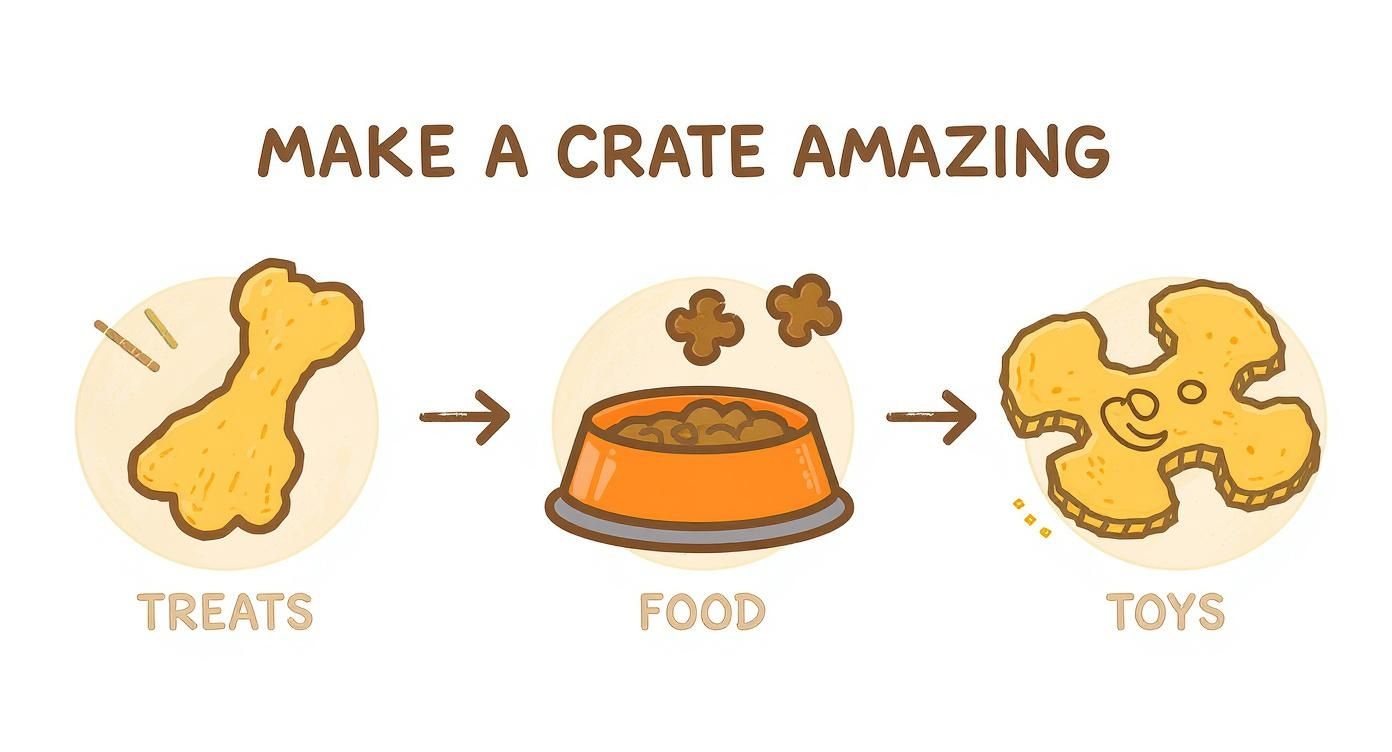
As you can see, it’s all about layering one good experience on top of another. When you pair the crate with high-value rewards, you're building a foundation so strong your dog will be happy to head into their special space.
Mastering the Closed Door
Let's start small. Give your dog that special "crate-only" puzzle toy or a tasty chew they can work on for a while. Once they’re totally absorbed in it, quietly close the door for just a second or two, then open it right back up. No fanfare, no big deal.
If they stay relaxed and happy, awesome! Do it again, but this time for three seconds. Then five. Then ten. You're just adding a few seconds at a time.
The moment you open that door, you’re reinforcing safety. By consistently opening it while they're still calm, you're teaching them a powerful lesson: the closed door isn't scary, and they can always trust you to let them out.
Keep your training sessions short and sweet. A couple of five-minute sessions a day will get you much further than one long, stressful one.
Building Time Alone
Once your dog can happily hang out with the door closed for a minute or two while you're right there, it's time to teach them they're okay on their own. The first step is to simply get up and move around the room.
Stay in sight at first. Just stand up, walk to the other side of the room, maybe grab a glass of water, and then sit back down. Then, calmly return to the crate and open the door as a reward for their quiet behavior.
From there, you can slowly up the ante:
- Leave the room for just 5-10 seconds. Pop back in and reward them.
- Gradually stretch that time out of sight to 30 seconds, then a full minute.
- Keep it unpredictable. Sometimes you might just step out for a moment, other times you might leave for a minute to put something away.
This process helps your dog realize that you leaving the room is normal and, more importantly, that you always come back. This is a massive step in preventing separation anxiety. It's just as crucial as early life experiences, which you can learn more about in our guide on what puppy socialization is.
Reading Your Dog's Cues
The real art of crate training is knowing when to push forward and when to ease up. You have to become a pro at reading your dog's body language. A relaxed dog will be happily chewing their toy, maybe even dozing off. A stressed dog, on the other hand, might start panting, whining, yawning over and over, or staring intently at the door.
If you see any of those stress signals, it just means you went a little too fast. It's not a big deal! Simply go back to the last step where they were completely comfortable and practice there a bit longer. A little extra patience right now will pay off with a confident, happy dog for years to come.
Tackling Common Crate Training Hurdles
Even with the best intentions and a pocket full of treats, you're bound to hit a few snags. That's perfectly normal. Crate training is a process, and some dogs will definitely test the boundaries. The trick is to figure out what they're trying to tell you and respond in a way that keeps the whole experience positive.
Whining, barking, or plotting a great escape can be frustrating, for sure. But these are just your dog's ways of communicating. Our job is to play detective and decode their message. Are they just grumbling a bit? Do they genuinely need a potty break? Or is something more serious like anxiety bubbling up?
What Your Dog's Protests Really Mean
The first and most common hurdle? The noise. Whining and barking can test anyone's patience, but it’s crucial to know the difference between a puppy complaining and a dog having a full-blown panic attack. A little bit of soft whining for a few minutes is usually just your pup seeing if a little fuss will get you to open the door.
On the other hand, frantic, non-stop barking, pools of drool, or desperate attempts to break out are red flags. This isn't your dog being stubborn; it's a clear sign of confinement anxiety. Trying to force them to "cry it out" will only intensify their fear. If you see these signs of genuine panic, it means you've pushed them too far, too fast. Take a deep breath, and go back to the fun, positive association games from the beginning to rebuild their confidence.
Here's the golden rule: Never, ever let your dog out of the crate while they're actively whining or barking. If you do, you've just taught them a super effective (and annoying) lesson: noise equals freedom.
Instead, wait for a pause. Even if it's just a split-second of silence between barks, that's your window. Opening the door during that quiet moment teaches them that calmness is the key to getting out.
When Accidents Happen in the Crate
Discovering a mess in the crate can feel like a huge step backward, but it's usually a solvable problem. First things first, a quick call to your vet can rule out any underlying medical issues. If your dog gets a clean bill of health, the accident is probably down to one of these common culprits:
- Too Much Room to Roam: If the crate is too big, your dog might designate one corner as a personal bathroom and sleep soundly in the other.
- Holding It Too Long: They were simply left for longer than their bladder could physically manage.
- Lingering Smells: You didn't use an enzymatic cleaner, so faint odors are telling your dog, "This is an okay spot to go again!"
Clean up the accident completely with a cleaner made specifically for pet odors—regular soap won't cut it. Then, take another look at your crate setup and how long you're leaving your pup. You're in good company here; this is a widely accepted training method. In fact, market data shows that 72% of dog owners use crates for behavioral training and 60% rely on them for safer travel. If you're curious, you can dig into the numbers in this dog crate market report.
Remember, every little challenge is a chance to learn more about your dog. Stay patient, keep it positive, and you'll both get there.
Got Crate Training Questions? We've Got Answers
Even when you follow a guide to the letter, real life always throws a few curveballs. We get tons of questions from our SetterFren community about the nitty-gritty of crate training, so we've rounded up the most common ones. Here's some practical advice, straight from our pack to yours.
How Long is Too Long in a Crate?
This is a big one, and the answer really hinges on your dog’s age. With puppies, a solid rule of thumb is their age in months plus one. So, if you have a three-month-old pup, they can generally hold it for about four hours.
Adult dogs are a different story. While they can often handle six to eight hours, this should be the absolute maximum and definitely not a daily routine. Think of the crate as a great tool for short-term management, not a place for them to spend their entire workday. Always, always make sure they get a good walk and a potty break right before they go in and immediately after they come out.
What if My Dog is Genuinely Scared of the Crate?
If you're seeing signs of true fear—we're talking heavy panting, drooling, or full-on panic—that's your cue to hit the brakes. Hard. Whatever you do, never force your dog into the crate. That will only prove them right and can quickly spiral into serious confinement anxiety.
You need to go all the way back to square one. Your new goal is to change their mind completely and build a rock-solid positive association.
- Bring out the good stuff: Use super high-value treats (think tiny bits of chicken or cheese), a brand new puzzle toy, or a lick mat slathered with peanut butter that they only get when they're near the crate.
- Play crate games: Start by tossing treats near the crate. Then just inside the door. Make a huge, happy fuss over every sniff or step towards it. Don’t even worry about closing the door for a while.
Patience is your best friend here. You have to move at your dog's pace to prove that the crate is a safe space, not a scary one.
Should I Crate My Dog at Night?
Absolutely! Having your dog sleep in their crate at night is a brilliant way to prevent those middle-of-the-night accidents while keeping them safe and out of trouble. I always recommend putting the crate in your bedroom, especially in the beginning.
Being in the same room helps your pup feel secure and less alone. It also means you'll hear them if they wake up and need to go out, which prevents messes and reinforces that you're there to help.
Once your dog is older and totally comfortable with the routine, you can certainly move the crate to another spot if that works better for your family. A predictable bedtime routine helps make nighttime crating a peaceful habit for everyone.
Is It Ever Okay to Use the Crate for Punishment?
Let me make this simple: No. Absolutely not. This is the golden rule of crate training, and it's non-negotiable. The crate must always be a sanctuary—a safe, cozy, relaxing spot.
Using it for a time-out or sending your dog there when you're angry will only teach them to fear and resent it. You’ll undo all the positive work you’ve put in. To keep it as your dog’s happy den, it has to stay a positive-only zone. Period.
At SetterFren, we believe that life's better with a wagging tail and a good book. For more honest product reviews and practical guides to help you care for your pup like a pro, join our Puppicino Club and check out all the fun at https://setterfren.com. You can also follow us @setterfrens on TikTok and Instagram for heartwarming dog moments and behind-the-scenes content from our growing pack