

Welcome to the SetterFrens family! We know you’re here because you believe your dog deserves the very best. If you've been chatting with fellow dog parents or even just scrolling through your feed, you've probably seen it: more and more people are ditching the kibble scoop and heading for the kitchen.
This isn't just some fleeting trend. Becoming your dog's personal chef is a movement rooted in love, control, and a desire for real, trustworthy nutrition.
Why Dog Lovers Are Embracing Homemade Meals
At its core, the shift to homemade dog food is all about knowing exactly what’s going into your pup’s bowl. No more squinting at ingredient lists filled with mysterious fillers, artificial preservatives, or questionable byproducts.
This desire for transparency has been fueled by ongoing concerns about commercial pet food. The global dog food market is huge—projected to hit USD 153.92 billion by 2031—but that massive scale hasn't made it foolproof. Think about it: there have been over 120 major commercial dog food recalls since 2010 alone.
It’s no wonder so many of us are taking matters into our own hands. In fact, a whopping 35% of US pet owners are now preparing fresh, balanced meals for their dogs. That's a 59% jump since just 2020!

The Tangible Benefits of a Home-Cooked Diet
Beyond just peace of mind, the real magic happens when you see the changes in your dog. Owners who make the switch often rave about incredible, visible benefits that turn mealtime into a cornerstone of their pup's wellness.
Here are a few of the improvements people notice most often:
- Shinier, Healthier Coats: Those fresh, whole ingredients are packed with the essential fatty acids that lead to a beautiful, lustrous coat and less itchy, dry skin.
- Increased Energy Levels: When you fuel your dog with high-quality, easily digestible nutrients, you often see a real boost in their vitality and playfulness.
- Better Digestion: Homemade meals let you skip common irritants found in some processed foods, which can mean firmer stools and a happier tummy.
- Improved Appetite: There's something about a warm, fresh-cooked meal that can entice even the pickiest eaters to clean their bowl.
This passion for providing the best possible nourishment is universal. It connects back to the joy of crafting homemade meals for anyone we care about—our furry family members included. It’s an act of love.
The Building Blocks of a Balanced Meal
Okay, so where do you start? The idea of formulating a perfectly balanced meal can feel a little intimidating at first, but it breaks down into a few simple, core components. Getting a handle on these building blocks is your first step toward cooking up delicious, nutrient-packed meals.
Here's a quick-reference table outlining the essentials for your dog's bowl.
Core Components of a Balanced Canine Diet
| Nutrient | Recommended Percentage | Healthy Food Sources |
|---|---|---|
| Protein | 40-50% | Lean chicken, turkey, beef, fish, eggs |
| Carbohydrates | 25-30% | Brown rice, quinoa, sweet potatoes, oats |
| Vegetables & Fruits | 20-25% | Carrots, spinach, green beans, pumpkin, blueberries |
| Healthy Fats | 5-8% | Fish oil, flaxseed oil, coconut oil |
Think of these percentages as your North Star when building recipes. They ensure your pup gets the right fuel from high-quality protein, energy from digestible carbs, vitamins from fresh produce, and essential fatty acids for overall health.
So, What Does Your Dog Actually Need to Eat?
Before you start chopping vegetables and simmering chicken, let's talk about what a "balanced" homemade meal really means for a dog. It’s way more than just mixing meat and rice in a bowl. Think of it as building your dog’s health from the ground up, making sure every single bite is packed with purpose.
Your dog’s body is a finely-tuned machine. The right fuel—the right nutrients—powers everything from zoomies at the park to a strong immune system and that ridiculously shiny coat we all love. Let’s break down what that fuel actually is.
The Heavy Lifters: Protein, Fats, and Carbs
These are the macronutrients, the main energy sources and building blocks for your dog's body. You've got three major players here, and each one has a critical job to do.
Protein: This is non-negotiable. Protein is the foundation. It's made of amino acids that build and repair muscles, tissues, and everything in between. You’ll want to lean on high-quality animal proteins like chicken, turkey, lean beef, and fish.
Fats: Don't let the word "fat" scare you! Healthy fats are your dog’s best, most concentrated energy source. They're also essential for absorbing certain vitamins and keeping their skin healthy and coat glossy. Think good stuff like fish oil and flaxseed.
Carbohydrates: Carbs are your dog’s quick-energy source and a great way to get fiber in for good digestion. Easily digestible carbs like sweet potatoes, brown rice, and pumpkin are fantastic for keeping their system humming along smoothly.
Getting the balance right between these three is the first big step in creating balanced homemade dog food recipes that truly work.
The Unsung Heroes: Vitamins and Minerals
If macros are the fuel, micronutrients—vitamins and minerals—are the spark plugs. They’re needed in much smaller amounts, but without them, the whole system breaks down. A diet missing these can cause some serious problems down the road.
Take calcium and phosphorus, for instance. They work together to build strong bones and teeth, but the ratio between them is what's really important. Meat is packed with phosphorus, so if you just feed a meat-heavy diet without adding a proper calcium source, you can throw that ratio way off and cause harm. It’s one of the most common mistakes our community asks about.
A simple "chicken and rice" diet might sound healthy, but it's a nutritional disaster waiting to happen. It's often dangerously low in at least 15 essential nutrients—like calcium, zinc, and copper—which can lead to severe health issues over time.
To really see what's in your recipe, using a tool like a recipe nutrition calculator is a game-changer. It takes the guesswork out and shows you exactly where your recipe stands.
Age and Lifestyle Change Everything
There's no such thing as a one-size-fits-all diet for dogs. A bouncing puppy has totally different needs than a senior dog who's more interested in naps than fetch.
Puppies: These guys are growing machines! They need more calories, more protein, and specific minerals like calcium to build strong bones. If you're raising a little one, our guide to the best dog food for puppies has some great insights.
Adult Dogs: For adult dogs, it’s all about maintenance. The goal is to fuel their current energy level while keeping them at a healthy weight. A lazy Basset Hound's dinner is going to look a lot different than a meal for a high-drive working dog.
Senior Dogs: As dogs get older, their metabolism slows down. They usually need fewer calories to prevent weight gain, but they might need more fiber to help with digestion or joint support supplements like glucosamine.
Getting a handle on these basics is your most important first step. It shifts your mindset from just cooking for your dog to intentionally nourishing them.
How to Build Your Dog's Meal From Scratch
Alright, let's get our aprons on and start cooking! This is where the theory hits the mixing bowl, and you get to see just how simple it is to whip up a vibrant, balanced meal for your dog. Forget about complicated formulas or stressful prep work. We're going to build a simple, repeatable template that makes cooking for your pup a joyful part of your routine, not a chore.
The real goal here is to give you a blueprint you can easily adapt. Once you get the hang of the core components and what they do, you can swap ingredients based on what’s fresh at the market, what your dog goes crazy for, and what you happen to have on hand. Let's build a meal from the ground up.
The Foundation: A Simple Meal Template
Think of your dog's bowl as a pie chart. Getting the ratios right is the secret sauce to a truly balanced homemade recipe. This is a fantastic starting point for most adult dogs, but of course, you'll want to run it by your vet to fine-tune it for your specific pup.
- 40-50% Lean Protein: This is the star of the show. High-quality animal protein provides those essential amino acids that build strong muscles and keep your dog's whole body running smoothly.
- 25-30% Digestible Carbohydrates: Think of these as the fuel for zoomies and long walks. Carbs provide quick energy and valuable fiber for great digestive health.
- 20-25% Vegetables & Fruits: Here’s where you pack in a ton of vitamins, minerals, and antioxidants. A colorful mix of veggies is one of the best health boosters you can add to their bowl.
- 5-8% Healthy Fats & Extras: Small but mighty additions like healthy oils and organ meats provide concentrated nutrients that are tough to get anywhere else.
This visual gives a great breakdown of how to think about the nutritional building blocks. You start with the big stuff (macronutrients), add in the fine-tuning nutrients (micronutrients), and make sure it all comes together in a balanced way.
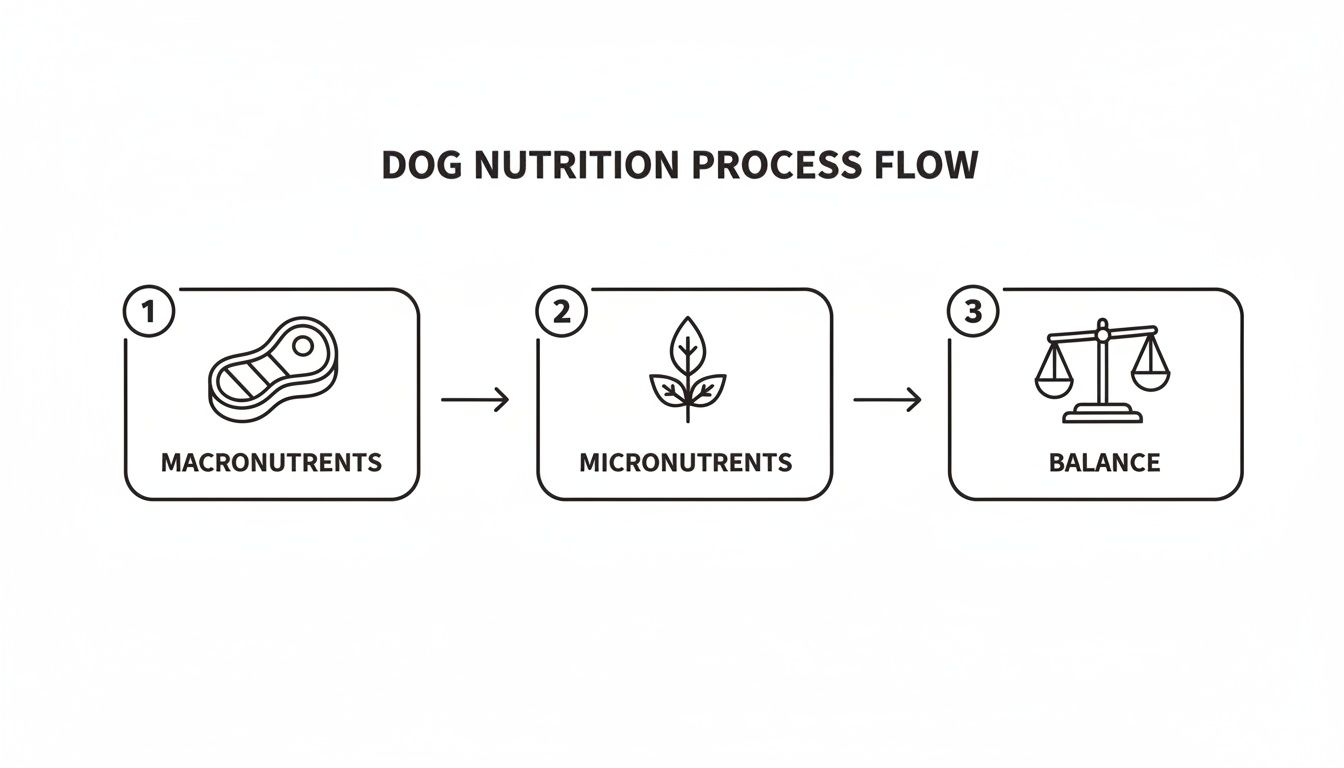
It’s a good reminder that a truly balanced meal is a deliberate combination of these core parts, not just a random mix of tasty ingredients.
Selecting Your Star Ingredients
Now for the fun part—let's fill in that template with real, wholesome foods. It goes without saying, but the quality of your ingredients has a direct line to the nutritional value of the final meal.
Choosing Your Protein
This is the cornerstone of the whole meal. Our pack loves lean options that provide high-quality protein without excessive fat.
- Lean Ground Meats: Chicken, turkey, or lean beef (90/10 or leaner) are all fantastic choices. They cook up fast and are super easy for most dogs to digest.
- Fish: We love using salmon and sardines because they're absolutely packed with anti-inflammatory omega-3 fatty acids. Just make sure you're using fish packed in water, with no salt added.
- Eggs: A true superfood! Eggs are a perfect source of protein. You can scramble or hard-boil them and mix them right into the meal.
Our Favorite SetterFrens Tip: Don't forget organ meats! Just a small amount of beef liver or chicken hearts—around 5% of the total meat portion—adds a powerful punch of essential vitamins like Vitamin A and minerals like iron and zinc.
Picking Carbs and Veggies
This is where you can get creative and add tons of variety and color. A quick but important note: always cook hard vegetables like carrots and sweet potatoes to break them down and make them easier for your dog to digest.
- Carbohydrates: Sweet potatoes, pumpkin, brown rice, and quinoa are all excellent. They provide that sustained energy and are typically very gentle on the digestive system.
- Vegetables: Think leafy greens like spinach, vibrant carrots, and fiber-rich green beans. These are canine superfoods that support everything from eyesight to immune function.
It's clear that more and more pet parents are thinking this way. The organic pet food market is on track to hit USD 29.1 billion by 2026, with dog food making up USD 11.17 billion of that. Many of us are choosing USDA-certified organics to steer clear of preservatives, which are linked to 15% of allergy cases in some studies. A balanced recipe that follows AAFCO guidelines—with at least 22.5% protein for adults—is key. In fact, research shows 85% of homemade-fed dogs maintain an ideal BMI, a huge jump from the 65% on kibble. You can discover more insights about organic pet food statistics here.
Must-Have Kitchen Tools for Easy Prep
You absolutely do not need a high-tech, professional kitchen to do this. A few simple, reliable tools will make your meal prep process smooth and almost effortless.
- A Reliable Food Scale: We can't stress this enough—precision is your friend. A food scale is the only way to ensure you’re getting your ratios right, which is the most critical part of nutritional balance.
- Large Stockpot or Pan: Get something big enough to cook and mix all your ingredients without splattering everything all over your stovetop. Trust us on this one.
- Batch-Cooking Containers: Glass or BPA-free plastic containers are perfect for portioning out meals for the week. This single step will save you so much time!
With these basics in hand, you've got a clear blueprint for crafting delicious, nutritionally sound meals that will have your pup licking the bowl clean every single time.
Alright, let's get cooking! The theory is great, but now for the fun part—turning all that knowledge into delicious, bowl-licking meals for your best friend.
Here are three vet-vetted recipes from the SetterFrens kitchen. We've developed these to give you a fantastic starting point, covering a few different proteins to suit various tastes and dietary needs. Just remember, a slow transition is key when introducing any new food, and a quick chat with your vet is always the best first step.
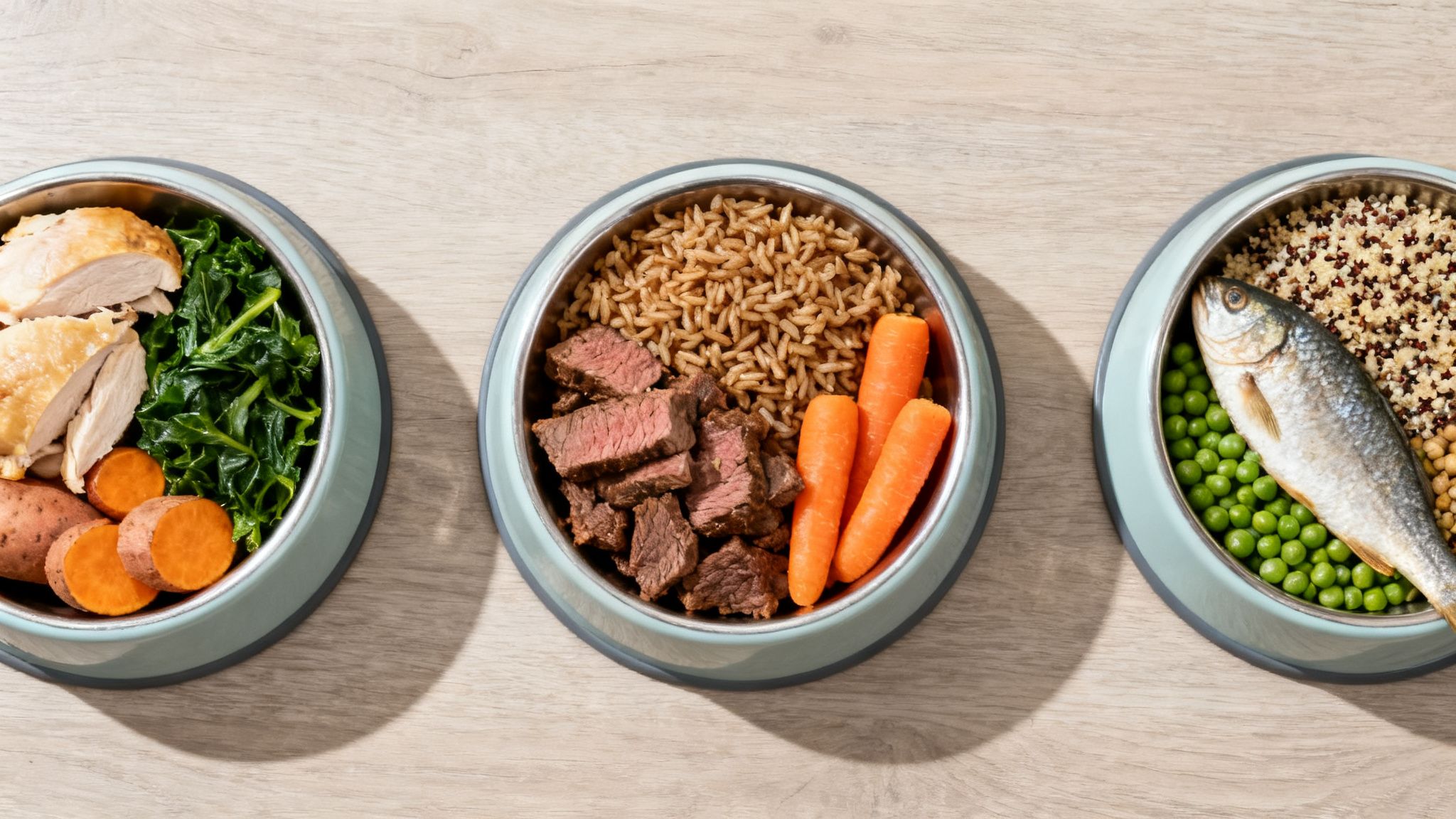
Setterfren’s Classic Chicken and Quinoa Bowl
This is our go-to starter recipe. It’s gentle on the tummy, full of lean protein, and uses quinoa—a powerhouse grain that's actually a complete protein, meaning it has all nine essential amino acids. It’s a real winner for most dogs.
What you'll need:
- 2 pounds ground chicken or turkey
- 1 cup uncooked quinoa, rinsed well
- 1 cup finely chopped carrots
- 1 cup fresh spinach, chopped
- 1 tablespoon olive oil or flaxseed oil
- 2 tablespoons finely minced curly parsley
Putting it together:
- First, get the quinoa cooking according to the package directions.
- While that simmers, brown the ground chicken in a large pan over medium heat. Once it's cooked through, be sure to drain off any extra fat.
- Toss the chopped carrots into the pan with the chicken and let them cook for about 5-7 minutes until they start to soften.
- Finally, stir in the spinach and parsley. You only need to cook them for a minute or two, just until the spinach wilts.
- Combine the chicken and veggie mix with the cooked quinoa in a large bowl, drizzle with the olive oil, and give it all a good stir. Let it cool completely before serving.
Hearty Beef and Sweet Potato Mash
Got a more active pup or one that could use a slightly richer, more calorie-dense meal? This beef and sweet potato mash is a home run. Beef delivers a great punch of iron and zinc, and sweet potatoes are a fantastic source of fiber and vitamin A.
It's amazing how easy it is to source top-notch ingredients these days. With online channels making up over 35% of the expanded dog food market, getting organic meats and veggies delivered is simpler than ever. This access makes it a breeze to create a balanced mix, like 40% chicken livers, 30% quinoa, 20% spinach, and 10% pumpkin. It’s no wonder 92% of owners who cook at home report seeing better digestion in their dogs. You can dive deeper into these dog food market trends here.
What you'll need:
- 2 pounds lean ground beef (90/10 is perfect)
- 2 medium sweet potatoes, peeled and diced
- 1 cup green beans, trimmed and chopped
- 2 hard-boiled eggs, chopped
- 1 tablespoon unrefined coconut oil
Putting it together:
- Start by boiling or steaming the diced sweet potatoes until they're fork-tender. Drain them well and mash them up in a big bowl.
- In a separate skillet, cook the ground beef until it's nicely browned, and then drain all the excess fat.
- Add the chopped green beans to the beef and cook for another 5-6 minutes until they're tender but still have a little crispness.
- Now, combine the beef and green bean mixture with your mashed sweet potatoes.
- Stir in the chopped hard-boiled eggs and coconut oil until everything is mixed together.
- Let it cool down to room temperature before you portion it out for your very patient dog.
Sensitive Stomach Sardine and Pumpkin Plate
If you have a dog with a sensitive digestive system or one whose skin and coat could use a little boost, this is the recipe for you. Sardines are a true superfood, packed with omega-3 fatty acids, and pumpkin is a legendary gut-soother.
A Quick Tip on Canned Fish: Always, always choose sardines packed in water with no salt added. The oils can add too much fat, and the brine is way too high in sodium for a dog's system.
What you'll need:
- 2 cans (3.75 oz each) of sardines in water (don't drain them!)
- 1 cup plain cooked brown rice
- 1 cup pure pumpkin purée (make sure it’s not the pie filling)
- 1/2 cup steamed and chopped broccoli
- Optional: A quality canine multivitamin—ask your vet for a recommendation!
Putting it together:
- This one is incredibly simple! In a medium bowl, mash the sardines with a fork, liquid and all. Don't worry about the tiny bones; they're soft and a fantastic source of calcium.
- Add the cooked brown rice, pumpkin purée, and steamed broccoli to the bowl.
- Mix it all together until you have an even consistency.
- If your vet recommended a powdered supplement, this is the perfect time to stir it in.
- Serve it up! This no-cook recipe is as fast as it is nutritious.
Recipe Snapshot Comparison
To help you choose the best starting point, here’s a quick side-by-side look at the three recipes.
| Recipe Name | Main Protein | Calories per Cup (approx.) | Best For |
|---|---|---|---|
| Classic Chicken & Quinoa | Chicken | ~350 kcal | Adult dogs, sensitive stomachs, good starter meal |
| Hearty Beef & Sweet Potato | Beef | ~450 kcal | Active dogs, dogs needing to gain weight, high energy breeds |
| Sardine & Pumpkin Plate | Sardines | ~300 kcal | Dogs with skin/coat issues, sensitive digestion, seniors |
Each recipe brings something unique to the table, whether it's lean protein for everyday health, higher calories for an active lifestyle, or omega-3s for a shiny coat.
Once you get comfortable with these main meals, why not try making some fun snacks? We have plenty of ideas in our guide to delicious homemade dog treats recipes. Enjoy the process—cooking for your dog is one of the most rewarding things you can do.
Getting It Right: Portioning, Storage, and Safety
Making your dog's food from scratch is a fantastic act of love. But to make sure every meal is truly nourishing, we have to talk about the less glamorous (but super important) details: getting the portion size right, storing the food safely, and knowing when to call in the experts.
Getting these things right is what takes your homemade meals from a nice treat to a healthy, sustainable diet for your best friend.
How Much Should I Feed My Dog?
Figuring out the right amount of food is probably one of the first questions on your mind. Too much can lead to weight gain, and too little leaves them hungry and under-nourished.
A good starting point is to feed about 1 cup of food for every 10-15 pounds of body weight per day. So, a 40-pound dog would get somewhere around 3-4 cups total, usually split between a morning and evening meal.
But every dog's metabolism and activity level are different. For a more tailored number, you can get a pretty solid estimate of their daily calorie needs.
Here's a quick calculation:
- Convert pounds to kilograms (kg): Take your dog's weight in pounds and divide it by 2.2. A 40 lb dog is 18.2 kg.
- Find their basic calorie needs (RER): The formula is 70 x (their weight in kg)^0.75. For our 40 lb dog, that’s 70 x (18.2)^0.75, which comes out to 623 calories just to exist.
- Factor in their lifestyle: Now, multiply that RER number by a factor that reflects how active they are. A typical, active family dog's factor is around 1.6. So, 623 x 1.6 gives us a daily target of ~997 calories.
This number is your North Star. You can weigh your prepared food and calculate the calories in each portion to hit that daily goal.
Keeping It Fresh: Safe Handling and Storage
Remember, your homemade dog food is fresh, real food—it doesn't have the preservatives that keep kibble shelf-stable for months. That means we have to handle it just like we would our own meals.
- Cool it down fast. Don't let a big, hot batch of food sit on the counter for hours. Spread it out on a baking sheet to cool quickly, and never leave it out for more than two hours.
- Refrigerate what you'll use soon. Once it's cool, pack it into airtight containers and pop it in the fridge.
- Freeze the rest. Batch cooking is a game-changer. We always portion out individual meals into freezer bags or containers. It’s the best way to lock in freshness and have ready-to-go meals for weeks.
A simple rule we live by is the 3-day fridge rule. If we're not going to eat it within three days, it goes straight into the freezer. No exceptions.
And always trust your nose. If the food smells off, looks discolored, or you see anything funky growing on it, toss it. It's not worth the risk.
The Two Things You Can't Skip: Supplements and Your Vet
This is, without a doubt, the most critical part of feeding a homemade diet. You can follow the best recipe in the world, but it's nearly impossible to meet all of your dog's complex nutritional needs from whole foods alone. Over time, these tiny gaps can lead to big health problems.
Most homemade recipes absolutely require a few key additions:
- Calcium: Meat is full of phosphorus, which is great, but it needs to be balanced with calcium. Adding a source like calcium carbonate is essential for maintaining that critical calcium-to-phosphorus ratio for bone health.
- Omega-3 Fatty Acids: Think fish oil or flaxseed oil. These healthy fats are powerhouses for a dog's skin, coat, joints, and even their brain.
- A Good Multivitamin: A well-formulated canine multivitamin helps fill in the remaining micronutrient gaps—things like zinc, copper, and B vitamins that are tough to get just right.
This is not the place for guesswork. Please, make an appointment with your veterinarian or, even better, a board-certified veterinary nutritionist. They are your partners in this. They can look at your recipes, run the numbers, and tell you exactly which supplements and dosages your individual dog needs to thrive on their new diet.
Your Top Questions About Homemade Dog Food, Answered
Deciding to cook for your dog is a big step, and it's totally normal to have a ton of questions swirling around. We hear from our SetterFrens community all the time, so we've gathered some of the most common queries right here. Let's get you cooking with confidence.
Is This Going to Be More Expensive Than Kibble?
That's the million-dollar question, isn't it? Honestly, it can be, but it doesn't have to be.
If you’re reaching for grass-fed bison and all-organic produce, your costs will definitely be higher than a standard bag of kibble. But you're in the driver's seat here. You control the budget.
Buying things like chicken, brown rice, and in-season veggies in bulk can make a huge difference. Many home-cookers find the cost ends up being pretty close to what they’d spend on a premium commercial dog food anyway. Think of it as an investment in your dog’s health—one that might just save you some diet-related vet bills down the road.
How Do I Switch My Dog Over Without Causing an Upset Stomach?
The number one rule is to take it slow. A sudden jump from dry kibble to fresh food is a recipe for digestive chaos. A gradual transition over 7-10 days gives their system time to adapt to all the new, wonderful ingredients.
Here’s a simple timeline that usually works wonders:
- Days 1-3: Start with a mix of 75% old kibble and 25% new homemade food.
- Days 4-6: Shift to a 50/50 split.
- Days 7-9: Now, go for 75% homemade and just 25% kibble.
- Day 10: If everything looks good (you know what we mean!), you can go 100% homemade!
Just pay close attention to your dog's potty breaks during this period. If things seem a little off, just pull back and slow the transition down even more. No rush!
What Supplements Are Actually Necessary?
This is probably one of the most important things to get right. It's nearly impossible to hit all of your dog’s micronutrient targets with whole foods alone, no matter how amazing your recipe is.
A lot of people think a simple mix of meat and veggies is all a dog needs. This is a huge myth. A diet without the right supplements can lead to serious health problems over time, especially deficiencies in crucial nutrients like calcium, zinc, and B vitamins.
While every dog is different, most homemade diets need a little help. A good canine multivitamin is a great place to start. Calcium is almost always a must-add to balance the high phosphorus in meat—it's essential for strong bones. We also love adding Omega-3 fatty acids for healthy skin, a shiny coat, and joint support.
Ultimately, the only way to be certain is to talk to your vet or a veterinary nutritionist. They can look at your specific recipes and give you the exact "what" and "how much."
Can I Just Use Raw Meat in These Recipes?
Our recipes are built with safety in mind, which means they are all designed to be fully cooked. Feeding a raw diet is a whole different ballgame, one that comes with real risks and requires meticulous, expert-level formulation.
Raw meat can carry nasty bacteria like Salmonella and E. coli, which can make your dog—and even the people in your home—very sick. Making sure a raw diet is nutritionally complete is also incredibly tricky. For those reasons, we strongly recommend cooking all proteins exactly as we've laid out.
And if you're just getting started with a new furry face in your home, figuring out their diet is just one part of the adventure. For more great advice, you can learn all about how to care for a new puppy in our comprehensive guide.
At SetterFrens, we're here to help you care for your pup like a pro because we believe life's better with a wagging tail and a good book. From our curated dog-themed books to practical guides like this one, we’re building a cozy community for dog lovers. Join our Puppicino Club at https://setterfren.com to unlock member perks and book updates, and follow @setterfrens on TikTok and Instagram for heartwarming dog moments and product tips