
You’re probably here because a regular dog park stopped feeling relaxing.
Maybe your dog freezes at the gate. Maybe you spend the whole visit scanning body language instead of enjoying it. Maybe your sweet pup does great one-on-one but falls apart when a crowded park adds barking, charging, and clueless owners to the mix. A lot of dog parents know that tight-chested feeling. You unclip the leash and hope for the best, even when “the best” feels less likely every week.
A private dog park solves a different problem than a public one. It isn’t just a fenced patch of grass. It’s a controlled space where you decide who enters, how dogs interact, and what kind of experience the visit should create. That can mean a personal backyard haven for your own dog, a shared neighborhood space for a few trusted families, or a rentable yard that gives local pups a calmer place to play.
Why a Private Dog Park Might Be Your Best Idea Yet
The private dog park idea makes immediate sense once you’ve had one too many bad public park visits.

At a public dog park, most problems start before the dogs even hit the open space. The entrance is crowded. Leashes tangle. Owners chat while one dog barrels straight at another. A nervous dog gets trapped in greeting pressure, and suddenly everyone is pretending a tense situation is “just dogs being dogs.”
That’s a big reason private options have taken off. The private dog park sector has grown rapidly, with platforms like Sniffspot expanding to over 8,000 properties, and one major driver is safety anxiety around public spaces. In the same coverage, 18% of owners report their dog being attacked at public parks, which helps explain why many families now prefer a controlled setup with known rules and limited access (HumanePro on the rise of private dog parks).
Control changes everything
A private dog park lets you control the variables that usually wreck a visit:
- Who comes in: You can keep it solo, invite only a few familiar dogs, or screen visitors if you’re renting the space.
- When they come: No more showing up at peak hours and hoping the group dynamic works.
- What the environment feels like: Quiet fencing, shaded rest areas, water, and clear rules create a softer landing for excitable or anxious dogs.
- How dogs are matched: Puppies, seniors, rough players, and reactive dogs don’t all need the same kind of outing.
A good private dog park doesn’t try to be everything for every dog. It works because it’s intentionally limited.
That trade-off matters. Public parks win on scale and spontaneity. Private parks win on predictability. If your dog needs lower pressure, cleaner routines, or more customized enrichment, predictability is often the feature that matters most.
It can be personal, not commercial
One thing I love about this model is that it doesn’t have to become a full-blown business to be worthwhile. Some of the best private dog park setups are modest. A clean fenced yard, secure gate flow, fresh water, seating, and enough room for movement can already feel luxurious compared with a chaotic public lot.
You’re not just building a place for zoomies. You’re building peace of mind. For a lot of dog moms, that’s the dream.
Planning Your Park From Dream to Blueprint
A private dog park goes wrong long before construction if the planning is sloppy. Most headaches come from three places: legal assumptions, bad site fit, and a budget that only covered the fun parts.
Start with legal reality
Before buying materials or sketching a layout, check what your local rules allow. A private space for your own household is one thing. A small shared community setup or rentable yard can trigger different zoning, permit, parking, insurance, or business-use questions.
Call your municipality and ask direct questions in plain language. Don’t ask, “Can I build a dog park?” Ask whether your property can be used for private recreational animal use, hosted appointments, or membership access. If you expect guests, ask about noise limits, occupancy, fencing restrictions, drainage work, and whether added structures like shade sails, storage sheds, or lighting need approval.
A quick checklist helps:
- Zoning use: Is your property use allowed as-is, or will hosted visits change the classification?
- Permit triggers: Will fencing, grading, sheds, gates, lighting, or water lines need permits?
- Insurance and liability: What coverage does your current policy exclude once guests or paying visitors enter the property?
- Parking and access: Can visitors arrive without blocking sidewalks, neighbors, or emergency access?
- Waste and drainage: Are there local requirements for runoff, sanitation, or disposal?
Practical rule: If strangers and their dogs will use your land, talk to both your insurer and a local attorney before launch. Templates can help you organize questions, but they don’t replace local advice.
Use public park benchmarks wisely
You do not need to copy a municipal dog park. But the public market gives useful benchmarks.
Public dog parks in the U.S. number around 5,200, average 0.75 acres, and 68% feature separate areas for small and large dogs (Gitnux dog park statistics). Those numbers are helpful because they show what people already expect from a functional dog space.
That doesn’t mean your yard needs to hit that size. It means your layout should solve the same practical questions public parks solve:
- Where do dogs enter?
- Can dogs decompress before greeting?
- Is there enough room to move without immediate crowding?
- Should different dogs use different zones?
- Can humans supervise comfortably?
For a personal or micro-community private dog park, I’d think less about acreage and more about flow. A smaller well-zoned space beats a larger awkward one every time.
Assess the site like a builder, not a dreamer
Walk your space with a notebook. Look at it at different times of day. Wet ground, afternoon sun, neighbor sightlines, and muddy low spots will shape your design more than your Pinterest board will.
Focus on these questions:
- Ground condition: Does water pool anywhere? Muddy parks become unusable fast.
- Slope: Gentle grade can help drainage. Uneven footing can also create running hazards.
- Visibility: Can handlers see the full area from key seating spots?
- Noise exposure: Are there fence lines where nearby dogs, roads, or foot traffic will overstimulate visitors?
- Entry route: Can people move from car to gate without passing close to another dog?
- Maintenance access: How will you mow, rake, disinfect, repair fencing, and remove waste?
If your property is larger, don’t automatically fence the maximum area. Dogs use space differently than people imagine. A well-shaped active zone plus a quiet decompression corner often works better than a giant open rectangle.
Build the budget before the excitement takes over
The budget needs to include the dull but necessary parts. Fence lines, gates, surfacing prep, drainage fixes, seating, signage, water access, waste stations, storage, and maintenance tools add up quickly.
Here’s a practical starter framework.
| Item | Low-End Estimate | High-End Estimate | Notes |
|---|---|---|---|
| Fencing and gates | Varies | Varies | Usually the biggest cost. Final price depends on perimeter, material, terrain, and gate count. |
| Site prep and grading | Varies | Varies | Includes brush clearing, leveling, drainage correction, and debris removal. |
| Surfacing | Varies | Varies | Grass, turf, mulch, or mixed surfaces each carry different install and upkeep costs. |
| Water access | Varies | Varies | Could be as simple as hose-fed filling or as involved as a dedicated spigot setup. |
| Seating and shade | Varies | Varies | Benches, picnic tables, shade sails, pergolas, or planted shade all change the budget. |
| Waste stations and cleaning supplies | Varies | Varies | Include bins, liners, scoopers, sanitizer, and storage. |
| Signage and rules | Varies | Varies | Entry signs, use instructions, emergency contacts, and wayfinding matter more than people think. |
| Insurance and professional advice | Varies | Varies | Legal review and coverage upgrades are part of startup, not optional extras. |
| Enrichment features | Varies | Varies | Tunnels, platforms, digging zones, and splash features can be phased in later. |
A smart budget has two versions. One is the safe launch version, with only the must-haves. The other is the nice-to-have version, with amenities added later. That keeps the project moving without forcing you to overbuild.
Building a Safe and Secure Canine Oasis
If you spend generously anywhere, spend it on containment and entry design. Dogs forgive plain aesthetics. They do not forgive a weak fence line or a chaotic gate.
Fence height and ground gaps are not negotiable
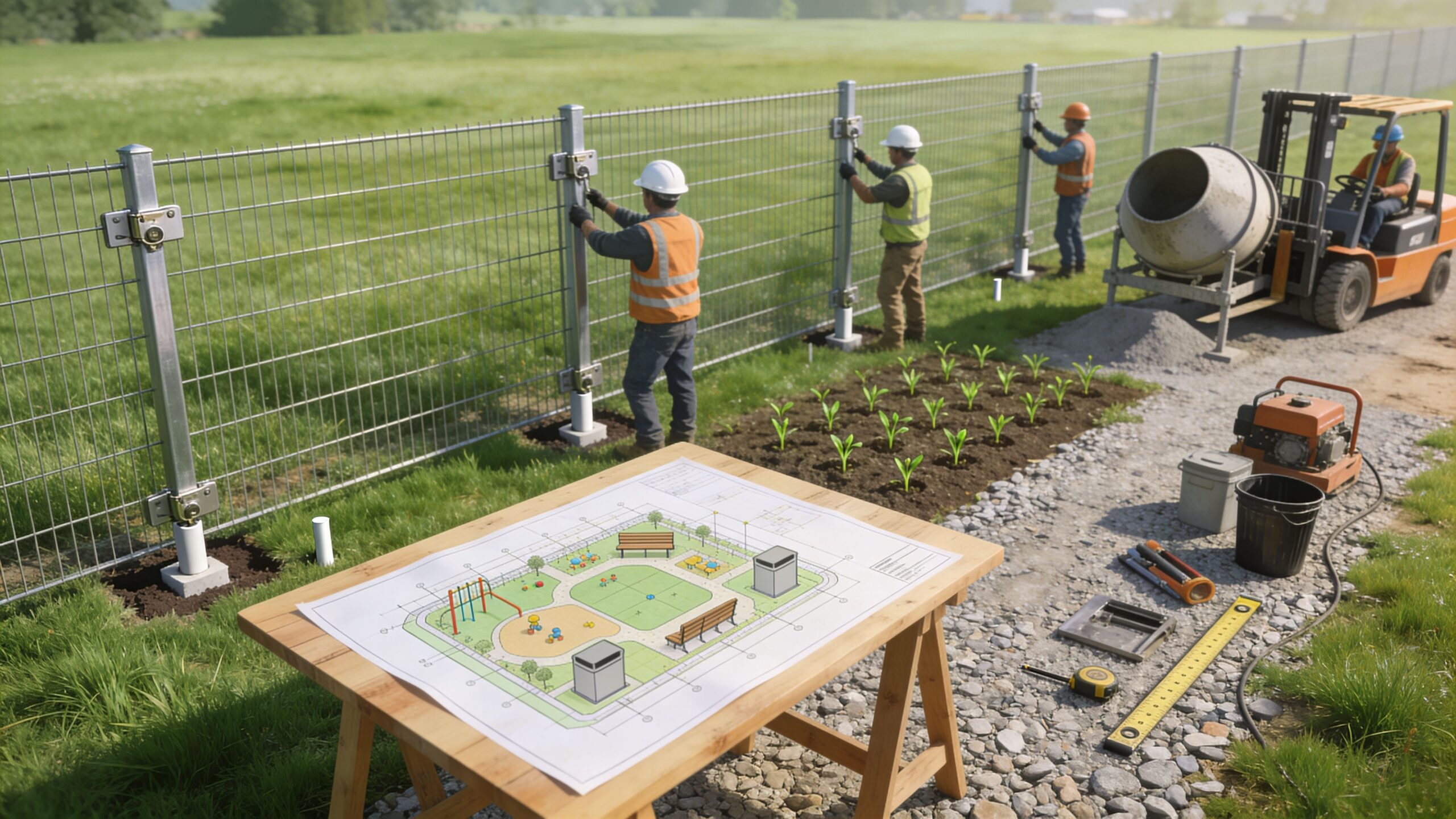
For a private dog park, fencing should be a minimum of 5 to 6 feet high, with no gaps larger than 2 inches. A double-gate doggie airlock can reduce greeting aggression by as much as 85%, which makes the entrance one of the most important safety features you’ll build (The Park Catalog dog park guide).
That tells you what matters most:
- Height stops jumpers and climbers from testing the perimeter.
- Tight installation at ground level stops dig-outs and squeeze-through escapes.
- Two gates instead of one give handlers a pause point, which cuts tension and prevents accidental bolt-outs.
If you want more material-specific context before you commit, FenceScape has essential information for dog owners that’s helpful for comparing practical fencing considerations in everyday home settings.
Choose fencing for behavior, not just looks
Not all fences solve the same problem. The right choice depends on your dog mix, sightline sensitivity, climate, and maintenance tolerance.
A quick comparison helps:
| Fence type | Best for | Watch out for |
|---|---|---|
| Chain-link | Durable, visible, common for active dog spaces | Some reactive dogs fixate through open mesh |
| Solid vinyl or privacy panels | Reducing outside triggers and visual stimulation | Wind load, drainage planning, and a more enclosed feel |
| Wood privacy fence | Warm look and good visual blocking | Ongoing upkeep, rot risk, and potential chew damage |
| Mixed fence design | Combines visibility in some areas with privacy in others | More planning, more transitions to maintain |
For anxious or reactive dogs, visual shielding can matter as much as physical containment. If dogs spiral when they see neighbor dogs or street traffic, a solid run on the hottest trigger side of the yard is often worth it.
Don’t put your prettiest gate at the most stressful corner if it creates pressure at entry. The best-looking layout isn’t always the safest one.
Build the entrance like a decompression zone
The entrance is where arousal spikes. People arrive with leashes on, dogs are excited, and handlers are juggling bags, phones, and gate latches. That’s exactly why the airlock matters.
A good airlock has:
- An outer gate
- A buffer space between gates
- An inner gate into the main play area
- Enough room for one dog and one human to pause comfortably
- Clear latch hardware that closes reliably
I prefer the entry path to feel calm, not ceremonial. Keep it uncluttered. Skip decorative planters, loose storage, or anything that narrows movement. If you host unfamiliar dogs, post rules right in the airlock so people stop and read while the dog settles.
Surfacing decides whether the park stays usable
Surface mistakes are expensive because they affect cleanup, drainage, and paw comfort every single day. The best choice depends on your climate, traffic level, and how often the space will be rested between visits.
Here’s how the common options usually play out.
Natural grass
Grass feels pleasant and looks inviting. It also struggles if use is heavy, drainage is poor, or dogs repeatedly run the same path near gates and fence lines. Expect wear patterns, urine burn, muddy patches, and reseeding work.
Grass works best when:
- The space gets moderate use
- You can rotate activity zones
- Drainage is decent
- You’re committed to lawn repair
Artificial turf
Turf gives a tidy look and can simplify cleanup, but only if the base prep and drainage are done well. Cheap installs trap odor, heat up, and become the exact kind of “easy” solution owners regret later.
Turf works best when:
- You need a consistently clean appearance
- Natural grass won’t hold up
- You can invest in proper underlayment and cleaning
- You understand local heat conditions
Wood chips or mulch
Some dogs love it. It can soften impact and reduce muddy mess. But it migrates, breaks down, gets kicked into bowls and paws, and may need more frequent topping up than people expect.
Sand
Sand can be fun in a designated digging zone. As a full-site surface, it tends to travel, hold odor if unmanaged, and create cleanup headaches after rain.
Drainage wins quietly
A private dog park can look great on opening day and become miserable after the first serious rain if drainage wasn’t part of the build. Standing water creates mud, smell, mosquito issues, and worn-out turf or grass.
Basic drainage priorities:
- Grade water away from entry gates and seating
- Avoid low bowls where dogs naturally congregate
- Use hardy edge materials in high-traffic strips
- Stabilize muddy transitions between hardscape and soft surface
- Check runoff direction so you don’t create a problem at a neighbor line
If you’re torn between more square footage and better drainage work, choose drainage. Every time.
Build in inspection points from day one
The safest private dog park owners don’t “finish” the fence and forget it. They build routines around inspection.
Use a simple recurring check:
- Walk the full fence line
- Check latch tension and gate swing
- Look for digging at corners
- Inspect boards, ties, mesh, or post movement
- Scan for splinters, sharp wire ends, or exposed hardware
- Test the path from parking area to entry
That routine matters even more if children, seniors, or reactive dogs use the space. Those visitors need a park that behaves predictably.
Choosing Amenities for Happy Dogs and Happier Humans
Once the enclosure is solid, the park starts becoming inviting. At this stage, many private dog park owners either overdo gimmicks or underbuild comfort. The sweet spot is thoughtful amenities that support real use.
Water, shade, and seating are the real luxury package
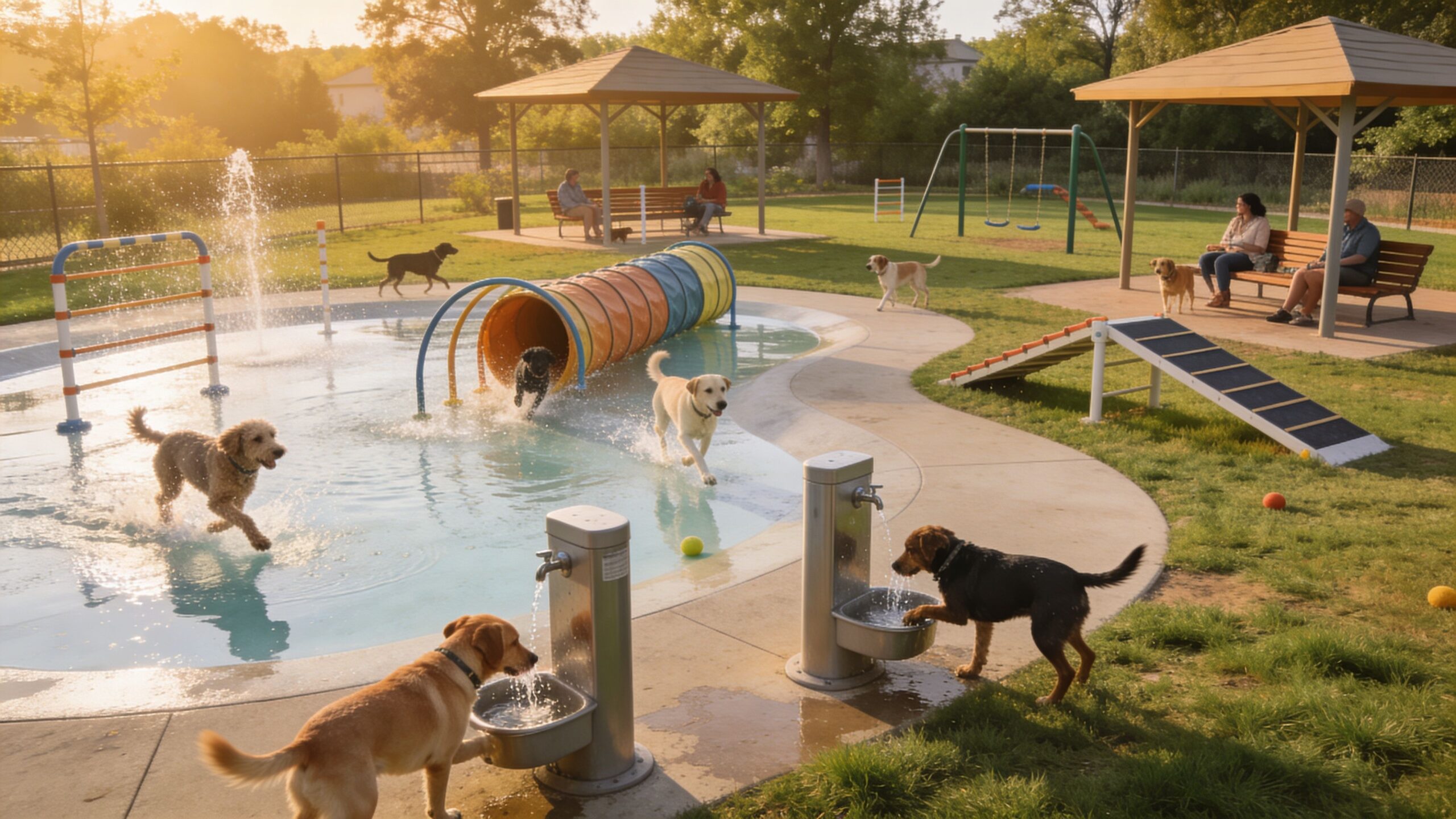
People often start by shopping for cute agility pieces. I’d start with the boring trio first:
- Fresh water
- Reliable shade
- Comfortable seating
If the humans are hot, standing, and annoyed, they won’t supervise well. If the dogs can’t pause, cool down, or drink easily, the visit gets shorter and more frantic. The best private dog park amenities make calm behavior easier.
A few practical choices work well:
- Hose-fed bowl refill stations
- Raised water bowls for larger dogs
- Shade sails or pergolas near seating
- Benches placed where owners can see the whole yard
- One quieter seat away from the main action for dogs that need decompression
A private dog park feels premium when both species can settle, not just run.
Add enrichment that supports natural behavior
A great dog space isn’t just for sprinting. Dogs sniff, climb, watch, dig, and explore with their whole bodies. Good enrichment gives them options.
Consider building a mix of these:
- Low platforms or mounds: Great for confidence and scanning the environment
- Short tunnels: Good for curious, playful dogs if they’re introduced well
- Log or beam balance features: Best when low and stable
- Sniff garden areas: Safe plantings, textured corners, and scent variety
- Dig zone: A designated sand or soft-earth area can save the rest of your yard
- Texture variety: Grass, packed paths, mulch pockets, and smooth hardscape can break up the experience
Keep equipment simple. Commercial-looking agility setups can be fun, but oversized pieces often end up underused if the average visitor just wants a safe, pleasant outing.
Treat the ground like an amenity too
The lawn itself shapes the whole experience. Soft, durable grass or a healthy mixed surface makes the space feel cared for. If you’re keeping a natural yard, it helps to use region-specific lawn advice instead of generic pet-safe tips. For readers in that area, Barefoot Organics shares healthy pet lawn tips for North Georgia that are useful when you’re trying to balance turf health with dog wear and tear.
A few ground-level upgrades pay off quickly:
| Amenity | Why it earns its keep |
|---|---|
| Waste station near exit | Makes cleanup the default, not an afterthought |
| Towel or paw-wipe area | Helps on wet days and keeps cars cleaner |
| Toy bin with rules | Useful only if items are cleaned and monitored |
| Small storage bench | Keeps hoses, bags, and disinfecting supplies handy |
| Night lighting near gate | Helps with safer arrivals and departures |
Skip anything that creates preventable conflict
Not every “fun” amenity belongs in every private dog park.
Use caution with:
- Shared high-value toys left out all day
- Deep water features without rules and supervision
- Tall agility equipment for casual users
- Tight choke points around seating or shade
- Decorative gravel that ends up in paws or mouths
The best amenities are the ones people use correctly without needing constant correction. If a feature increases guarding, crowding, or cleanup stress, it probably doesn’t belong.
Smart Management for a Thriving Dog Community
A beautiful private dog park can still fail if the rules are fuzzy. Management is what turns a fenced yard into a dependable dog space people trust.
Rules should be plain, short, and enforceable
If guests need a lawyer to decode your park rules, they won’t follow them. Keep the policy clear and visible at booking and at entry.
Cover the basics:
- Dogs must be healthy and current on required vaccinations
- Owners stay on site and supervise
- Aggressive behavior ends the session
- Waste must be picked up immediately
- Dogs enter and exit through the gate system one at a time
- Food, treats, toys, and children follow whatever restrictions you choose
- Visitors report damage, injury, or sanitation issues right away
The strongest rules remove ambiguity. “Use common sense” is not a rule. “One family enters only during its reserved time” is a rule.
Screening matters more for special-needs dogs
One of the biggest gaps in dog park guidance is support for reactive or special-needs dogs. That matters because 25% of dog aggression incidents occur in shared play spaces, which is exactly why private spaces can be a safer option when hosts use proper pre-visit screening and management protocols (Sniffspot listing context on reactive and special-needs guidance).
That doesn’t mean every reactive dog is a fit for every private dog park. It means you need a system.
Try a short intake process that asks:
- Has your dog shown leash reactivity?
- Is your dog comfortable seeing other dogs through a fence?
- Does your dog guard toys, food, or people?
- Is your dog more successful solo, with one dog friend, or in a small group?
- Are there handling, mobility, or medical needs we should know about?
This information helps you set the right kind of visit. Some dogs need solo bookings only. Some need a longer buffer before and after a session. Some do best entering from a quieter side path with no visual contact.
Private dog parks are often safest when they stop treating every dog like a generic social butterfly.
Scheduling and flow prevent half the trouble
Most conflict is operational. The wrong dogs overlap. One visitor arrives early. Another lingers. Nobody knows whose turn it is.
A clean management system should include:
- Reservation windows
- Buffer time between visits
- Simple arrival instructions
- A posted emergency contact
- A clear cancellation and weather policy
For a small shared community park, a private calendar and text thread may be enough. For a rentable yard, use a booking platform that timestamps reservations, collects park rules, and stores visitor communication in one place.
Keep arrival instructions specific:
- where to park
- which gate to use
- whether to wait in the car until the slot begins
- where waste supplies are located
- how to lock up when leaving
Liability is not a paperwork afterthought
Any private dog park with guests needs a serious liability plan. That includes insurance review, local legal advice, written rules, waivers or agreements drafted for your setup, and a process for incident reporting.
At minimum, keep records of:
- visitor acknowledgments
- reservation times
- maintenance checks
- repairs completed
- incidents and follow-up
- complaints from neighbors or guests
That recordkeeping isn’t glamorous, but it protects the space and helps you see patterns. If three separate visitors mention one muddy corner or one sticky latch, fix the problem before it becomes a real event.
Daily care keeps the park trustworthy
A private dog park doesn’t need to feel fussy. It does need to feel maintained.
A simple routine works well:
Before the day starts
- Walk the perimeter
- Check gates and latches
- Refill water
- Restock bags and sanitizer
- Scan for sharp debris or holes
After visits
- Remove waste
- Check high-traffic turf or muddy spots
- Wipe seating if needed
- Reset toys or equipment only if you intentionally provide them
Weekly or on a set cadence
- Deep-clean bowls and bins
- Inspect fence lines closely
- Rake or level loose-fill surfaces
- Trim overgrowth near fences and paths
- Review any guest messages for recurring issues
If you want a small style upgrade that still supports cleanup, it can be nice to find stylish dog poop bags that you won’t mind keeping visible at stations or in welcome kits. Functional doesn’t have to look sloppy.
Your New Role as a Private Park Pack Leader
Creating a private dog park asks you to think like a dog parent, a property planner, and a calm host all at once. That’s exactly why the finished space feels so rewarding. You’re not just fencing a yard. You’re shaping an experience around safety, comfort, and the kind of canine joy that doesn’t need chaos to feel exciting.
The strongest setups are rarely the flashiest. They’re the ones with secure fencing, smart gate flow, paw-friendly ground, dependable water, useful shade, clear rules, and management that respects different dogs. That’s what makes the space feel trustworthy.
A private dog park can stay beautifully simple. It can also grow into a beloved small community asset. Either way, the win is the same. Your dog gets a place that fits who they are instead of forcing them to cope with a one-size-fits-all environment.
If you’ve been waiting for permission to build something better for your pup, this is it. Start with the safest version. Keep the layout honest. Add features as real use teaches you what matters. Dogs don’t need perfection. They need a place where they can breathe, move, and feel secure.
If you love practical dog-life ideas like this, take a peek at Setterfrens LLC. It’s a warm, dog-loving corner of the internet filled with dog-themed books, helpful guides, honest product picks, and cheerful extras for people who believe life is better with paws nearby.