You know that feeling when a movie trailer gives you goosebumps and you just know you have to see that film? That's exactly what a book trailer does, but for a story you can hold in your hands. It’s a short, dynamic video that gives potential readers a taste of your book's world, its characters, and the central question that will keep them turning pages.
A great trailer can stop a casual social media scroller in their tracks and turn them into an eager reader.
What Is a Book Trailer Anyway?
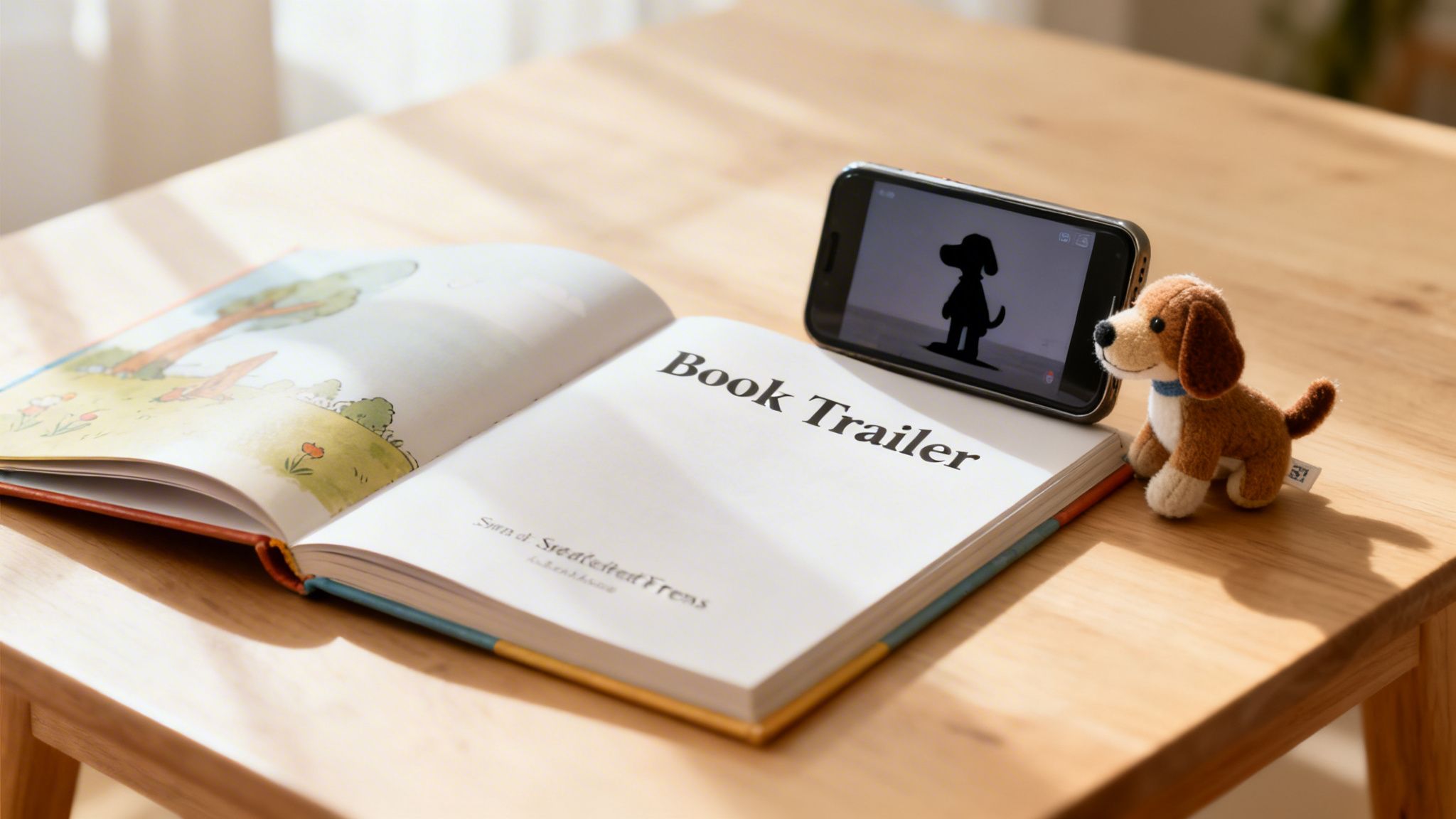
At its core, a book trailer is a promotional video that uses visuals, sound, and a bit of story to stir up curiosity. It’s not about giving away the plot. Instead, it’s about creating an emotional connection and letting viewers feel the adventure before they even open the book. For a cozy online community like ours at SetterFrens—built for dog lovers who believe life’s better with a wagging tail and a good book—it’s the perfect way to bring our dog-themed stories to life for kids and parents.
A book trailer isn’t about telling the whole story—it’s about selling the feeling of the story. Think of it as a promise of adventure, mystery, or heartwarming fun, all wrapped up in a package that’s usually under 90 seconds.
What started as a quirky marketing idea around 2010 has become a must-have tool for authors, especially with the rise of visual-first platforms like TikTok and Instagram. And it's not just a trend; it's a booming industry. The global book trailer production market was valued at $120 million in 2024 and is expected to skyrocket to $410 million by 2033. You can learn more about this explosive market growth and see why it’s a game-changer for authors.
To put it simply, here's a quick rundown of the key components and their jobs.
Book Trailer Quick Guide
| Element | Purpose |
|---|---|
| Hook | Grab attention in the first 3-5 seconds. |
| Visuals | Show the book's world, mood, and characters. |
| Music/Sound | Set the emotional tone (e.g., suspenseful, joyful). |
| Text/Voiceover | Tease the story's core conflict or theme. |
| Call-to-Action | Tell the viewer exactly what to do next. |
These elements work together to create a powerful first impression and make your book impossible to ignore.
The Core Elements of a Book Trailer
A fantastic book trailer doesn’t just fall into place; it’s a carefully crafted recipe for intrigue. Each ingredient is chosen to build anticipation and make your book stick in the viewer's mind long after the video ends.
A Compelling Hook: You have about 3-5 seconds to stop the scroll. A provocative question, a stunning piece of animation, or an unforgettable line of dialogue can do the trick.
Atmospheric Music: Sound is your shortcut to emotion. Is your story a fun, lighthearted romp for kids? A playful, upbeat tune says it all. Writing a nail-biting thriller? Tense, dramatic music will build that suspense instantly.
Engaging Visuals: This is where you bring the world to life. You can use anything from live-action clips and custom animation to simple, elegant text moving over background art. The goal is always to show the feeling, not just tell people about it.
A Clear Call-to-Action (CTA): Never leave your viewer hanging! End every trailer by telling them what to do next. Simple, direct commands like "Pre-order now," "Available wherever books are sold," or "Join our Puppicino Club for exclusive updates" work wonders.
Exploring Different Book Trailer Styles
Finding the right style for your book trailer is a bit like casting the lead role in a movie. You need the perfect fit for your story's personality, your audience, and of course, your budget. There’s no one-size-fits-all solution, so let’s walk through the most common styles to see which one makes the most sense for you.
Each approach offers a completely different way to grab a reader's attention, from heart-pounding action sequences to a quiet, heartfelt chat with the author.
Cinematic and Live-Action Trailers
This is the blockbuster approach. Think of a cinematic trailer as a mini-movie, complete with actors, sets, and high-quality filming that drops viewers right into your story’s world. They are an absolute home run for genres that thrive on atmosphere—like thrillers, epic fantasy, and steamy romance.
While a full-scale production can be the most expensive route, it packs a serious emotional punch and makes the world of your book feel incredibly real. Don't be discouraged by the price tag, though; clever use of high-quality stock footage can give you that cinematic feel for a fraction of the cost.
Animated and Motion Graphics Trailers
For many books, especially in the children’s space, animation is pure magic. Animated trailers can bring your illustrations to life, creating vibrant, whimsical worlds that perfectly capture a story's sense of wonder. We're huge fans of this style here at SetterFrens, as it lets us share our dog-centric stories in a way that delights both kids and parents. If you’re working on a story for young readers, our guide on how to write a children's book has some great tips for building those enchanting narratives.
Motion graphics trailers are a slightly different beast. They use slick, animated text and imagery to explain concepts in a clean and modern way. This makes them a fantastic choice for non-fiction, business guides, or even hard sci-fi, where conveying a core idea is just as crucial as setting the mood.
Key Takeaway: The best trailer style isn't the most expensive one. It's the one that authentically captures the heart of your book and speaks the language of your ideal reader.
The Author-Focused Trailer
Sometimes, the most powerful story isn't in the book—it's behind it. Author-focused trailers put you, the writer, front and center. In these, you speak directly to your audience, sharing your passion, the spark of inspiration for the book, and what you hope readers will take away from it.
This authentic, creator-led voice is something we champion at SetterFrens. It builds an immediate personal connection and turns your name on the cover into a friendly face readers can trust. When you share your "why," you're not just selling a book; you're inviting readers into your world and building a community that will stick with you for the long haul.
Which Book Trailer Type Is Right for You?
Feeling a little overwhelmed by the options? That's totally normal. To make the decision easier, we’ve put together a quick comparison to help you weigh the pros and cons of each style based on your specific goals and resources.
| Trailer Type | Best For | Pros | Cons |
|---|---|---|---|
| Cinematic / Live-Action | Thrillers, Romance, Fantasy, Sci-Fi | High emotional impact; feels professional and immersive. | Can be very expensive and time-consuming; casting can be difficult. |
| Animated | Children's Books, Fantasy, YA, Illustrated Novels | Visually captivating; perfectly matches the book's art style. | Custom animation can be costly; less "realistic" feel. |
| Motion Graphics | Non-Fiction, Business, Sci-Fi, Self-Help | Modern and clean; great for explaining complex ideas quickly. | Can feel impersonal; less emotionally driven. |
| Author-Focused | All Genres (especially Non-Fiction & Memoir) | Builds strong author-reader connection; very authentic and affordable. | Requires the author to be comfortable on camera; production quality matters. |
Ultimately, the best choice is the one that aligns with your book's unique spirit and your ability to execute it well. Whether you hire a full film crew or simply set up a camera in your office, the goal is the same: to create a compelling invitation into your story.
Why Book Trailers Are a Must-Have for Authors
Let's be honest: in a sea of millions of books published every year, just writing a brilliant story isn't always enough to get noticed. Your book needs a spark to catch a reader's eye, and a book trailer is that spark. It’s your secret weapon for cutting through the noise.
Think about your own social media habits. We're all drawn to video. A quick, compelling clip on TikTok or Instagram can stop us mid-scroll in a way a static image just can't. A book trailer harnesses that exact energy, making your story feel urgent, exciting, and real before anyone even reads a single page. You're meeting readers right where they are, in a language they already love.
Boost Your Book’s Discoverability
A great trailer isn't just a mini-movie; it's a piece of marketing gold that does the work for you. When someone loves your trailer, they don't just watch it—they share it. They send it to their book club, post it to their stories, and tag friends who they know will love it. That's how your book starts reaching people you never could have found on your own.
And the numbers don't lie. The market for book trailer production rocketed to $120 million globally in 2024 and is on track to hit a massive $410 million by 2033. That explosive growth shows just how vital video has become in the book world.
A book trailer is basically a 24/7 salesperson for your book. It travels across social media, pops up in conversations, and sells your story while you sleep.
Forge an Immediate Emotional Connection
Here’s where the real magic happens. In just 60-90 seconds, a trailer can pull someone straight into your book's world. You can set the mood, hint at a heart-pounding conflict, and—most importantly—make a potential reader feel something. That flicker of excitement, curiosity, or empathy is what turns a casual browser into someone who smashes that pre-order button.
For our SetterFrens books, for example, seeing our plushie pups wag their tails in a cozy reading nook instantly creates a warm, fuzzy feeling for fellow dog lovers. It makes our brand feel familiar and friendly. Once you've grabbed their heart, you can guide them to the next step, like figuring out how to get book reviews to build that all-important social proof.
Ultimately, a book trailer isn't just an ad. It’s a handshake, an invitation, and one of the best tools you have for building a community of loyal fans.
Your Step-by-Step Guide to Making a Book Trailer
Feeling that spark of inspiration? The best part about book trailers is that you don't need a Hollywood-sized budget to make something that truly connects with people. A great video is all about smart planning and a dash of creativity, not expensive gear.
Think of this guide as your roadmap. We’ll break the whole process down into a few simple phases, making it feel less like a massive undertaking and more like a fun, creative project. Even if you're new to video or working with a tight budget, these steps will get you there.
Phase 1: Scripting and Storyboarding
Before you even think about opening a video editor, you need a plan. Seriously, don't skip this part! This is where you draw the map for your trailer. Your main goal is to tell a tiny story that grabs the viewer emotionally and leaves them desperate to know what happens next.
Start by zeroing in on the core feeling of your book. Is it a heartwarming tale? A chilling mystery? Or is it just plain hilarious? Whatever it is, that single emotion is the anchor for your entire script.
Next, it’s time to create a storyboard. This doesn't have to be a work of art—stick figures on a notepad are totally fine! Just sketch out each key moment and jot down what text or voiceover will go with it. This simple exercise helps you see the flow and makes sure your final video is tight and punchy.
Pro Tip: Write your script first, then read it out loud. You're aiming for a final runtime of about 60-90 seconds. That’s the sweet spot for keeping someone’s attention without giving away the whole farm.
Phase 2: Gathering Your Creative Assets
With your storyboard ready, it's time to go on a scavenger hunt for all the creative ingredients you’ll need. This is where you’ll collect the visuals and sounds that will bring your little story to life. The most important thing here is to make sure everything is high-quality and, crucially, that you have the legal rights to use it.
Here’s a quick checklist of what you'll be looking for:
- Visuals: This could be anything from your book cover and character illustrations to relevant stock video clips. You could even take your own photos! For our SetterFrens community, we love using shots of our adorable plushie dogs in cozy spots—it creates an instant connection with fellow dog lovers.
- Audio: Music is your emotional shortcut. Find a track from a royalty-free music library that perfectly matches your book's mood. If you’re planning a voiceover, find a quiet closet and use a decent microphone to get clean, professional-sounding audio.
- Text and Graphics: Get your on-screen text ready. This includes things like a killer review quote, your book title, or a tagline. Pick a font that’s clean, easy to read, and fits your author brand.
Putting in this effort is what guides a potential reader from simply noticing you to becoming a paying customer and a fan.
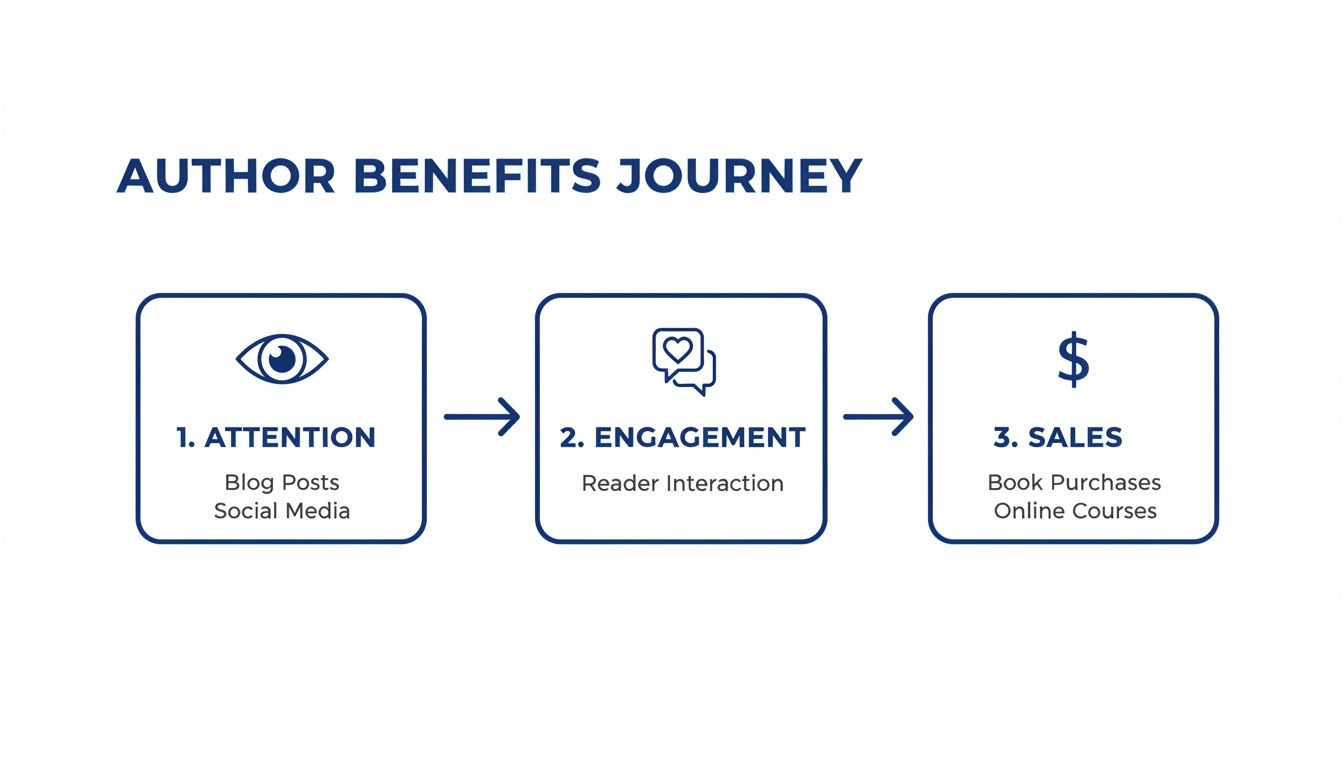
This journey starts with grabbing attention, which then blossoms into meaningful engagement and, ultimately, drives sales.
Phase 3: Production and Final Touches
Okay, now for the really fun part: putting it all together! You absolutely do not need complex, expensive software for this. Tools you might already be familiar with, like Canva or iMovie, are more than powerful enough to create a polished, professional-looking trailer.
Just follow your storyboard. Drop in your clips, music, and text in the order you planned. Keep your cuts sharp and the pacing energetic. A great tip is to make sure your music swells and dips along with the on-screen action to build tension or excitement.
Finally, and this might be the most important part, every great book trailer needs a strong call-to-action (CTA). You have to tell your viewers exactly what you want them to do next. Don't be shy—be direct and clear!
A few effective CTAs look like this:
- "Pre-order your copy today!"
- "Available now wherever books are sold."
- "Join our Puppicino Club for a sneak peek!"
With just a bit of planning, you can put together an incredible book trailer that shows off your unique style and gets readers genuinely excited for your story.
Where to Share Your Trailer for Maximum Impact
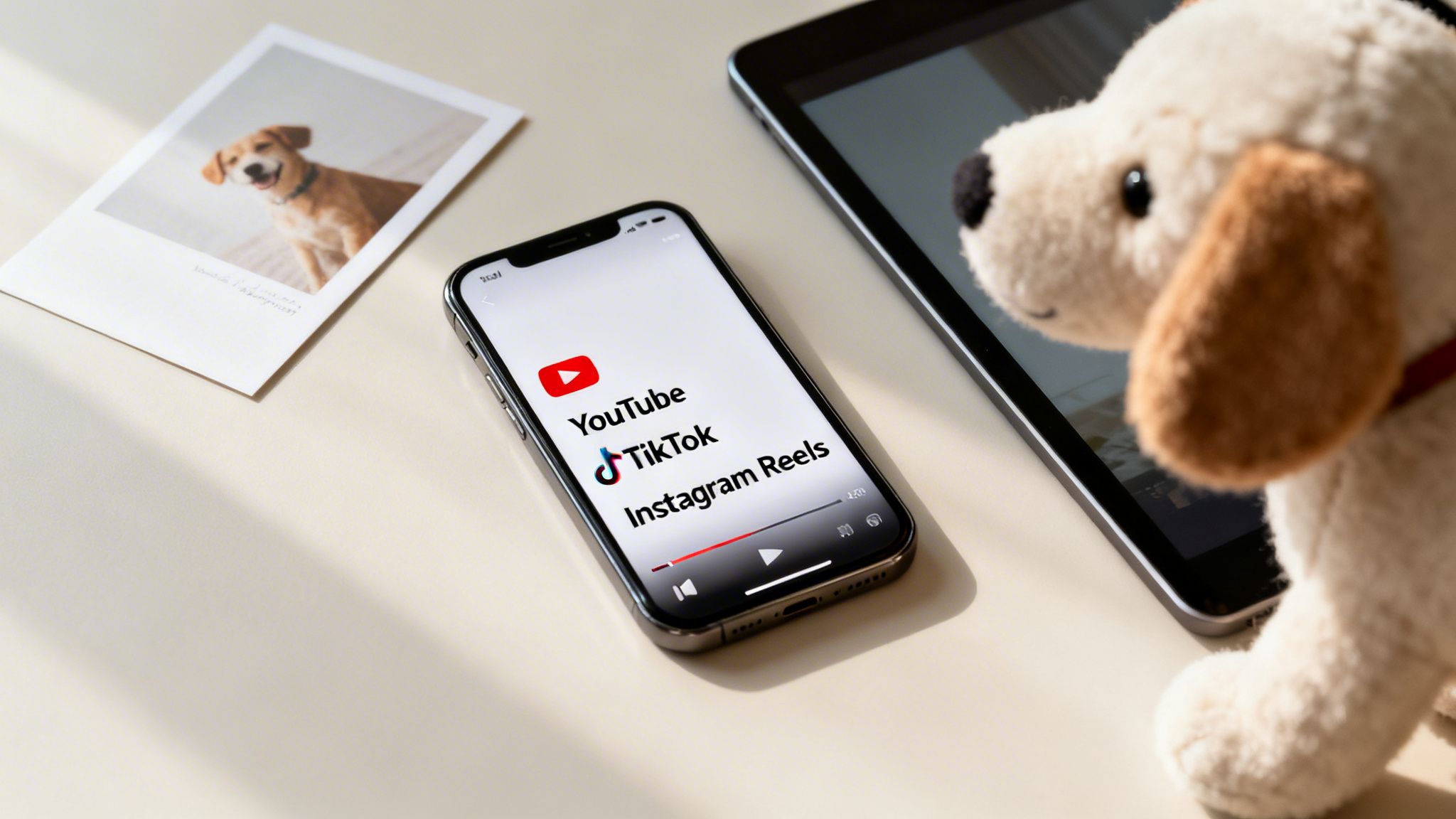
So, you’ve created a fantastic book trailer. That’s a huge win! But making the video is only half the journey. Now, it’s time to get it in front of the right eyeballs so your story can really take off.
Think of it like this: your distribution plan should be just as creative as the trailer itself. You need to focus on the digital hangouts where your ideal readers are already scrolling, laughing, and looking for their next favorite thing. Each platform has its own vibe, so let’s talk about how to choose the right stage for your big premiere.
The Social Media Powerhouses
Social media is the perfect playground for something as visual and shareable as a book trailer. But you can't just post it everywhere and hope for the best. To really get some traction, you’ll want to tailor your approach for each platform.
YouTube: Think of YouTube as your trailer's forever home. It's a massive video search engine, which means readers can stumble upon your trailer for months, or even years, after you post it. This is the place for your full-length, cinematic version—think 60-90 seconds. Make sure to embed it on your author website!
TikTok and Instagram Reels: These platforms are all about fast-paced fun and have massive viral potential. You'll want a much shorter, punchier cut for these spots, ideally under 30 seconds. At SetterFrens, we’re always sharing heartwarming dog moments, product tips, and behind-the-scenes content from our growing pack, so a high-energy trailer feels right at home.
Pinterest: Pinterest is a visual discovery engine where people go to find and save ideas. It's less about a quick flash and more about long-term discovery. Create a beautiful, eye-catching Pin with a video thumbnail that makes people curious enough to click and watch.
A great pro-tip for your social profiles is to use a full video link in bio. This gives your followers a direct, one-click path to watch the whole thing without any friction.
Your Owned Marketing Channels
Beyond the buzz of social media, your own channels are your direct line to your biggest fans. These are the folks who have already raised their hands (or paws!) and said they want to hear from you.
Your author website and email list aren't just marketing tools; they're your digital living room. This is where you can have real conversations with your core community, making it the perfect spot to debut your new trailer.
Your author website should feature the trailer right on the homepage or on the book’s specific landing page. But your email list? That’s where the real magic happens. Our SetterFrens Puppicino Club members, for instance, are always the first to see anything new, getting exclusive sneak peeks, member perks, book updates, and even dog-friendly treats.
Finally, don’t underestimate the power of your community. A personal email to book bloggers and influencers in your genre can go a long way. Offering them a first look at your trailer can lead to valuable shares and buzz.
How to Know If Your Book Trailer Is Working
You’ve done it. You poured your heart, time, and creative energy into making a fantastic book trailer. It’s live, and the views are starting to trickle in. But now what?
It’s easy to get fixated on the view count, watching the number climb. While a high view count feels great, it’s what’s known as a vanity metric. It looks good on the surface, but it doesn't actually tell you if your trailer is doing its job—selling your book.
The real measure of success is what viewers do after they watch.
Tracking What Really Matters
So, how do you figure out if your trailer is actually working? You need to look at the numbers that connect your video's performance directly to your goals as an author. Instead of just chasing views, let's focus on the metrics that show genuine interest and lead to action.
Here are the key things to watch:
- Click-Through Rate (CTR): This is a big one. It’s the percentage of people who watched your trailer and then clicked the link to your book’s sales page or your website. A strong CTR is a fantastic sign that your trailer didn't just entertain—it made people curious enough to take the next step.
- Engagement Rate: Go beyond simple likes. Are people commenting? Are they sharing it with their friends? Are they saving it for later? On platforms like our SetterFrens TikTok and Instagram, meaningful comments and shares are gold. They show your message truly connected with someone.
- Conversion Rate: This is the ultimate goal. Of all the people who clicked through from your trailer, how many actually bought the book, pre-ordered it, or signed up for your Puppicino Club newsletter? This tells you if you sealed the deal.
The most important question isn't "How many people saw my trailer?" but "How did my trailer's launch affect my book sales and community growth?"
By keeping an eye on these numbers, you get a much clearer picture of what’s working. Look for spikes in your website traffic, newsletter sign-ups, and—most importantly—book sales that line up with your trailer's launch. That’s how you know you’ve made something that truly moves the needle.
Answering Your Top Book Trailer Questions
Okay, so you're on board with the idea of a book trailer. But even after seeing the examples and understanding the process, a few practical questions are probably bubbling up. That's a great sign—it means you're getting serious! Let's tackle some of the most common ones I hear from authors.
How Long Should a Book Trailer Be?
This is probably the number one question I get. The sweet spot for a main book trailer—the one you'll feature on your website or YouTube—is between 60 and 90 seconds. That's just enough time to hook the viewer, set the tone, and give them a clear call to action without them getting distracted.
But don't stop there! Think about where people will see it. For fast-scrolling platforms like our @setterfrens TikTok and Instagram, you need a different beast entirely. Aim for a high-energy, super-short version under 30 seconds. It's all about grabbing attention in that split second.
What Does a Book Trailer Cost?
Ah, the million-dollar question (don't worry, it won't cost that much!). The budget can swing wildly, from practically nothing to thousands of dollars. It all depends on your vision and resources.
- The DIY Route (under $100): If you're scrappy, you can pull this off for less than a hundred bucks using simple software and high-quality stock footage.
- Hiring a Freelancer ($300 – $800): Want to add a little more polish? A freelance motion graphics artist can create something slick and professional within this range.
- The Big Production ($1,500 – $5,000+): For a truly cinematic experience with live actors or high-end animation, you'll be looking at a professional production team and a budget to match.
Remember, a huge budget doesn't guarantee success. The best trailers are built on a fantastic concept and a clear plan, not just a pile of cash.
Can I Use Copyrighted Music or Images?
Let me be crystal clear on this: no. You should never, ever use copyrighted music, images, or video clips without getting the proper license first. It’s a fast track to getting your video removed, and it can even land you in legal hot water.
This is where authors often ask, what is royalty-free music? Essentially, it’s music you can license for a fee (sometimes a one-time fee, sometimes a subscription) to use in your projects without having to pay royalties for every view. Always use reputable stock asset sites and read the licensing terms carefully to make sure you're covered for commercial use.
At SetterFrens, we believe every story deserves a chance to find its audience. Along with our curated selection of dog-themed books, Setterfren.com features honest reviews of top dog products and practical how-to guides to help you care for your pup like a pro. And don’t forget to check out our official SetterFrens merchandise on Etsy.com