Here at SetterFrens, we believe life's better with a wagging tail and a good book. Spotting that first hint of stiffness in your dog is often what gets us thinking about joint supplements. The best ones are usually packed with a powerful combination of Glucosamine, Chondroitin, MSM, and Green-Lipped Mussel. These ingredients work together to help support cartilage, keep joints moving smoothly, and ultimately boost your dog's mobility. Being proactive can make a world of difference in their comfort and quality of life.
Keeping Your Best Friend Active and Pain-Free
There’s nothing better than watching your dog live their best life, whether they’re chasing a ball, hopping on the couch for a cuddle, or trotting alongside you on a walk. Their joint health is the foundation for all of it, from their clumsy puppy zoomies to their more graceful golden years.

But as our dogs get older, their joints naturally start to show signs of wear and tear. It's a tough reality that up to 80% of dogs over the age of 8 experience some form of joint discomfort. These problems can creep up on you, often looking like nothing more than your dog "slowing down."
The Power of Proactive Care
You don't have to wait until your dog is clearly struggling to take action. Proactive care is all about getting ahead of major mobility issues before they start. By introducing a quality joint supplement early on, you give their body the building blocks it needs to maintain healthy cartilage and joint fluid.
Even something as subtle as a dog limping can be an early warning sign that their joints need a little extra support. This one small step can be huge in keeping them active and happy for years to come.
More than ever, we see our dogs as part of the family, and we're investing in their health with the same care we give our own. This shift has made supplements a staple in modern dog care. It’s not just about managing a problem; it’s about investing in more joy-filled time together.
A good supplement can be the difference between a dog who hesitates at the bottom of the stairs and one who still joyfully scrambles up to greet you. It’s about preserving those little moments that make having a dog so special.
An active dog is a happy dog, but it's important to remember their needs change over time. To make sure their exercise routine is helping, not hurting, check out our guide on dog exercise requirements by breed. Now, let's dive into how to find the perfect joint support for your best friend.
Understanding the Science Behind Joint Support
Ever flip over a bottle of joint supplements and feel like you need a chemistry degree to understand the label? You're not alone. The list of ingredients can look pretty intimidating, but figuring out what you’re giving your pup shouldn't be so complicated. Let's break down the key compounds that make these formulas work, so you can read any label with confidence.
Think of your dog's joints like the suspension system on a car. The cartilage is the shock absorber, and the synovial fluid is the lubricant that keeps everything moving smoothly. Over time, especially for our active dogs or larger breeds, that cartilage can wear thin and the fluid can dry up. That’s what leads to stiffness, discomfort, and the classic signs of arthritis or hip dysplasia.
The best supplements don't just mask the problem—they give your dog's body the raw materials it needs to repair and maintain that system.
The Core Trio: Glucosamine, Chondroitin, and MSM
You'll spot these three names on almost every popular joint supplement, and for very good reason. They are the undisputed heavy hitters in the world of joint health, working together as a powerful team. These aren't just trendy buzzwords; they’re the backbone of an industry projected to hit $3.14 billion by 2025, according to research from DataInsightsMarket.com.
So, what does each one actually do?
Glucosamine: This is a natural compound already found in your dog’s cartilage. Adding more through a supplement is like sending in a construction crew with a fresh supply of bricks—it helps the body build and repair its own cartilage.
Chondroitin Sulfate: Chondroitin is glucosamine’s best partner. Its main job is to act like a sponge, helping the cartilage absorb and hold water. This keeps it plump and cushiony, ready to absorb impact. It also plays defense by helping to block certain enzymes that break down cartilage in the first place.
MSM (Methylsulfonylmethane): While the first two are busy rebuilding, MSM steps in to provide comfort. It’s a natural source of sulfur, a critical element for healthy connective tissues, and it's well-known for helping to support a healthy inflammatory response and ease everyday aches and pains.
Many owners see the best results when a supplement contains all three. Glucosamine and chondroitin rebuild and protect, while MSM provides comfort, allowing your dog to stay active while the other ingredients get to work.
Nature’s Most Powerful Joint Supporters
Beyond that core trio, you'll often find other natural ingredients that take a supplement from good to great. These botanicals and superfoods can offer unique benefits, especially for dogs who need a little extra support.
A holistic diet can also provide some of these supportive nutrients. If you're curious about how your dog's meals impact their overall wellness, you might be interested in our guide on the raw dog food diet.
Omega-3 Fatty Acids
Typically sourced from things like fish oil, omega-3s are famous for their ability to support a healthy inflammatory response. For joints, this means they can help soothe the underlying irritation that causes stiffness and pain, making it easier for your dog to move comfortably.
Green-Lipped Mussel (GLM)
This unique shellfish from New Zealand is a true joint superfood. It's a fantastic whole-food source of not just glucosamine and chondroitin but also a potent mix of omega-3s, vitamins, and minerals. Think of it as an all-in-one ingredient that helps soothe joints, support cartilage, and deliver a host of other nutrients.
Turmeric (Curcumin)
You might have this in your spice rack, but it’s a powerhouse for joints, too. Turmeric’s active compound is curcumin, a potent antioxidant that helps promote a healthy inflammatory response. It works along a different pathway than MSM or omega-3s, offering another layer of support for managing the daily aches that come from an active life.
Choosing the Right Supplement for Your Unique Dog
Every dog is an individual, and that means there’s no single "best" joint supplement for all of them. Walking down the pet aisle or browsing online can feel overwhelming, but you can cut through the noise by focusing on one thing: your dog's specific needs.
Instead of just grabbing the bottle with the best marketing, let's zero in on what truly matters. We'll match the right ingredients to your dog's age, size, and current mobility. This is how you make a choice that genuinely supports their comfort and happiness for years to come.
Matching Supplements to Your Dog’s Age
A dog’s joint needs change quite a bit from their clumsy puppy days to their slower senior years. What works for a young, growing dog isn't what an older, stiffer dog requires.
Puppies & Young Adults (Under 2 years): For large breeds known for joint problems—think German Shepherds, Labs, or Goldens—getting ahead of the game is smart. A low-dose, preventative formula can support healthy joint development while they're growing like weeds. This is all about building a solid framework for the future.
Adult Dogs (2-7 years): During their prime, the goal shifts to maintenance. For most active dogs, a daily supplement acts like an insurance policy, helping protect their cartilage from the normal wear and tear of daily zoomies, fetch sessions, and adventures.
Senior Dogs (7+ years): This is when you might start noticing a little stiffness in the morning or after a nap. Senior formulas are usually more powerful because they're designed to soothe existing discomfort, not just maintain healthy joints. If you have a senior, you might also find our guide to the best dog food for senior dogs helpful for their overall wellness.
Considering Breed Size and Activity Level
It seems obvious, but a tiny Chihuahua and a massive Great Dane have completely different worlds resting on their joints. Their size and lifestyle are huge factors in what they need.
Large and giant breeds are simply built differently and are more prone to issues like hip and elbow dysplasia because their joints are under so much more stress. For these bigger pups, ingredients that support cartilage structure, like glucosamine and chondroitin, are a good idea even from a young age.
On the other hand, a smaller dog might not need a high-potency formula unless they're an athlete or already showing signs of slowing down. A Jack Russell who lives for agility trials, for example, will benefit from joint support far more than a lap-loving Maltese of the same age.
This decision tree helps visualize how certain ingredients map to different goals, whether you're looking for cartilage support or comfort and mobility.
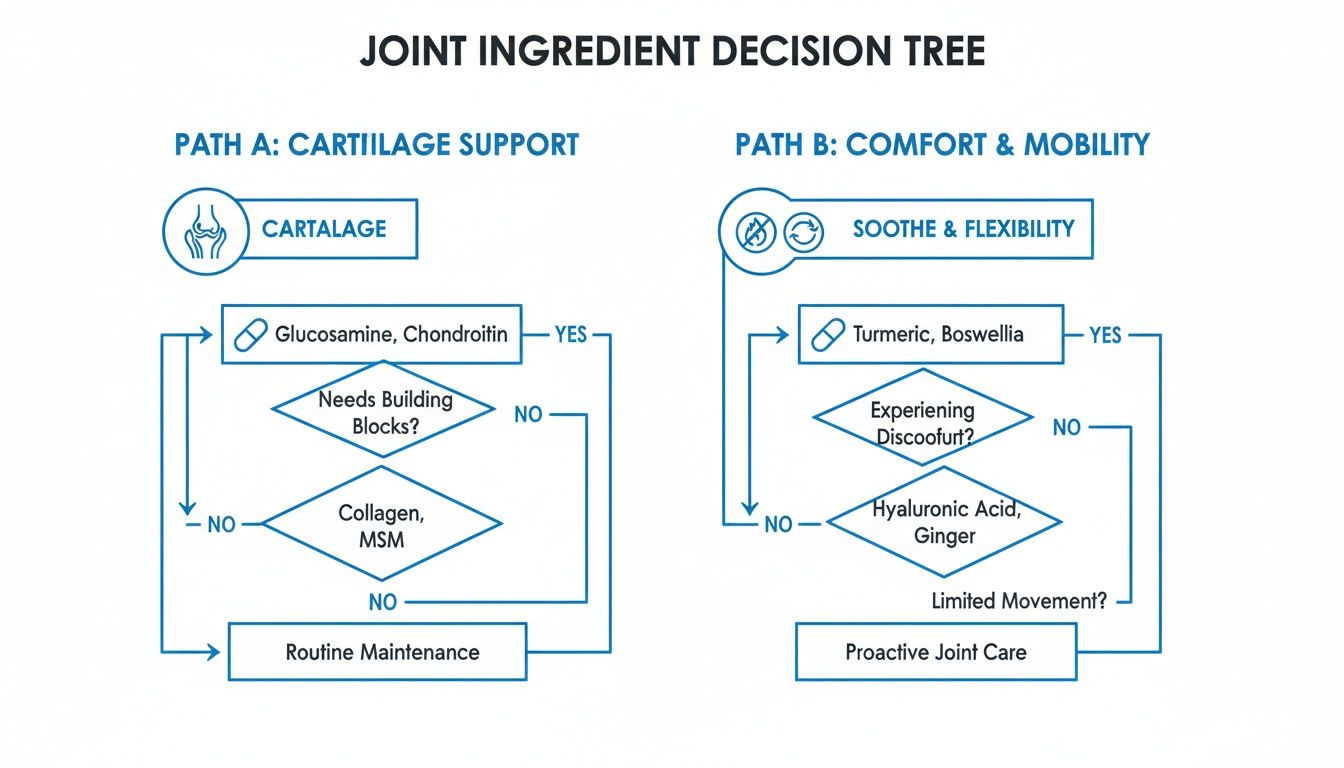
It’s a simple way to see how different ingredients work, helping you pick a formula that directly addresses what your dog needs most.
Choosing the Right Form for Your Dog
The most effective supplement in the world is useless if you can’t get your dog to take it. The delivery method—whether it’s a chew, liquid, powder, or tablet—is a surprisingly critical part of the puzzle.
A supplement only works if you give it consistently. Choosing a form your dog actually likes is just as important as the ingredients. A tasty chew is often the easiest way to make it a daily habit.
Let’s break down the common forms you’ll find:
1. Soft Chews
There's a reason these are so popular—most dogs think they're getting a treat! They’re a lifesaver for picky eaters and are usually flavored with something delicious like bacon or beef. They’re our favorite way to make sure our own growing pack gets their daily dose.
2. Liquids
Liquid formulas are incredibly easy to mix right into your dog's food, whether it's wet or dry. This makes them a great pick for dogs with sensitive teeth or for multi-dog households where you can dose everyone’s bowl at once.
3. Powders
Much like liquids, powders can be sprinkled over and mixed into meals. They are often more concentrated, which can make them a budget-friendly option, especially if you have multiple large dogs to care for.
4. Tablets
Tablets are the old-school, no-frills option and often the most affordable. The downside? They can be tough to give to suspicious dogs. You’ll probably need a good pill pocket or a clever hiding spot in a piece of cheese.
Understanding how to choose the right product for your specific dog is key, whether it's for joint health or other wellness areas like gut health, which is covered in this great guide on Finding the Best Probiotics for Dogs. By thinking through your dog's age, breed, and personal preferences, you can easily narrow the field and find the perfect joint supplement for your best friend.
Comparing the Top Dog Joint Supplements of 2026
Alright, this is the part you’ve been waiting for. We’re going to cut through the marketing fluff and confusing labels to look at the joint supplements that genuinely stand out. This isn't just a "best of" list; think of it as a guide from one dog lover to another, helping you find the right supplement for your dog's specific situation.
We’ve evaluated our top picks for 2026 based on what actually matters: the quality and source of the ingredients, the potency you get in each dose, how easily your dog will take it, and the real value you get for your money. Let's find the perfect match for your best friend.

Evaluation Criteria for the Best Dog Joint Supplements
Before we get to the products, let's quickly cover how we're judging them. A supplement’s real worth goes way beyond a high milligram count on the label. It’s all about a smart formula that delivers noticeable results.
Here’s what we look for:
Ingredient Quality & Sourcing: Are the active ingredients backed by science? We always give extra points for transparent sourcing and products featuring the NASC Quality Seal, which means they’ve passed strict third-party audits.
Potency & Formulation: Does the supplement provide a dose of glucosamine, chondroitin, and MSM that's actually effective? We look for comprehensive formulas that support cartilage, soothe discomfort, and improve lubrication all at once.
Palatability & Form: Let's be honest—the best supplement in the world is useless if your dog won't eat it. We consider the form (chew, liquid, or powder) and how likely it is to pass the sniff test with picky eaters.
Best Use Case: We pinpoint exactly who each supplement is for. Is it a preventative formula for a young, active dog, or a high-strength blend for a senior managing advanced arthritis?
Overall Value: This isn’t just about being cheap. We measure value by comparing the cost per serving to the ingredient quality and potency, so you know exactly what you’re paying for.
2026 Top Dog Joint Supplement Comparison
To help you see how these products stack up at a glance, we've put together a detailed comparison table. This rubric breaks down our top picks by their ingredients, ideal use cases, and overall value.
| Product | Key Ingredients & Potency | Form | Best Use Case | NASC Certified | Value Score (1-5) |
|---|---|---|---|---|---|
| VetriScience® Senior Healthy Hip & Joint | Glucosamine, Chondroitin, MSM, L-Carnitine, Green-Lipped Mussel | Soft Chew | Senior dogs needing muscle and joint support | Yes | 4.5 |
| Nutramax Dasuquin with MSM | Glucosamine (900mg), MSM (800mg), Chondroitin, ASU | Soft Chew | Large breeds & highly active dogs needing maximum support | Yes | 4.0 |
| Zesty Paws Mobility Bites | Glucosamine, Chondroitin, OptiMSM®, Turmeric, Green-Lipped Mussel | Soft Chew | Picky eaters & dogs with sensitive stomachs | Yes | 4.0 |
This table is a great starting point, but remember to consider the details. Sometimes the "best" product on paper isn't the best one for your individual dog's habits and health needs.
Top Pick for All-Around Senior Support
As our dogs get older, their joint needs change. We're not just trying to maintain healthy joints anymore; we’re actively working to improve their comfort and mobility. For seniors, we need a formula that not only protects cartilage but also helps soothe existing stiffness.
Our Recommendation: VetriScience® Senior Healthy Hip & Joint
This formula is built from the ground up for the challenges senior dogs face. It’s got the core joint-support ingredients, but with the brilliant addition of L-Carnitine to help maintain lean muscle. This is a game-changer because strong muscles are crucial for stabilizing aging joints.
The chews are also softer and extra tasty, making them perfect for older dogs who might have sensitive teeth. It’s a truly thoughtful product that addresses the complete picture of senior mobility.
Key Differentiator: Best for Senior Dogs
This supplement stands out by adding L-Carnitine to support muscle strength right alongside powerful joint ingredients. This dual-action approach is ideal for older dogs who need help staying strong and mobile.
Top Pick for High-Energy and Large Breeds
Big, active dogs like Labs, German Shepherds, and Golden Retrievers put a ton of stress on their joints every single day. For these dogs, proactive joint care isn't just a good idea—it's essential for their long-term health. They need a heavy-duty formula that can keep up.
Our Recommendation: Nutramax Dasuquin with MSM Soft Chews
Dasuquin is a staple in vet clinics for good reason. Its potent mix of glucosamine, chondroitin, and MSM is boosted with ASU (Avocado/Soybean Unsaponifiables), an ingredient shown to enhance the effects of glucosamine and protect cartilage even more effectively.
This formula is a true workhorse, designed for dogs who need maximum support. The soft chews are also famously palatable, which is a huge bonus when you need to give a supplement every single day.
Top Pick for Picky Eaters and Sensitive Stomachs
If you have a dog who sniffs at every new food or one with a notoriously sensitive stomach, finding a supplement can be beyond frustrating. For these pups, a gentle, easy-to-give formula is the only way to go.
Our Recommendation: Zesty Paws Mobility Bites
Zesty Paws has mastered the art of making supplements that dogs actually think are treats, and their Mobility Bites are a prime example. They come in dog-approved flavors that turn supplement time into something to look forward to.
More importantly, the formula is solid, featuring Glucosamine, Chondroitin, and OptiMSM® for purity. They also add turmeric and green-lipped mussel, which offer natural support for a healthy inflammatory response that’s typically easy on the stomach.
Key Differentiator: Top Pick for Sensitive Stomachs
Zesty Paws nails the balance between effective ingredients and high palatability. It's an excellent choice for dogs who are fussy or have had digestive issues with other supplements.
Ultimately, finding the best dog joint supplement is all about matching a high-quality product to your dog’s unique needs. Whether you have a senior who needs extra comfort, a large breed needing preventative care, or a picky eater, the right formula is out there to keep them happy and mobile for years to come.
Why Proactive Joint Care Is a Smart Investment
If you’re looking into joint supplements for your dog, you’re already on the right track. This isn't just some passing trend; it's a thoughtful decision that countless informed and dedicated dog owners, just like you, are making every day.
And the numbers back this up. Hip and joint supplements are, by far, the biggest category in the dog supplement world, with glucosamine leading the charge. In fact, the global market for these supplements is expected to reach a staggering $3.14 billion by 2025, growing at a healthy 6.34% each year. You can dig deeper into these pet supplement market trends and their 2026 outlook if you're curious.
The Humanization of Pet Wellness
So, what’s driving this? It's something the SetterFrens community understands deeply: our dogs are family. The days of seeing them as "just a pet" are long behind us. We now invest in their health and happiness with the same care we give ourselves.
This shift means we’re more in tune with our dogs' needs than ever before. We don’t want to wait until our best friend is limping, struggling to hop on the couch, or showing obvious signs of pain. The goal is to get ahead of the problem, giving them the best shot at a long, active, and happy life.
Think of it this way: Investing in a quality joint supplement isn't just about managing a future problem. It’s a proactive choice that can help you avoid more intensive and costly vet visits down the road, saving both your wallet and your dog from unnecessary discomfort.
A Forward-Thinking Choice for Long-Term Health
Ultimately, starting your dog on a joint supplement is simply a smart, forward-thinking move. It’s a small daily habit that adds up to a huge investment in their long-term mobility and quality of life. By giving their joints the nutritional backup they need before signs of serious wear and tear appear, you're helping them stay comfortable and active.
You're ensuring more years of joyful walks, enthusiastic greetings at the door, and cozy cuddles on the couch. As you continue your search, rest assured that your commitment to being proactive is a powerful act of love—one shared by millions of owners who want nothing but the best for their four-legged family.
Your Vet Is Your Most Important Partner
Think of this guide as your homework. You're learning the ins and outs of joint supplements, which is a fantastic first step. But all the research in the world can't replace the hands-on expertise of your veterinarian. They are, without a doubt, your best ally in keeping your dog’s joints healthy.
That’s why, before you give your dog that first chew or dose of liquid, a chat with your vet is essential. A quick physical exam, and maybe some X-rays, can confirm what's really going on. This ensures you’re treating a joint issue like arthritis and not missing another underlying problem that’s causing their stiffness.
Making the Most of Your Vet Visit
To get the best advice, it helps to show up prepared. Walking in with a few specific questions helps you and your vet work together to find the safest, most effective supplement for your dog.
Here are a few great questions to start with:
- What’s the right dosage for my dog's specific weight and condition?
- Could this supplement interact with any of their current medications or other supplements?
- What signs of improvement should I be looking for over the next 4-8 weeks?
- Based on what you saw today, are there any specific ingredients I should prioritize?
Your vet has the full picture of your dog's health. They can help you cut through the noise of the booming supplement market and pinpoint a product that truly fits your dog's needs.
It's no surprise that hip and joint products are so popular. The pet supplement industry has seen incredible growth, with this category leading the charge. In 2025, joint support accounted for a whopping 28% of the total pet dietary supplements market, a trend that vets are happy to see as more owners embrace proactive care. You can read more about these pet supplement market findings to get a sense of just how big this movement is.
When you work with your vet, you’re creating a small but powerful team dedicated to your dog's well-being. This partnership lets you choose the best dog joint supplements with real confidence, knowing you're giving your furry friend the support they need to stay active and happy.
Common Questions About Dog Joint Supplements
Thinking about a joint supplement for your dog? You're not alone. It's one of the most common topics we chat about with fellow SetterFrens, and a handful of questions pop up again and again. We've gathered them all here to give you straightforward answers, so you can feel great about the choices you're making for your best friend.
At What Age Should My Dog Start a Joint Supplement
Honestly, there’s no single magic age. The right time really comes down to your individual dog. For bigger breeds predisposed to joint trouble—think German Shepherds, Labs, or Goldens—many vets suggest starting a low, preventative dose as early as one year old. This gives their joints extra support as they finish growing.
For most other dogs, a good time to start is when they hit their senior years, usually around age seven. A better cue, though, is simply watching your dog. If you spot the first subtle sign of stiffness, like a little hesitation before they jump on the bed, that’s your signal. Your vet is always your best resource for nailing down the perfect timing.
How Long Until I See Results from a Joint Supplement
This is where a little patience goes a long way. Joint supplements aren't a quick fix like pain medication. Instead, they work by steadily supplying the building blocks for healthy cartilage and helping to soothe inflammation over time. It’s a long-term investment in your dog’s comfort.
Most people start to see a real difference in their dog’s mobility and spirit within 4 to 8 weeks of daily use. It's so important to be consistent and give it at least two months to truly gauge how well it's working for your pup.
Don't be discouraged if you don't see a change overnight. Joint support is a marathon, not a sprint. The small, daily habit is what leads to big improvements in comfort and mobility over time.
Can I Give My Dog Human Glucosamine Supplements
We get this question a lot, and our answer is always a firm "please don't." While the active ingredients on the label might seem the same, the formulas are worlds apart. Dog-specific supplements are created just for a canine’s metabolism, digestive system, and body weight.
The biggest danger is that many human supplements contain fillers or sweeteners like xylitol, which is incredibly toxic to dogs. Plus, the dosages are completely different and can't be safely translated. For your dog's safety and to get actual results, always stick to a product made specifically for them.
Are There Any Side Effects to Watch For
The good news is that the core ingredients found in high-quality dog joint supplements—like glucosamine and chondroitin—are known to be very safe with a low risk of side effects. On the rare occasion that they do occur, they’re usually minor digestive issues, like a bit of gas or a slightly upset tummy.
An easy way to avoid this is to start with a half-dose for the first week or so, giving your dog's system time to adjust. If you notice any digestive upset that doesn't go away, it's best to stop the supplement and have a quick chat with your vet.
We hope this clears things up! Here at SetterFrens, our goal is to give you the confidence and knowledge to help your dog live their best life. For more heartwarming dog moments, product tips, and behind-the-scenes content from our growing pack, be sure to follow us @setterfrens on TikTok and Instagram. Join our Puppicino Club to unlock member perks, book updates, and dog-friendly treats. You can check out all our curated guides, book picks, and official SetterFrens merchandise over at Setterfren.com.