The right dog water fountain does more than just hold water—it delivers a constant stream of fresh, filtered hydration that can genuinely improve your dog's health. The best ones are typically made from hygienic materials like stainless steel or ceramic and feature a multi-stage filter. For picky drinkers, this simple upgrade can be a game-changer.
Why a Fountain Will Make Your Dog Happier
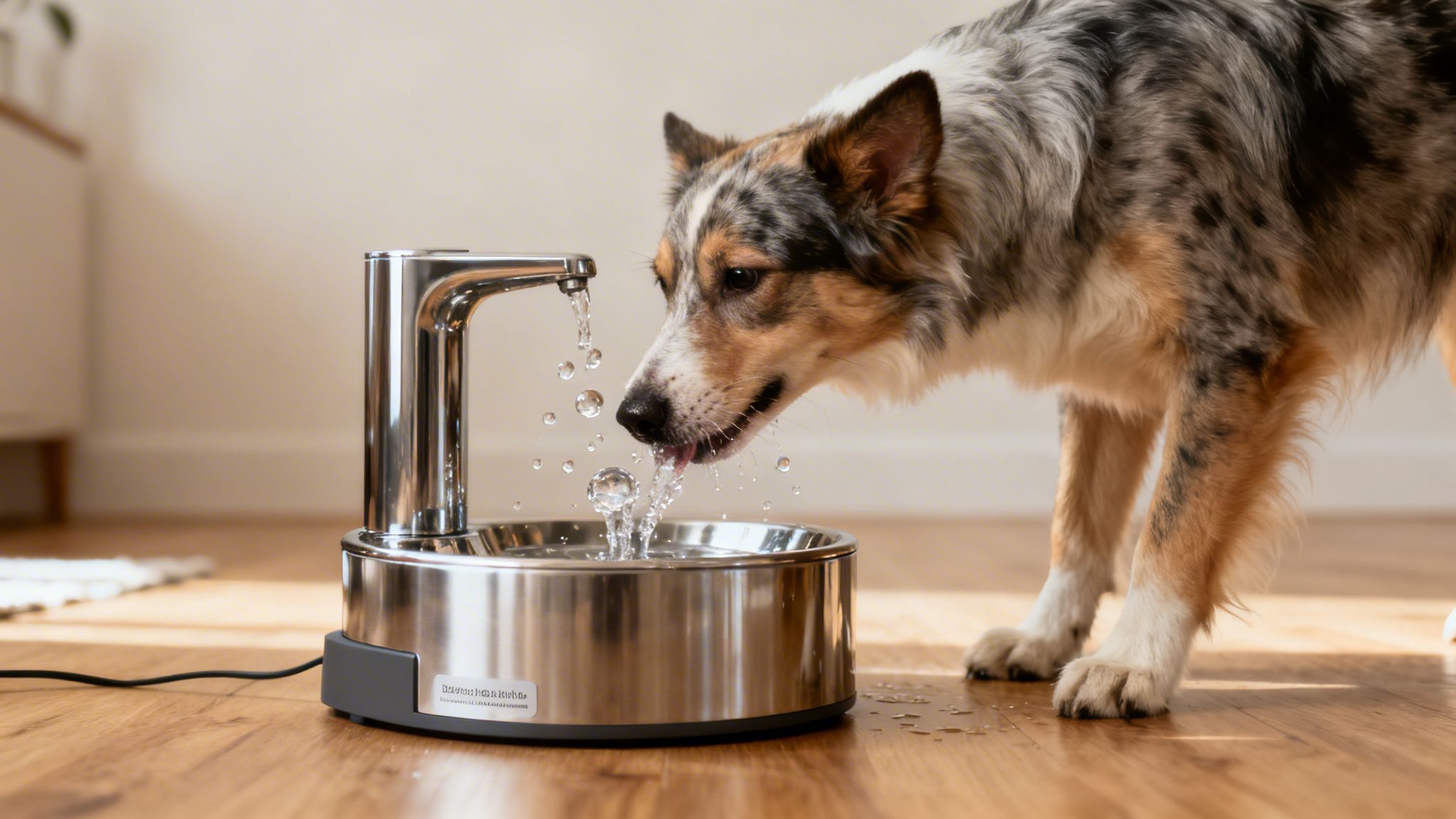
Here at SetterFrens, we believe life's better with a wagging tail, and that small changes can have a huge impact on our dogs' happiness. Swapping out that old water bowl for a fountain is one of those easy wins. It’s not just a fancy gadget; it’s an investment in your best friend’s well-being.
Think about that static bowl of water. Within hours, it's collecting dust, stray hairs, and bits of kibble. A slimy film often develops, and the water starts to taste stale. Yuck. A dog water fountain tackles this head-on by keeping the water constantly moving.
This circulation is brilliant for two reasons. First, it naturally aerates the water, which makes it taste much fresher and cleaner. Second, the gentle movement taps into a dog's primal instinct to seek out running water sources like streams and creeks, which they associate with safety and freshness. This simple trick encourages them to drink more.
The Health Benefits of Better Hydration
Proper hydration is everything. It’s the foundation of your dog’s health, and even mild dehydration can lead to serious problems like urinary tract infections (UTIs) and kidney disease. By making water more enticing, a fountain ensures your pup stays topped up, helping all their vital organs function smoothly.
A well-hydrated dog has better energy levels, healthier skin and coat, and more efficient digestion. A fountain is a proactive tool for preventing health problems before they start.
Most quality dog water fountains also come with built-in filters that are absolute lifesavers. These aren't just simple screens; they're multi-stage systems designed to purify the water your dog drinks every day.
| Filtration Stage | What It Does | Why It Matters for Your Dog |
|---|---|---|
| Foam Filter | Catches the big stuff—hair, food particles, and dust. | This keeps the pump from getting clogged and prevents debris from floating on the surface. |
| Activated Carbon | Absorbs and eliminates unpleasant tastes and odors. | It makes the water taste crisp and clean, which is a huge plus for fussy drinkers. |
| Ion Exchange Resin | Softens hard water by removing minerals like calcium and magnesium. | This can help reduce the risk of mineral buildup that leads to kidney and bladder stones. |
Giving your dog clean, appealing water is one of the most basic ways we show them they're part of the family. While these filters do an amazing job, it never hurts to be informed. If you're curious about water quality in general, you can learn more about how to purify tap water for your whole household.
Ultimately, a fountain sends a clear signal to your dog: this water is fresh, safe, and delicious. When your dog feels good, it shows. Paying attention to their little cues of happiness—like a wagging tail after a long drink—is what being a dog parent is all about. You can even learn how to read your dog’s body language to better understand what they're telling you.
Choosing the Right Fountain Material and Features
When it comes to picking a dog water fountain, it's easy to get lost in all the options. But getting it right comes down to understanding a few key details that make a world of difference for both you and your dog. The material, the filtration system, and even how loud it is all play a part in whether your new fountain becomes a beloved hydration station or a dust-collecting corner ornament.
Let's start with the most important decision you'll make: the material. This isn't just about looks; it directly impacts your dog's health and how much time you'll spend cleaning. The three main players are plastic, ceramic, and stainless steel, each with its own quirks.
Plastic fountains are usually the first ones you'll see. They’re budget-friendly and come in every shape and color imaginable. The downside? Over time, they get covered in tiny, invisible scratches. These little nicks are a perfect hiding spot for bacteria, which can sometimes lead to an annoying skin issue for dogs called "chin acne."
Material Matters Most for Hygiene and Durability
If you're looking for something with a bit more style, ceramic fountains are a great choice. They're heavy, so a clumsy or playful pup is less likely to send water flying across your floor. The glazed, non-porous surface is also a big step up from plastic for hygiene and is a breeze to wipe clean.
The catch with ceramic is that it's fragile. One accidental slip while you're washing it, and you could end up with a chip or a crack. Not only does that ruin the aesthetic, but it also creates a new sharp edge and a place for grime to build up. It’s a fantastic option for a calm dog in a quiet home, but maybe not the best fit for a chaotic, multi-pet household.
Then you have stainless steel, which is what most of the seasoned dog owners we know swear by. It’s the undisputed champ for hygiene and durability. It’s practically indestructible, dishwasher-safe, and naturally resists both bacteria and rust. Honestly, it’s a smart investment that pays for itself.
In fact, stainless steel models are the top pick for 45% of buyers simply because they’re built to last, outperforming plastic versions by up to 3 times in durability tests. If you want to dive deeper into the market trends, you can find more data over at MetaStatInsight.com.
SetterFrens Pro Tip: When you're looking at stainless steel, keep an eye out for "304-grade" or "food-grade" on the label. That's your guarantee that you're getting a high-quality, non-toxic material that won’t degrade, even after years of daily use.
Choosing the right material really comes down to balancing your priorities. To make it easier, here’s a quick side-by-side look at how they stack up.
Dog Water Fountain Material Comparison
This table breaks down the three most common fountain materials, helping you decide which one best fits your needs for hygiene, durability, cost, and maintenance.
| Material | Hygiene & Safety | Durability & Lifespan | Best For | Maintenance Level |
|---|---|---|---|---|
| Stainless Steel | Highest; non-porous and resists bacterial growth. | Excellent; resists rust, scratches, and breakage. Very long-lasting. | All dogs, especially those with sensitive skin or allergies. | Low to Medium |
| Ceramic | High; non-porous glazed surface is easy to clean. | Moderate; heavy and stable but can chip or break if dropped. | Households wanting a stylish, stable option for calm dogs. | Medium |
| Plastic (BPA-Free) | Moderate; can develop micro-scratches that harbor bacteria. | Low to Moderate; can become brittle and crack over time. | Budget-conscious buyers or as a temporary or travel fountain. | High |
Ultimately, what you choose will depend on your dog, your home, and how much time you want to spend on upkeep.
Understanding Filters and Other Key Features
Once you've settled on a material, the next thing to look at is the filtration system—this is really the heart of the fountain. It's what turns ordinary tap water into the fresh, flowing water that dogs find so enticing. Most systems use a multi-stage approach.
- Foam or Pre-Filter: Think of this as the bouncer. It catches all the big stuff like dog hair, dust, and stray kibble bits before they can clog up the pump.
- Activated Carbon Filter: This is what makes the water taste and smell great. The carbon acts like a sponge, soaking up chlorine and other funky odors from your tap water.
- Ion Exchange Resin: You’ll find this in more advanced filters. It's designed to soften "hard water" by removing minerals like calcium and magnesium, which can help support your dog's urinary health over the long run.
Finally, don't forget the little details that will make your life easier.
Pump Noise: A noisy, rattling pump can be a deal-breaker, especially if you have a shy or anxious dog. Check reviews for phrases like "whisper-quiet" and look for models with submersible pumps, which tend to be quieter.
Capacity: How often do you want to refill the fountain? A little 64-ounce model is perfect for a single Chihuahua, but if you have two Labradors, you'll want something much larger—think 2 gallons or more—to keep from running to the sink multiple times a day.
Ease of Cleaning: This is a big one. A fountain that’s a nightmare to take apart and clean will quickly become a chore you avoid. The best designs have smooth surfaces, minimal parts, and are dishwasher-safe. Trust us, you’ll thank yourself later.
Matching a Fountain to Your Dog's Needs
Alright, now that we’ve covered the ins and outs of materials and features, it’s time for the fun part—picking the perfect fountain for your actual dog. The truth is, the "best" dog water fountain isn't a one-size-fits-all deal. A great choice for a tiny Yorkie could be all wrong for a goofy Golden Retriever, and what works for a solo pup might not cut it in a multi-dog home.
Let's walk through the options based on your specific situation. This way, you can feel confident you're choosing a fountain that fits right into your life and keeps your best friend happy and hydrated.
For the Tiny Companion
When you've got a small or toy breed, you have to think from their perspective. A huge, cascading fountain can feel more like an intimidating waterfall, and a noisy motor might spook a timid pup. For these little guys, the name of the game is small, low-profile, and whisper-quiet.
I'd suggest looking for models with a capacity around 64 ounces (2 liters) or less. That’s plenty of water to last them, and it keeps the fountain from taking over your floor space. Often, a gentle bubbling action is much more inviting than a free-falling stream. Ceramic and stainless steel are fantastic here since their weight adds stability, preventing the fountain from getting knocked over by a curious nose.
For the Multi-Dog Household
When you have more than one dog, drinking water can quickly become a group activity. A small fountain just won't keep up; you’ll find yourself refilling it constantly. In this case, the mantra is capacity, capacity, capacity. You’ll want to start with fountains that hold at least a gallon (128 ounces), and for bigger dogs or a full-on pack, models holding 2-3 gallons are even better.
These larger fountains usually come with wider drinking surfaces or even multiple spouts, which is great for letting more than one dog drink at a time. It's a simple way to head off any resource guarding or squabbles over whose turn it is. Durability is also a big deal here, so a solid stainless steel model is often the smartest investment for a busy, thirsty crew.
It's interesting to see that dispensers with capacities over 4 liters (about 1.1 gallons) now make up 35% of the market. This shows how popular they are for active breeds like Labradors and the nearly 20% of U.S. homes that have more than one pet.
Choosing the right fountain for a crew isn't just about making your life easier—it’s about keeping the peace and making sure every dog gets the hydration they need. This little guide can help you decide what to prioritize.
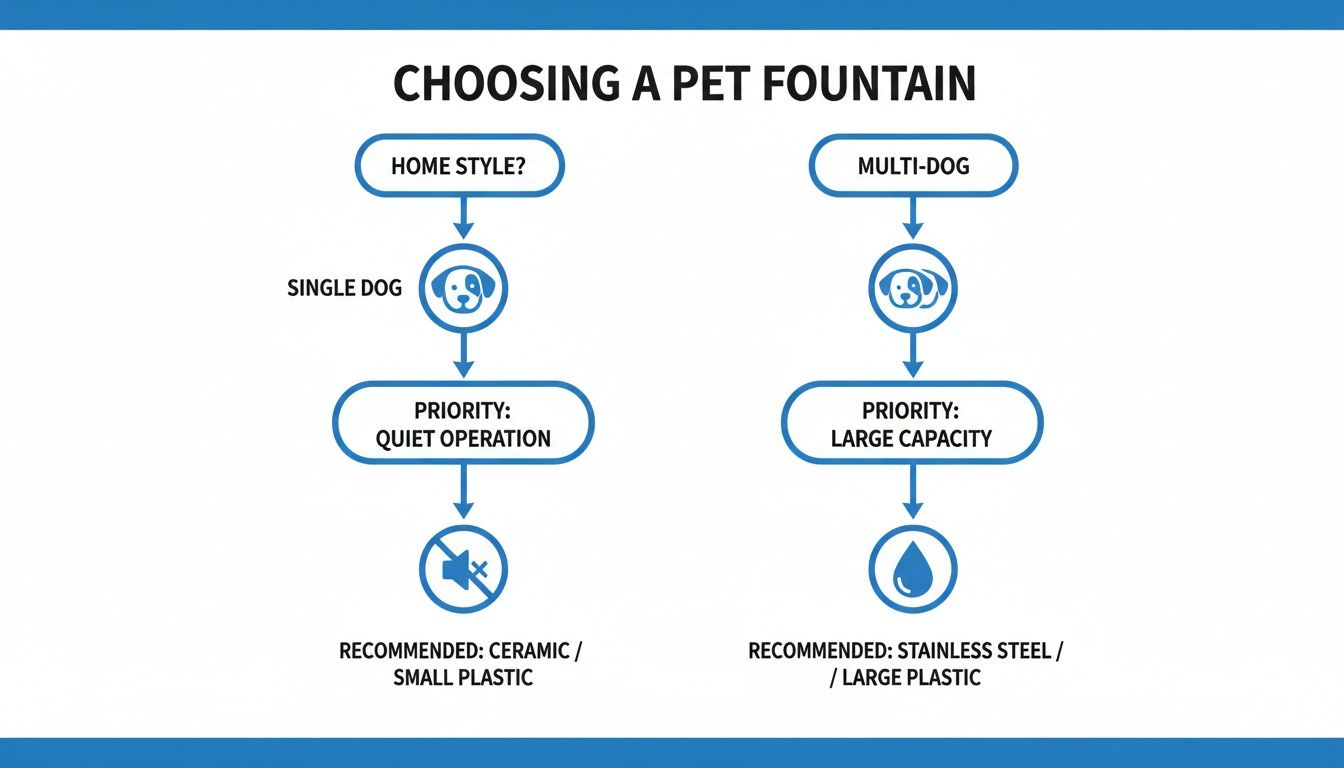
As you can see, the decision really comes down to a fork in the road: are you aiming for a quiet fountain for one dog, or do you need a big reservoir for a house full of them?
For the Tech-Savvy Pet Parent
If you're the type who loves smart-home gadgets and tracking data, you're in luck. A new wave of smart water fountains connects to your Wi-Fi, giving you an impressive amount of control and insight right from your phone.
Here are some of the features you'll find:
- Water Level Alerts: Your phone will buzz you when it's time for a refill. No more guessing.
- Filter Change Reminders: The app takes the guesswork out of maintenance by telling you exactly when to swap the filter.
- Remote Control: Forgot to turn the fountain on? You can do it from anywhere.
- UV Sterilization: Some high-end models use a UV-C light to zap bacteria, keeping the water exceptionally pure.
These fountains offer incredible peace of mind, especially if you work long hours. You’ll know for sure that your dog has fresh, clean water, and tracking their drinking habits can even help you spot potential health issues before they become serious problems.
For the Budget-Conscious Owner
You definitely don't have to break the bank to upgrade your dog from a boring old water bowl. While the premium fountains are nice, there are plenty of fantastic, affordable options that deliver the most important benefits: filtration and flowing water.
If you're watching your budget, a well-made BPA-free plastic fountain is a great place to start. Just know that you'll need to be a bit more diligent with cleaning to prevent any bacteria from settling into tiny scratches over time. It's also smart to pick a model with high-quality, easy-to-find replacement filters. After all, most people—over 60% of buyers, in fact—say that a top-notch filter capable of removing 99.9% of impurities is their main priority.
Ultimately, getting the right gear for your dog, whether it's for drinking or sleeping, is about matching it to their specific needs. Just as the right fountain is key for their health, taking a look at dog kennel size recommendations is just as vital for making sure they're comfortable in their own space.
And speaking of a dog’s changing needs, if you have an older companion, proper hydration is just one piece of the puzzle. You might also want to check out our guide on the best dog food for senior dogs to support their overall wellness as they age.
How to Keep Your Dog's Fountain Clean and Safe
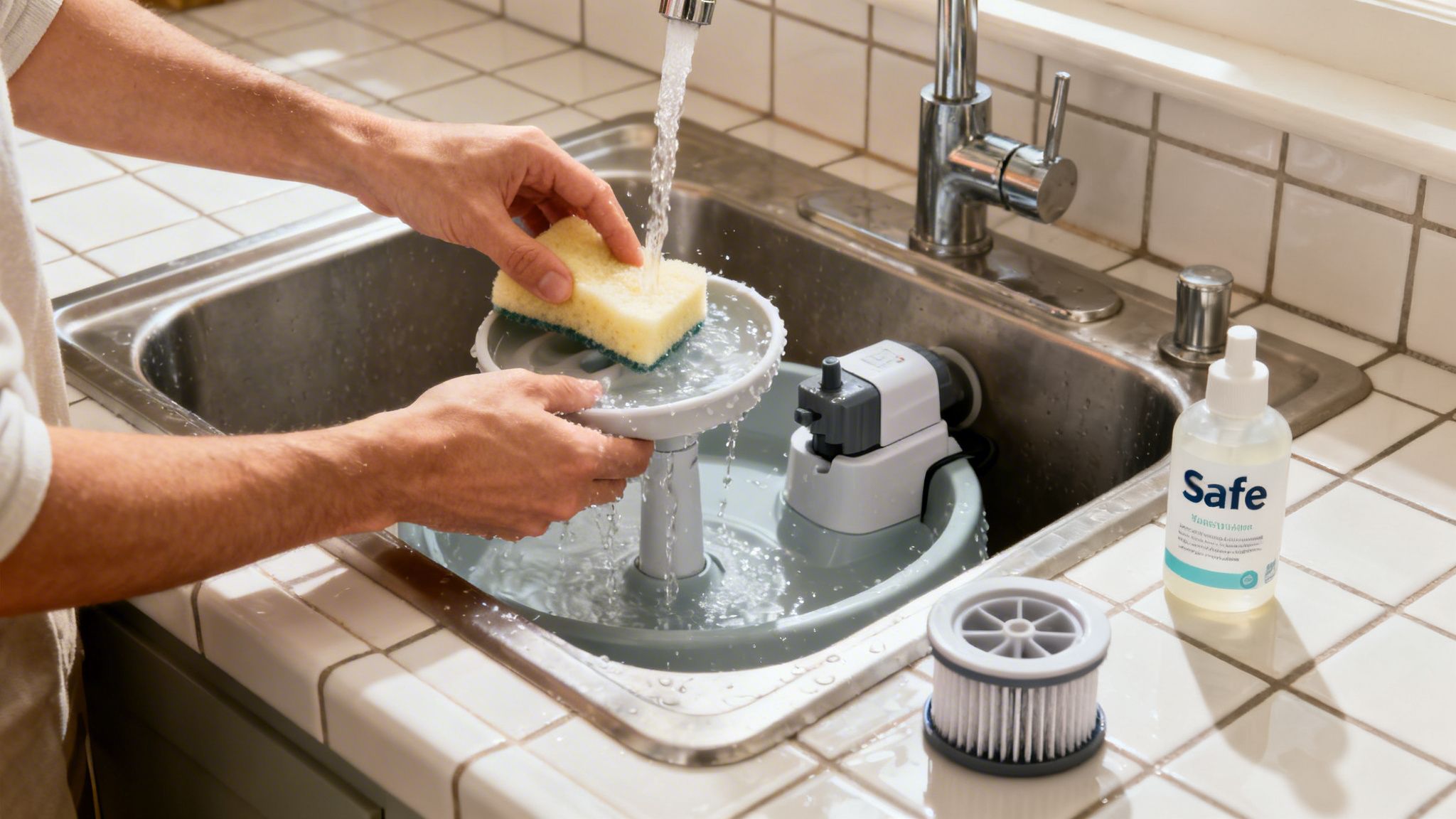
So you've brought home a fantastic new water fountain for your dog. That's a great first step! But the real secret to keeping that water fresh, safe, and appealing lies in one simple thing: regular cleaning.
Think of it as a small weekly investment in your dog's health. A little bit of upkeep prevents problems down the road and ensures your fountain runs like a champ for years to come. It’s a simple habit that makes a huge difference.
If you let it slide, you’ll quickly notice a slimy film called biofilm building up. Not only is it gross, but it's a breeding ground for bacteria that can make your pup sick. A neglected pump will also get clogged, noisy, and eventually just give up, turning that lovely flowing water into a stagnant mess.
Your Weekly Cleaning Routine
Consistency is your best friend here. Just a few minutes once a week is all it takes to keep things sparkling.
Here’s a quick and painless breakdown of the process:
- Unplug and Break It Down: Safety first—unplug the fountain. Then, take everything apart: the reservoir, top tray, any spouts, and the pump casing.
- Get Scrubbing: Using warm water and some mild soap, give every single piece a good scrub with a sponge or brush. Pay close attention to all the nooks and crannies where gunk loves to hide. A little bottle brush works wonders for getting into the spouts and other tight spots.
- Rinse and Dry: Rinse every component thoroughly to get rid of any soap residue. You can let them air dry or wipe them down with a clean towel before putting it all back together.
For most cleanings, a simple, unscented dish soap is perfect. If you’re battling hard water mineral deposits, a 50/50 mix of white vinegar and water will dissolve them beautifully. Just make sure to rinse extra well afterward—dogs are definitely not fans of that vinegar smell.
SetterFrens Pro Tip: Steer clear of harsh chemical cleaners or abrasive scouring pads. They can scratch the fountain’s surface, creating tiny crevices for bacteria to hide in, and might leave behind harmful chemical traces.
Maintaining the Pump and Filters
The pump is the heart of the fountain, and the filter is its kidney. You have to take care of both for the system to work properly.
Cleaning the Pump
About once a month, the pump itself needs a little TLC. It’s way easier than it sounds.
- Disassemble It: Most pumps are designed to come apart easily. Pop off the faceplate to get to the impeller, which is the small, fan-like part inside.
- Scrub the Guts: Use a small brush (an old toothbrush is perfect for this) to scrub the impeller and the inside of the pump. This clears out any slime or mineral gunk that makes the pump work harder and get louder.
- Rinse and Reassemble: Give all the parts a final rinse and put the pump back together. You'll be amazed at how much quieter and more powerful it runs when it's clean!
Replacing the Filters
Don't think of filters as optional accessories; they are non-negotiable for your dog's health. Once a filter is clogged, it stops trapping hair, dirt, and other impurities, which defeats the whole purpose of the fountain.
Most brands recommend swapping out the carbon filter every 2 to 4 weeks. If you have a multi-dog household or your tap water is on the hard side, aim for every two weeks. This schedule is key to keeping the water tasting fresh and preventing health issues. Good hygiene is a holistic effort; our guide on at-home dog dental care dives into how oral health plays a role, too.
Recent industry data really drives home why hygiene is so important. Stainless steel fountains, which see a 40% preference among owners, tend to resist scratches 2x better than plastic and can often process up to 100 gallons before a filter change is needed. Even more telling, veterinarians have reported 40% fewer kidney stone cases over a five-year span in dogs that drink from fountains, a benefit linked directly to superior filtration and increased hydration. To see more trends like these, you can dig into the latest market insights on pet fountains.
Your Final Checklist and Troubleshooting Tips
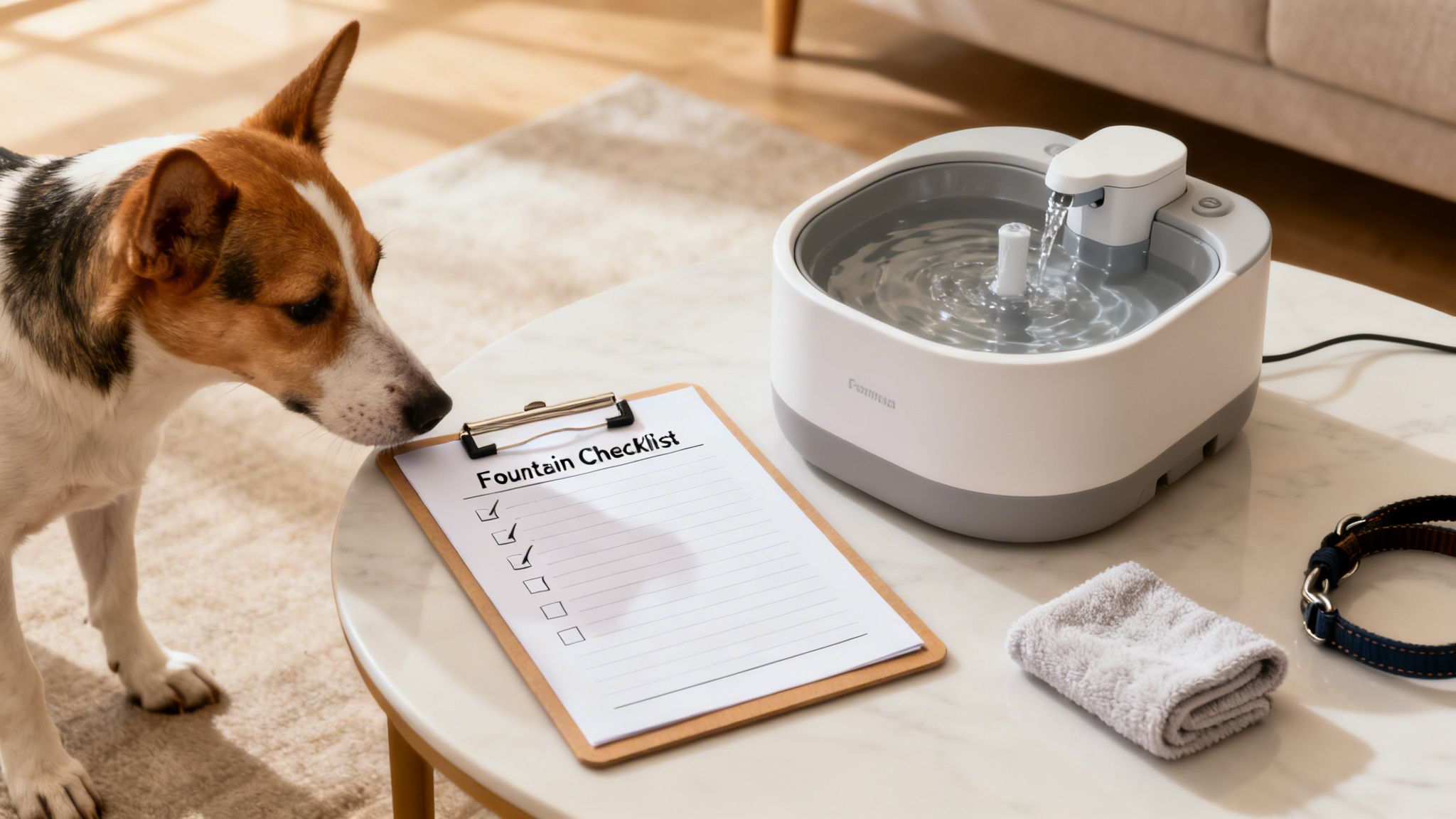
Alright, you've waded through the options, and you're ready to bring home a new fountain. This is a great move for keeping your pup well-hydrated. But before you hit that "buy" button, let’s run through a quick mental checklist to make sure the one you’ve picked is truly the best fit.
Answering these questions honestly will help you feel confident that you’re choosing a fountain that works for your dog, your home, and your sanity.
The Final Pre-Purchase Check-In
Think of this as your last gut check. A few moments of thought here can save you a lot of hassle later.
- What’s my dog's size and drinking style? A tiny Yorkie will be perfectly happy lapping from a small, bubbling fountain. But a big, goofy Golden Retriever? They’ll need a large-capacity model with a wide bowl to keep the splashing to a minimum.
- Where is this thing going to live? Location matters. If the fountain is destined for a busy hallway, a heavier ceramic or stainless steel unit is a smart choice for stability. If it’s going in your bedroom, an ultra-quiet pump is non-negotiable.
- How much cleaning am I really willing to do? Let's be real. If you hate scrubbing, a stainless steel or ceramic model with dishwasher-safe parts is your new best friend. Plastic fountains are fine, but they demand more frequent and thorough cleaning.
- How many pets will be sharing? In a multi-dog home, capacity is everything. To avoid refereeing arguments at the water station, look for fountains holding at least one gallon.
Thinking through these four points helps you move beyond just buying a product. You're actually setting up a system that encourages your dog to drink more, which is a huge win for their long-term health.
Troubleshooting Common Fountain Frustrations
Even the best dog water fountains can have a few hiccups right out of the box. Don’t panic! Most of these little quirks are incredibly easy to solve.
One of the most common issues I hear about is a dog who seems terrified of their new, gurgling water source. This is totally normal, so a little patience goes a long way.
My Dog Is Scared of the Fountain
The key here is a slow, positive introduction. You can’t just plop it down and expect them to love it.
- Start with the Power Off: For the first day or so, just leave the unplugged fountain in its designated spot. Let your dog sniff it, circle it, and get used to its presence without any intimidating sounds or movement.
- Keep Their Old Bowl Nearby: Don't take away their familiar water bowl just yet! Having both options available gives them a sense of security and lets them switch over on their own time.
- Make It a Treat Magnet: Whenever your dog goes near the fountain, toss them a high-value treat and offer some praise. You want them to think, "Good things happen when I'm near this weird new bowl." You can find all sorts of unique, tasty dog treats on Etsy to keep them engaged.
- Turn It On Low: Once your dog seems unbothered by the fountain itself, turn it on to its lowest, quietest setting. A gentle bubble is often much less scary than a full-on waterfall.
My Fountain’s Pump Is So Loud!
A noisy pump is enough to drive anyone crazy. Before you pack it up for a return, try these simple fixes—they work surprisingly often.
- Check the Water Level: The number one cause of a noisy pump is low water. The motor has to work harder, and it lets you know it's unhappy. Topping it off is usually all it takes.
- Give the Pump a Good Scrub: Gunk, hair, and slimy buildup can get caught in the pump's impeller, causing it to vibrate and rattle. Take the pump apart and use a small brush to clean out all the nooks and crannies.
- Put a Mat Under It: Sometimes the noise isn't the pump at all, but the fountain's vibration against your hard floor. A small silicone or rubber mat placed underneath can absorb the rattle and make a world of difference.
With these tips in your back pocket, you’re all set to choose, introduce, and maintain the perfect fountain for your furry best friend. Here's to a happy, hydrated pup
Common Questions About Dog Water Fountains
Even after you’ve done all your research, you might still have a few nagging questions. It happens! To help you feel totally confident about your choice, we’ve rounded up some of the most common questions we get from fellow dog parents in the SetterFrens community.
How Often Should I Change the Filter in My Dog's Fountain?
This is the big one, right? The filter is what keeps that water clean and inviting, so getting the timing right is crucial. As a general rule, most manufacturers suggest swapping out the filter every 2 to 4 weeks.
Think of that as a starting point, not a strict deadline. You’ll want to adjust based on your own situation:
- Number of Pets: If you have multiple dogs (or a cat who's decided the fountain is also for them), you're dealing with more fur and slobber. You'll definitely want to stay closer to that 2-week mark to keep things fresh.
- Water Quality: If your tap water is on the hard side, with lots of minerals, the filter has to work overtime. Changing it more often prevents that chalky buildup on the pump and basin.
- Debris: Got a messy drinker who drops bits of kibble into the water? That debris will clog a filter in no time, so you’ll need to be more vigilant.
Staying on top of filter changes is non-negotiable. A dirty, clogged filter can't do its job, which pretty much defeats the whole point of getting a fountain in the first place.
Are Dog Water Fountains Loud?
The answer really comes down to the specific model you choose. A lot of the newer fountains are impressively quiet, humming along at around 28 decibels—that’s literally as quiet as a whisper. For most, the only sound you'll notice is the gentle trickle of water, which many people (and pups!) find very relaxing.
The noise usually comes from two places: the pump itself and the sound of water splashing. If a silent home is your top priority, look for a fountain with a submersible pump, which is designed to run almost silently when fully underwater. Heavier materials like ceramic or stainless steel also do a great job of absorbing vibrations from the pump, cutting down on any rattling. A quick scan of customer reviews for words like "quiet" or "silent" is a great way to double-check.
SetterFrens Tip: If your once-quiet fountain suddenly starts making a rattling or humming noise, the first thing to check is the water level. When the water gets too low, the pump has to work harder and gets noisy. Topping it off usually fixes the problem instantly.
My Dog Won't Drink from the New Fountain. What Should I Do?
It's totally normal for your dog to give the side-eye to a strange, bubbling contraption that just appeared in their kitchen. Don’t panic! With a little patience and a few tricks, you can win them over.
First things first, place the new fountain near their old water bowl, but don't take the old bowl away just yet. This gives your dog a chance to investigate the new object on their own terms, without feeling pressured. You can even leave the fountain turned off for a day so they get comfortable with its presence before adding motion and sound.
Once they start sniffing around, shower them with praise or offer a high-value treat. You want them to think, "Good things happen when I'm near this weird water thing." After a day or two of this, try turning the fountain on its lowest, quietest setting. It may take a few days, but their curiosity and the appeal of fresh, moving water almost always win out.
Can I Put a Dog Water Fountain Outside?
For the most part, standard dog water fountains are indoor pets. Their electrical parts aren't built to handle rain, humidity, or wild temperature swings, which can create a serious safety hazard.
That said, if you’re looking for a great outdoor hydration station, you’ve got a couple of solid options:
- Outdoor-Rated Fountains: A few brands make fountains specifically for the great outdoors. They're constructed from durable, UV-resistant materials and feature sealed, weatherproof electrical components.
- Battery-Powered Models: For a day on the patio or balcony, a battery-operated fountain is a fantastic choice. Some models have a battery life of up to 16 hours, giving you tons of flexibility without worrying about finding an outlet.
This is especially handy for pet parents in cities with amazing outdoor spaces, like the dog-friendly paths around Lady Bird Lake in Austin. If you want to learn more about enjoying the outdoors with your pup, check out popular spots like Austin’s Hike & Bike Trail.
We hope this guide has made finding the perfect hydration station for your best friend a whole lot easier. Here at SetterFrens, we know that caring for your pup like a pro makes life better for everyone. For more honest reviews of top dog products, practical how-to guides, and our curated selection of dog-themed books, be sure to explore https://setterfren.com. And for heartwarming dog moments, follow our growing pack at @setterfrens on TikTok and Instagram