
So, you're thinking about starting a fan club? That's awesome. But let's be real—it’s about more than just collecting a list of email addresses. A truly great fan club is a living, breathing community that transforms casual followers into dedicated insiders. It’s where people feel a real sense of belonging.
This guide is your complete playbook for doing it right. We'll cover everything from figuring out your club's core purpose and picking the right platforms to designing irresistible member perks and launching with a bang.
Your Guide to Starting a Fan Club That Thrives
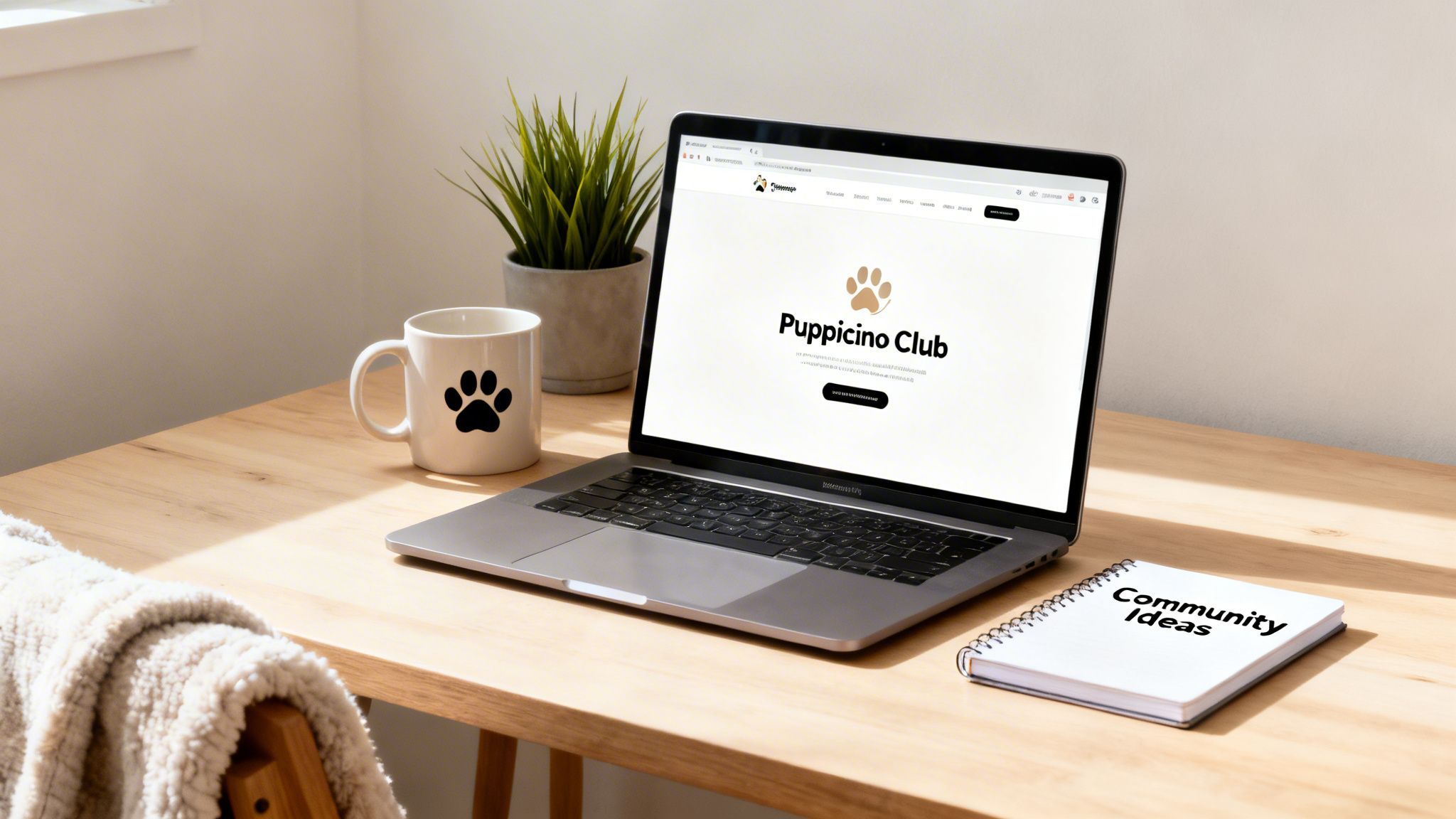
A thriving fan club is a special space where people can connect over something they love, whether it’s an artist, a brand, or even a book series about adorable dogs.
To make this super practical, we’ll walk you through our own journey of creating the Puppicino Club for SetterFrens. You'll get a behind-the-scenes look at how we're applying these very same principles. For an even deeper dive into the foundations, this step-by-step guide to starting a community is a fantastic resource to have in your back pocket.
What We'll Cover
We’re going to get into the nitty-gritty of building a community from scratch. Forget the fluff—this is about actionable strategy. We’ll explore how to:
- Nail Down Your "Why": Get crystal clear on your club's purpose to attract the perfect members.
- Pick Your Playground: Figure out the best home for your community, whether it's on TikTok, a private forum, or somewhere else.
- Design Killer Perks: Brainstorm benefits that make joining an absolute no-brainer for your fans.
- Launch Like a Pro: Learn how to build buzz and get those first enthusiastic members through the door.
At SetterFrens, we believe every successful fan club is built on three pillars: a clear identity, real value for members, and consistent engagement that makes people feel like they’re part of something special. It’s all about creating a cozy home for your biggest supporters.
It doesn’t matter if you're a creator with a growing Instagram following, an author with a loyal reader base, or a brand running a popular Etsy shop—these strategies will help you build genuine connections. Let's get started and build something your members will love.
Alright, let's nail down the heart and soul of your fan club before you even think about building a sign-up page. So many creators get excited and jump straight to the fun stuff—logos, perks, launch parties—but we’ve seen countless clubs fizzle out because they skipped this foundational work.
Before you do anything else, you have to ask: Why does this club need to exist? What's the point? A fan club without a clear purpose feels aimless, and people will lose interest fast.
Take our Puppicino Club, for example. Our mission was simple from day one: create a cozy corner of the internet for people who believe life’s better with a wagging tail and a good book. We wanted to bottle up that feeling of a good story and a happy pup and share it, expanding the world we'd already built with SetterFrens. That simple idea became our guiding light for everything that came after.
Who Is This Club Really For?
Now, let's get specific about who you’re building this for. "My followers" isn't good enough. You need to picture your ideal member. Are they the ones who comment on every TikTok you post? The casual readers who stumble upon your blog? Or maybe the loyal customers who’ve bought from your Etsy shop multiple times?
Think about what these people truly crave from a community like this.
- A sense of belonging? Are they looking for their people—others who get their specific obsession?
- Exclusive access? Do they want a peek behind the curtain, early access to new stuff, or content no one else gets to see?
- Deeper knowledge? Maybe they want to learn from you and become an expert themselves.
- A direct connection? For many, the biggest draw is simply getting to interact with you more directly.
Figuring this out is the key to creating an experience that feels like it was made just for them. With SetterFrens, we knew our community was full of "dog people" who loved that cozy lifestyle. So, we leaned in, offering perks like early book updates and dog-friendly treats. It just made sense.
Shaping Your Club's Vibe and Promise
Once you have a clear picture of your ideal member, you can start building the club's core identity. The first big decision is a fork in the road: will your club be free for everyone or an exclusive paid membership?
There's no wrong answer here. A free model is fantastic for getting as many people in the door as possible and building a massive, lively community. On the other hand, a paid model lets you offer more premium, high-value perks and tends to attract a more dedicated, tight-knit group of superfans. It all comes down to your goals and what your specific audience is willing to invest in.
Your club's name and mission statement are its handshake and its promise. A great name is memorable and captures the club's spirit, while a mission statement provides direction and keeps you focused on delivering value.
With your model in mind, start brainstorming a name that captures the vibe. Is it fun and quirky like our "Puppicino Club," or something more serious and exclusive? Then, try to write a one- or two-sentence mission statement that spells out the club's purpose. For instance: "The Puppicino Club is a community for dog lovers to share their passion for pups and reading through exclusive content, early updates, and a shared love for all things cozy."
Lock Down Your Brand and Visuals
Last but not least, don't get so caught up in the excitement that you forget to protect your new identity. This is a step people often skip, and it can cause major headaches later. First, do a quick search to make sure your club name is available. Check social media handles, domain names, and do a few web searches, especially within your niche.
With the name secured, it's time to give your club a look. This doesn't need to be some massive design project. It can be as simple as a unique logo or a specific color palette that sets the club apart from your main brand but still feels related. Whether your primary home is a blog, an Instagram profile, or an Etsy shop, this consistent visual identity makes members feel like they've stepped into a special, exclusive part of your world.
Choosing the Right Platforms for Your Community
Okay, let's talk about where your fan club is going to live. Picking the right platform is like choosing the perfect venue for a party—it needs to have the right vibe, be easy for everyone to get to, and have all the tools you need to make some magic happen. This isn’t just a tech decision; it's about creating a smooth and welcoming experience for your members from day one.
The tools you choose will be the very foundation of your fan club. At SetterFrens, we learned this firsthand with our Puppicino Club. We use high-energy spots like TikTok and Instagram to meet new dog lovers, but the real community building happens in our dedicated email list. This gives us the best of both worlds: a wide public reach and a direct, intimate way to connect with our most dedicated fans.
Free and Accessible Community Hubs
Great news: you don't need a big budget to get started. Some of the best communities we've seen were built on free platforms your members are probably already using every day.
Facebook Groups: This is often the easiest place to start. A Facebook Group is simple to set up, people know how to use it, and it comes packed with tools for polls, events, and live videos. It's a fantastic, low-effort way to create a space for discussion.
Discord Servers: Don't let its gaming roots fool you. Discord has become a go-to for all kinds of communities. It’s built for real-time chat, letting you create different channels for specific topics (we have channels for #BookTalk and #PupPhotos!). The voice and video features are also perfect for hosting casual virtual hangouts.
These free options are brilliant for sparking conversation. The main thing to remember is that you're building on "rented land"—you don't fully control the space or the user data.
Dedicated Community Platforms
If you're thinking about a paid membership or just want more control over your brand, a dedicated platform is the way to go. These are tools specifically designed for building and managing a community.
Platforms like Circle or Mighty Networks give you a private, branded space that you truly own. You can set up membership tiers, host events, and even offer courses, all without the noise of a social media feed. Yes, they have a monthly fee, but the professional, focused experience they provide can be well worth it. For those wanting total control, it's even worth looking into owning your own fan subscription platform.
This isn't a small market, either. Fan engagement is exploding, which shows just how much people are willing to invest in digital connections. The sports tech fan engagement space alone generated $215.1 million in 2024 and is projected to hit a whopping $943.5 million by 2030. That's a lot of value being created!
This decision tree can help you visualize whether a free or paid model is right for you.
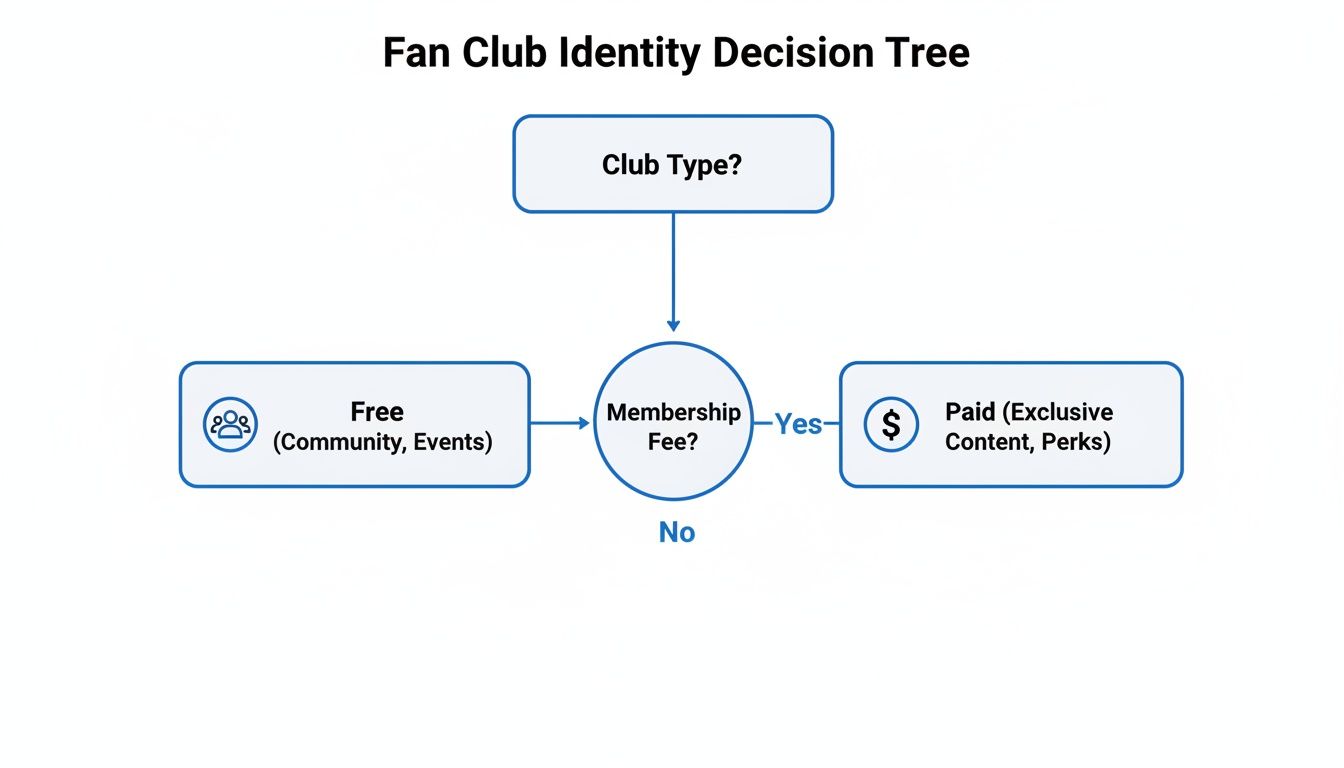
Ultimately, your main goal—whether it's building a massive free community or generating revenue—should be the deciding factor.
To help you weigh your options, here’s a quick comparison of the different types of platforms you might consider.
Fan Club Platform Comparison
| Platform Type | Examples | Best For | Potential Drawbacks |
|---|---|---|---|
| Social Media | Facebook Groups, Discord | Building a free, highly engaged community where members already hang out. | Lack of branding control; you're building on "rented land." |
| Dedicated Platforms | Circle, Mighty Networks | Creating a premium, branded experience with paid tiers and exclusive content. | Monthly subscription fees; requires more effort to attract members. |
| Email Marketing | ConvertKit, Mailchimp | Direct, personal communication that you own completely. | Not a community hub on its own; works best alongside other platforms. |
| Website/CMS | WordPress with plugins | Maximum control and customization, integrating the club into your main brand site. | Can be technically complex and expensive to set up and maintain. |
Each option has its pros and cons, so think about what a "perfect" home for your fans would look like and which platform gets you closest to that vision.
The Central Role of Email
We're going to say this loud and clear: no matter what other platforms you use, you need an email list. It is the single most important asset you will build. It's the only channel you truly own, making it the central nervous system for your entire fan club.
Think of social media as the party where you meet new friends, and your email list as the cozy coffee shop where you have deeper conversations.
Tools like ConvertKit or Mailchimp make it easy to set up sign-up forms, automate a welcome sequence, and send updates straight to your members. For our Puppicino Club, that first welcome email is a huge deal—it’s our official "hello" and the first exclusive dog-friendly treat we share. It creates a personal connection that you just can't get on any other platform. This is a key part of our overall outreach strategy, which we dive into in our guide on social media marketing for authors.
Designing Irresistible Perks and Engaging Content
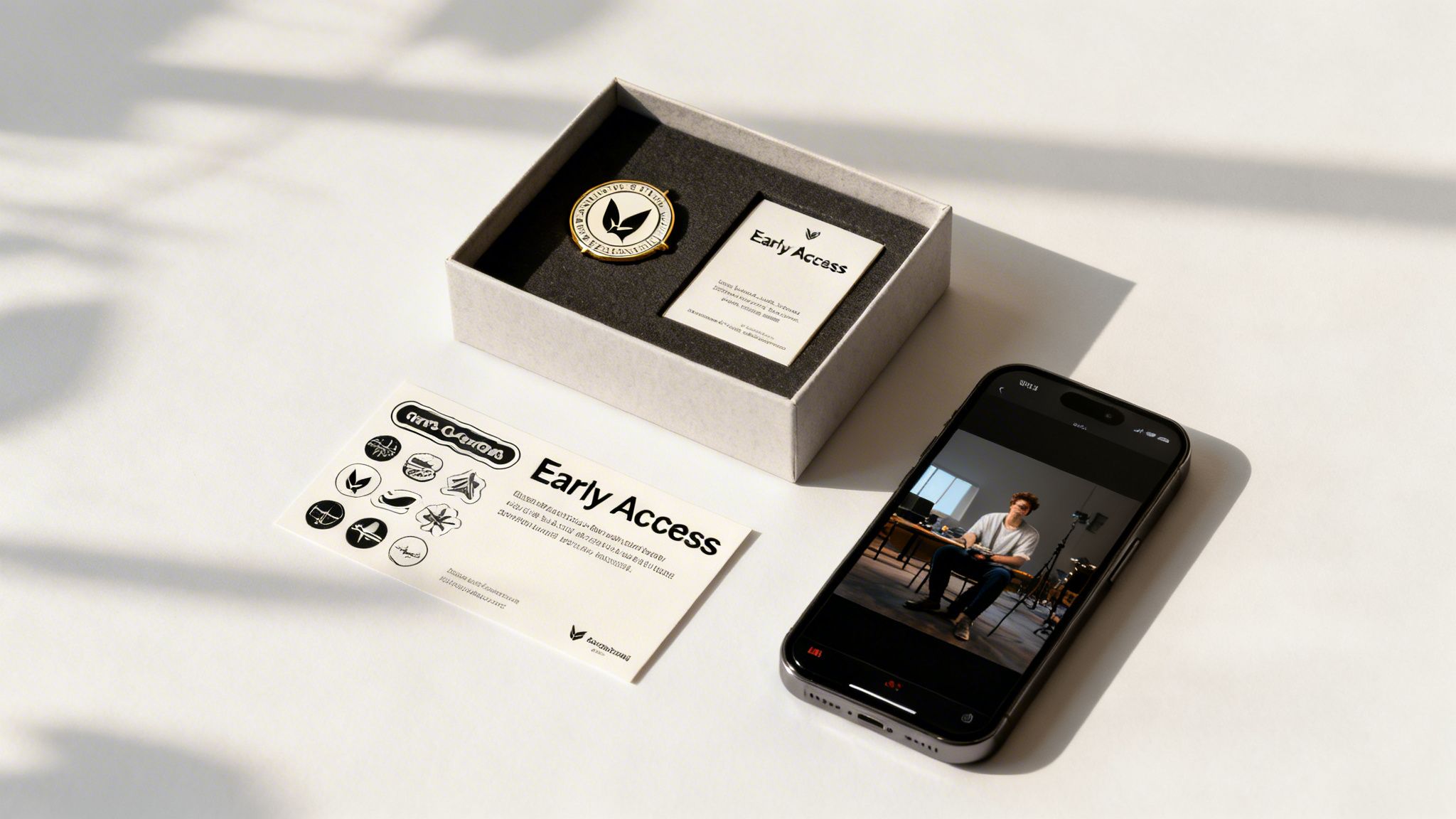
Let's talk about the good stuff. The real reason people join a fan club isn't just because they like you—it's because they want to feel like they're part of something special. Your perks and content are how you deliver that feeling. It all boils down to answering the one question on every potential member's mind: "What's in it for me?"
For our Puppicino Club, we knew our members adored the cozy, dog-centric world of SetterFrens. So, we designed perks that made them feel like true insiders. This isn't just about throwing random benefits at people; it's about curating a collection of experiences that feel personal, thoughtful, and genuinely exciting.
Crafting Your Membership Tiers
One of the first puzzles to solve is how you'll structure your benefits. Will everyone get the same access, or will you create different levels for different kinds of fans? We’re big fans of a tiered structure because it lets you welcome everyone while still rewarding your most dedicated supporters.
We always recommend starting with a free tier. Think of it as your community's front porch—a welcoming space where people can get a feel for what you're about without any pressure. Our free SetterFrens tier, for instance, gives members our main newsletter, fun downloadable activity sheets, and a first look at brand news. It's a fantastic, no-risk way to bring people into your world.
From there, you can build out your premium tiers. This is where the magic really happens.
Mid-Tier Perks: This is for your engaged fans. Offer things like early access to new book chapters, a special discount code for your Etsy shop, or behind-the-scenes videos that aren't posted anywhere else.
Top-Tier Perks: Save the best for your biggest champions. This could mean direct interaction, like a monthly group Q&A call, a personal shout-out on your TikTok, or even physical goodies, like a welcome kit, mailed right to their door.
Key Takeaway: The best perks are an extension of your brand's soul. If fans love your art, show them your creative process. If they're obsessed with your writing, give them early chapter reveals. Don't just offer generic benefits; create experiences only you can provide.
This mix of community, content, and commerce is a powerful formula. Don't just take our word for it—the fan engagement market is booming, hitting an estimated $16.2 billion in 2024 and projected to reach a staggering $66.7 billion by 2034. With North America holding a 36.8% share of that market, brands have a massive opportunity to build real, lasting connections. You can dig deeper into the trends shaping the fan engagement market to see just how big this is.
Brainstorming Exclusive Content Ideas
Okay, now for the fun part—what are you actually going to share? Your content is the lifeblood of the community. It's what keeps people logging in and feeling connected. The trick is to find a good mix of exclusive material and fun, interactive activities.
Here are a few ideas from our own SetterFrens playbook that you can easily adapt:
Behind-the-Scenes Access: Pull back the curtain and show members how the magic is made. We share early sketches of book illustrations, behind-the-scenes content from our growing pack, and even quick tours of our workspace. People love seeing the "real" stuff.
Exclusive Digital Goodies: These are high-value perks with zero shipping costs. Think downloadable phone wallpapers, printable checklists, or digital activity books for kids (or kids-at-heart!).
Early Access & Big Announcements: Make your members feel like VIPs by giving them the news first. A 24-hour head start on a merch drop or an exclusive project reveal can create a huge buzz.
Direct Interaction: This is a big one. People join to feel closer to you. Host a monthly "ask me anything" session, run a poll to let members vote on a new T-shirt design, or just pop into your community forum to chat and answer questions.
The goal is to create a rich, engaging experience that constantly reminds members why they joined. We've actually found that many of the same principles for fostering a tight-knit group apply everywhere, and some of the ideas in our guide on building classroom community activities can be surprisingly effective for an online fan club.
The Power of a Content Calendar
We’ll tell you a secret: consistency is everything. An empty, quiet community is the quickest way to lose members. This is where a content calendar becomes your absolute best friend, helping you plan ahead and keep a steady, engaging rhythm.
It doesn’t need to be fancy. A simple spreadsheet is perfect. Just map out your weeks and plan a healthy balance of different types of content.
Here’s a simple weekly schedule to get you started:
- Monday: Member Spotlight (Feature an active member in your newsletter or on social media).
- Wednesday: Exclusive Content Drop (Release that new video, article, or downloadable).
- Friday: Community Fun (Start a themed discussion thread, post a fun poll, or host a quick virtual get-together).
- Weekend: Spontaneous Check-in (Pop in for a quick "hello" or an impromptu live chat).
A simple structure like this removes the daily pressure of "What should I post?" and gives your members a reliable reason to check in. It keeps your community vibrant, active, and always looking forward to what’s next.
Launching and Growing Your Community
Alright, you've laid the groundwork for your fan club. Now for the exciting (and slightly nerve-wracking) part: the launch. A powerful, high-energy launch is what gives you that initial wave of momentum that's so hard to build from a standstill.
Think of your launch not as a single "go live" date, but as a carefully orchestrated rollout. The goal is to get your most dedicated fans hyped up and counting down the days until they can join.
We started this process for our Puppicino Club weeks before we ever opened the doors. We began teasing exclusive perks and behind-the-scenes content on Instagram and TikTok. This pre-launch phase is your golden opportunity to build a waitlist and make people feel like they’re about to be let in on a fantastic secret.
Whipping Up Excitement Before You Open
You don’t need a massive ad budget to create a buzz. It’s all about smart, targeted communication with the people who already follow and love what you do. Start talking about your club as a "secret project" or a "new way for us to connect."
A few simple tactics we’ve found work wonders:
- Start a Waitlist: Put up a simple landing page where people can drop their email to be notified first. This isn't just a list; it's your future group of founding members, ready and waiting.
- Tease the Goods: Share sneak peeks of the benefits members will get. On our @setterfrens Instagram, we posted a blurred-out picture of a new merch item with the caption, "Puppicino Club members will see this first!" It drove people nuts (in a good way!).
- Run a Countdown: Instagram Stories' countdown sticker is perfect for this. It builds a daily drumbeat of anticipation and keeps your club top-of-mind.
A great launch isn't about getting thousands of new sign-ups on day one. It’s about making your first 100 members feel like the most important people in your world. Their genuine excitement is the most powerful marketing tool you have.
Once the doors are open, the real work begins. A successful launch is just the spark; now you have to turn it into a sustainable fire. This is when you switch from a launch mindset to a growth mindset, focusing on keeping your community vibrant and bringing in new people who fit the vibe.
Strategies for Sustainable Growth
With your club officially live, your attention splits into two key areas: keeping the members you have happy and attracting new ones who will add to the community. The secret to both is fostering a welcoming environment and creating content that people genuinely want to share.
When your current members are happy, they become your best recruiters.
This goes beyond just posting on a schedule. It means actively listening. For instance, if you see members of your dog-themed club constantly sharing training tips with each other, why not create a dedicated channel or a downloadable guide on that very topic? Seeing how other communities operate, like local dog social clubs, can also spark fantastic ideas for new activities.
Here are a few strategies to keep your community thriving long-term:
- Spark User-Generated Content: Create a unique hashtag and run simple challenges. We ask our Puppicino Club members to share photos with their dogs and a good book using a special tag. It’s fun, and it creates a gallery of authentic content.
- Team Up with Others: Partner with other creators or brands in your niche for a joint giveaway or a live event. This is a brilliant way to introduce your club to a fresh, highly relevant audience.
- Let the Data Be Your Guide: The numbers don't lie. Pay attention to what's working and what's falling flat.
Using Data to Refine and Grow
This might sound a bit corporate, but paying attention to the data is what separates clubs that fizzle out from those that flourish. Starting a fan club today means tapping into a fan engagement market that hit $8.09 billion in 2025 and is projected to hit $9.79 billion in 2026—that’s a massive 21.1% growth rate. Fans want those immersive experiences, and analytics is how you figure out what they actually want. Check out the full breakdown of the massive growth in the fan engagement market to see the opportunity for yourself.
Start by tracking a few key metrics to understand how your members are behaving:
- Sign-up Rate: Are you getting a steady stream of new members each week or month?
- Engagement Rate: Are people actually opening your emails, commenting on posts, and showing up for events?
- Retention Rate: How many of your members are sticking around for the long haul?
This feedback loop is your secret weapon. It helps you stop guessing what your members want and start giving them exactly what they value, ensuring your community doesn't just survive, but truly thrives.
Your Fan Club Starter Kit: Ready-to-Use Templates

Alright, let's get practical. The thought of creating all the necessary documents from scratch can be a real roadblock. We've been there, staring at a blank page, not sure where to begin.
To help you skip that step, we've pulled together a few essential templates. These are directly inspired by what we use for our own community, the Puppicino Club, but we’ve made them easy for you to copy, paste, and adapt. Think of them as a head start—just add your own unique flavor.
The Perfect Welcome Email
That first email is your chance to make a fantastic impression. It’s more than just a receipt; it’s a warm, personal welcome that says, "We're so glad you're here." A great one confirms their spot, reminds them why they joined, and gives them a clear next step.
Here’s a simple template you can make your own:
Subject: Welcome to the [Club Name]! You’re officially in the pack!
Hey [Member Name],
We are so thrilled to have you join our community! The [Club Name] is all about [State your club’s core purpose in one sentence]. We’re a group of [Describe your members] who love to [Describe a shared activity or passion].
As promised, here’s your first exclusive perk: [Link to a special download or content].
To get started, we’d love for you to:
- Introduce yourself! Pop into our [Link to community forum/Discord channel] and say hello.
- Check out our upcoming events: [Link to events calendar].
We’re so excited you’re here!
Paws & love,
[Your Name/Brand Name]
This approach immediately delivers value and invites interaction, which is exactly the tone you want to set from day one.
Community Guidelines to Keep Things Positive
Trust us on this: setting ground rules from the start is non-negotiable. You’re not trying to be a drill sergeant; you’re building a foundation for a space where everyone feels safe and respected. When we drafted the rules for the Puppicino Club, our focus was simply on keeping it a kind and fun place to hang out.
Here are a few must-have guidelines to start with:
- Be Kind and Courteous: We're all here to connect over our shared passion. Let's treat everyone with respect.
- No Hate Speech or Bullying: This is a safe space. Bullying of any kind isn't allowed, and degrading comments will be removed.
- Stay On-Topic: Please keep discussions relevant to the channel or thread you're in.
- No Promotions or Spam: Self-promotion and irrelevant links aren't allowed.
Keep the rules simple and post them somewhere obvious. It makes moderation so much easier later on.
The Friction-Free Sign-Up Form
Your sign-up form should be quick and painless. Every extra field you add is a potential reason for someone to give up and leave.
Seriously, just ask for the essentials. For most fan clubs, that’s just a name and an email address. You can always ask for more details later on, maybe in their profile settings, but get them in the door first. Make it so easy to join that they don't even have to think about it.
Common Questions We Get About Starting a Fan Club
So you're ready to start a fan club? Awesome. It’s an exciting journey, but it’s natural to have a few questions buzzing around. We've been there! Here are some of the things people ask us most often, with honest answers pulled from our own experiences building communities like our Puppicino Club.
How Much Is This Going to Cost Me?
This is the big one, right? The truth is, your costs can range from literally zero to a few hundred bucks a month. It all comes down to the tools you choose and how big you want to go right out of the gate.
Believe it or not, you can get started for free. A simple Facebook Group combined with a free email service is a surprisingly powerful duo for building a community without opening your wallet.
When you're ready to step things up with a more polished, branded space, you're probably looking at a mid-range budget of $50-$150 per month. This could cover a subscription to a dedicated platform like Circle and a more robust email tool for better automations. Our advice? Start lean. Let the club's growth (and any income it generates) tell you when it's time to invest more.
What's the Best Way to Keep Members From Getting Bored?
Keeping a community lively boils down to two things: being consistent and mixing it up. A content calendar is a lifesaver for planning, but some of the best moments come from spontaneity—think a surprise live Q&A or a fun, last-minute challenge.
Try to keep your content from getting stale. One week you might share a exclusive behind-the-scenes video from our @setterfrens TikTok, and the next you could drop a downloadable recipe for dog-friendly cookies.
The real secret to engagement isn’t just posting stuff. It’s about sparking connections between your members. Post discussion starters, feature a member of the week, or create activities where they have to team up or share with each other.
Don't forget to show your most active members some love. A simple shout-out or a small discount code for your Etsy shop can make someone feel truly valued. That's how you turn a casual fan into a passionate advocate for life.
Can I Start a Fan Club for a Celebrity or TV Show?
Absolutely! You can create what's known as an "unofficial" fan club. These communities are built on pure, shared passion for a public figure, a book series, or a show. The key, though, is to be smart about it and respect intellectual property.
You have to be careful not to use copyrighted logos, official photos, or trademarked names in a way that suggests you're an official partner. Your best bet is to be completely transparent. Make it crystal clear in your group description that your club is unofficial and proudly fan-run.
The smartest way to operate is by creating your own unique content. Instead of just reposting official news, host your own fan theory discussions, write reviews, or run fan art contests. That's what makes your community a unique destination—a place built on genuine interaction, not just borrowed content.
At SetterFrens, we're all about building connections, whether it's between a pup and their person or a reader and a great story. Find your next favorite read, discover pup-approved products, and join our pack at https://setterfren.com.