Let's be honest: that fine layer of fur covering your favorite armchair is practically a badge of honor for any dog owner. It's a fuzzy reminder of all the cozy evenings and happy moments you've shared. But while we believe life’s better with a wagging tail, we also love a home that feels clean and inviting.
So, how do you deal with the constant shedding without it turning into a full-time job? That's exactly what we're here to figure out together.
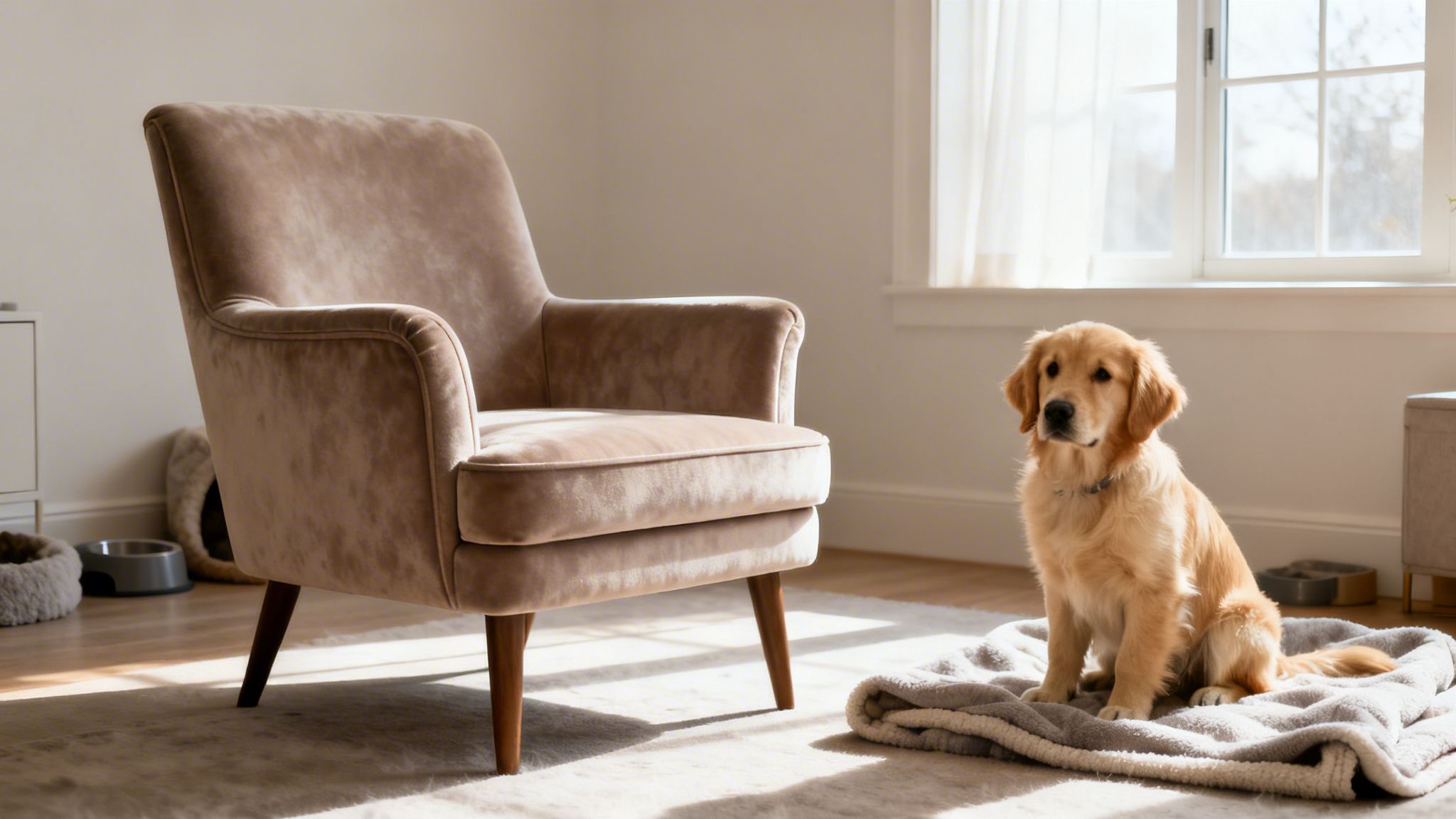
A Realistic Guide to a Fur-Free Home
We know you're busy. You'd rather spend your time playing fetch than fighting with fur. This guide is packed with practical, real-world solutions that actually get the job done, from quick daily touch-ups to deep-cleaning secrets that won't take over your weekend.
The goal isn't a sterile, hairless home—it's about finding that sweet spot where you can cuddle on the couch without getting covered in fur.
It’s All About Balance
Living with a shedding dog doesn't mean surrendering to a sea of hair. It's all about finding a simple, manageable routine. With the right tools and a few smart tricks, you can keep the fur under control and reclaim your space.
Here’s what you'll be able to do:
- Slash your cleaning time with surprisingly effective tools and techniques.
- Keep your furniture looking great by safely removing even the most stubborn, woven-in hair.
- Breathe a little easier by cutting down on pet dander and allergens.
- Enjoy more quality time with your pup on a couch you're both happy to share.
More Than Just a Cleaning Guide
Tackling pet hair is a big part of creating a harmonious home, and so is teaching good manners. It's all connected. For instance, while you’re making the sofa a fur-free zone, it's a great opportunity to reinforce other household boundaries. If you've also got a four-legged friend who thinks the kitchen counter is a snack bar, you'll find our guide on how to keep dogs off counters super helpful.
The easiest mess to clean is the one that was never made. By pairing smart hair removal with a few simple preventative steps, you’ll spend far less time cleaning and more time enjoying a home that’s always ready for company.
We'll walk you through the best methods for every type of furniture, from your delicate velvet sofa to that durable leather recliner. Let's get you back to what really matters—all those priceless cuddles.
The Ultimate Pet Hair Removal Toolkit
Before you can win the war on fur, you need the right arsenal. Having a few go-to tools ready makes all the difference, turning a frustrating chore into a quick, almost satisfying, cleanup session. Let's talk about the essential gear you'll need, from heavy-duty vacuums to some shockingly simple gadgets that just plain work.
It's no surprise that the pet hair removal market is huge—it's projected to hit a staggering USD 5,500 million by the end of 2026. While affordable manual tools like brushes and rollers make up a huge chunk of that (60-70% of sales), the techy side is catching up. Some of the newer vacuum systems are so effective they can capture 25% more fur than standard models.
High-Tech Helpers for a Deep Clean
For a truly thorough, down-to-the-cushion clean, nothing beats a vacuum specifically designed for homes with pets. These aren't your average floor cleaners; they come with specialized attachments that are absolute game-changers for furniture.
The most important feature to look for is a motorized brush head. These attachments have their own little motor, spinning stiff bristles that dig deep into fabric to agitate and lift out those stubborn, woven-in hairs. A simple suction tool just can't compete, especially on tough upholstery or low-pile rugs where fur gets trapped.
Another must-have is a rubber-tipped crevice tool. The rubber creates just enough friction and static to act like a hair magnet, pulling fur out of tight seams and corners where it loves to hide. It's perfect for getting between sofa cushions or along the baseboards of your dog's favorite armchair.
Manual Tools for Quick Touch-Ups
Let's be real—you don't need to haul out the big vacuum for every little furball. For daily maintenance and those "guests are coming in 10 minutes!" panics, manual tools are your best friends. They're fast, effective, and wonderfully low-effort.
Pro Tip: Keep a few of these manual tools stashed right where the fur accumulates. I have one by the sofa, one in my car, and another near my dog’s bed. A quick, 30-second cleanup every day prevents a massive fur catastrophe later.
Here are the manual heroes every pet parent in the SetterFrens community should own:
- Reusable Lint Rollers: Forget those endless sticky tape sheets. Modern rollers, like the ever-popular ChomChom or similar models from Black + Decker, use a brilliant combination of fabric and a tiny squeegee to grab hair and tuck it away in a chamber. Just a few quick back-and-forth rolls, and you're done.
- Rubber Brushes or Gloves: This might be the best (and cheapest) pet hair hack out there. A simple pair of rubber dish gloves, slightly dampened, works miracles. Just put them on, wipe your hands over the furniture, and watch the fur clump up into easily disposable balls.
- Squeegees and Scrapers: Small, handheld tools with a firm rubber or silicone edge, like the Analan or FurDozer, act like a window squeegee for your couch. They take a little more elbow grease, but they are fantastic for pulling deeply embedded hair from durable fabrics like microfiber or canvas.
Pet Hair Removal Tool Smackdown
With so many options, how do you choose? I've put the most popular tools head-to-head to help you decide which ones deserve a spot in your cleaning caddy.
| Tool | Best For | Fabric Type | Effectiveness Score (1-5) |
|---|---|---|---|
| Reusable Roller (ChomChom) | Quick, daily touch-ups on flat surfaces | Upholstery, bedding, low-pile carpet | 5 |
| Damp Rubber Glove | Clumping loose hair, getting into corners | Almost all fabrics (except delicate ones) | 4 |
| Pet Hair Squeegee | Pulling out deeply embedded fur | Microfiber, car carpets, durable fabrics | 4.5 |
| Vacuum with Motorized Brush | Deep cleaning, large areas | Heavy-duty upholstery, rugs | 5 |
| Traditional Sticky Lint Roller | Last-minute spot cleaning on clothes | Clothing, velvet, delicate fabrics | 3 |
Ultimately, there's no single magic bullet. The best approach is a combination: a great vacuum for your weekly deep clean and a few manual tools for the daily upkeep.
Of course, the best tool is prevention. A solid grooming routine can drastically cut down on how much hair ends up on your furniture in the first place. If you want to get ahead of the shedding, check out our expert dog grooming tips for home to help stop the fur at its source.
How to Tackle Fur on Every Type of Furniture
Pet hair seems to have a mind of its own, weaving itself into some fabrics while just clinging to others. What works wonders on your durable family room couch could be a complete disaster on a delicate velvet chair. You really have to know your opponent—and your furniture—to get the best results.
Think of it this way: you wouldn't use the same cleaning spray on your windows and your wooden coffee table. The same logic applies here. Let's walk through the best ways to de-fur the most common types of furniture in your home.
Woven and Upholstered Fabrics
Fabrics with a noticeable weave, like tweed, linen, or most standard upholstery, are absolute magnets for pet hair. Those pesky strands get caught right in the textured surface, and a simple wipe-down just won’t cut it. They need a bit more muscle.
My go-to for these tougher fabrics is a two-step process. I start with a good vacuum, but it has to have a motorized brush attachment. Those spinning bristles are key for loosening hairs that have really worked their way in. Once that's done, I grab a rubber squeegee—yep, the kind you use for windows—and drag it in short, firm strokes across the fabric. You will be shocked at the amount of hair that clumps up, even on a couch that looks clean.
The Gentle Touch for Microfiber
Microfiber is a fantastic choice for pet owners. It's tough and generally easy to clean, but it has a unique texture that you need to be careful with. The fibers are so fine that aggressive scrubbing can actually damage them.
For microfiber, the best tool is surprisingly simple: a brand-new, completely dry sponge. Just a regular kitchen sponge will do. Wipe it across the surface in one direction. This builds up a little static electricity that lifts the hair and pulls it into a neat pile. Whatever you do, don't rub back and forth, or you'll just push the hair deeper into the fabric. It’s a great little trick for a quick cleanup.
This simple chart can help you figure out the best place to start.

As you can see, whether you're dealing with a hard surface or a soft fabric, there’s a straightforward method to get it hair-free.
Caring for Leather and Vinyl
This is where pet owners catch a break. Hair can't weave itself into leather or vinyl, but it can still cling to the surface because of static. Thankfully, the fix is easy.
Just take a microfiber cloth and lightly dampen it with either water or a cleaner made specifically for leather. If you want to go a step further, you can spritz a little anti-static dusting spray onto your cloth (never spray it directly on the furniture!) before wiping. This helps repel hair, making your next cleanup even easier.
Here's a pro tip I've learned over the years: keeping your leather conditioned is your best defense. A well-moisturized leather sofa isn't just healthier—its smooth, supple surface gives pet hair nothing to grab onto.
Protecting Velvet and Corduroy
Velvet and corduroy look gorgeous, but they are notoriously delicate. Both fabrics have a "nap," which is that soft, raised texture that gives them their signature feel. If you use a harsh tool, you can easily crush or ruin that nap for good. A rubber squeegee is a definite no-go here.
Instead, you’ll want to get a dedicated velvet brush. These have soft bristles that are designed to lift hair and debris while gently grooming the fabric's nap. The trick is to always brush with the grain of the fabric. This not only cleans it but also keeps it looking plush and new.
Proper cleaning is more than just cosmetic, especially when you consider that up to 30% of homes are dealing with pet allergies. Some tools are genuinely better than others; for instance, certain rubber-bristled brushes can lift 99% of hair from fabrics like velvet and outperform standard tape rollers by 40%. You can dig into more stats about the global pet hair removing products market on dataintelo.com.
If you’re facing a really stubborn pet hair situation or just want to give your furniture a deep refresh, calling in the experts can make a world of difference. Professional upholstery cleaning services have the right equipment and know-how to safely restore even the most delicate fabrics.
Creative DIY Hacks for That Stubborn Pet Hair
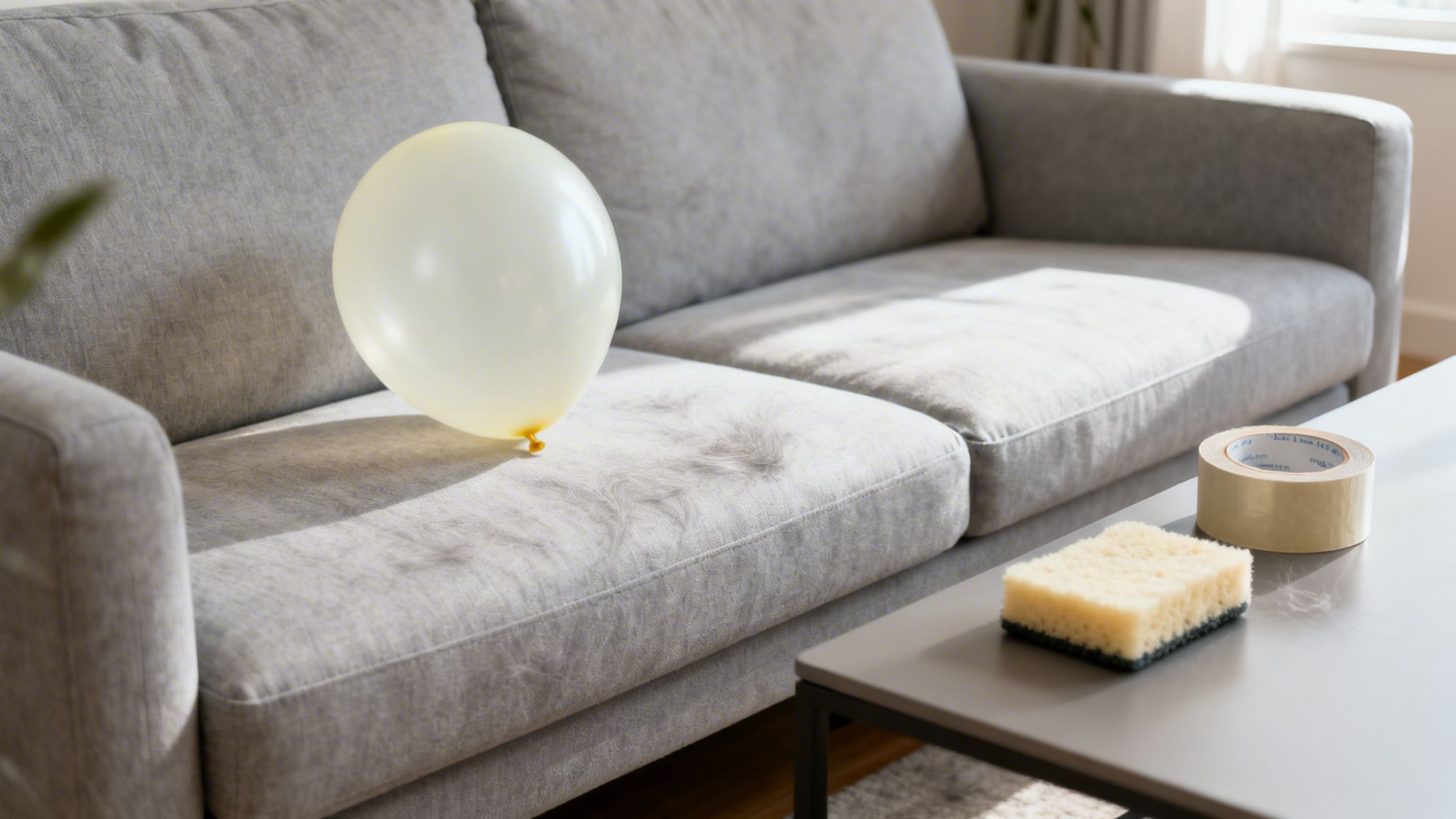
We've all been there. Guests are coming over in an hour, and you realize your sofa has become a monument to your shedding golden retriever. Before you panic, take a look around your house. You probably already have some surprisingly effective, low-cost tools that can save the day.
You don't always need a fancy gadget. Some of the best fur-fighters are things you’d never expect.
The Old-School Static Trick
Remember rubbing a balloon on your hair as a kid to make it stand on end? That same static electricity is your secret weapon against pet fur. Just inflate a regular latex balloon and rub it across your couch in one smooth motion.
The friction generates a static charge that acts like a hair magnet, lifting the fur right off the fabric. You'll be amazed as it clings to the balloon. This works especially well for a light coating of fur on fabrics like microfiber or other smooth upholstery.
Saviors from the Kitchen and Office
Your junk drawer and kitchen cabinets are hiding some serious fur-removal power. These everyday items are perfect for a quick, satisfying cleanup.
The Damp Sponge: Grab a clean kitchen sponge and get it slightly damp—make sure to wring it out well so it isn't dripping wet. Then, just wipe it firmly across your furniture in a single direction. The combination of moisture and the sponge's texture is fantastic for grabbing loose hair and rolling it into clumps you can easily pick off.
Packing Tape: If your regular lint roller is giving up the fight, it's time to bring in the big guns. Wrap a good length of heavy-duty packing tape around your hand with the sticky side out. Press it firmly onto the hairy spots, then peel it away. The strong adhesive is a lifesaver for pulling out those stubborn, woven-in hairs that other tools leave behind.
It's funny how the simplest tools are often the best. Even as the market for these products races toward USD 4.5 billion by 2032, basic manual rollers still dominate. Why? They just work. In fact, about 80% of pet owners have one, and a good one can clear 90-95% of hair from a surface in one go. You can see more interesting numbers on these pet fur remover market trends at factmr.com.
The Pumice Stone Power-Up
For those really tough jobs on durable fabrics—think low-pile carpets or the upholstery in your car—a pumice stone can be a total game-changer. You can buy stones specifically sold as "fur removers," or just use a new one from the beauty aisle.
Gently drag the flat edge of the stone across the fabric with light, short strokes. The porous surface is incredible at grabbing and pulling out deeply embedded hair that even powerful vacuums struggle with.
But a word of caution: never, ever use this on delicate fabrics. It's far too abrasive for things like velvet, silk, or fine upholstery and will absolutely cause damage. When in doubt, always test it on a small, hidden area first.
Your Best Defense Is a Good Offense: Preventing Pet Hair Buildup
Honestly, the best way to handle pet hair on your furniture is to keep it from sticking there in the first place. If you can get ahead of the shedding, you’ll spend way less time cleaning and more time just enjoying your furry companion. It's all about shifting from constant clean-up duty to a simple, proactive routine.
A solid grooming habit makes the biggest difference. Seriously, every clump of fur you pull out with a brush is one less you'll have to scrape off the sofa later. Getting a quality de-shedding tool and using it a few times a week—especially during the heavy shedding seasons of spring and fall—will dramatically reduce the amount of loose hair floating around your home.
Create Designated Cozy Zones
Let’s be real, you're not going to keep your dog off the couch entirely, and who would want to? Instead, get strategic. Drape some stylish, easy-to-wash throws or blankets over their favorite napping spots. This gives them a comfy place to curl up and acts as a barrier for your upholstery.
A "dog-only" blanket is another great move. It not only protects your furniture but also becomes a comforting, familiar spot just for your pup. If you need tips on making a space feel safe and inviting, our guide on how to crate train a dog has some great advice. Once their blanket is covered in hair, you just shake it out and toss it in the wash.
SetterFrens Pro Tip: Before you wash a furry blanket or furniture cover, run it through the dryer on a no-heat or low-heat cycle for 10-15 minutes. The tumbling loosens the dry hair and sends it straight to the lint trap, preventing it from clumping up and clogging your washing machine.
This little pre-wash trick makes a huge difference and keeps your washer from turning into a fuzzy mess.
Build a Barrier with Furniture Covers
If you’re looking for wall-to-wall protection, full furniture covers are the way to go. And forget those awful, crinkly plastic covers from back in the day. Modern covers are actually stylish, coming in tons of fabrics and colors that can fit right in with your home’s look.
They give you top-notch protection and make cleaning a breeze. Got company coming over? Just whip the cover off, and you've got a perfectly clean sofa waiting underneath.
When you're shopping for one, make sure it's:
- Machine-washable: This is a must-have for easy cleaning.
- Durable: Look for a tough fabric that can handle claws and frequent washes.
- Water-resistant: An excellent bonus for protecting against the occasional drool or accident.
Ultimately, getting a handle on pet hair means tackling it at the source. Learning how to manage pet dander and loose fur with good grooming, combined with smart furniture protection, is a game-changer. It’s a simple approach that keeps your home looking great and gives you more time for the best part of having a dog: all the cuddles.
Your Top Pet Hair Questions Answered
Even with all these tips and tricks up your sleeve, you probably still have a few questions about tackling that never-ending supply of pet fur. Don't worry, you're not alone! Let's dive into some of the most common questions we hear from the SetterFrens community so you can get your fur-fighting routine down to a science.
How Often Should I Clean Pet Hair Off My Furniture?
Honestly, this really comes down to your dog's shedding habits and, well, how much fluff you can personally stand to see on the couch.
For most of us, a quick daily swipe over your pup's favorite nap spot is a game-changer. Just grab a reusable roller or a rubber brush and give it a once-over. It takes less than a minute and stops the hair from getting woven into the fabric.
Then, try to do a more thorough vacuuming once a week. Now, if you're in the thick of shedding season in the spring or fall, you might find yourself needing to do this daily to avoid a "fur-nado." A little bit of upkeep every day is so much easier than a huge deep-cleaning project later.
The SetterFrens Takeaway: A little bit of cleaning every day is far less work than a massive deep clean once a month. Think of it as maintenance, not a chore.
What Cleaning Products Should I Avoid?
This is a big one! Be really careful about what you're spraying on your furniture. Steer clear of harsh chemical cleaners that aren’t specifically made for your sofa’s material. They can leave permanent stains, damage the fibers, or create a sticky film that just attracts more dirt.
Always, always test a new product on a hidden spot first—think the underside of a cushion or the fabric on the back. Also, be wary of those DIY sprays using fabric softener. They seem to work at first, but the residue they leave behind can become a magnet for dirt and grime over time. Your safest bet is sticking with plain water or a trusted, pet-safe upholstery cleaner.
Does Washing Cushion Covers Actually Get the Hair Out?
It's a common frustration: you wash your cushion covers, only to pull them out and find the hair has turned into stubborn, wet clumps that are now impossible to remove. Washing alone almost never does the trick.
But here’s a simple fix that works wonders. Before they go anywhere near the washing machine, toss the dry covers into your dryer. Run them on a no-heat or low-heat air-fluff cycle for about 10-15 minutes. Throwing in a couple of wool dryer balls will help knock even more hair loose. This little pre-treatment step pulls the dry fur right off and traps it in the lint filter, so your covers are nearly hair-free before they even get wet.
At SetterFrens, we're a cozy online community built for dog lovers who believe life's better with a wagging tail and a good book. From our curated selection of dog-themed books and honest product reviews to practical how-to guides like this one, we're here to help you care for your pup like a pro. Join our Puppicino Club for member perks and stay part of the fun by following @setterfrens on TikTok and Instagram. Explore all we have to offer at https://setterfren.com.