Welcome, fellow book lovers and dedicated teachers! You know that a well-organized classroom library isn't just tidy—it's a launchpad for literary adventures. A space where students can independently find their next favorite story is a space where a love for reading blossoms. But getting there can feel like a puzzle with endless pieces.
That's why we've fetched the best, most practical classroom library organization ideas to transform your book nook into an engaging, accessible, and joyful hub of learning. Forget generic advice; we're giving you actionable blueprints to create a system that truly works for your unique classroom.
From vibrant, color-coded genre systems that even emergent readers can navigate with confidence, to student-led libraries that build incredible ownership and responsibility, we're covering it all. We'll explore ten distinct and innovative systems designed to spark curiosity and make book selection a breeze. At SetterFrens, we believe life’s better with a wagging tail and a good book, and finding one should be an exciting quest, not a chore.
Get ready to discover the perfect organizational fit for your students and your teaching style. Let's dive in and create a library that wags with excitement and invites every child to become a lifelong reader!
1. Color-Coded Genre System
One of the most visually intuitive and kid-friendly classroom library organization ideas is a color-coded genre system. This method assigns a unique color to each book category, making it simple for students to find exactly what they’re looking for and, just as importantly, put books back where they belong. Imagine fantasy books with a blue sticker, historical fiction with orange, and animal stories (a favorite in our pack!) with green. This visual cue helps young readers become more independent in their book selections.
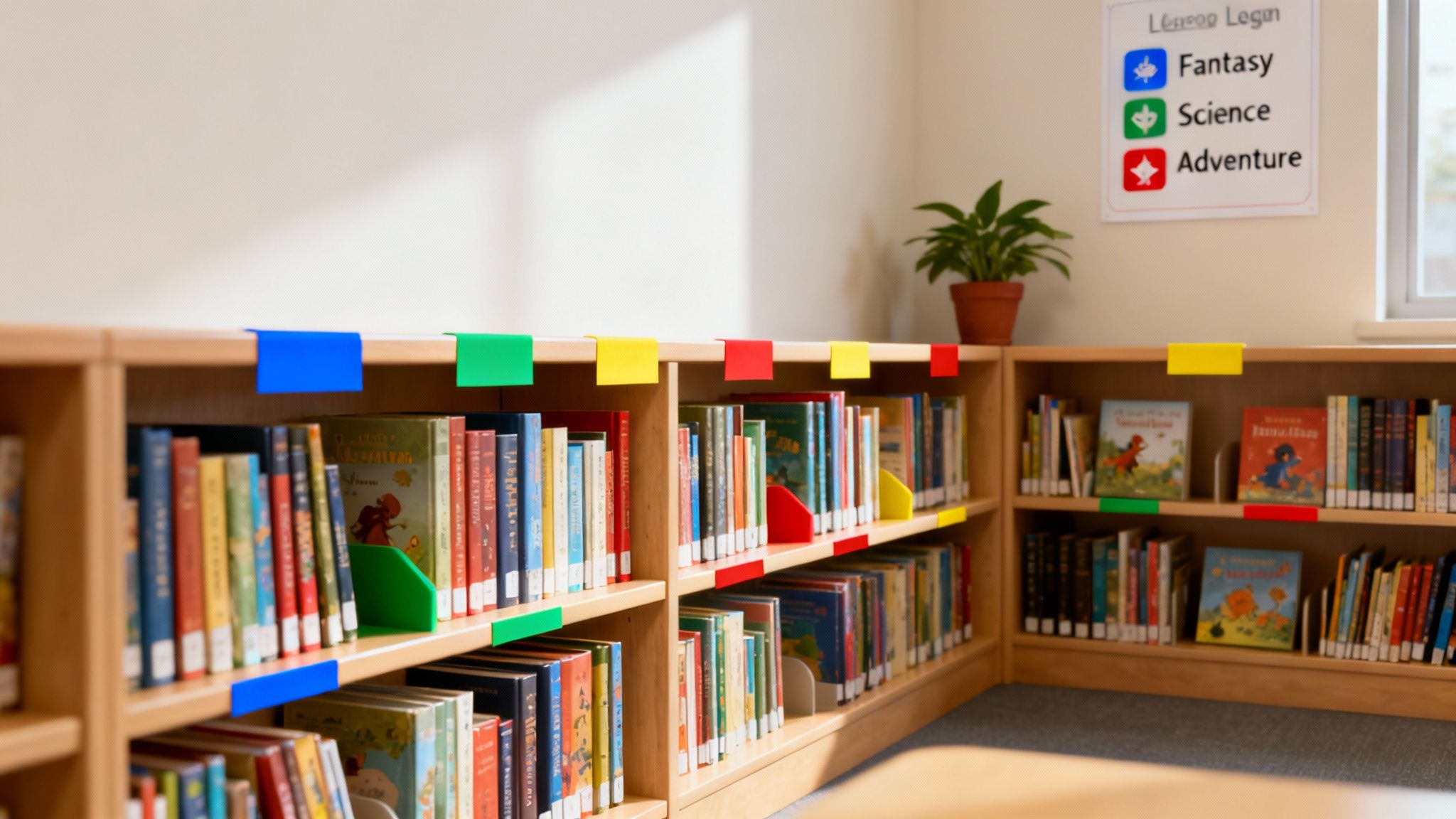
This approach is highly effective because it removes the intimidation of complex systems like Dewey Decimal, making it perfect for elementary and middle school classrooms. It encourages exploration and helps students naturally learn the characteristics of different genres.
How to Implement It:
- Create a Legend: Design a large, colorful poster that clearly shows which color corresponds to which genre. Place it prominently in the library area for easy reference.
- Use Durable Labels: Apply colored dot stickers or colored electrical tape to the spine of each book. For extra longevity, you can place a piece of clear packing tape over the sticker.
- Involve Your Students: Turn the organization process into a class activity. Let students help decide which colors represent which genres and assist in labeling the books. This buy-in makes them more invested in keeping the library tidy.
- Add an Icon: For an extra layer of support, pair each color with a simple icon (e.g., a dragon for fantasy, a magnifying glass for mystery). This helps pre-readers and visual learners navigate the library with even more confidence.
2. Benchmark/Reading Level Organization
For teachers focused on differentiated instruction, organizing books by reading level is a powerhouse strategy. This approach arranges the library by a specific benchmark system, like Fountas & Pinnell levels (A-Z), Lexile scores, or grade-level equivalents. This classroom library organization idea helps students find "just right" books that match their current abilities, building confidence and fostering growth. A well-leveled library empowers students to choose books that are challenging enough to learn from but not so difficult that they become frustrated.
This method directly supports guided reading groups and independent reading goals. By having books pre-sorted, teachers can quickly pull appropriate texts for small groups or guide individual students to bins that suit their needs, creating a seamless connection between instruction and practice. It helps make the often-daunting task of finding the right book a simple, positive experience for every reader.
How to Implement It:
- Level Every Book: Use a consistent system to determine the reading level of each book in your collection. Websites like the Fountas & Pinnell or Lexile databases are invaluable resources for this process.
- Label Bins Clearly: Use sturdy book bins and label each one clearly with the corresponding letter, number, or score range. This creates a grab-and-go system for students.
- Combine with Color: Add a layer of visual organization by assigning a color to each level or group of levels. For example, all "Level C" books could have a red dot, while "Level D" gets a blue dot.
- Create a "Book Shopping" Guide: Help students understand the system by providing them with a personal bookmark or card that indicates their "just right" reading level. You can use fun phrases like "Look for books in the Green Bin!" to make it more approachable.
3. Interest-Based/Theme-Centered Bins
Another powerful classroom library organization idea is to sort books by student interests and specific themes rather than broad genres. This method creates highly engaging, browsable collections that speak directly to what kids are passionate about. Think of bins labeled "Dog Stories," "Amazing Adventures," "Friendship Tales," or "Funny Books." This approach makes the library feel personal and exciting, empowering students to find books on topics they genuinely love.
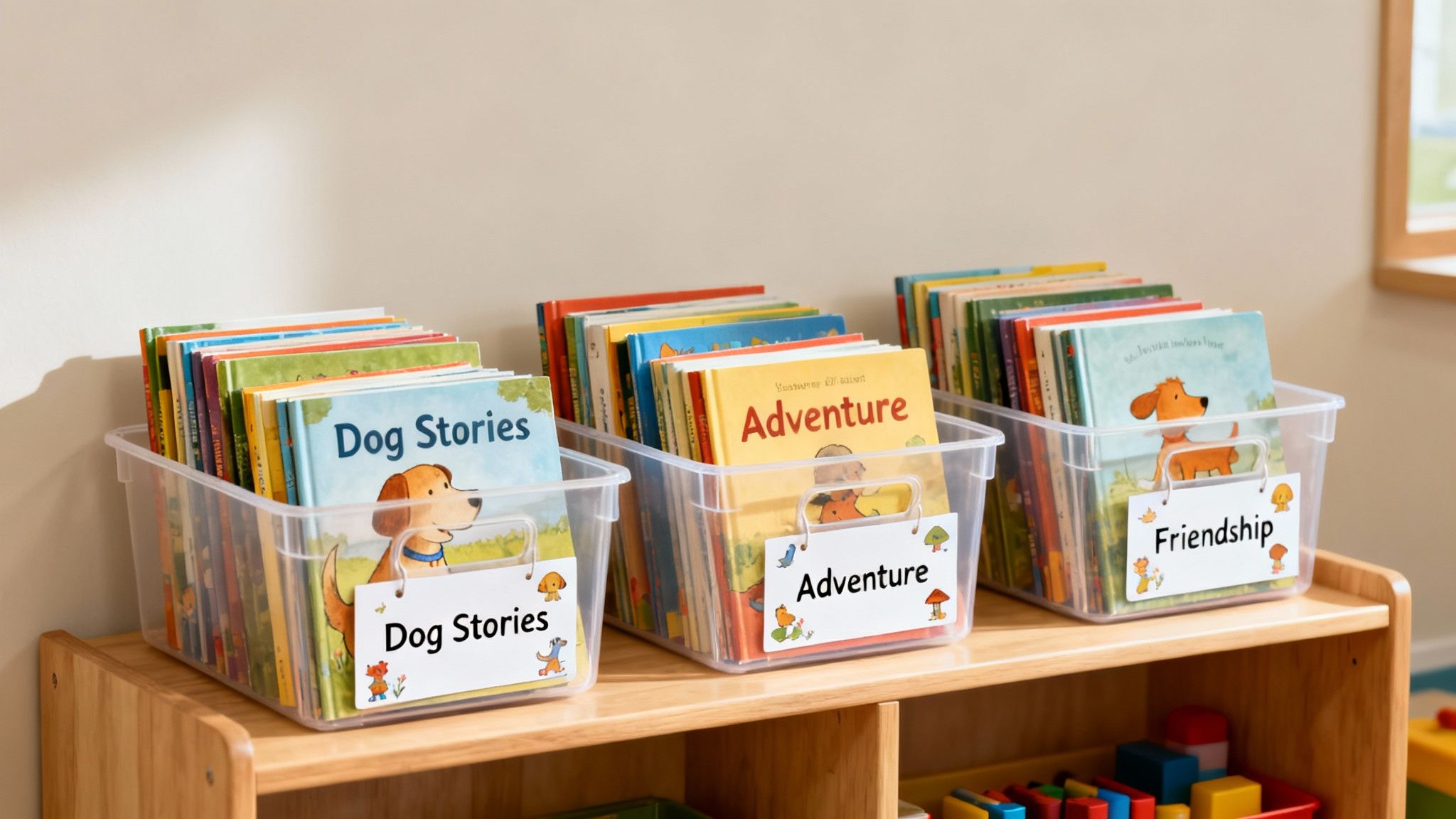
This strategy is especially effective for reluctant readers because it removes the pressure of navigating traditional categories. Instead of searching for a genre, they can look for a topic that sparks their curiosity. A "Dog Stories" bin, for example, is a huge hit with our pack, as it immediately connects with young animal lovers and draws them into the world of reading through a familiar passion.
How to Implement It:
- Survey Your Students: Start by asking your students what they love to read about. Use a simple poll or discussion to gather ideas for your bin themes, ensuring the library reflects their interests.
- Create Appealing Labels: Design clear, vibrant labels for each bin. Including pictures or icons alongside the text makes them more accessible for all reading levels. Clear plastic bins are a great choice so students can see the covers.
- Keep Bins Manageable: Aim for about 8-12 books per bin. This amount provides choice without overwhelming students, making it easy for them to browse and put books back correctly.
- Rotate and Refresh: Keep the library dynamic by rotating themes monthly or quarterly based on new interests, seasonal topics, or curriculum units. A "New Arrivals" bin is also a great way to generate excitement for recently added books.
4. Alphabetical Author Organization with Sub-Categories
For classrooms with older students or a vast collection, organizing by the author's last name is a classic and effective system. This method mirrors how most public libraries and bookstores arrange their fiction, teaching students a valuable, lifelong skill for navigating larger collections. It’s one of the most practical classroom library organization ideas for preparing students for research and independent library use.
While straightforward, this approach can be enhanced with modern, kid-friendly sub-categories. By adding visual cues like genre icons or reading level stickers to the author labels, you create a hybrid system that offers the structure of alphabetical order with the accessibility of visual sorting. This is ideal for upper elementary and middle schoolers who are ready for a more sophisticated system but still benefit from helpful visual guides.
How to Implement It:
- Create Clear Spine Labels: Design and print consistent spine labels that clearly display the author's last name (e.g., the first three letters). Use a large, readable font.
- Add Visual Sub-Categories: Add a small icon or colored dot sticker to the spine label to indicate genre, series, or reading level. This helps students find "just right" books within an author's section.
- Create an "Author Spotlight": Dedicate a small shelf or display area to a featured author each month. Include their books, a short biography, and maybe even a photo. This is a great way to introduce students to new writers.
- Start a "Popular Authors" Section: Pull books by extremely popular authors like Kate DiCamillo or Roald Dahl and place them in a front-facing, high-traffic bin. This makes it easy for students to find their favorites without having to search the entire library.
5. Series-Based Organization with Series Boxes
Once a student gets hooked on a book series, they often want to devour the entire collection. One of the most effective classroom library organization ideas to support this reading momentum is organizing books by series. By dedicating specific bins, boxes, or shelf sections to popular series like Wings of Fire, I Survived, or Dog Man (a Puppuccino Club favorite!), you make it incredibly easy for students to find the next book in their reading adventure. This method capitalizes on their enthusiasm and is a fantastic way to build reading stamina.
This approach helps students see a clear path forward in their reading journey. Instead of searching aimlessly for the next installment, they know exactly where to look. It fosters a sense of accomplishment as they work their way through a box, encouraging them to tackle longer and more complex narratives over time.
How to Implement It:
- Designate Series Bins: Use sturdy, clearly labeled bins or decorative boxes for each series. Label the outside with the series title and, if possible, a picture of the book cover.
- Number Each Book: Clearly label the spine of each book with its number in the series (e.g., "Book 1," "Book 2"). This helps students read them in the correct order and keeps the collection tidy.
- Create a Series Directory: Design a poster or a "menu" that lists all the series available in the library. This can include the series title, author, and a short, enticing blurb to pique student interest.
- Launch a Series Challenge: Motivate students with a "Series Reading Challenge." Create a simple tracker where they can mark off each book they complete in a series, celebrating their progress and encouraging others to start a new collection.
6. Social-Emotional Learning (SEL) Themed Collections
A truly powerful classroom library organization idea goes beyond genres and levels to support the whole child. Organizing books by social-emotional learning (SEL) themes like kindness, resilience, friendship, and growth mindset creates a resource that nurtures empathy and emotional intelligence. Imagine a shelf dedicated to "Handling Big Feelings" or a bin for "Being a Good Friend." This approach transforms your library into an intentional tool for character development.
This method is perfect for schools with a focus on Responsive Classroom or character education programs. It allows students to find stories that mirror their own experiences and challenges, helping them build self-awareness and social skills. Beyond just organizing books, integrating social-emotional learning into your library can profoundly impact student well-being. For comprehensive strategies and effective SEL resources, you might explore additional guides.
How to Implement It:
- Identify Core Themes: Collaborate with your school counselor or use your curriculum to select 5-7 key SEL themes to focus on (e.g., empathy, problem-solving, diversity, self-regulation).
- Create Themed Bins or Shelves: Clearly label bins or specific shelf sections with your chosen themes. Use both words and simple icons to make them accessible to all readers.
- Add Discussion Prompts: Tape a small index card with thought-provoking questions inside the cover of each SEL book (e.g., "How did the character show resilience?"). This encourages deeper thinking and conversation.
- Feature a Monthly SEL Theme: Rotate a specific theme to the forefront each month. Create a special display and tie it into class meetings or read-alouds to build a positive classroom culture.
7. Rotating Spotlight/Featured Display with Core Collection
One of the most engaging classroom library organization ideas is creating a rotating spotlight display while maintaining a stable core collection. This hybrid system keeps the bulk of your library predictably organized while using a prominent, high-traffic area to feature a curated, themed selection of books that changes regularly. Think of it as your classroom's version of a bookstore's "New Arrivals" or "Staff Picks" table, generating constant buzz and interest.

This strategy is fantastic for balancing structure with spontaneity. Students who know what they want can easily find it in the core library, while others can be drawn in by fresh, eye-catching displays tied to seasons, curriculum units, or current events. It’s an amazing way to highlight hidden gems and encourage students to try books they might otherwise overlook.
How to Implement It:
- Designate a "Spotlight" Zone: Choose a prime location like a special bookshelf, a small table, or a highly visible ledge for your featured display.
- Create Exciting Themes: Develop fun, appealing themes for your displays. Examples include "Dog Tales" (a SetterFrens favorite!), "Cozy Autumn Reads," "Books That Became Movies," or "Adventure Awaits."
- Rotate Regularly: Change the display every two to four weeks to keep the content fresh and exciting. A new display gives students a reason to keep coming back to the library.
- Add Student Voice: Incorporate "student recommendation" cards where kids can write a short review of a featured book. This peer-to-peer endorsement is incredibly powerful and builds a strong reading community.
8. Accessible/Universal Design Organization System
Creating an inclusive learning environment means ensuring every student can fully participate, and your library is the perfect place to start. An accessible organization system, rooted in the principles of Universal Design for Learning (UDL), goes beyond simple sorting to remove barriers for all learners. This thoughtful approach incorporates features like height-appropriate shelving, large-print labels, and even audio pairings to support students with diverse physical, sensory, and learning needs.
This method ensures that your classroom library isn’t just organized, but truly welcoming and usable for every child, regardless of their ability. It fosters independence and sends a powerful message that every student belongs and is capable of finding a story they love. This is one of the most impactful classroom library organization ideas for building an equitable and supportive community.
How to Implement It:
- Audit for Accessibility: Start by evaluating your current setup. Are shelves too high for some students? Is there enough space for a wheelchair to navigate? Are labels small or hard to read? Involve your students in this process to get direct feedback.
- Use High-Contrast & Large-Print Labels: Design labels with large, clear fonts on high-contrast backgrounds (e.g., black text on a yellow background). This simple change makes a huge difference for students with visual impairments.
- Incorporate Multiple Formats: Pair physical books with their audiobook versions. You can use a QR code on the book cover that links directly to an audio file, allowing students to listen and follow along. This is a game-changer for struggling readers and auditory learners.
- Vary Your Shelving: Use a combination of traditional bookshelves, low forward-facing displays, and floor-level baskets. This ensures that students of all heights and mobility levels can comfortably browse and select their own books.
- Add Tactile Elements: For visually impaired students, consider adding tactile markers to book bins or shelves. A simple piece of bumpy tape or a textured sticker can help them navigate the library by touch.
9. Student-Managed/Choice-Based Organization with 'Little Free Library' Concept
To cultivate a deep sense of ownership and community, consider handing the organizational keys over to your students. This student-managed model transforms the library into a living, breathing space curated by its primary users. It mirrors the community spirit of a 'Little Free Library,' where readers are empowered to share, recommend, and take responsibility for their shared collection, turning book management into a valuable leadership lesson.
This participatory approach is one of the most powerful classroom library organization ideas because it fosters responsibility, collaboration, and authentic engagement. When students have a say in how the library runs, from creating displays to recommending books, they become more invested in its success and are more likely to encourage their peers to read. It's a fantastic way to build a reading culture from the ground up.
How to Implement It:
- Establish Student Librarian Roles: Create a rotating team of "student librarians" with clear, manageable responsibilities like tidying shelves, checking books in and out, or updating displays. This gives multiple students a chance to lead.
- Co-Create the Rules: Work with your class to establish simple, clear guidelines for library use. When students help create the rules, they are far more likely to follow and enforce them.
- Introduce Recommendation Cards: Place a box of blank index cards in the library where students can write short book reviews or recommendations for their peers. Create a "Student Picks" shelf to feature these reviewed books.
- Hold 'Book Council' Meetings: Schedule brief, regular meetings with your student librarians or the whole class to discuss what’s working, what isn’t, and any new ideas for the library. This feedback loop is essential for a thriving student-led system.
10. Hybrid Digital-Physical Catalog System with Physical Organization
For the tech-savvy classroom, a hybrid digital-physical catalog system offers the best of both worlds. This modern approach keeps books neatly organized on shelves while using a searchable digital database (like Google Sheets or a dedicated app) to track everything from reading level and genre to keywords and availability. It’s one of the most powerful classroom library organization ideas for managing a large collection.
This method empowers students to become expert researchers, allowing them to search for books based on specific interests, like "dogs" or "space," without having to browse every single shelf. It also gives you, the teacher, powerful data on which books are most popular and where gaps might exist in your library.
How to Implement It:
- Choose Your Tool: Start simple with a Google Sheet or Airtable. For more advanced features, look into classroom-specific apps like Booksource Classroom Organizer or Libib.
- Create QR Codes: Generate a unique QR code for each book that links to its entry in your digital catalog. Place the sticker inside the book cover for easy scanning during checkout.
- Teach Digital Literacy: Dedicate class time to teaching students how to use the search function. Create fun scavenger hunts to help them practice finding books using different keywords.
- Streamline with Barcodes: For a truly modern approach, integrating barcoding services can significantly streamline your book tracking and inventory management, making checkout a breeze for your student librarians.
10 Classroom Library Organization Ideas Compared
| System | Implementation Complexity 🔄 | Resource Requirements ⚡ | Expected Outcomes 📊 | Ideal Use Cases 💡 | Key Advantages ⭐ |
|---|---|---|---|---|---|
| Color-Coded Genre System | Low — simple labeling and legend 🔄 | Low–Moderate — labels, tape, posters ⚡ | Faster browsing; greater independence 📊 ⭐⭐⭐ | Early elementary, mixed-age, visual systems 💡 | Intuitive for emergent readers; easy upkeep ⭐ |
| Benchmark / Reading Level Organization | Moderate–High — requires leveling knowledge 🔄 | Moderate — assessment tools, specialist input ⚡ | Better level-match; supports differentiated instruction 📊 ⭐⭐⭐ | Guided reading, interventions, leveled instruction 💡 | Personalizes reading; tracks progression ⭐ |
| Interest-Based / Theme-Centered Bins | Low–Moderate — curation and bin setup 🔄 | Moderate — bins, themed labels, rotation effort ⚡ | Higher engagement and choice-driven browsing 📊 ⭐⭐⭐ | Reluctant readers, thematic units, seasonal rotations 💡 | Boosts motivation; flexible and trendy ⭐⭐ |
| Alphabetical Author Organization with Sub-Categories | Moderate — alphabetization + sublabels 🔄 | Low — signage and spine labels ⚡ | Familiar to older readers; supports author discovery 📊 ⭐⭐ | Upper elementary, middle school, independent fiction 💡 | Scalable; teaches research/organizational skills ⭐ |
| Series-Based Organization with Series Boxes | Low–Moderate — grouping and numbering 🔄 | Moderate — boxes, duplicates, signage ⚡ | Increases series completion and reading stamina 📊 ⭐⭐⭐ | Series-heavy collections; avid readers, challenges 💡 | Encourages sustained reading; easy tracking ⭐ |
| Social-Emotional Learning (SEL) Themed Collections | Moderate — content analysis and mapping 🔄 | Moderate — counselor input, discussion guides ⚡ | Supports SEL lessons and emotional literacy 📊 ⭐⭐⭐ | SEL curriculum, counseling, character education 💡 | Facilitates discussions; aligns with wellbeing goals ⭐ |
| Rotating Spotlight / Featured Display with Core Collection | Moderate — dual maintenance and curation 🔄 | Moderate–High — display space, props, staff time ⚡ | Boosts circulation and refreshes interest regularly 📊 ⭐⭐⭐ | New releases, seasonal promotion, classroom highlights 💡 | Drives discovery; highlights underused titles ⭐ |
| Accessible / Universal Design Organization System | High — inclusive design + tech/training 🔄 | High — adjustable shelving, tech, training ⚡ | Greater equity and multi-modal access 📊 ⭐⭐⭐⭐ | Inclusive classrooms, ELLs, special education settings 💡 | Broad accessibility; future-proof design ⭐⭐ |
| Student-Managed / Choice-Based ('Little Free Library') | Moderate — training, routines, oversight 🔄 | Low–Moderate — labels, training time, displays ⚡ | High ownership and peer-driven recommendations 📊 ⭐⭐⭐ | Student leadership programs, community projects 💡 | Builds responsibility; authentic engagement ⭐ |
| Hybrid Digital-Physical Catalog System | High — tech integration and cataloging 🔄 | High — software, devices, staff training ⚡ | Quick searchability, inventory data, analytics 📊 ⭐⭐⭐⭐ | Large collections, district libraries, data-driven planning 💡 | Combines physical access with data insights ⭐ |
Your Organized Library Awaits!
Creating a vibrant, functional, and inviting classroom library is one of the most powerful moves you can make as an educator. It’s more than just tidying up shelves; it's about building a space where every student feels seen, empowered, and excited to find their next great read. Throughout this guide, we've explored a wide range of classroom library organization ideas, each designed to transform your book corner into a dynamic hub of learning and discovery.
Remember, the "perfect" system doesn't exist in a vacuum. The best approach is the one that serves your specific students, aligns with your teaching goals, and fits the unique flow of your classroom. Whether you're drawn to the visual clarity of a color-coded genre system, the data-driven precision of leveled bins, or the student-centered freedom of a choice-based model, the goal remains the same: to remove barriers and make the magic of storytelling accessible to all.
Key Takeaways for Your Classroom Library
Let’s quickly recap the core principles that tie all these ideas together:
- Student-Centered Design: Always put your students first. A library organized around their interests, reading levels, and needs will see far more use than one organized for adult convenience. Think about accessibility, visual appeal, and ease of use from a child’s perspective.
- Flexibility is Key: Your classroom and your students will change year after year. Don’t be afraid to adapt, modify, or even completely overhaul your system. A rotating spotlight display or a hybrid model can keep your collection feeling fresh and relevant.
- Procedures Make It Possible: An organized library only stays organized if students know how to use it. Clear, simple, and consistently reinforced procedures for browsing, borrowing, and returning books are the secret ingredient to long-term success.
Your Actionable Next Steps
Feeling inspired? It's time to translate that energy into action. Start small. You don't need to reorganize everything overnight. Choose one section of your library, one bin of books, or one new labeling idea to implement this week. Involve your students in the process by asking for their feedback on what works and what doesn't. Their ownership will be your greatest asset in maintaining the space.
Ultimately, a well-organized classroom library is a gift to your students. It tells them that reading is a priority, that their choices matter, and that a world of adventure and knowledge is right at their fingertips. It becomes the heart of the classroom, a cozy corner where a love for stories can truly take root and flourish.
Ready to fill those newly organized shelves with stories that warm the heart? At Setterfrens LLC, we feature honest reviews of top dog products and practical how-to guides to help you care for your pup like a pro. Explore our curated selection of dog-themed books at Setterfrens LLC to find the perfect additions to your classroom library that celebrate kindness, friendship, and the joy of reading. Join our Puppiccino Club to unlock member perks and stay part of the fun by following @setterfrens on TikTok and Instagram