Bringing a new puppy home is pure joy, but figuring out what to feed them? That's your first big challenge as a new pet parent. Finding the best dog food for puppies isn't about a single magic brand; it's about finding a formula that nails your little one's specific needs for high-quality protein, brain-boosting DHA, and the right amount of calcium for those growing bones.
Your Puppy's First Guide to Perfect Nutrition
Welcome to the SetterFren family! We're a cozy community built for dog lovers who believe life’s better with a wagging tail and a good book. We know that stepping into the world of puppy ownership is a thrilling ride, and we're here to help you navigate the food aisle with total confidence. Let's be honest, choosing the right puppy food can feel like a huge task with all the options staring back at you from the shelf.
The global dog food market was valued at an incredible $39.61 billion in 2024. That number isn't just a statistic; it shows just how many choices are out there for loving owners like you. This boom is driven by people who want nothing but the best for their furry family members. While you can dive into more stats on the growing pet food market, the main point is clear: you're in the driver's seat when it comes to picking top-notch nutrition.
The Building Blocks of a Healthy Pup
Think of puppy food as the lumber, bricks, and mortar for building a strong, healthy adult dog. Every single bite contributes to their development, from their endlessly wagging tail to their surprisingly sharp little mind. Our goal is to find a food that delivers a complete and balanced diet designed specifically for this rapid growth phase.
A puppy's body is a whirlwind of development, much like a human baby's. This means their meals need to be packed with easy-to-digest nutrients.
Here are the non-negotiables every great puppy food should have:
- High-Quality Protein: This is the absolute foundation for building strong muscles and tissues. You want to see named meat sources like chicken, lamb, beef, or fish listed right at the top of the ingredient list.
- Essential Fats and DHA: Fats are your puppy's main energy source. Within those fats, an omega-3 fatty acid called DHA is a superstar for healthy brain and eye development.
- Balanced Minerals: Getting the calcium-to-phosphorus ratio just right is critical for building strong bones and teeth. This is especially important for puppies of large breeds, who have a lot of growing to do!
A well-balanced diet is the cornerstone of a long and healthy life. By focusing on these key nutritional building blocks from day one, you are setting your puppy up for a vibrant future.
To help you get a quick handle on what's most important, we've put together this simple table. It breaks down the essentials so you know exactly what you're looking for on a food label.
Puppy Nutrition at a Glance
| Nutrient | Why It's Important for Puppies | Good Sources |
|---|---|---|
| Protein | The primary building block for muscles, organs, and tissues. Puppies need more than adult dogs. | Chicken, beef, lamb, fish, high-quality meat meals. |
| Fats & Fatty Acids | Provides concentrated energy and supports a healthy coat. DHA is vital for brain and vision development. | Fish oil (especially salmon oil), chicken fat, flaxseed. |
| Carbohydrates | A key source of energy. Digestible carbs also provide fiber for good gut health. | Sweet potatoes, brown rice, oatmeal, peas, barley. |
| Calcium & Phosphorus | Crucial for developing strong bones and teeth. The ratio between them must be carefully balanced. | Bone meal, eggshells (in formulated foods), dicalcium phosphate. |
| Vitamins & Minerals | Support everything from immune function and metabolism to nerve function. | Found in a balanced mix of fruits, vegetables, and fortified ingredients. |
Remember, this is about giving your puppy the best possible start. By understanding what's in their bowl, you're making an investment in their long-term health and happiness.
Of course, nutrition is just one piece of the puzzle. As you settle in with your new best friend, creating routines and learning their unique personality are just as vital. For a complete guide to getting started on the right paw, check out our advice on how to care for a new puppy.
How to Read a Puppy Food Label
Have you ever stood in the pet food aisle and felt your eyes glaze over? The walls of brightly colored bags all shouting promises can be seriously overwhelming. But here at SetterFren, we want to let you in on a little secret: learning to read a puppy food label is the single best skill you can develop to pick the right food for your little one.
Think of that label as the food's resume. It cuts right through all the flashy marketing fluff and tells you what’s really inside. Our mission is to help you become a pro at reading them, so you can spot the good stuff and confidently walk away from the not-so-good stuff.
The First Five Ingredients Tell the Real Story
Here’s a simple rule of thumb that will never steer you wrong: the first five ingredients make up most of what's in the bag. By law, ingredients have to be listed by weight before they're cooked. So, whatever you see at the top of that list is what your puppy will be eating the most of.
If you were making dinner for a tiny, growing athlete, you'd start with a great source of protein, right? It’s the exact same principle for your puppy. You want to see high-quality, named meat sources—like "deboned chicken," "lamb," or "salmon"—right at the top of the list. These are whole, identifiable proteins that you can feel good about.
Vague terms like "meat by-products" or "poultry meal," on the other hand, are a bit of a red flag. While they aren't necessarily bad, they just don't offer the same quality or transparency. You deserve to know exactly what kind of meat is fueling your pup.
This whole idea is captured perfectly in the infographic below, which breaks down the essential building blocks every growing puppy needs.
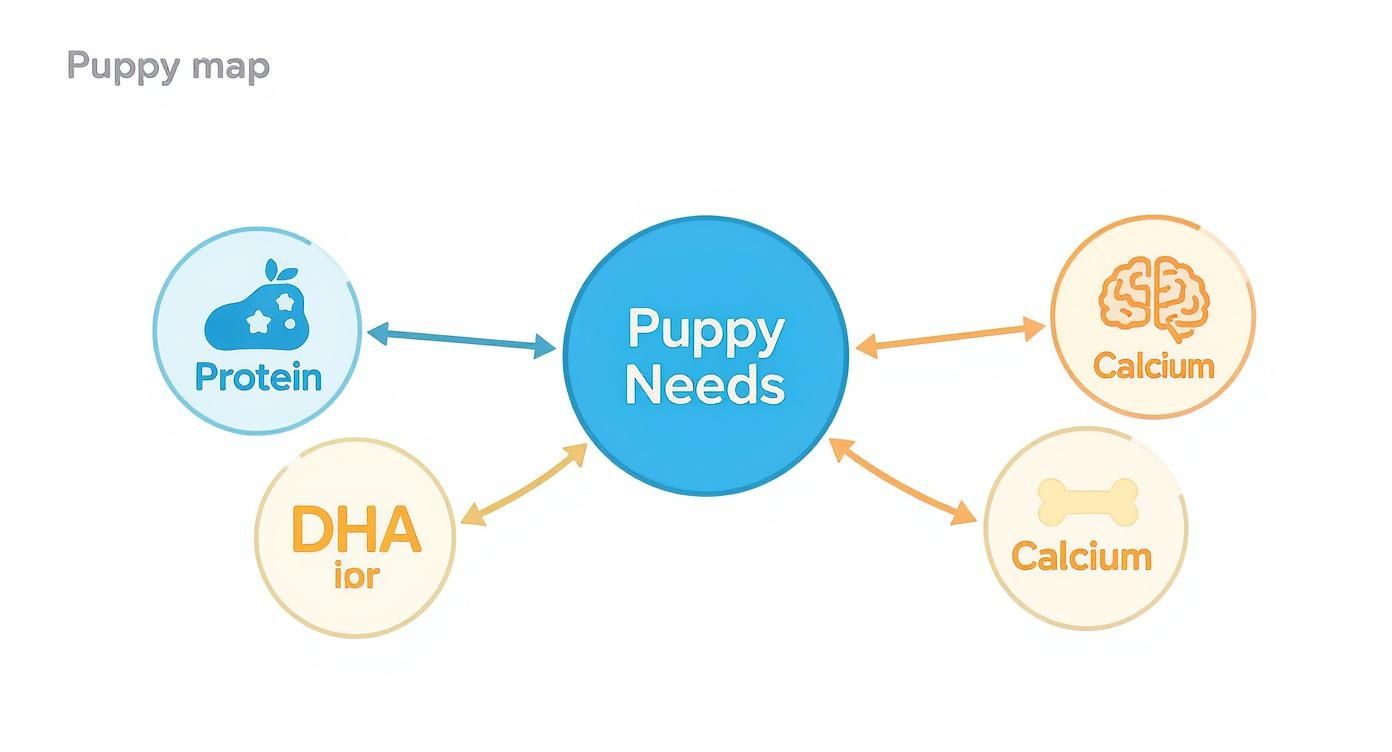
As you can see, quality protein for muscle, DHA for that developing brain, and calcium for strong bones are the non-negotiables for a puppy's healthy start in life.
Decoding the Guaranteed Analysis
Every bag of puppy food has a little box on the side called the "Guaranteed Analysis." This is where the manufacturer lists the minimums for protein and fat and the maximums for fiber and moisture.
Now, these numbers are useful, but they can be a little tricky without the right context. For instance, a food with more moisture might look like it has less protein than a dry kibble, even if the protein content is similar once you account for the water weight.
Here's a quick cheat sheet for what those numbers should look like:
- Crude Protein (Min): Puppies need plenty of it. Most experts agree you should look for at least 22.5% on a dry matter basis.
- Crude Fat (Min): Fat is pure energy for a playful pup. A minimum of 8.5% is what you want to see.
- Crude Fiber (Max): A little fiber is great for digestion, but too much is just filler. A happy medium is usually between 2-5%.
- Moisture (Max): This just tells you how much water is in the kibble. For dry food, it’s typically around 10-12%.
Understanding the AAFCO Statement
Alright, this might be the most important part of the entire label: the nutritional adequacy statement from the Association of American Feed Control Officials (AAFCO). This little sentence is your guarantee that the food is "complete and balanced" for your puppy's specific life stage.
The AAFCO statement isn't a five-star review or a seal of approval. It simply confirms that the food meets the minimum nutritional requirements for a puppy to grow and develop properly. Think of it as the pass/fail grade for puppy nutrition.
You need to look for one of two specific phrases on the packaging:
- "Formulated to meet the nutritional levels established by the AAFCO Dog Food Nutrient Profiles for growth."
- "Formulated to meet the nutritional levels established by the AAFCO Dog Food Nutrient Profiles for all life stages."
If the bag says the food is for "maintenance" or for "adult dogs," put it back on the shelf. It won't have the higher levels of protein, fat, calcium, and phosphorus your growing pup desperately needs to build a strong, healthy body.
This has become even more crucial as the pet food market has exploded with "natural" and "premium" options. The global natural pet food market was valued at around USD 15,276.8 million in 2025 and is projected to climb to USD 23,052.0 million by 2035. This boom is fueled by owners like us who want organic, grain-free, or holistic options. You can discover more insights about the natural pet food market on futuremarketinsights.com. While this means we have more great choices than ever, it also makes checking for that AAFCO statement absolutely essential to ensure a fancy-sounding food actually meets your puppy’s needs.
Matching Nutrition to Your Puppy's Breed Size
Think about building two completely different things: a tiny cottage versus a giant skyscraper. Would you use the same foundation plan or the same amount of steel for both? Of course not. That same logic applies perfectly to feeding puppies. A tiny Yorkie and a growing Great Dane simply can't be built from the same nutritional blueprint.
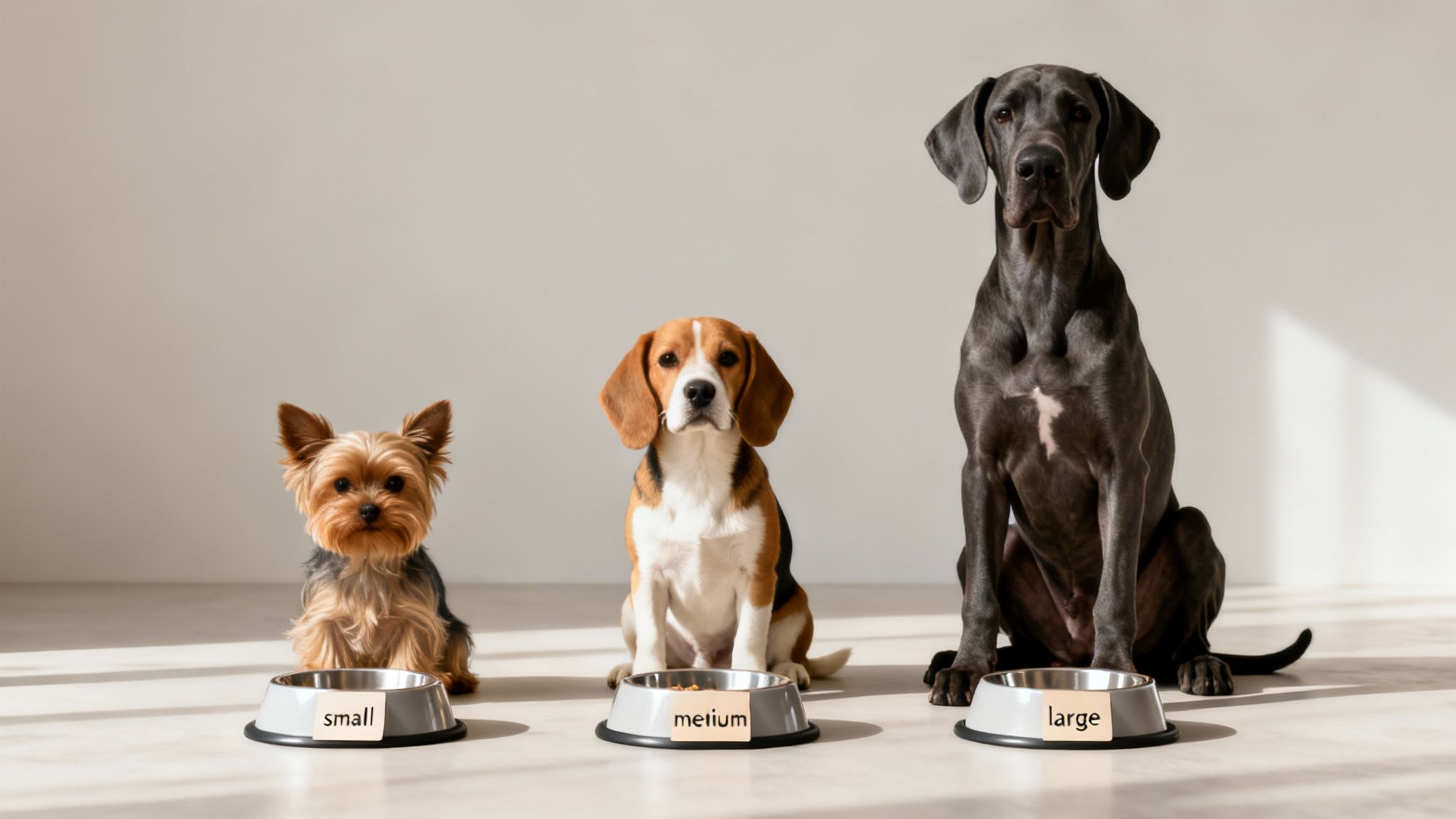
This is why picking the best dog food for puppies almost always comes down to one thing: their future adult size. A puppy's breed size is the master controller for their metabolism, growth speed, and skeletal development. Getting the size-specific formula right is one of the most important things you can do for their long-term health.
Small Breed Puppies: Fueling a Fast Metabolism
Little guys like Chihuahuas or Pomeranians are basically tiny, high-octane engines. They have blazing-fast metabolisms, which means they burn through calories way more quickly than bigger dogs. If their food isn't packed with enough energy, they can easily fall behind on what they need for all that growing and playing.
Because of this, small breed puppy food is built a little differently:
- Higher Calorie Density: Every single bite is loaded with more energy to keep their metabolic furnace roaring.
- Smaller Kibble Size: The pieces are tiny, making them easy for little jaws to handle without being a choking hazard.
- Rich in Antioxidants: These formulas often have an extra boost of antioxidants to support the immune systems of dogs who generally have longer lifespans.
Large Breed Puppies: A Blueprint for Steady Growth
On the complete other end of the spectrum, you've got large and giant breeds—think German Shepherds, Labradors, and Mastiffs. Their challenge isn't burning calories too fast; it's the risk of growing too fast. When a big pup's skeleton grows too rapidly, it can put a ton of strain on their joints, setting them up for problems down the road.
The number one goal when feeding a large breed puppy is to encourage slow, steady, and controlled growth. This allows their bones, joints, and muscles to develop in harmony, building a strong, solid framework for their adult life.
To pull this off, large breed formulas are carefully engineered. They have a lower calorie density to keep weight gain in check and, most critically, very specific levels of calcium and phosphorus. Too much calcium can actually make their bones grow at an unsafe rate, so finding a food that nails this balance is non-negotiable. For more great advice, check out these 5 simple tips to take care of larger breeds of dogs.
Puppy Food Needs by Breed Size
To make it all crystal clear, let's put these key differences side-by-side in a table. This will help you see exactly what to look for on the food label based on how big your puppy is going to get.
| Nutritional Factor | Small Breed Puppies (<20 lbs) | Medium Breed Puppies (20-50 lbs) | Large Breed Puppies (>50 lbs) |
|---|---|---|---|
| Calorie Density | Highest. Needed to support their very fast metabolism and high energy levels. | Moderate. A balanced approach to support steady growth without excess weight gain. | Lowest. Carefully controlled to prevent growing too quickly and stressing joints. |
| Kibble Size | Smallest. Designed to be easy to chew and prevent choking hazards for tiny mouths. | Standard. A medium-sized kibble that suits a wide range of jaw sizes. | Largest. Bigger pieces encourage proper chewing and are easier for large jaws to handle. |
| Calcium & Phosphorus | Standard Levels. Supports healthy bone formation for a small skeletal frame. | Balanced Levels. Provides the necessary minerals for a moderately sized frame. | Strictly Controlled. Lower levels are crucial to ensure bones grow at a safe, steady pace. |
This kind of tailored nutrition is only getting more sophisticated. The global market for personalized dog food was valued at a whopping US$ 143 million in 2024 and is projected to nearly double to US$ 282 million by 2031. This growth is all about innovations that customize diets to a dog's specific size, age, and breed.
By choosing a size-specific formula, you’re taking the first and most important step into this world of personalized care for your new best friend.
Choosing Between Wet, Dry, and Fresh Puppy Food
Once you’ve figured out the right nutritional blueprint for your puppy's size, the next big question is… what form should it come in? Stroll down the pet food aisle and you're hit with a wall of choices: giant bags of crunchy kibble, neat stacks of cans, and even refrigerators filled with fresh meals.
So, which one is right for your little furball?
Honestly, there’s no single "best" answer. The right choice really hinges on your puppy's personality, your lifestyle, and your budget. Think of it like your own lunch—some days a quick sandwich is perfect, other days you need a warm, comforting soup. Each food type has its own set of pros and cons.
The Case for Dry Kibble
Dry kibble is the undisputed king of the puppy food world, and for good reason. It's just so darn convenient to store and serve, which makes it a lifesaver for busy pet parents.
One of the biggest perks of kibble is its potential to help with dental health. That crunchy texture isn't just for fun; it can help scrape away plaque and tartar as your puppy chews, which is great for their teeth and gums down the road. Plus, it’s usually the most budget-friendly option, so you can feed top-tier nutrition without emptying your wallet.
The flip side? Some puppies, especially the picky ones, might find dry food a bit boring. Its low moisture content also means you have to be extra vigilant about keeping that water bowl full so your pup stays hydrated.
The Appeal of Wet Food
Got a finicky eater on your hands? Wet or canned food might just be your saving grace. Its rich smell and soft texture are often completely irresistible to puppies who'd otherwise turn their noses up at a bowl of kibble.
The sky-high moisture content in wet food—often 75% or more—is another huge plus. All that extra water is fantastic for your puppy's urinary tract health and is a sneaky way to keep them hydrated if they aren't big drinkers.
Of course, there are downsides. Wet food is almost always more expensive per meal than kibble. It also has to be refrigerated after you open it and doesn't last nearly as long, so you have to stay on top of your supply.
At the end of the day, the best puppy food is the one they'll actually eat. For some pups, the sheer deliciousness of wet food makes it the clear winner, ensuring they get every last calorie and nutrient they need to grow.
The Rise of Fresh Food
More and more, pet parents are turning to fresh, human-grade puppy food. These meals are typically made with whole ingredients you’d recognize—like lean meats, chopped veggies, and healthy grains—and then lightly cooked to lock in the nutrients. Most of these services deliver the food frozen or chilled right to your door.
The biggest draw for fresh food is how easy it is for a puppy to digest and how much they love to eat it. Because the ingredients are so minimally processed, many owners report it helps soothe sensitive stomachs, leading to a shinier coat and more consistent energy levels.
Naturally, this kind of quality comes with a premium price tag, making it the most expensive choice by a long shot. It also demands a good chunk of freezer or fridge space and requires careful handling to keep it safe for your puppy.
If you're inspired by the idea of adding some freshness to your pup's bowl, you could even try making some special additions yourself. Our guide to homemade dog treats recipes is a fantastic place to start for fun, healthy snacks.
Making the Right Choice for Your Pack
So, how do you decide? Let's walk through a few common scenarios.
- For the budget-conscious family with a healthy, active Labrador puppy: A high-quality dry kibble designed for large breeds is a fantastic choice. It delivers all the nutrients for steady growth, helps keep those teeth clean, and is easy on the bank account.
- For the owner of a picky little Pomeranian who ignores her food: A wet food topper or a full switch to a wet food diet could be the game-changer. That boost of flavor and aroma might be just what she needs to get excited about dinner.
- For the family committed to an all-natural lifestyle with a French Bulldog prone to allergies: A fresh food subscription could be a perfect match. The simple, high-quality ingredients can often help manage food sensitivities and tummy troubles.
Remember, you can always mix and match! Adding a spoonful of wet food to your puppy's kibble—a little trick called "topping"—is a great way to add flavor and moisture without going all-in on the cost of a wet-food-only diet. The goal is to find a routine that works for you and keeps your puppy healthy, happy, and eagerly licking their bowl clean.
How to Create a Puppy Feeding Schedule
So, we've covered what to put in your puppy's bowl, but the when is just as crucial. One of the kindest things you can do for your new pup is to get them on a consistent feeding schedule. It sets a predictable rhythm for their day, which is a massive help with everything from house training to keeping them at a healthy weight.
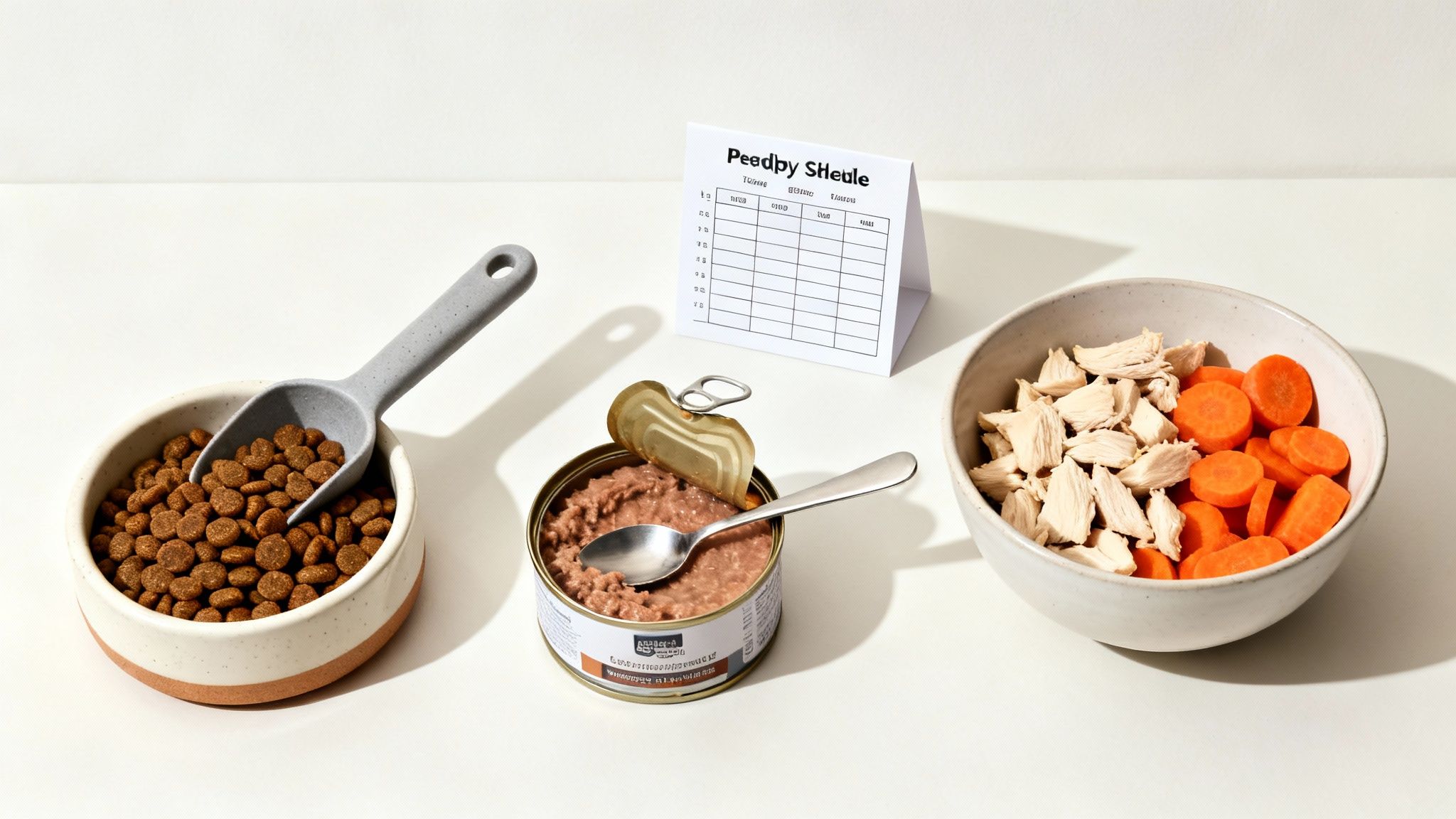
Think of your puppy’s digestive system like a tiny, high-performance engine. It needs small, regular refuels to run properly. Unlike grown dogs who can handle one or two big meals, puppies have tiny stomachs and explosive growth spurts that demand a more constant supply of energy.
A set schedule is also your secret weapon for potty training. Seriously. When you know when food is going in, you can pretty accurately predict when it’s going to come out. This predictability makes you look like a house-training genius and saves your rugs from countless accidents.
Why Free-Feeding Is a No-Go
I know it’s tempting to just fill a bowl and leave it out all day—this is called free-feeding. It seems easier, right? But trust me, it can cause a whole host of problems down the line. For one, you can't really track your puppy's appetite, which is often the very first sign that they might not be feeling well.
Even more importantly, it's a fast track to overeating and unhealthy weight gain. That extra chub puts a lot of stress on their still-developing joints. Setting specific mealtimes from the start builds a foundation for healthy eating habits that will last a lifetime.
Feeding Frequency by Age
So, how often should that food bowl hit the floor? The answer changes pretty quickly as your puppy grows. Just like a human baby transitions from constant small bottles to a few solid meals, your puppy’s schedule will evolve over their first year.
Here’s a simple breakdown to guide you:
| Puppy's Age | Recommended Meals Per Day | Why It Works |
|---|---|---|
| 6-12 Weeks | 3-4 Meals | At this stage, they're tiny! Their stomachs are small and their energy needs are huge. Frequent, small meals keep their blood sugar stable. |
| 3-6 Months | 3 Meals | As they get a bit bigger, so does their stomach. You can start spacing meals out a little more—think morning, noon, and evening. |
| 6-12 Months | 2 Meals | By now, most puppies are ready to switch to a typical adult dog schedule of two meals a day, roughly 12 hours apart. |
Mastering Portion Control
Once you've got the timing down, the next puzzle is how much. Every bag of quality puppy food has a feeding chart on the back, usually based on your pup’s age and current weight. This is your starting point, but it's definitely not set in stone.
Think of the feeding guidelines on the bag as a helpful estimate, not a strict rule. Your puppy's individual metabolism, activity level, and breed will determine their exact needs.
Start with the recommended amount, but then become a puppy-watcher. Is she gobbling it all down and looking for more? Is he leaving kibble behind? Is she getting a little too round, or looking a bit lean? Use what you see to tweak the portion size up or down.
Your vet is your best partner in this. They can help you assess your puppy’s body condition to find that sweet spot—enough fuel for healthy growth without overdoing it. Whatever you do, be consistent. Grab a measuring cup and be precise with every meal.
Your Puppy Feeding Questions, Answered
Once you get into the swing of things with your new furry sidekick, you'll undoubtedly have questions. It’s totally normal! At SetterFren, we get these all the time from our community, so we’ve put together some straightforward answers to the most common ones.
Think of this as your quick-reference guide for all those little "what do I do now?" moments. Knowing these details will help you feel much more confident as you build healthy eating habits for life.
How Long Does My Puppy Need Puppy Food?
This is probably the number one question we hear! When is it time to graduate from puppy chow to adult dog food? A good rule of thumb is to wait until your pup has reached about 80-90% of their expected adult size. But, as you can imagine, this happens at very different ages depending on the breed.
- Small Breeds (under 20 lbs): These little guys grow up fast. They’re often ready to make the switch somewhere between 9 and 12 months old.
- Medium Breeds (20-50 lbs): Most medium-sized dogs hit this milestone right around their first birthday.
- Large and Giant Breeds (over 50 lbs): Big dogs need the specialized nutrition in large-breed puppy formulas for much longer. Don't be surprised if they need it until they're 18, or even 24, months old.
If you switch them over too soon, you risk shortchanging them on the critical calories and nutrients they need to finish growing strong. If you're ever unsure, your vet is the best person to ask for a personalized recommendation.
Are Grain-Free Diets a Good Idea for Puppies?
Grain-free dog food has been a huge trend, but it's a bit of a controversial topic among vets. The main worry revolves around a potential link between some of these diets and a heart condition known as dilated cardiomyopathy (DCM). The reality is, healthy grains like oatmeal and brown rice are fantastic sources of energy and nutrients for a growing pup.
Unless your vet has specifically diagnosed your puppy with a grain allergy—which is actually very rare—there's no compelling health reason to go grain-free. For peace of mind, most veterinarians suggest sticking with a high-quality, grain-inclusive food from a well-established brand.
What Human Foods Can I Share with My Puppy?
It's so tempting to share a bite of your food with those adorable puppy-dog eyes staring up at you! And sometimes, it's perfectly fine. While your puppy’s kibble should be their main source of nutrition, a few human foods can make for excellent, healthy treats.
The key is moderation. Treats of any kind (human food or otherwise) should never make up more than 10% of your puppy's total daily calories. Any more than that and you risk throwing their diet out of balance.
Here are a few safe, pup-approved snacks:
- Carrots: Crunchy, fun to chew, and great for their teeth.
- Green Beans: A fantastic low-calorie option.
- Cooked Sweet Potatoes: Packed with fiber and vitamins.
- Blueberries: A tiny, antioxidant-rich power snack.
- Small bits of plain, cooked chicken or turkey (no skin, bones, or seasoning!).
And of course, always steer clear of the big no-nos: grapes, raisins, onions, garlic, chocolate, and anything containing the artificial sweetener xylitol.
At SetterFren, we truly believe that a well-fed puppy is a happy puppy. We hope this guide helps you feel empowered to make the best choices for your newest family member. For more honest product reviews, practical how-to guides, and our curated selection of dog-themed books, come explore our resources at https://setterfren.com. Join our Puppicino Club to unlock member perks, and be sure to follow us @setterfrens on TikTok and Instagram for heartwarming dog moments from our growing pack